World At RiskGLOBAL HAZARDS
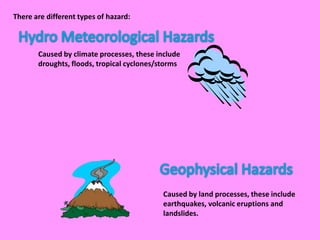
There are different types of hazard:Hydro Meteorological HazardsCaused by climate processes, these include droughts, floods, tropical cyclones/stormsGeophysical HazardsCaused by land processes, these include earthquakes, volcanic eruptions and landslides.
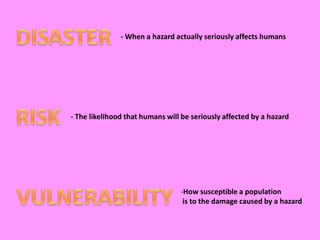
DISASTER- When a hazard actually seriously affects humansRISK- The likelihood that humans will be seriously affected by a hazard VULNERABILITYHow susceptible a population is to the damage caused by a hazard
THE DISASTER RISK EQUATIONHazard [H] X Vulnerability [V]Risk [R] = Capacity to cope [C]The risk of a disaster increases as the frequency or severity of hazards increases, people’s vulnerability increases and people’s capacity to cope (ability to cope with the consequences) is decreased.
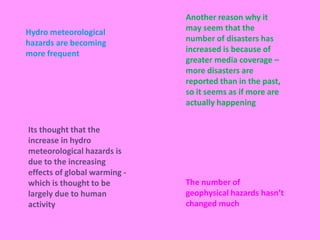
Another reason why it may seem that the number of disasters has increased is because of greater media coverage – more disasters are reported than in the past, so it seems as if more are actually happeningHydro meteorological hazards are becoming more frequent Its thought that the increase in hydro meteorological hazards is due to the increasing effects of global warming - which is thought to be largely due to human activity  The number of geophysical hazards hasn’t changed much
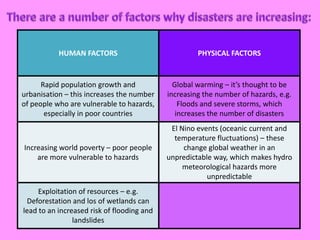
There are a number of factors why disasters are increasing:
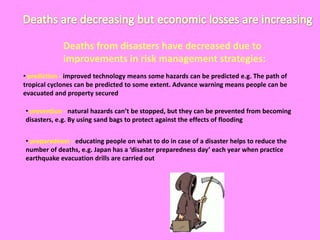
Deaths are decreasing but economic losses are increasing Deaths from disasters have decreased due to improvements in risk management strategies:prediction - improved technology means some hazards can be predicted e.g. The path of tropical cyclones can be predicted to some extent. Advance warning means people can be evacuated and property secured
prevention - natural hazards can’t be stopped, but they can be prevented from becoming disasters, e.g. By using sand bags to protect against the effects of flooding
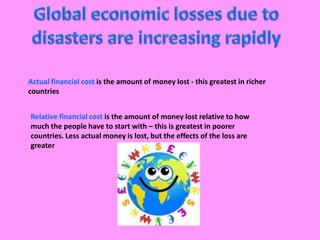
preparedness - educating people on what to do in case of a disaster helps to reduce the number of deaths, e.g. Japan has a ‘disaster preparedness day’ each year when practice earthquake evacuation drills are carried outGlobal economic losses due to disasters are increasing rapidlyActual financial cost is the amount of money lost - this greatest in richer countriesRelative financial cost is the amount of money lost relative to how much the people have to start with – this is greatest in poorer countries. Less actual money is lost, but the effects of the loss are greater

World At Risk Global Hazards

  • 1.
  • 2.
    There are differenttypes of hazard:Hydro Meteorological HazardsCaused by climate processes, these include droughts, floods, tropical cyclones/stormsGeophysical HazardsCaused by land processes, these include earthquakes, volcanic eruptions and landslides.
  • 3.
    DISASTER- When ahazard actually seriously affects humansRISK- The likelihood that humans will be seriously affected by a hazard VULNERABILITYHow susceptible a population is to the damage caused by a hazard
  • 4.
    THE DISASTER RISKEQUATIONHazard [H] X Vulnerability [V]Risk [R] = Capacity to cope [C]The risk of a disaster increases as the frequency or severity of hazards increases, people’s vulnerability increases and people’s capacity to cope (ability to cope with the consequences) is decreased.
  • 5.
    Another reason whyit may seem that the number of disasters has increased is because of greater media coverage – more disasters are reported than in the past, so it seems as if more are actually happeningHydro meteorological hazards are becoming more frequent Its thought that the increase in hydro meteorological hazards is due to the increasing effects of global warming - which is thought to be largely due to human activity The number of geophysical hazards hasn’t changed much
  • 6.
    There are anumber of factors why disasters are increasing:
  • 7.
    Deaths are decreasingbut economic losses are increasing Deaths from disasters have decreased due to improvements in risk management strategies:prediction - improved technology means some hazards can be predicted e.g. The path of tropical cyclones can be predicted to some extent. Advance warning means people can be evacuated and property secured
  • 8.
    prevention - naturalhazards can’t be stopped, but they can be prevented from becoming disasters, e.g. By using sand bags to protect against the effects of flooding
  • 9.
    preparedness - educatingpeople on what to do in case of a disaster helps to reduce the number of deaths, e.g. Japan has a ‘disaster preparedness day’ each year when practice earthquake evacuation drills are carried outGlobal economic losses due to disasters are increasing rapidlyActual financial cost is the amount of money lost - this greatest in richer countriesRelative financial cost is the amount of money lost relative to how much the people have to start with – this is greatest in poorer countries. Less actual money is lost, but the effects of the loss are greater