Global Trends
TRENDS IN TECTONIC HAZARDS
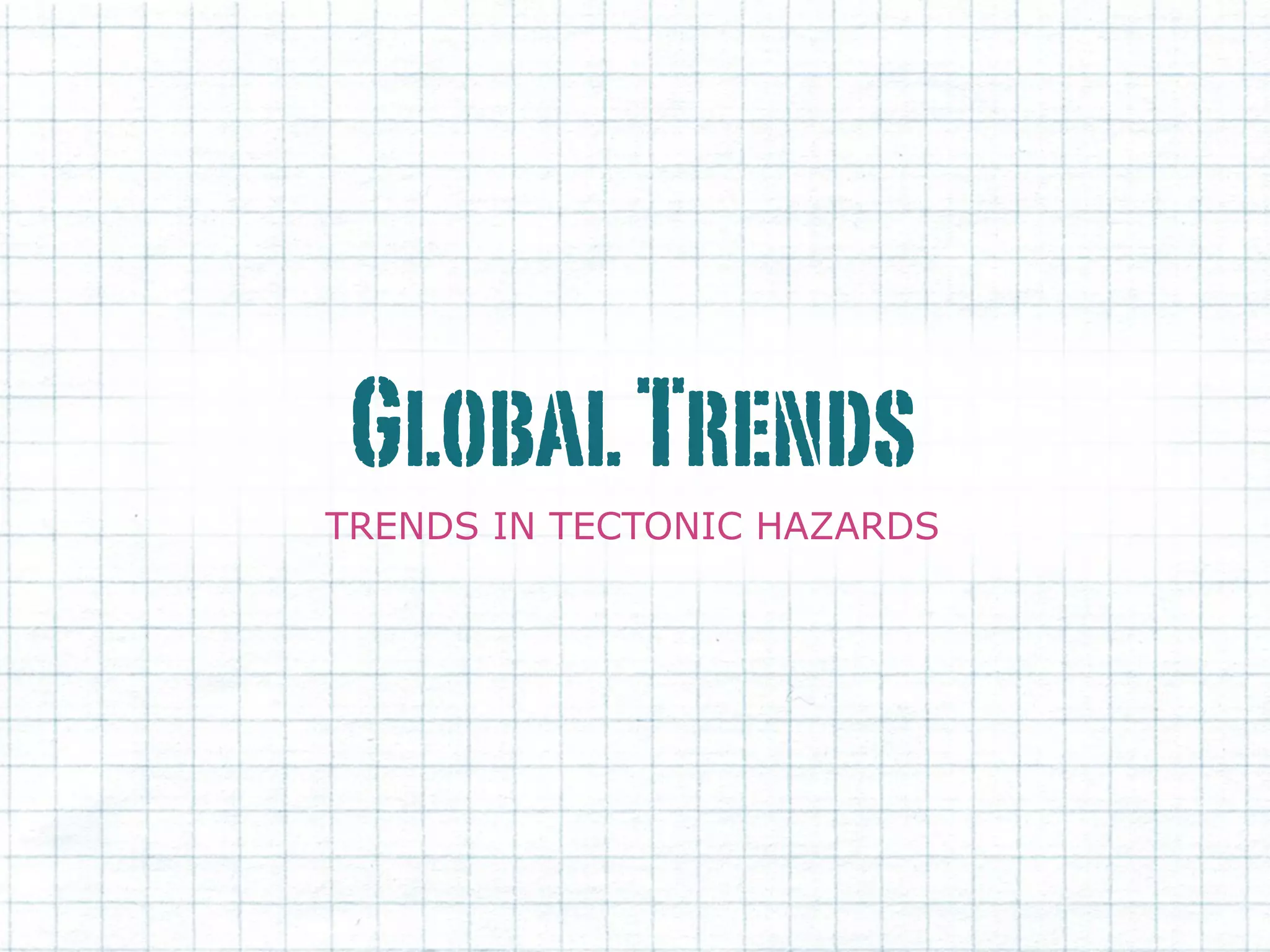
Impacts by Disaster 1992-2011 (UNISDR,
2011)
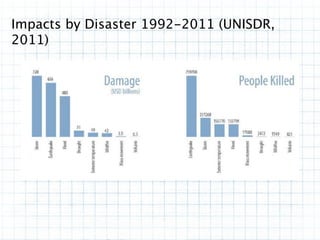
Impacts by Disaster 2001-10 vs 2011
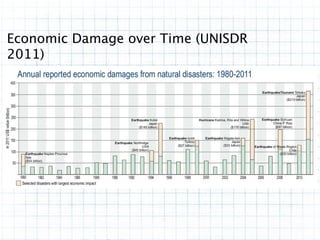
Economic Damage over Time (UNISDR
2011)
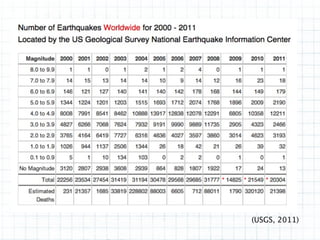
(USGS, 2011)
The recent annual death toll from earthquakes has been more than 75
000 higher than in any comparable period in the last century, and shows
that the number of earthquakes causing significant human and economic
loss has increased since the 1970s. This is at the same time as the
annual frequency of earthquakes remaining within the ‘normal’ limits of
expected seismic activity.
                                                      (Spence et al., 2011)


                         “There are more than 1500 volcanoes potentially,
                         active in the world and more than one million volcanic
                         vents under the sea; about 50-60 volcanoes erupt
                         every year worldwide.

                         Earthquakes are the natural hazard that causes most
                         deaths per event. According to CRED between 1988
                         and 2007, more than 495 000 people died in
                         earthquakes and approximately 3 billion people live in
                         regions prone to earthquakes.”
                                                                (UNISDR, 2011)
Key Points:

• rising costs over time.
• earthquakes kill a significant number of
    people.
•   earthquakes cause widespread damage
    and death.
•   volcanoes tend to have ‘smaller’ impact
    in a more localised area.
•   there are frequent examples of extreme
    high magnitude incidents that can have a
    dramatic impact on overall trends.

Tectonic Hazards Global Trends Overview

  • 1.
    Global Trends TRENDS INTECTONIC HAZARDS
  • 2.
    Impacts by Disaster1992-2011 (UNISDR, 2011)
  • 3.
    Impacts by Disaster2001-10 vs 2011
  • 4.
    Economic Damage overTime (UNISDR 2011)
  • 5.
  • 6.
    The recent annualdeath toll from earthquakes has been more than 75 000 higher than in any comparable period in the last century, and shows that the number of earthquakes causing significant human and economic loss has increased since the 1970s. This is at the same time as the annual frequency of earthquakes remaining within the ‘normal’ limits of expected seismic activity. (Spence et al., 2011) “There are more than 1500 volcanoes potentially, active in the world and more than one million volcanic vents under the sea; about 50-60 volcanoes erupt every year worldwide. Earthquakes are the natural hazard that causes most deaths per event. According to CRED between 1988 and 2007, more than 495 000 people died in earthquakes and approximately 3 billion people live in regions prone to earthquakes.” (UNISDR, 2011)
  • 7.
    Key Points: • risingcosts over time. • earthquakes kill a significant number of people. • earthquakes cause widespread damage and death. • volcanoes tend to have ‘smaller’ impact in a more localised area. • there are frequent examples of extreme high magnitude incidents that can have a dramatic impact on overall trends.

Editor's Notes