The Role of Technology
   in Delivering the
      Curriculum
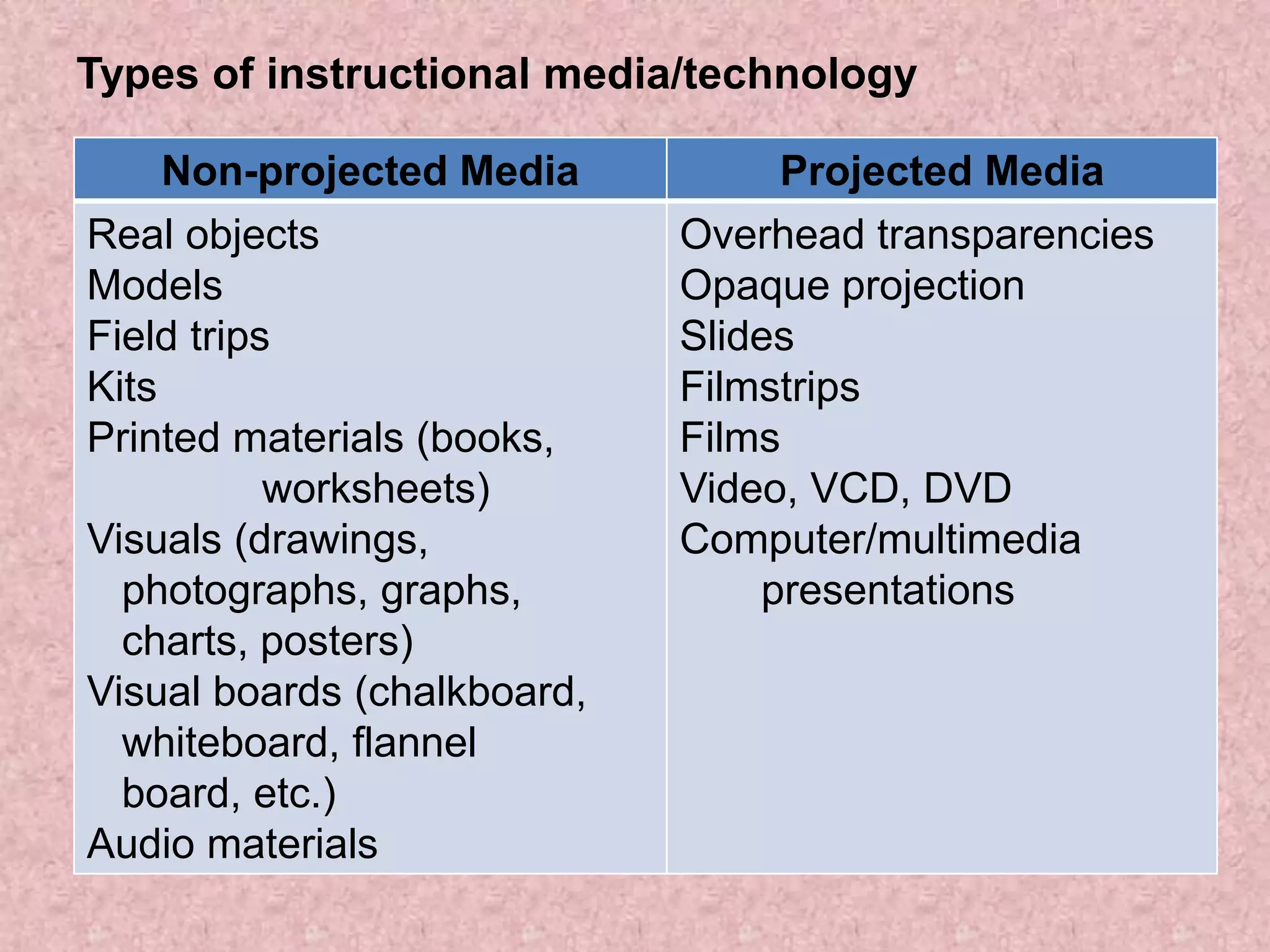
Types of instructional media/technology

     Non-projected Media          Projected Media
Real objects                 Overhead transparencies
Models                       Opaque projection
Field trips                  Slides
Kits                         Filmstrips
Printed materials (books,    Films
           worksheets)       Video, VCD, DVD
Visuals (drawings,           Computer/multimedia
  photographs, graphs,           presentations
  charts, posters)
Visual boards (chalkboard,
  whiteboard, flannel
  board, etc.)
Audio materials
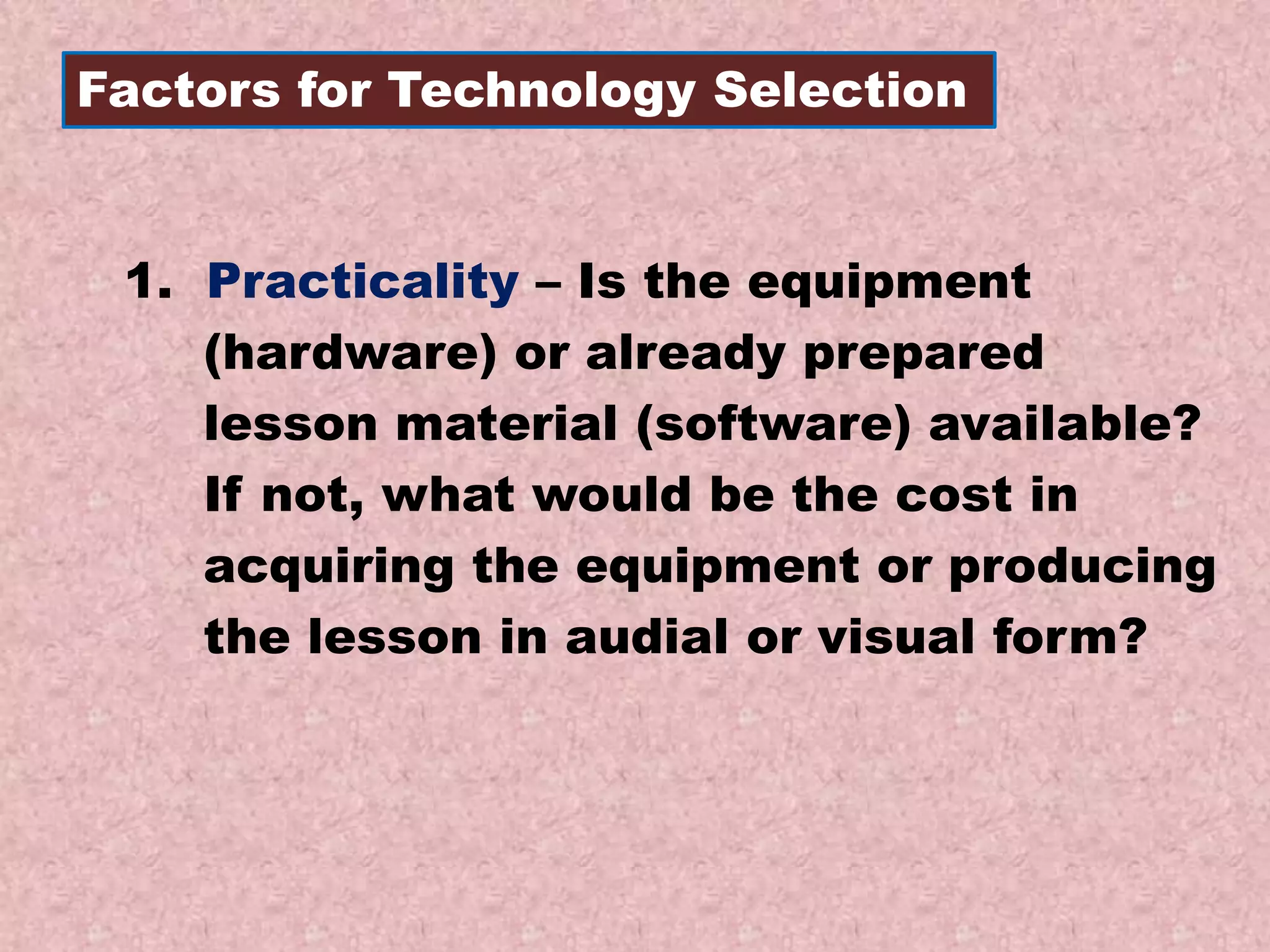
Factors for Technology Selection


 1. Practicality – Is the equipment
    (hardware) or already prepared
    lesson material (software) available?
    If not, what would be the cost in
    acquiring the equipment or producing
    the lesson in audial or visual form?
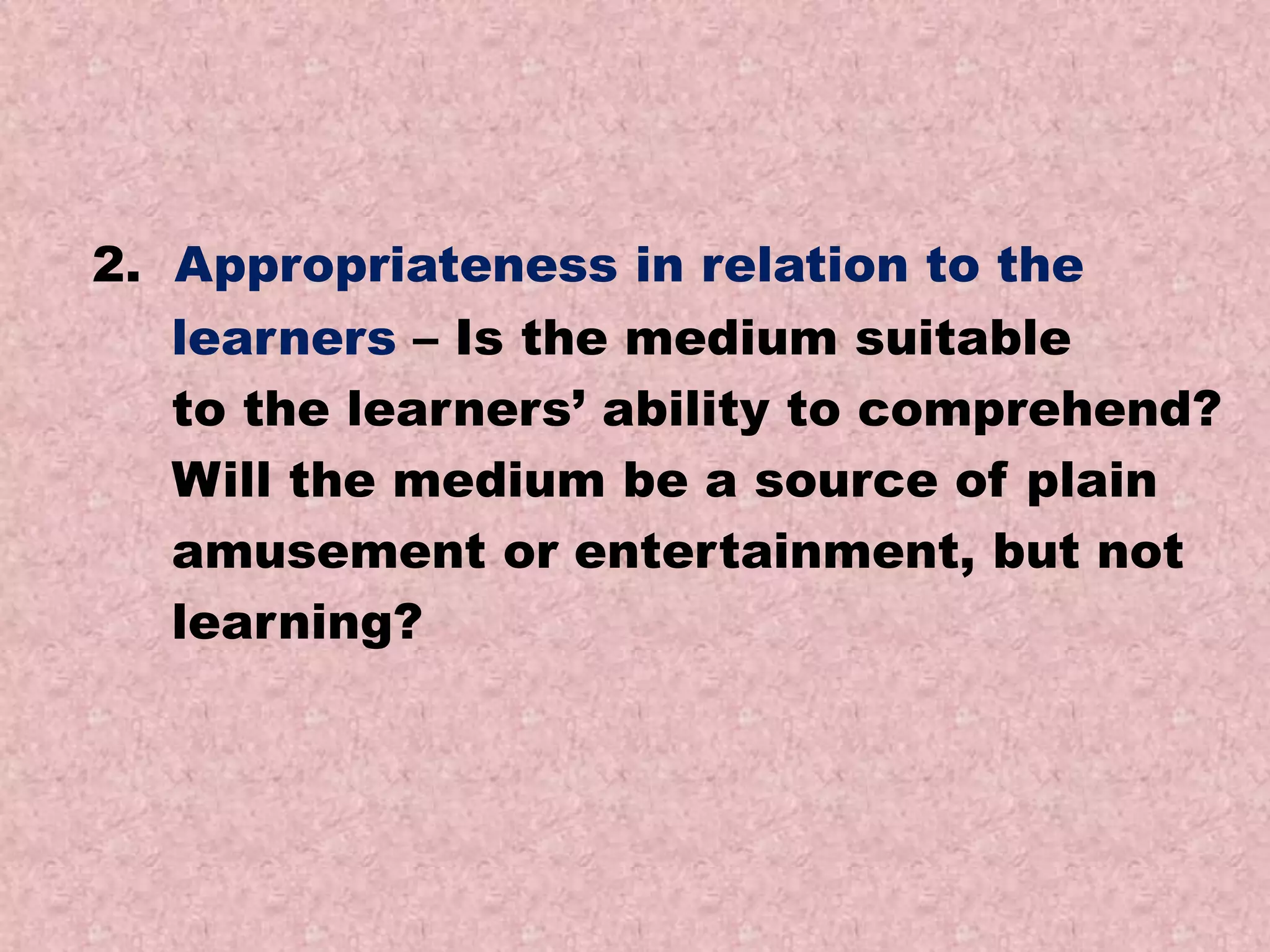
2. Appropriateness in relation to the
   learners – Is the medium suitable
   to the learners’ ability to comprehend?
   Will the medium be a source of plain
   amusement or entertainment, but not
   learning?
3. Activity / suitability – Will the chosen
   media fit the set instructional event,
   resulting in either information,
   motivation, or psychomotor display?
4. Objective-matching – Overall, does
   the medium help in achieving the
    learning-objective(s)?
The Role of Technology in Curriculum
Delivery


   Upgrading the quality of teaching-and-
    learning in schools
Increasing the capability of the teacher
   to effectively inculcate learning, and for
   students to gain mastery of lessons
   and courses
 Broadening the delivery of education
   outside schools through non-traditional
   approaches to formal and informal
   learning, such as Open Universities and
   lifelong learning to adult learners
 Revolutionizing the use of technology to
   boost educational paradigm shifts that
   give importance to student-centered
   and holistic learning

The role of technology in delivering the curriculum

  • 1.
    The Role ofTechnology in Delivering the Curriculum
  • 2.
    Types of instructionalmedia/technology Non-projected Media Projected Media Real objects Overhead transparencies Models Opaque projection Field trips Slides Kits Filmstrips Printed materials (books, Films worksheets) Video, VCD, DVD Visuals (drawings, Computer/multimedia photographs, graphs, presentations charts, posters) Visual boards (chalkboard, whiteboard, flannel board, etc.) Audio materials
  • 3.
    Factors for TechnologySelection 1. Practicality – Is the equipment (hardware) or already prepared lesson material (software) available? If not, what would be the cost in acquiring the equipment or producing the lesson in audial or visual form?
  • 4.
    2. Appropriateness inrelation to the learners – Is the medium suitable to the learners’ ability to comprehend? Will the medium be a source of plain amusement or entertainment, but not learning?
  • 5.
    3. Activity /suitability – Will the chosen media fit the set instructional event, resulting in either information, motivation, or psychomotor display?
  • 6.
    4. Objective-matching –Overall, does the medium help in achieving the learning-objective(s)?
  • 7.
    The Role ofTechnology in Curriculum Delivery  Upgrading the quality of teaching-and- learning in schools
  • 8.
    Increasing the capabilityof the teacher to effectively inculcate learning, and for students to gain mastery of lessons and courses
  • 9.
     Broadening thedelivery of education outside schools through non-traditional approaches to formal and informal learning, such as Open Universities and lifelong learning to adult learners
  • 10.
     Revolutionizing theuse of technology to boost educational paradigm shifts that give importance to student-centered and holistic learning