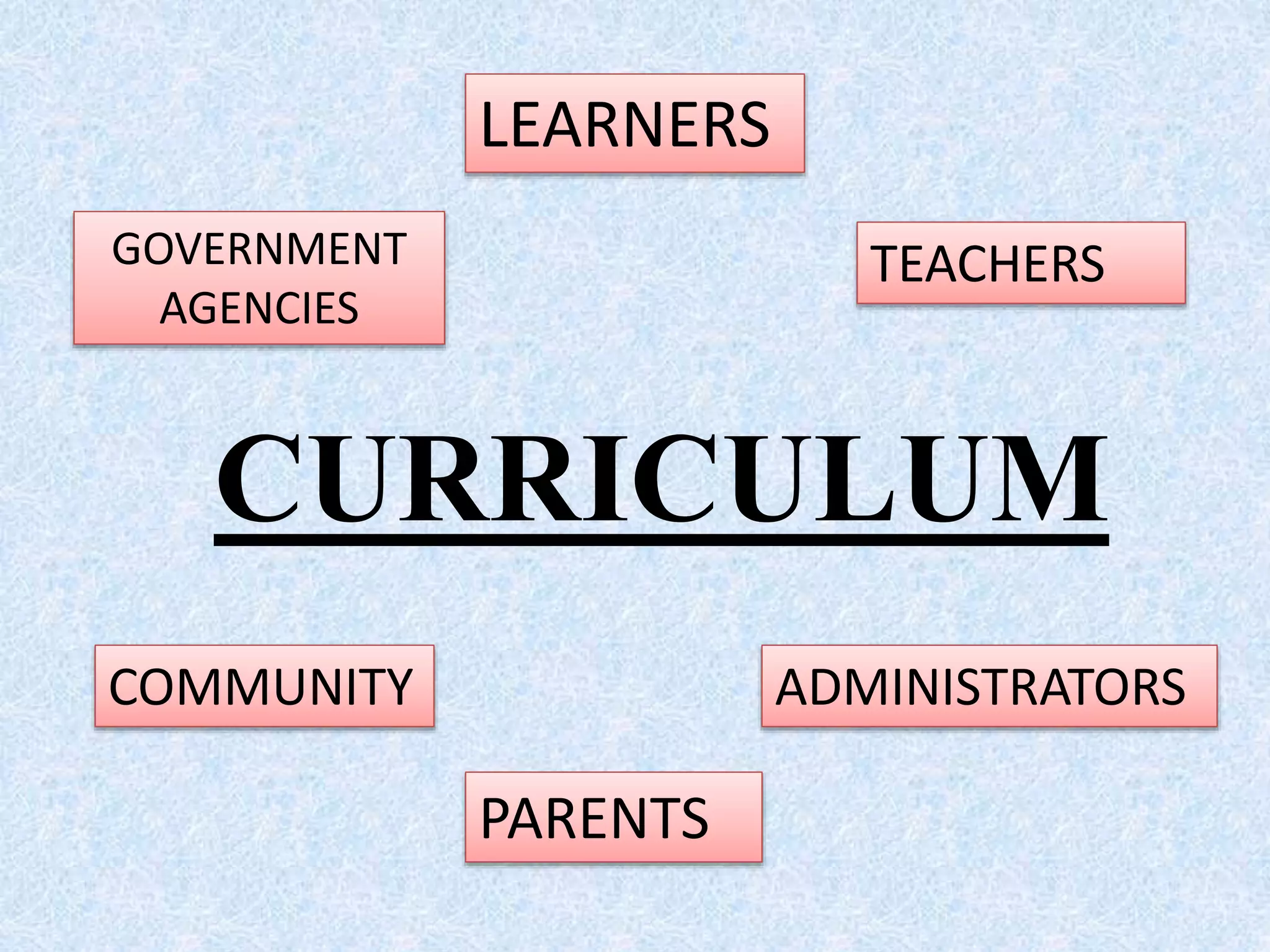
CURRICULUM
LEARNERS
TEACHERS
ADMINISTRATORS
PARENTS
COMMUNITY
GOVERNMENT
AGENCIES
THE ROLES OF
STAKEHOLDERS IN
CURRICULUM
IMPLEMENTATION
• Stakeholders are individuals
or institutions that are
interested in the school
curriculum.
• They give life to the
curriculum.
Stakeholders
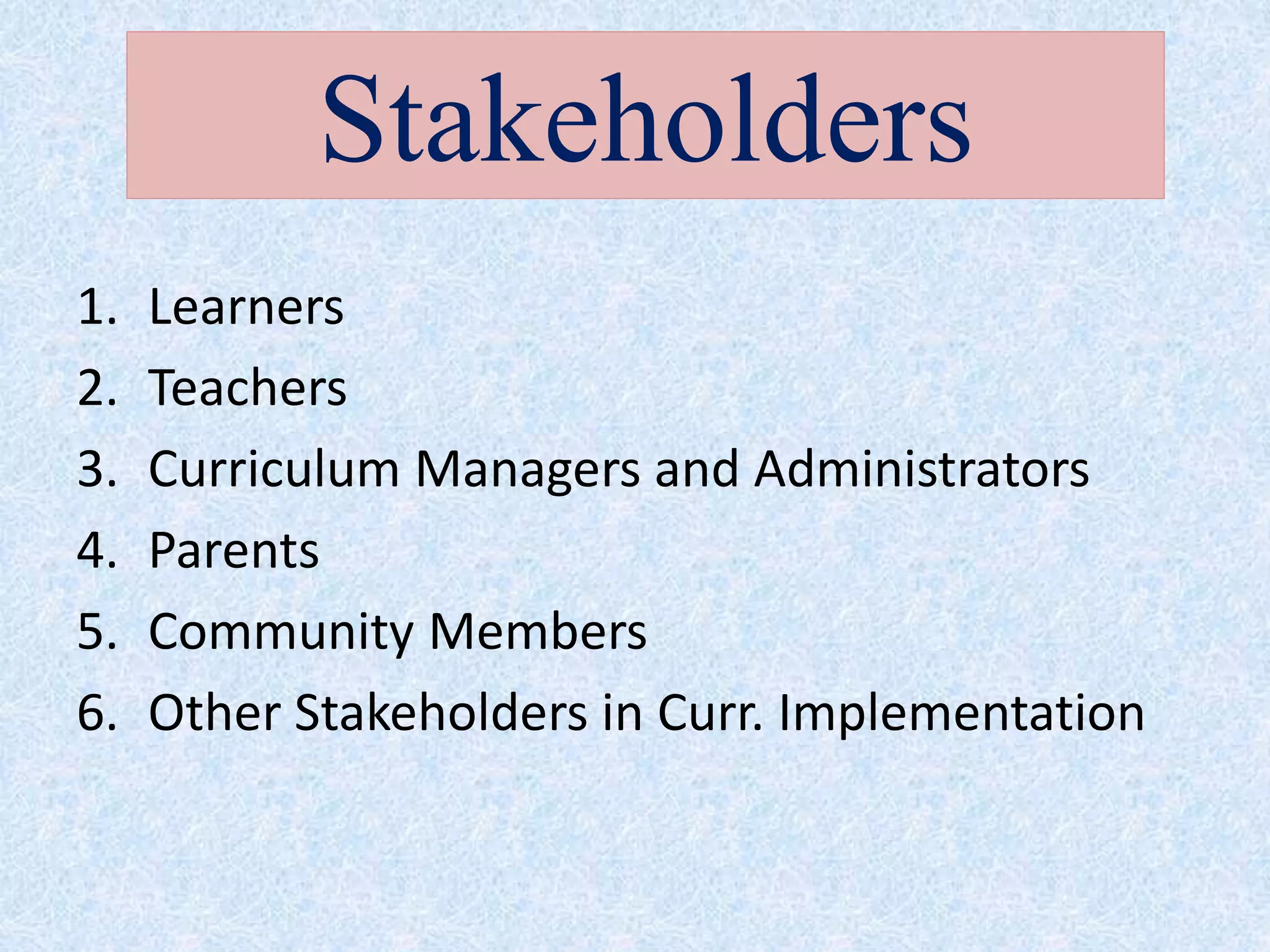
1. Learners
2. Teachers
3. Curriculum Managers and Administrators
4. Parents
5. Community Members
6. Other Stakeholders in Curr. Implementation
Stakeholders
LEARNERS
• Center of the curriculum
• the very reason a curriculum is developed
• They are the ones who are directly
influenced by it.
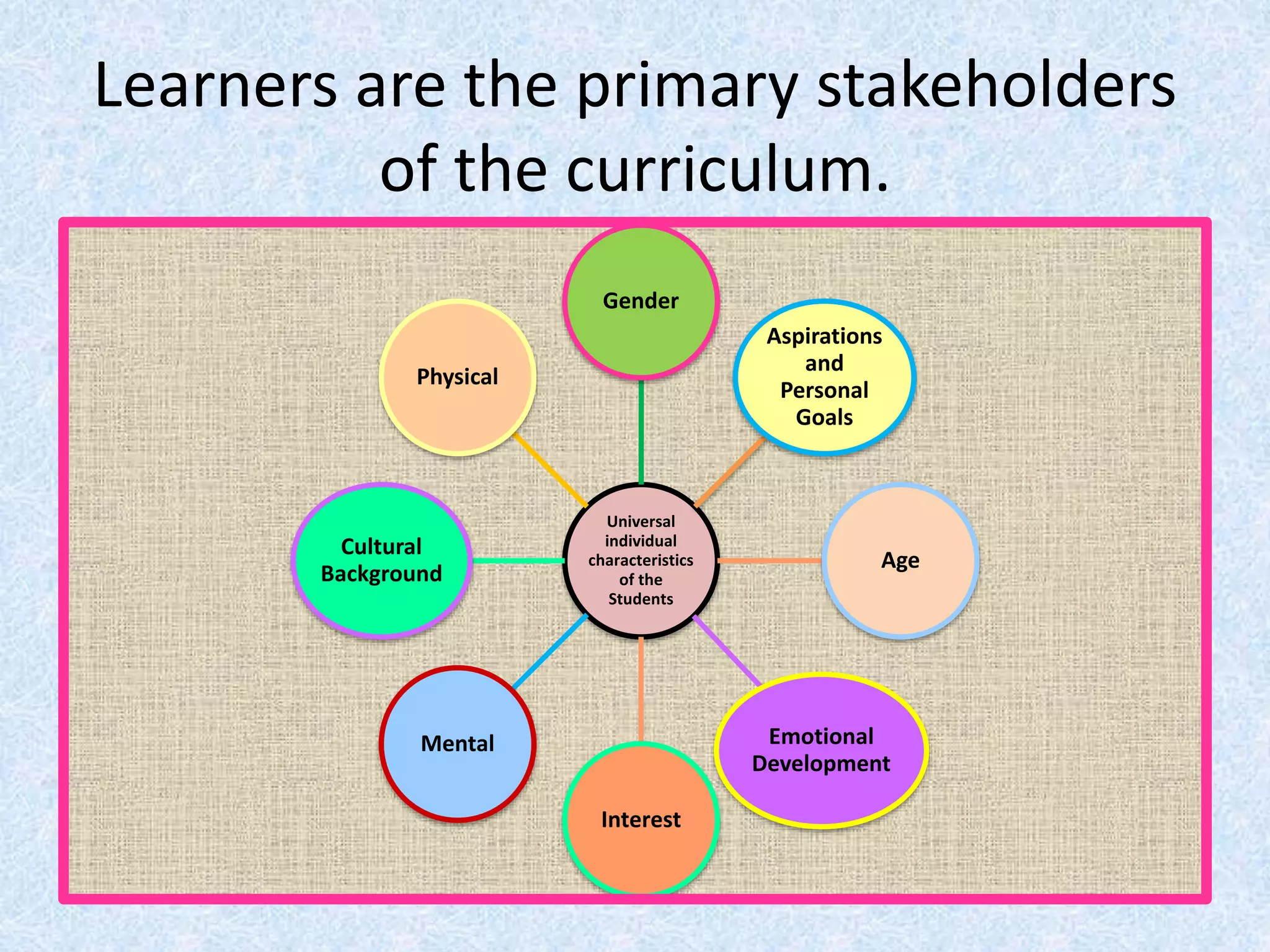
Learners are the primary stakeholders
of the curriculum.
Universal
individual
characteristics
of the
Students
Gender
Aspirations
and
Personal
Goals
Age
Emotional
Development
Interest
Mental
Cultural
Background
Physical
In curriculum
implementation, the
concluding question will
always be:
Has the learner
The success of the curriculum
can only be measured by the
extent of learning that the
learners have achieved.
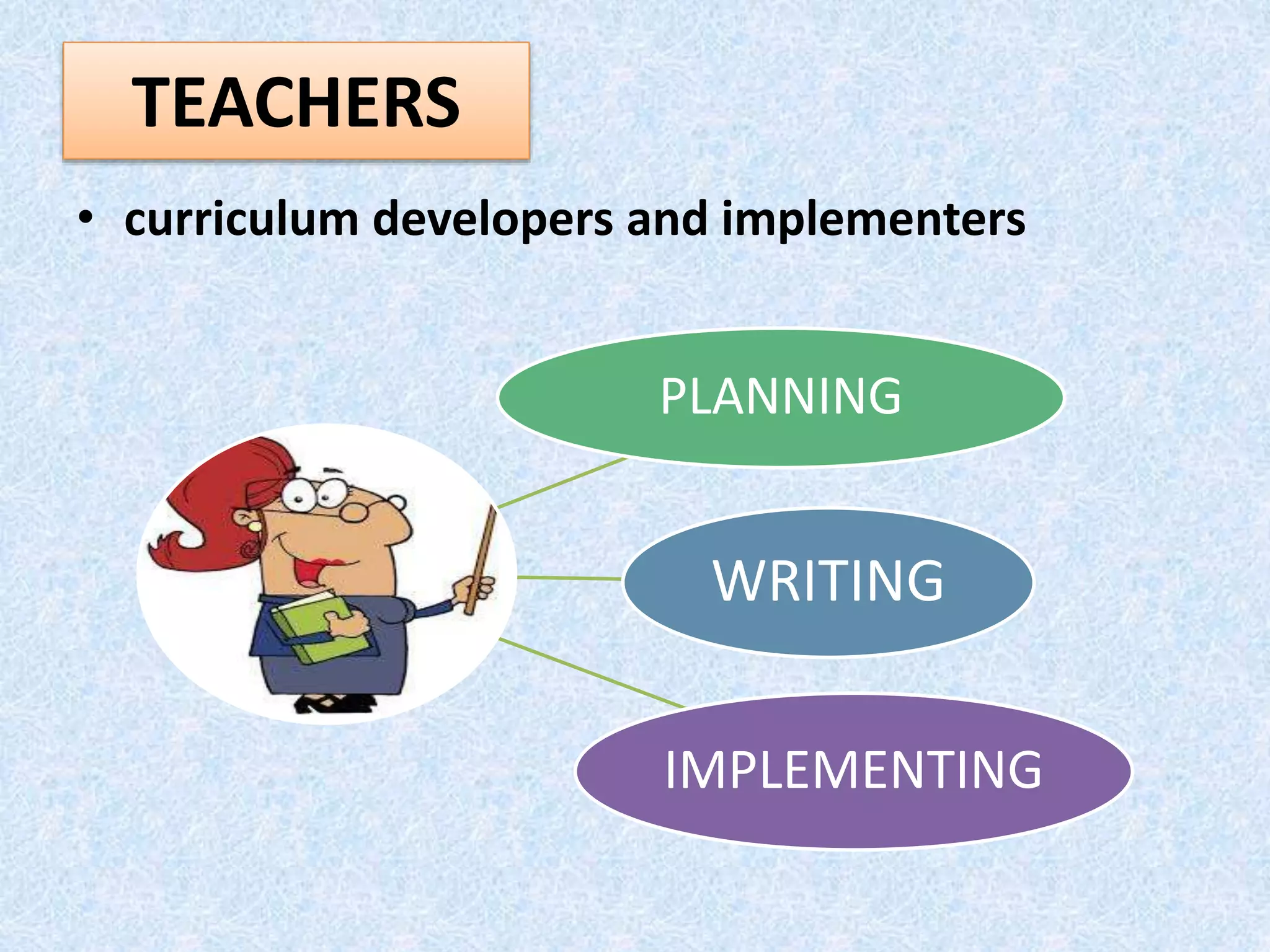
• curriculum developers and implementers
TEACHERS
PLANNING
WRITING
IMPLEMENTING
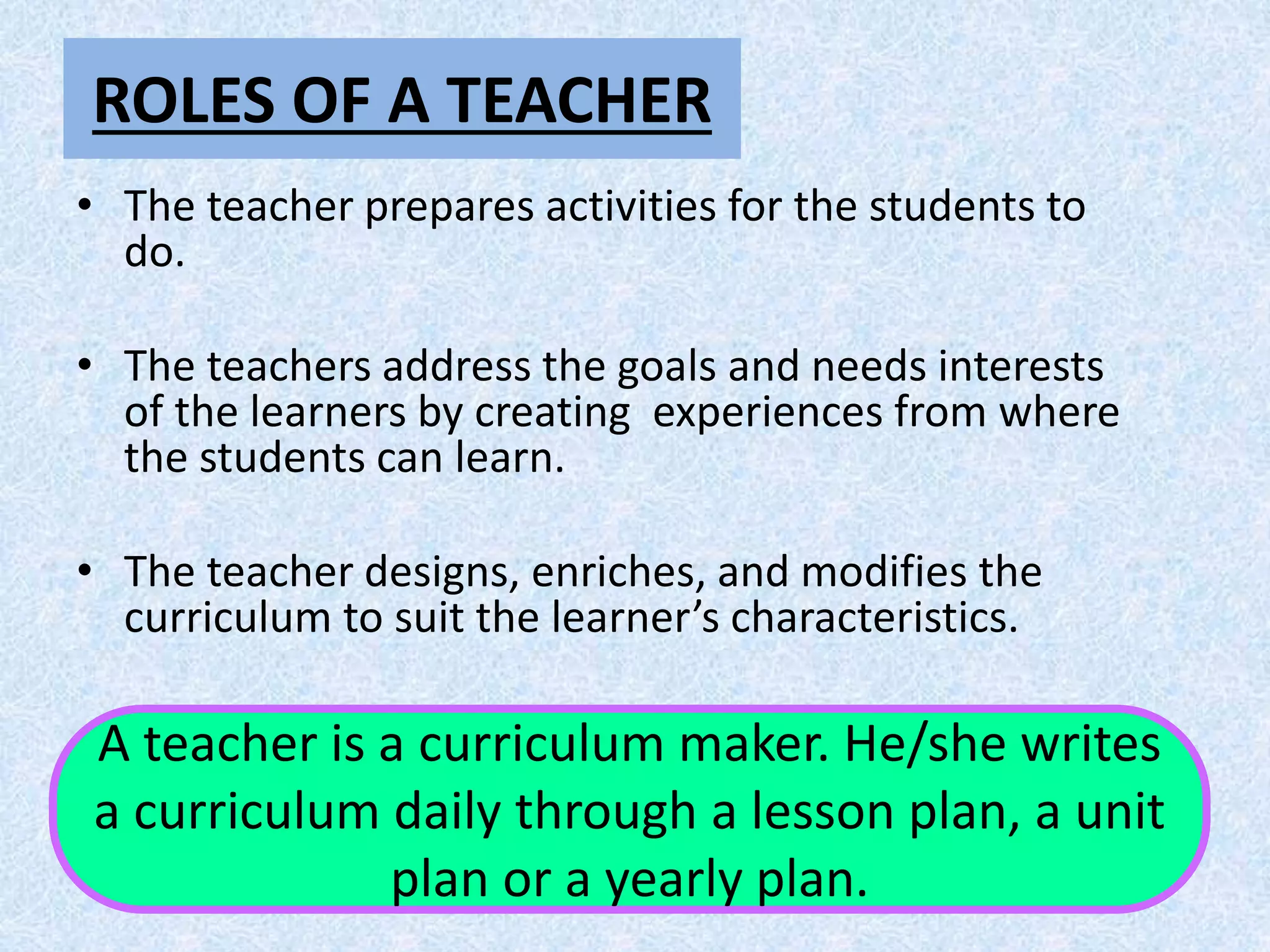
ROLES OF A TEACHER
• The teacher prepares activities for the students to
do.
• The teachers address the goals and needs interests
of the learners by creating experiences from where
the students can learn.
• The teacher designs, enriches, and modifies the
curriculum to suit the learner’s characteristics.
A teacher is a curriculum maker. He/she writes
a curriculum daily through a lesson plan, a unit
plan or a yearly plan.
A developed curriculum remains
inactive, if it is not implemented.
…teacher role’s shifts from a
developer to an implementer.
• Doing implies guiding, facilitating and
directing activities which will be done by the
students.
• The teachers’ role as an implementer is very
crucial. Oftentimes, unsuccessful implementation
of the curriculum becomes the root of
educational failure, thus some would say that
the root of the educational problem is the teacher.
• Although educational theorist and
practitioners are giving value the idea of
independent learning and learning how to
learn, the role of the teacher in curriculum
implementation has never diminished.
• No technology can ever replace a teacher, it
will only support the multifaceted role of the
teacher.
In a school organization, there is always a
curriculum manager or school
administrator.
In fact, for school principals, one of their
functions is being a curriculum manager.
CURRICULUM MANAGERS AND ADMINISTRATORS
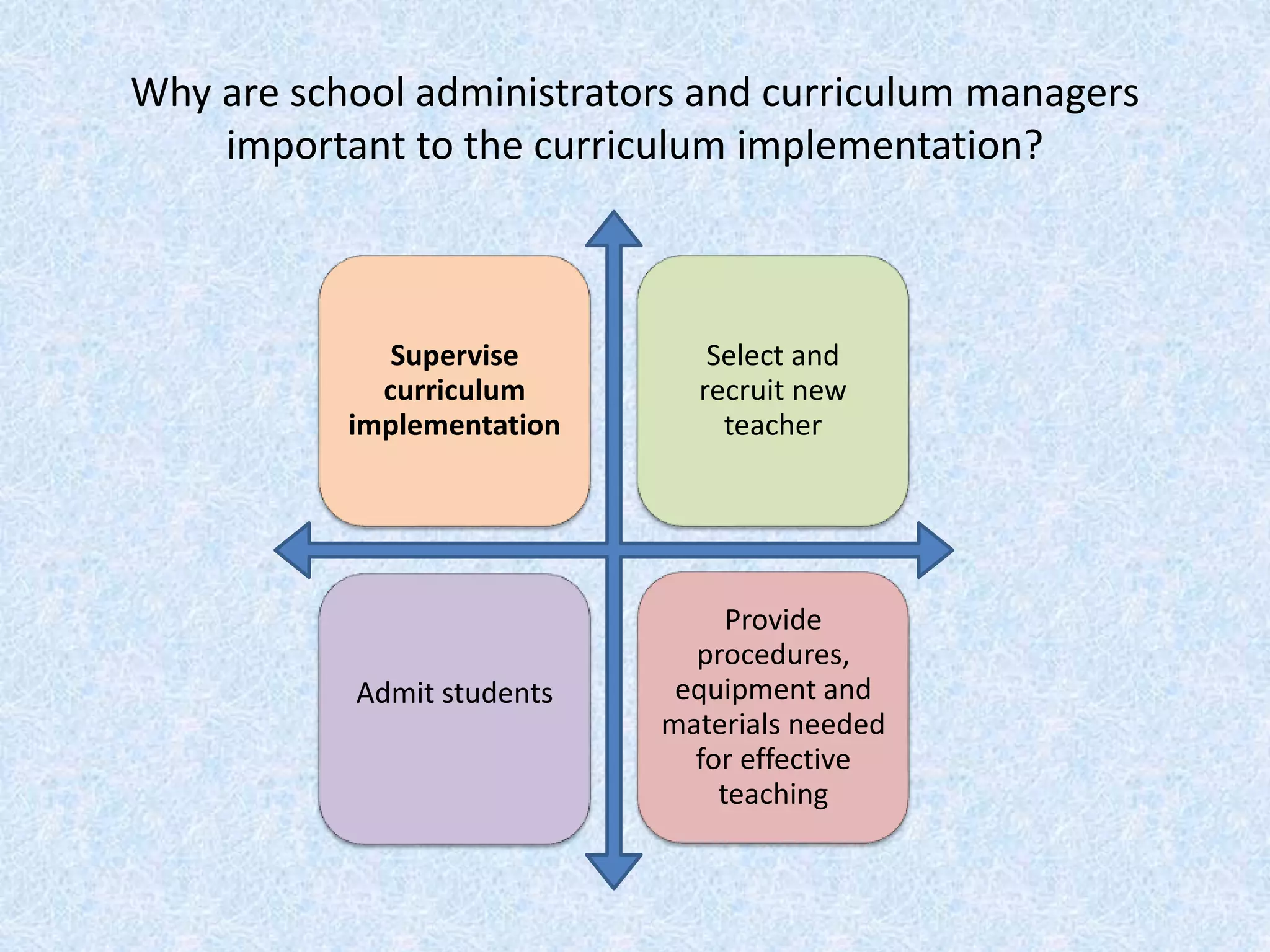
Why are school administrators and curriculum managers
important to the curriculum implementation?
Supervise
curriculum
implementation
Select and
recruit new
teacher
Admit students
Provide
procedures,
equipment and
materials needed
for effective
teaching
‘‘ My child and my money go to this school.’’
• Supporters of the curriculum
PARENTS
How do the parents shape the curriculum and why are
they consider as stakeholders?
A. Effective parental involvement in school affairs may be
linked to parent educational programs which is central
to high quality educational experiences of the children.
B. The parent’s involvement extends from the confine of
the school to the homes.
C. In most schools the Parents Association is organized
• success in the implementation of the curriculum
requires resources.
• Respected community members maybe included in
school boards
• Some can become resource speakers.
• They can provide local and indigenous knowledge in
school curriculum
COMMUNITY MEMBERS
• Professional organizations have shown great influence in
school curriculum.
• They are asked by curriculum specialists to contribute in
curriculum review since they have a voice in the
licensure examinations, curriculum enhancement and
many more.
• On the other hand, since all schools in the country, are
under the regulation of the government as provided for
in the Philippine Constitution, then the government has
a great stake in curriculum implementation.
OTHER STAKEHOLDERS
The government is represented by the:
1.Department of Education (DepEd) for basic
education curricula.
2.Commission on Higher Education (CHED) for
the tertiary and graduate education.
3.The Professional Regulations Commission
(PRC).
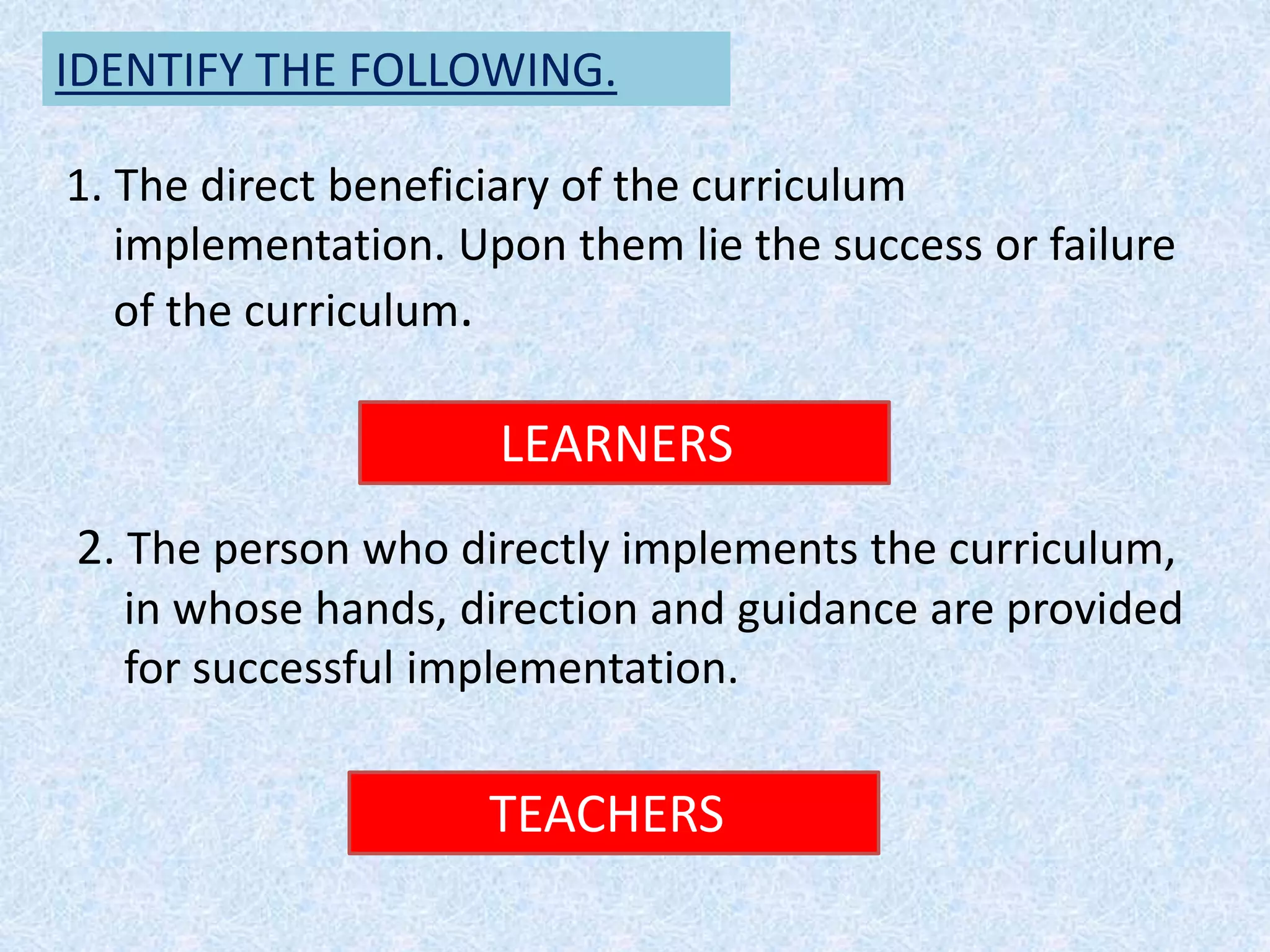
IDENTIFY THE FOLLOWING.
1. The direct beneficiary of the curriculum
implementation. Upon them lie the success or failure
of the curriculum.
LEARNERS
2. The person who directly implements the curriculum,
in whose hands, direction and guidance are provided
for successful implementation.
TEACHERS
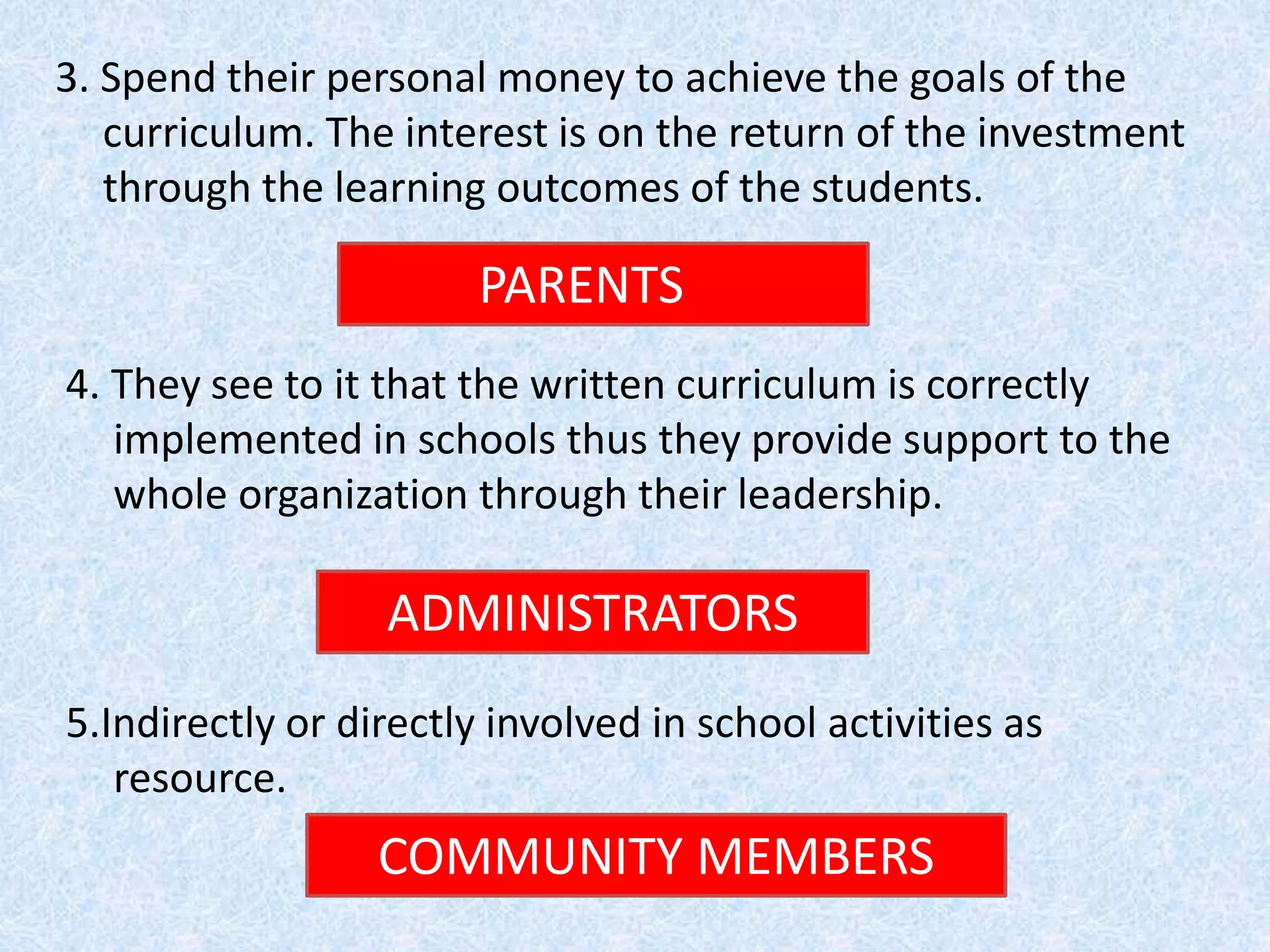
3. Spend their personal money to achieve the goals of the
curriculum. The interest is on the return of the investment
through the learning outcomes of the students.
PARENTS
4. They see to it that the written curriculum is correctly
implemented in schools thus they provide support to the
whole organization through their leadership.
ADMINISTRATORS
5.Indirectly or directly involved in school activities as
resource.
COMMUNITY MEMBERS
Thank
you…

Role of Stakeholders in curriculum implementation

  • 1.
  • 2.
    THE ROLES OF STAKEHOLDERSIN CURRICULUM IMPLEMENTATION
  • 3.
    • Stakeholders areindividuals or institutions that are interested in the school curriculum. • They give life to the curriculum. Stakeholders
  • 4.
    1. Learners 2. Teachers 3.Curriculum Managers and Administrators 4. Parents 5. Community Members 6. Other Stakeholders in Curr. Implementation Stakeholders
  • 5.
    LEARNERS • Center ofthe curriculum • the very reason a curriculum is developed • They are the ones who are directly influenced by it.
  • 6.
    Learners are theprimary stakeholders of the curriculum. Universal individual characteristics of the Students Gender Aspirations and Personal Goals Age Emotional Development Interest Mental Cultural Background Physical
  • 7.
    In curriculum implementation, the concludingquestion will always be: Has the learner
  • 8.
    The success ofthe curriculum can only be measured by the extent of learning that the learners have achieved.
  • 9.
    • curriculum developersand implementers TEACHERS PLANNING WRITING IMPLEMENTING
  • 10.
    ROLES OF ATEACHER • The teacher prepares activities for the students to do. • The teachers address the goals and needs interests of the learners by creating experiences from where the students can learn. • The teacher designs, enriches, and modifies the curriculum to suit the learner’s characteristics. A teacher is a curriculum maker. He/she writes a curriculum daily through a lesson plan, a unit plan or a yearly plan.
  • 11.
    A developed curriculumremains inactive, if it is not implemented. …teacher role’s shifts from a developer to an implementer.
  • 12.
    • Doing impliesguiding, facilitating and directing activities which will be done by the students. • The teachers’ role as an implementer is very crucial. Oftentimes, unsuccessful implementation of the curriculum becomes the root of educational failure, thus some would say that the root of the educational problem is the teacher.
  • 13.
    • Although educationaltheorist and practitioners are giving value the idea of independent learning and learning how to learn, the role of the teacher in curriculum implementation has never diminished. • No technology can ever replace a teacher, it will only support the multifaceted role of the teacher.
  • 14.
    In a schoolorganization, there is always a curriculum manager or school administrator. In fact, for school principals, one of their functions is being a curriculum manager. CURRICULUM MANAGERS AND ADMINISTRATORS
  • 15.
    Why are schooladministrators and curriculum managers important to the curriculum implementation? Supervise curriculum implementation Select and recruit new teacher Admit students Provide procedures, equipment and materials needed for effective teaching
  • 16.
    ‘‘ My childand my money go to this school.’’ • Supporters of the curriculum PARENTS
  • 17.
    How do theparents shape the curriculum and why are they consider as stakeholders? A. Effective parental involvement in school affairs may be linked to parent educational programs which is central to high quality educational experiences of the children. B. The parent’s involvement extends from the confine of the school to the homes. C. In most schools the Parents Association is organized
  • 18.
    • success inthe implementation of the curriculum requires resources. • Respected community members maybe included in school boards • Some can become resource speakers. • They can provide local and indigenous knowledge in school curriculum COMMUNITY MEMBERS
  • 19.
    • Professional organizationshave shown great influence in school curriculum. • They are asked by curriculum specialists to contribute in curriculum review since they have a voice in the licensure examinations, curriculum enhancement and many more. • On the other hand, since all schools in the country, are under the regulation of the government as provided for in the Philippine Constitution, then the government has a great stake in curriculum implementation. OTHER STAKEHOLDERS
  • 20.
    The government isrepresented by the: 1.Department of Education (DepEd) for basic education curricula. 2.Commission on Higher Education (CHED) for the tertiary and graduate education. 3.The Professional Regulations Commission (PRC).
  • 22.
    IDENTIFY THE FOLLOWING. 1.The direct beneficiary of the curriculum implementation. Upon them lie the success or failure of the curriculum. LEARNERS 2. The person who directly implements the curriculum, in whose hands, direction and guidance are provided for successful implementation. TEACHERS
  • 23.
    3. Spend theirpersonal money to achieve the goals of the curriculum. The interest is on the return of the investment through the learning outcomes of the students. PARENTS 4. They see to it that the written curriculum is correctly implemented in schools thus they provide support to the whole organization through their leadership. ADMINISTRATORS 5.Indirectly or directly involved in school activities as resource. COMMUNITY MEMBERS
  • 24.