 In delivering the curriculum the role of
technology is very important.
 Right at the planning phase of any
instruction, aside from formulating the
objectives and among other considerations,
there is a need to identify what instructional
media are to be utilized in the
implementation.
THE ROLE OF TECHNOLOGY IN
DELIVERING CURRICULUM
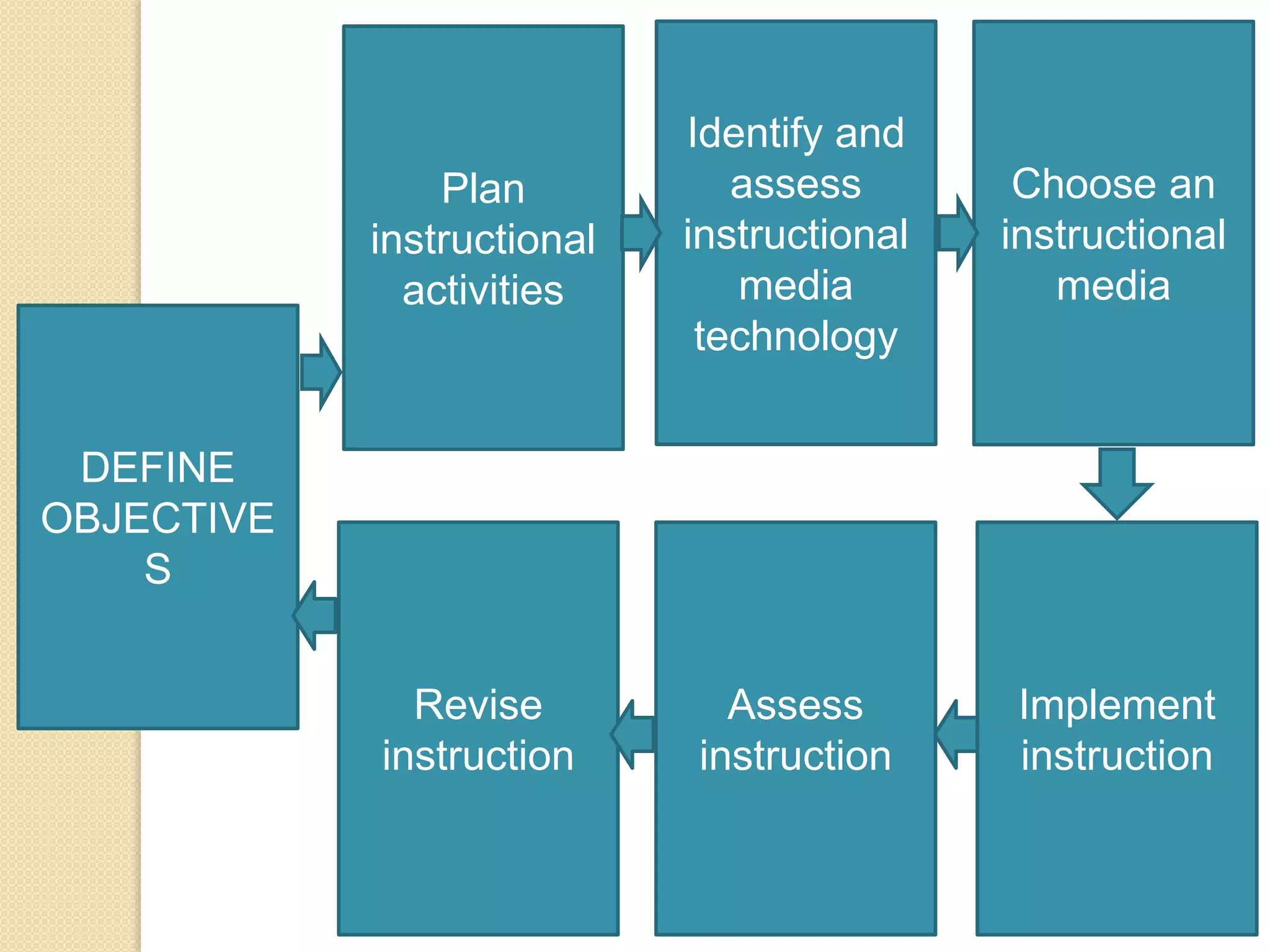
SYSTEMATIC
APPROACH TO
INSTRUCTIONAL
PLANNING
DEFINE
OBJECTIVE
S
Plan
instructional
activities
Identify and
assess
instructional
media
technology
Choose an
instructional
media
Revise
instruction
Assess
instruction
Implement
instruction
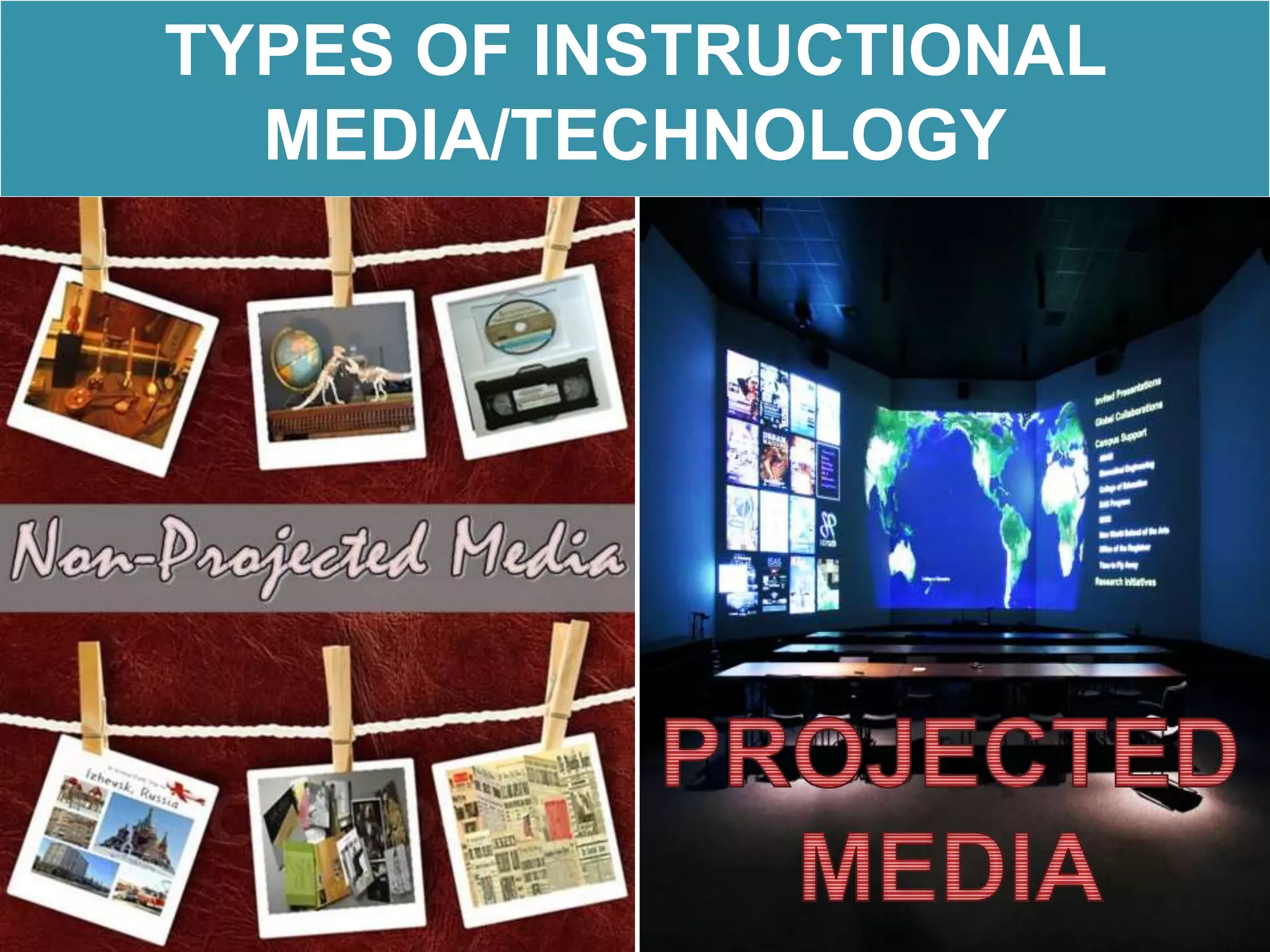
TYPES OF INSTRUCTIONAL
MEDIA/TECHNOLOGY
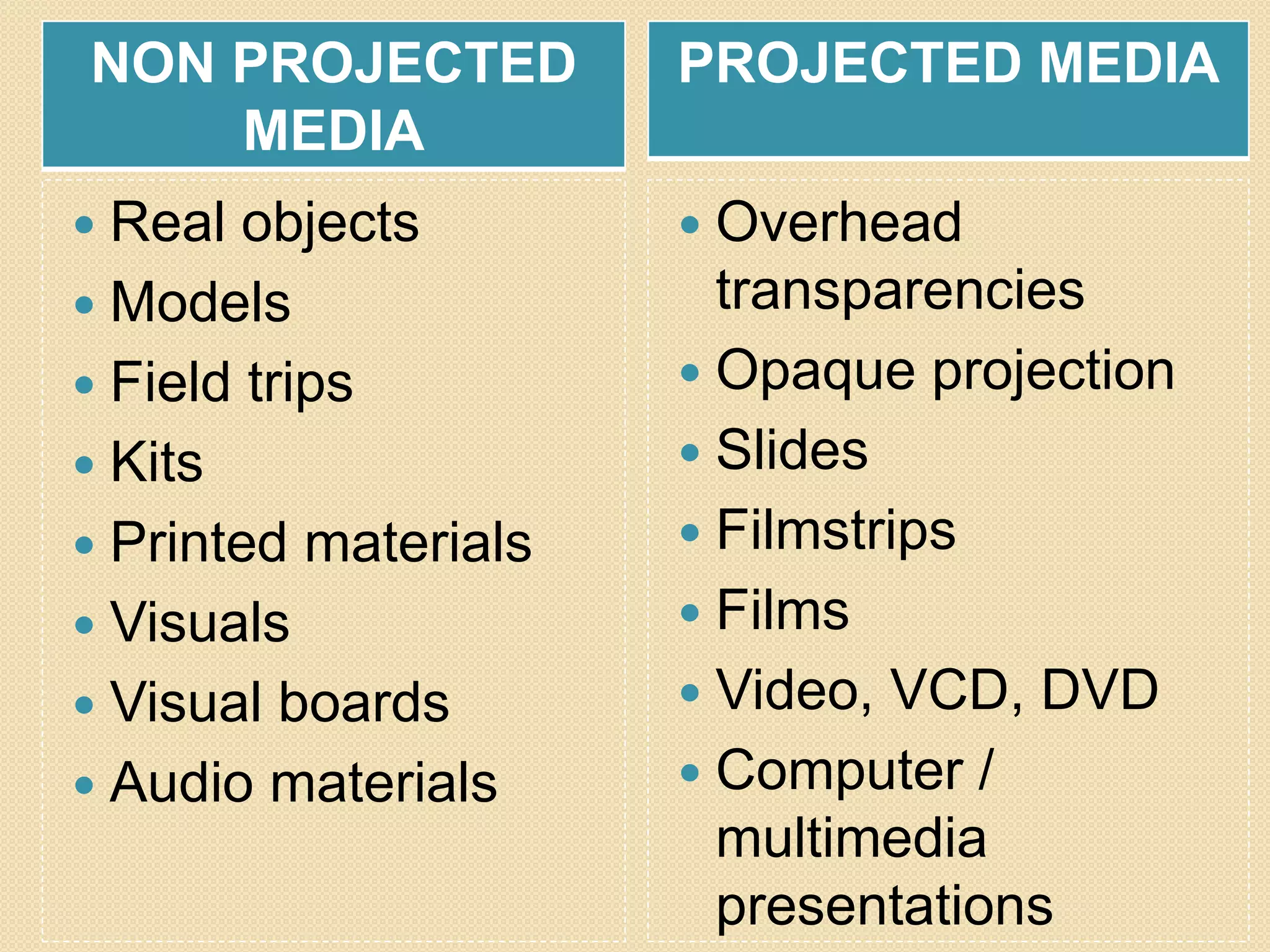
 Real objects
 Models
 Field trips
 Kits
 Printed materials
 Visuals
 Visual boards
 Audio materials
 Overhead
transparencies
 Opaque projection
 Slides
 Filmstrips
 Films
 Video, VCD, DVD
 Computer /
multimedia
presentations
NON PROJECTED
MEDIA
PROJECTED MEDIA
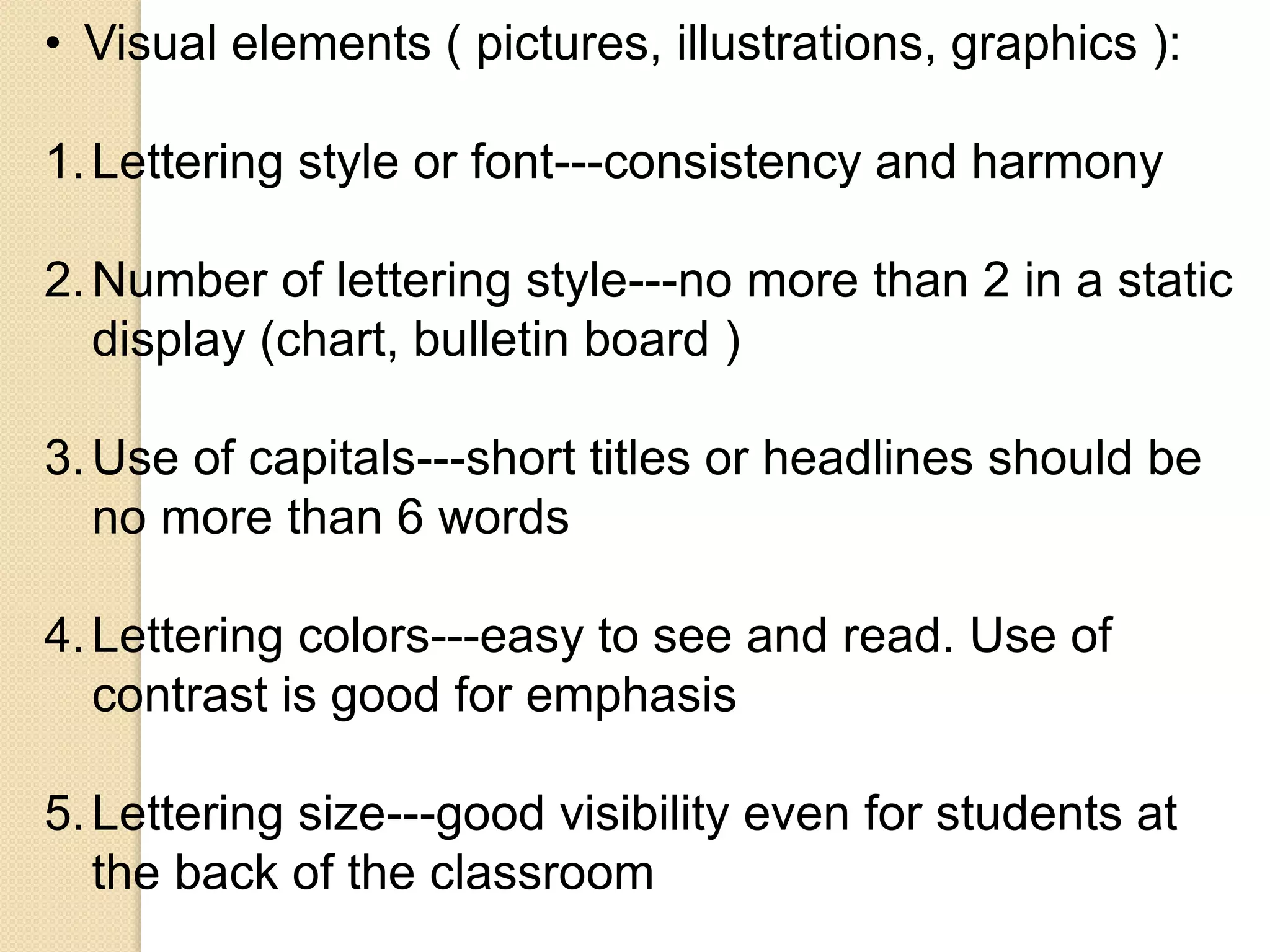
• Visual elements ( pictures, illustrations, graphics ):
1.Lettering style or font---consistency and harmony
2.Number of lettering style---no more than 2 in a static
display (chart, bulletin board )
3.Use of capitals---short titles or headlines should be
no more than 6 words
4.Lettering colors---easy to see and read. Use of
contrast is good for emphasis
5.Lettering size---good visibility even for students at
the back of the classroom
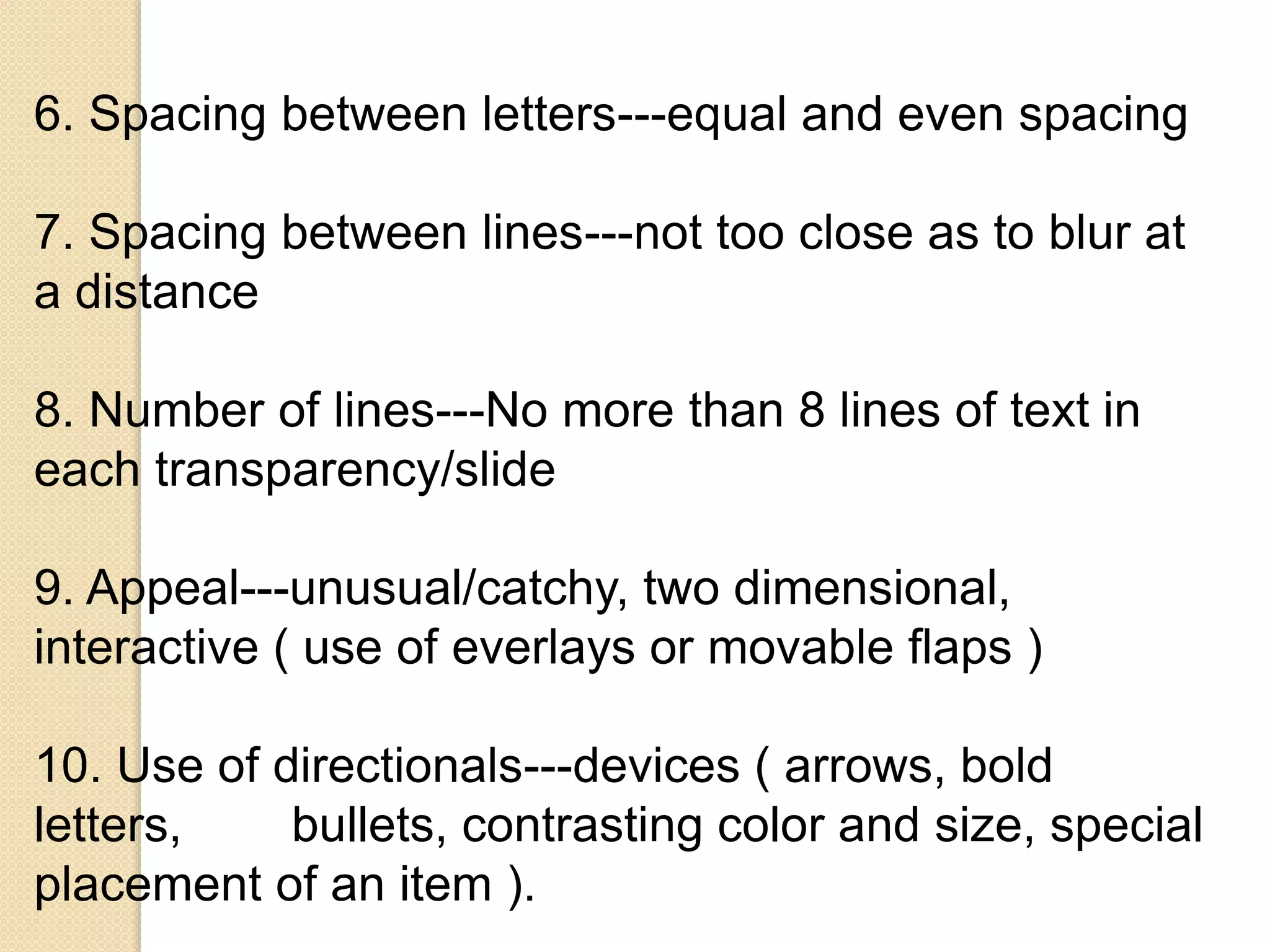
6. Spacing between letters---equal and even spacing
7. Spacing between lines---not too close as to blur at
a distance
8. Number of lines---No more than 8 lines of text in
each transparency/slide
9. Appeal---unusual/catchy, two dimensional,
interactive ( use of everlays or movable flaps )
10. Use of directionals---devices ( arrows, bold
letters, bullets, contrasting color and size, special
placement of an item ).
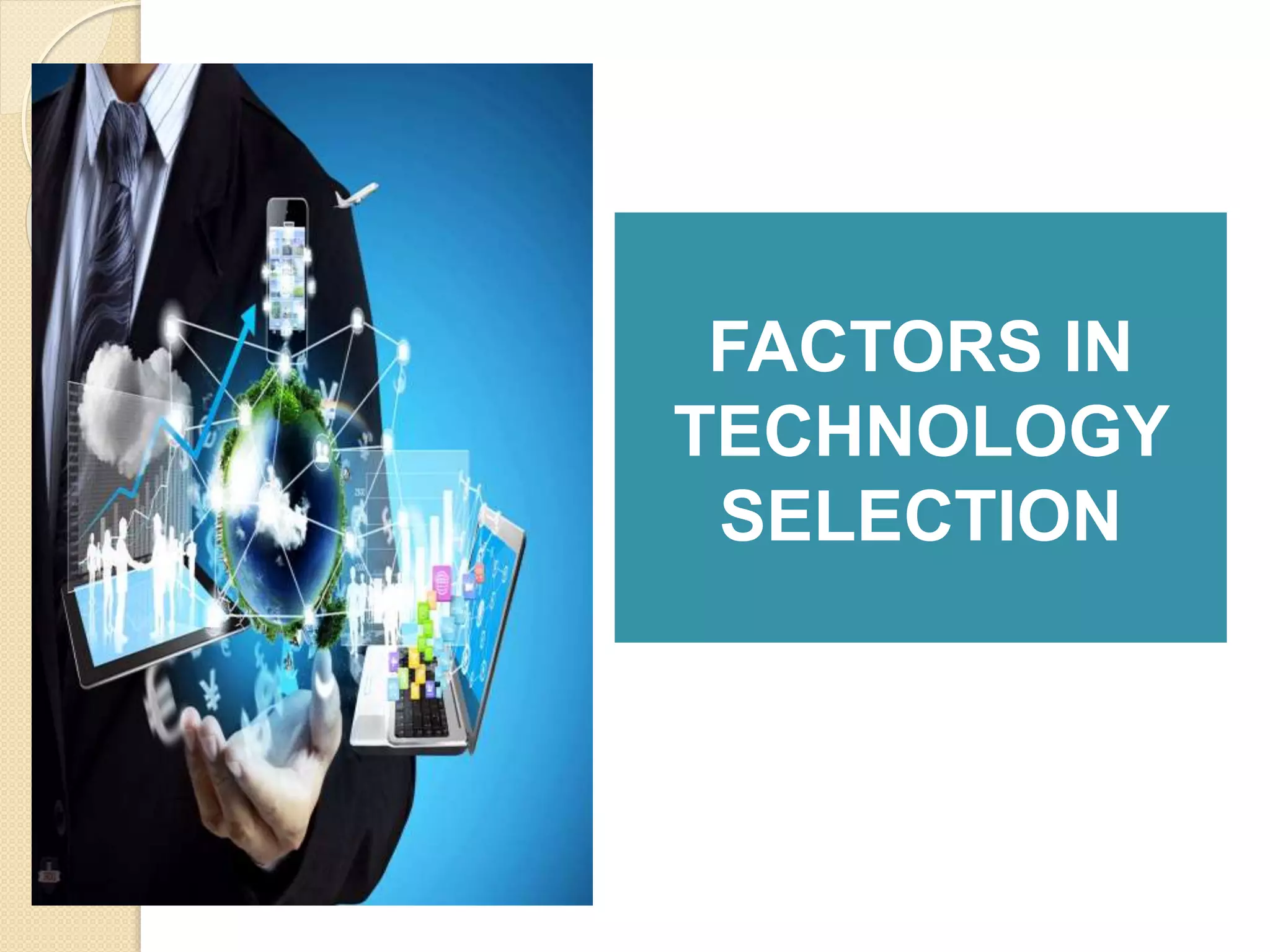
FACTORS IN
TECHNOLOGY
SELECTION
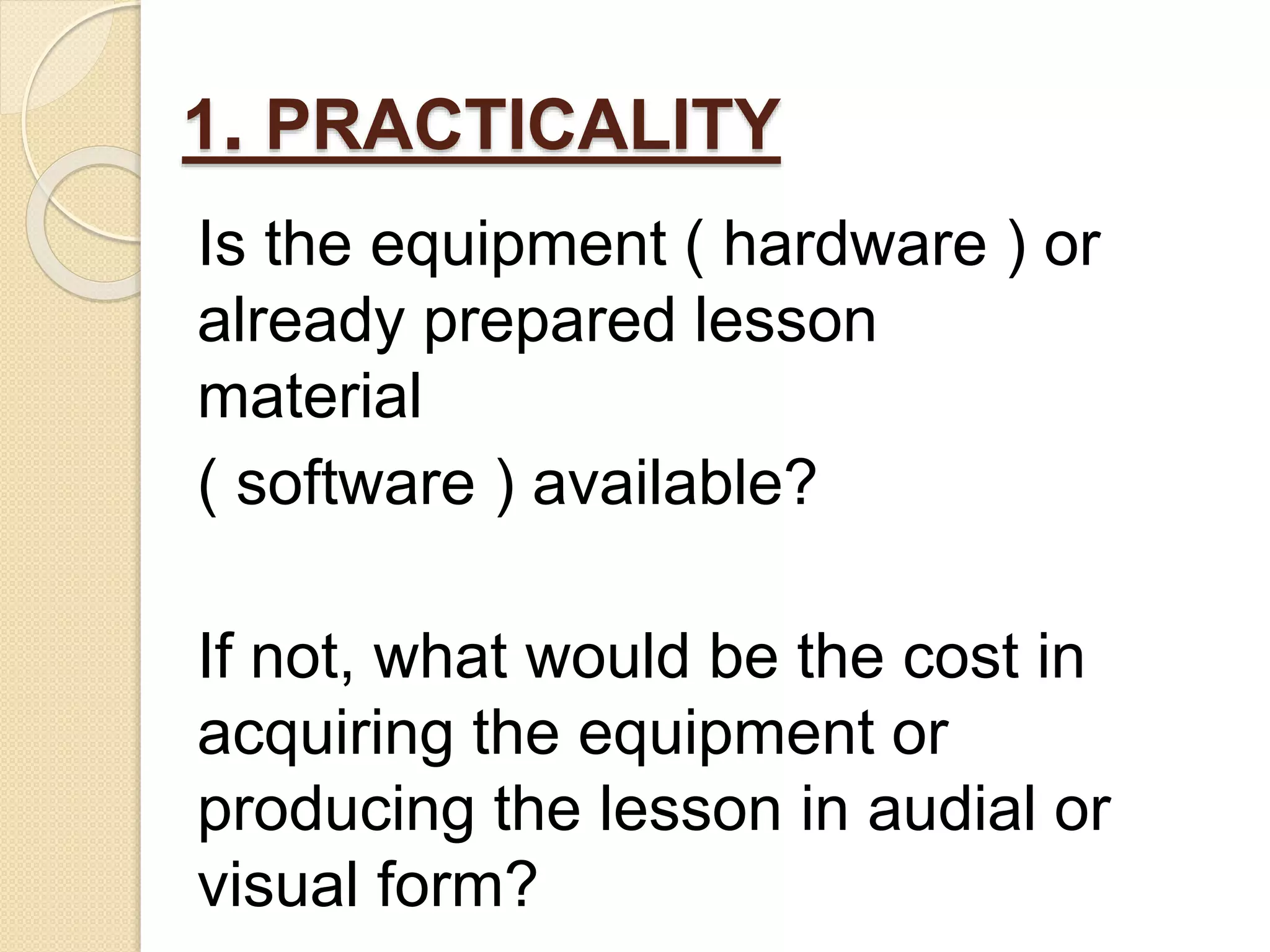
1. PRACTICALITY
Is the equipment ( hardware ) or
already prepared lesson
material
( software ) available?
If not, what would be the cost in
acquiring the equipment or
producing the lesson in audial or
visual form?
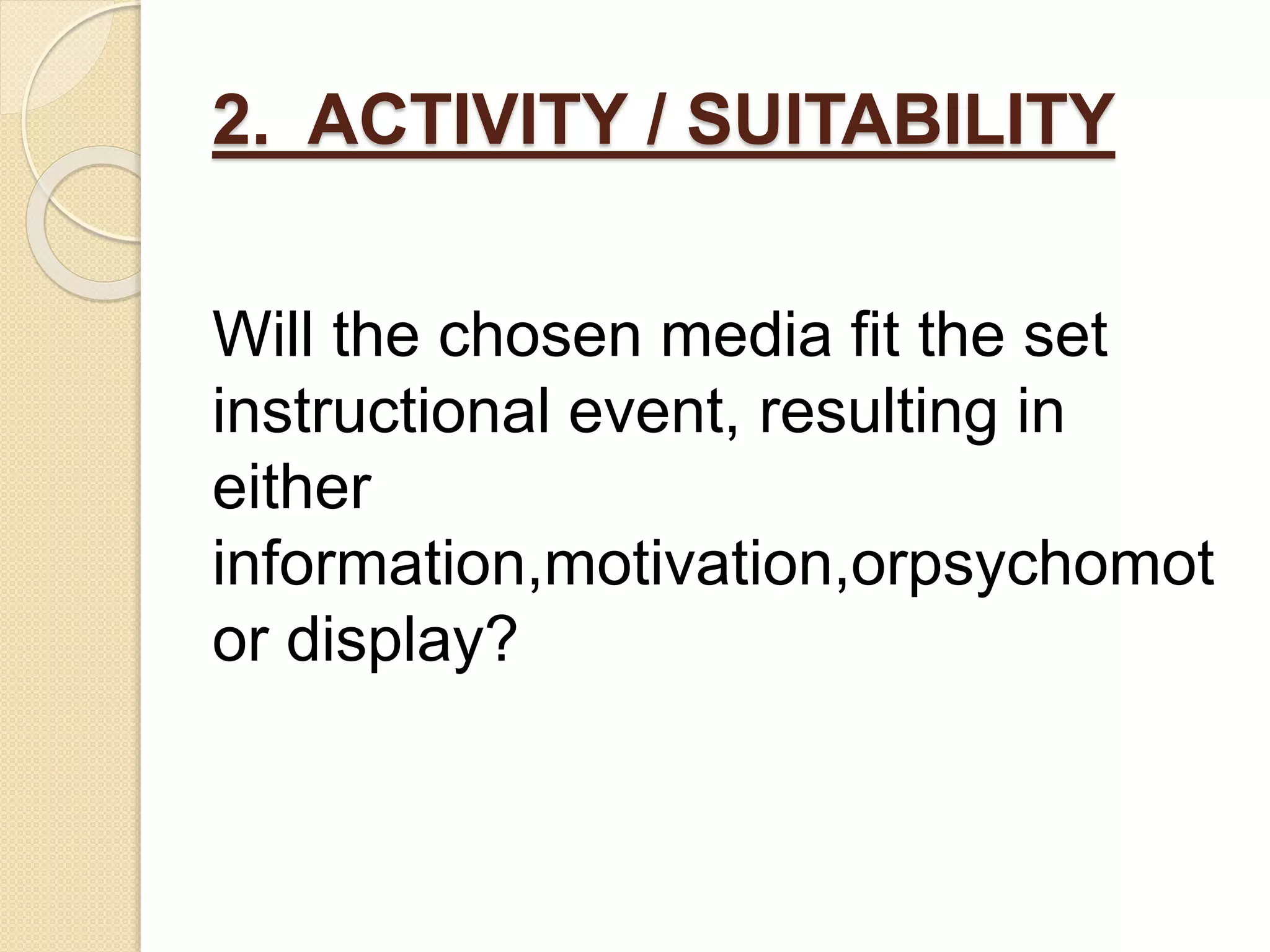
2. ACTIVITY / SUITABILITY
Will the chosen media fit the set
instructional event, resulting in
either
information,motivation,orpsychomot
or display?
3. APPROPRIATNESS IN
RELATION TO THE
LEARNERS
Is the medium suitable for the
learners’ ability to comprehend?
Will the medium be a source of
plain amusement or entertainment,
but not learning?
4. OBJECTIVE-MATCHING
Overall, does the medium help in
achieving the learners objective (s)?
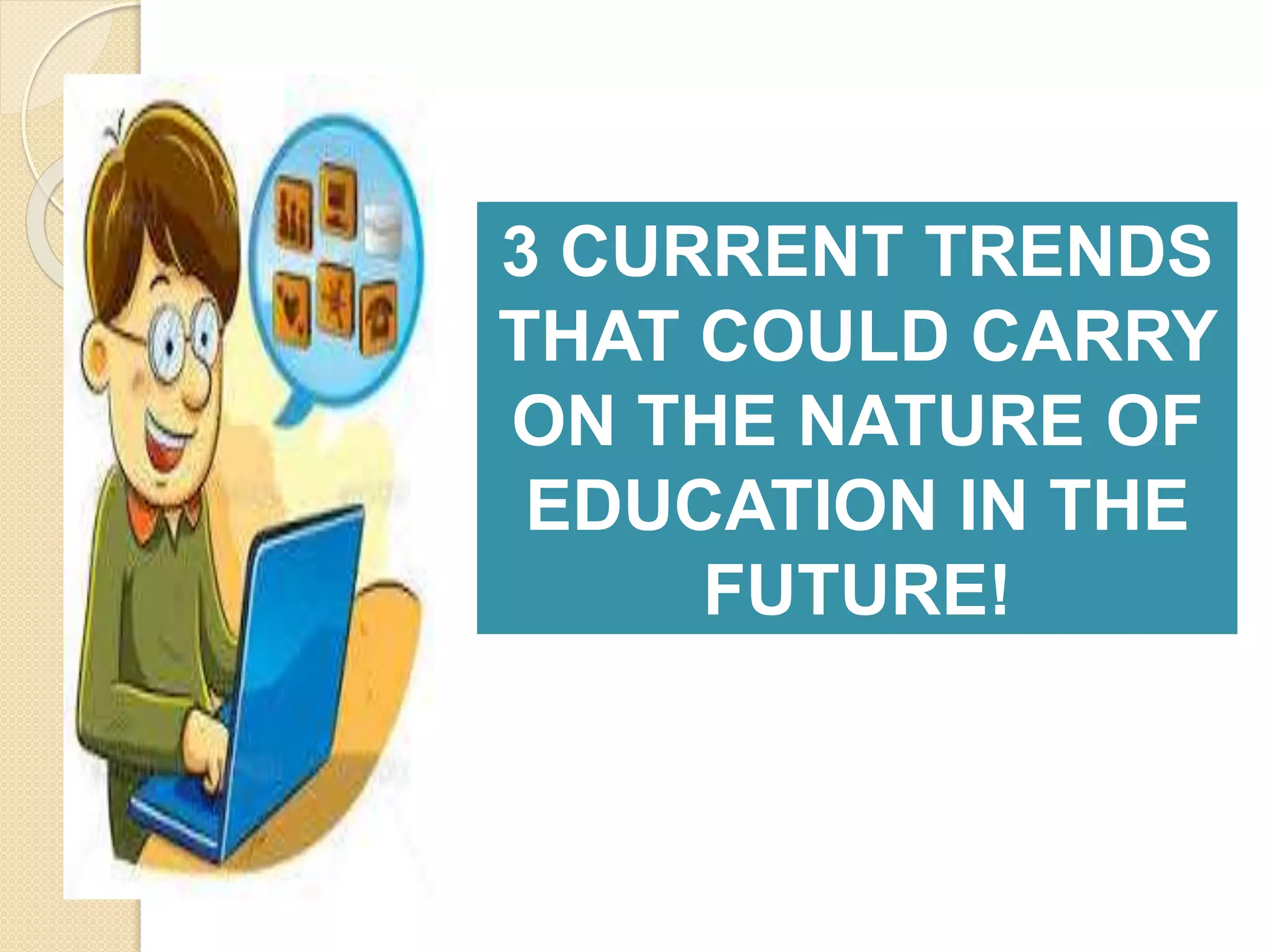
3 CURRENT TRENDS
THAT COULD CARRY
ON THE NATURE OF
EDUCATION IN THE
FUTURE!
1.The first trend is the paradigm shift from the
teacher centered to student-centered
approach to learning.
2. The second is the broadening realization that
education is not simply a delivery of facts and
information, but an educative process of
cultivating the cognitive, affective,
psychomotor, and much more the
contemplative intelligence of the learners of a
new age.
3. Is the increase in the use of new information
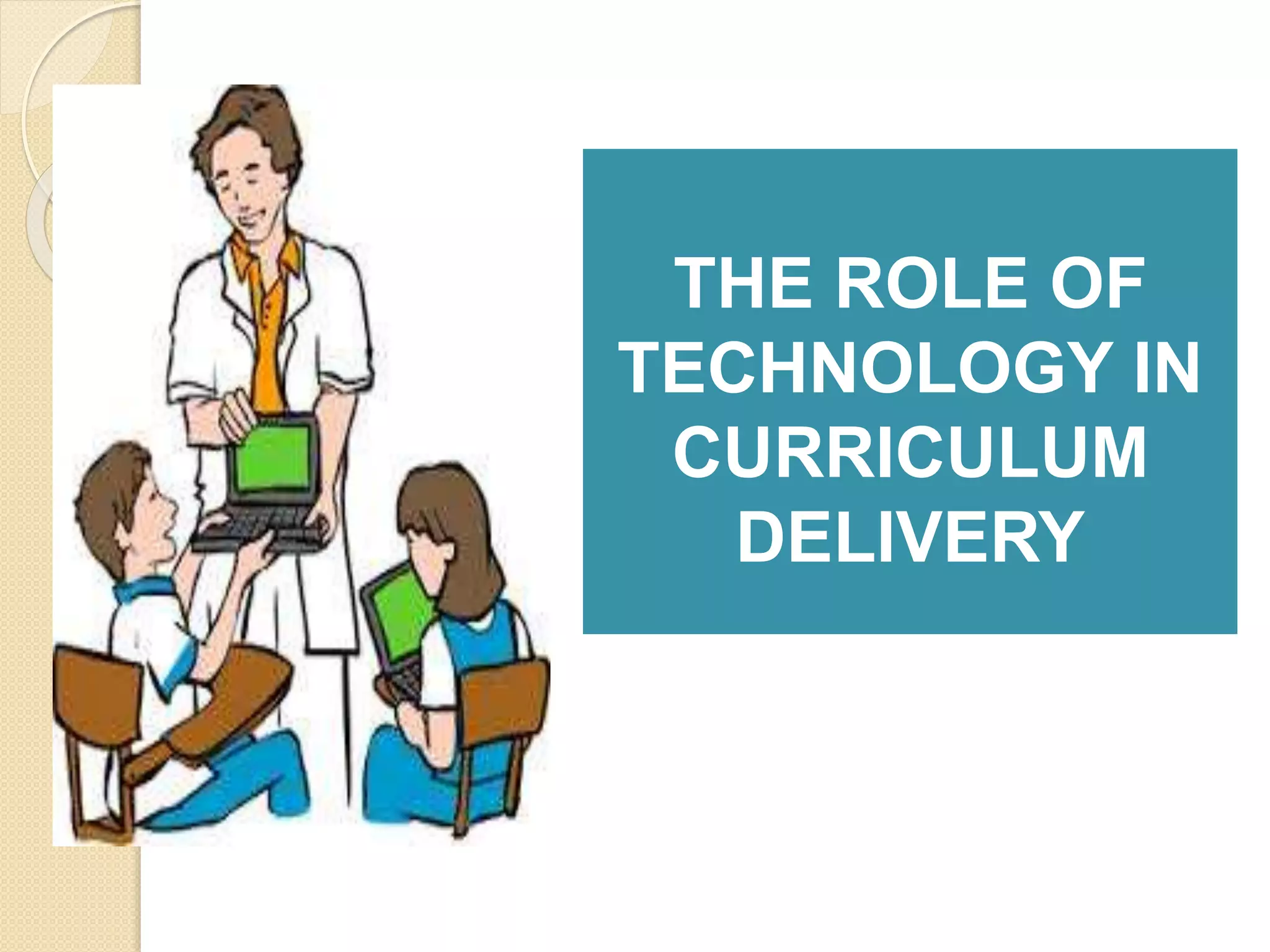
THE ROLE OF
TECHNOLOGY IN
CURRICULUM
DELIVERY
• upgrading the quality of teaching-and-learning in
schools
• increasing the capability of the teacher to effectively
inculcate learning, and for students to gain mastery
of lessons and courses
• broadening the delivery of education outside
schools through non traditional approaches to
formal and informal learning, such as Open
Universities and lifelong learning to adult learners
• revolutionizing the use of technology to boost
educational paradigm shifts that give importance to
students-centered and holistic learning.
In a proposed mastery approach to
instruction, the teacher:
a) presents the lesson to the whole
class
b) assesses if learners attain mastery of
the lesson
c) provides enrichment activities with
the use of media technology
d) re-mediates the non-mastery student
e) moves on to the next lesson.
REFLECT
 HYPERMEDIA
- also called multimedia packages that
include:
Texts
Audio
Graphic image ( still picture )
Animation and
Video clip
OTHER IMPORTANT
TERMS
Prepared by:
Anuada, Leizl E.
Melano, Gretchell B.
Roxas, Kim
THANK YOU!
WE HOPE YOU LEARN SOMETHING…

The Role of Technology in Delivering a Curriculum

  • 2.
     In deliveringthe curriculum the role of technology is very important.  Right at the planning phase of any instruction, aside from formulating the objectives and among other considerations, there is a need to identify what instructional media are to be utilized in the implementation. THE ROLE OF TECHNOLOGY IN DELIVERING CURRICULUM
  • 3.
  • 4.
  • 5.
  • 6.
     Real objects Models  Field trips  Kits  Printed materials  Visuals  Visual boards  Audio materials  Overhead transparencies  Opaque projection  Slides  Filmstrips  Films  Video, VCD, DVD  Computer / multimedia presentations NON PROJECTED MEDIA PROJECTED MEDIA
  • 8.
    • Visual elements( pictures, illustrations, graphics ): 1.Lettering style or font---consistency and harmony 2.Number of lettering style---no more than 2 in a static display (chart, bulletin board ) 3.Use of capitals---short titles or headlines should be no more than 6 words 4.Lettering colors---easy to see and read. Use of contrast is good for emphasis 5.Lettering size---good visibility even for students at the back of the classroom
  • 9.
    6. Spacing betweenletters---equal and even spacing 7. Spacing between lines---not too close as to blur at a distance 8. Number of lines---No more than 8 lines of text in each transparency/slide 9. Appeal---unusual/catchy, two dimensional, interactive ( use of everlays or movable flaps ) 10. Use of directionals---devices ( arrows, bold letters, bullets, contrasting color and size, special placement of an item ).
  • 10.
  • 11.
    1. PRACTICALITY Is theequipment ( hardware ) or already prepared lesson material ( software ) available? If not, what would be the cost in acquiring the equipment or producing the lesson in audial or visual form?
  • 12.
    2. ACTIVITY /SUITABILITY Will the chosen media fit the set instructional event, resulting in either information,motivation,orpsychomot or display?
  • 13.
    3. APPROPRIATNESS IN RELATIONTO THE LEARNERS Is the medium suitable for the learners’ ability to comprehend? Will the medium be a source of plain amusement or entertainment, but not learning?
  • 14.
    4. OBJECTIVE-MATCHING Overall, doesthe medium help in achieving the learners objective (s)?
  • 15.
    3 CURRENT TRENDS THATCOULD CARRY ON THE NATURE OF EDUCATION IN THE FUTURE!
  • 16.
    1.The first trendis the paradigm shift from the teacher centered to student-centered approach to learning. 2. The second is the broadening realization that education is not simply a delivery of facts and information, but an educative process of cultivating the cognitive, affective, psychomotor, and much more the contemplative intelligence of the learners of a new age. 3. Is the increase in the use of new information
  • 17.
    THE ROLE OF TECHNOLOGYIN CURRICULUM DELIVERY
  • 18.
    • upgrading thequality of teaching-and-learning in schools • increasing the capability of the teacher to effectively inculcate learning, and for students to gain mastery of lessons and courses • broadening the delivery of education outside schools through non traditional approaches to formal and informal learning, such as Open Universities and lifelong learning to adult learners • revolutionizing the use of technology to boost educational paradigm shifts that give importance to students-centered and holistic learning.
  • 19.
    In a proposedmastery approach to instruction, the teacher: a) presents the lesson to the whole class b) assesses if learners attain mastery of the lesson c) provides enrichment activities with the use of media technology d) re-mediates the non-mastery student e) moves on to the next lesson. REFLECT
  • 20.
     HYPERMEDIA - alsocalled multimedia packages that include: Texts Audio Graphic image ( still picture ) Animation and Video clip OTHER IMPORTANT TERMS
  • 21.
    Prepared by: Anuada, LeizlE. Melano, Gretchell B. Roxas, Kim THANK YOU! WE HOPE YOU LEARN SOMETHING…