The Parallel Computing Revolution Is Only Half Over
Rob Schreiber, Cerebras Systems, Inc.
ATPESC, August 1, 2019
The Past
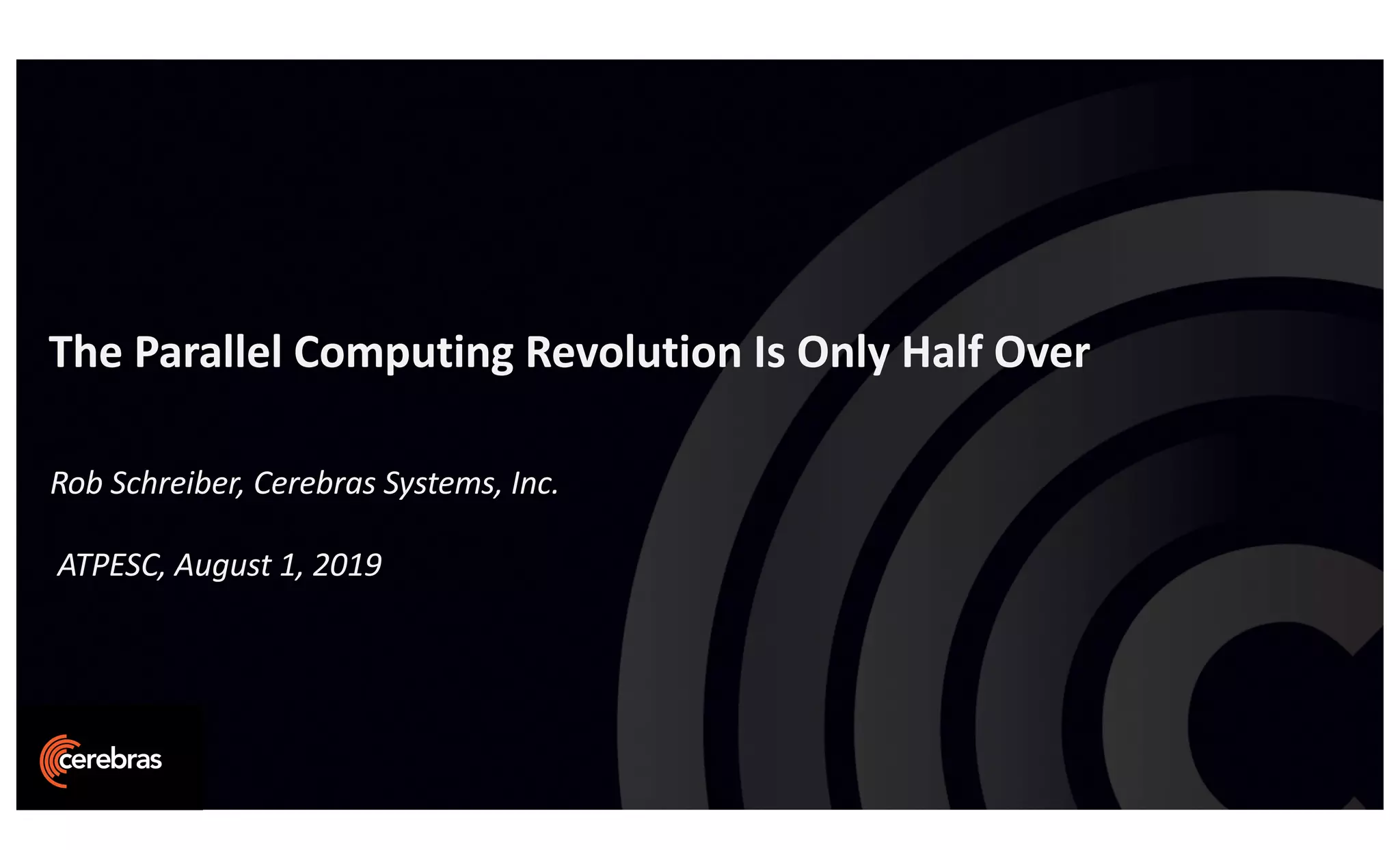
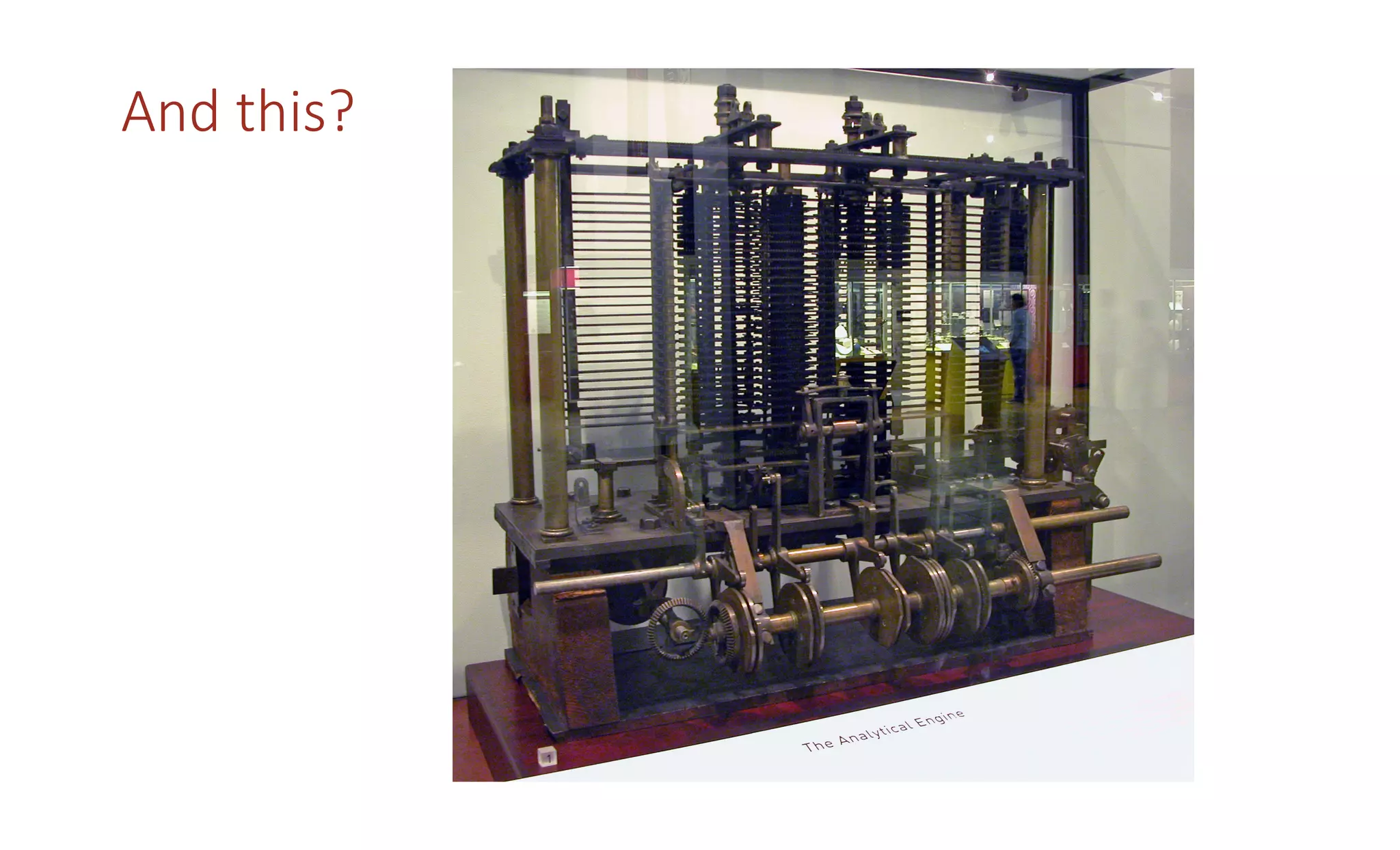
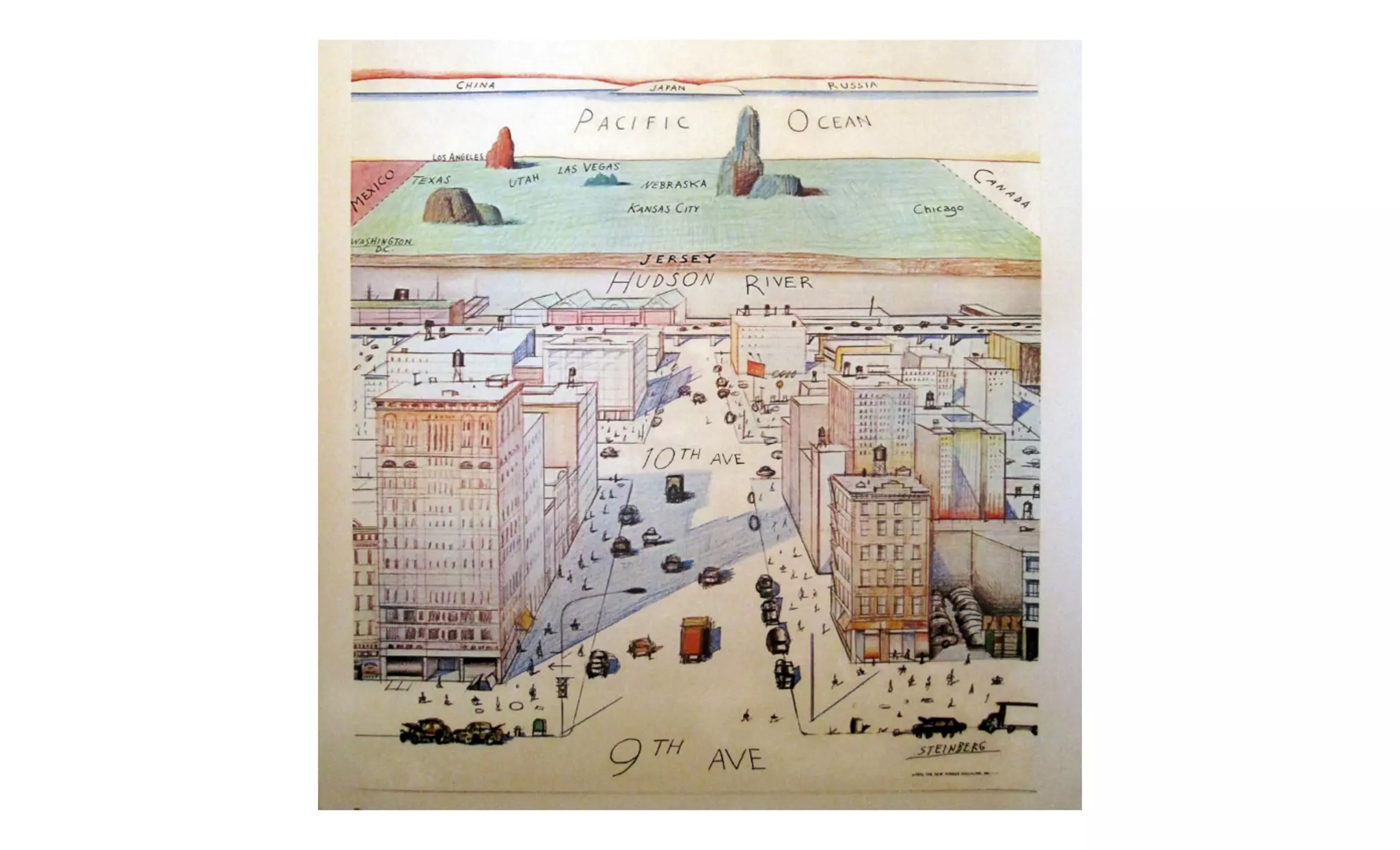
What this is?
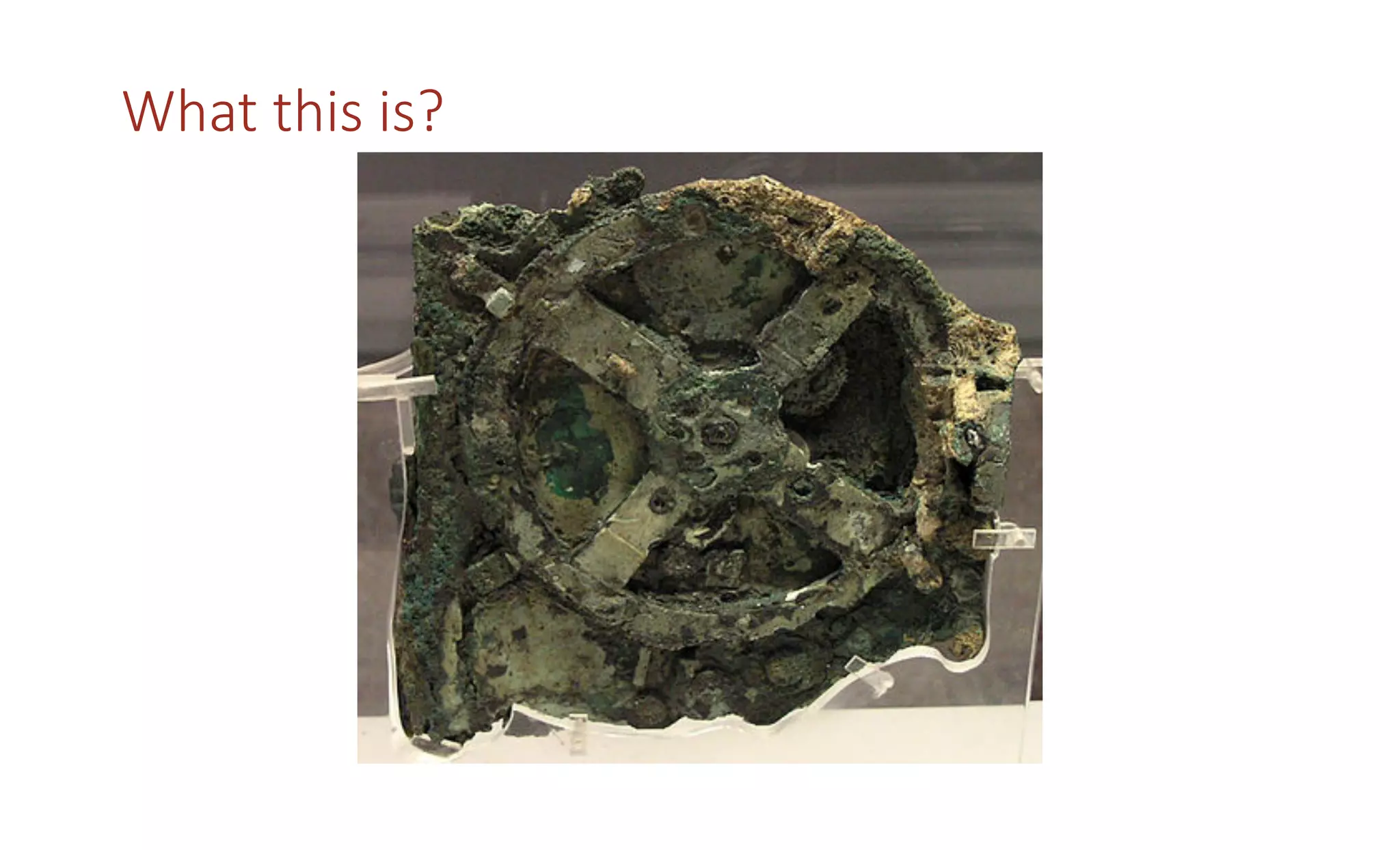
And this?
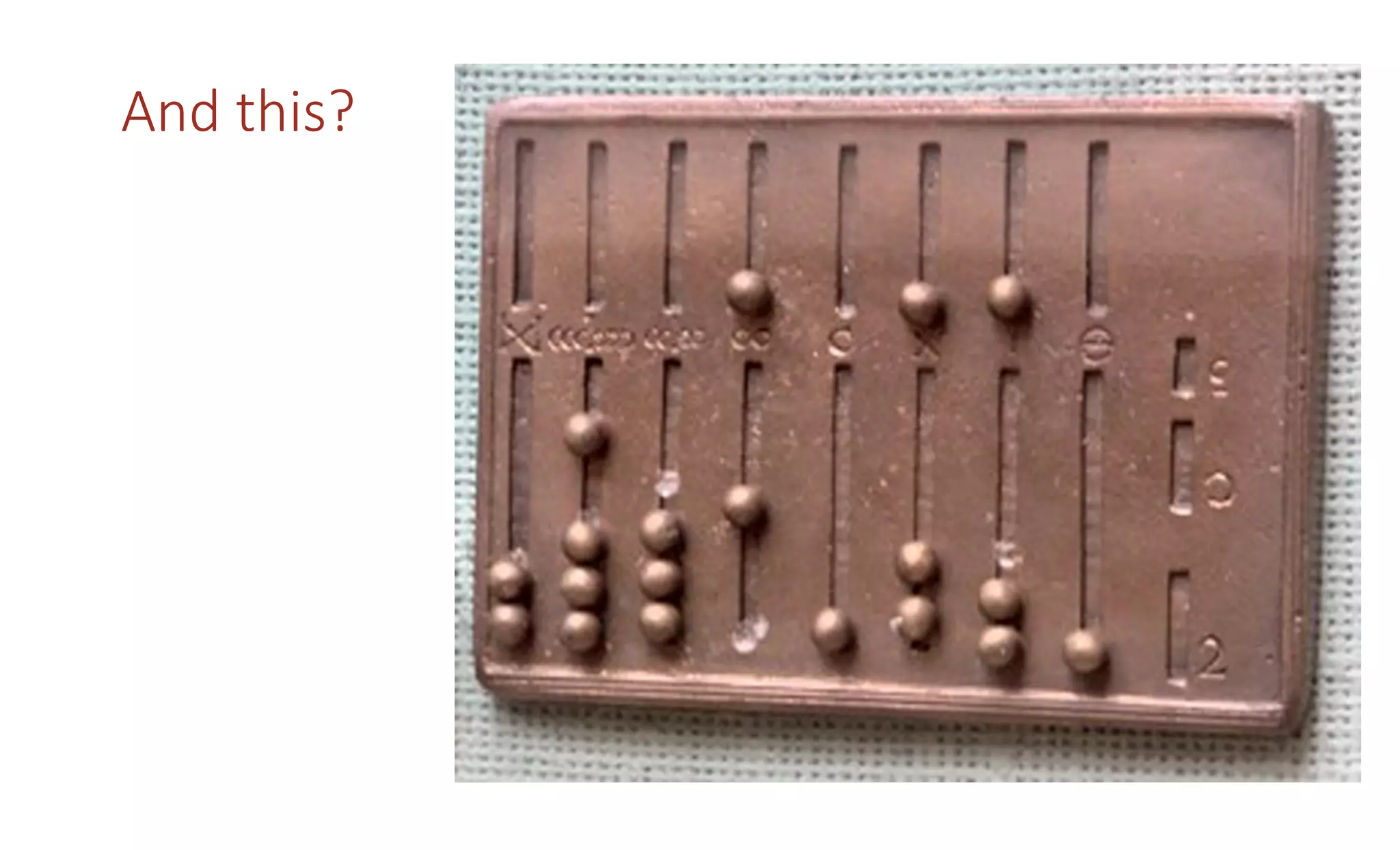
And this?
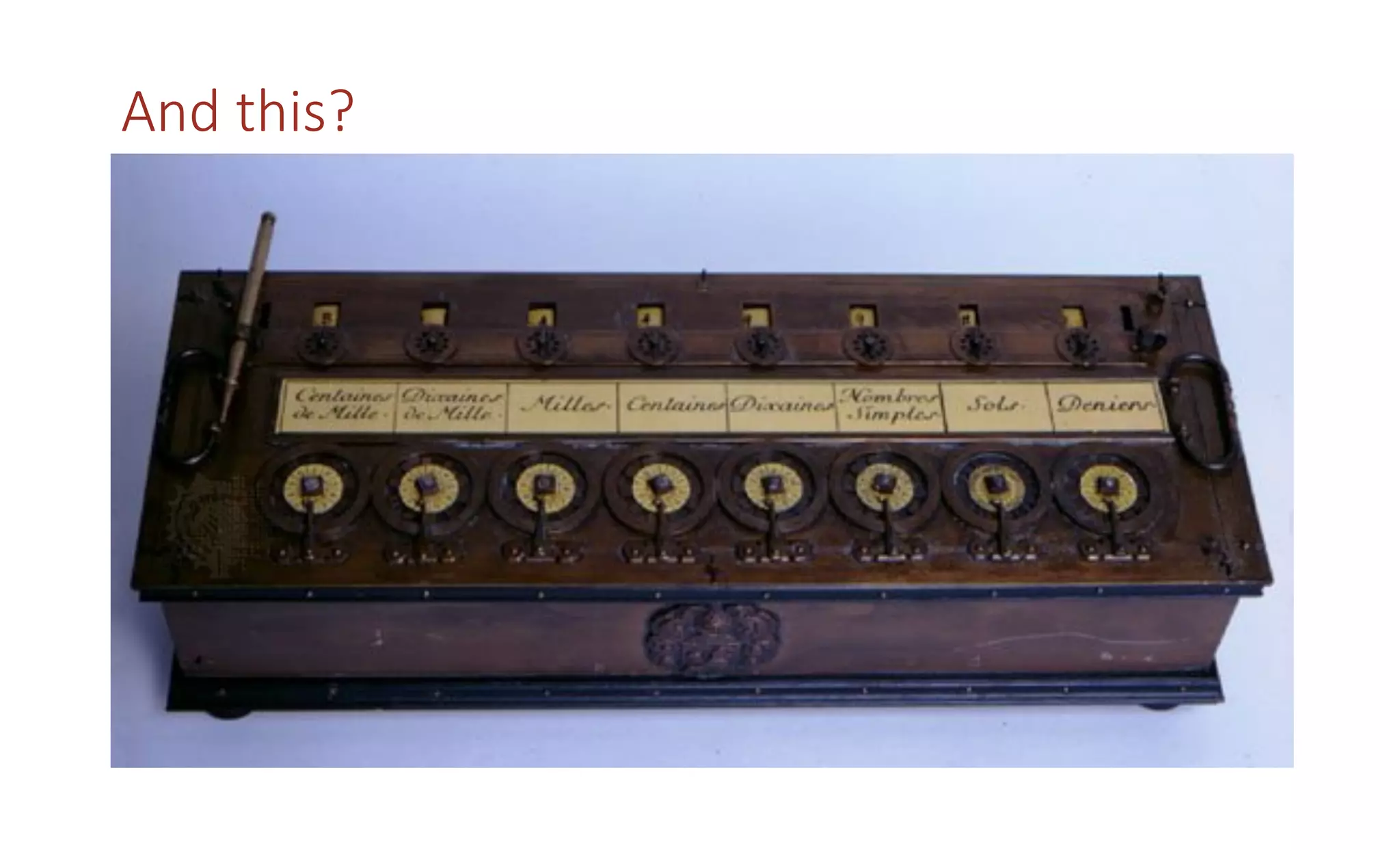
And this?
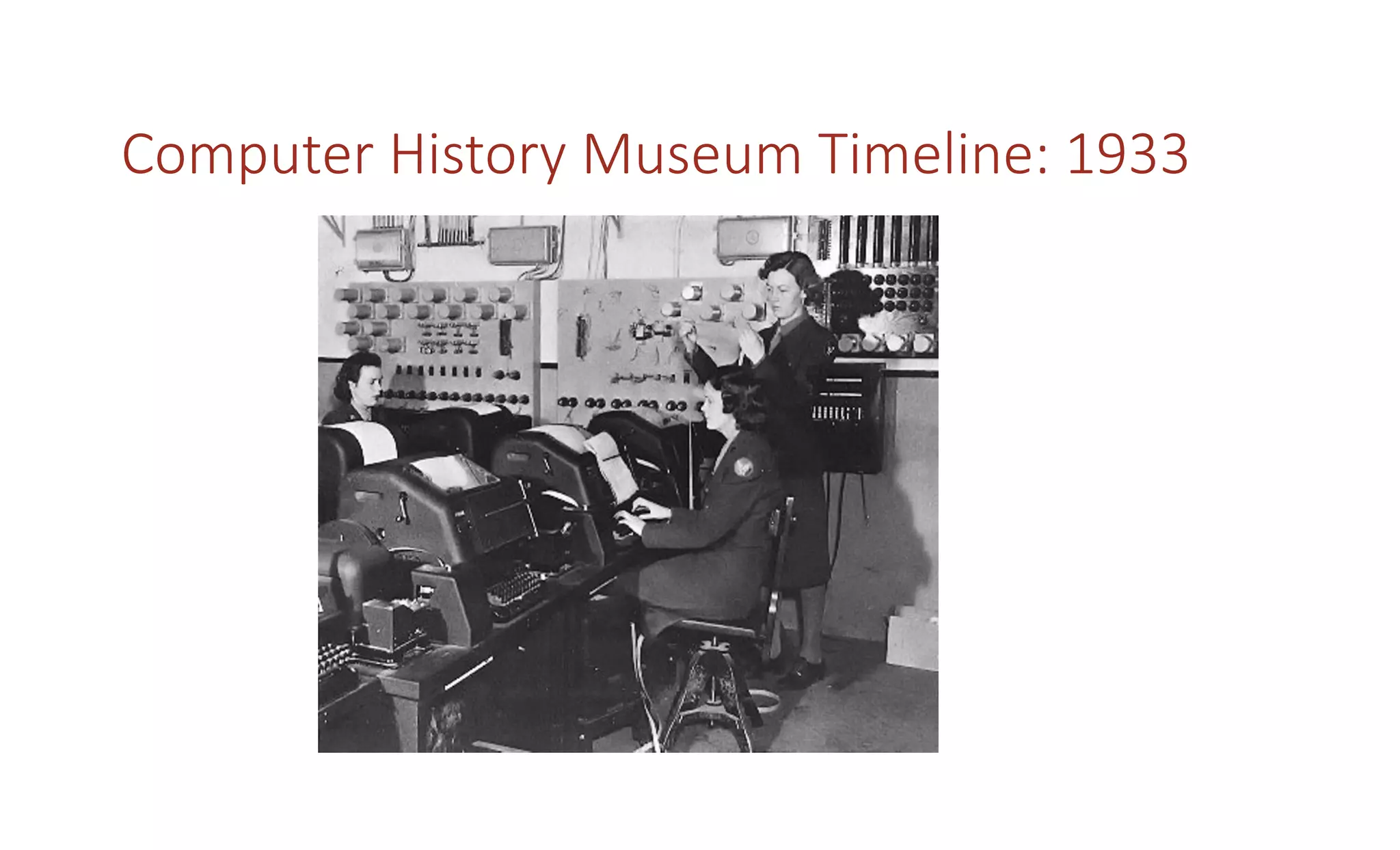
Computer History Museum Timeline: 1933
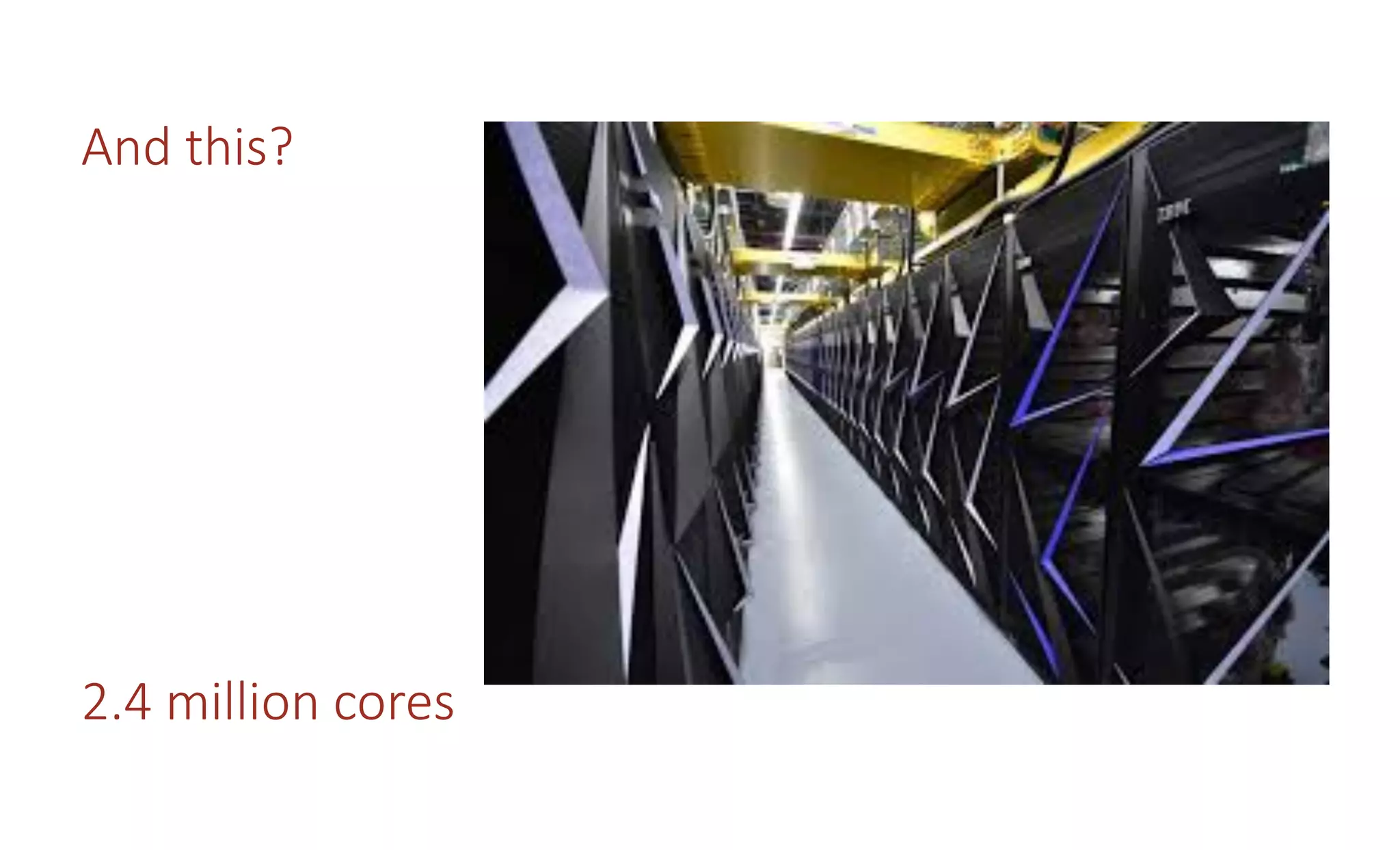
And this?
2.4 million cores
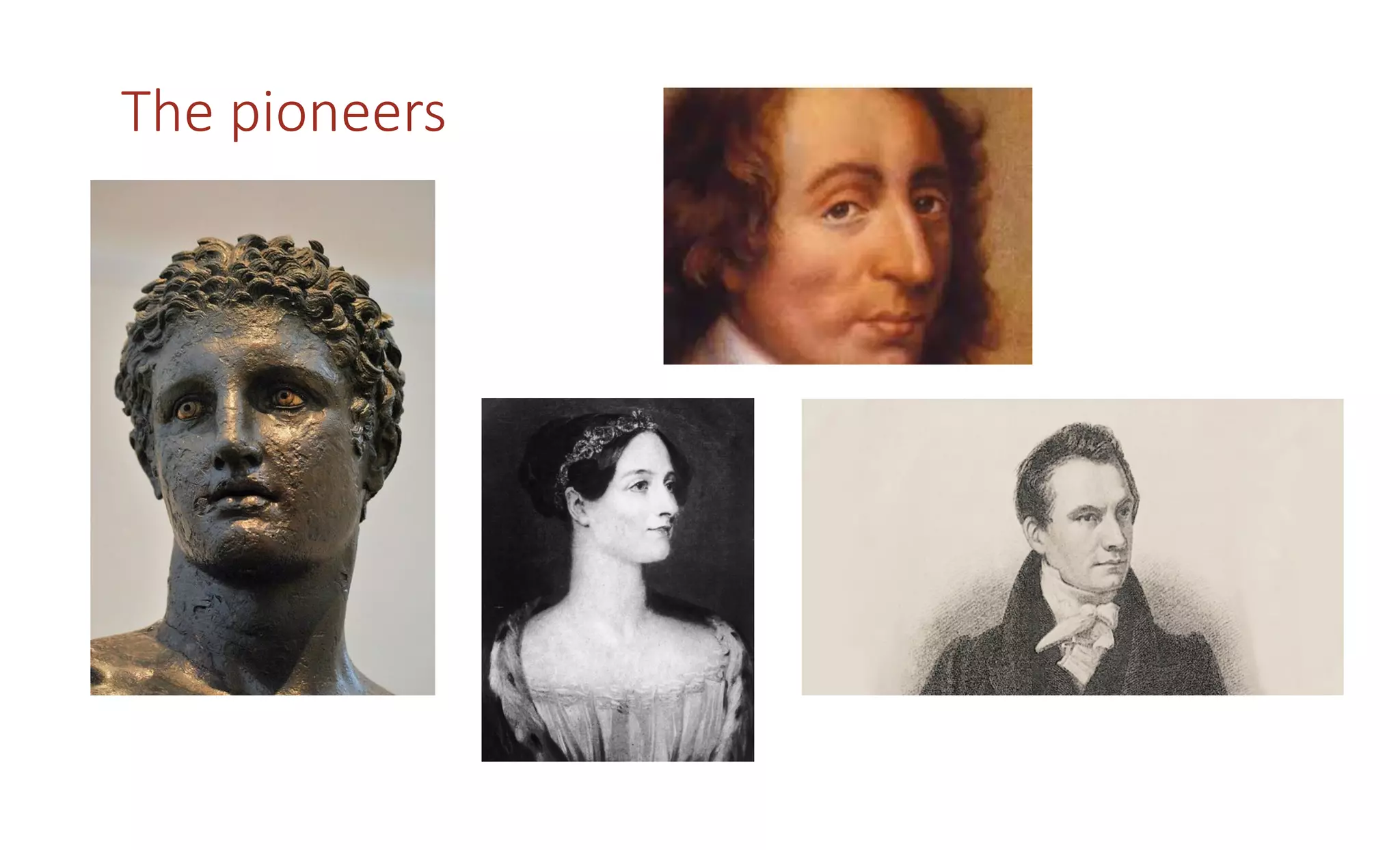
The pioneers
Controversy
Success!
Technology Triumphant
The Crisis
A Pressing Need
A New Era
The parallel computing era
Parallel computers were once controversial
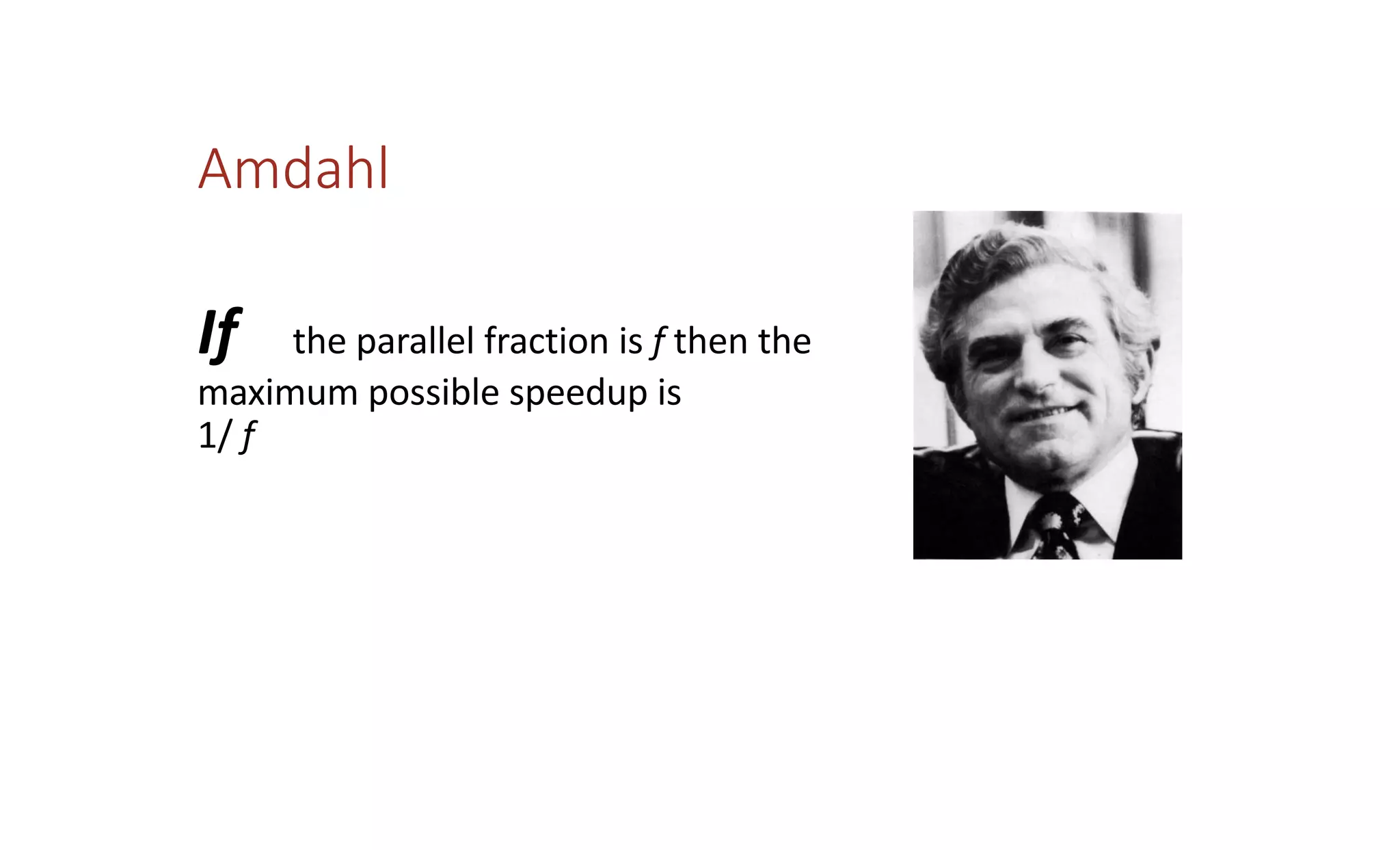
If the parallel fraction is f then the
maximum possible speedup is
1/ f
Amdahl
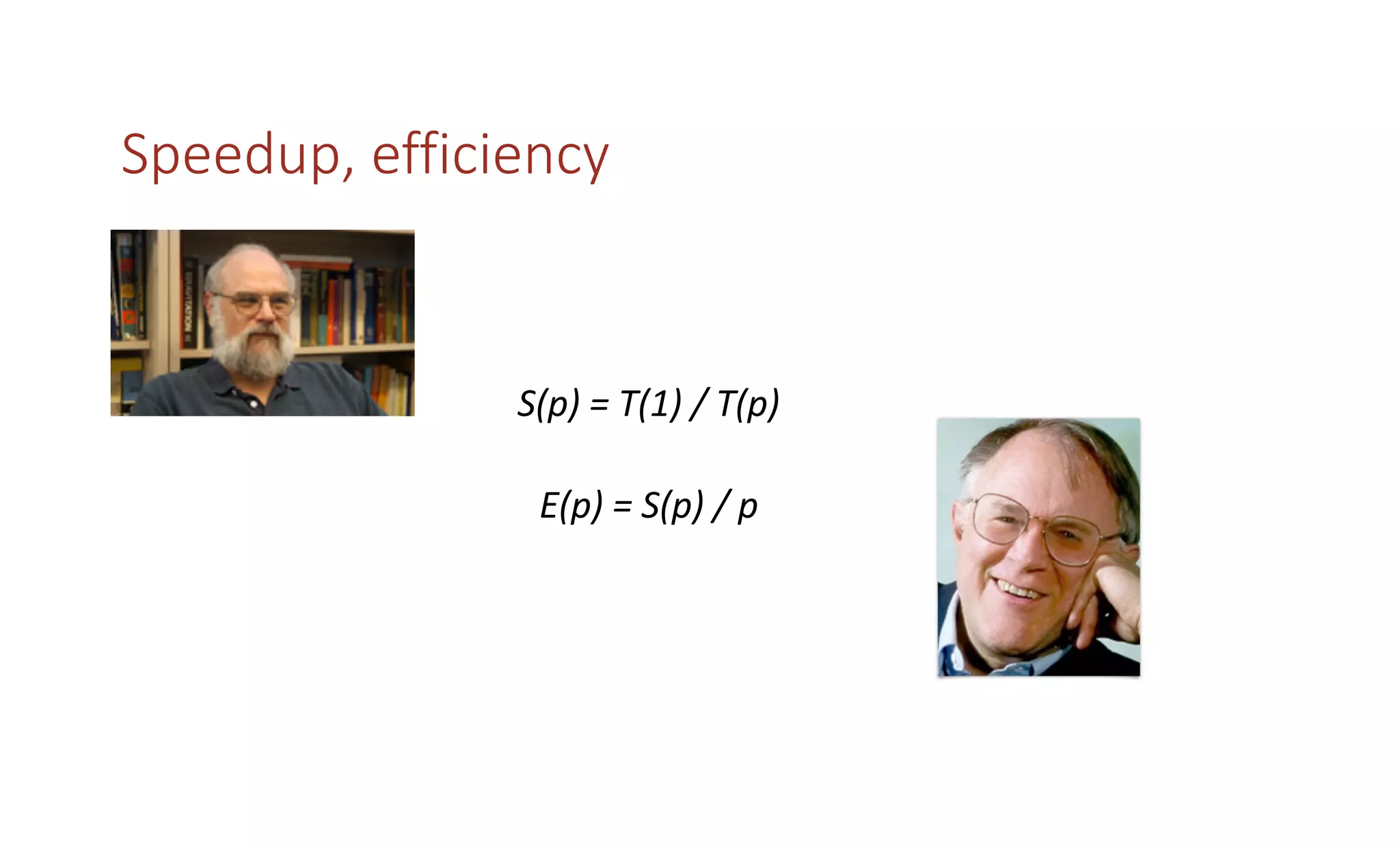
Speedup, efficiency
S(p) = T(1) / T(p)
E(p) = S(p) / p
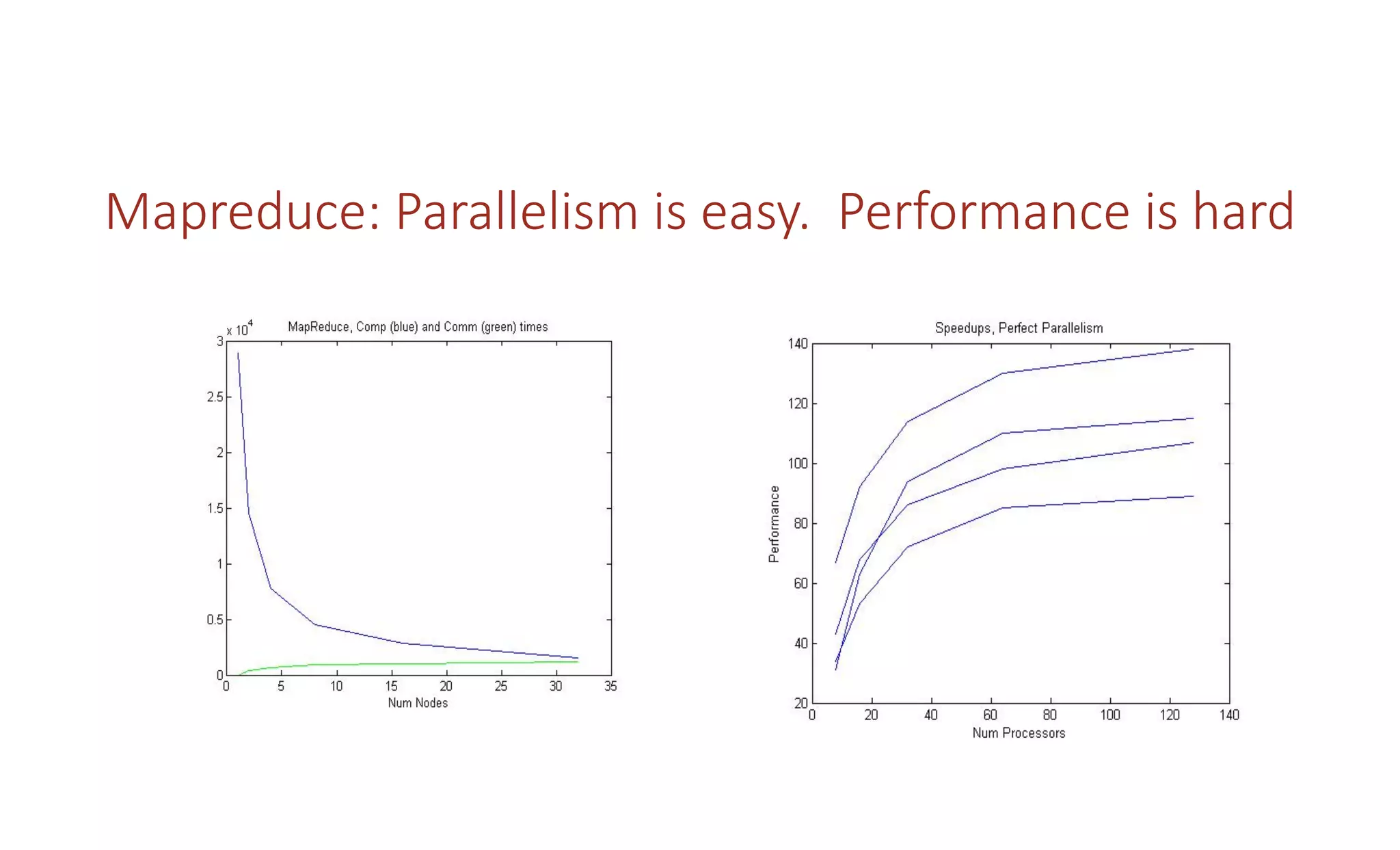
Mapreduce: Parallelism is easy. Performance is hard
It’s the memory and the network
And the algorithm
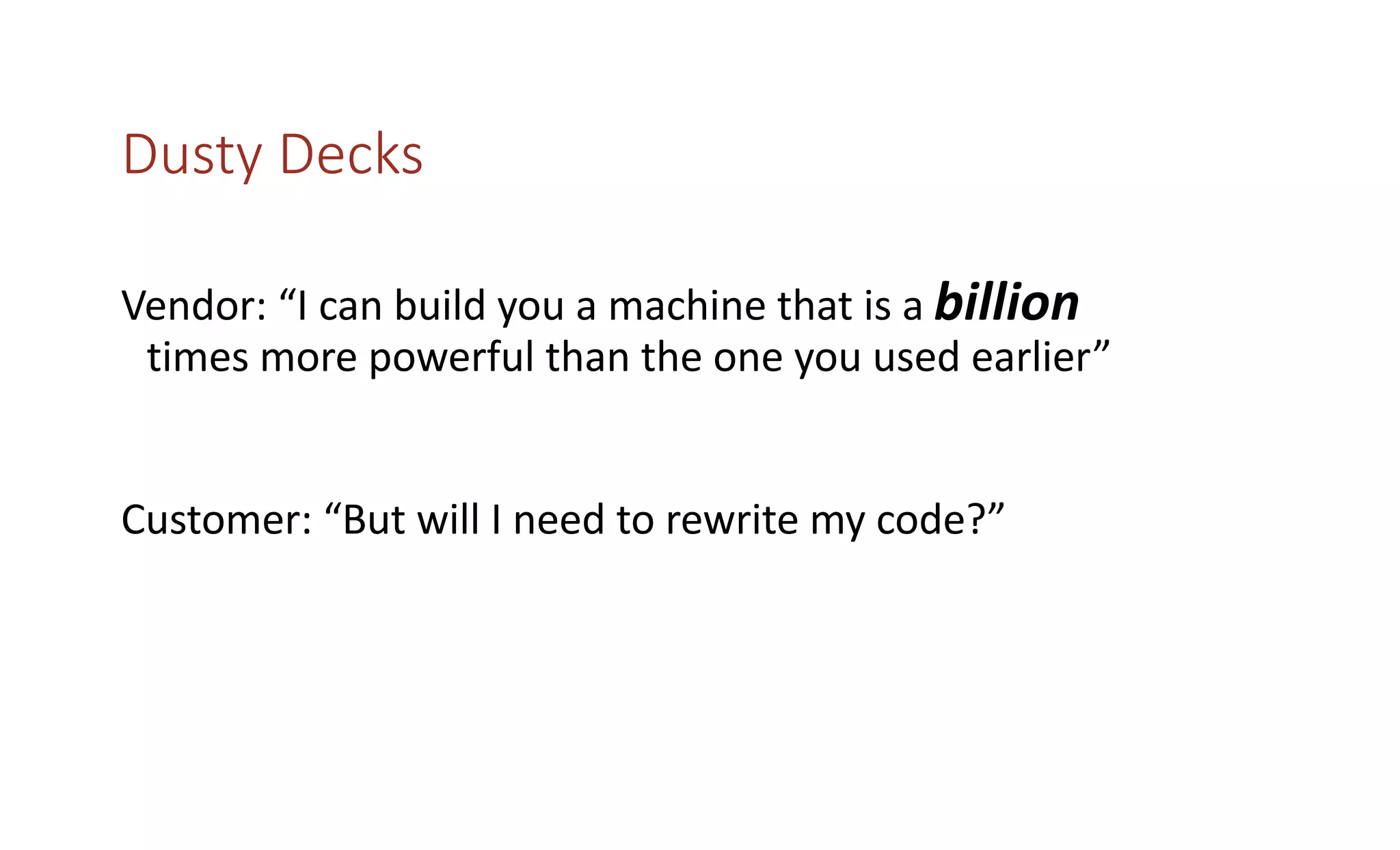
Dusty Decks
Vendor: “I can build you a machine that is a billion
times more powerful than the one you used earlier”
Customer: “But will I need to rewrite my code?”
Automatic parallelization
The compiler should create an optimized,
parallel implementation of the algorithm
in the code
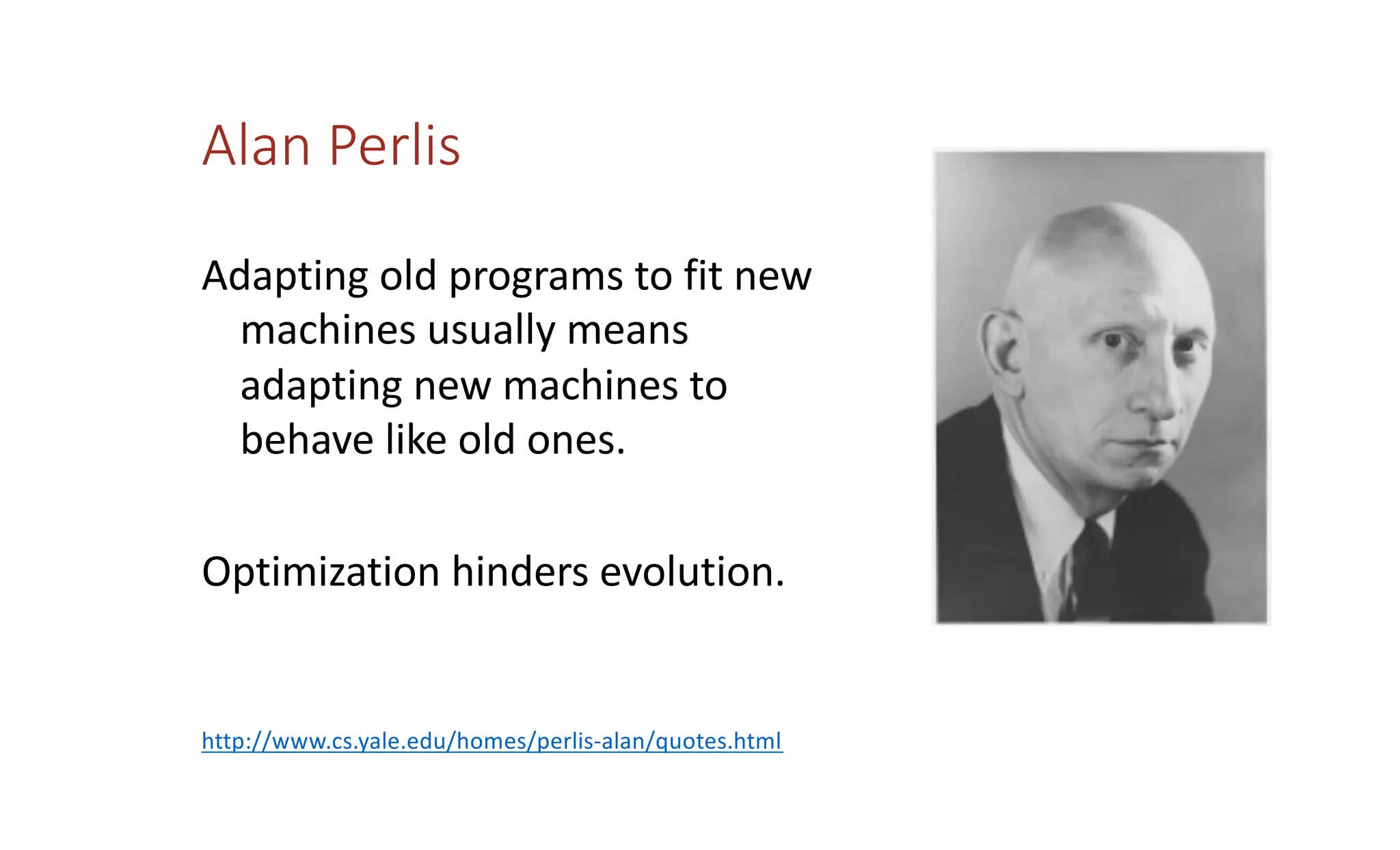
Alan Perlis
Adapting old programs to fit new
machines usually means
adapting new machines to
behave like old ones.
Optimization hinders evolution.
http://www.cs.yale.edu/homes/perlis-alan/quotes.html
Success
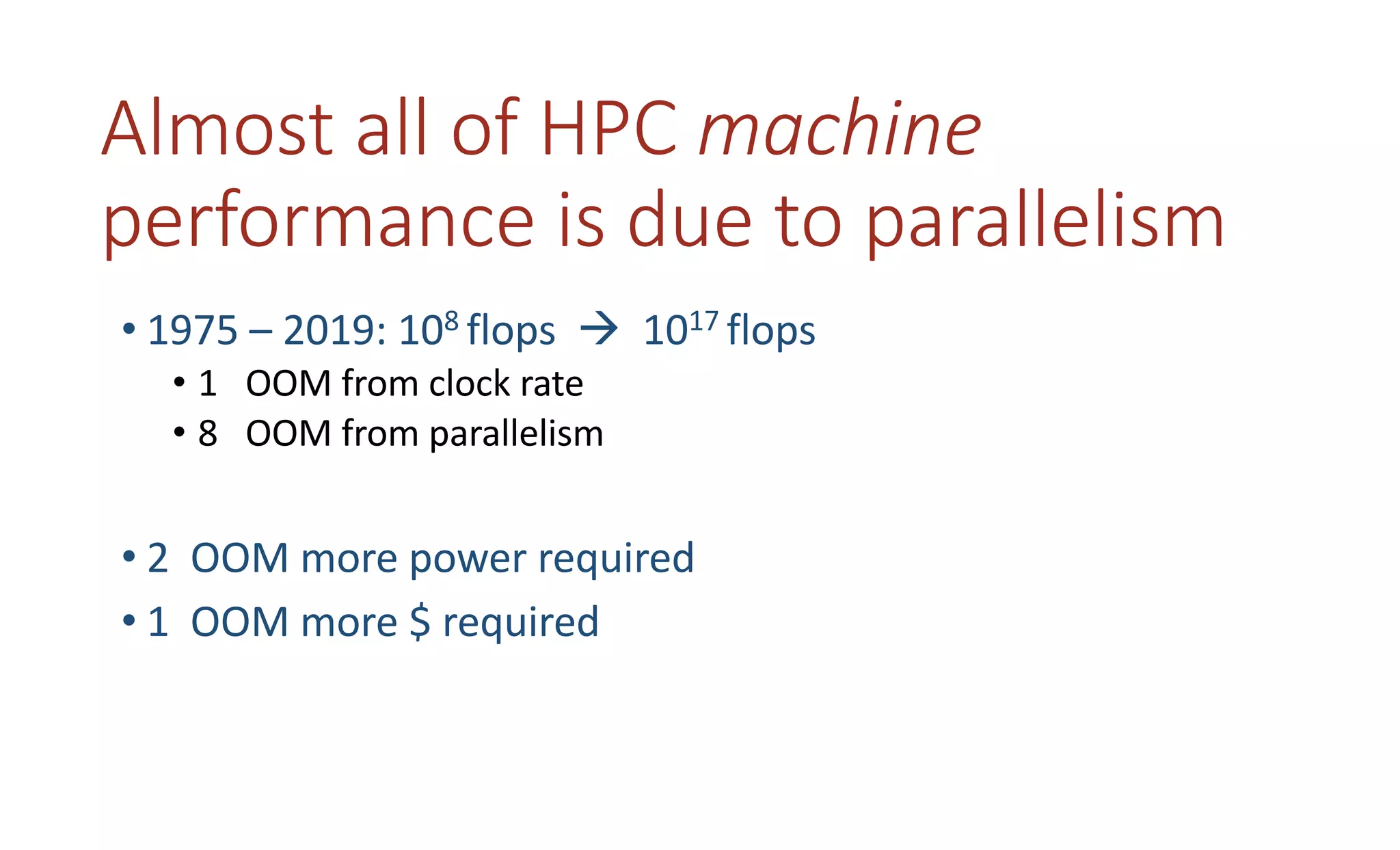
Almost all of HPC machine
performance is due to parallelism
• 1975 – 2019: 108 flops à 1017 flops
• 1 OOM from clock rate
• 8 OOM from parallelism
• 2 OOM more power required
• 1 OOM more $ required
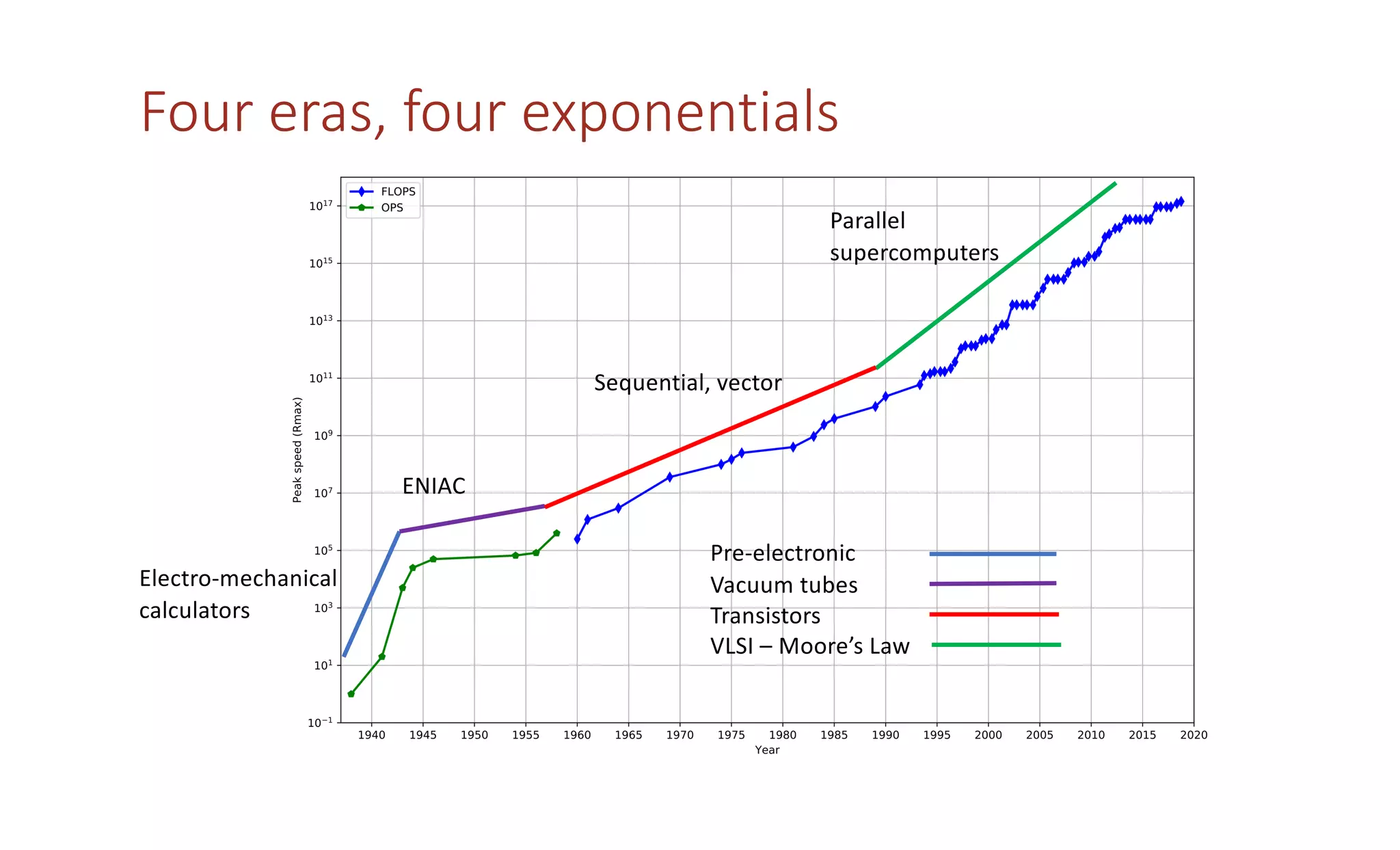
Four eras, four exponentials
Pre-electronic
Vacuum tubes
Transistors
VLSI – Moore’s Law
Parallel
supercomputers
Sequential, vector
Electro-mechanical
calculators
ENIAC
The past is easy to predict. The future?
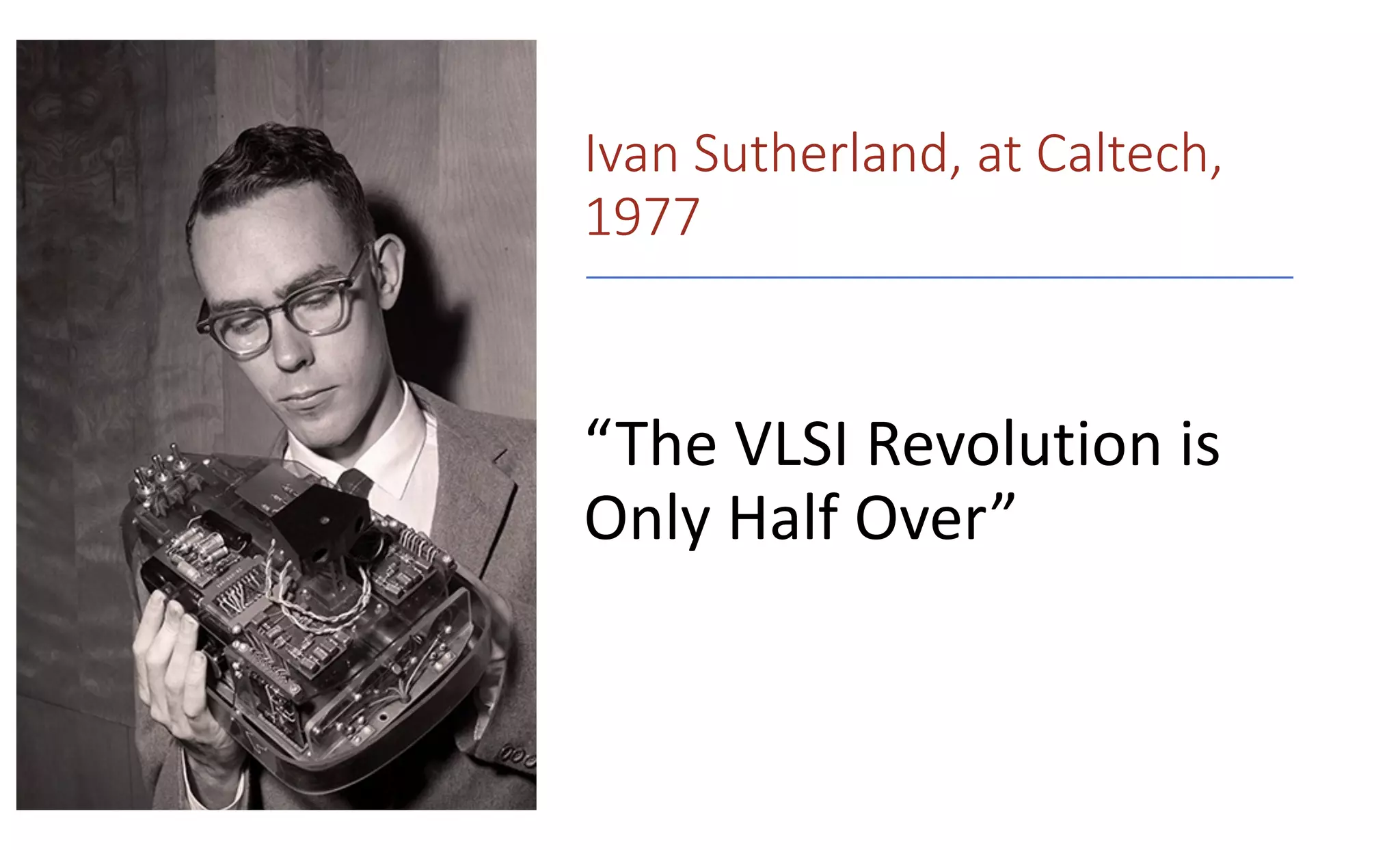
Ivan Sutherland, at Caltech,
1977
“The VLSI Revolution is
Only Half Over”
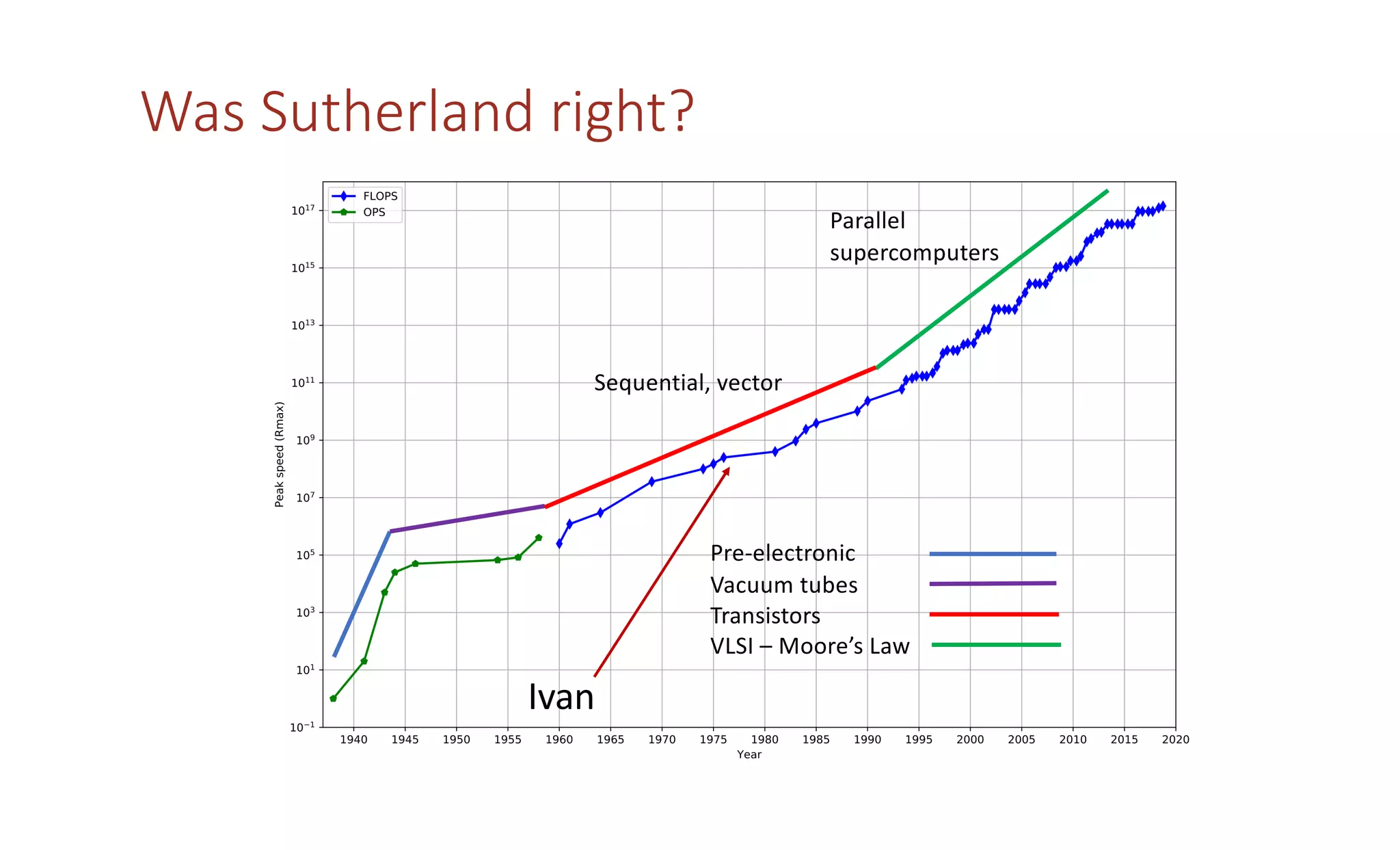
Was Sutherland right?
Pre-electronic
Vacuum tubes
Transistors
VLSI – Moore’s Law
Parallel
supercomputers
Sequential, vector
Ivan
VLSI: Technology
Triumphant
After Ivan, What Happened?
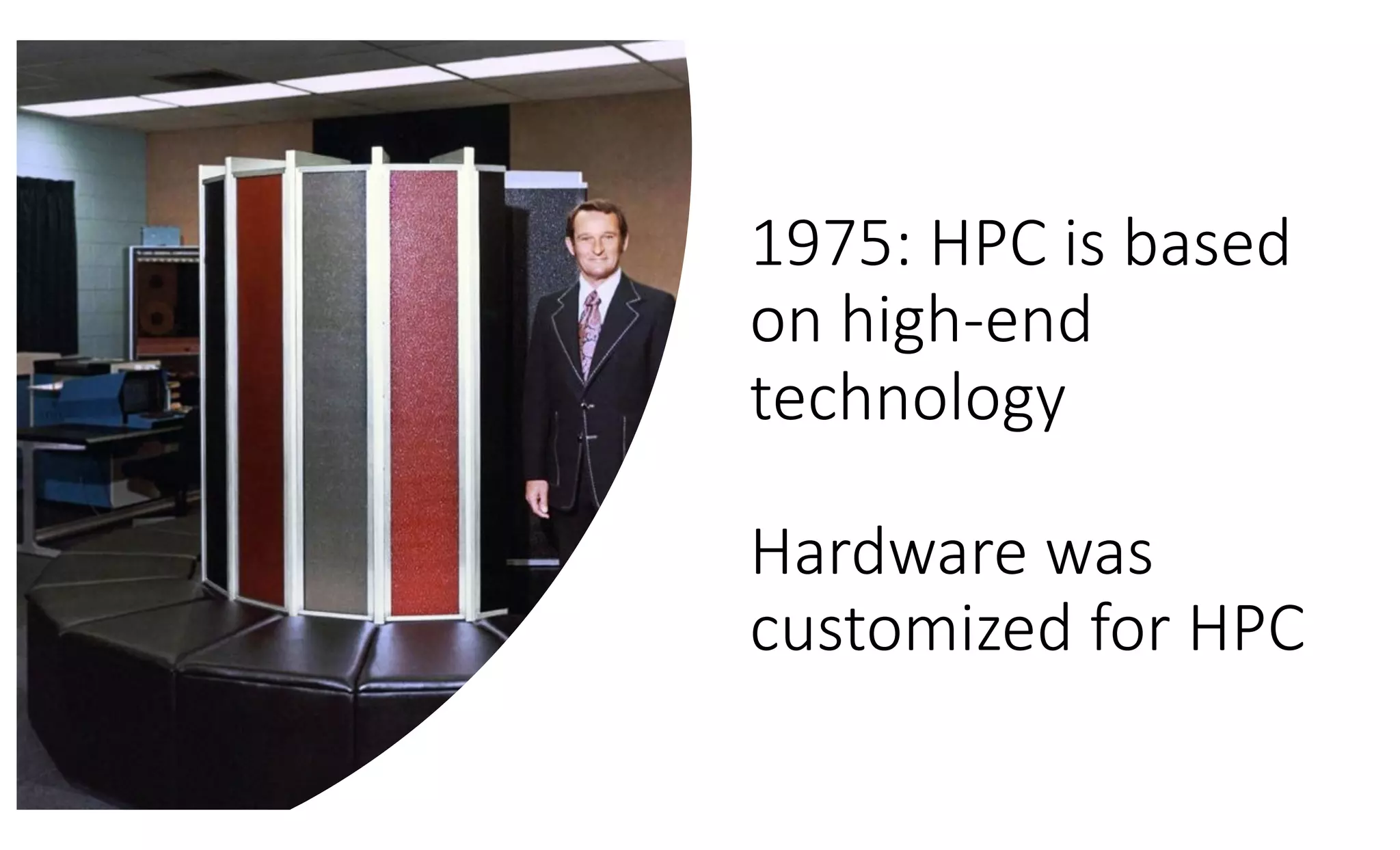
1975: HPC is based
on high-end
technology
Hardware was
customized for HPC
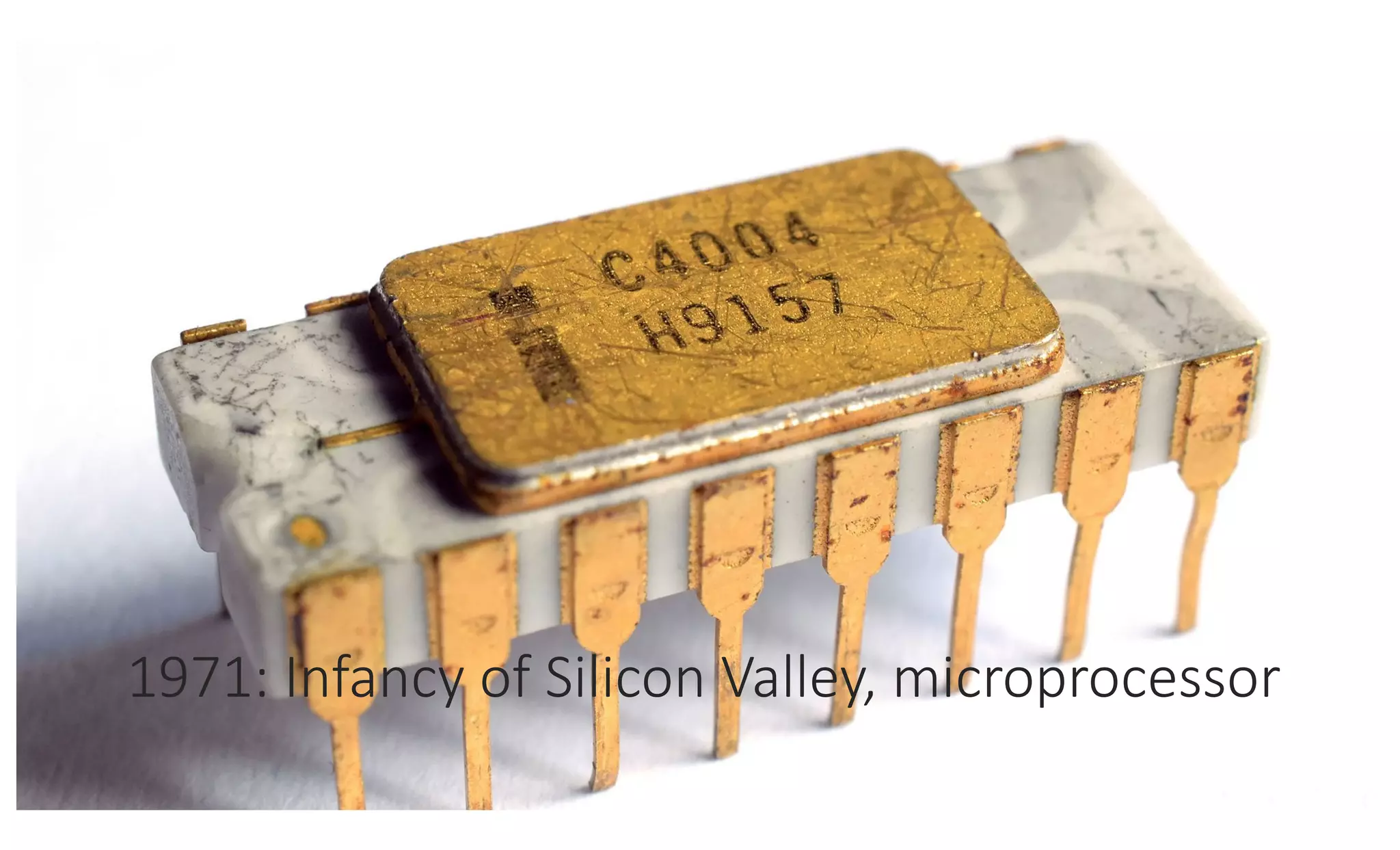
1971: Infancy of Silicon Valley, microprocessor
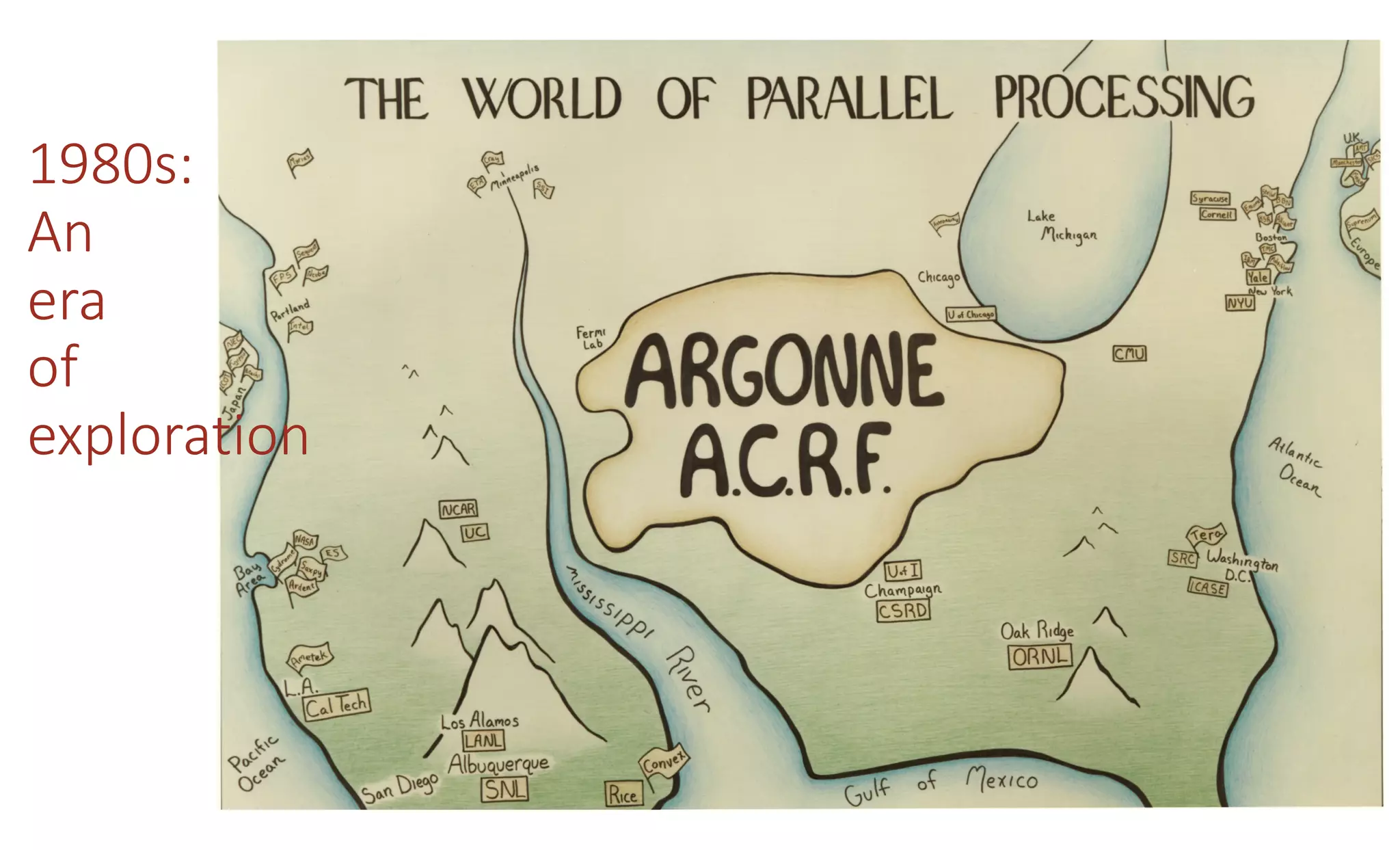
1980s:
An
era
of
exploration
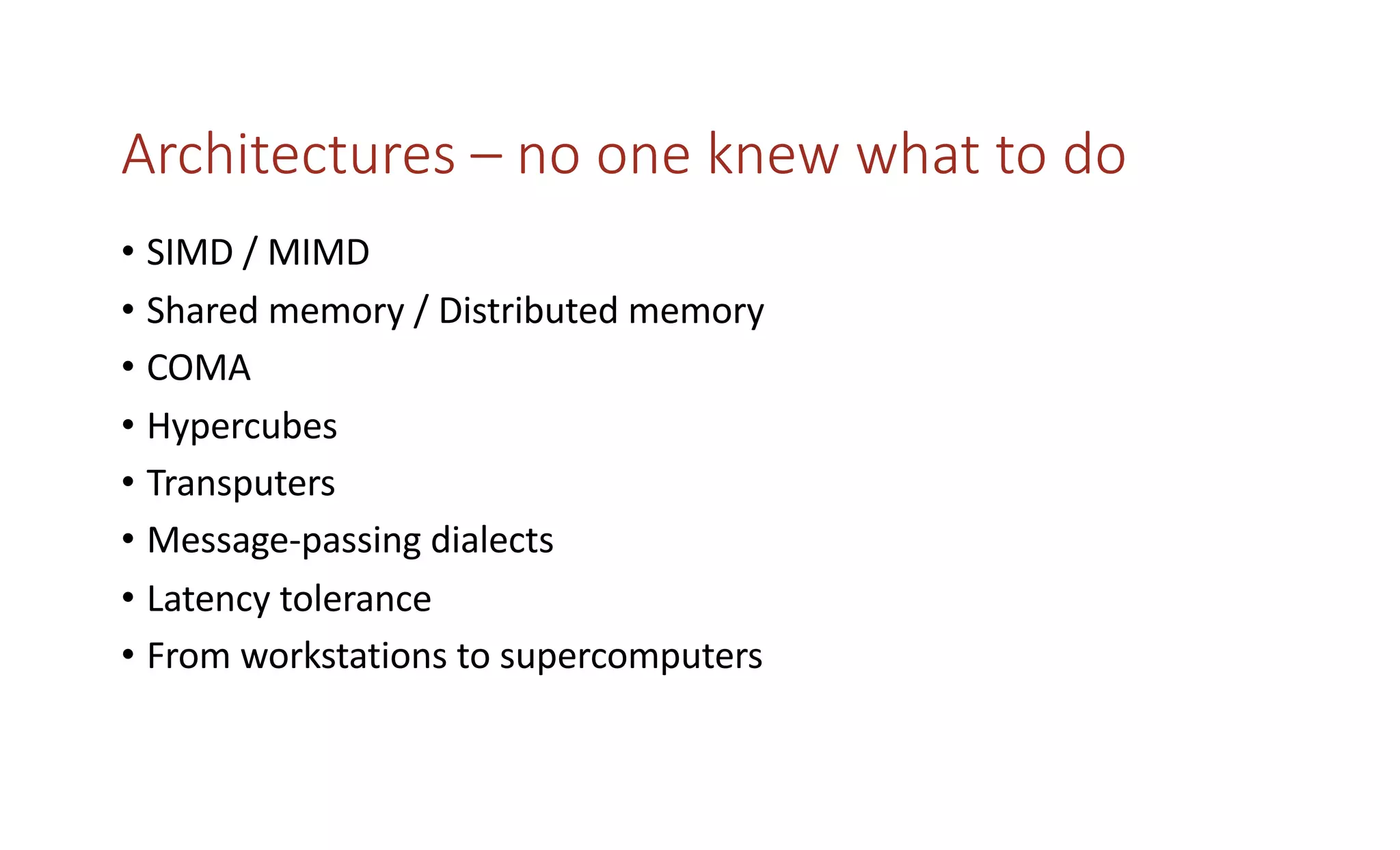
Architectures – no one knew what to do
• SIMD / MIMD
• Shared memory / Distributed memory
• COMA
• Hypercubes
• Transputers
• Message-passing dialects
• Latency tolerance
• From workstations to supercomputers
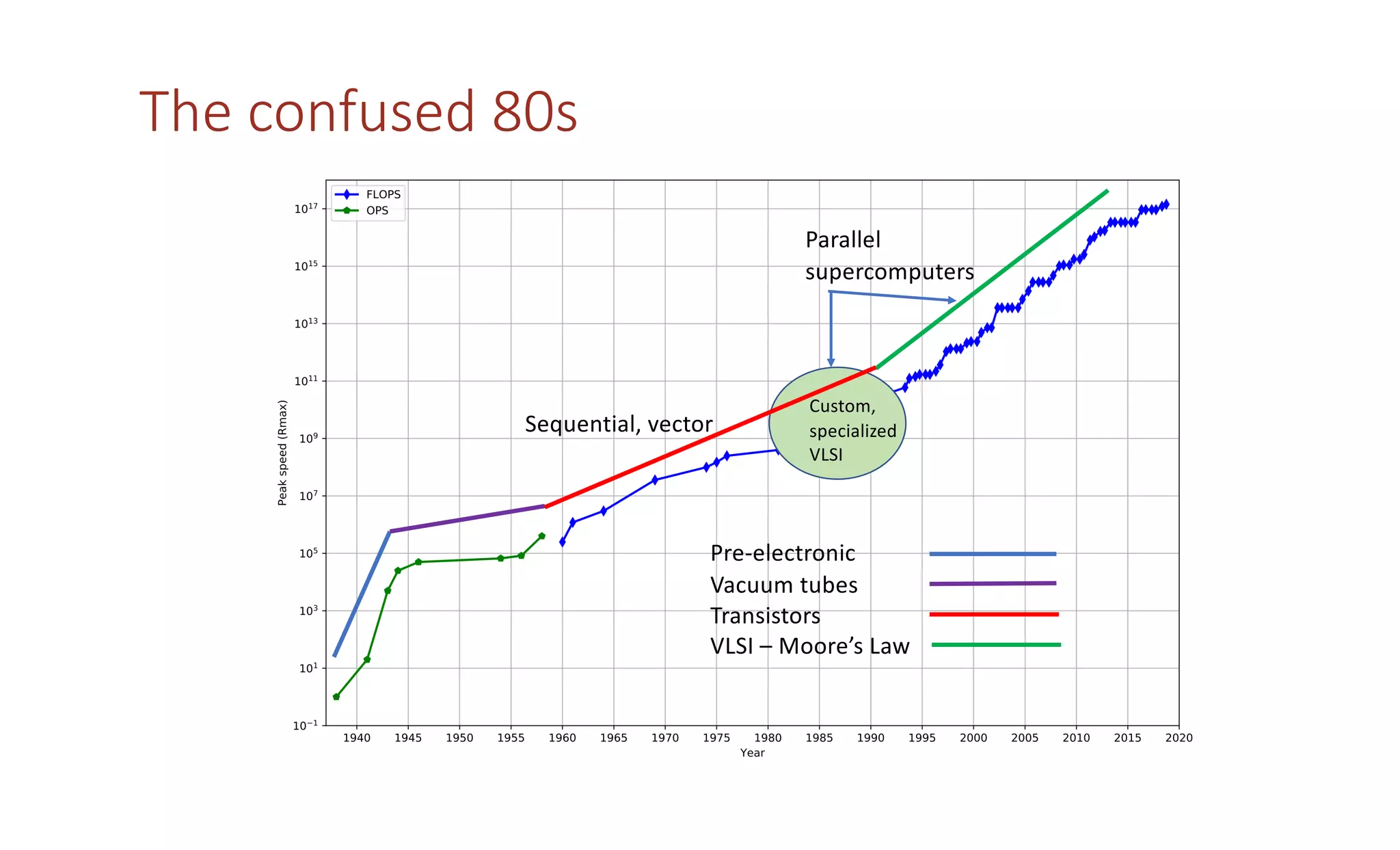
The confused 80s
Pre-electronic
Vacuum tubes
Transistors
VLSI – Moore’s Law
Parallel
supercomputers
Sequential, vector
Custom,
specialized
VLSI
1971 – 1990: Micros catch up
• Transistor count doubles every two years.
• 1971 – 2000 transistors (i4004)
• 1990 – 1,000,000 transistors (i80486)
• It took 19 years of exponential growth to catch up to old style
computers for HPC
• But then…
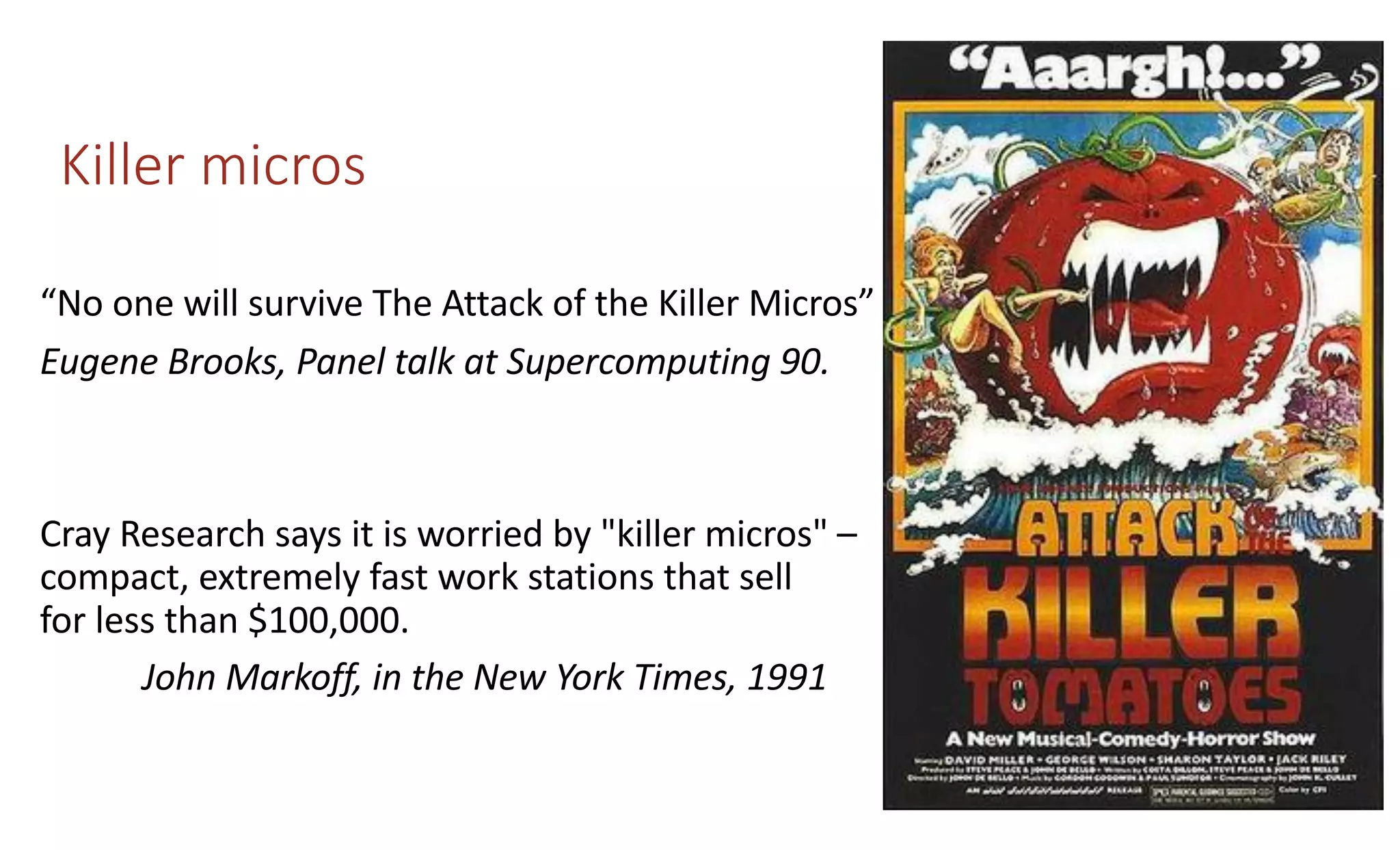
Killer micros
“No one will survive The Attack of the Killer Micros”
Eugene Brooks, Panel talk at Supercomputing 90.
Cray Research says it is worried by "killer micros" –
compact, extremely fast work stations that sell
for less than $100,000.
John Markoff, in the New York Times, 1991
VLSI and supercomputers after 1990
Then the attack really happens
• A mass market drove investment and innovation
• Dennard scaling made micros faster, cheaper, same power
• Commodity pricing killed architectural specialization
• By 2000, all HPC machines are clusters of commodity designs
• AND – we knew how to program them (MPI)
From 1990 to 2010
7 OOM, from 0.1 teraflops to 0.1 exaflops
Greater than the gains from 1942 (pre-electronic) to 1990
A loss of computer design diversity; the one-size-fits-all processor
The Crisis
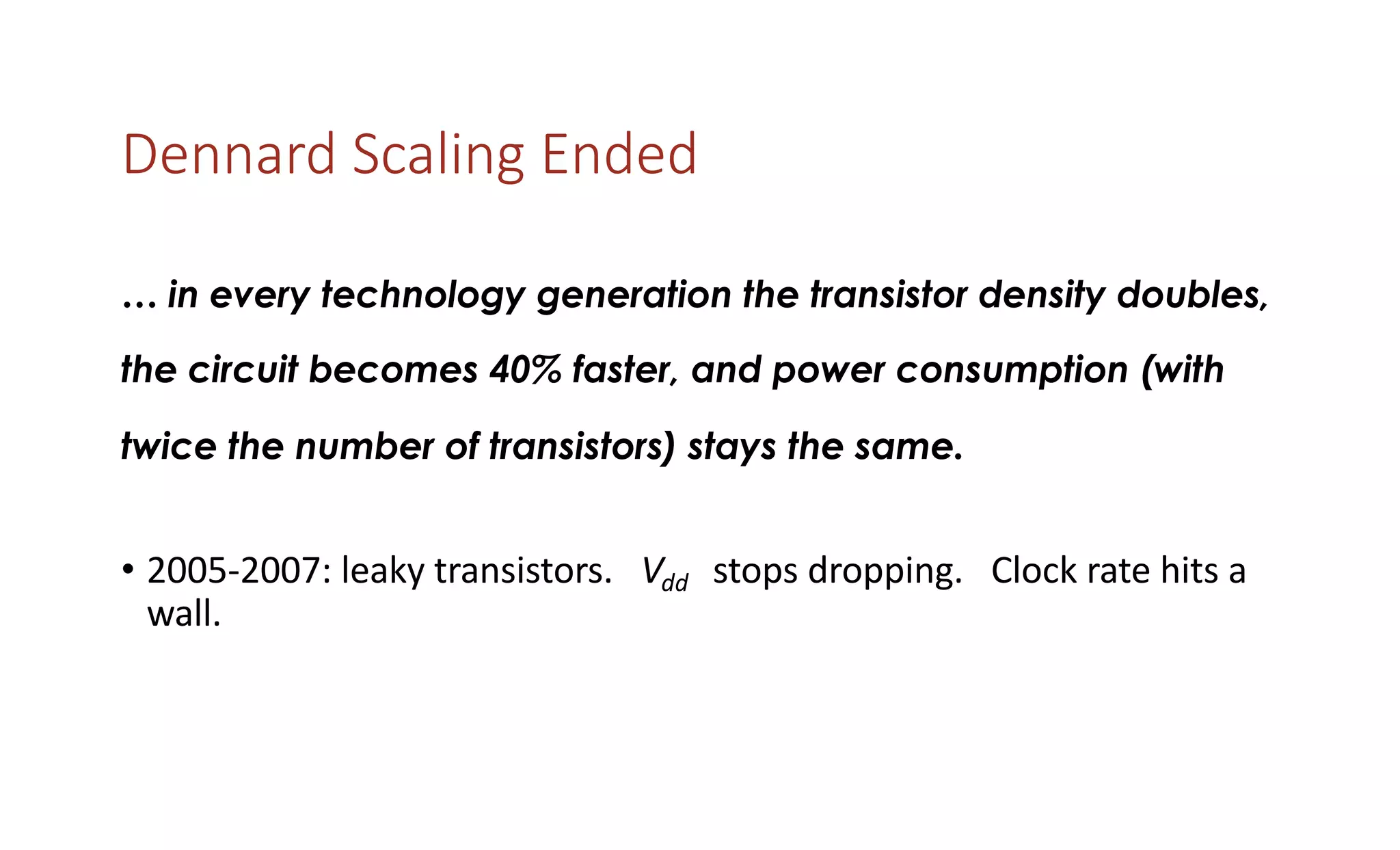
Dennard Scaling Ended
… in every technology generation the transistor density doubles,
the circuit becomes 40% faster, and power consumption (with
twice the number of transistors) stays the same.
• 2005-2007: leaky transistors. Vdd stops dropping. Clock rate hits a
wall.
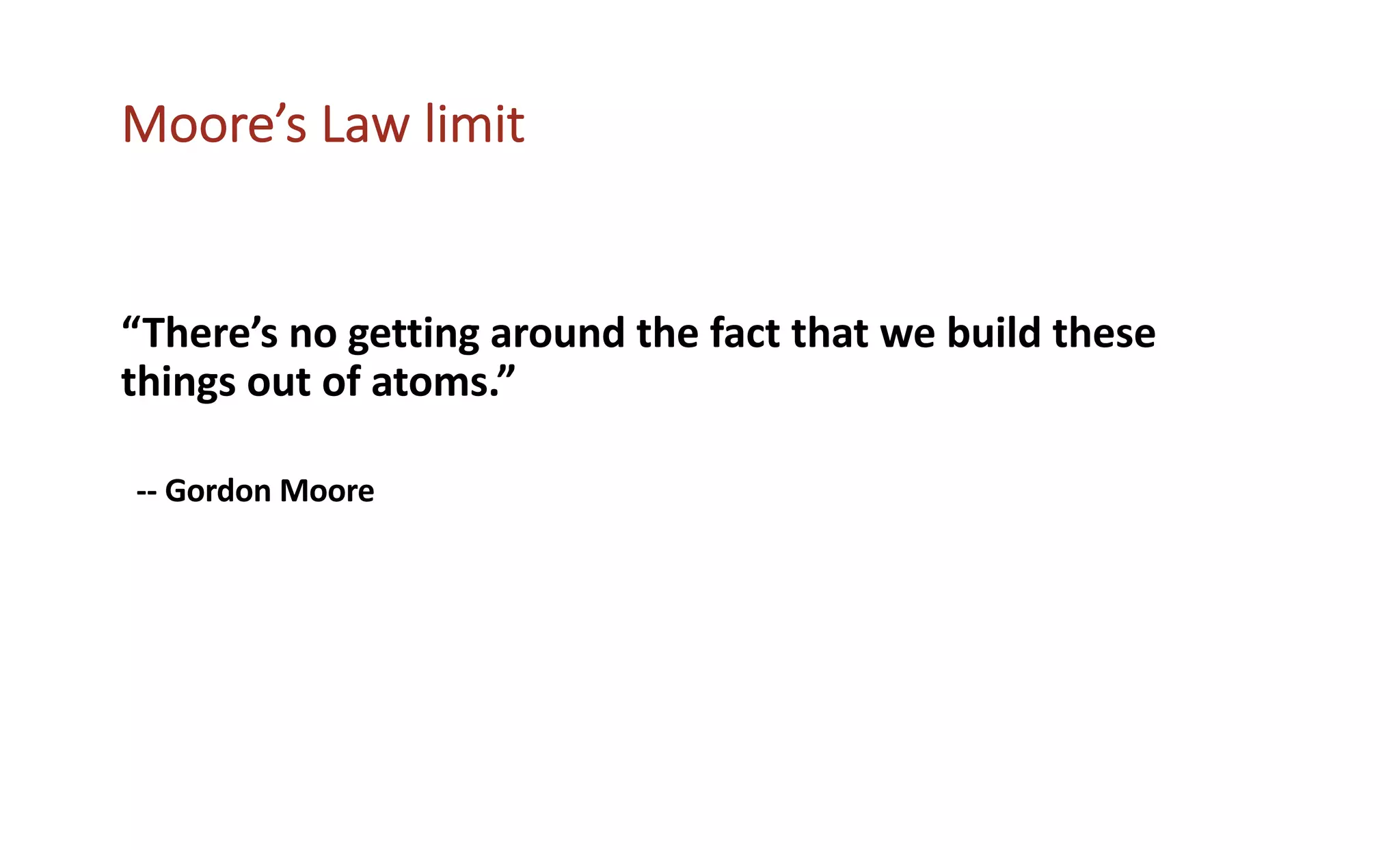
Moore’s Law limit
“There’s no getting around the fact that we build these
things out of atoms.”
-- Gordon Moore
The transition, to the post-Moore era
A pressing need
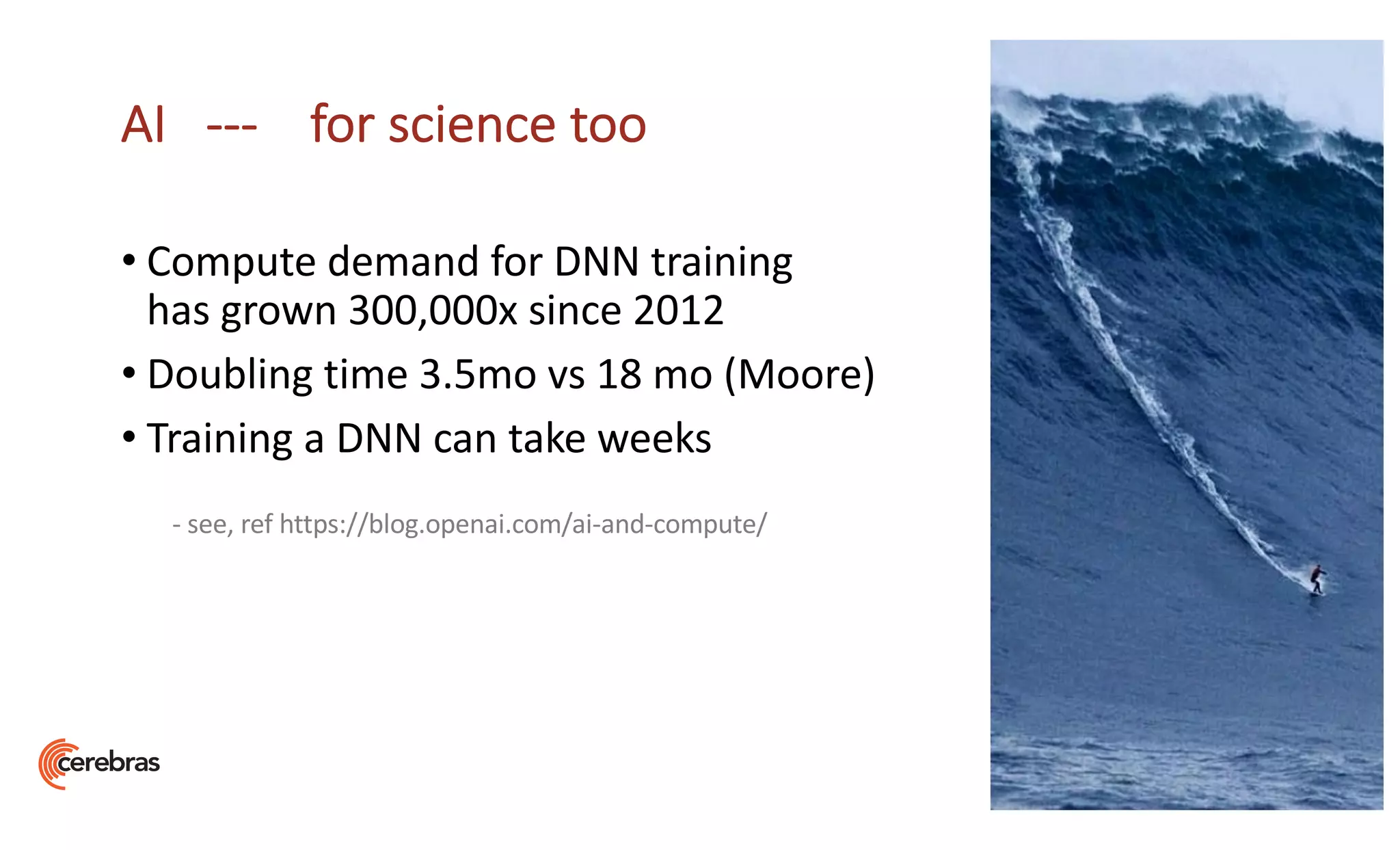
AI --- for science too
• Compute demand for DNN training
has grown 300,000x since 2012
• Doubling time 3.5mo vs 18 mo (Moore)
• Training a DNN can take weeks
- see, ref https://blog.openai.com/ai-and-compute/
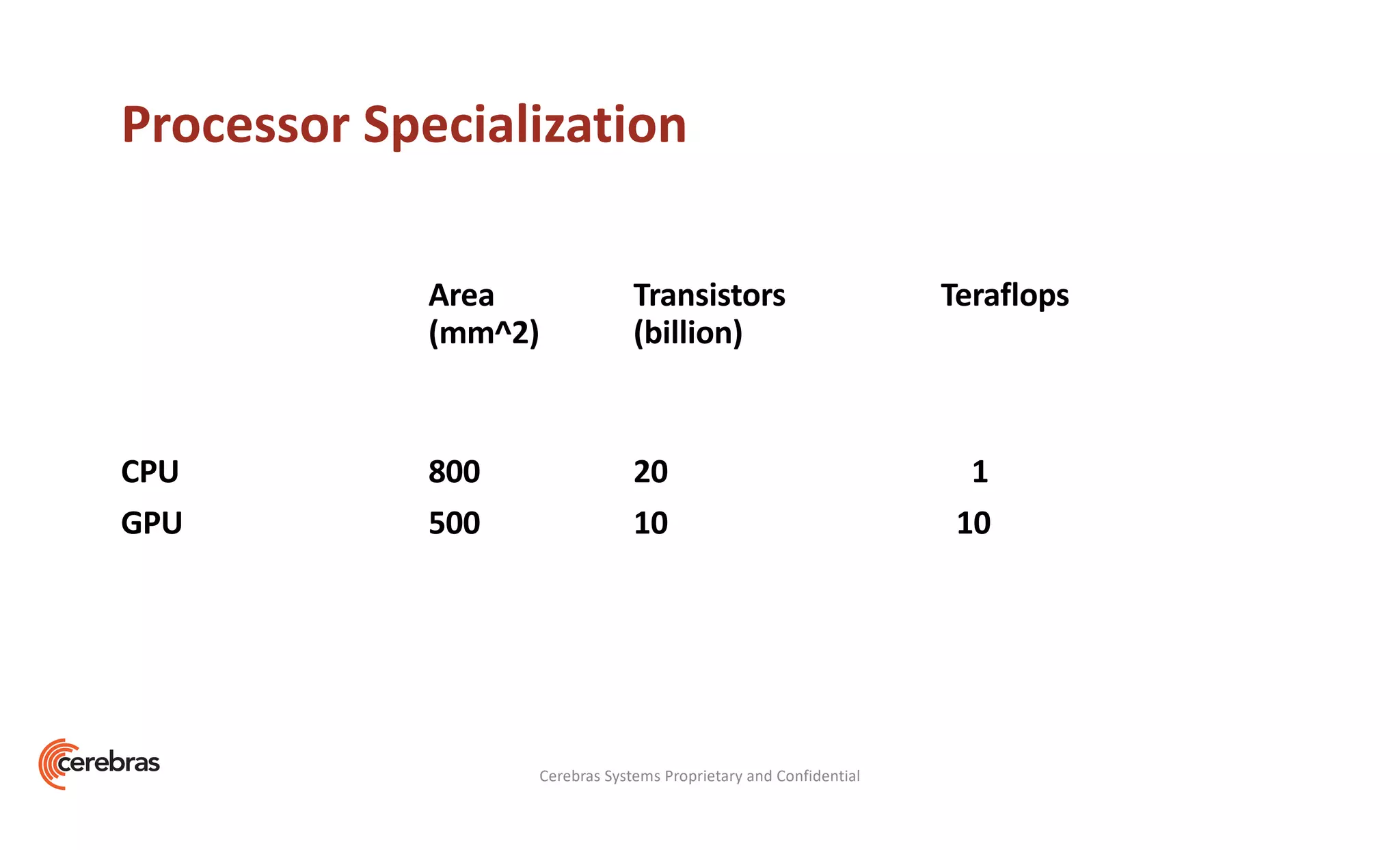
Processor Specialization
Area Transistors Teraflops
(mm^2) (billion)
CPU 800 20 1
GPU 500 10 10
Cerebras Systems Proprietary and Confidential
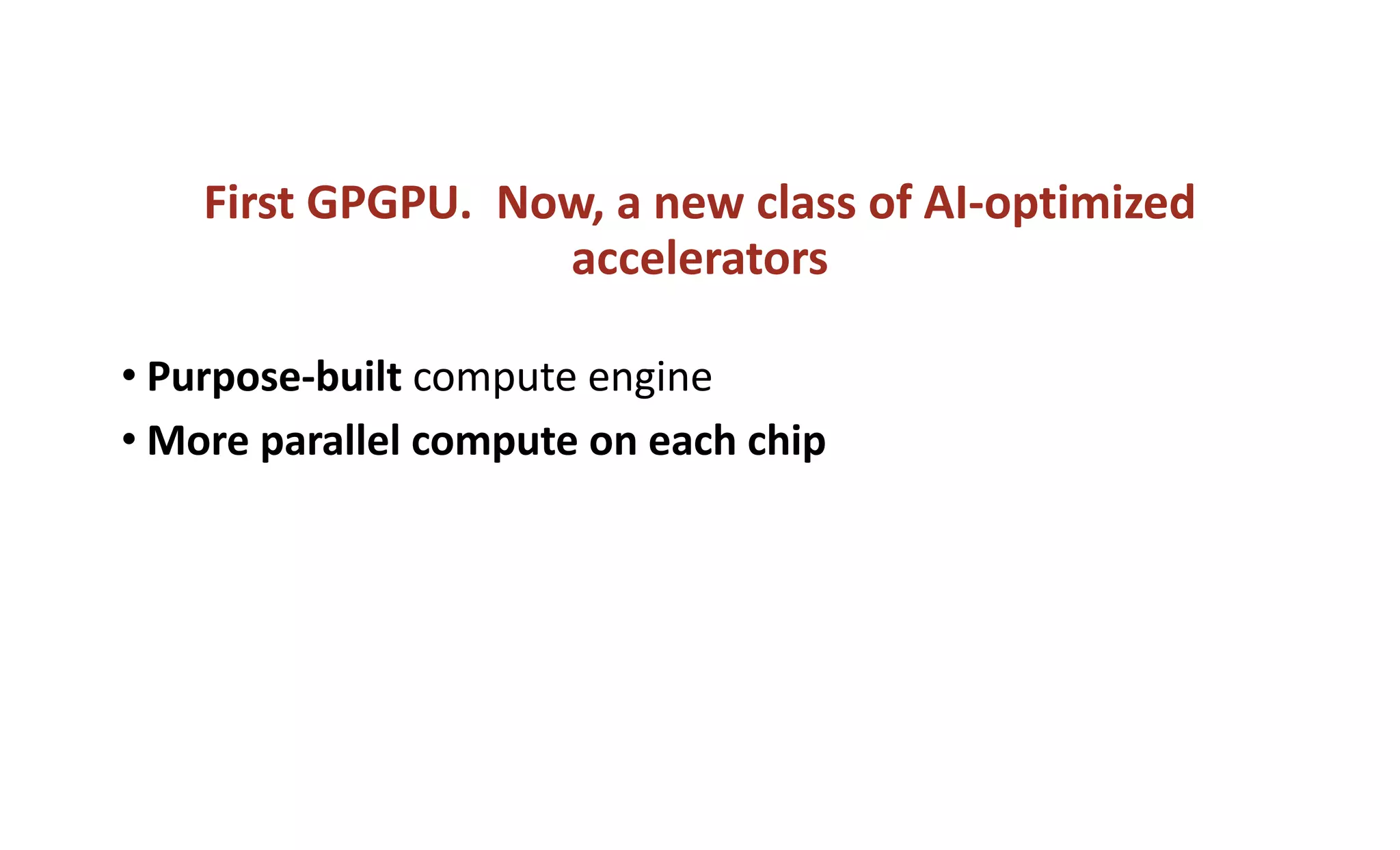
First GPGPU. Now, a new class of AI-optimized
accelerators
• Purpose-built compute engine
• More parallel compute on each chip
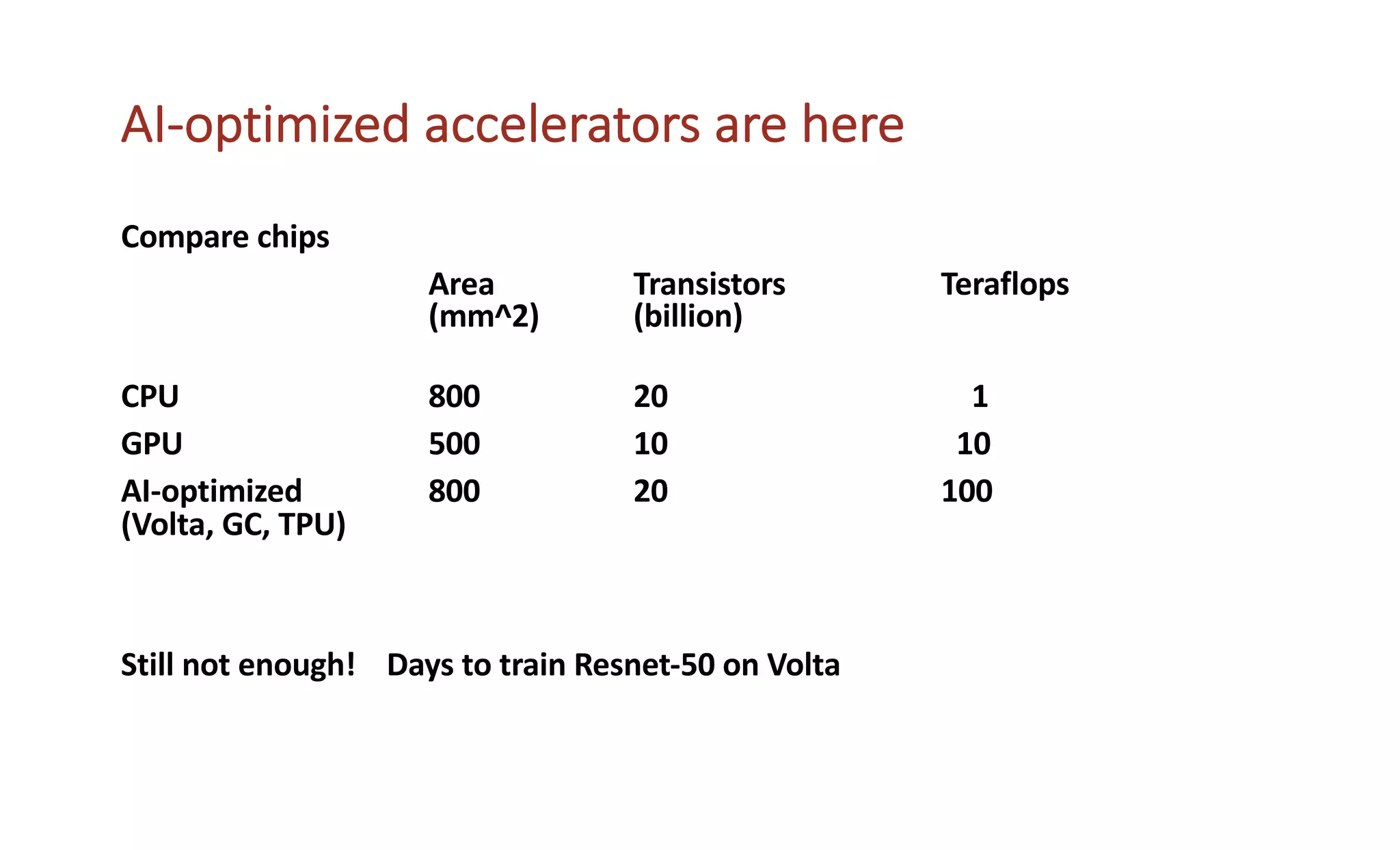
AI-optimized accelerators are here
Compare chips
Area Transistors Teraflops
(mm^2) (billion)
CPU 800 20 1
GPU 500 10 10
AI-optimized 800 20 100
(Volta, GC, TPU)
Still not enough! Days to train Resnet-50 on Volta
A New Era
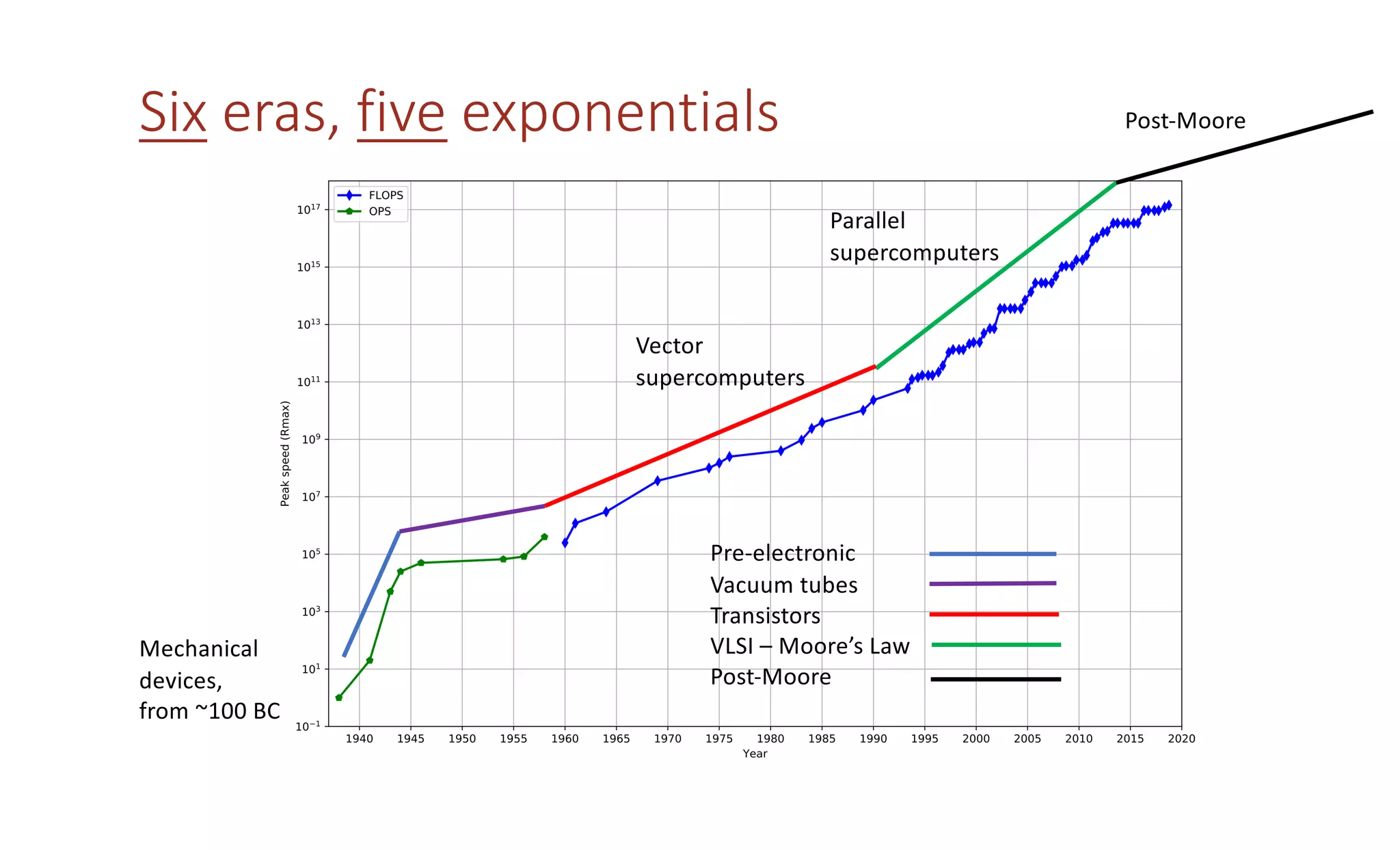
Six eras, five exponentials
Pre-electronic
Vacuum tubes
Transistors
VLSI – Moore’s Law
Post-Moore
Parallel
supercomputers
Vector
supercomputers
Post-Moore
Mechanical
devices,
from ~100 BC
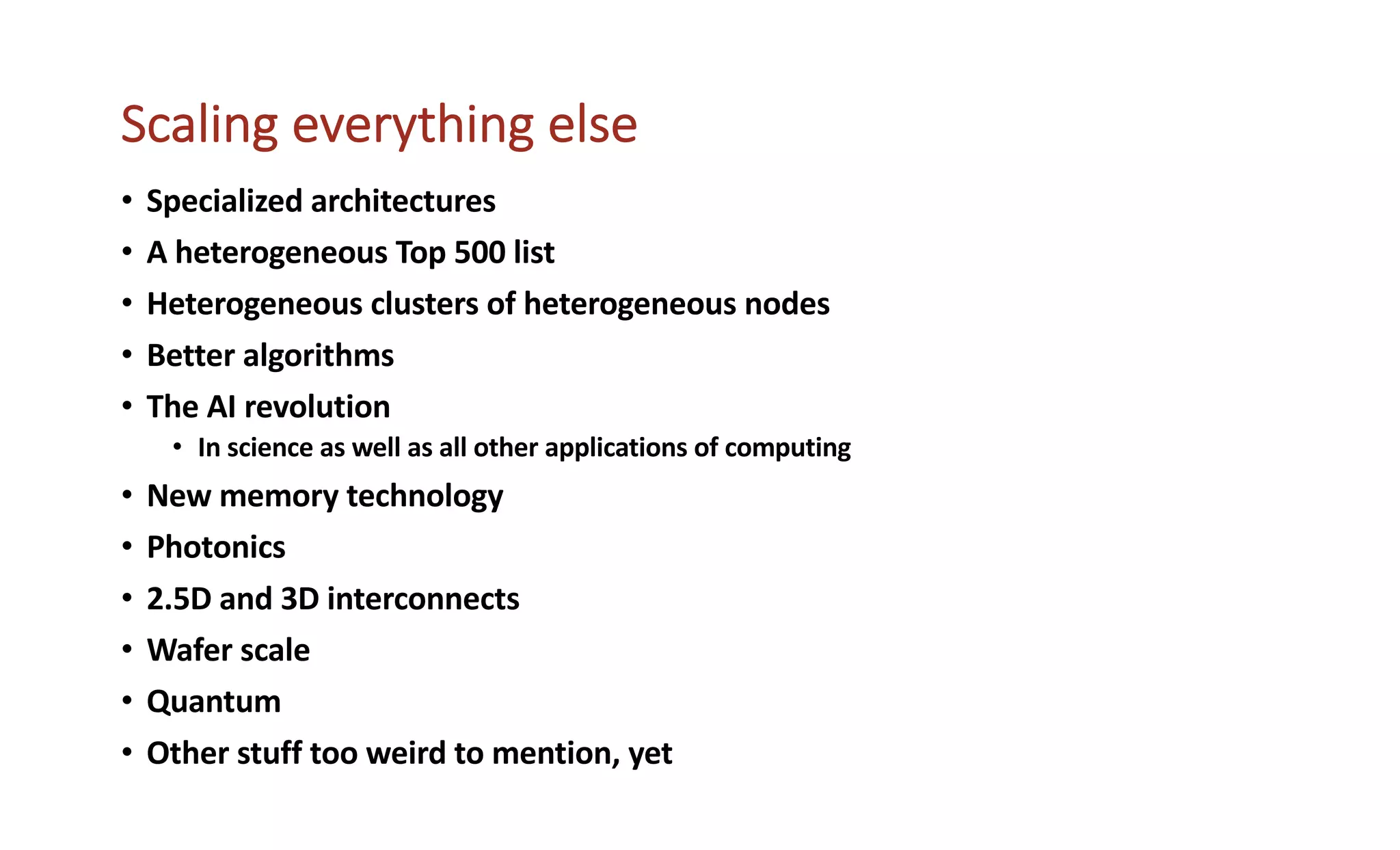
Scaling everything else
• Specialized architectures
• A heterogeneous Top 500 list
• Heterogeneous clusters of heterogeneous nodes
• Better algorithms
• The AI revolution
• In science as well as all other applications of computing
• New memory technology
• Photonics
• 2.5D and 3D interconnects
• Wafer scale
• Quantum
• Other stuff too weird to mention, yet
Chip scaling and feature scaling
When feature size scaling stops, use bigger chips
EE Times, May 24, 2019
Startups Cerebras, Habana, and UpMem will unveil new deep-learning
processors. Cerebras will describe a much-anticipated device using
wafer-scale integration.
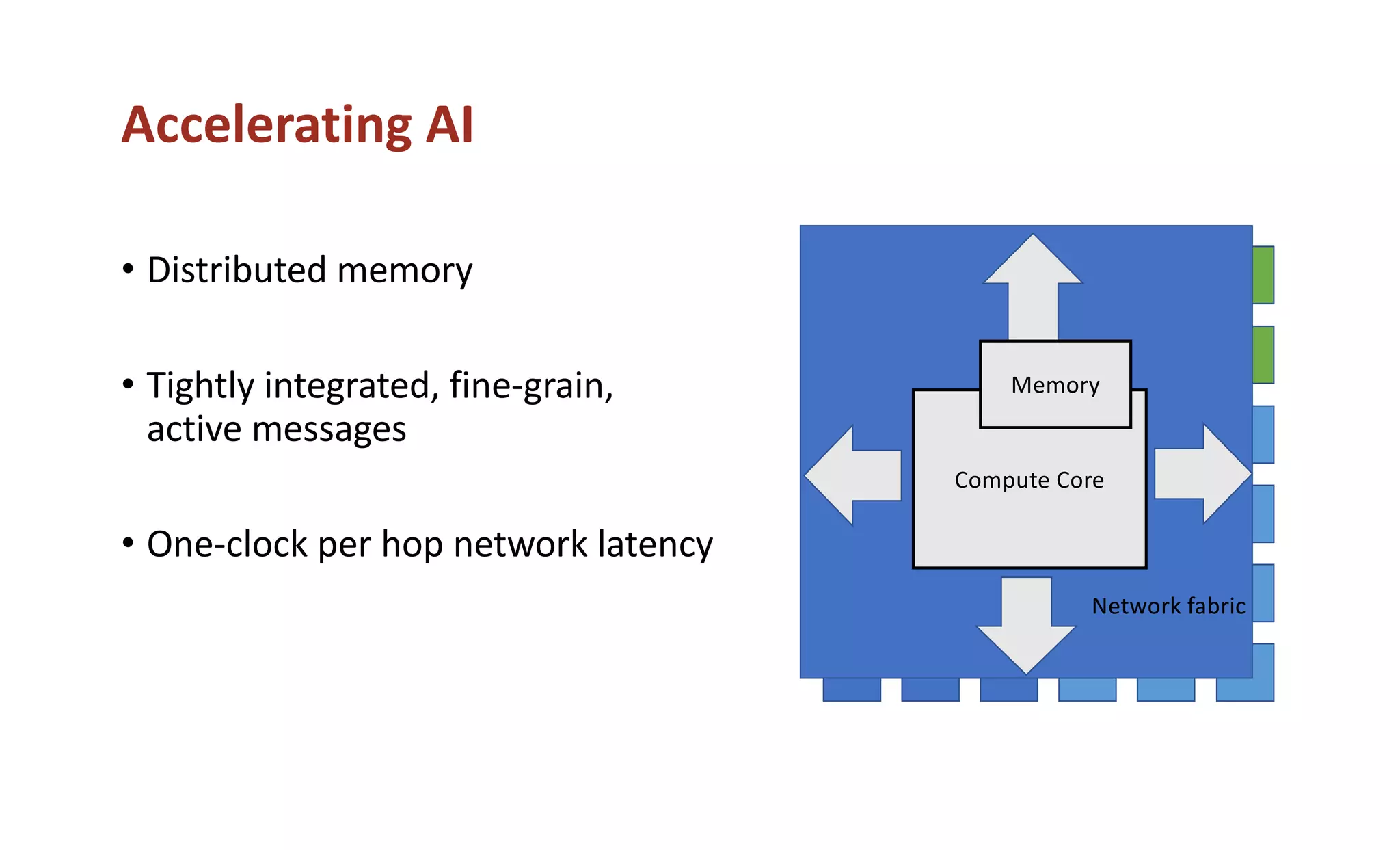
Accelerating AI
Compute Core
Network fabric
Memory
• Distributed memory
• Tightly integrated, fine-grain,
active messages
• One-clock per hop network latency
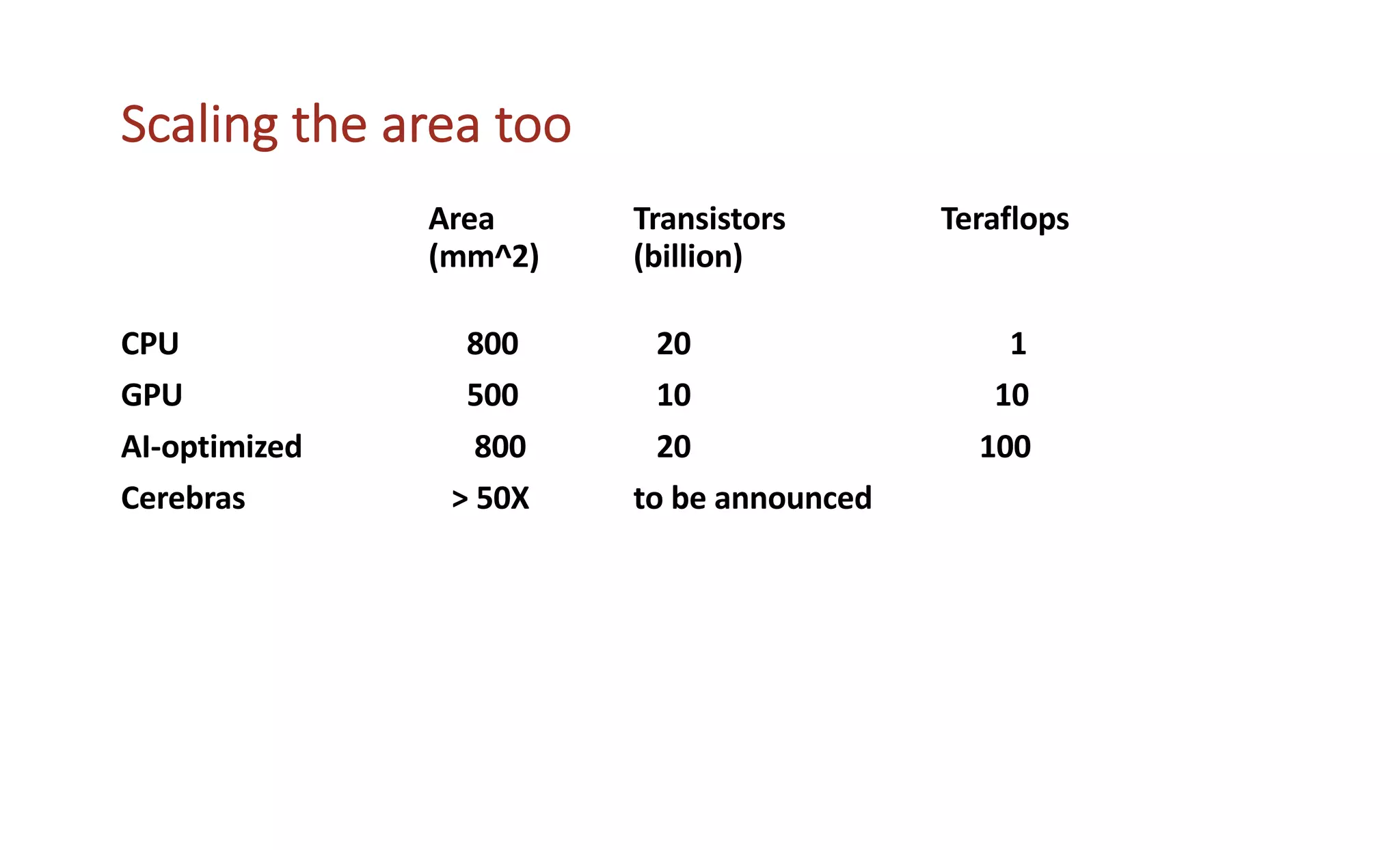
Scaling the area too
Area Transistors Teraflops
(mm^2) (billion)
CPU 800 20 1
GPU 500 10 10
AI-optimized 800 20 100
Cerebras > 50X to be announced
The Parallel Computing Revolution Is Only Half Over

The Parallel Computing Revolution Is Only Half Over

  • 1.
    The Parallel ComputingRevolution Is Only Half Over Rob Schreiber, Cerebras Systems, Inc. ATPESC, August 1, 2019
  • 2.
  • 3.
  • 4.
  • 5.
  • 6.
  • 7.
  • 8.
  • 9.
  • 10.
    Controversy Success! Technology Triumphant The Crisis APressing Need A New Era The parallel computing era
  • 11.
    Parallel computers wereonce controversial
  • 12.
    If the parallelfraction is f then the maximum possible speedup is 1/ f Amdahl
  • 13.
    Speedup, efficiency S(p) =T(1) / T(p) E(p) = S(p) / p
  • 14.
    Mapreduce: Parallelism iseasy. Performance is hard
  • 15.
    It’s the memoryand the network And the algorithm
  • 16.
    Dusty Decks Vendor: “Ican build you a machine that is a billion times more powerful than the one you used earlier” Customer: “But will I need to rewrite my code?”
  • 17.
    Automatic parallelization The compilershould create an optimized, parallel implementation of the algorithm in the code
  • 18.
    Alan Perlis Adapting oldprograms to fit new machines usually means adapting new machines to behave like old ones. Optimization hinders evolution. http://www.cs.yale.edu/homes/perlis-alan/quotes.html
  • 19.
  • 20.
    Almost all ofHPC machine performance is due to parallelism • 1975 – 2019: 108 flops à 1017 flops • 1 OOM from clock rate • 8 OOM from parallelism • 2 OOM more power required • 1 OOM more $ required
  • 21.
    Four eras, fourexponentials Pre-electronic Vacuum tubes Transistors VLSI – Moore’s Law Parallel supercomputers Sequential, vector Electro-mechanical calculators ENIAC
  • 22.
    The past iseasy to predict. The future?
  • 23.
    Ivan Sutherland, atCaltech, 1977 “The VLSI Revolution is Only Half Over”
  • 24.
    Was Sutherland right? Pre-electronic Vacuumtubes Transistors VLSI – Moore’s Law Parallel supercomputers Sequential, vector Ivan
  • 25.
  • 26.
  • 27.
    1975: HPC isbased on high-end technology Hardware was customized for HPC
  • 28.
    1971: Infancy ofSilicon Valley, microprocessor
  • 30.
  • 31.
    Architectures – noone knew what to do • SIMD / MIMD • Shared memory / Distributed memory • COMA • Hypercubes • Transputers • Message-passing dialects • Latency tolerance • From workstations to supercomputers
  • 32.
    The confused 80s Pre-electronic Vacuumtubes Transistors VLSI – Moore’s Law Parallel supercomputers Sequential, vector Custom, specialized VLSI
  • 33.
    1971 – 1990:Micros catch up • Transistor count doubles every two years. • 1971 – 2000 transistors (i4004) • 1990 – 1,000,000 transistors (i80486) • It took 19 years of exponential growth to catch up to old style computers for HPC • But then…
  • 34.
    Killer micros “No onewill survive The Attack of the Killer Micros” Eugene Brooks, Panel talk at Supercomputing 90. Cray Research says it is worried by "killer micros" – compact, extremely fast work stations that sell for less than $100,000. John Markoff, in the New York Times, 1991
  • 35.
    VLSI and supercomputersafter 1990 Then the attack really happens • A mass market drove investment and innovation • Dennard scaling made micros faster, cheaper, same power • Commodity pricing killed architectural specialization • By 2000, all HPC machines are clusters of commodity designs • AND – we knew how to program them (MPI)
  • 36.
    From 1990 to2010 7 OOM, from 0.1 teraflops to 0.1 exaflops Greater than the gains from 1942 (pre-electronic) to 1990 A loss of computer design diversity; the one-size-fits-all processor
  • 37.
  • 38.
    Dennard Scaling Ended …in every technology generation the transistor density doubles, the circuit becomes 40% faster, and power consumption (with twice the number of transistors) stays the same. • 2005-2007: leaky transistors. Vdd stops dropping. Clock rate hits a wall.
  • 39.
    Moore’s Law limit “There’sno getting around the fact that we build these things out of atoms.” -- Gordon Moore
  • 40.
    The transition, tothe post-Moore era
  • 41.
  • 42.
    AI --- forscience too • Compute demand for DNN training has grown 300,000x since 2012 • Doubling time 3.5mo vs 18 mo (Moore) • Training a DNN can take weeks - see, ref https://blog.openai.com/ai-and-compute/
  • 43.
    Processor Specialization Area TransistorsTeraflops (mm^2) (billion) CPU 800 20 1 GPU 500 10 10 Cerebras Systems Proprietary and Confidential
  • 44.
    First GPGPU. Now,a new class of AI-optimized accelerators • Purpose-built compute engine • More parallel compute on each chip
  • 45.
    AI-optimized accelerators arehere Compare chips Area Transistors Teraflops (mm^2) (billion) CPU 800 20 1 GPU 500 10 10 AI-optimized 800 20 100 (Volta, GC, TPU) Still not enough! Days to train Resnet-50 on Volta
  • 46.
  • 47.
    Six eras, fiveexponentials Pre-electronic Vacuum tubes Transistors VLSI – Moore’s Law Post-Moore Parallel supercomputers Vector supercomputers Post-Moore Mechanical devices, from ~100 BC
  • 48.
    Scaling everything else •Specialized architectures • A heterogeneous Top 500 list • Heterogeneous clusters of heterogeneous nodes • Better algorithms • The AI revolution • In science as well as all other applications of computing • New memory technology • Photonics • 2.5D and 3D interconnects • Wafer scale • Quantum • Other stuff too weird to mention, yet
  • 49.
    Chip scaling andfeature scaling When feature size scaling stops, use bigger chips
  • 50.
    EE Times, May24, 2019 Startups Cerebras, Habana, and UpMem will unveil new deep-learning processors. Cerebras will describe a much-anticipated device using wafer-scale integration.
  • 51.
    Accelerating AI Compute Core Networkfabric Memory • Distributed memory • Tightly integrated, fine-grain, active messages • One-clock per hop network latency
  • 52.
    Scaling the areatoo Area Transistors Teraflops (mm^2) (billion) CPU 800 20 1 GPU 500 10 10 AI-optimized 800 20 100 Cerebras > 50X to be announced