 Literature survey
 Introduction
 Operating system
 Measurement of speed
 Types of super computers
 Differ from our computer
 Uses
 Advantages
 Dis-advantages
 conclusion
sampath (cse - e4)
sampath (cse - e4)
sampath (cse - e4)
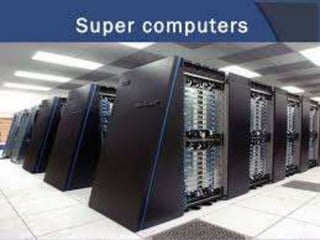
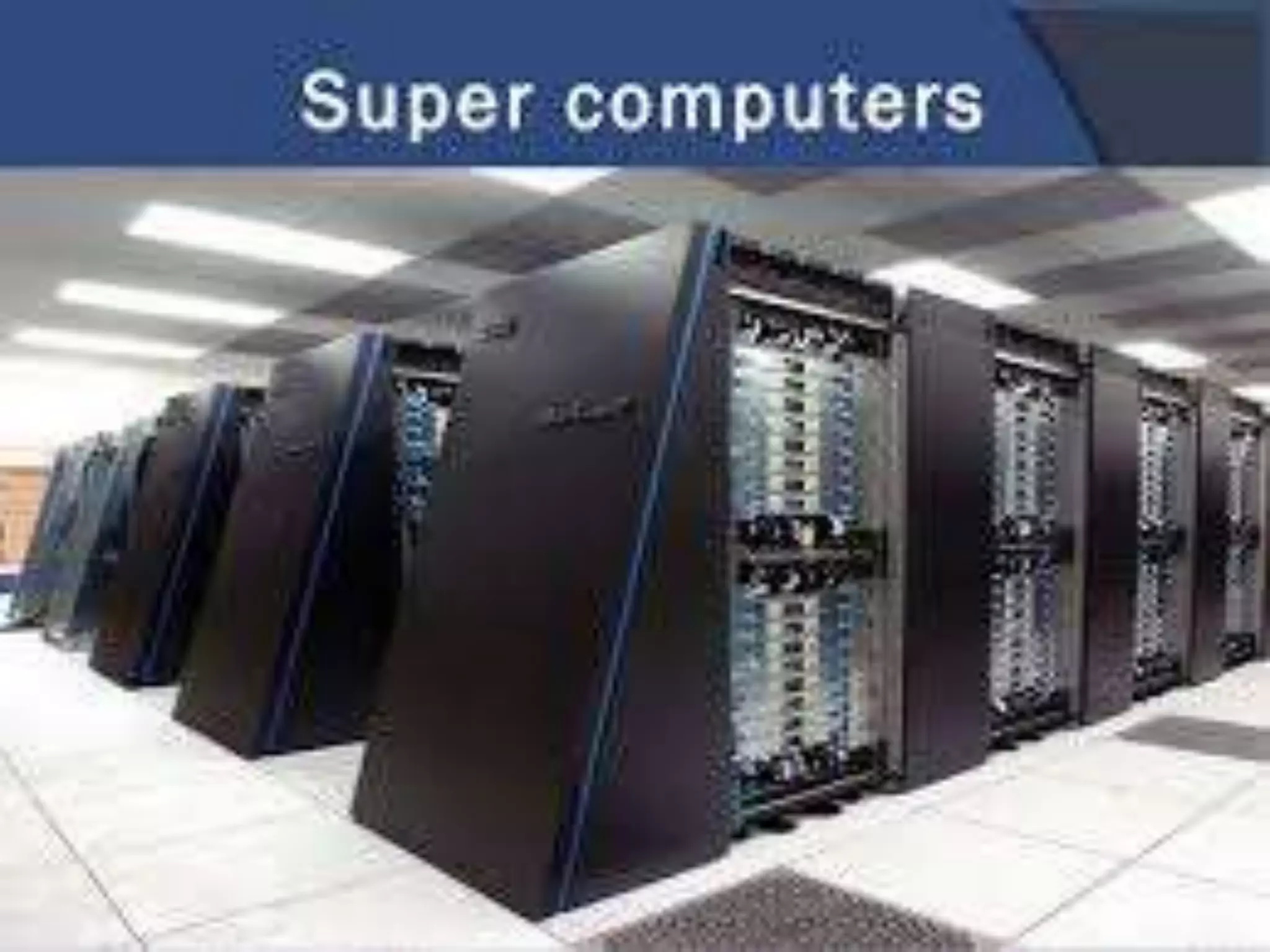
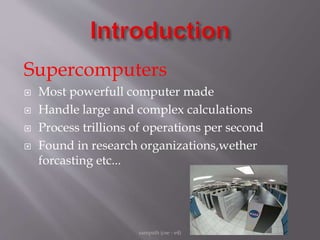
Supercomputers
 Most powerfull computer made
 Handle large and complex calculations
 Process trillions of operations per second
 Found in research organizations,wether
forcasting etc...
sampath (cse - e4)
 Run on a linux or unix operating system, as
these operating systems are extremly
flexible,stable and efficient
 These typically have multiple processors and
variety of other technology tricks to ensure that
they run smoothly
sampath (cse - e4)
 Superconductors speed are measured in
floating value per second(FLOPS)
 Units
a) Megaflops(MFLOPS)
b) Gigaflops(GFLOPS)
c) Teraflops(TFLOPS)
d) Petaflops(PFLOPS)
sampath (cse - e4)
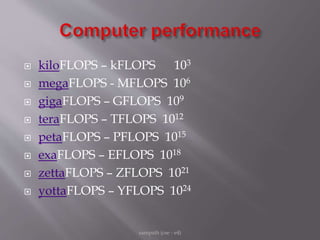
 kiloFLOPS – kFLOPS 103
 megaFLOPS - MFLOPS 106
 gigaFLOPS – GFLOPS 109
 teraFLOPS – TFLOPS 1012
 petaFLOPS – PFLOPS 1015
 exaFLOPS – EFLOPS 1018
 zettaFLOPS – ZFLOPS 1021
 yottaFLOPS – YFLOPS 1024
sampath (cse - e4)
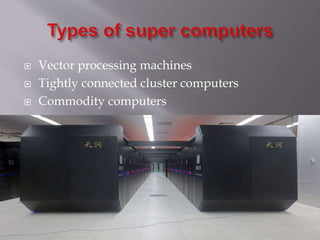
 Vector processing machines
 Tightly connected cluster computers
 Commodity computers
sampath (cse - e4)
 Also called array processor
 Able to run mathematical operations very
quickly
 Common in scientific sector of computing
sampath (cse - e4)
sampath (cse - e4)
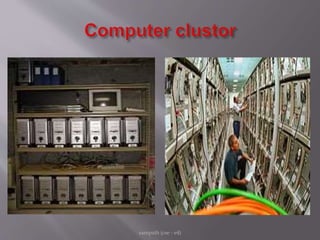
 Group of connected computers that work
together as a unit
 Types
i. Director-based cluster
ii. Two node cluster
iii. Multi node cluster
iv. Massively parllel cluster
sampath (cse - e4)
 A large number of commodity pc’s inter
connected with high bandwidth low latency
Local area networks
sampath (cse - e4)
 Cost : range from $100,000-$1,000,000
 Environment : most required environmentally
controlled rooms
 Peripherals : lack sound cards , graphic ,
keyboards
 Programming language : FORTRON
sampath (cse - e4)
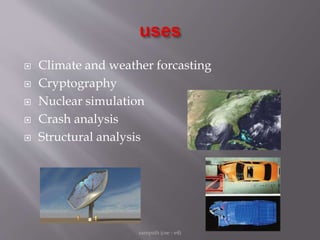
 Climate and weather forcasting
 Cryptography
 Nuclear simulation
 Crash analysis
 Structural analysis
sampath (cse - e4)
 Solve bigger problems
 Run more problems in shorter time
 May save money
 Allows for virtual testing
 Weather for casting and materiology
 Scientific simulations
sampath (cse - e4)
 Can be expensive
 Takes up a lot of space
 May only be good for specific applications
 Does not replace physical testing
 Requires trained staff
sampath (cse - e4)
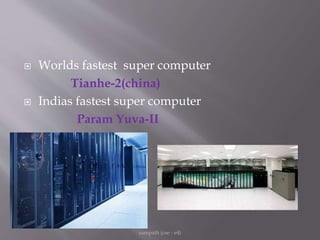
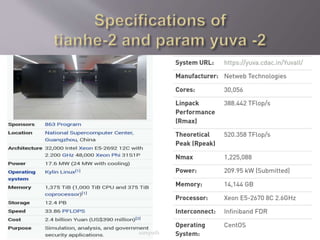
 Worlds fastest super computer
Tianhe-2(china)
 Indias fastest super computer
Param Yuva-II
sampath (cse - e4)
sampath (cse - e4)
 Super computers of today are general purpose
computers of tommorrow
 Many important applications need the better
main memory bandwidth and computing
power that are available only in super
computers
sampath (cse - e4)
sampath (cse - e4)

Super computer 2017

  • 2.
     Literature survey Introduction  Operating system  Measurement of speed  Types of super computers  Differ from our computer  Uses  Advantages  Dis-advantages  conclusion sampath (cse - e4)
  • 3.
  • 4.
  • 5.
    Supercomputers  Most powerfullcomputer made  Handle large and complex calculations  Process trillions of operations per second  Found in research organizations,wether forcasting etc... sampath (cse - e4)
  • 6.
     Run ona linux or unix operating system, as these operating systems are extremly flexible,stable and efficient  These typically have multiple processors and variety of other technology tricks to ensure that they run smoothly sampath (cse - e4)
  • 7.
     Superconductors speedare measured in floating value per second(FLOPS)  Units a) Megaflops(MFLOPS) b) Gigaflops(GFLOPS) c) Teraflops(TFLOPS) d) Petaflops(PFLOPS) sampath (cse - e4)
  • 8.
     kiloFLOPS –kFLOPS 103  megaFLOPS - MFLOPS 106  gigaFLOPS – GFLOPS 109  teraFLOPS – TFLOPS 1012  petaFLOPS – PFLOPS 1015  exaFLOPS – EFLOPS 1018  zettaFLOPS – ZFLOPS 1021  yottaFLOPS – YFLOPS 1024 sampath (cse - e4)
  • 9.
     Vector processingmachines  Tightly connected cluster computers  Commodity computers sampath (cse - e4)
  • 10.
     Also calledarray processor  Able to run mathematical operations very quickly  Common in scientific sector of computing sampath (cse - e4)
  • 11.
  • 12.
     Group ofconnected computers that work together as a unit  Types i. Director-based cluster ii. Two node cluster iii. Multi node cluster iv. Massively parllel cluster sampath (cse - e4)
  • 13.
     A largenumber of commodity pc’s inter connected with high bandwidth low latency Local area networks sampath (cse - e4)
  • 14.
     Cost :range from $100,000-$1,000,000  Environment : most required environmentally controlled rooms  Peripherals : lack sound cards , graphic , keyboards  Programming language : FORTRON sampath (cse - e4)
  • 15.
     Climate andweather forcasting  Cryptography  Nuclear simulation  Crash analysis  Structural analysis sampath (cse - e4)
  • 16.
     Solve biggerproblems  Run more problems in shorter time  May save money  Allows for virtual testing  Weather for casting and materiology  Scientific simulations sampath (cse - e4)
  • 17.
     Can beexpensive  Takes up a lot of space  May only be good for specific applications  Does not replace physical testing  Requires trained staff sampath (cse - e4)
  • 18.
     Worlds fastestsuper computer Tianhe-2(china)  Indias fastest super computer Param Yuva-II sampath (cse - e4)
  • 19.
  • 20.
     Super computersof today are general purpose computers of tommorrow  Many important applications need the better main memory bandwidth and computing power that are available only in super computers sampath (cse - e4)
  • 21.