CELL MEMBRANES AND
     TRANSPORT


  The fluid mosaic model of
    membrane structure
                              ALBIO9700/2006JK
Phospholipids
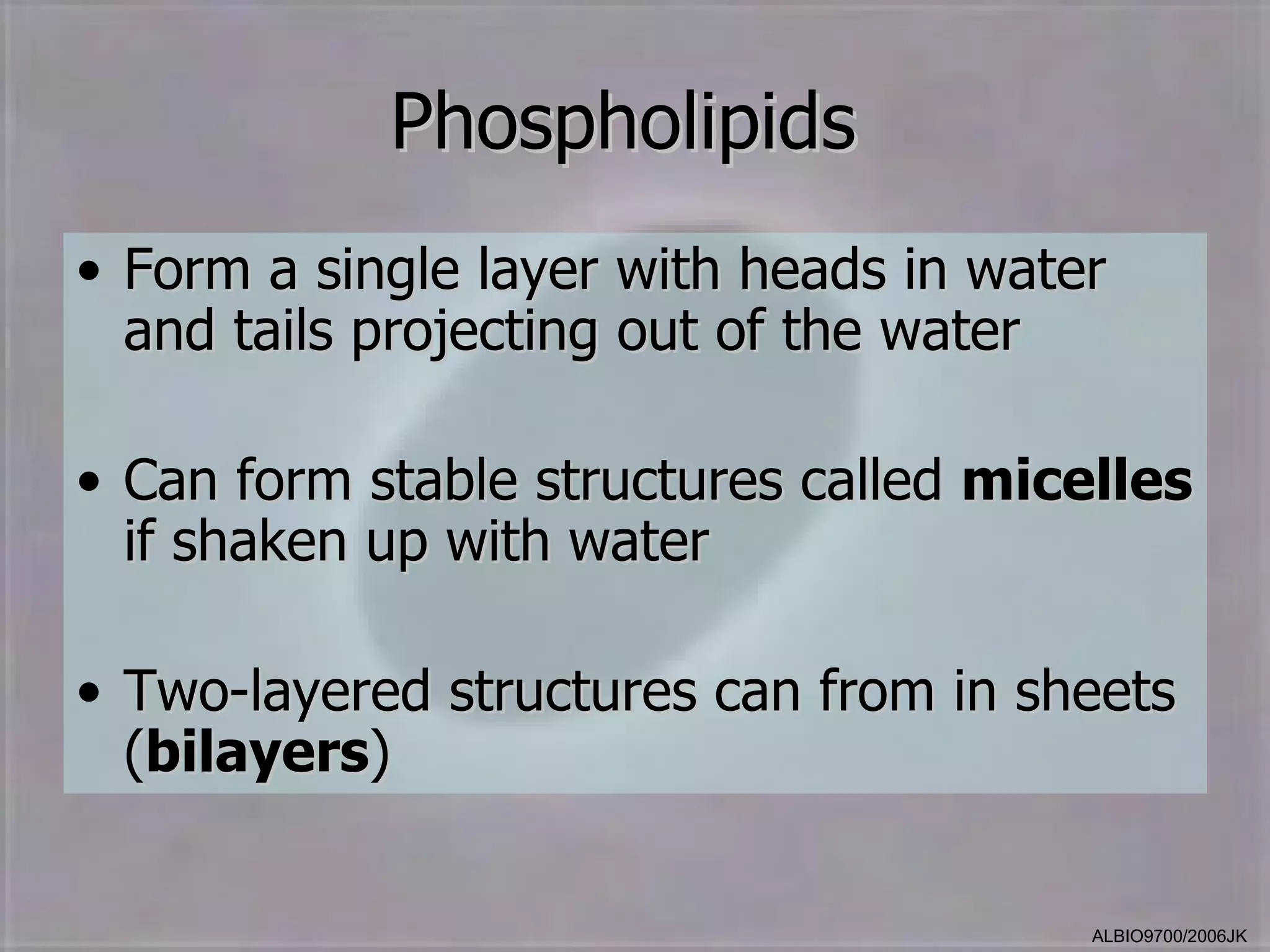
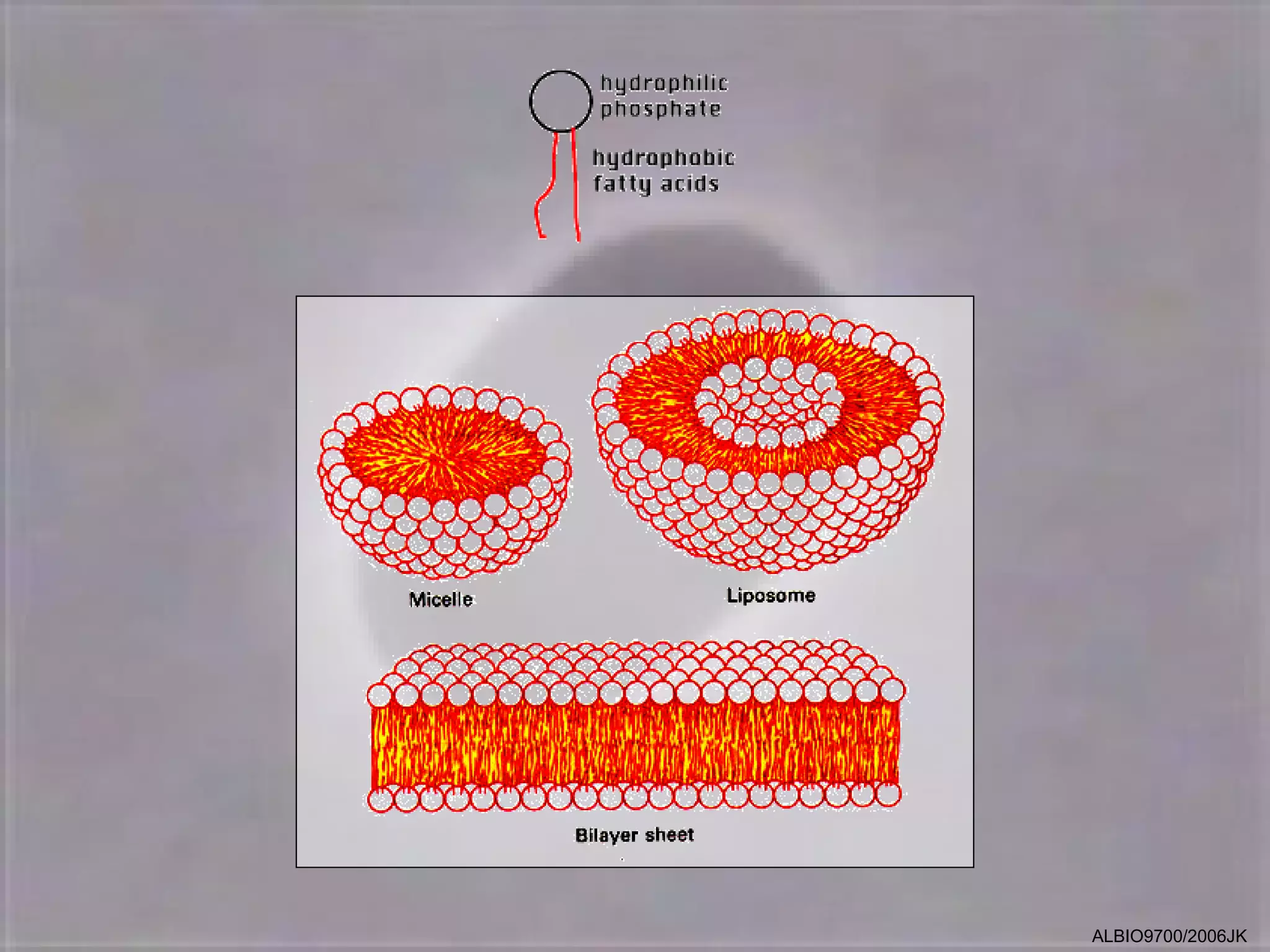
• Form a single layer with heads in water
  and tails projecting out of the water

• Can form stable structures called micelles
  if shaken up with water

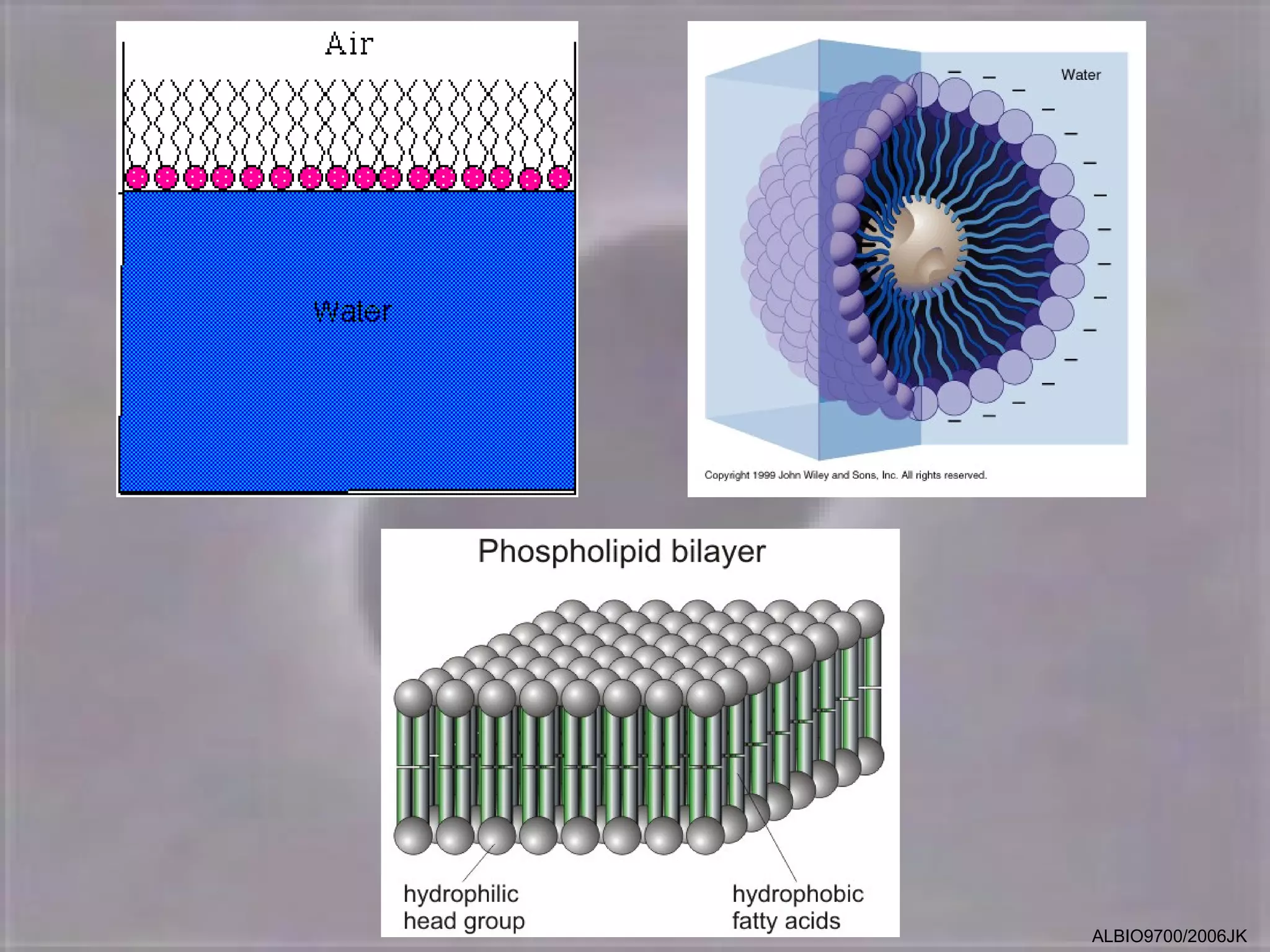
• Two-layered structures can from in sheets
  (bilayers)


                                        ALBIO9700/2006JK
ALBIO9700/2006JK
ALBIO9700/2006JK
Structure of membranes
• The phospholipid bilayer is visible using the
  electron microscope (> x100 000)
• 7nm wide
• Also contains proteins
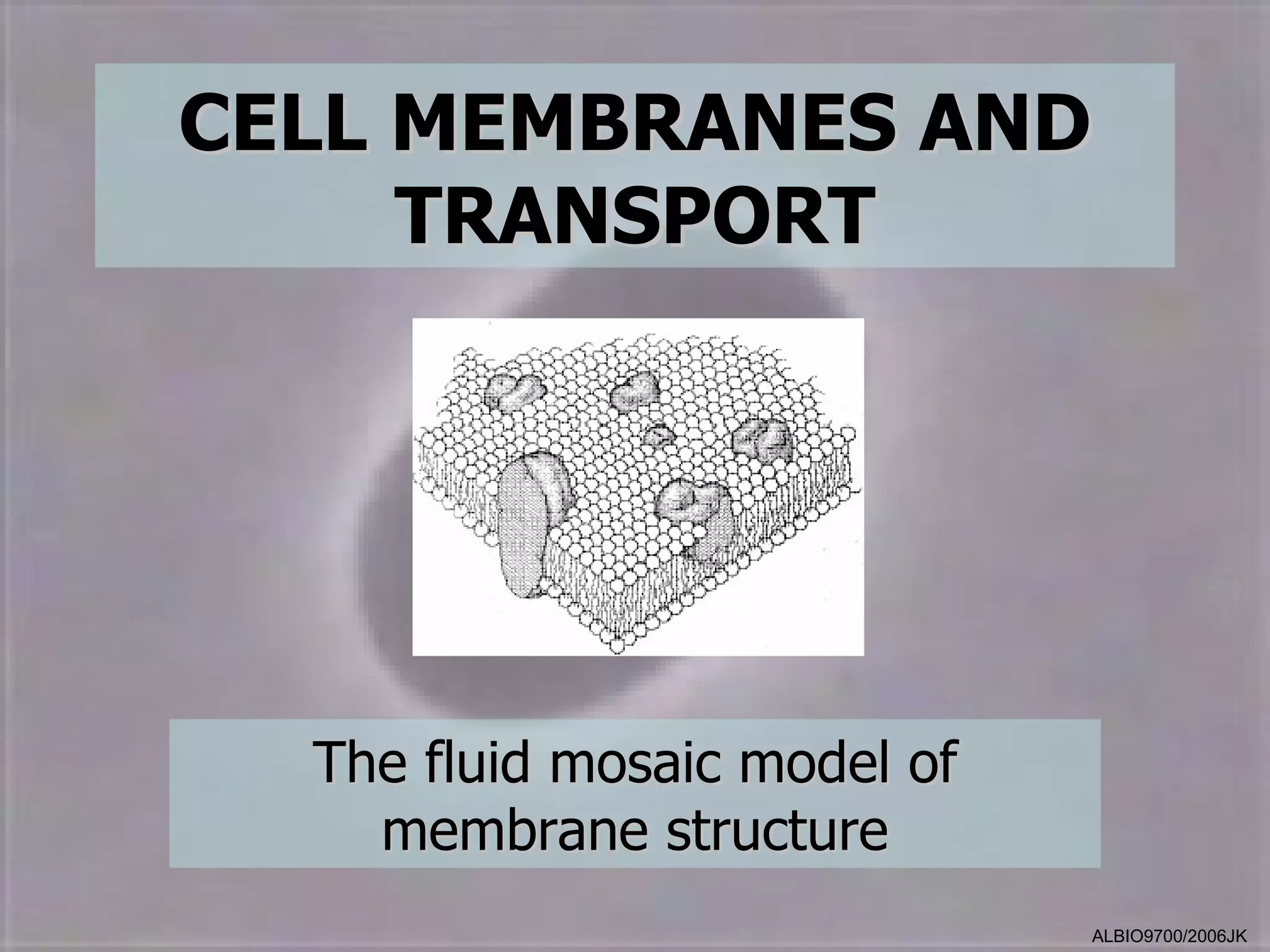
• Model for the structure is called fluid mosaic
  model
• ‘fluid’ – the individual phospholipid and protein
  molecules move around within their layer
• ‘mosaic’ – describes the pattern produced by the
  scattered protein molecules when the surface of
  the membrane is viewed from above
                                              ALBIO9700/2006JK
ALBIO9700/2006JK
Features of the fluid mosaic model
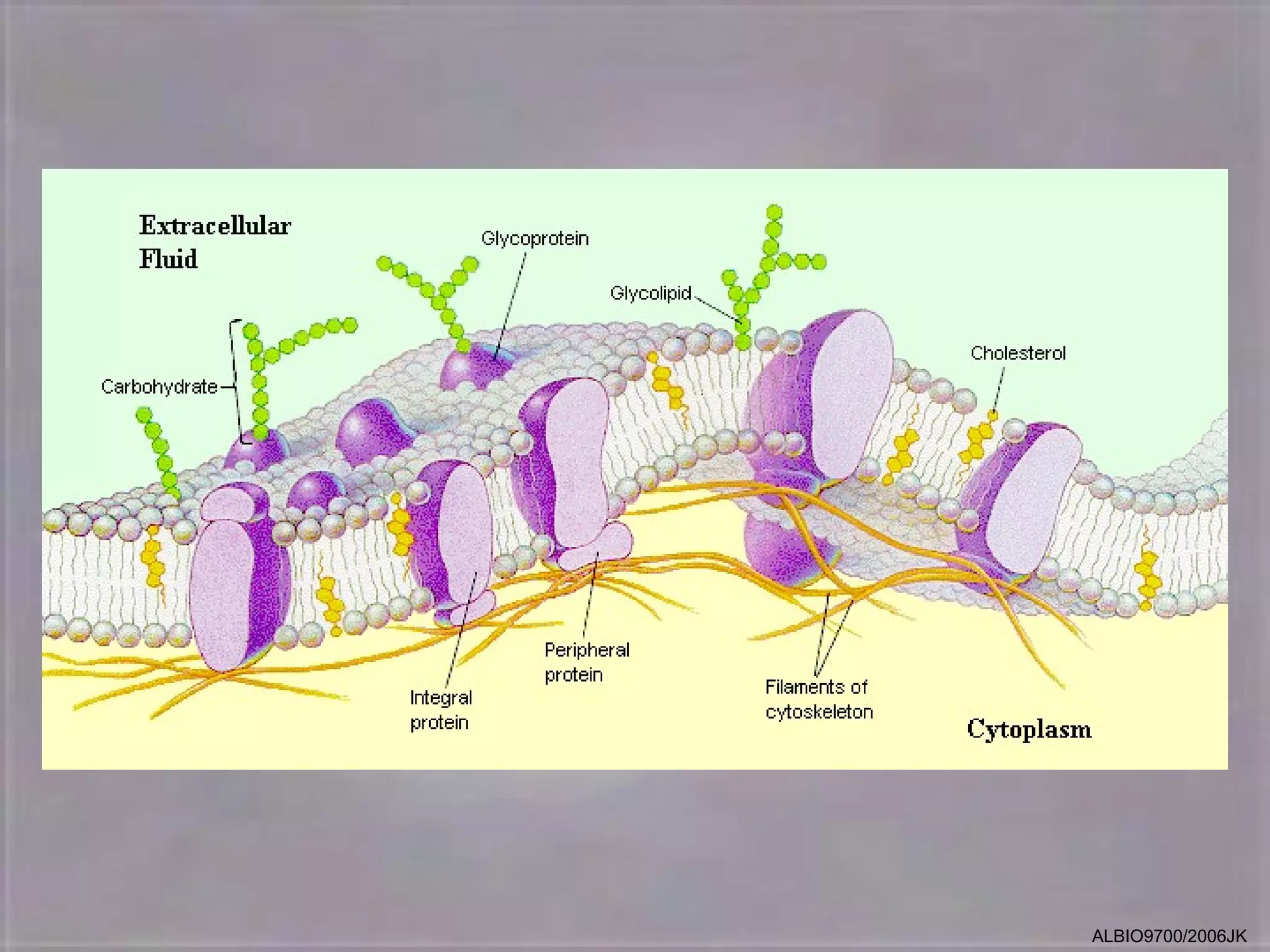
• Membrane is bilayer of phospholipid molecules that
  move about by diffusion within their own monolayer
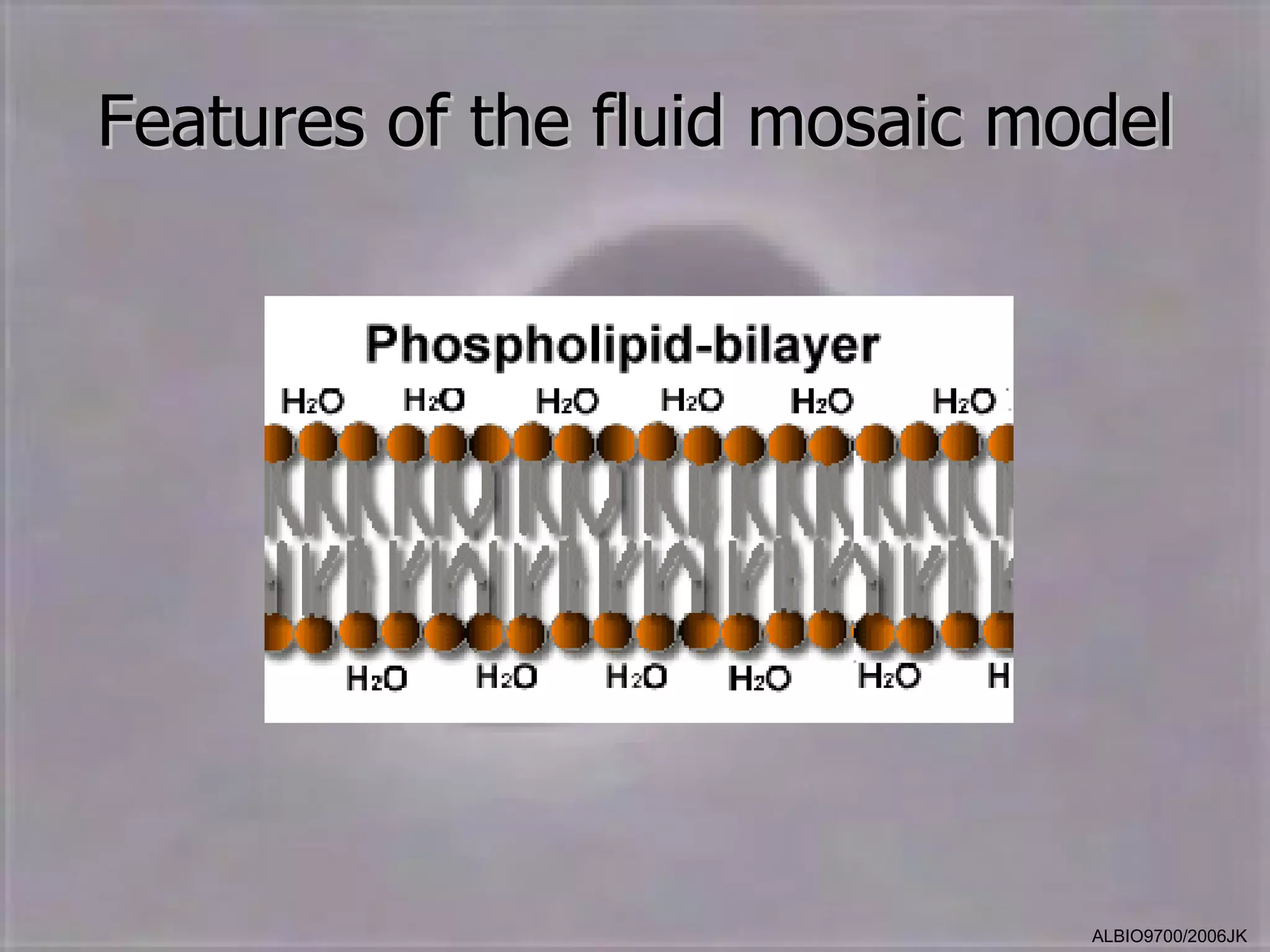
• Phospholipid tails point inwards and form a non-polar
  hydrophobic interior. Heads face the aqueous medium
  surrounding membrane
• Some phospholipid tails are saturated and some
  unsaturated. The more unsaturated, the more fluid the
  membrane
• Most protein molecules float in phospholipid layers
• Some proteins are embedded in the outer layer, some in
  the inner layer and some span the whole membrane
• Thickness = 7nm
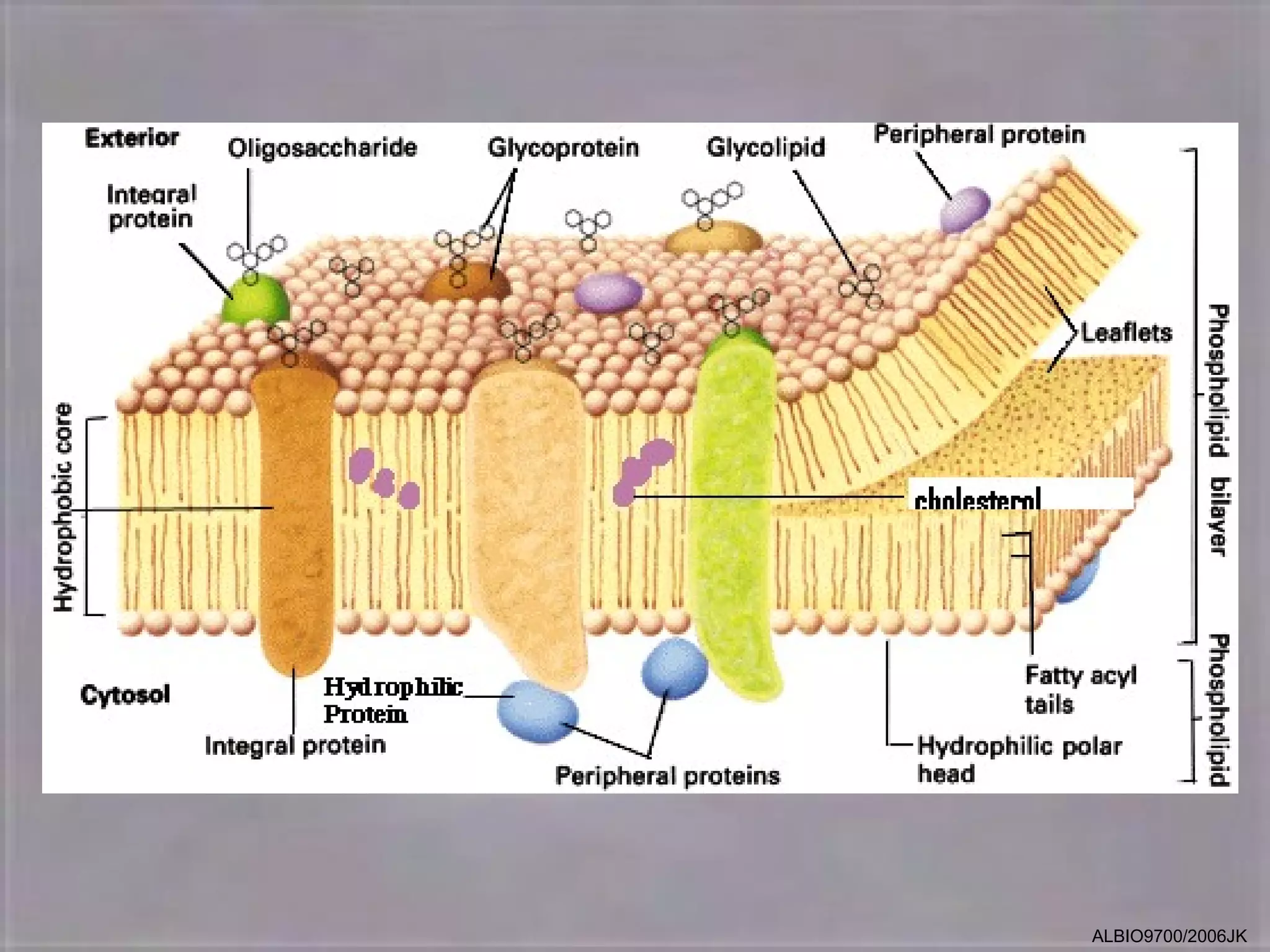
• Many proteins and lipids have short , branching
  carbohydrate chains attached to the external surface,
  forming glycoproteins and glycolipids
• presence of cholesterol
                                                   ALBIO9700/2006JK
Features of the fluid mosaic model


                               ALBIO9700/2006JK
ALBIO9700/2006JK
Roles of components of cell
             membranes
• Phospholipids
  – Form bilayer (basic structure of membrane)
  – Act as a barrier to most water-soluble substances
• Cholesterol
  – Have hydrophilic heads and hydrophobic tails
  – Regulates the fluidity of the membrane, preventing it
    from becoming too fluid or too rigid
  – Important for the mechanical stability of membranes
  – Hydrophobic regions help to prevent ions or polar
    molecules from passing through the membrane
    (myelin sheath around nerve cells – leakage of ions
    would slow down nerve impulses)

                                                    ALBIO9700/2006JK
• Proteins
  – Transport proteins: provide hydrophilic channels or
    passageways for ions and polar molecules to pass
    through the membrane
  – Enzymes: catalyse the hydrolysis of molecules such
    disaccharides (small intestines)
  – Protein in membranes of organelles
    (mitochondria and chloroplasts): involved in the
    processes of respiration and photosynthesis
• Glycolipids and glycoprotein
  – Protein and lipid molecules with short carbohydrate
    chains
  – Form hydrogen bonds with the water molecules and
    so help to stabilise the membrane structure
  – Act as receptor molecules, binding with hormones
    or neurotransmitters (chemicals that enable nerve
    impulses to pass from one nerve cell to another)
                                                  ALBIO9700/2006JK
ALBIO9700/2006JK

The fluid mosaic model of membrane structure

  • 1.
    CELL MEMBRANES AND TRANSPORT The fluid mosaic model of membrane structure ALBIO9700/2006JK
  • 2.
    Phospholipids • Form asingle layer with heads in water and tails projecting out of the water • Can form stable structures called micelles if shaken up with water • Two-layered structures can from in sheets (bilayers) ALBIO9700/2006JK
  • 3.
  • 4.
  • 5.
    Structure of membranes •The phospholipid bilayer is visible using the electron microscope (> x100 000) • 7nm wide • Also contains proteins • Model for the structure is called fluid mosaic model • ‘fluid’ – the individual phospholipid and protein molecules move around within their layer • ‘mosaic’ – describes the pattern produced by the scattered protein molecules when the surface of the membrane is viewed from above ALBIO9700/2006JK
  • 6.
  • 7.
    Features of thefluid mosaic model • Membrane is bilayer of phospholipid molecules that move about by diffusion within their own monolayer • Phospholipid tails point inwards and form a non-polar hydrophobic interior. Heads face the aqueous medium surrounding membrane • Some phospholipid tails are saturated and some unsaturated. The more unsaturated, the more fluid the membrane • Most protein molecules float in phospholipid layers • Some proteins are embedded in the outer layer, some in the inner layer and some span the whole membrane • Thickness = 7nm • Many proteins and lipids have short , branching carbohydrate chains attached to the external surface, forming glycoproteins and glycolipids • presence of cholesterol ALBIO9700/2006JK
  • 8.
    Features of thefluid mosaic model ALBIO9700/2006JK
  • 9.
  • 10.
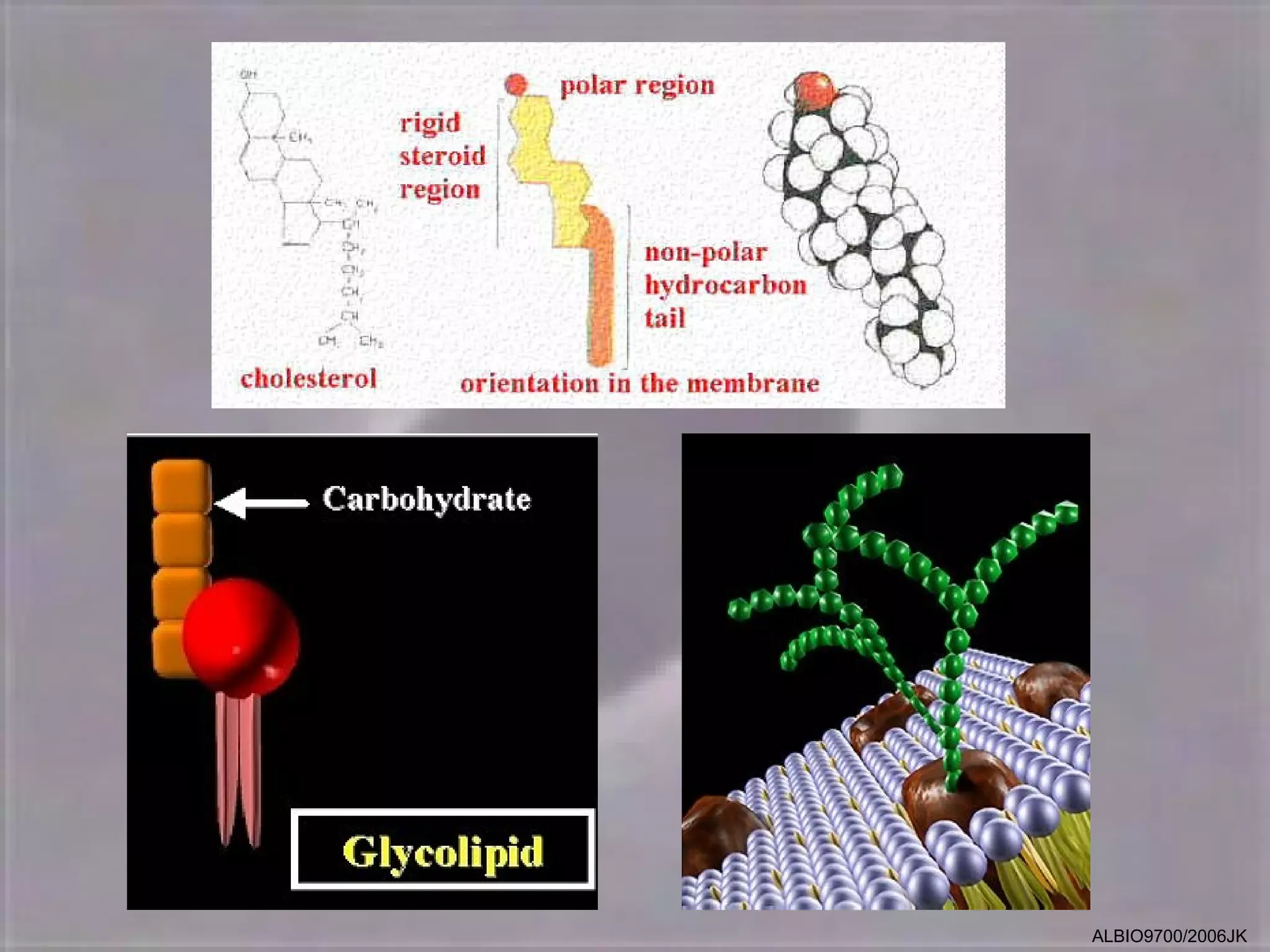
    Roles of componentsof cell membranes • Phospholipids – Form bilayer (basic structure of membrane) – Act as a barrier to most water-soluble substances • Cholesterol – Have hydrophilic heads and hydrophobic tails – Regulates the fluidity of the membrane, preventing it from becoming too fluid or too rigid – Important for the mechanical stability of membranes – Hydrophobic regions help to prevent ions or polar molecules from passing through the membrane (myelin sheath around nerve cells – leakage of ions would slow down nerve impulses) ALBIO9700/2006JK
  • 11.
    • Proteins – Transport proteins: provide hydrophilic channels or passageways for ions and polar molecules to pass through the membrane – Enzymes: catalyse the hydrolysis of molecules such disaccharides (small intestines) – Protein in membranes of organelles (mitochondria and chloroplasts): involved in the processes of respiration and photosynthesis • Glycolipids and glycoprotein – Protein and lipid molecules with short carbohydrate chains – Form hydrogen bonds with the water molecules and so help to stabilise the membrane structure – Act as receptor molecules, binding with hormones or neurotransmitters (chemicals that enable nerve impulses to pass from one nerve cell to another) ALBIO9700/2006JK
  • 12.