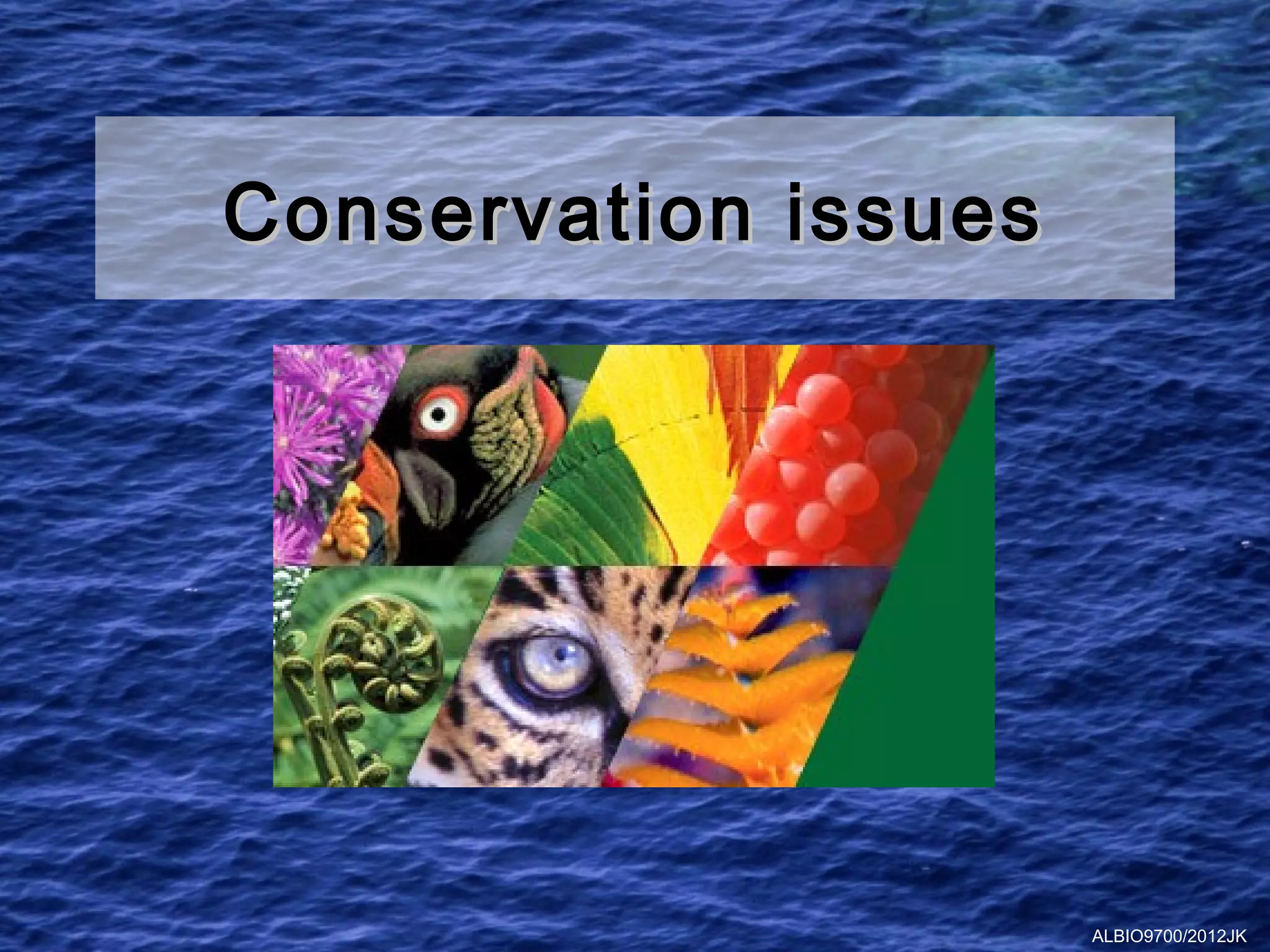
Conservation issues


                      ALBIO9700/2012JK
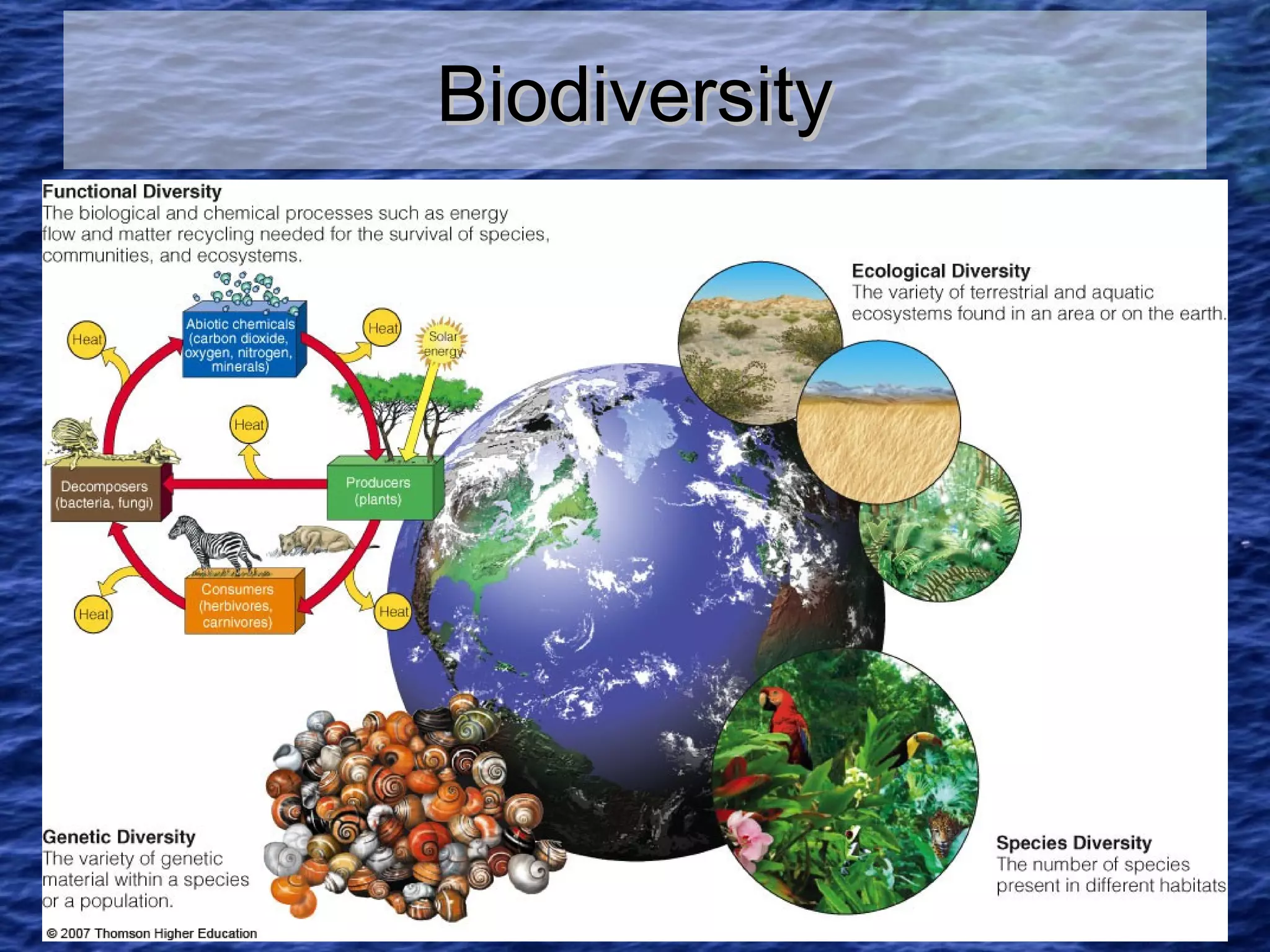
Biodiversity
• The total number of different
  species/range of communities living in a
  defined area, ecosystem or biome
  – Huge interdependence between species and
    biodiversity is essential to maintain ecological
    balance and stability
• Extent of genetic diversity with species
  and populations
  – Essential for the stability and survival of a
    species

                                                    ALBIO9700/2012JK
Biodiversity
Biodiversity Loss and Species
  Extinction: Remember HIPPO

• H for habitat destruction and
  degradation
• I for invasive species
• P for pollution
• P for human population growth
• O for overexploitation

                                  ALBIO9700/2012JK
The need to maintain Biodiversity
• Biological reasons:
   – Ecological balance and stability
   – Diverse gene pools within populations and the genetic
     diversity of species is extremely important if species are to
     be prevented from becoming extinct
• Human reasons:
   – For use in agriculture – potential food supplies or to be
     crossed with existing agricultural species to improve
     features (yield, hardiness or disease resistance)
   – To provide possible medicines (7000 drugs in the UK
     derived from plants)
   – To encourage tourism in some countries – ecotourism
   – Obligation to reverse the decline in biodiversity and also to
     try and maintain the current level of biodiversity for future
     generations

                                                            ALBIO9700/2012JK
Reasons why species have
         become endangered
• Endangered species - any species whose numbers have
  become so low that they are unlikely to be maintained by normal
  rates of reproduction and are in danger of becoming extinct.
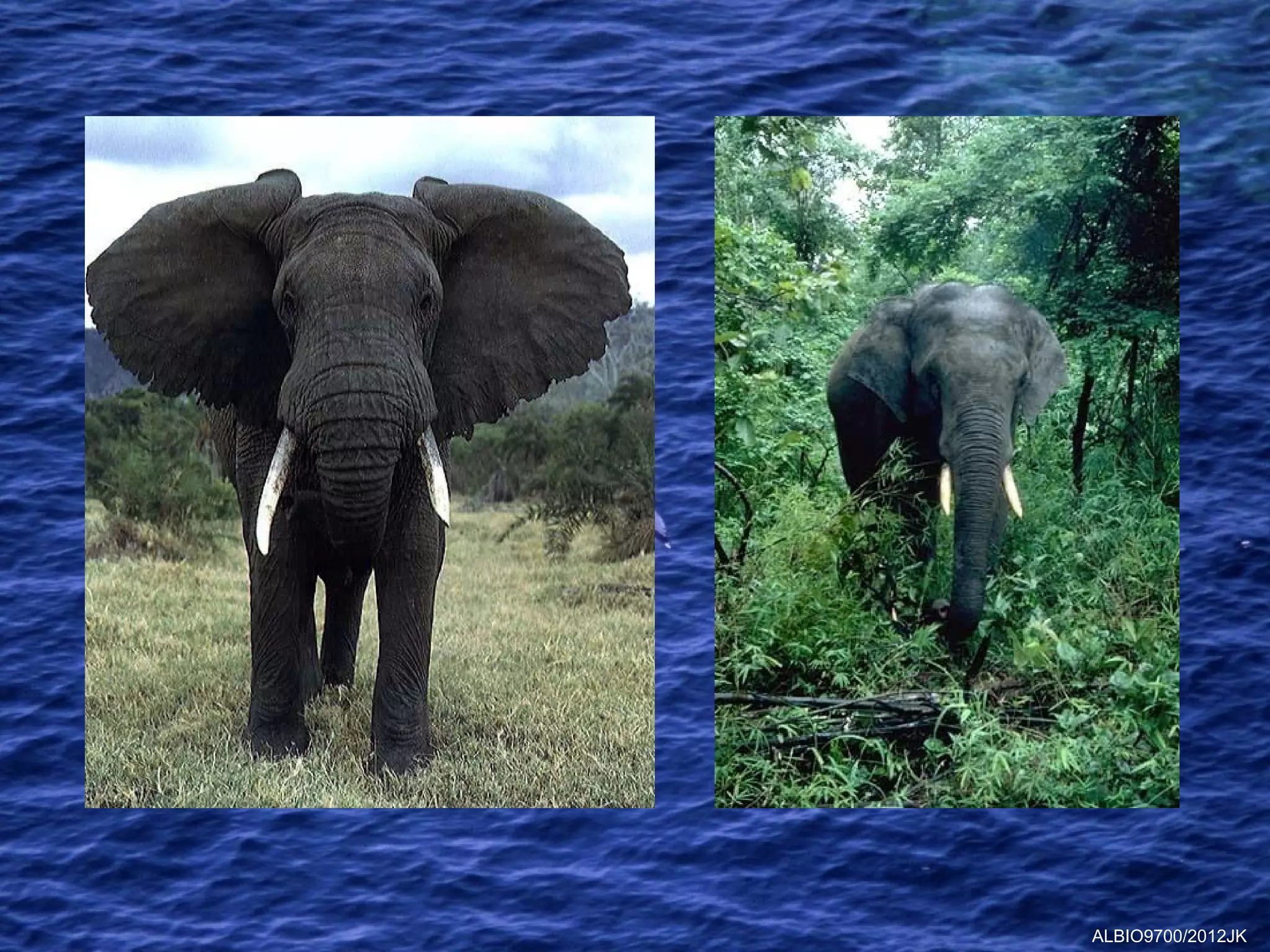
• African elephant
   – Habitat loss – competition between humans and elephants for
     space, trees and grazing leading to loss and fragmentation of
     the elephant habitat
   – Contact with humans – protection of villages
   – Hunting – trophies, ivory and ‘bushmeat’
   – Poaching – illegal hunting
   – IUCN Red list status = 2008 ( Near Threatened)
   – CITES Listing Appendix I except Botswana, Namibia, South
     Africa and Zimbabwe & Appendix II
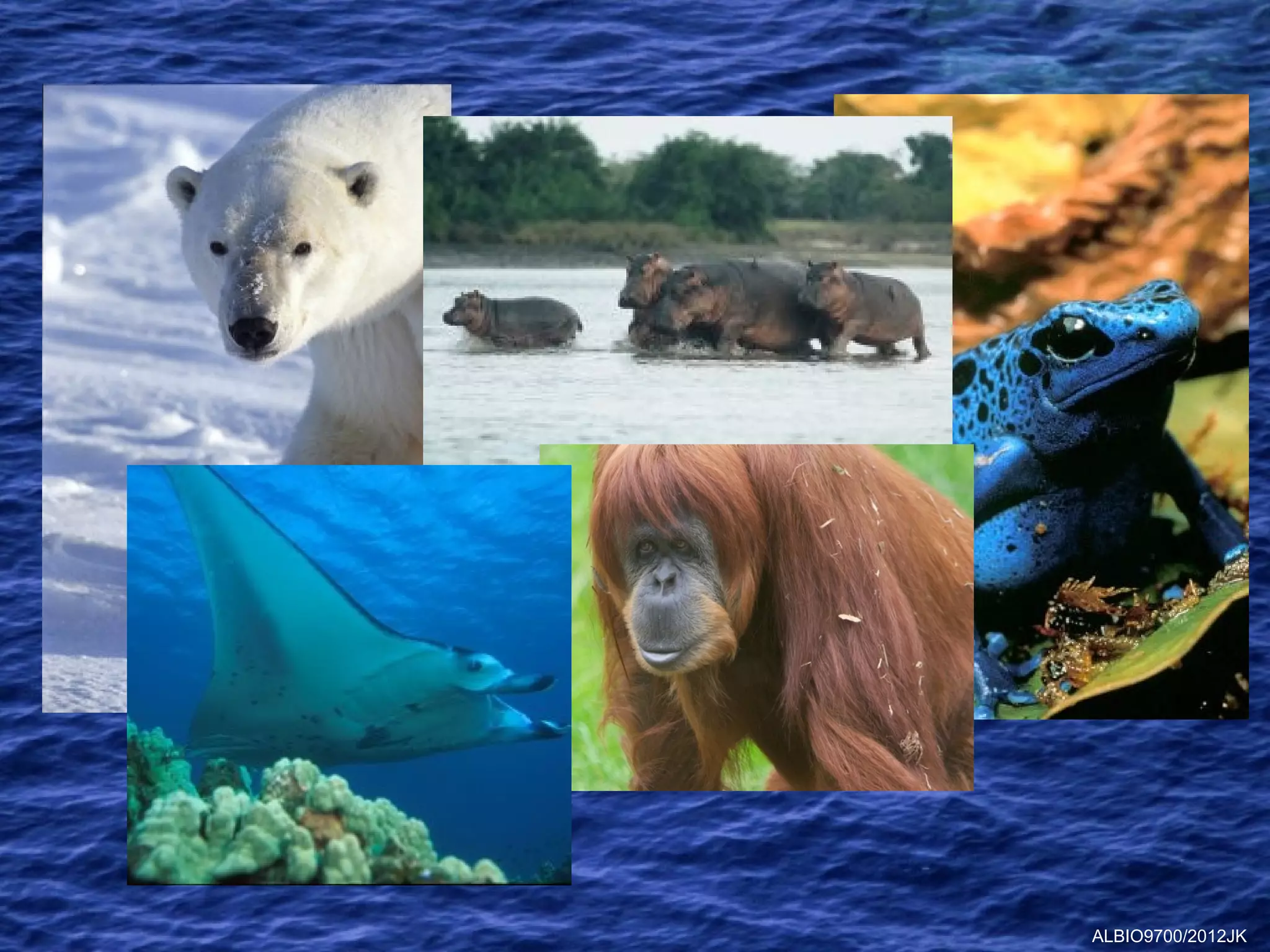
• Orangutan
                                                              ALBIO9700/2012JK
ALBIO9700/2012JK
ALBIO9700/2012JK
Methods of protecting endangered
            species
• Zoos
  – Advantage of captive breeding:
     • Possible to monitor the health of the mother and the
       development of the fetus during the pregnancy
     • Sperm and eggs can be obtained from the captive individuals
     • These can be stored in a frozen form
     • It allows the possibility of artificial insemination
     • Also in-vitro fertilisation
     • Fertilised embryos may be implanted in surrogate mothers
       (might even be different species)
     • There is a possibility of international co-operation and the
       transfer of breeding individuals between different zoos
     • It allows the keeping of breeding records and the genetic
       relatedness of captive individuals
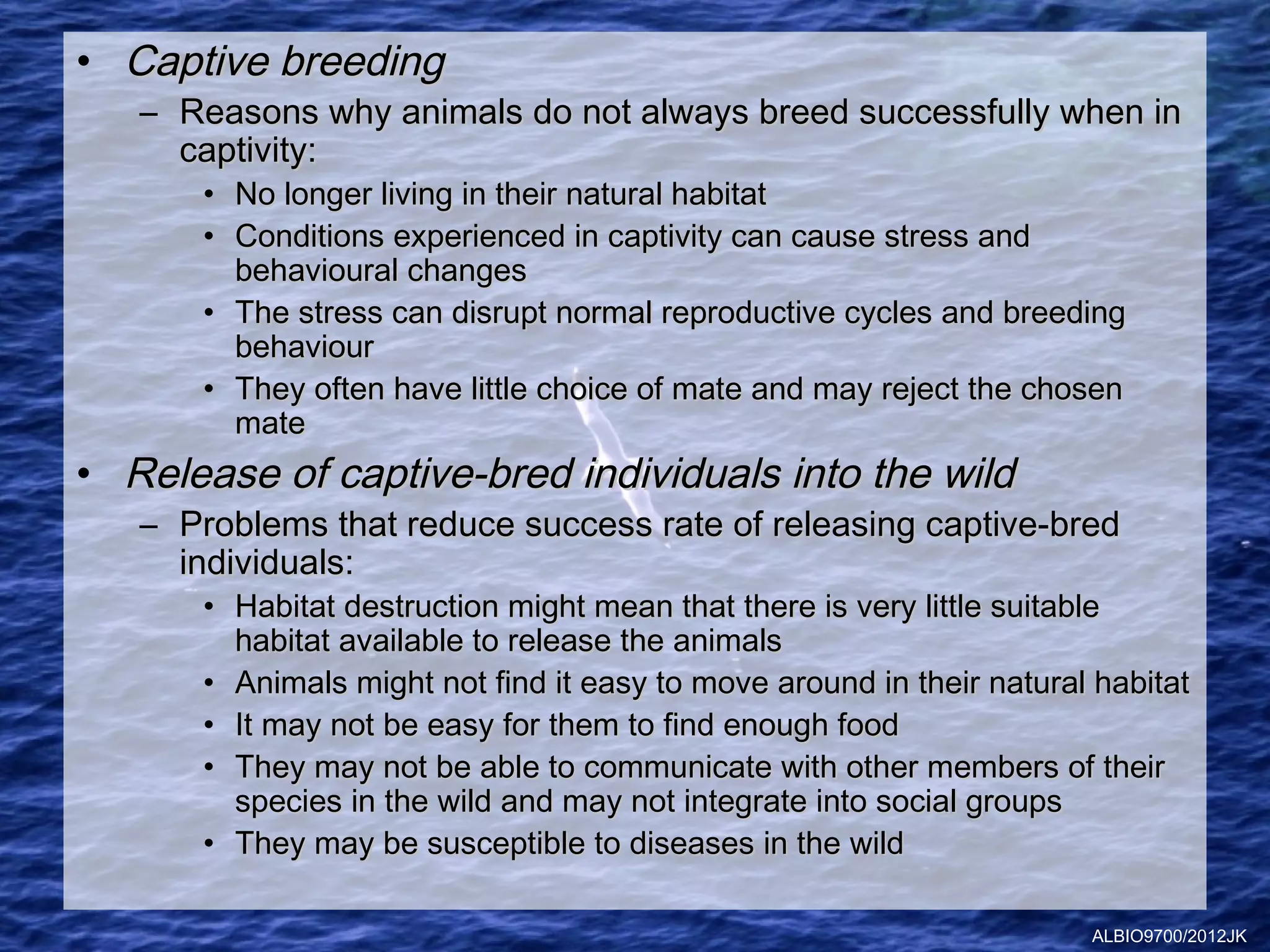
  – Golden lion tamarin; Californian Condor; Black-footed
    ferret; Cheetah; Arabian oryx; Red wolf
                                                            ALBIO9700/2012JK
ALBIO9700/2012JK
• Captive breeding
   – Reasons why animals do not always breed successfully when in
     captivity:
      • No longer living in their natural habitat
      • Conditions experienced in captivity can cause stress and
        behavioural changes
      • The stress can disrupt normal reproductive cycles and breeding
        behaviour
      • They often have little choice of mate and may reject the chosen
        mate
• Release of captive-bred individuals into the wild
   – Problems that reduce success rate of releasing captive-bred
     individuals:
      • Habitat destruction might mean that there is very little suitable
        habitat available to release the animals
      • Animals might not find it easy to move around in their natural habitat
      • It may not be easy for them to find enough food
      • They may not be able to communicate with other members of their
        species in the wild and may not integrate into social groups
      • They may be susceptible to diseases in the wild

                                                                      ALBIO9700/2012JK
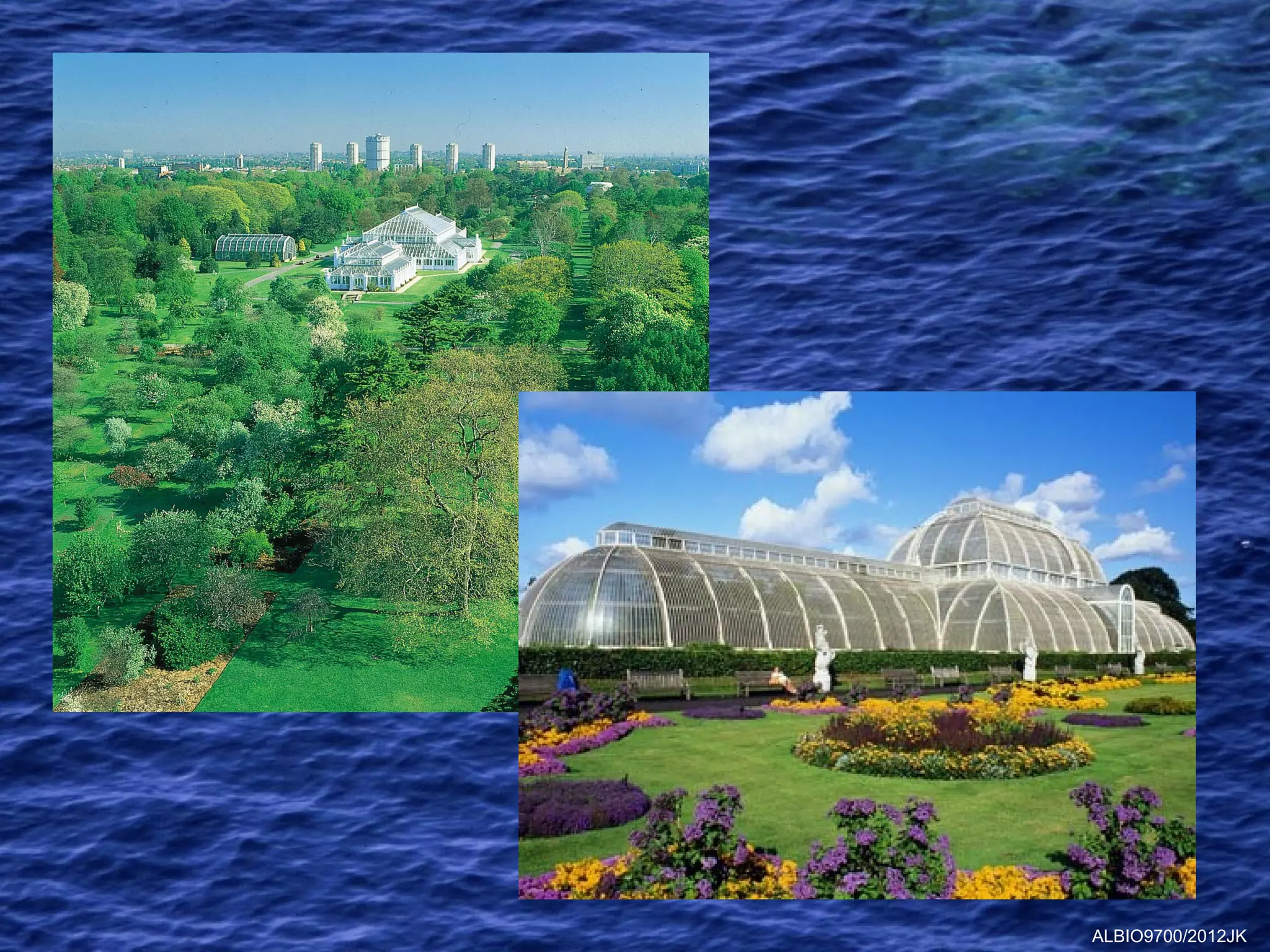
• Botanic gardens
  – Plants can be grown in botanic gardens
  – Possible to create ideal growing conditions (availability of light,
    nutrients, water and the atmospheric conditions)
  – Also possible to propagate endangered species (by seed,
    vegetative or tissue culture)
  – Allows possibility of re-introducing endangered species of plants
    into their natural habitat
  – Botanic Gardens Conservation International; Royal Botanic
    Gardens, Kew, London
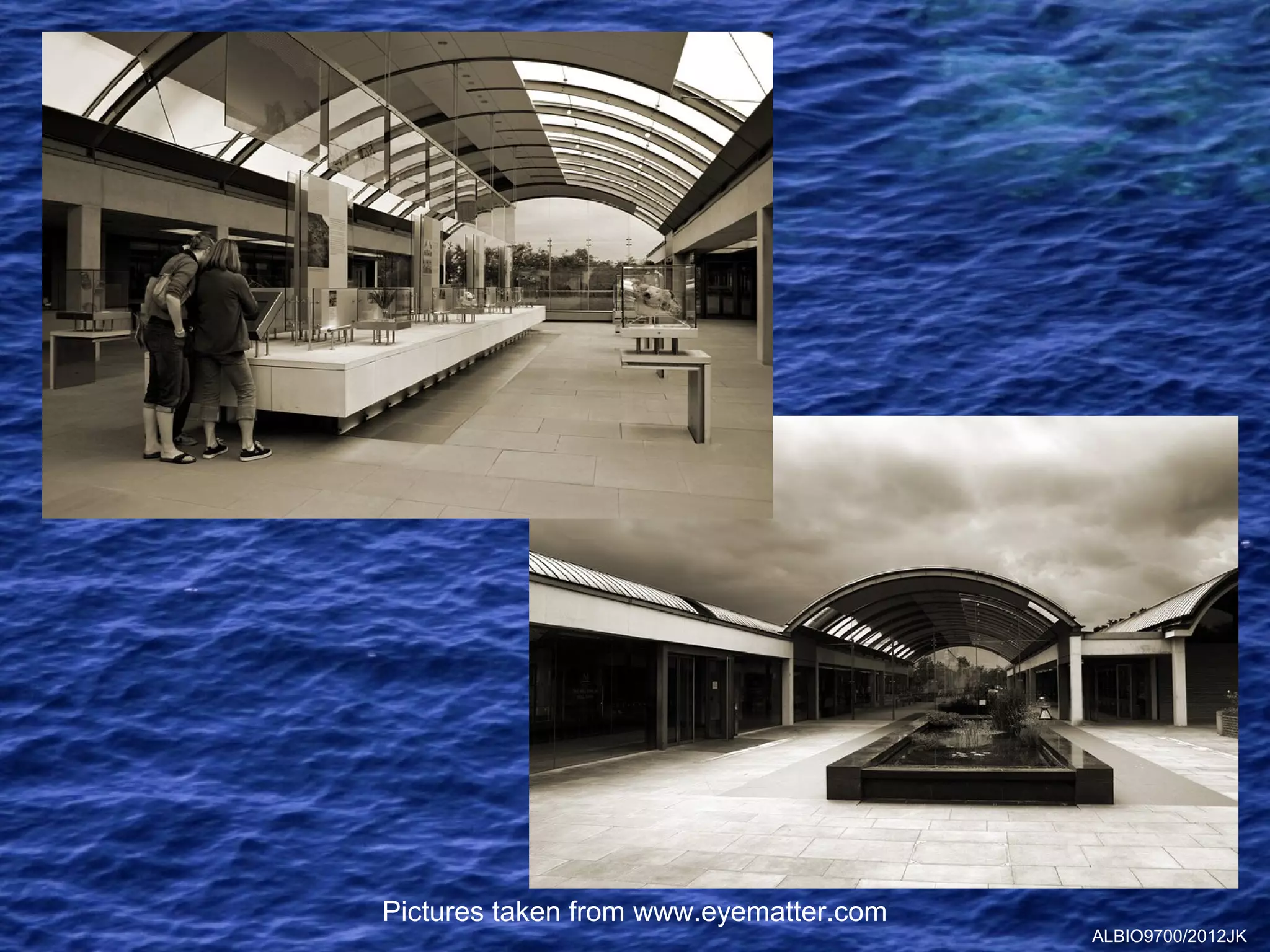
• Seed banks
  – Collection of seeds that are long-lived and can be stored in a
    relatively small space
  – Life span of such seeds can be extended if they are kept in
    carefully controlled conditions (atmosphere of low oxygen levels,
    moisture and temperature)
  – Gene pool of a particular species is also maintained
  – Seeds of endangered species can be germinated at any time
    and plants can be grown in Botanic gardens or restored to the
    wild
  – Some species produce seeds which have a limited longevity
    (e.g. cocoa, rubber, coconut) – such plants would need to be
    maintained in botanic gardens
  – The Millenium Seed Bank at Wakehurst Place, UK              ALBIO9700/2012JK
ALBIO9700/2012JK
Pictures taken from www.eyematter.com
                                        ALBIO9700/2012JK
• National Parks (and other protected areas)
   – Set up to conserve rare/endangered species and maintain
     important habitats
   – Legislation is passed to ensure that such areas are protected
     under the law
   – The ways in which National Parks protect their resident species
     include:
       • Wardens, rangers and volunteers can be used to patrol the parks
       • Access by humans can be restricted (footpaths are created)
       • Agricultural activities can be strictly controlled
       • Industrial activities and mining can be limited and controlled
       • The building of roads, dwellings and other developments can be
         strictly controlled
       • Visitor Centres can be established to educate the general public in
         the importance of conservation within the Park and elsewhere
       • Wildlife can be protected directly e.g. 24 hour surveillance of
         nests/breeding sites
   – In addition to National Parks, other categories of conservation
     areas can be created if they contain species or habitat which
     need some form of protection (e.g. SSSIs - http://www.english-
     nature.org.uk/special/sssi/)
                                                                      ALBIO9700/2012JK
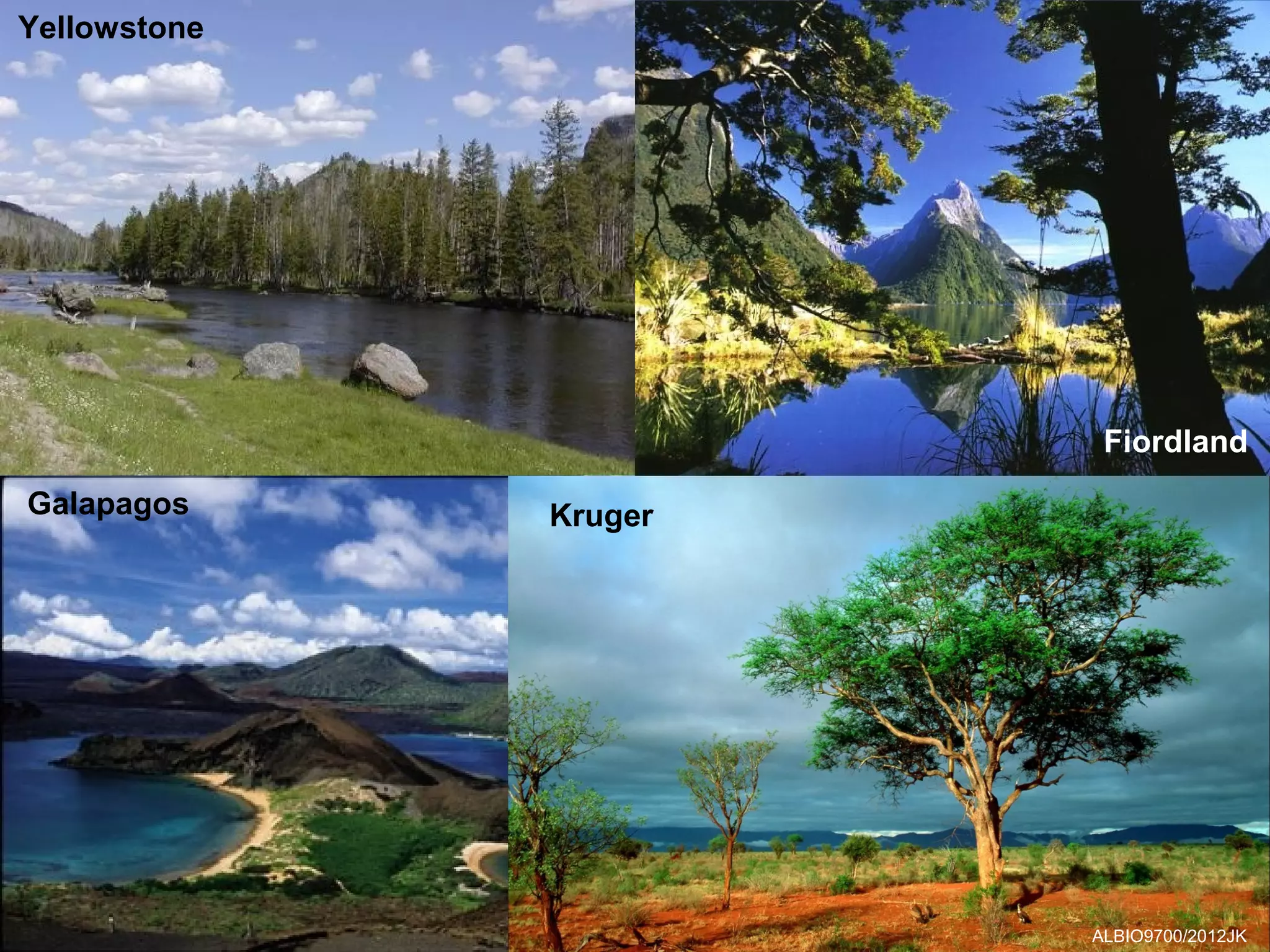
Yellowstone


                        Fiordland
Galapagos     Kruger


                       ALBIO9700/2012JK
                       ALBIO9700/2006JK

02 Conservation Issues

  • 1.
    Conservation issues ALBIO9700/2012JK
  • 2.
    Biodiversity • The totalnumber of different species/range of communities living in a defined area, ecosystem or biome – Huge interdependence between species and biodiversity is essential to maintain ecological balance and stability • Extent of genetic diversity with species and populations – Essential for the stability and survival of a species ALBIO9700/2012JK
  • 3.
  • 4.
    Biodiversity Loss andSpecies Extinction: Remember HIPPO • H for habitat destruction and degradation • I for invasive species • P for pollution • P for human population growth • O for overexploitation ALBIO9700/2012JK
  • 5.
    The need tomaintain Biodiversity • Biological reasons: – Ecological balance and stability – Diverse gene pools within populations and the genetic diversity of species is extremely important if species are to be prevented from becoming extinct • Human reasons: – For use in agriculture – potential food supplies or to be crossed with existing agricultural species to improve features (yield, hardiness or disease resistance) – To provide possible medicines (7000 drugs in the UK derived from plants) – To encourage tourism in some countries – ecotourism – Obligation to reverse the decline in biodiversity and also to try and maintain the current level of biodiversity for future generations ALBIO9700/2012JK
  • 6.
    Reasons why specieshave become endangered • Endangered species - any species whose numbers have become so low that they are unlikely to be maintained by normal rates of reproduction and are in danger of becoming extinct. • African elephant – Habitat loss – competition between humans and elephants for space, trees and grazing leading to loss and fragmentation of the elephant habitat – Contact with humans – protection of villages – Hunting – trophies, ivory and ‘bushmeat’ – Poaching – illegal hunting – IUCN Red list status = 2008 ( Near Threatened) – CITES Listing Appendix I except Botswana, Namibia, South Africa and Zimbabwe & Appendix II • Orangutan ALBIO9700/2012JK
  • 7.
  • 8.
  • 9.
    Methods of protectingendangered species • Zoos – Advantage of captive breeding: • Possible to monitor the health of the mother and the development of the fetus during the pregnancy • Sperm and eggs can be obtained from the captive individuals • These can be stored in a frozen form • It allows the possibility of artificial insemination • Also in-vitro fertilisation • Fertilised embryos may be implanted in surrogate mothers (might even be different species) • There is a possibility of international co-operation and the transfer of breeding individuals between different zoos • It allows the keeping of breeding records and the genetic relatedness of captive individuals – Golden lion tamarin; Californian Condor; Black-footed ferret; Cheetah; Arabian oryx; Red wolf ALBIO9700/2012JK
  • 10.
  • 11.
    • Captive breeding – Reasons why animals do not always breed successfully when in captivity: • No longer living in their natural habitat • Conditions experienced in captivity can cause stress and behavioural changes • The stress can disrupt normal reproductive cycles and breeding behaviour • They often have little choice of mate and may reject the chosen mate • Release of captive-bred individuals into the wild – Problems that reduce success rate of releasing captive-bred individuals: • Habitat destruction might mean that there is very little suitable habitat available to release the animals • Animals might not find it easy to move around in their natural habitat • It may not be easy for them to find enough food • They may not be able to communicate with other members of their species in the wild and may not integrate into social groups • They may be susceptible to diseases in the wild ALBIO9700/2012JK
  • 12.
    • Botanic gardens – Plants can be grown in botanic gardens – Possible to create ideal growing conditions (availability of light, nutrients, water and the atmospheric conditions) – Also possible to propagate endangered species (by seed, vegetative or tissue culture) – Allows possibility of re-introducing endangered species of plants into their natural habitat – Botanic Gardens Conservation International; Royal Botanic Gardens, Kew, London • Seed banks – Collection of seeds that are long-lived and can be stored in a relatively small space – Life span of such seeds can be extended if they are kept in carefully controlled conditions (atmosphere of low oxygen levels, moisture and temperature) – Gene pool of a particular species is also maintained – Seeds of endangered species can be germinated at any time and plants can be grown in Botanic gardens or restored to the wild – Some species produce seeds which have a limited longevity (e.g. cocoa, rubber, coconut) – such plants would need to be maintained in botanic gardens – The Millenium Seed Bank at Wakehurst Place, UK ALBIO9700/2012JK
  • 13.
  • 14.
    Pictures taken fromwww.eyematter.com ALBIO9700/2012JK
  • 15.
    • National Parks(and other protected areas) – Set up to conserve rare/endangered species and maintain important habitats – Legislation is passed to ensure that such areas are protected under the law – The ways in which National Parks protect their resident species include: • Wardens, rangers and volunteers can be used to patrol the parks • Access by humans can be restricted (footpaths are created) • Agricultural activities can be strictly controlled • Industrial activities and mining can be limited and controlled • The building of roads, dwellings and other developments can be strictly controlled • Visitor Centres can be established to educate the general public in the importance of conservation within the Park and elsewhere • Wildlife can be protected directly e.g. 24 hour surveillance of nests/breeding sites – In addition to National Parks, other categories of conservation areas can be created if they contain species or habitat which need some form of protection (e.g. SSSIs - http://www.english- nature.org.uk/special/sssi/) ALBIO9700/2012JK
  • 16.
    Yellowstone Fiordland Galapagos Kruger ALBIO9700/2012JK ALBIO9700/2006JK