
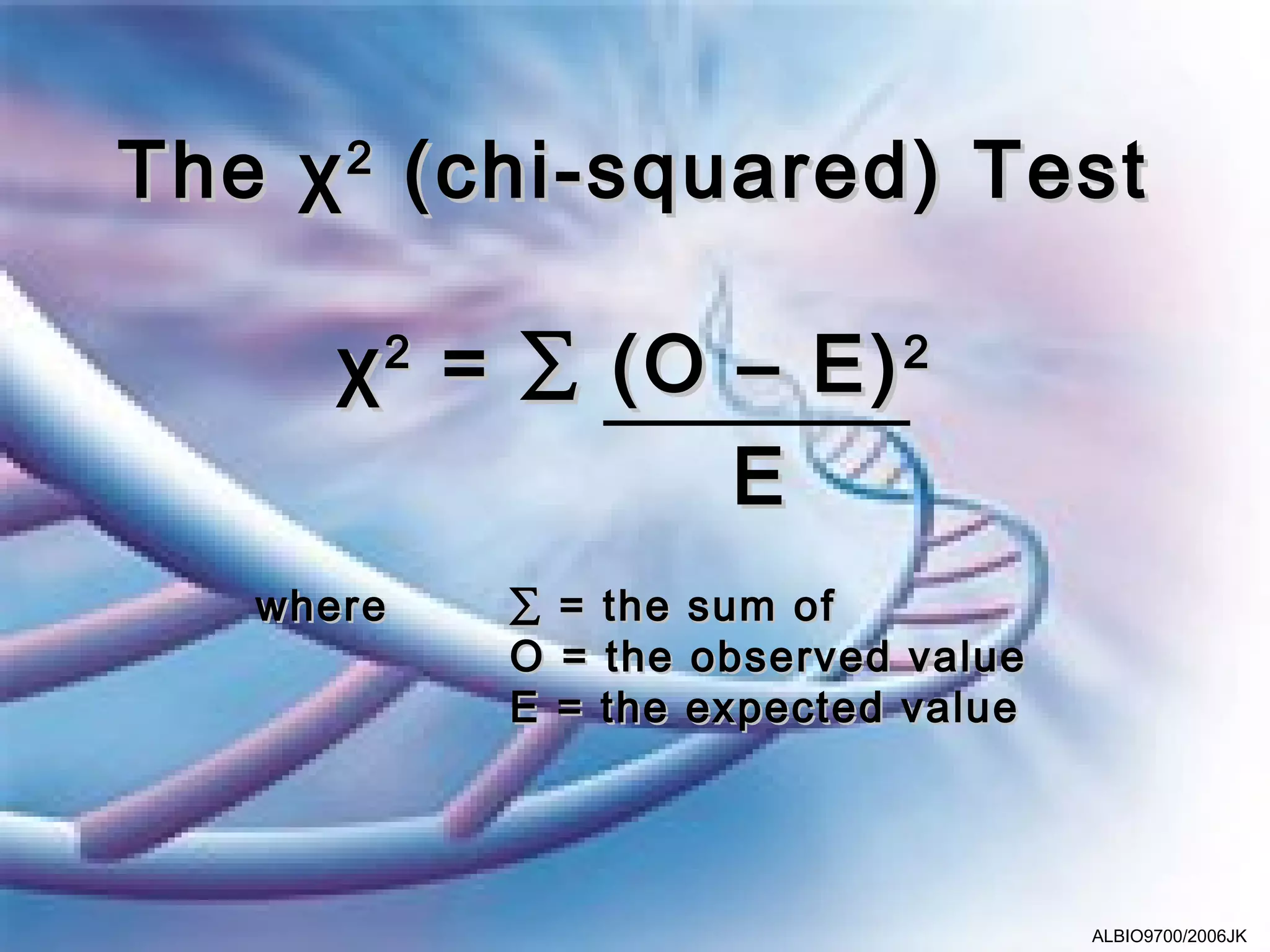






The χ 2 (chi-squared) Test

      χ 2 = ∑ (O – E) 2
                 E
   where   ∑ = the sum of
           O = the observed value
           E = the expected value


                                    ALBIO9700/2006JK
Questions:
• Are the results we get (observed)
  sufficiently close to the ones we expected
  that the differences between them have
  probably just arisen by chance?


• Are they so different that something
  unexpected must be going on?


                                         ALBIO9700/2006JK
Answers:
• The χ2 (chi-squared) test allows us to
  compare our observed results with the
  expected results

• Decide whether or not there is a significant
  difference between them


                                           ALBIO9700/2006JK
Calculations:
1. Work out expected results
2. Record in table with observed results
3. Calculate difference between each set
   and square it
4. Divide each squared difference by the
   expected value and add up


                                      ALBIO9700/2006JK
What the value means?
• Relate χ2 (chi-squared) value to probabilities in
  “Table of χ2 values”

• The probabilities are the probability that the
  difference between our expected and observed
  results are due to chance


                                                ALBIO9700/2006JK
Table of χ values    2
          •Takes into account the no of comparisons
Degrees                    made
                      Probability greater than
   of          • number of classes of data - 1
freedom      0.1          0.05          0.01          0.001


  1        2.71           3.84          6.64          10.83
  2        4.60           5.99          9.21          13.82
  3        6.25           7.82         11.34          16.27
  4        7.78           9.49         13.28          18.46


                                                        ALBIO9700/2006JK
Problem:
In an actual cross between heterozygous grey
parents with a long tail, the number of each
phenotype obtained in the offspring were:
grey, long       54
grey, short      4
white, long      4
white, short     18
Use a χ2 test to determine whether or not the
difference between these observed results and
the expected results is significant.

                                          ALBIO9700/2006JK

03 The Chi Squared Test

  • 1.
    The χ 2(chi-squared) Test χ 2 = ∑ (O – E) 2 E where ∑ = the sum of O = the observed value E = the expected value ALBIO9700/2006JK
  • 2.
    Questions: • Are theresults we get (observed) sufficiently close to the ones we expected that the differences between them have probably just arisen by chance? • Are they so different that something unexpected must be going on? ALBIO9700/2006JK
  • 3.
    Answers: • The χ2(chi-squared) test allows us to compare our observed results with the expected results • Decide whether or not there is a significant difference between them ALBIO9700/2006JK
  • 4.
    Calculations: 1. Work outexpected results 2. Record in table with observed results 3. Calculate difference between each set and square it 4. Divide each squared difference by the expected value and add up ALBIO9700/2006JK
  • 5.
    What the valuemeans? • Relate χ2 (chi-squared) value to probabilities in “Table of χ2 values” • The probabilities are the probability that the difference between our expected and observed results are due to chance ALBIO9700/2006JK
  • 6.
    Table of χvalues 2 •Takes into account the no of comparisons Degrees made Probability greater than of • number of classes of data - 1 freedom 0.1 0.05 0.01 0.001 1 2.71 3.84 6.64 10.83 2 4.60 5.99 9.21 13.82 3 6.25 7.82 11.34 16.27 4 7.78 9.49 13.28 18.46 ALBIO9700/2006JK
  • 7.
    Problem: In an actualcross between heterozygous grey parents with a long tail, the number of each phenotype obtained in the offspring were: grey, long 54 grey, short 4 white, long 4 white, short 18 Use a χ2 test to determine whether or not the difference between these observed results and the expected results is significant. ALBIO9700/2006JK