
DNA sequencing and genetic
      fingerprinting


                         ALBIO9700/2006JK
The use of electrophoresis in genetic
     fingerprinting and DNA sequencing
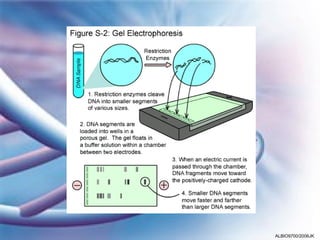
• Electrophoresis
  – A method of separating substances and analyzing molecular
    structure based on rate of movement of each component inn a
    liquid medium while under the influence of an electric field
  – Gel electrophoresis: gel is a colloid in which there are spaces
    between the molecules through which other molecules can move
  – Electrodes fragments of DNA of varied lengths
  – Direction of movement depends on the fact that DNA molecules
    and fragments of DNA are negatively charged – move towards
    the positive electrode (anode)
  – Distance moved in a given time will depend on mass of molecule
    of fragment
  – Human example
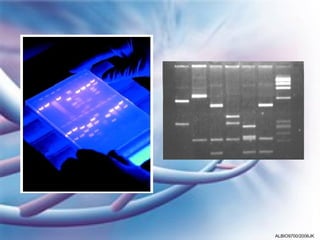
  – Fragments must be treated to make them visible:
     • Staining of all DNA fragments (EtBr, methylene blue and nile blue A)
     • Complementary gene probe

                                                                   ALBIO9700/2006JK
– Fragments must be treated to make them visible:
   • Staining of all DNA fragments (EtBr, methylene blue and nile
     blue A)
   • Complementary gene probe
       – To commonly repeated bit of DNA
       – To a base sequence that is specific to a particular gene or allele
         of a gene
– Gene probe: single stranded piece of DNA with a
  base sequence complementary to the DNA that you
  wish to identify and it must be labelled
– Common forms of labelling:
   • Making the probe radioactive and detect by its ability to
     expose the photographic film used to make X-ray
     photographs
   • To stain the probe with a fluorescent stain (vital red) that will
     fluoresce with bright visible light when placed in UV light

                                                                   ALBIO9700/2006JK
ALBIO9700/2006JK
ALBIO9700/2006JK
ALBIO9700/2006JK
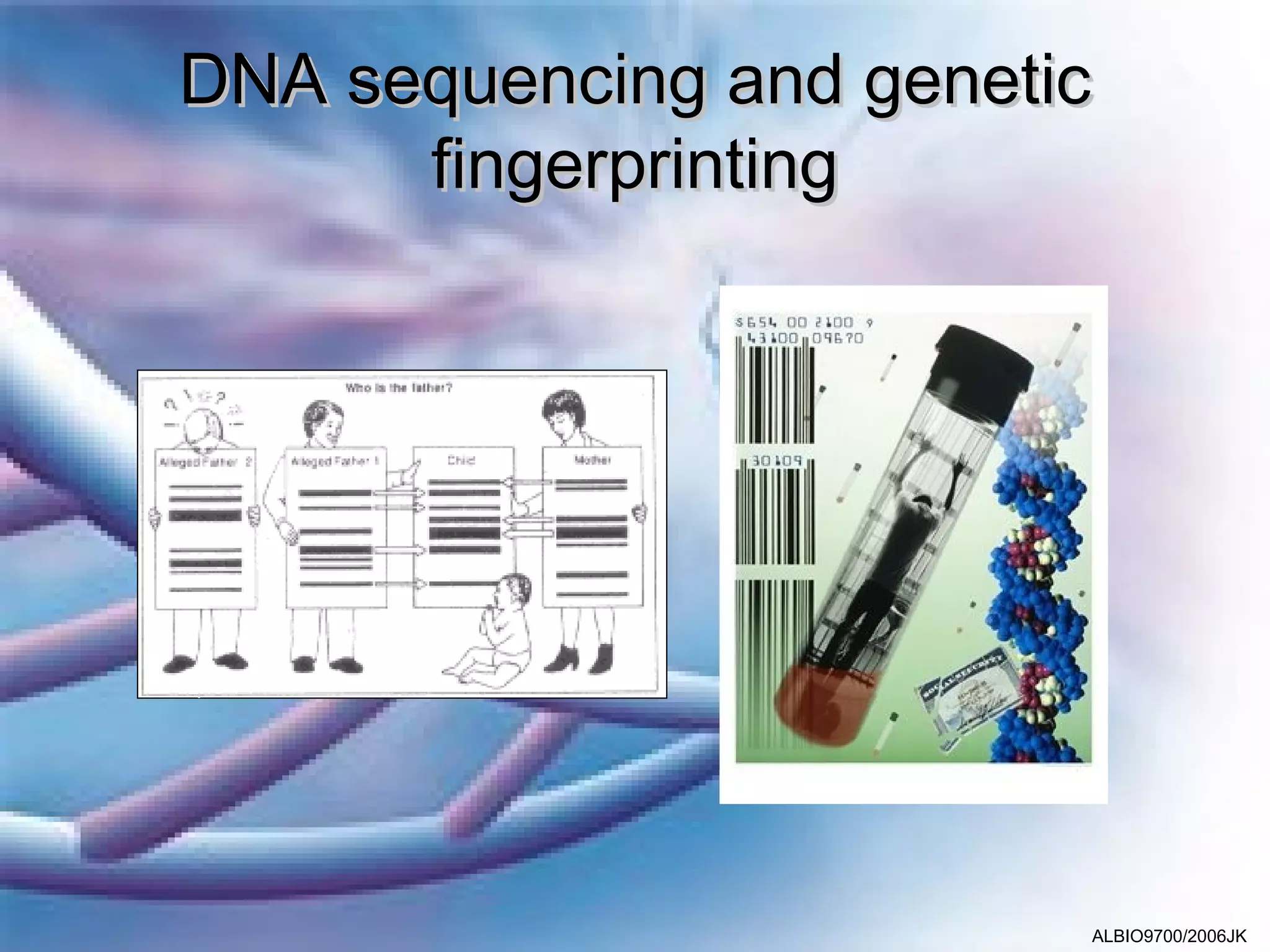
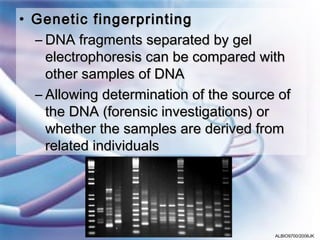
• Genetic fingerprinting
  – DNA fragments separated by gel
    electrophoresis can be compared with
    other samples of DNA
  – Allowing determination of the source of
    the DNA (forensic investigations) or
    whether the samples are derived from
    related individuals


                                        ALBIO9700/2006JK
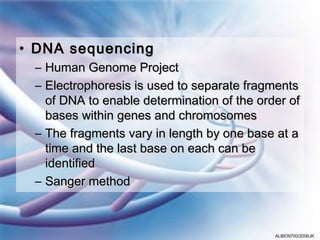
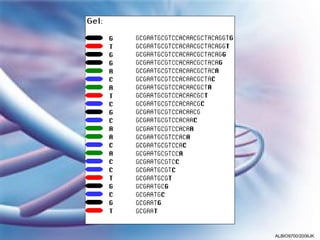
• DNA sequencing
 – Human Genome Project
 – Electrophoresis is used to separate fragments
   of DNA to enable determination of the order of
   bases within genes and chromosomes
 – The fragments vary in length by one base at a
   time and the last base on each can be
   identified
 – Sanger method


                                            ALBIO9700/2006JK
ALBIO9700/2006JK
ALBIO9700/2006JK

04 DNA Sequencing and Genetic Fingerprinting

  • 1.
    DNA sequencing andgenetic fingerprinting ALBIO9700/2006JK
  • 2.
    The use ofelectrophoresis in genetic fingerprinting and DNA sequencing • Electrophoresis – A method of separating substances and analyzing molecular structure based on rate of movement of each component inn a liquid medium while under the influence of an electric field – Gel electrophoresis: gel is a colloid in which there are spaces between the molecules through which other molecules can move – Electrodes fragments of DNA of varied lengths – Direction of movement depends on the fact that DNA molecules and fragments of DNA are negatively charged – move towards the positive electrode (anode) – Distance moved in a given time will depend on mass of molecule of fragment – Human example – Fragments must be treated to make them visible: • Staining of all DNA fragments (EtBr, methylene blue and nile blue A) • Complementary gene probe ALBIO9700/2006JK
  • 3.
    – Fragments mustbe treated to make them visible: • Staining of all DNA fragments (EtBr, methylene blue and nile blue A) • Complementary gene probe – To commonly repeated bit of DNA – To a base sequence that is specific to a particular gene or allele of a gene – Gene probe: single stranded piece of DNA with a base sequence complementary to the DNA that you wish to identify and it must be labelled – Common forms of labelling: • Making the probe radioactive and detect by its ability to expose the photographic film used to make X-ray photographs • To stain the probe with a fluorescent stain (vital red) that will fluoresce with bright visible light when placed in UV light ALBIO9700/2006JK
  • 4.
  • 5.
  • 6.
  • 7.
    • Genetic fingerprinting – DNA fragments separated by gel electrophoresis can be compared with other samples of DNA – Allowing determination of the source of the DNA (forensic investigations) or whether the samples are derived from related individuals ALBIO9700/2006JK
  • 8.
    • DNA sequencing – Human Genome Project – Electrophoresis is used to separate fragments of DNA to enable determination of the order of bases within genes and chromosomes – The fragments vary in length by one base at a time and the last base on each can be identified – Sanger method ALBIO9700/2006JK
  • 9.
  • 10.