Communication and
control in flowering plants


                         ALBIO9700/2006JK
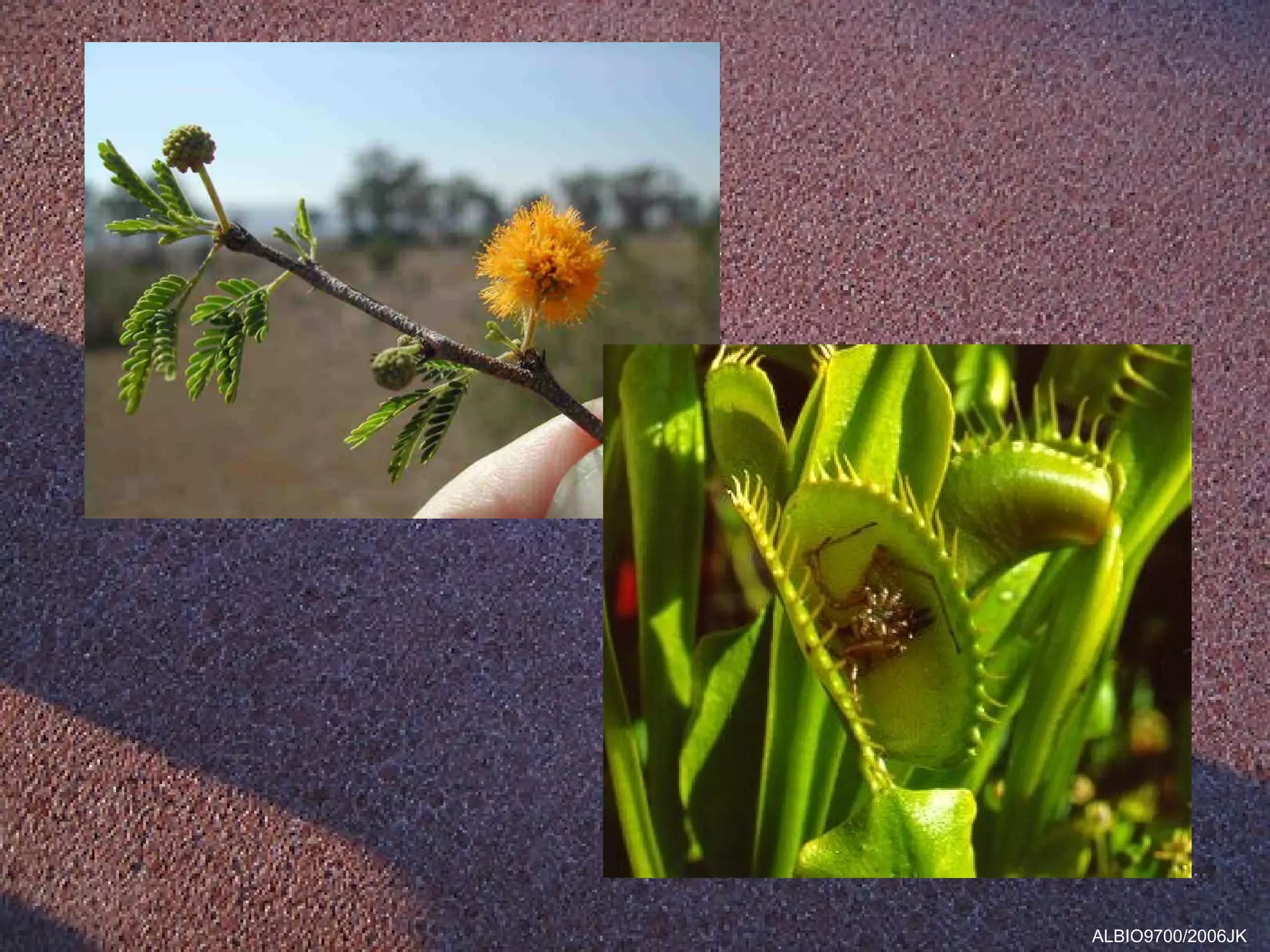
• In some species of plants (Mimosa and
  Venus fly-trap) electrical signals rather like
  the action potentials can be detected
• Most communication within plants
  depends on chemicals (plant hormones
  or plant growth regulators )
• Plant growth regulators are not produced
  in endocrine glands but in a variety of
  tissues in small quantities
• They move in plant either directly from cell
  to cell (diffusion or active transport) or
  carried in the phloem sap or xylem
  vessels; some don’t move at all
                                           ALBIO9700/2006JK
ALBIO9700/2006JK
Auxins and apical dominance
• Auxin (IAA : indole 3-acetic acid) is synthesised in the
  growing tips of roots and shoots, where the cells are
  dividing
• Involved in determining whether a plant grows upwards
  or whether it branches sideways
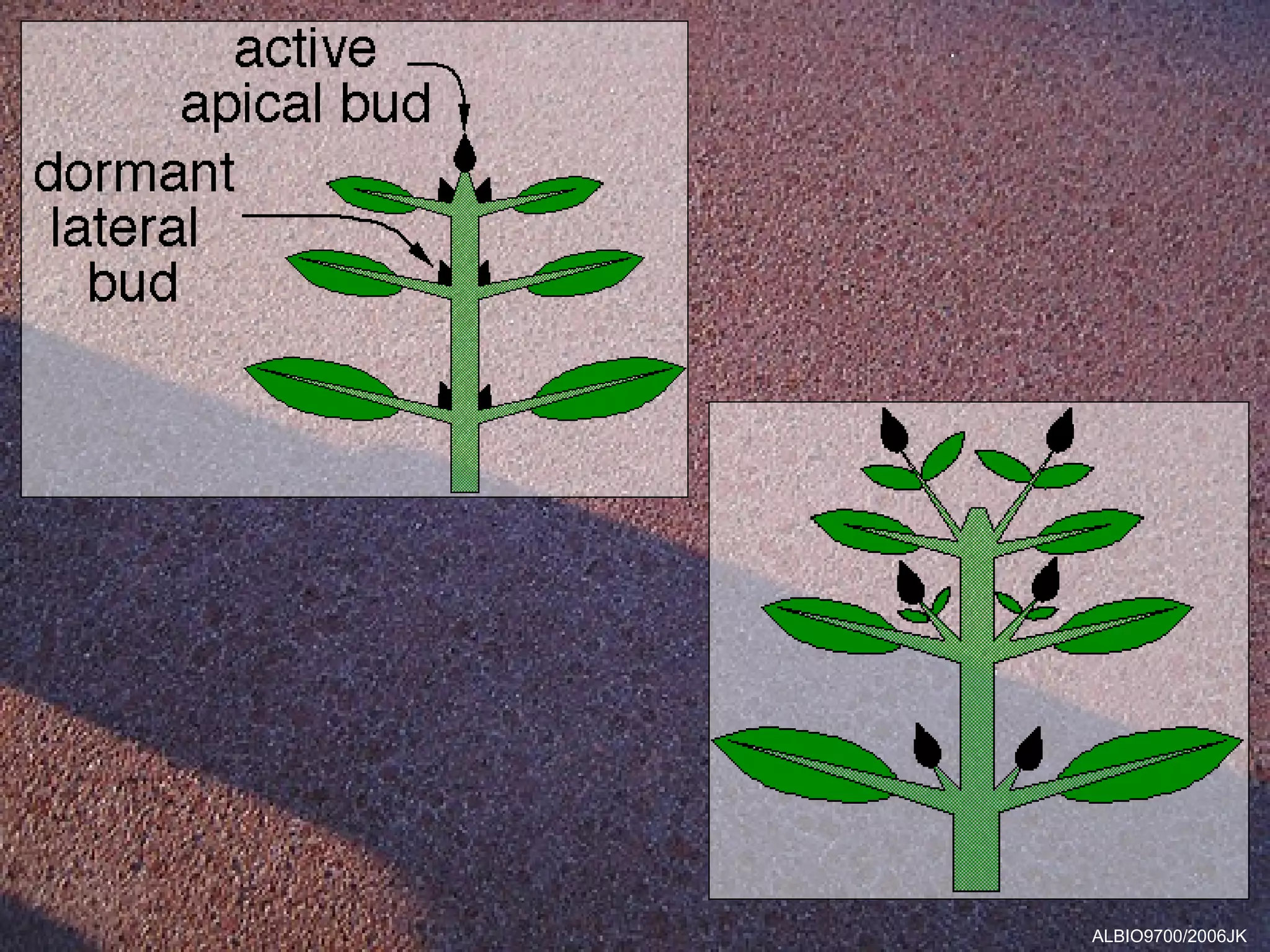
• When a plant has an active growing point at its apex, this
  tends to stop lateral buds from growing
• However, if the apical bud is cut off, then the lateral
  buds start to grow
• Clearly the presence of the apical bud is stopping the
  lateral bud from growing (apical dominance )
• Auxin in the apical bud is transported down the stem to
  the lateral buds
• It seems like that other plant growth substances
  (cytokinins and abscisic acid ) are also involved
                                                      ALBIO9700/2006JK
ALBIO9700/2006JK
Gibberellins and stem elongation
• Gibberellins are synthesised in most parts of
  plants (young leaves and seeds, stems:
  determining growth)
• The height of some plants is partly controlled by
  their genes
• The dominant allele of this gene regulates the
  synthesis of an enzyme that catalyses the
  synthesis of an active form of gibberellin, GA1
• If only recessive allele is present, plant contains
  only inactive forms of gibberellin
• Active gibberellin stimulates cell division and cell
  elongation in the stem (causing plant to grow
  tall)
                                                 ALBIO9700/2006JK
Gibberellins and seed germination
• In some seeds, gibberellins are involved in the control of
  germination
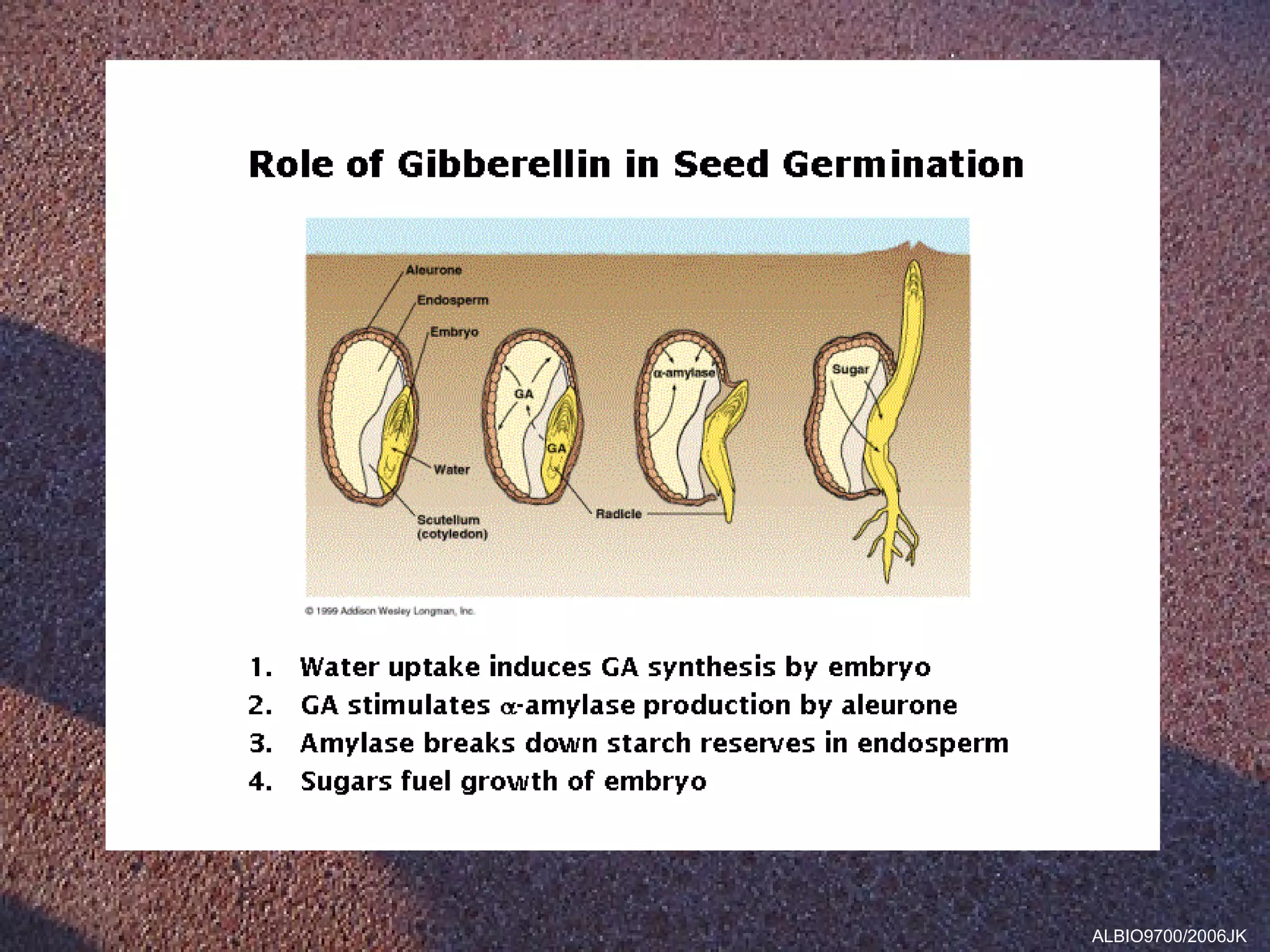
• When the seed absorbs water, this stimulates the
  production of gibberellin by the embryo and the
  gibberellin stimulates the synthesis of amylase by the
  cells in the aleurone layer
• Amylase hydrolyses starch molecules in endosperm –
  maltose molecules – glucose – transported to the
  embryo – respiration to provide energy as embryo begins
  to grow
• Gibberellin causes these effects by regulating genes that
  are involved in the synthesis of amylase (in barley seeds,
  it has been shown that application of gibberellin causes
  an increase in the transcription of mRNA coding for
  amylase
                                                      ALBIO9700/2006JK
ALBIO9700/2006JK
Abscisic acid and stomatal closure
• ABA is found in a wide variety of plants including ferns and
  mosses as well as flowering plants
• Can be found in every part of the plant and is synthesised in
  almost all cells that possess chloroplasts or amyloplasts
  (organelles like chloroplasts but contain large starch grains
  and no chlorophyll)
• One role of ABA is as a stress hormone
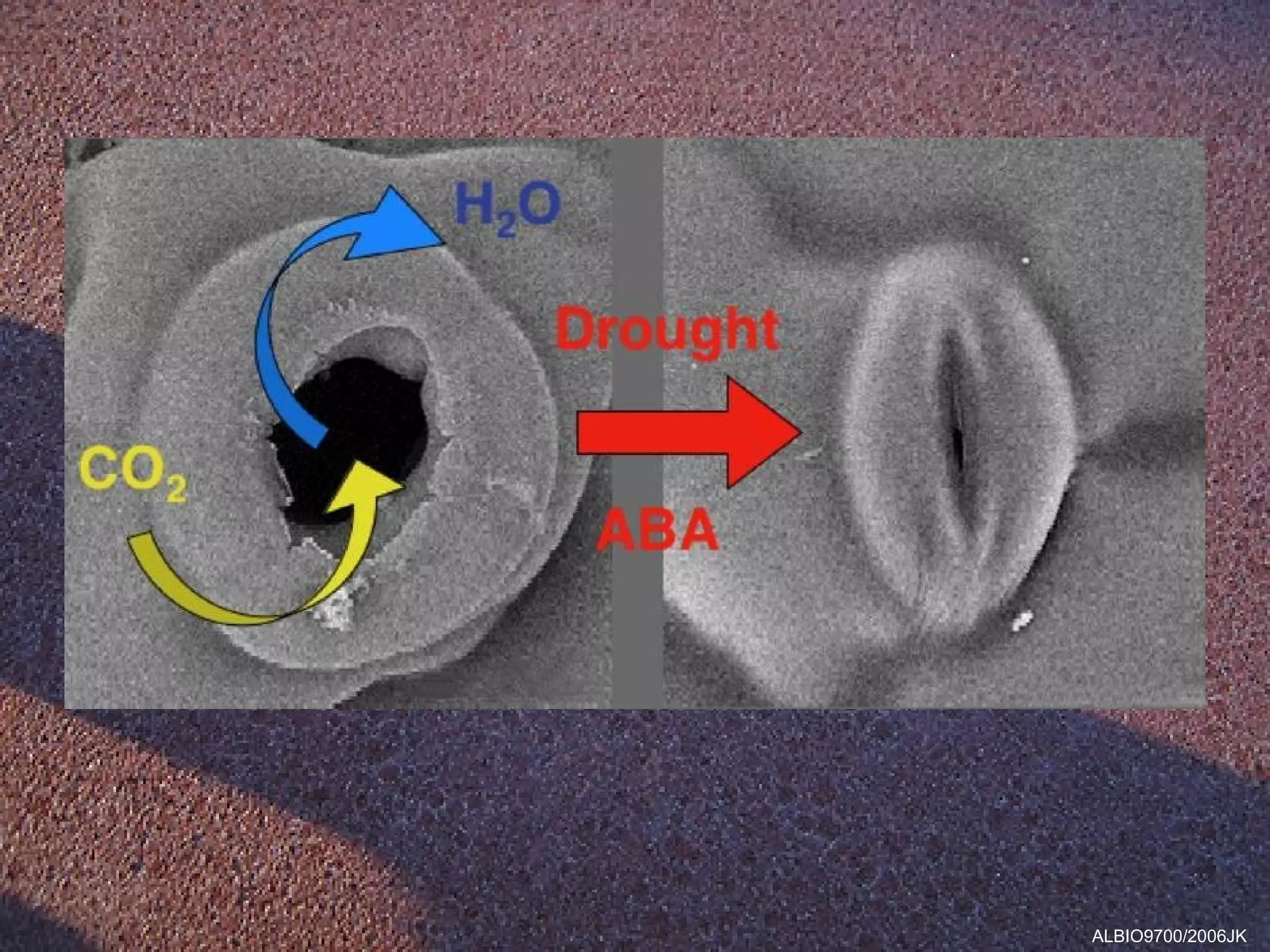
• Plant in drought conditions can have concentrations of ABA in
  leaves rise to 40 times the normal (causes stomata to close)
• Not known exactly how ABA achieves the closure of stomata
  but the fact that the response is very fast indicates that it is
  not done by regulating the expression of genes (stomata
  closes within a few minutes of applying ABA to leaf)
• It seems that guard cells have ABA receptors on their plasma
  membranes and it is possible that when ABA binds with these
  it inhibits the proton pump – stops H+ being pumped out, so K+
  and water would not enter and guard cells would become
  flaccid and close the stomata
                                                            ALBIO9700/2006JK
ALBIO9700/2006JK
Leaf abscission
•   Abscisic acid takes its name from the fact that it was thought to be
    closely involved in leaf or fruit fall (abscission )
•   The leaves fall because the leaf stalk or petiole breaks off from the stem
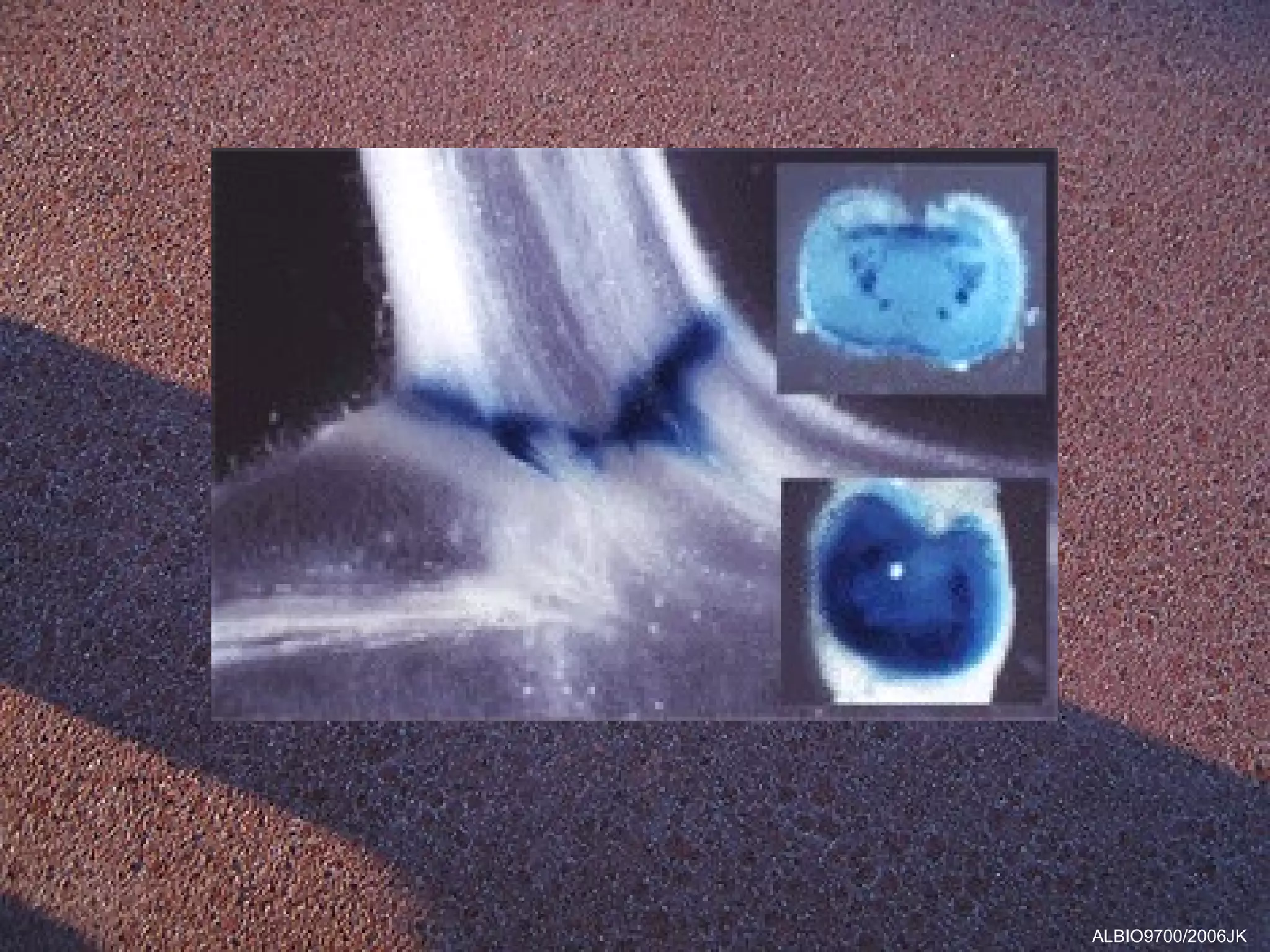
•   Useful substance withdrawn from leaves and taken back into stem
    (breakdown of pigments) – abscission zone forms where petiole
    meets stem (2 layers of cell)
•   Separation layer (nearest to leaf) – made of small cells with thin walls
•   Protective layer (nearest to stem) – made up of cells whose walls
    contain suberin
•   Enzymes break down the cells walls in the separation layer and the
    petiole breaks at this point
•   The protective layer remains, forming a ‘scar’ on the stem were leaf
    used to be
•   Abscisic acid appears to be involved in the senescence of leaves but
    not directly in their falling from the plant (auxin is stronger candidate)
•   Abscision is usually followed by a drop in auxin concentration in leaf and
    can be prevented by applying auxin in early stages
•   However, high concentrations of auxin, applied later, can actually
    promote fruit drop

                                                                      ALBIO9700/2006JK
ALBIO9700/2006JK

03 Communication and Control in Flowering Plants

  • 1.
    Communication and control inflowering plants ALBIO9700/2006JK
  • 2.
    • In somespecies of plants (Mimosa and Venus fly-trap) electrical signals rather like the action potentials can be detected • Most communication within plants depends on chemicals (plant hormones or plant growth regulators ) • Plant growth regulators are not produced in endocrine glands but in a variety of tissues in small quantities • They move in plant either directly from cell to cell (diffusion or active transport) or carried in the phloem sap or xylem vessels; some don’t move at all ALBIO9700/2006JK
  • 3.
  • 4.
    Auxins and apicaldominance • Auxin (IAA : indole 3-acetic acid) is synthesised in the growing tips of roots and shoots, where the cells are dividing • Involved in determining whether a plant grows upwards or whether it branches sideways • When a plant has an active growing point at its apex, this tends to stop lateral buds from growing • However, if the apical bud is cut off, then the lateral buds start to grow • Clearly the presence of the apical bud is stopping the lateral bud from growing (apical dominance ) • Auxin in the apical bud is transported down the stem to the lateral buds • It seems like that other plant growth substances (cytokinins and abscisic acid ) are also involved ALBIO9700/2006JK
  • 5.
  • 6.
    Gibberellins and stemelongation • Gibberellins are synthesised in most parts of plants (young leaves and seeds, stems: determining growth) • The height of some plants is partly controlled by their genes • The dominant allele of this gene regulates the synthesis of an enzyme that catalyses the synthesis of an active form of gibberellin, GA1 • If only recessive allele is present, plant contains only inactive forms of gibberellin • Active gibberellin stimulates cell division and cell elongation in the stem (causing plant to grow tall) ALBIO9700/2006JK
  • 7.
    Gibberellins and seedgermination • In some seeds, gibberellins are involved in the control of germination • When the seed absorbs water, this stimulates the production of gibberellin by the embryo and the gibberellin stimulates the synthesis of amylase by the cells in the aleurone layer • Amylase hydrolyses starch molecules in endosperm – maltose molecules – glucose – transported to the embryo – respiration to provide energy as embryo begins to grow • Gibberellin causes these effects by regulating genes that are involved in the synthesis of amylase (in barley seeds, it has been shown that application of gibberellin causes an increase in the transcription of mRNA coding for amylase ALBIO9700/2006JK
  • 8.
  • 9.
    Abscisic acid andstomatal closure • ABA is found in a wide variety of plants including ferns and mosses as well as flowering plants • Can be found in every part of the plant and is synthesised in almost all cells that possess chloroplasts or amyloplasts (organelles like chloroplasts but contain large starch grains and no chlorophyll) • One role of ABA is as a stress hormone • Plant in drought conditions can have concentrations of ABA in leaves rise to 40 times the normal (causes stomata to close) • Not known exactly how ABA achieves the closure of stomata but the fact that the response is very fast indicates that it is not done by regulating the expression of genes (stomata closes within a few minutes of applying ABA to leaf) • It seems that guard cells have ABA receptors on their plasma membranes and it is possible that when ABA binds with these it inhibits the proton pump – stops H+ being pumped out, so K+ and water would not enter and guard cells would become flaccid and close the stomata ALBIO9700/2006JK
  • 10.
  • 11.
    Leaf abscission • Abscisic acid takes its name from the fact that it was thought to be closely involved in leaf or fruit fall (abscission ) • The leaves fall because the leaf stalk or petiole breaks off from the stem • Useful substance withdrawn from leaves and taken back into stem (breakdown of pigments) – abscission zone forms where petiole meets stem (2 layers of cell) • Separation layer (nearest to leaf) – made of small cells with thin walls • Protective layer (nearest to stem) – made up of cells whose walls contain suberin • Enzymes break down the cells walls in the separation layer and the petiole breaks at this point • The protective layer remains, forming a ‘scar’ on the stem were leaf used to be • Abscisic acid appears to be involved in the senescence of leaves but not directly in their falling from the plant (auxin is stronger candidate) • Abscision is usually followed by a drop in auxin concentration in leaf and can be prevented by applying auxin in early stages • However, high concentrations of auxin, applied later, can actually promote fruit drop ALBIO9700/2006JK
  • 12.