
Cystic Fibrosis (CF)
• Causes
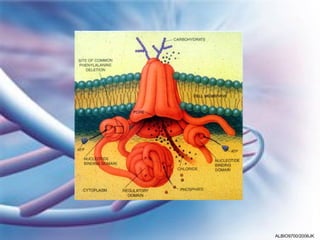
  – Several different alleles of a key gene coding for a
    transmembrane protein that transports chloride ions
    through cell surface membranes (cystic fibrosis
    transmembrane regulator, CFTR)
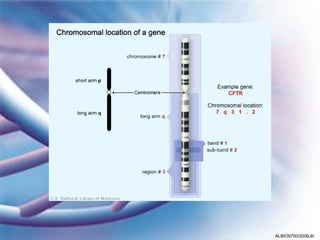
  – Inheritance is autosomal (NOT sex-linked) and
    recessive – located on chromosome 7
  – CF alleles originate by mutation of the CFTR protein,
    but can be inherited through many generations
  – Individuals with a single copy of such an allele are
    heterozygous and do not have the condition (10
    million carriers worldwide)
  – To have CF, it is necessary to be homozygous for CF
    alleles
                                                    ALBIO9700/2006JK
ALBIO9700/2006JK
ALBIO9700/2006JK
• Effects of CF
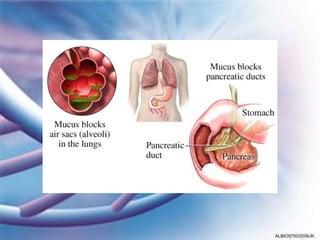
  – Reduced chloride transport through cell membranes
    leads to production of thick, sticky mucus that affects
    lungs, pancreas and reproductive organs
  – The mucus remains in the lungs leading to wheezing
    and repeated infections (removed by physiotherapy)
  – Mucus may block pancreatic duct, compromising
    digestion and nutrition and also causing build-up of
    protease in the pancreas, damaging the pancreatic
    tissue
  – Mucus may block sperm ducts (male infertility) and
    may slow the progress of eggs and sperm through the
    oviducts (reducing female fertility)


                                                     ALBIO9700/2006JK
ALBIO9700/2006JK
Progress towards treating Cystic
   Fibrosis with gene technology
• Current treatments deal with the symptoms rather than
  the causes
• Research continues to try and develop techniques for
  adding functional copies of the CFTR gene to the cells of
  people with CF
• It is thought that if even a proportion of lung cells could
  be given a working copy of the gene, this would thin the
  mucus sufficiently to allow the cilia to operate normally
• Approach trialed is to remove cells from body, add
  working copies of the gene and put the cells back
• The working copies of the gene integrate themselves into
  random positions in the genome of the treated cells
  (repetition and cancer)

                                                       ALBIO9700/2006JK
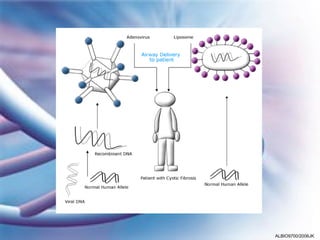
• A vector must be used to deliver the DNA
  containing the functional CFTR gene into the
  lung cells
  – Viral delivery systems
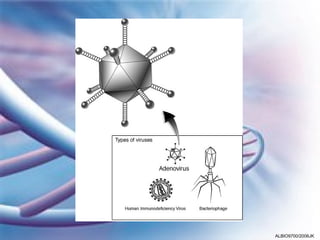
     • Adenoviruses (group of viruses that infect the membranes of
       the respiratory tract, eyes, intestines, and urinary tract) can
       be used/viruses which infect lungs
     • Virulence removed and genetically engineered to carry
       functional human CFTR gene
     • Either injection with genetically engineered viruses or inhale
       from an aerosol directly into the lungs
  – Non-viral delivery systems
     • Creation of a lipid sphere or liposome containing DNA
     • DNA can be compressed into a very small volume which
       may directly enter cells


                                                                ALBIO9700/2006JK
ALBIO9700/2006JK
ALBIO9700/2006JK
• There is not yet a successful example of
  treatment of CF by gene therapy because:
  – Current viral vectors have been found to stimulate
    allergic or other immune responses
  – Current liposome vectors have proved inefficient at
    delivering genes into cells
  – The effect of the therapy on chloride ion transport has
    lasted only a few days
• A cure would require every one of the 50 x 10 13
  cells in the body to be altered, which is not
  currently thought to be technically possible and
  would raise significant further ethical issues
• To enable people with CF to have children would
  require germ-line gene therapy – changes are
  made to human gamete cells that are inherited
  by the next generation
                                                     ALBIO9700/2006JK
• http://www.machinegraphics.com/animation/an


• http://presenter.multicastmedia.com/links/CFF


• http://learn.genetics.utah.edu/units/genetherap


                                         ALBIO9700/2006JK

05 Cystic Fibrosis

  • 1.
    Cystic Fibrosis (CF) •Causes – Several different alleles of a key gene coding for a transmembrane protein that transports chloride ions through cell surface membranes (cystic fibrosis transmembrane regulator, CFTR) – Inheritance is autosomal (NOT sex-linked) and recessive – located on chromosome 7 – CF alleles originate by mutation of the CFTR protein, but can be inherited through many generations – Individuals with a single copy of such an allele are heterozygous and do not have the condition (10 million carriers worldwide) – To have CF, it is necessary to be homozygous for CF alleles ALBIO9700/2006JK
  • 2.
  • 3.
  • 4.
    • Effects ofCF – Reduced chloride transport through cell membranes leads to production of thick, sticky mucus that affects lungs, pancreas and reproductive organs – The mucus remains in the lungs leading to wheezing and repeated infections (removed by physiotherapy) – Mucus may block pancreatic duct, compromising digestion and nutrition and also causing build-up of protease in the pancreas, damaging the pancreatic tissue – Mucus may block sperm ducts (male infertility) and may slow the progress of eggs and sperm through the oviducts (reducing female fertility) ALBIO9700/2006JK
  • 5.
  • 6.
    Progress towards treatingCystic Fibrosis with gene technology • Current treatments deal with the symptoms rather than the causes • Research continues to try and develop techniques for adding functional copies of the CFTR gene to the cells of people with CF • It is thought that if even a proportion of lung cells could be given a working copy of the gene, this would thin the mucus sufficiently to allow the cilia to operate normally • Approach trialed is to remove cells from body, add working copies of the gene and put the cells back • The working copies of the gene integrate themselves into random positions in the genome of the treated cells (repetition and cancer) ALBIO9700/2006JK
  • 7.
    • A vectormust be used to deliver the DNA containing the functional CFTR gene into the lung cells – Viral delivery systems • Adenoviruses (group of viruses that infect the membranes of the respiratory tract, eyes, intestines, and urinary tract) can be used/viruses which infect lungs • Virulence removed and genetically engineered to carry functional human CFTR gene • Either injection with genetically engineered viruses or inhale from an aerosol directly into the lungs – Non-viral delivery systems • Creation of a lipid sphere or liposome containing DNA • DNA can be compressed into a very small volume which may directly enter cells ALBIO9700/2006JK
  • 8.
  • 9.
  • 10.
    • There isnot yet a successful example of treatment of CF by gene therapy because: – Current viral vectors have been found to stimulate allergic or other immune responses – Current liposome vectors have proved inefficient at delivering genes into cells – The effect of the therapy on chloride ion transport has lasted only a few days • A cure would require every one of the 50 x 10 13 cells in the body to be altered, which is not currently thought to be technically possible and would raise significant further ethical issues • To enable people with CF to have children would require germ-line gene therapy – changes are made to human gamete cells that are inherited by the next generation ALBIO9700/2006JK
  • 11.