By
Tamer Rushdy El Alfy
Assistant lecturer of G. surgery
Introduction
The spectrum of conditions that affect the scrotum and
its contents ranges from incidental findings that may
require patient reassurance only OR acute events
that may require immediate surgical intervention.
Normal anatomy
The normal testis is oriented in the vertical axis and
the epididymis is above the superior pole in the
posterolateral position.
Cremasteric reflex: Stroking/pinching the inner thigh
should result in elevation of > 0.5 cm of the
ipsilateral testicle.
DIFFERENTIAL DIAGNOSIS
 The most common causes of acute scrotal pain in adults are
testicular torsion and epididymitis.
 Other conditions that may result in acute scrotal pathology
include Fournier’s gangrene, torsion of the appendix testis,
trauma/surgery, testicular cancer, strangulated inguinal
hernia, Henoch-Schönlein purpura, mumps, and referred pain.
Testicular torsion
 Testicular torsion is a urologic emergency that is more
common in neonates and postpubertal boys, although it can
occur at any age [2].
 The prevalence of testicular torsion in adult patients
hospitalized with acute scrotal pain is approximately 25 to 50
percent [2,4-7].
 Testicular torsion results from inadequate fixation of the testis
to the tunica vaginalis producing ischemia from reduced
arterial inflow and venous outflow obstruction.
 Testicular torsion may occur after an incidental event (eg,
trauma) or spontaneously [10].
 It is generally felt that the testis suffers irreversible damage
after 12 hours of ischemia due to testicular torsion [8,9].
 Infertility may result, even with a normal contralateral testis,
because the disruption of the immunologic "blood-testis"
barrier may expose antigens from germ cells and sperm to the
general circulation and lead to the development of anti-sperm
antibodies.
Clinical features and diagnosis
 The diagnosis of testicular torsion is usually determined by
acute onset of severe symptoms and characteristic physical
findings, although ultrasound may be needed in equivocal
cases.
 The onset of pain in testicular torsion is usually sudden and
often occurs several hours after vigorous physical activity or
minor trauma to the testicles [11].
 There may be associated nausea and vomiting.
 Another typical presentation, particularly in children, is
awakening with scrotal pain in the middle of the night or in
the morning,
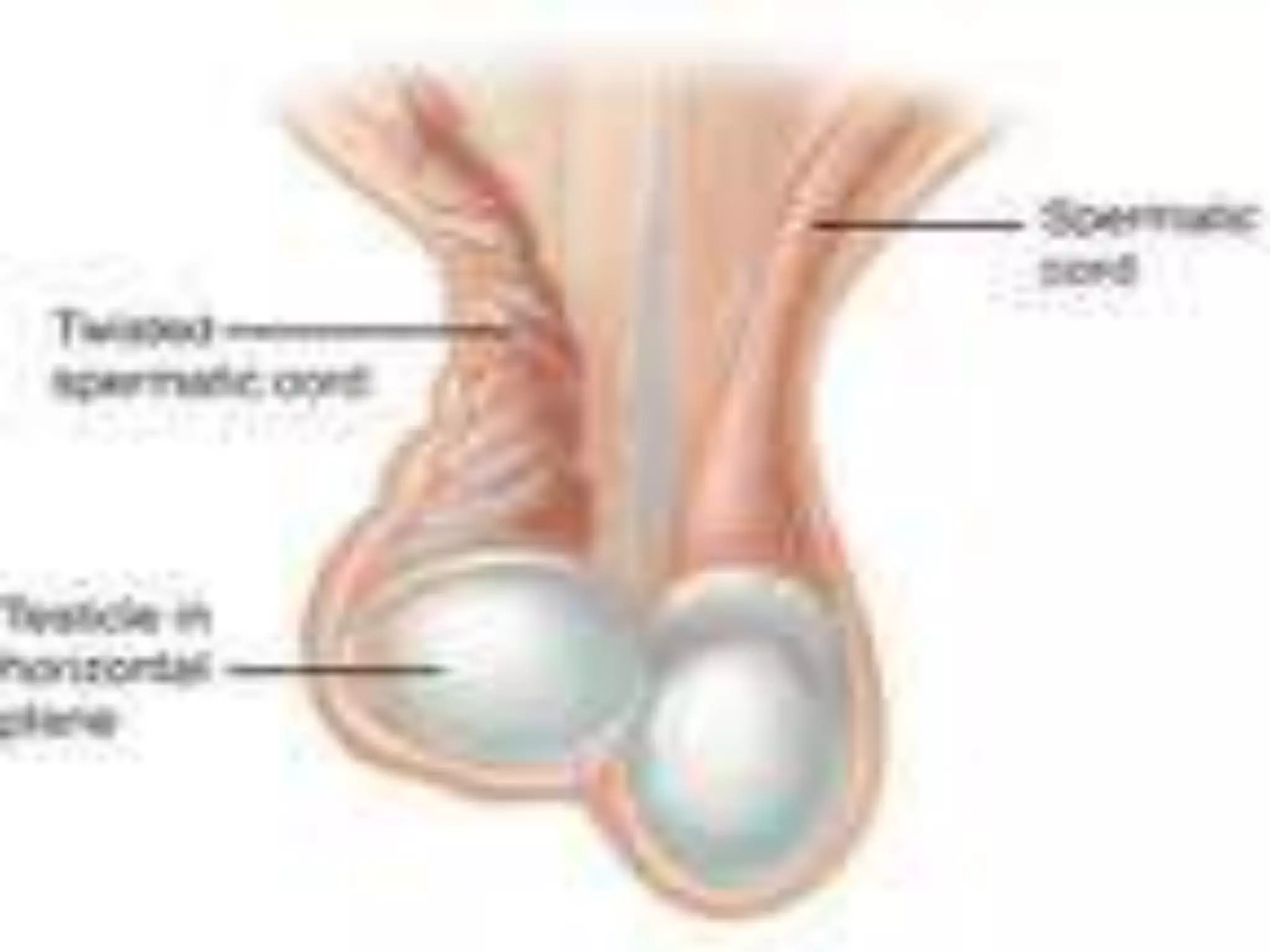
 The classic finding on physical examination is an
asymmetrically high-riding testis on the affected side with
the long axis of the testis oriented transversely instead of
longitudinally secondary to shortening of the spermatic cord
from the torsion, also called the “bell clapper deformity”
The cremasteric reflex
 A normal response is cremasteric contraction with elevation of
the testis.
 The reflex is usually absent in patients with testicular torsion .
 This helps distinguish testicular torsion from epididymitis
and other causes of scrotal pain, in which the reflex is
typically intact [1].
 Prehn’s sign: Relief of scrotal pain by elevating testicle. NOT
a reliable way to distinguish epididymitis from torsion
Imaging
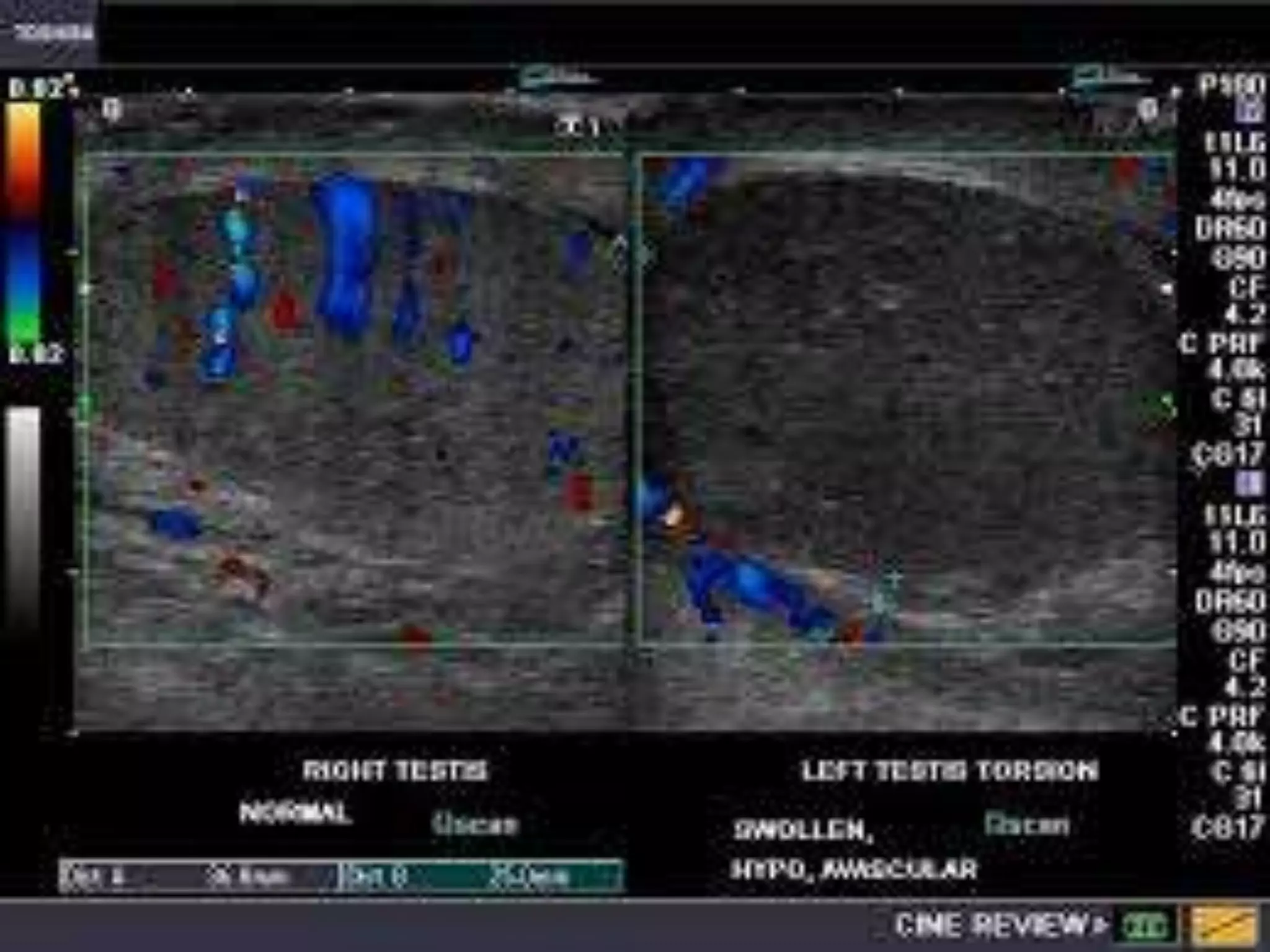
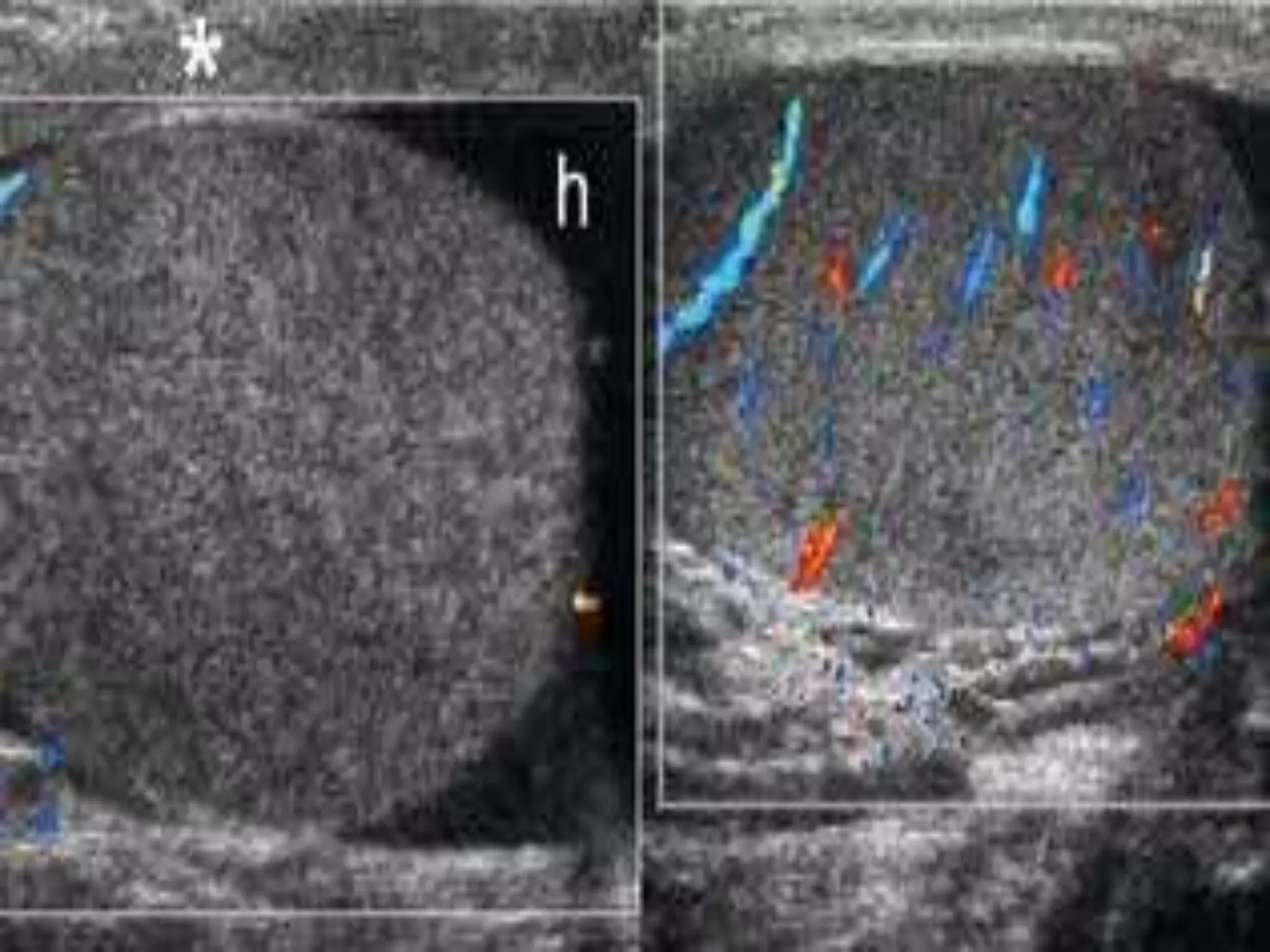
 If the etiology of an acute scrotal process is equivocal after
history and physical examination, color Doppler
ultrasonography is the diagnostic test of choice to
differentiate testicular torsion from other causes, including
epididymitis.
 lack of immediate access to scrotal ultrasound should not
delay surgical exploration.
 In a study of 56 patients who underwent surgical exploration
for acute scrotal pain and had Doppler ultrasound
examinations performed preoperatively [4] (sensitivity 100
percent and specificity 97 percent).
Treatment
 Treatment for suspected testicular torsion is immediate
surgical exploration with intraoperative detorsion and
fixation of the testes.
 Delay in detorsion of a few hours may lead to progressively
higher rates of nonviability of the testis.
 Manual detorsion is performed if surgical intervention is not
immediately available.
Surgery
 Detorsion and fixation of both the involved testis and the
contralateral uninvolved testis should be done since
inadequate gubernacular fixation is usually a bilateral defect.
 Longer periods of ischemia (>12 hours) may cause infarction
of the testis with liquefaction requiring orchiectomy.
Manual detorsion
 If surgery is not immediately available (within two hours), it is
reasonable to attempt to manually detorse the testicle [16].
 The classic teaching is that the testis usually rotates medially
during torsion and can be detorsed by rotating it outward
toward the thigh.
 However, in a retrospective analysis of 200 consecutive males
age 18 months to 20 years who underwent surgical
exploration for testicular torsion, lateral rotation was present in
one-third of cases [17].
successful detorsion is suggested by [18]:
 Relief of pain
 Resolution of the transverse lie of the testis to a longitudinal
orientation
 Lower position of the testis in the scrotum
 Return of normal arterial pulsations detected with a color
Doppler study
 Surgical exploration is necessary even after clinically
successful manual detorsion because orchiopexy (securing
the testicle to the scrotal wall) must be performed to prevent
recurrence, and residual torsion may be present that can be
further relieved [17].
Epididymitis
 Epididymitis is the most common cause of scrotal pain in
adults in the outpatient setting [19].
 Epididymitis is most commonly infectious in etiology, but can
also be due to noninfectious causes (eg, trauma, autoimmune
disease) [22].
Clinical features and diagnosis
 In acute infectious epididymitis, palpation reveals induration
and swelling of the involved epididymis with tenderness.
 More advanced cases often present with testicular swelling
and pain (epididymo-orchitis) with scrotal wall erythema and a
reactive hydrocele.
Investigations
 A urinalysis and urine culture should be performed in all
patients suspected of epididymitis, although urine studies are
often negative in patients without urinary complaints [8].
 A urethral swab should be obtained in patients with urethral
discharge and sent for culture
 should be performed in patients with acute onset of
testiculUltrasound ar pain to assess for testicular torsion.
Treatment
 Acutely febrile patients with sepsis often require
hospitalization for intravenous hydration and parenteral
antibiotics. Ice, scrotal elevation, and nonsteroidal
antiinflammatory drugs (NSAIDs) are helpful adjuncts.
 Less severe cases can be treated on an outpatient basis with
oral antibiotics, ice, and scrotal elevation).
 Regimens that cover C. trachomatis and N. gonorrhoeae. The
first-line treatment regimen includes ceftriaxone (250 mg
intramuscular injection in one dose) plus doxycycline (100 mg by
mouth twice a day for ten days).
 Quinolones alone are no longer recommended for the treatment
of epididymitis if N. gonorrhoeae is suspected (eg, in patients with
acute urethritis or proctitis, high risk for sexually transmitted
disease),
Fournier's gangrene
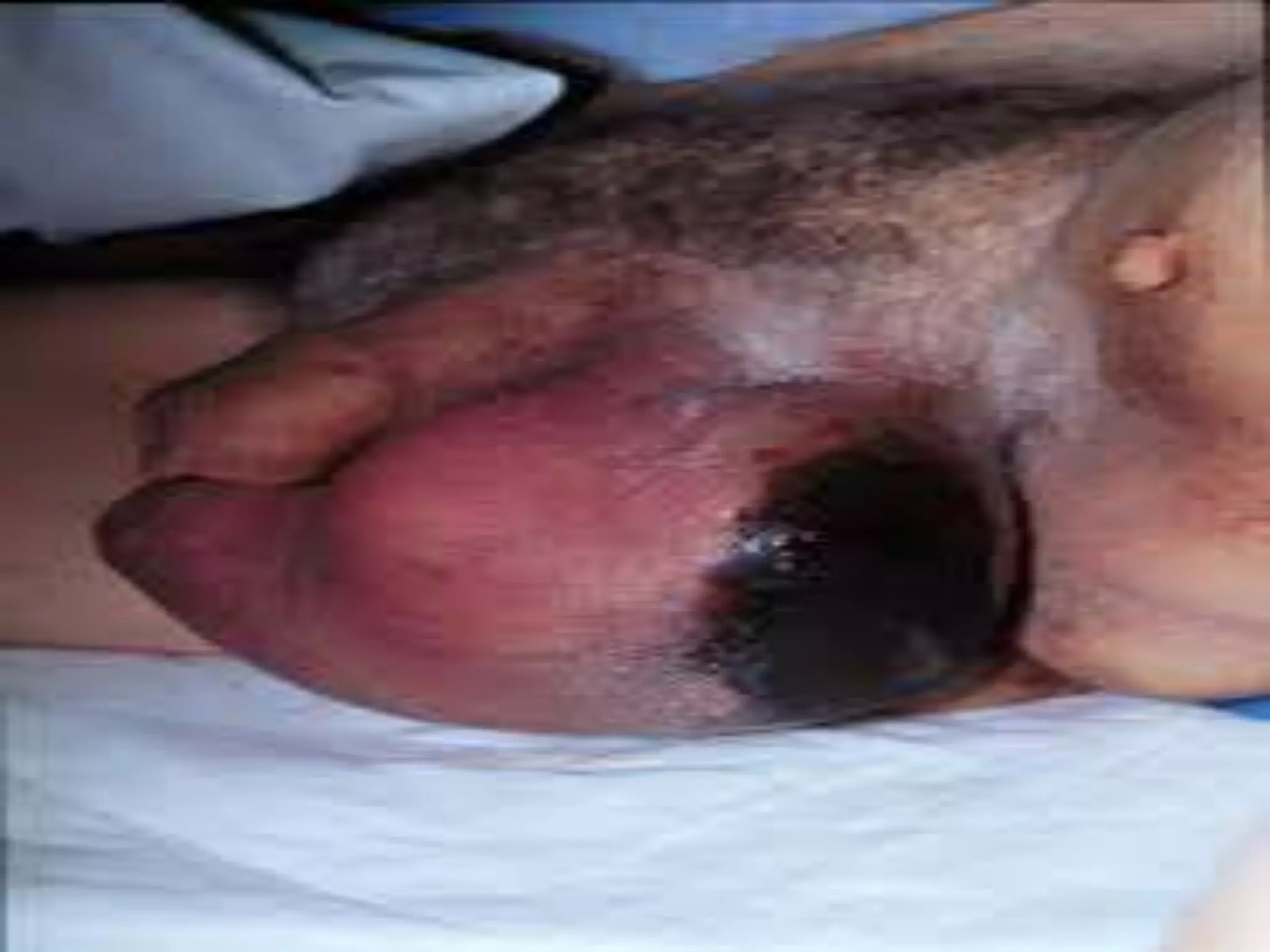
 Fournier’s gangrene is a necrotizing fasciitis of the
perineum caused by a mixed infection with aerobic/anaerobic
bacteria, which often involves the scrotum.
 Characterized by severe pain that generally starts on the
anterior abdominal wall, migrates into the gluteal muscles and
onto the scrotum and penis
Treatment
 Treatment of necrotizing fasciitis consists of early and
aggressive surgical exploration and debridement of necrotic
tissue, antibiotic therapy, and hemodynamic support as
needed.
 Antibiotic therapy alone is usually associated with a 100
percent mortality rate, highlighting the need for surgical
debridement.
Torsion of the appendix testis
 Testicular pain from torsion of the appendix testis is usually more
gradual than with testicular torsioIt is the leading cause of acute
scrotal pathology in childhood. Torsion of the appendix testis
rarely occurs in adults [29].
 It is not uncommon for patients to have several days of scrotal
discomfort before they present for evaluation. Pain ranges widely
from mild to severe.
 Careful inspection of the scrotal wall at this location may detect the
classic "blue dot" sign caused by infarction and necrosis of the
appendix testis .
management
 Management of acute torsion of the appendix testis usually
includes conservative treatment, which includes rest, ice, and
NSAIDs.
 Recovery is generally slow with this approach, and pain may
last for several weeks to months.
 Surgical excision of the appendix testis is reserved for patients
who have persistent pain.
Trauma
 only rarely does trauma result in severe testicular injury,
usually due to compression of the testis against the pubic
bones from a direct blow or straddle injury.
 The spectrum of traumatic complications can range from a
hematocele to infection with pyocele to testicular rupture..
 Testicular rupture requires surgical repair. Lesser injuries are
managed according to the clinical severity and often can be
treated conservatively.

Testicular cancer
 While most testicular tumors present as painless nodules or
masses, rapidly growing germ cell tumors may cause acute
scrotal pain secondary to hemorrhage and infarction.
 A mass is generally palpable, and ultrasound is usually
sufficient to make a diagnosis of testicular cancer.
Referred pain
 Men who have the acute onset of scrotal pain without local
inflammatory signs or a scrotal mass on examination may be
suffering from referred pain to the scrotum.
 The diseases that may cause referred scrotal pain are diverse,
reflecting the anatomy of the three somatic nerves that travel
to the scrotum: the genitofemoral, ilioinguinal, and posterior
scrotal nerves [31].
Referred pain
Causes of referred pain include :
 abdominal aortic aneurysm
 urolithiasis
 lower lumbar or sacral nerve root compression
 retrocecal appendicitis
 retroperitoneal tumor
 Post herniorrhaphy pain.
Summary
References
1-Rabinowitz R. The importance of the cremasteric reflex in
acute scrotal swelling in children. J Urol 1984; 132:89.
2-Molokwu CN, Somani BK, Goodman CM. Outcomes of scrotal
exploration for acute scrotal pain suspicious of testicular
torsion: a consecutive case series of 173 patients. BJU Int
2011; 107:990.
3-Cummings JM, Boullier JA, Sekhon D, Bose K. Adult testicular
torsion. J Urol 2002; 167:2109.
4- al Mufti RA, Ogedegbe AK, Lafferty K. The use of Doppler
ultrasound in the clinical management of acute testicular pain.
Br J Urol 1995; 76:625.
5-Watkin NA, Reiger NA, Moisey CU. Is the conservative
management of the acute scrotum justified on clinical
grounds? Br J Urol 1996; 78:623.
 6-Tajchner L, Larkin JO, Bourke MG, et al. Management of the acute
scrotum in a district general hospital: 10-year experience.
ScientificWorldJournal 2009; 9:281.
 7- Hegarty PK, Walsh E, Corcoran MO. Exploration of the acute
scrotum: a retrospective analysis of 100 consecutive cases. Ir J Med Sci
2001; 170:181.
 8- Wampler SM, Llanes M. Common scrotal and testicular problems.
Prim Care 2010; 37:613.
 9-Dunne PJ, O'Loughlin BS. Testicular torsion: time is the enemy. Aust
N Z J Surg 2000; 70:441.
 10-Jarow JP, Sanzone JJ. Risk factors for male partner antisperm
antibodies. J Urol 1992; 148:1805.
 11-Schmitz D, Safranek S. Clinical inquiries. How useful is a physical
exam in diagnosing testicular torsion? J Fam Pract 2009; 58:433.
 12-Wilbert DM, Schaerfe CW, Stern WD, et al. Evaluation of the acute
scrotum by color-coded Doppler ultrasonography. J Urol 1993; 149:1475.
 13- Kapasi Z, Halliday S. Best evidence topic report. Ultrasound in the
diagnosis of testicular torsion. Emerg Med J 2005; 22:559.
 14- Pepe P, Panella P, Pennisi M, Aragona F. Does color Doppler
sonography improve the clinical assessment of patients with acute
scrotum? Eur J Radiol 2006; 60:120.
 15-Liguori G, Bucci S, Zordani A, et al. Role of US in acute scrotal pain.
World J Urol 2011; 29:639.
 16- Cornel EB, Karthaus HF. Manual derotation of the twisted
spermatic cord. BJU Int 1999; 83:672.
 17-Sessions AE, Rabinowitz R, Hulbert WC, et al. Testicular torsion:
direction, degree, duration and disinformation. J Urol 2003; 169:663.
 18- Perron, CE. Pain--Scrotal. In: Textbook of Pediatric Emergency
Medicine, 4th ed, Fleisher, GR, Ludwig, S (Eds), Lippincott, Williams &
Wilkins, Philadelphia 2000. p.473.
 19- Trojian TH, Lishnak TS, Heiman D. Epididymitis and orchitis: an
overview. Am Fam Physician 2009; 79:583.
 20-Workowski KA, Berman S, Centers for Disease Control and
Prevention (CDC). Sexually transmitted diseases treatment guidelines,
2010. MMWR Recomm Rep 2010; 59:1.
 21-Tracy CR, Steers WD, Costabile R. Diagnosis and management of
epididymitis. Urol Clin North Am 2008; 35:101.
 22- Lewis AG, Bukowski TP, Jarvis PD, et al. Evaluation of acute
scrotum in the emergency department. J Pediatr Surg 1995; 30:277.
 23-Siegel A, Snyder H, Duckett JW. Epididymitis in infants and boys:
underlying urogenital anomalies and efficacy of imaging modalities. J
Urol 1987; 138:1100.
 24- Doble A, Taylor-Robinson D, Thomas BJ, et al. Acute
epididymitis: a microbiological and ultrasonographic study. Br J
Urol 1989; 63:90.
 25-Hawkins DA, Taylor-Robinson D, Thomas BJ, Harris JR.
Microbiological survey of acute epididymitis. Genitourin Med
1986; 62:342.
 26-Updated recommended treatment regimens for gonococcal
infections and associated conditions -- United States, April 2007.
(file://www.cdc.gov/std/treatment/2010/epididymitis.htm).
Accessed on June 6, 2011.
 27-Fisher R, Walker J. The acute paediatric scrotum. Br J Hosp
Med 1994; 51:290.
 28-Palestro CJ, Manor EP, Kim CK, Goldsmith SJ. Torsion of a
testicular appendage in an adult male. Clin Nucl Med 1990;
15:515.
 29- McGee SR. Referred scrotal pain: case reports and
review. J Gen Intern Med 1993; 8:694.
 30- Shah J, Qureshi I, Ellis BW. Acute idiopathic scrotal
oedema in an adult: a case report. Int J Clin Pract 2004;
58:1168.
 31-Ooi DG, Chua MT, Tan LG. A case of adult acute
idiopathic scrotal edema. Nat Rev Urol 2009; 6:331.
 32-Ringdahl E, Teague L. Testicular torsion. Am Fam
Physician 2006; 74:1739.
 33-Stewart A, Ubee SS, Davies H. Epididymo-orchitis. BMJ
2011; 342:d1543.
The acute scrotum
The acute scrotum

The acute scrotum

  • 1.
    By Tamer Rushdy ElAlfy Assistant lecturer of G. surgery
  • 2.
    Introduction The spectrum ofconditions that affect the scrotum and its contents ranges from incidental findings that may require patient reassurance only OR acute events that may require immediate surgical intervention.
  • 3.
    Normal anatomy The normaltestis is oriented in the vertical axis and the epididymis is above the superior pole in the posterolateral position. Cremasteric reflex: Stroking/pinching the inner thigh should result in elevation of > 0.5 cm of the ipsilateral testicle.
  • 5.
    DIFFERENTIAL DIAGNOSIS  Themost common causes of acute scrotal pain in adults are testicular torsion and epididymitis.  Other conditions that may result in acute scrotal pathology include Fournier’s gangrene, torsion of the appendix testis, trauma/surgery, testicular cancer, strangulated inguinal hernia, Henoch-Schönlein purpura, mumps, and referred pain.
  • 6.
    Testicular torsion  Testiculartorsion is a urologic emergency that is more common in neonates and postpubertal boys, although it can occur at any age [2].  The prevalence of testicular torsion in adult patients hospitalized with acute scrotal pain is approximately 25 to 50 percent [2,4-7].
  • 7.
     Testicular torsionresults from inadequate fixation of the testis to the tunica vaginalis producing ischemia from reduced arterial inflow and venous outflow obstruction.  Testicular torsion may occur after an incidental event (eg, trauma) or spontaneously [10].
  • 8.
     It isgenerally felt that the testis suffers irreversible damage after 12 hours of ischemia due to testicular torsion [8,9].  Infertility may result, even with a normal contralateral testis, because the disruption of the immunologic "blood-testis" barrier may expose antigens from germ cells and sperm to the general circulation and lead to the development of anti-sperm antibodies.
  • 9.
    Clinical features anddiagnosis  The diagnosis of testicular torsion is usually determined by acute onset of severe symptoms and characteristic physical findings, although ultrasound may be needed in equivocal cases.  The onset of pain in testicular torsion is usually sudden and often occurs several hours after vigorous physical activity or minor trauma to the testicles [11].  There may be associated nausea and vomiting.
  • 10.
     Another typicalpresentation, particularly in children, is awakening with scrotal pain in the middle of the night or in the morning,
  • 11.
     The classicfinding on physical examination is an asymmetrically high-riding testis on the affected side with the long axis of the testis oriented transversely instead of longitudinally secondary to shortening of the spermatic cord from the torsion, also called the “bell clapper deformity”
  • 15.
    The cremasteric reflex A normal response is cremasteric contraction with elevation of the testis.  The reflex is usually absent in patients with testicular torsion .  This helps distinguish testicular torsion from epididymitis and other causes of scrotal pain, in which the reflex is typically intact [1].
  • 16.
     Prehn’s sign:Relief of scrotal pain by elevating testicle. NOT a reliable way to distinguish epididymitis from torsion
  • 17.
    Imaging  If theetiology of an acute scrotal process is equivocal after history and physical examination, color Doppler ultrasonography is the diagnostic test of choice to differentiate testicular torsion from other causes, including epididymitis.  lack of immediate access to scrotal ultrasound should not delay surgical exploration.
  • 18.
     In astudy of 56 patients who underwent surgical exploration for acute scrotal pain and had Doppler ultrasound examinations performed preoperatively [4] (sensitivity 100 percent and specificity 97 percent).
  • 21.
    Treatment  Treatment forsuspected testicular torsion is immediate surgical exploration with intraoperative detorsion and fixation of the testes.  Delay in detorsion of a few hours may lead to progressively higher rates of nonviability of the testis.  Manual detorsion is performed if surgical intervention is not immediately available.
  • 22.
    Surgery  Detorsion andfixation of both the involved testis and the contralateral uninvolved testis should be done since inadequate gubernacular fixation is usually a bilateral defect.  Longer periods of ischemia (>12 hours) may cause infarction of the testis with liquefaction requiring orchiectomy.
  • 25.
    Manual detorsion  Ifsurgery is not immediately available (within two hours), it is reasonable to attempt to manually detorse the testicle [16].  The classic teaching is that the testis usually rotates medially during torsion and can be detorsed by rotating it outward toward the thigh.
  • 26.
     However, ina retrospective analysis of 200 consecutive males age 18 months to 20 years who underwent surgical exploration for testicular torsion, lateral rotation was present in one-third of cases [17].
  • 27.
    successful detorsion issuggested by [18]:  Relief of pain  Resolution of the transverse lie of the testis to a longitudinal orientation  Lower position of the testis in the scrotum  Return of normal arterial pulsations detected with a color Doppler study
  • 28.
     Surgical explorationis necessary even after clinically successful manual detorsion because orchiopexy (securing the testicle to the scrotal wall) must be performed to prevent recurrence, and residual torsion may be present that can be further relieved [17].
  • 29.
    Epididymitis  Epididymitis isthe most common cause of scrotal pain in adults in the outpatient setting [19].  Epididymitis is most commonly infectious in etiology, but can also be due to noninfectious causes (eg, trauma, autoimmune disease) [22].
  • 30.
    Clinical features anddiagnosis  In acute infectious epididymitis, palpation reveals induration and swelling of the involved epididymis with tenderness.  More advanced cases often present with testicular swelling and pain (epididymo-orchitis) with scrotal wall erythema and a reactive hydrocele.
  • 31.
    Investigations  A urinalysisand urine culture should be performed in all patients suspected of epididymitis, although urine studies are often negative in patients without urinary complaints [8].  A urethral swab should be obtained in patients with urethral discharge and sent for culture  should be performed in patients with acute onset of testiculUltrasound ar pain to assess for testicular torsion.
  • 32.
    Treatment  Acutely febrilepatients with sepsis often require hospitalization for intravenous hydration and parenteral antibiotics. Ice, scrotal elevation, and nonsteroidal antiinflammatory drugs (NSAIDs) are helpful adjuncts.  Less severe cases can be treated on an outpatient basis with oral antibiotics, ice, and scrotal elevation).
  • 33.
     Regimens thatcover C. trachomatis and N. gonorrhoeae. The first-line treatment regimen includes ceftriaxone (250 mg intramuscular injection in one dose) plus doxycycline (100 mg by mouth twice a day for ten days).  Quinolones alone are no longer recommended for the treatment of epididymitis if N. gonorrhoeae is suspected (eg, in patients with acute urethritis or proctitis, high risk for sexually transmitted disease),
  • 34.
    Fournier's gangrene  Fournier’sgangrene is a necrotizing fasciitis of the perineum caused by a mixed infection with aerobic/anaerobic bacteria, which often involves the scrotum.  Characterized by severe pain that generally starts on the anterior abdominal wall, migrates into the gluteal muscles and onto the scrotum and penis
  • 37.
    Treatment  Treatment ofnecrotizing fasciitis consists of early and aggressive surgical exploration and debridement of necrotic tissue, antibiotic therapy, and hemodynamic support as needed.  Antibiotic therapy alone is usually associated with a 100 percent mortality rate, highlighting the need for surgical debridement.
  • 39.
    Torsion of theappendix testis  Testicular pain from torsion of the appendix testis is usually more gradual than with testicular torsioIt is the leading cause of acute scrotal pathology in childhood. Torsion of the appendix testis rarely occurs in adults [29].  It is not uncommon for patients to have several days of scrotal discomfort before they present for evaluation. Pain ranges widely from mild to severe.  Careful inspection of the scrotal wall at this location may detect the classic "blue dot" sign caused by infarction and necrosis of the appendix testis .
  • 41.
    management  Management ofacute torsion of the appendix testis usually includes conservative treatment, which includes rest, ice, and NSAIDs.  Recovery is generally slow with this approach, and pain may last for several weeks to months.  Surgical excision of the appendix testis is reserved for patients who have persistent pain.
  • 42.
    Trauma  only rarelydoes trauma result in severe testicular injury, usually due to compression of the testis against the pubic bones from a direct blow or straddle injury.  The spectrum of traumatic complications can range from a hematocele to infection with pyocele to testicular rupture..  Testicular rupture requires surgical repair. Lesser injuries are managed according to the clinical severity and often can be treated conservatively. 
  • 43.
    Testicular cancer  Whilemost testicular tumors present as painless nodules or masses, rapidly growing germ cell tumors may cause acute scrotal pain secondary to hemorrhage and infarction.  A mass is generally palpable, and ultrasound is usually sufficient to make a diagnosis of testicular cancer.
  • 44.
    Referred pain  Menwho have the acute onset of scrotal pain without local inflammatory signs or a scrotal mass on examination may be suffering from referred pain to the scrotum.  The diseases that may cause referred scrotal pain are diverse, reflecting the anatomy of the three somatic nerves that travel to the scrotum: the genitofemoral, ilioinguinal, and posterior scrotal nerves [31].
  • 45.
    Referred pain Causes ofreferred pain include :  abdominal aortic aneurysm  urolithiasis  lower lumbar or sacral nerve root compression  retrocecal appendicitis  retroperitoneal tumor  Post herniorrhaphy pain.
  • 46.
  • 47.
    References 1-Rabinowitz R. Theimportance of the cremasteric reflex in acute scrotal swelling in children. J Urol 1984; 132:89. 2-Molokwu CN, Somani BK, Goodman CM. Outcomes of scrotal exploration for acute scrotal pain suspicious of testicular torsion: a consecutive case series of 173 patients. BJU Int 2011; 107:990. 3-Cummings JM, Boullier JA, Sekhon D, Bose K. Adult testicular torsion. J Urol 2002; 167:2109. 4- al Mufti RA, Ogedegbe AK, Lafferty K. The use of Doppler ultrasound in the clinical management of acute testicular pain. Br J Urol 1995; 76:625. 5-Watkin NA, Reiger NA, Moisey CU. Is the conservative management of the acute scrotum justified on clinical grounds? Br J Urol 1996; 78:623.
  • 48.
     6-Tajchner L,Larkin JO, Bourke MG, et al. Management of the acute scrotum in a district general hospital: 10-year experience. ScientificWorldJournal 2009; 9:281.  7- Hegarty PK, Walsh E, Corcoran MO. Exploration of the acute scrotum: a retrospective analysis of 100 consecutive cases. Ir J Med Sci 2001; 170:181.  8- Wampler SM, Llanes M. Common scrotal and testicular problems. Prim Care 2010; 37:613.  9-Dunne PJ, O'Loughlin BS. Testicular torsion: time is the enemy. Aust N Z J Surg 2000; 70:441.  10-Jarow JP, Sanzone JJ. Risk factors for male partner antisperm antibodies. J Urol 1992; 148:1805.  11-Schmitz D, Safranek S. Clinical inquiries. How useful is a physical exam in diagnosing testicular torsion? J Fam Pract 2009; 58:433.
  • 49.
     12-Wilbert DM,Schaerfe CW, Stern WD, et al. Evaluation of the acute scrotum by color-coded Doppler ultrasonography. J Urol 1993; 149:1475.  13- Kapasi Z, Halliday S. Best evidence topic report. Ultrasound in the diagnosis of testicular torsion. Emerg Med J 2005; 22:559.  14- Pepe P, Panella P, Pennisi M, Aragona F. Does color Doppler sonography improve the clinical assessment of patients with acute scrotum? Eur J Radiol 2006; 60:120.  15-Liguori G, Bucci S, Zordani A, et al. Role of US in acute scrotal pain. World J Urol 2011; 29:639.  16- Cornel EB, Karthaus HF. Manual derotation of the twisted spermatic cord. BJU Int 1999; 83:672.  17-Sessions AE, Rabinowitz R, Hulbert WC, et al. Testicular torsion: direction, degree, duration and disinformation. J Urol 2003; 169:663.
  • 50.
     18- Perron,CE. Pain--Scrotal. In: Textbook of Pediatric Emergency Medicine, 4th ed, Fleisher, GR, Ludwig, S (Eds), Lippincott, Williams & Wilkins, Philadelphia 2000. p.473.  19- Trojian TH, Lishnak TS, Heiman D. Epididymitis and orchitis: an overview. Am Fam Physician 2009; 79:583.  20-Workowski KA, Berman S, Centers for Disease Control and Prevention (CDC). Sexually transmitted diseases treatment guidelines, 2010. MMWR Recomm Rep 2010; 59:1.  21-Tracy CR, Steers WD, Costabile R. Diagnosis and management of epididymitis. Urol Clin North Am 2008; 35:101.  22- Lewis AG, Bukowski TP, Jarvis PD, et al. Evaluation of acute scrotum in the emergency department. J Pediatr Surg 1995; 30:277.  23-Siegel A, Snyder H, Duckett JW. Epididymitis in infants and boys: underlying urogenital anomalies and efficacy of imaging modalities. J Urol 1987; 138:1100.
  • 51.
     24- DobleA, Taylor-Robinson D, Thomas BJ, et al. Acute epididymitis: a microbiological and ultrasonographic study. Br J Urol 1989; 63:90.  25-Hawkins DA, Taylor-Robinson D, Thomas BJ, Harris JR. Microbiological survey of acute epididymitis. Genitourin Med 1986; 62:342.  26-Updated recommended treatment regimens for gonococcal infections and associated conditions -- United States, April 2007. (file://www.cdc.gov/std/treatment/2010/epididymitis.htm). Accessed on June 6, 2011.  27-Fisher R, Walker J. The acute paediatric scrotum. Br J Hosp Med 1994; 51:290.  28-Palestro CJ, Manor EP, Kim CK, Goldsmith SJ. Torsion of a testicular appendage in an adult male. Clin Nucl Med 1990; 15:515.
  • 52.
     29- McGeeSR. Referred scrotal pain: case reports and review. J Gen Intern Med 1993; 8:694.  30- Shah J, Qureshi I, Ellis BW. Acute idiopathic scrotal oedema in an adult: a case report. Int J Clin Pract 2004; 58:1168.  31-Ooi DG, Chua MT, Tan LG. A case of adult acute idiopathic scrotal edema. Nat Rev Urol 2009; 6:331.  32-Ringdahl E, Teague L. Testicular torsion. Am Fam Physician 2006; 74:1739.  33-Stewart A, Ubee SS, Davies H. Epididymo-orchitis. BMJ 2011; 342:d1543.