Learning Goals:
• To understand the structure of
o the atmosphere
o the biosphere
o the lithosphere,
o hydrosphere
• To understand how the three spheres interacts
with each other
What is the difference between weather and
climate?
How would you define them?
WEATHER: the state of the
atmosphere at a particular place
and time (i.e. the weather in Redcliffe
right now)

CLIMATE: The average weather
conditions of a certain region (i.e.

the climate in Redcliffe includes hot humid
summers and mild dry winters)

What is the major difference between the two?
The earth can be divided up into four spheres that
interact with each other:

The Atmosphere
The Biosphere
The Lithosphere
The Hydrosphere

Can anyone guess
what each is?
(air)

(life)
(earth)

(water)
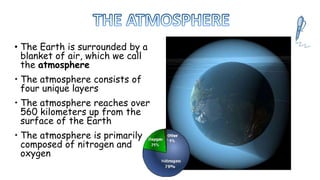
• The Earth is surrounded by a
blanket of air, which we call
the atmosphere
• The atmosphere consists of
four unique layers
• The atmosphere reaches over
560 kilometers up from the
surface of the Earth

• The atmosphere is primarily
composed of nitrogen and
oxygen
• The biosphere is the zone of life on
the Earth. It includes
• all living organisms (including humans)
• all organic matter that has not yet
decomposed

• The biosphere is structured into a
hierarchy known as the food chain

• Energy and mass is transferred from
one level of the food chain to the next
• The lithosphere includes the
crust and the uppermost
mantle; the hard and rigid
outer layer of the Earth
• The lithosphere is about 100
km thick
• The lithosphere below the
crust is brittle enough at
some locations to produce
earthquakes
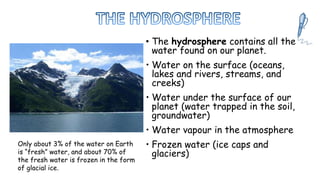
• The hydrosphere contains all the
water found on our planet.
• Water on the surface (oceans,
lakes and rivers, streams, and
creeks)

• Water under the surface of our
planet (water trapped in the soil,
groundwater)
• Water vapour in the atmosphere
Only about 3% of the water on Earth
is “fresh” water, and about 70% of
the fresh water is frozen in the form
of glacial ice.

• Frozen water (ice caps and
glaciers)
System Interactions
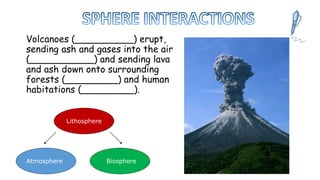
Volcanoes (__________) erupt,
sending ash and gases into the air
(___________) and sending lava
and ash down onto surrounding
forests (_________) and human
habitations (_________).
Lithosphere

Atmosphere

Biosphere
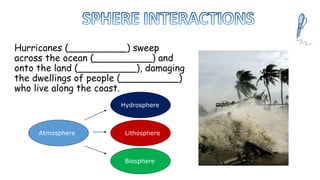
Hurricanes (__________) sweep
across the ocean (__________) and
onto the land (__________), damaging
the dwellings of people (__________)
who live along the coast.
Hydrosphere

Atmosphere

Lithosphere

Biosphere
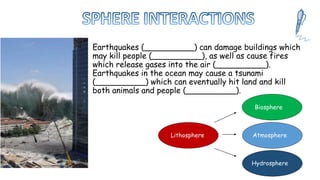
Earthquakes (__________) can damage buildings which
may kill people (__________), as well as cause fires
which release gases into the air (__________).
Earthquakes in the ocean may cause a tsunami
(__________) which can eventually hit land and kill
both animals and people (__________).
Biosphere

Lithosphere

Atmosphere

Hydrosphere
Learning Goals:
• What do we mean when we say:
o the lithosphere?
o the atmosphere?
o hydrosphere?

The 4 Spheres

  • 1.
    Learning Goals: • Tounderstand the structure of o the atmosphere o the biosphere o the lithosphere, o hydrosphere • To understand how the three spheres interacts with each other
  • 2.
    What is thedifference between weather and climate? How would you define them?
  • 3.
    WEATHER: the stateof the atmosphere at a particular place and time (i.e. the weather in Redcliffe right now) CLIMATE: The average weather conditions of a certain region (i.e. the climate in Redcliffe includes hot humid summers and mild dry winters) What is the major difference between the two?
  • 4.
    The earth canbe divided up into four spheres that interact with each other: The Atmosphere The Biosphere The Lithosphere The Hydrosphere Can anyone guess what each is?
  • 5.
  • 6.
    • The Earthis surrounded by a blanket of air, which we call the atmosphere • The atmosphere consists of four unique layers • The atmosphere reaches over 560 kilometers up from the surface of the Earth • The atmosphere is primarily composed of nitrogen and oxygen
  • 8.
    • The biosphereis the zone of life on the Earth. It includes • all living organisms (including humans) • all organic matter that has not yet decomposed • The biosphere is structured into a hierarchy known as the food chain • Energy and mass is transferred from one level of the food chain to the next
  • 9.
    • The lithosphereincludes the crust and the uppermost mantle; the hard and rigid outer layer of the Earth • The lithosphere is about 100 km thick • The lithosphere below the crust is brittle enough at some locations to produce earthquakes
  • 10.
    • The hydrospherecontains all the water found on our planet. • Water on the surface (oceans, lakes and rivers, streams, and creeks) • Water under the surface of our planet (water trapped in the soil, groundwater) • Water vapour in the atmosphere Only about 3% of the water on Earth is “fresh” water, and about 70% of the fresh water is frozen in the form of glacial ice. • Frozen water (ice caps and glaciers)
  • 11.
    System Interactions Volcanoes (__________)erupt, sending ash and gases into the air (___________) and sending lava and ash down onto surrounding forests (_________) and human habitations (_________). Lithosphere Atmosphere Biosphere
  • 12.
    Hurricanes (__________) sweep acrossthe ocean (__________) and onto the land (__________), damaging the dwellings of people (__________) who live along the coast. Hydrosphere Atmosphere Lithosphere Biosphere
  • 13.
    Earthquakes (__________) candamage buildings which may kill people (__________), as well as cause fires which release gases into the air (__________). Earthquakes in the ocean may cause a tsunami (__________) which can eventually hit land and kill both animals and people (__________). Biosphere Lithosphere Atmosphere Hydrosphere
  • 14.
    Learning Goals: • Whatdo we mean when we say: o the lithosphere? o the atmosphere? o hydrosphere?