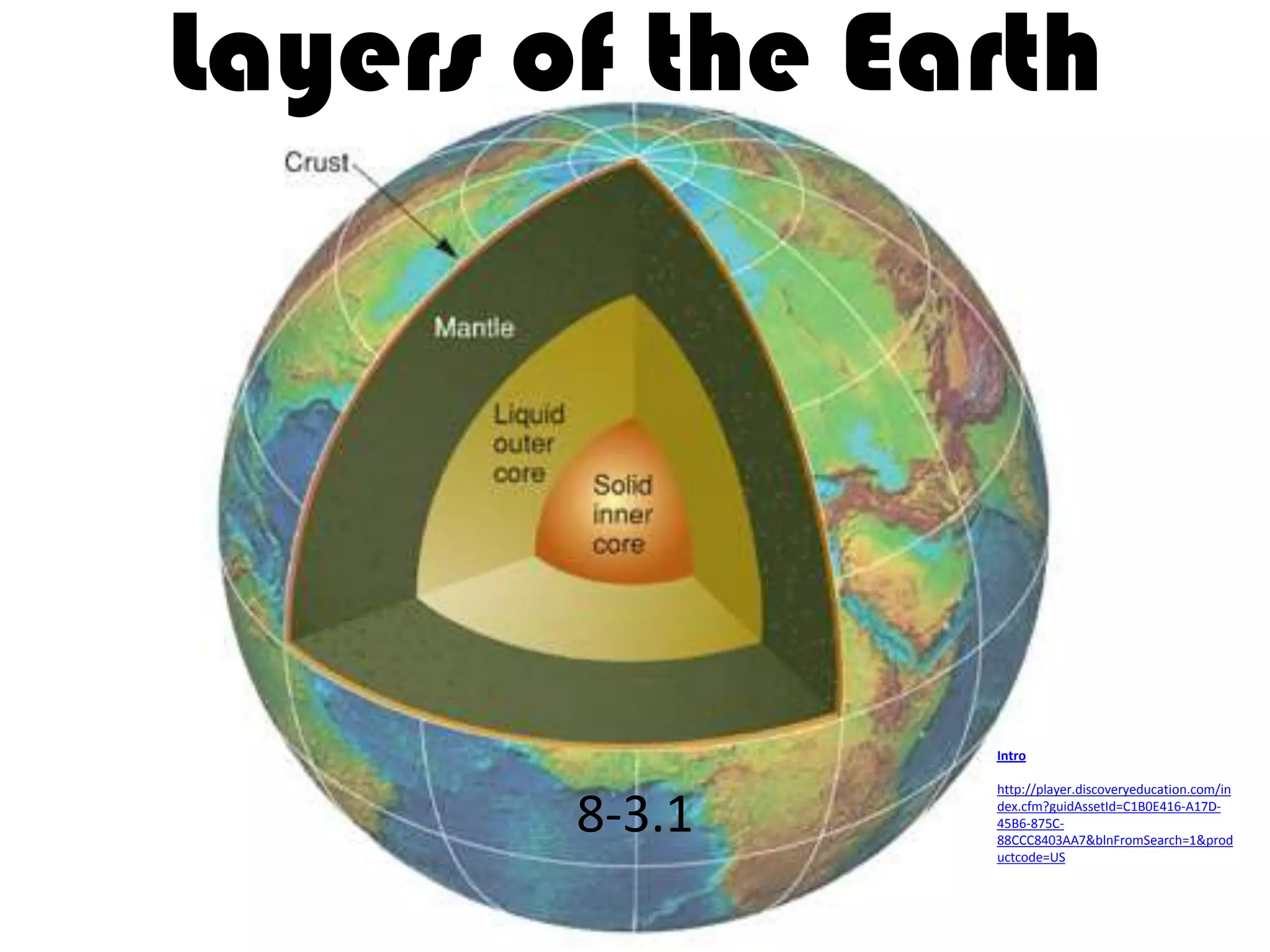
Layers of the Earth


                Intro

                http://player.discoveryeducation.com/in

        8-3.1   dex.cfm?guidAssetId=C1B0E416-A17D-
                45B6-875C-
                88CCC8403AA7&blnFromSearch=1&prod
                uctcode=US
VIW’s
1.   Crust
2.   Mantle
3.   Core
4.   Density
5.   Composition
6.   Lithosphere
7.   Asthenosphere
8.   Oceanic crust – basalt
9.   Continental crust - granite
Learning Objectives
8-3
  The student will demonstrate an
  understanding of materials that determine the
  structure of the Earth and the processes that
  have altered this structure.
8-3.1
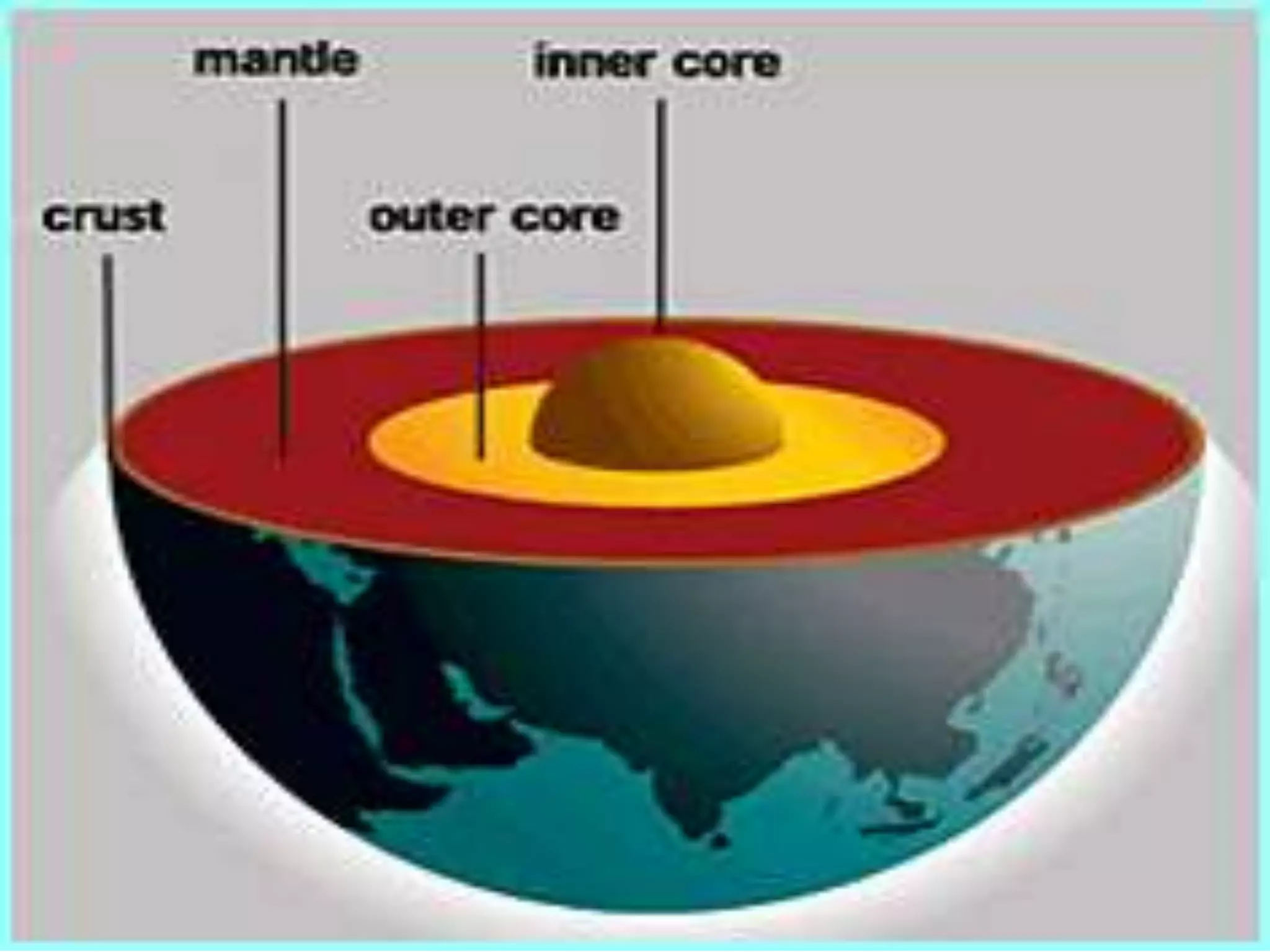
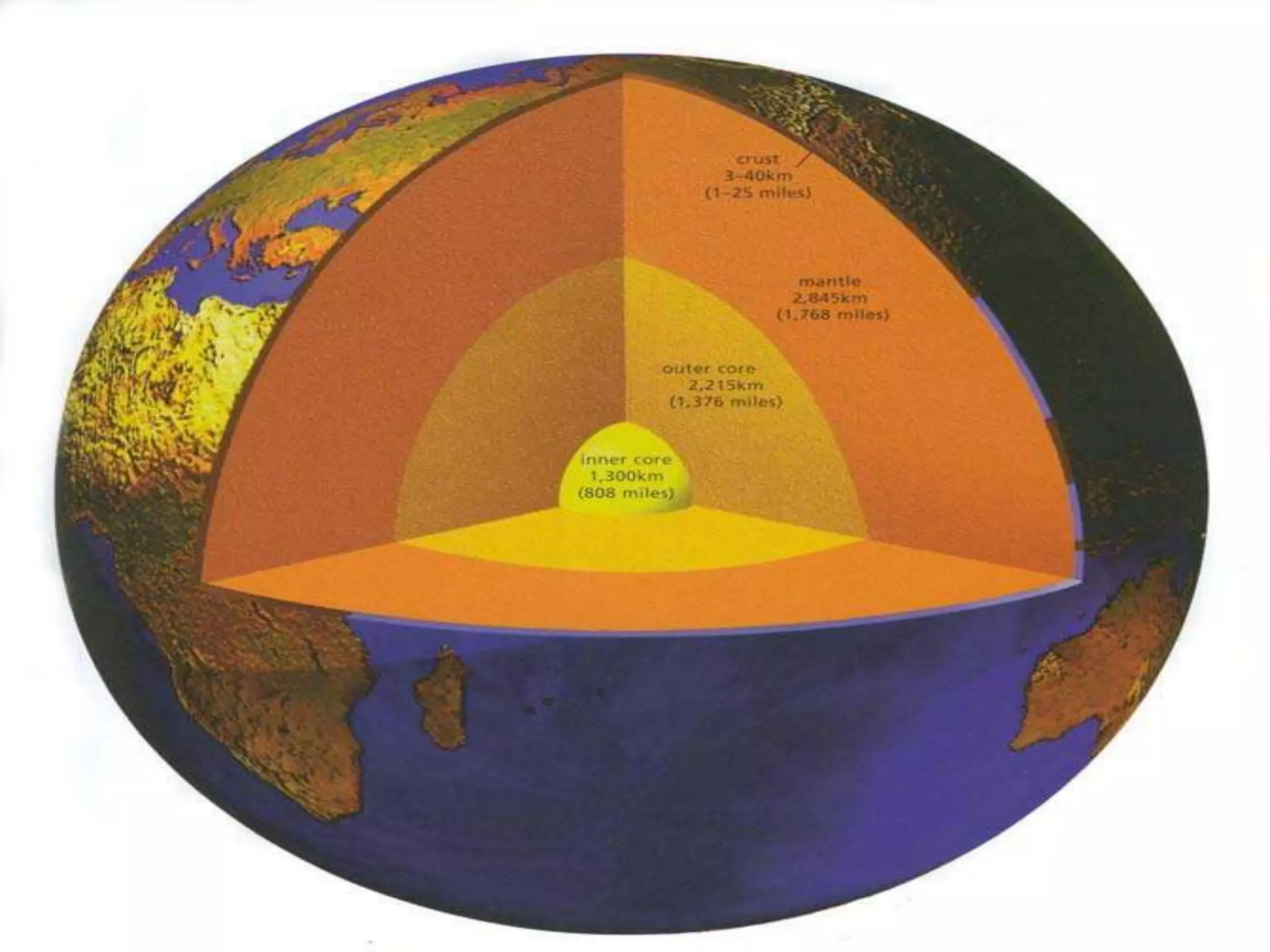
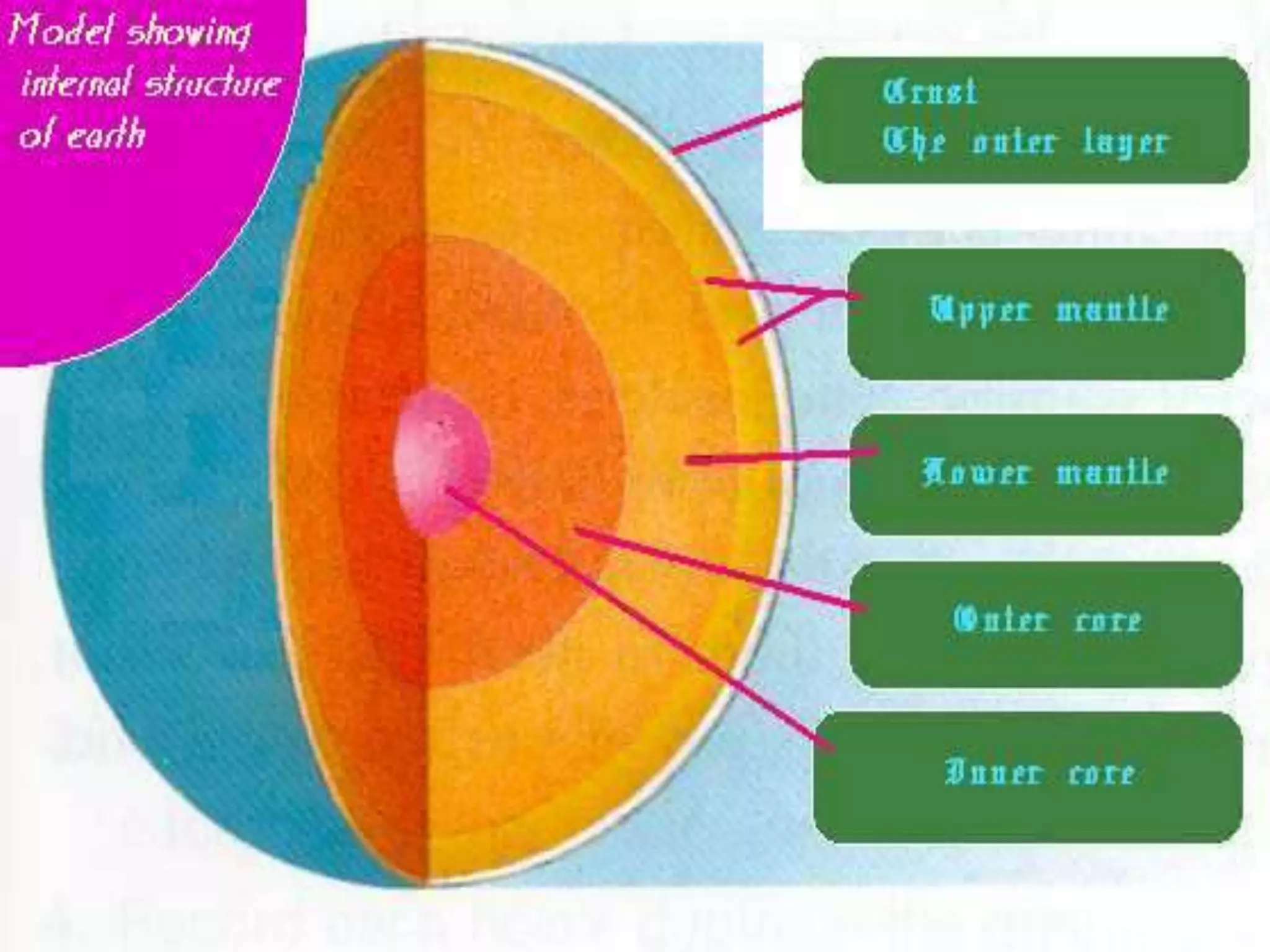
  Summarize the three layers of Earth – crust,
  mantle, and core – on the basis of relative
  position, density, and composition.
Essential Information
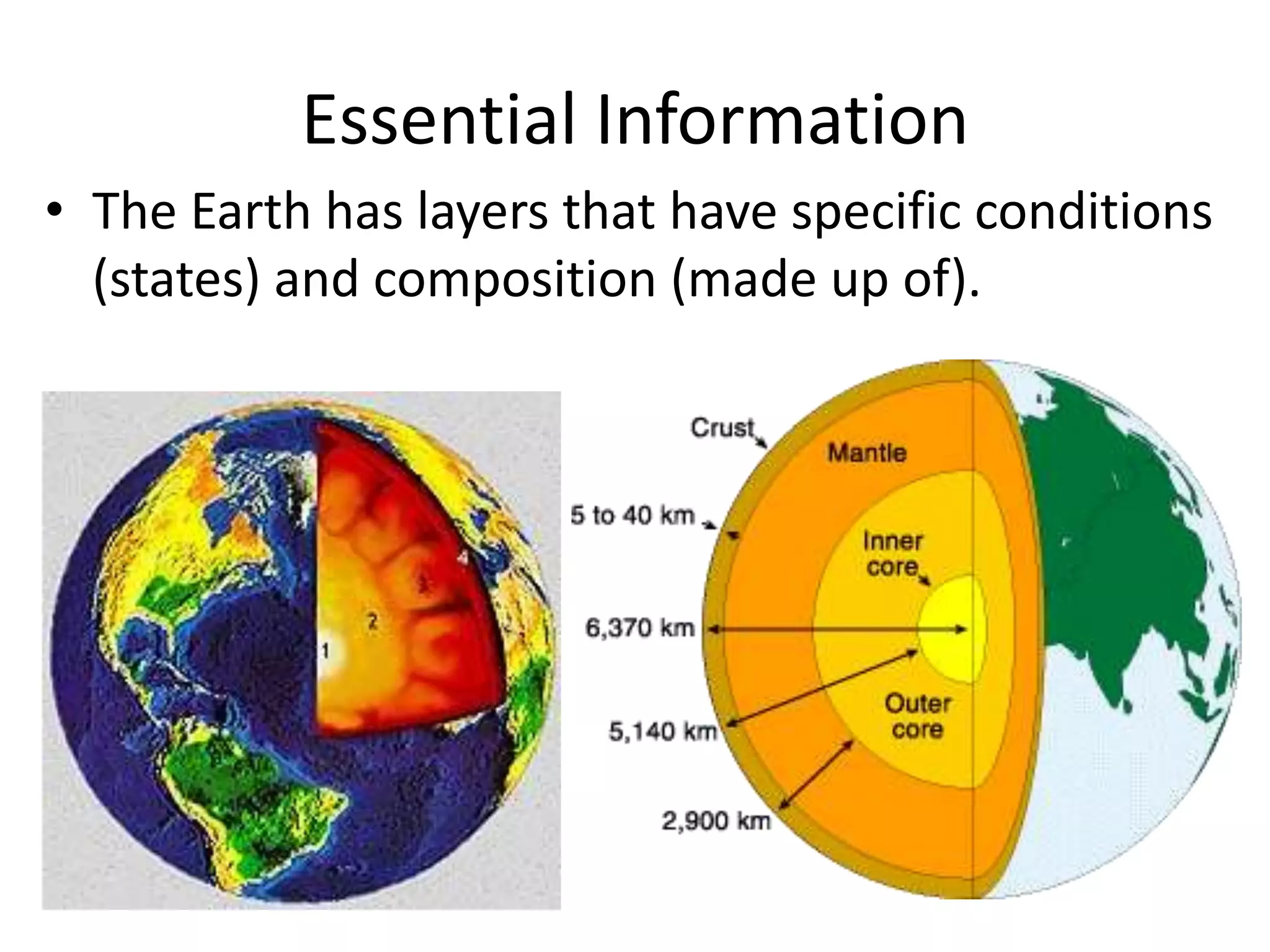
• The Earth has layers that have specific conditions
  (states) and composition (made up of).
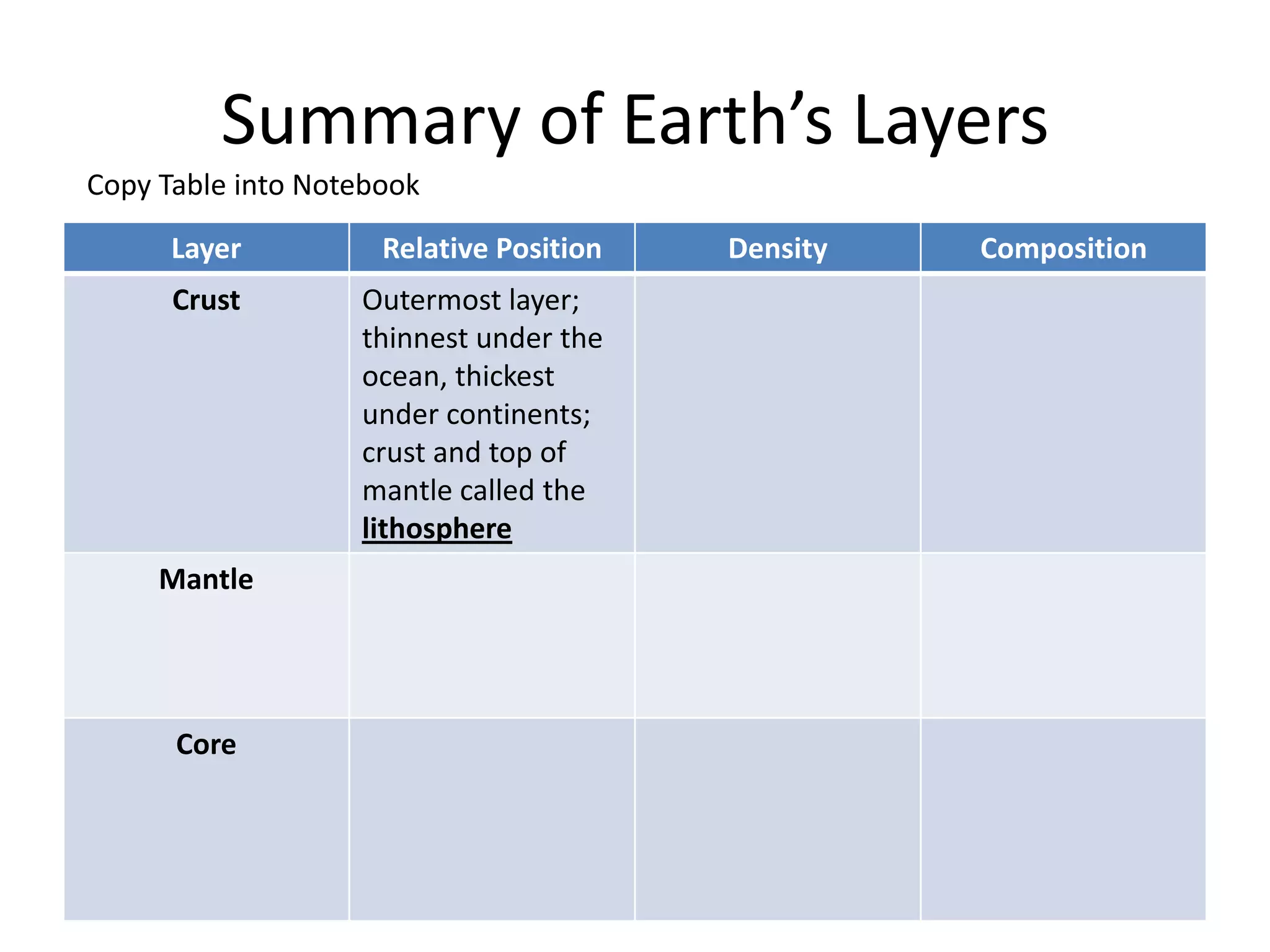
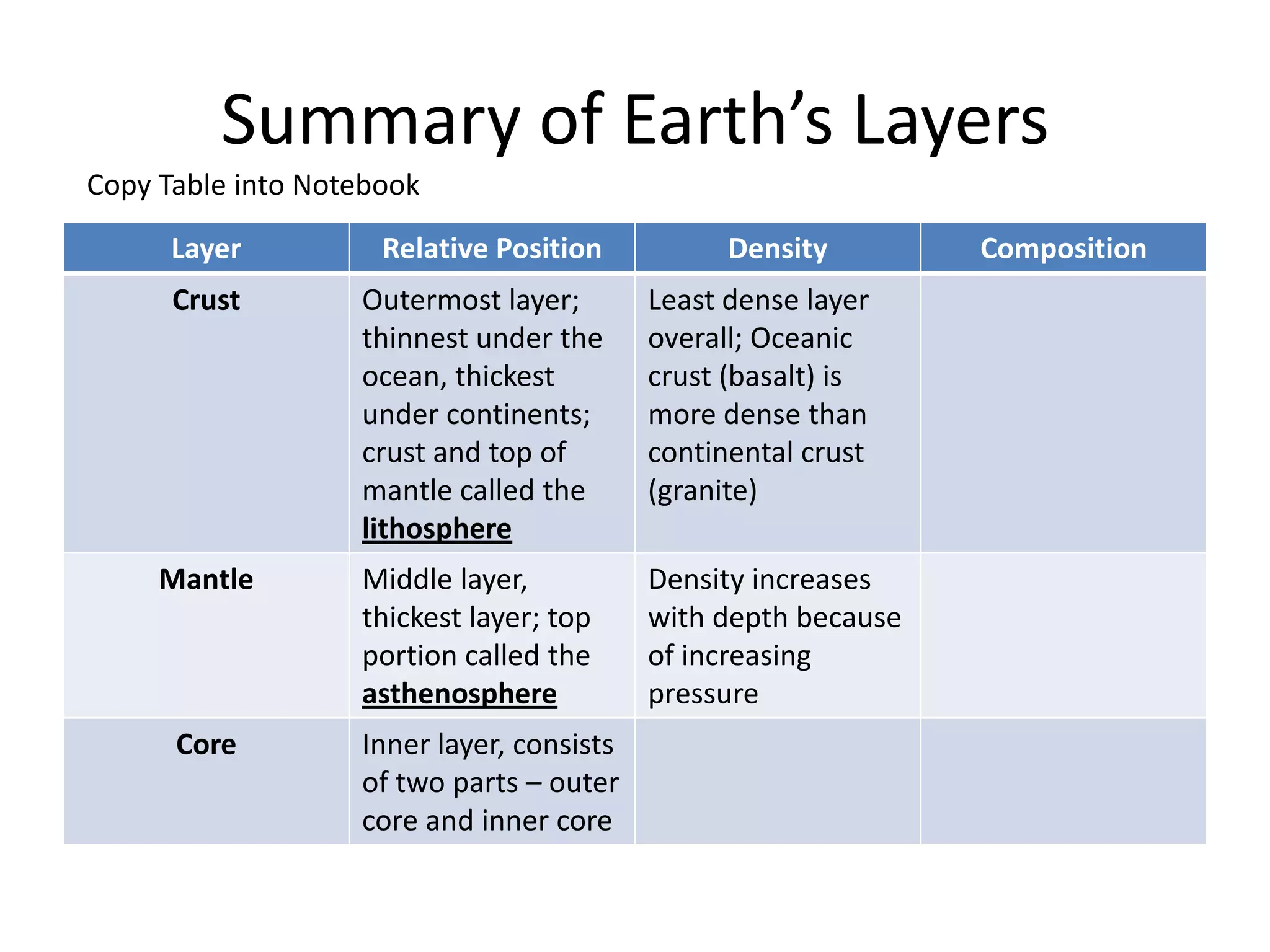
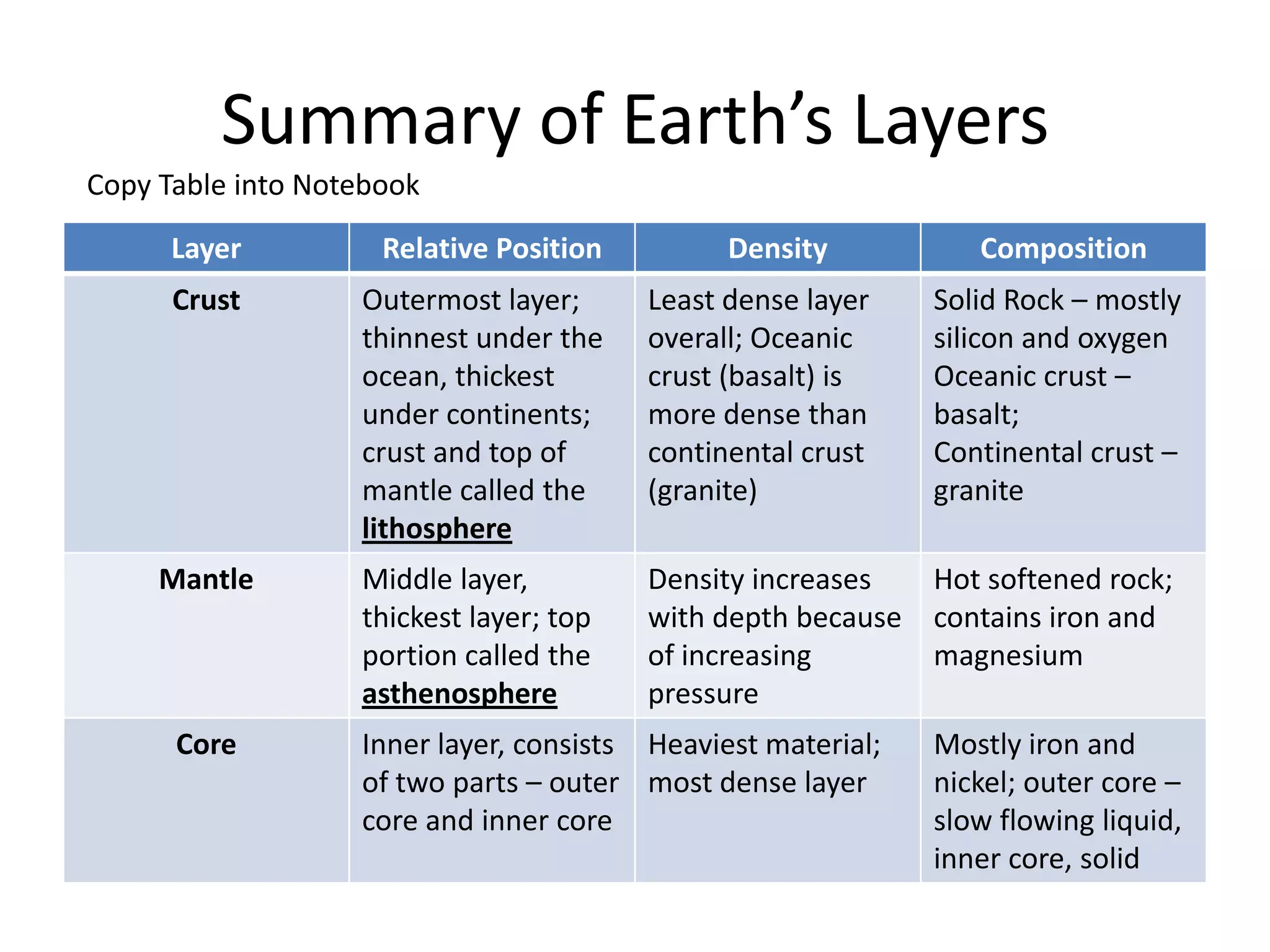
Summary of Earth’s Layers
Copy Table into Notebook

      Layer          Relative Position   Density   Composition
      Crust        Outermost layer;
                   thinnest under the
                   ocean, thickest
                   under continents;
                   crust and top of
                   mantle called the
                   lithosphere
     Mantle


      Core
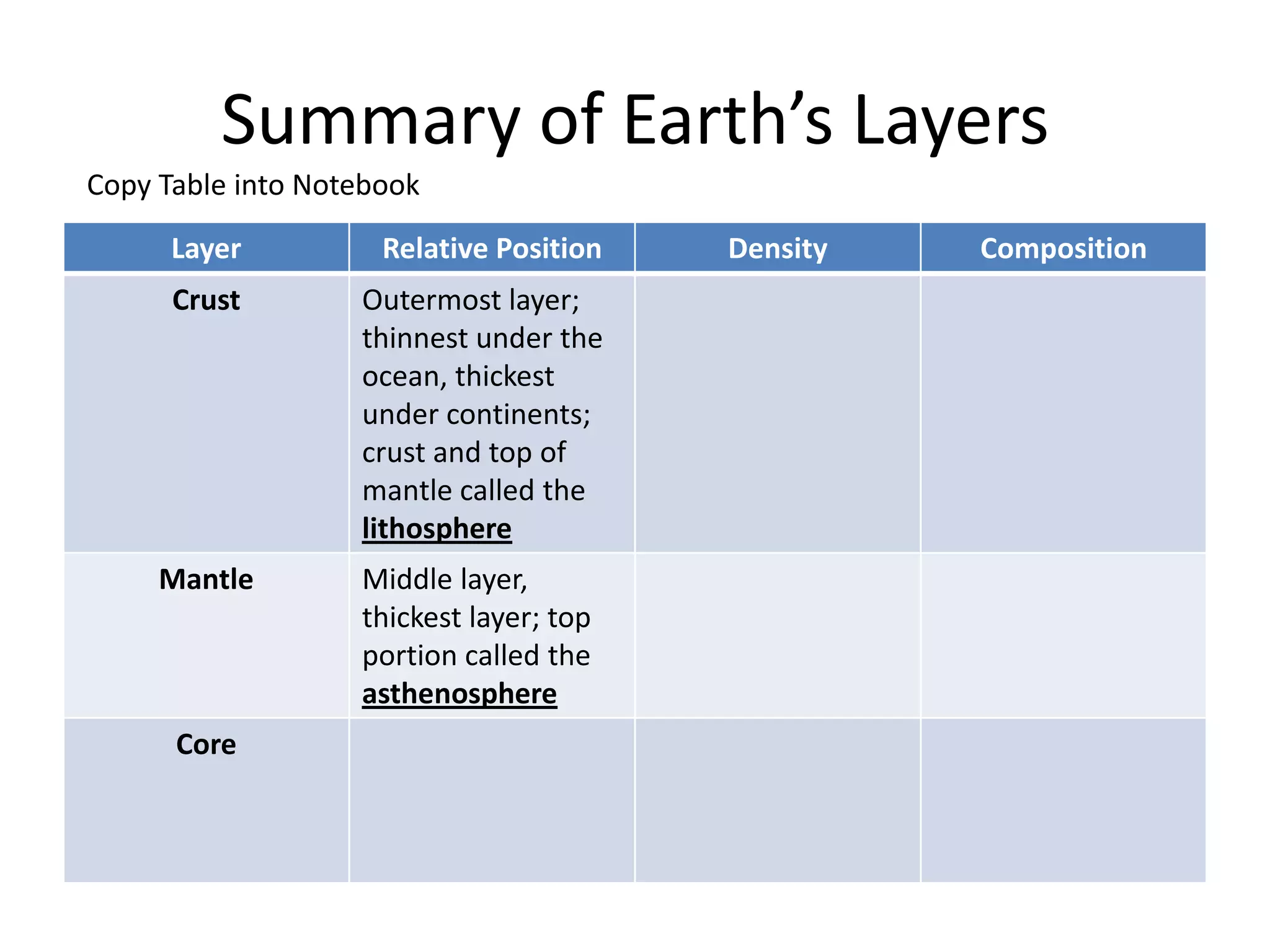
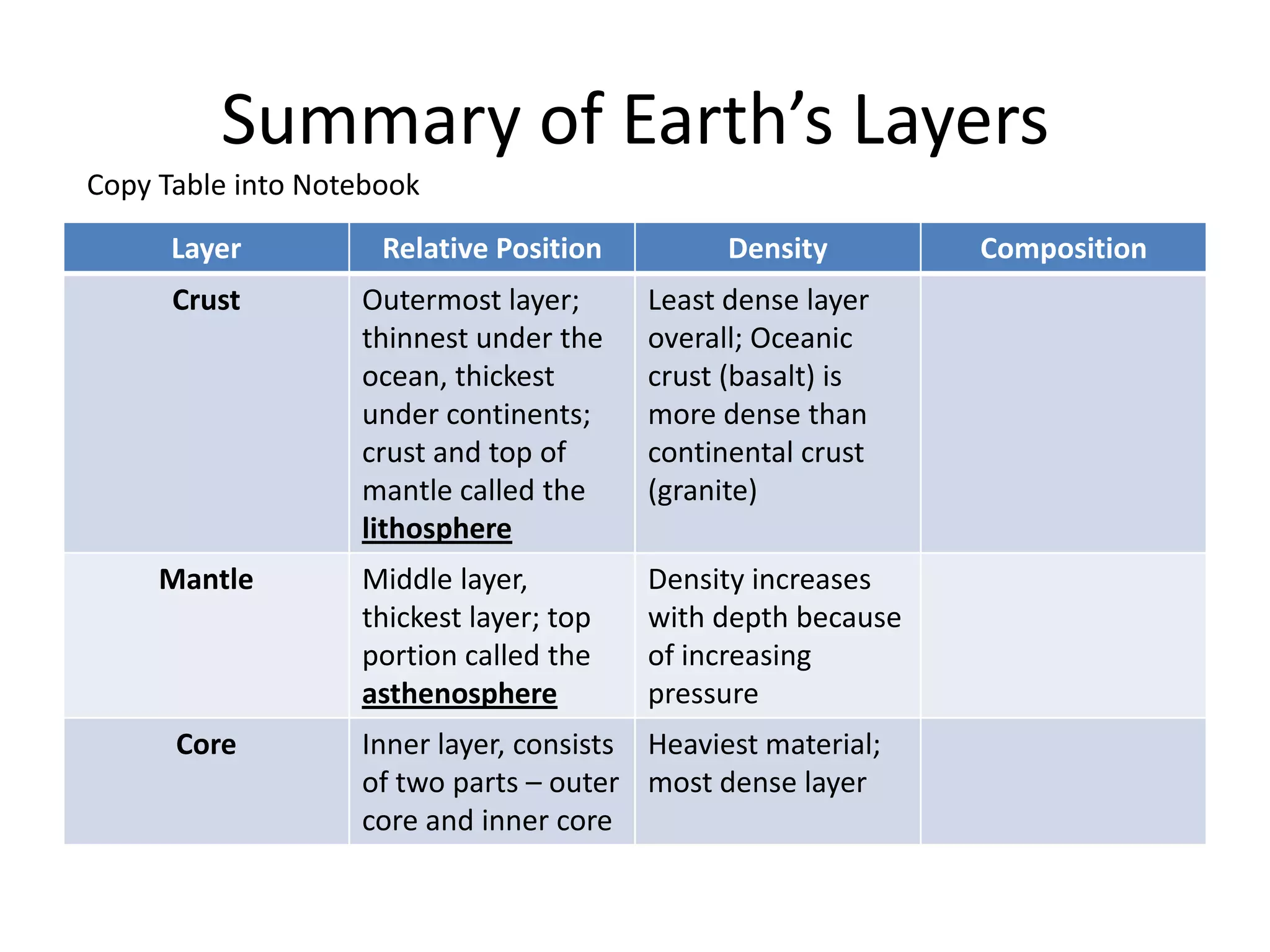
Summary of Earth’s Layers
Copy Table into Notebook

      Layer          Relative Position   Density   Composition
      Crust        Outermost layer;
                   thinnest under the
                   ocean, thickest
                   under continents;
                   crust and top of
                   mantle called the
                   lithosphere
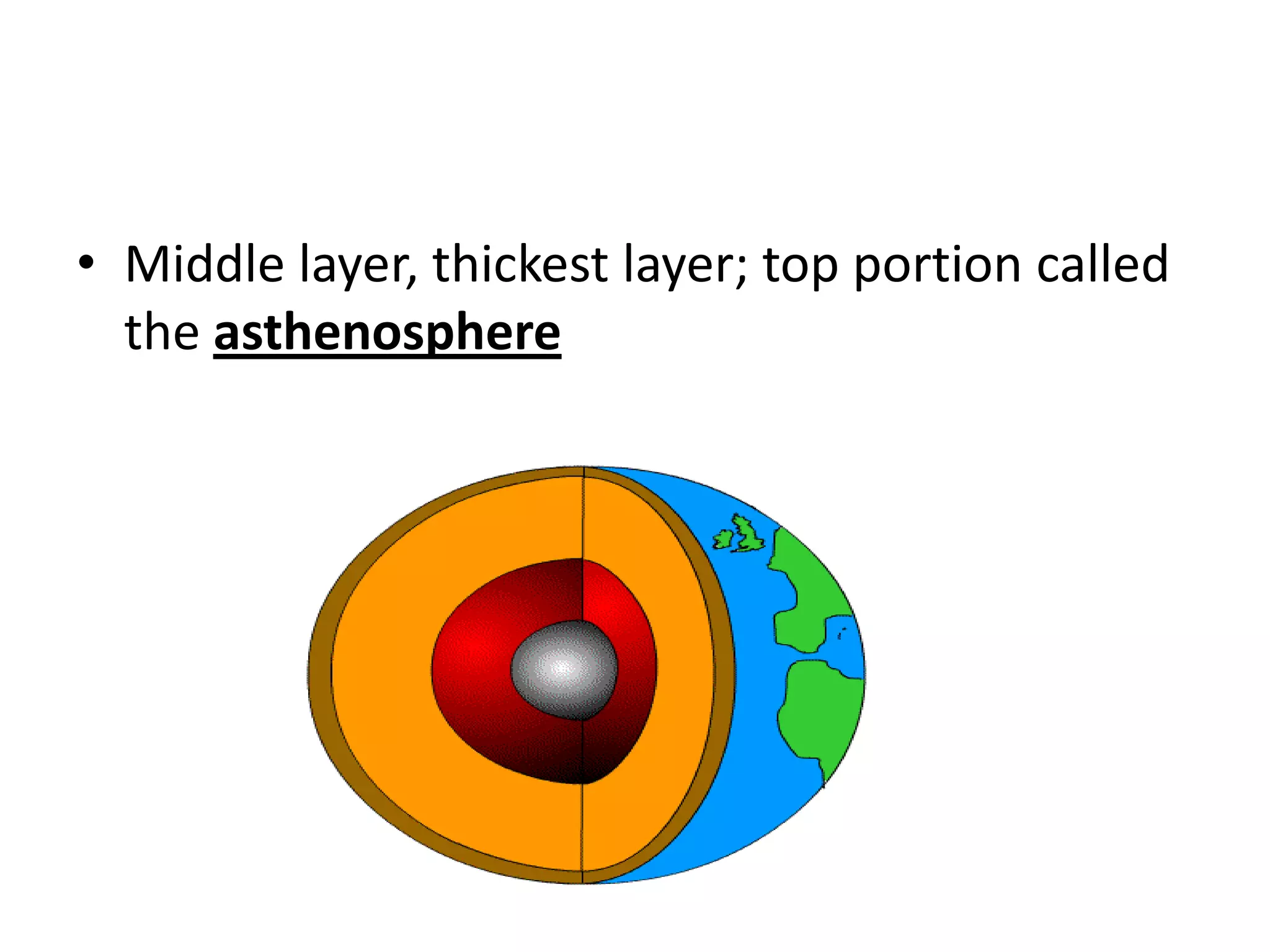
     Mantle        Middle layer,
                   thickest layer; top
                   portion called the
                   asthenosphere
      Core
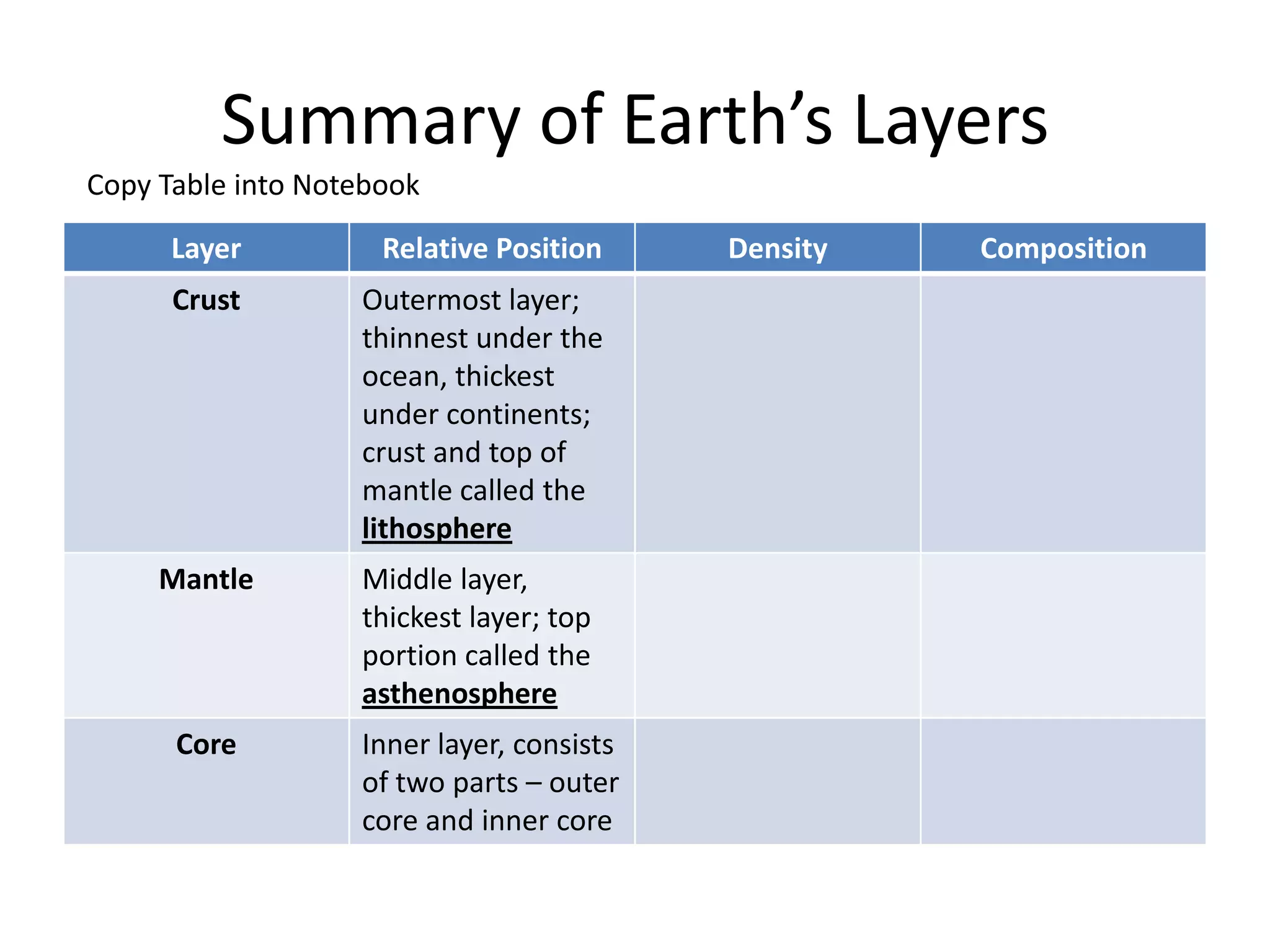
Summary of Earth’s Layers
Copy Table into Notebook

      Layer          Relative Position     Density   Composition
      Crust        Outermost layer;
                   thinnest under the
                   ocean, thickest
                   under continents;
                   crust and top of
                   mantle called the
                   lithosphere
     Mantle        Middle layer,
                   thickest layer; top
                   portion called the
                   asthenosphere
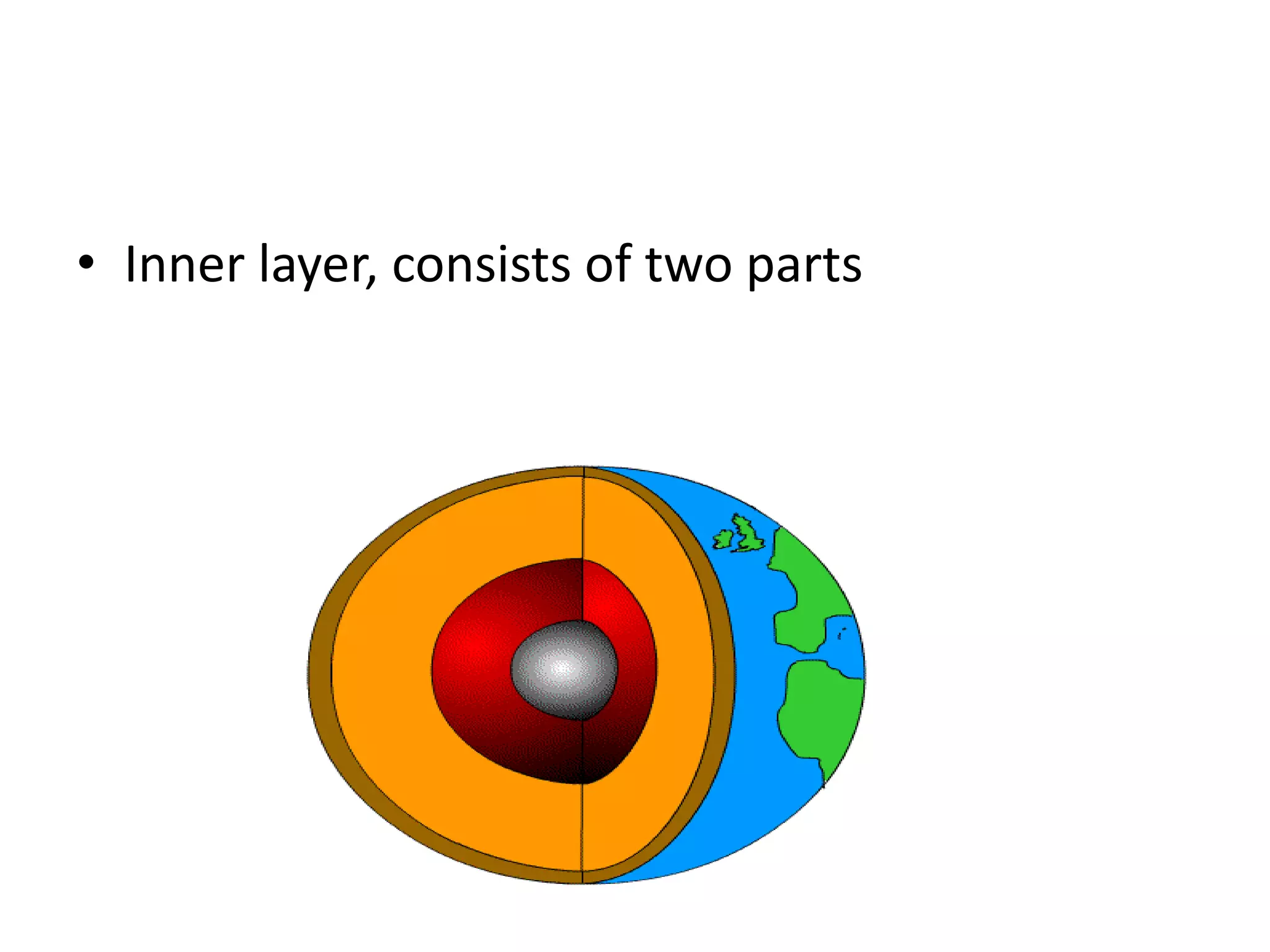
      Core         Inner layer, consists
                   of two parts – outer
                   core and inner core
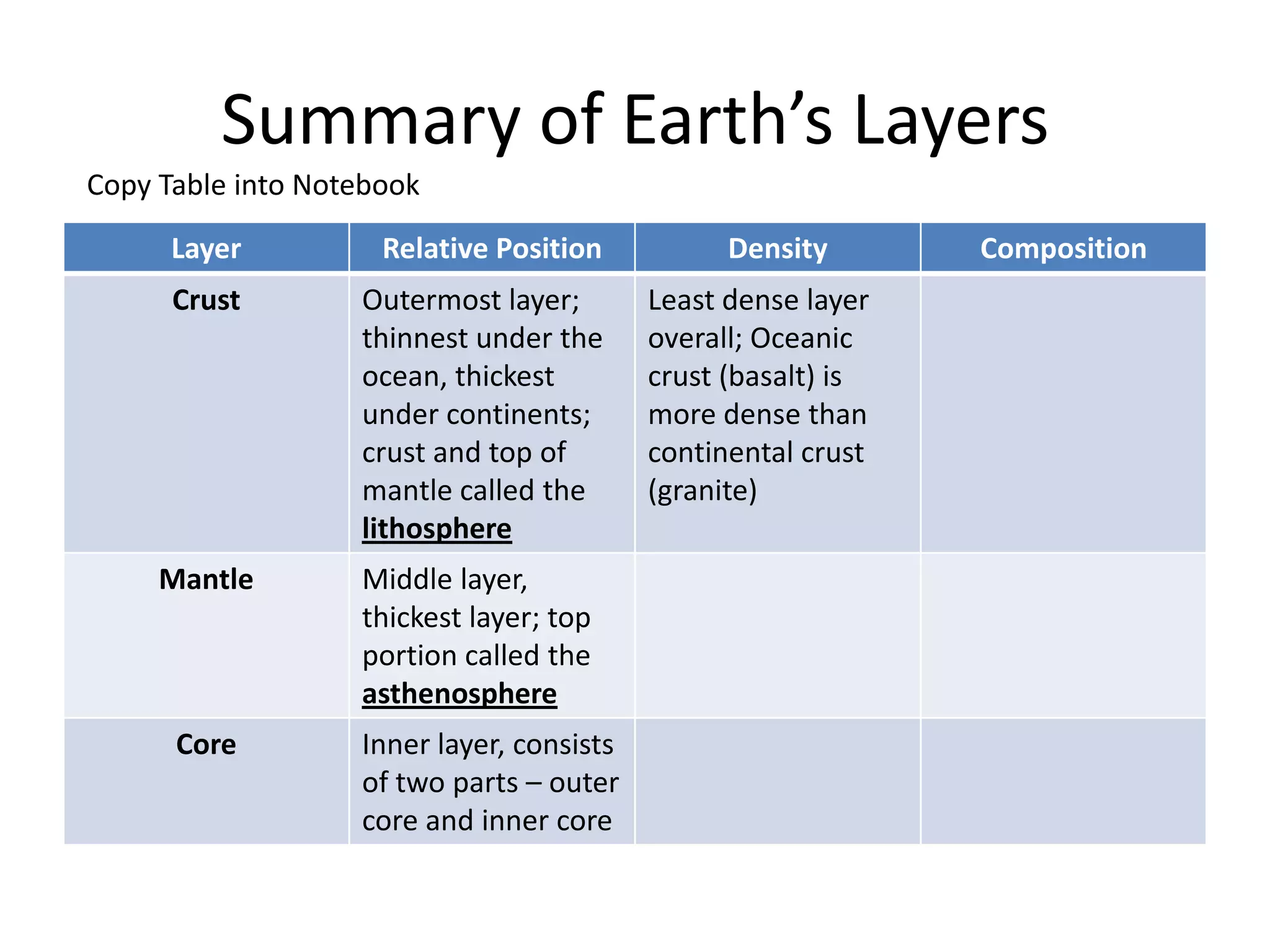
Summary of Earth’s Layers
Copy Table into Notebook

      Layer          Relative Position           Density       Composition
      Crust        Outermost layer;        Least dense layer
                   thinnest under the      overall; Oceanic
                   ocean, thickest         crust (basalt) is
                   under continents;       more dense than
                   crust and top of        continental crust
                   mantle called the       (granite)
                   lithosphere
     Mantle        Middle layer,
                   thickest layer; top
                   portion called the
                   asthenosphere
      Core         Inner layer, consists
                   of two parts – outer
                   core and inner core
Summary of Earth’s Layers
Copy Table into Notebook

      Layer          Relative Position           Density        Composition
      Crust        Outermost layer;        Least dense layer
                   thinnest under the      overall; Oceanic
                   ocean, thickest         crust (basalt) is
                   under continents;       more dense than
                   crust and top of        continental crust
                   mantle called the       (granite)
                   lithosphere
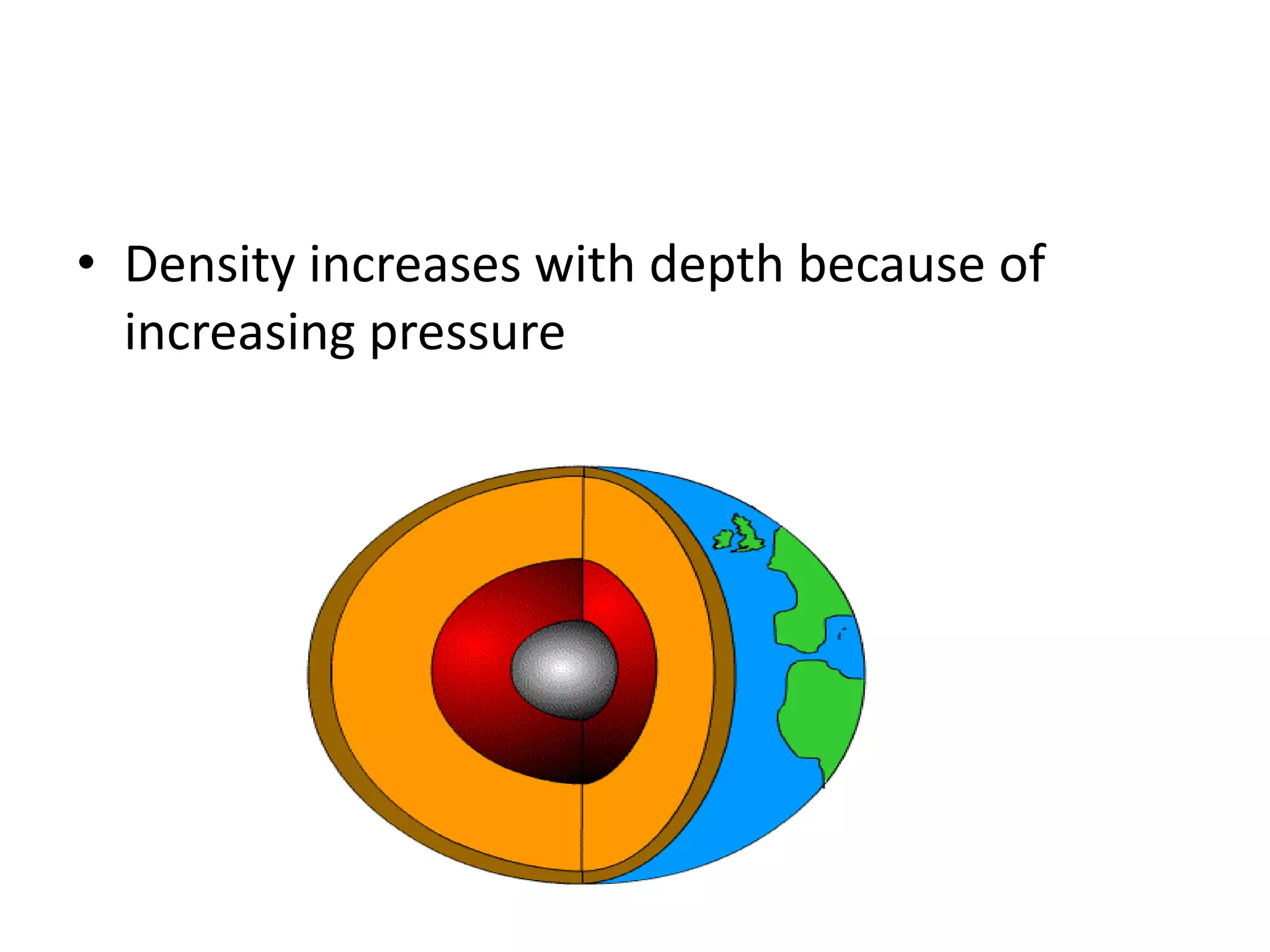
     Mantle        Middle layer,           Density increases
                   thickest layer; top     with depth because
                   portion called the      of increasing
                   asthenosphere           pressure
      Core         Inner layer, consists
                   of two parts – outer
                   core and inner core
Summary of Earth’s Layers
Copy Table into Notebook

      Layer          Relative Position         Density        Composition
      Crust        Outermost layer;      Least dense layer
                   thinnest under the    overall; Oceanic
                   ocean, thickest       crust (basalt) is
                   under continents;     more dense than
                   crust and top of      continental crust
                   mantle called the     (granite)
                   lithosphere
     Mantle        Middle layer,         Density increases
                   thickest layer; top   with depth because
                   portion called the    of increasing
                   asthenosphere         pressure
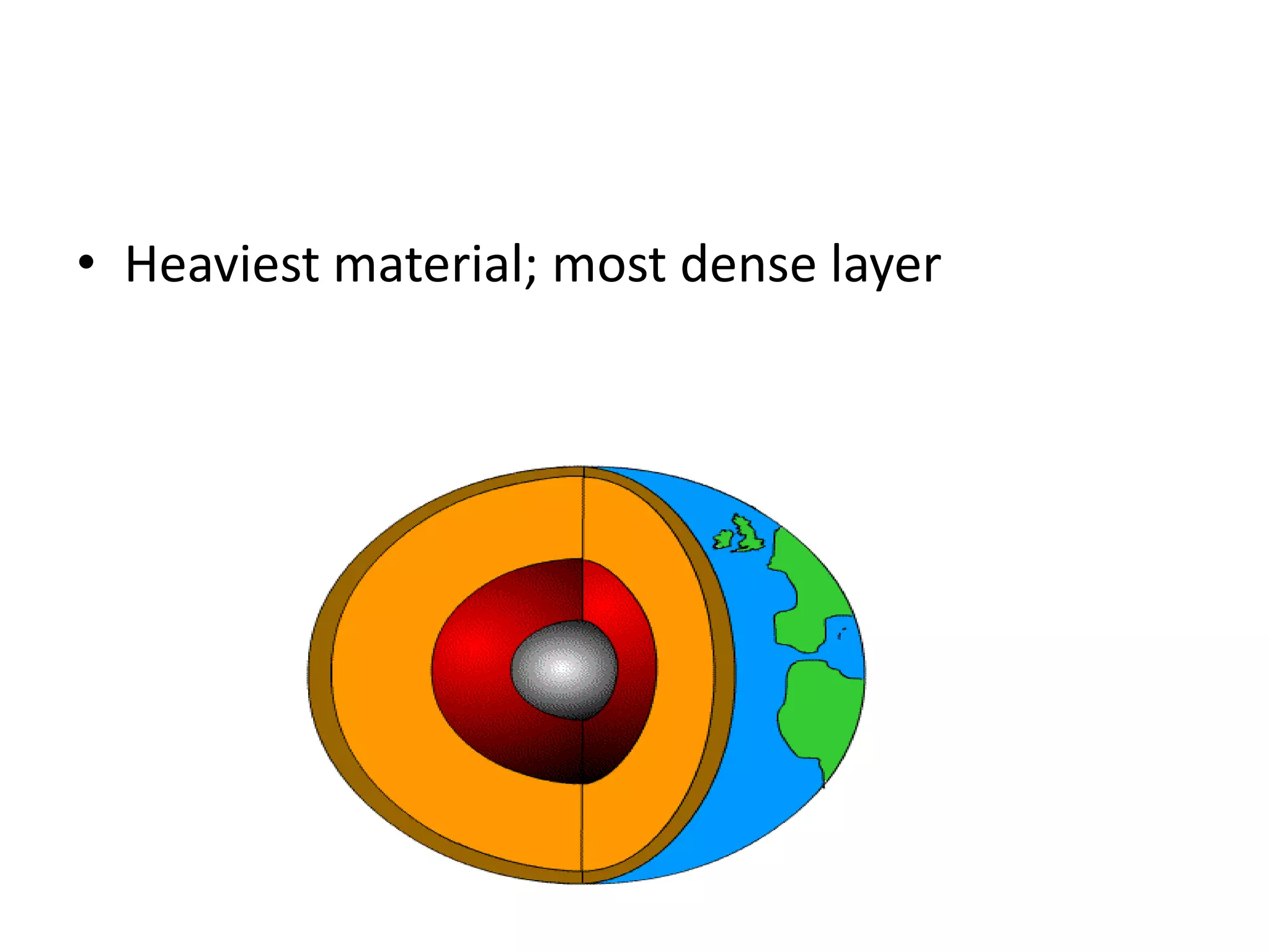
      Core         Inner layer, consists Heaviest material;
                   of two parts – outer most dense layer
                   core and inner core
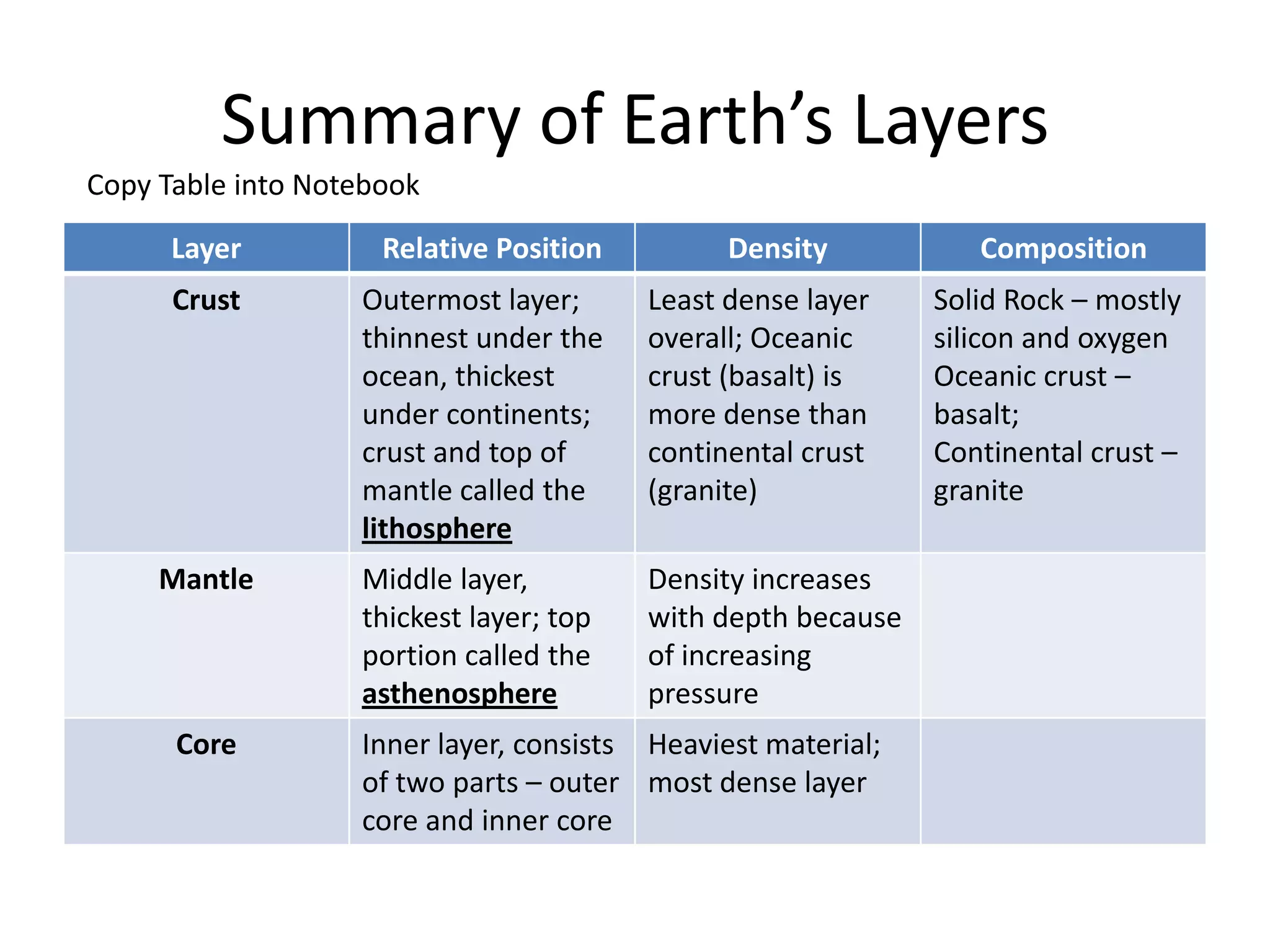
Summary of Earth’s Layers
Copy Table into Notebook

      Layer          Relative Position         Density           Composition
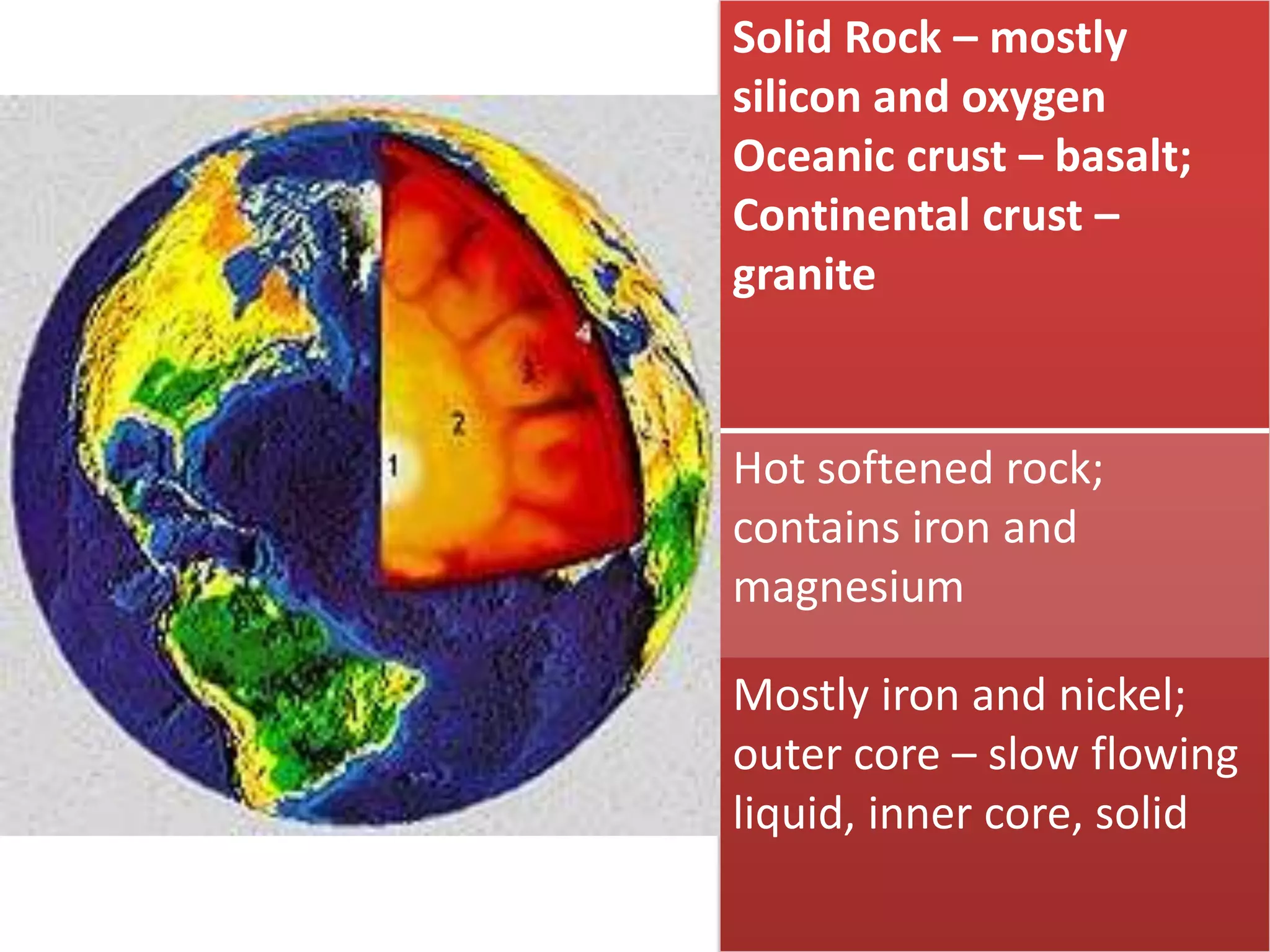
      Crust        Outermost layer;      Least dense layer    Solid Rock – mostly
                   thinnest under the    overall; Oceanic     silicon and oxygen
                   ocean, thickest       crust (basalt) is    Oceanic crust –
                   under continents;     more dense than      basalt;
                   crust and top of      continental crust    Continental crust –
                   mantle called the     (granite)            granite
                   lithosphere
     Mantle        Middle layer,         Density increases
                   thickest layer; top   with depth because
                   portion called the    of increasing
                   asthenosphere         pressure
      Core         Inner layer, consists Heaviest material;
                   of two parts – outer most dense layer
                   core and inner core
Summary of Earth’s Layers
Copy Table into Notebook

      Layer          Relative Position         Density           Composition
      Crust        Outermost layer;      Least dense layer    Solid Rock – mostly
                   thinnest under the    overall; Oceanic     silicon and oxygen
                   ocean, thickest       crust (basalt) is    Oceanic crust –
                   under continents;     more dense than      basalt;
                   crust and top of      continental crust    Continental crust –
                   mantle called the     (granite)            granite
                   lithosphere
     Mantle        Middle layer,         Density increases  Hot softened rock;
                   thickest layer; top   with depth because contains iron and
                   portion called the    of increasing      magnesium
                   asthenosphere         pressure
      Core         Inner layer, consists Heaviest material;
                   of two parts – outer most dense layer
                   core and inner core
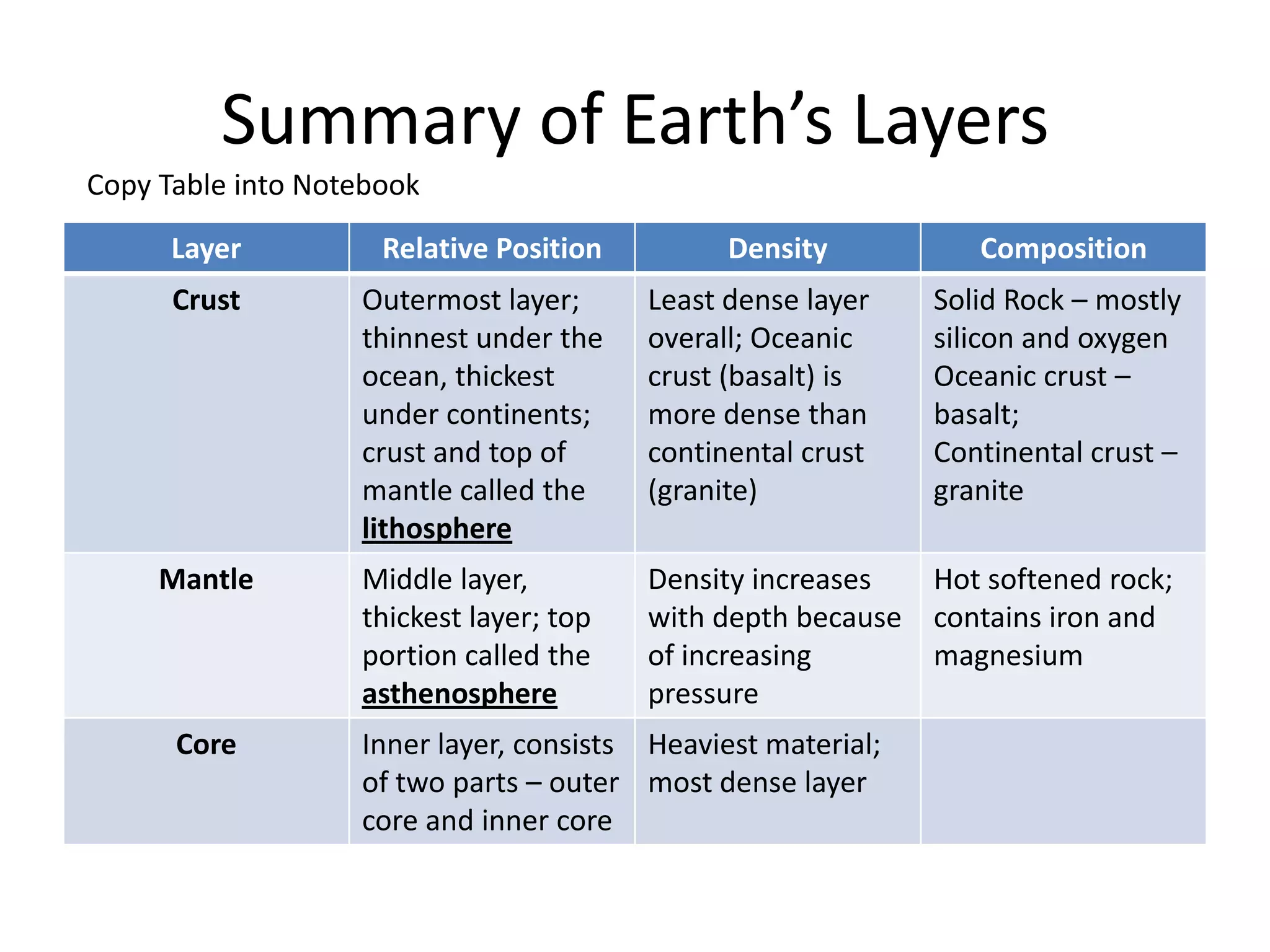
Summary of Earth’s Layers
Copy Table into Notebook

      Layer          Relative Position         Density           Composition
      Crust        Outermost layer;      Least dense layer    Solid Rock – mostly
                   thinnest under the    overall; Oceanic     silicon and oxygen
                   ocean, thickest       crust (basalt) is    Oceanic crust –
                   under continents;     more dense than      basalt;
                   crust and top of      continental crust    Continental crust –
                   mantle called the     (granite)            granite
                   lithosphere
     Mantle        Middle layer,         Density increases  Hot softened rock;
                   thickest layer; top   with depth because contains iron and
                   portion called the    of increasing      magnesium
                   asthenosphere         pressure
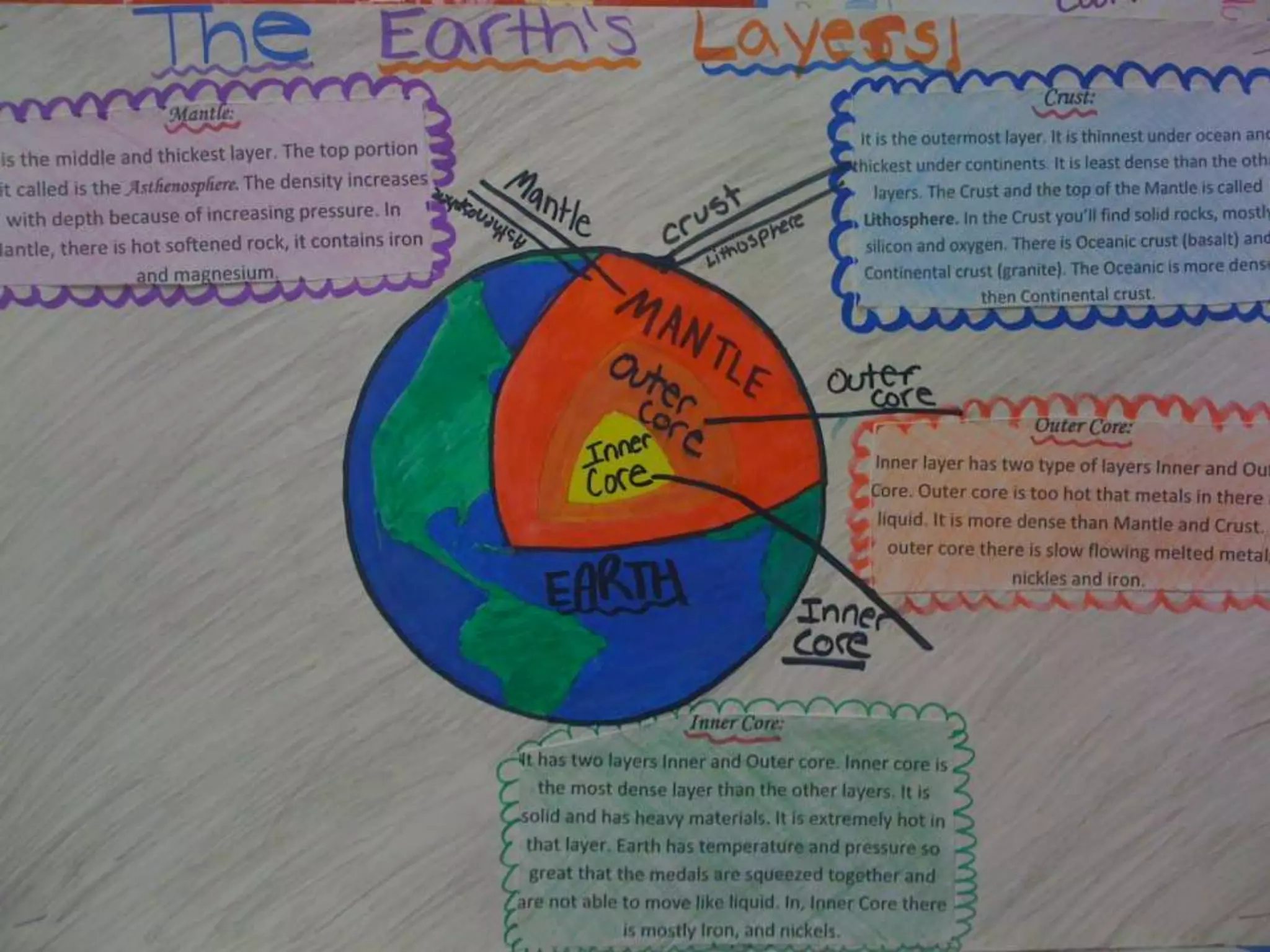
      Core         Inner layer, consists Heaviest material;   Mostly iron and
                   of two parts – outer most dense layer      nickel; outer core –
                   core and inner core                        slow flowing liquid,
                                                              inner core, solid
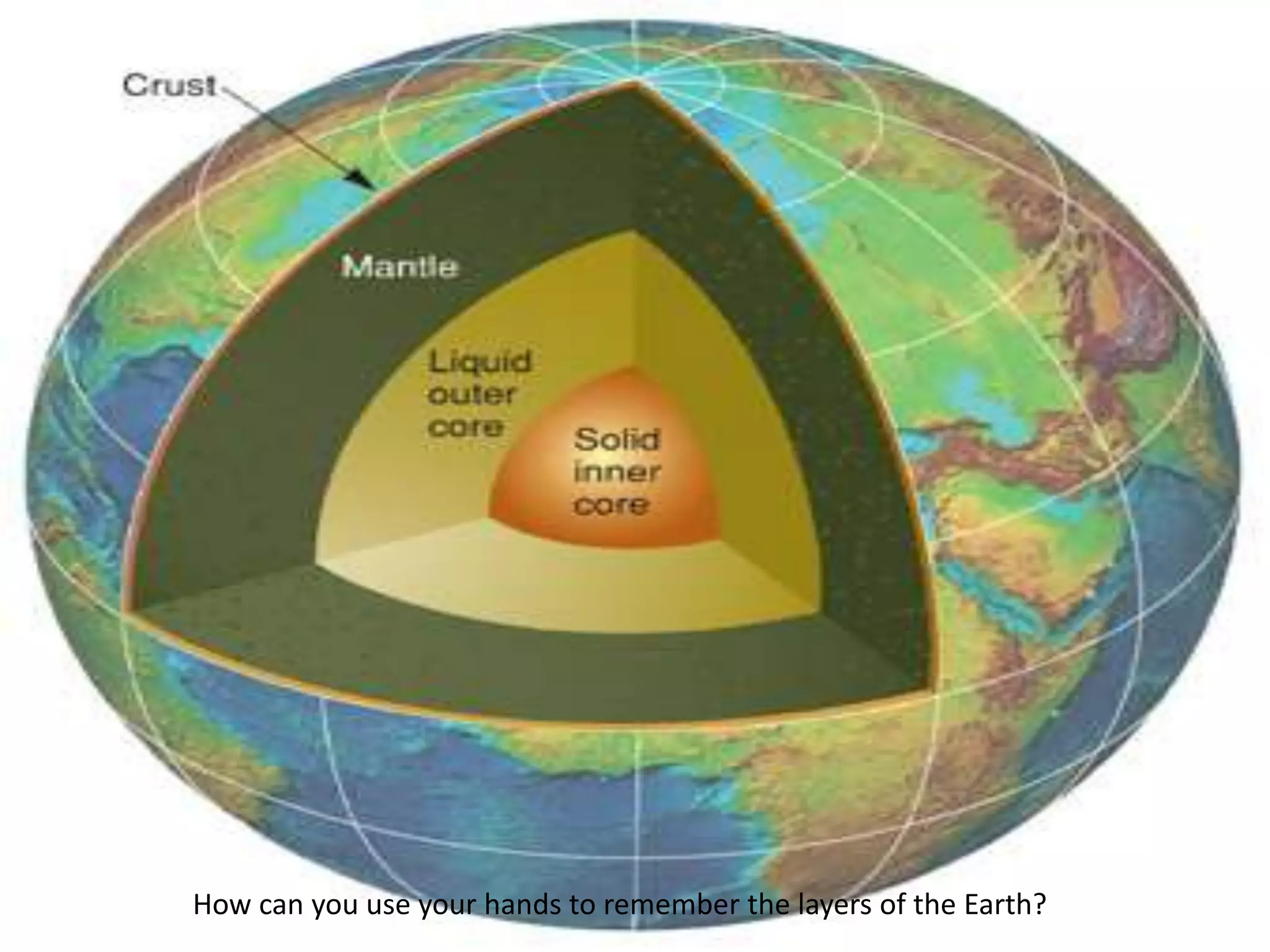
How can you use your hands to remember the layers of the Earth?
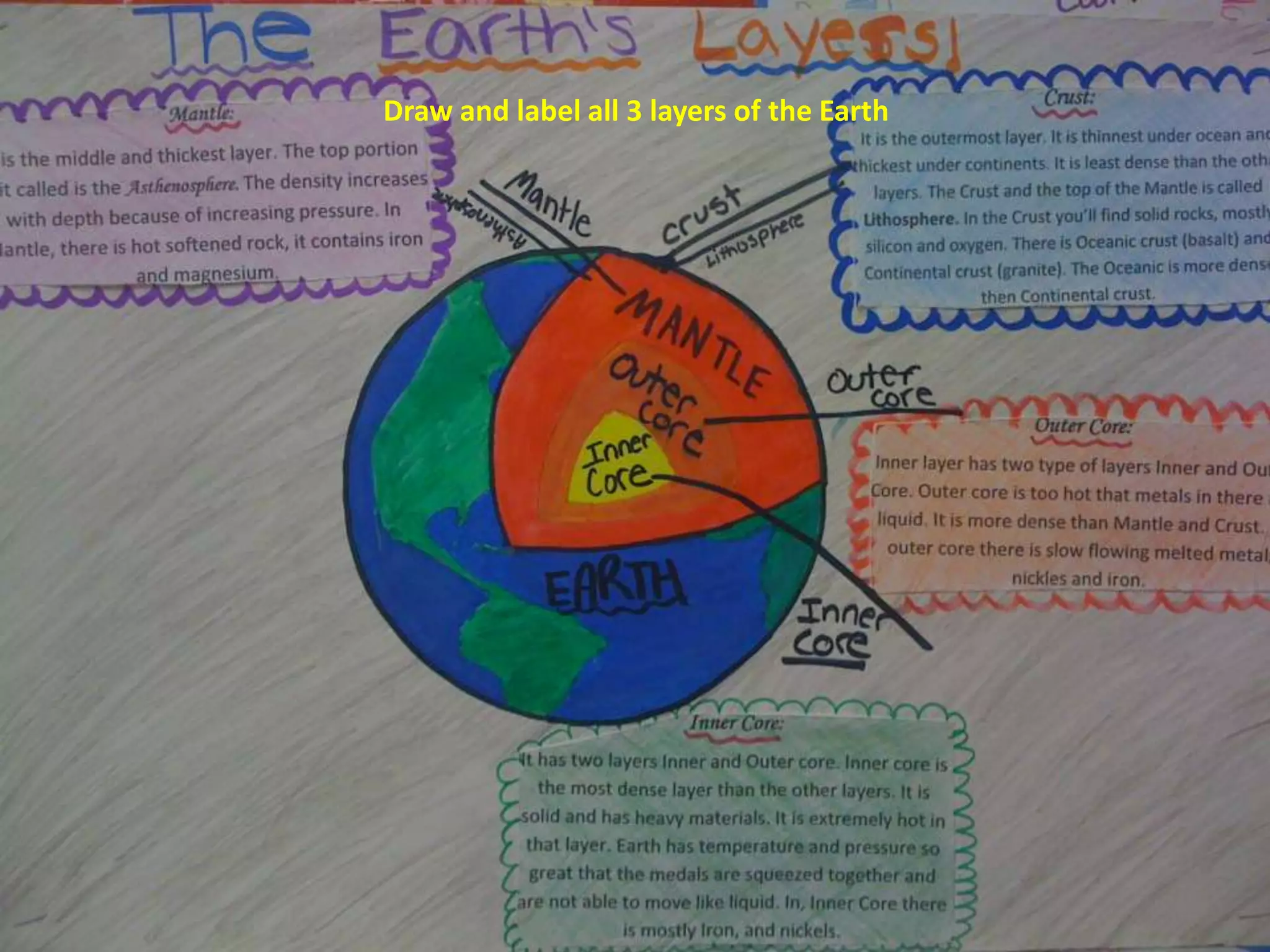
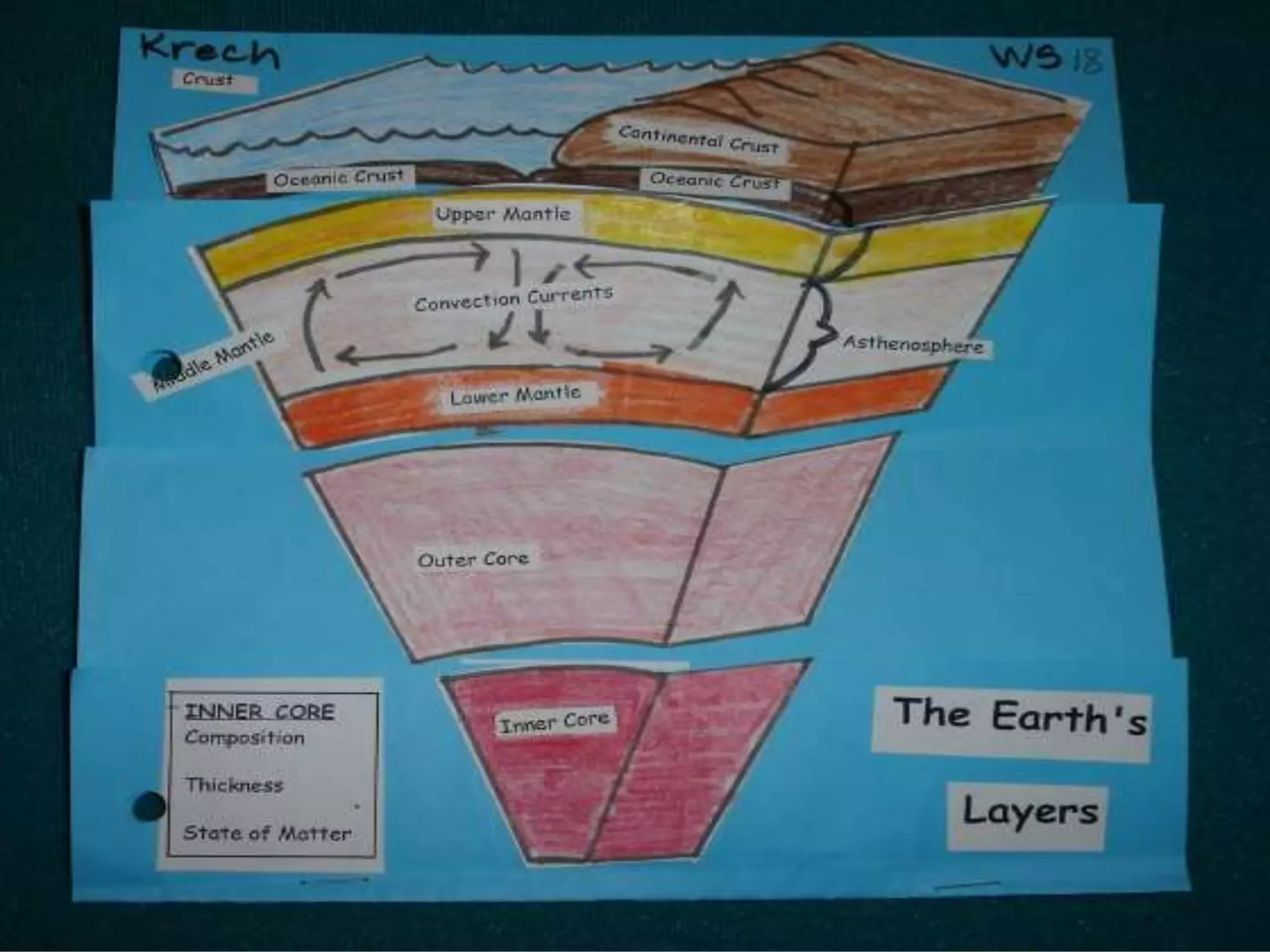
Draw and label all 3 layers of the Earth
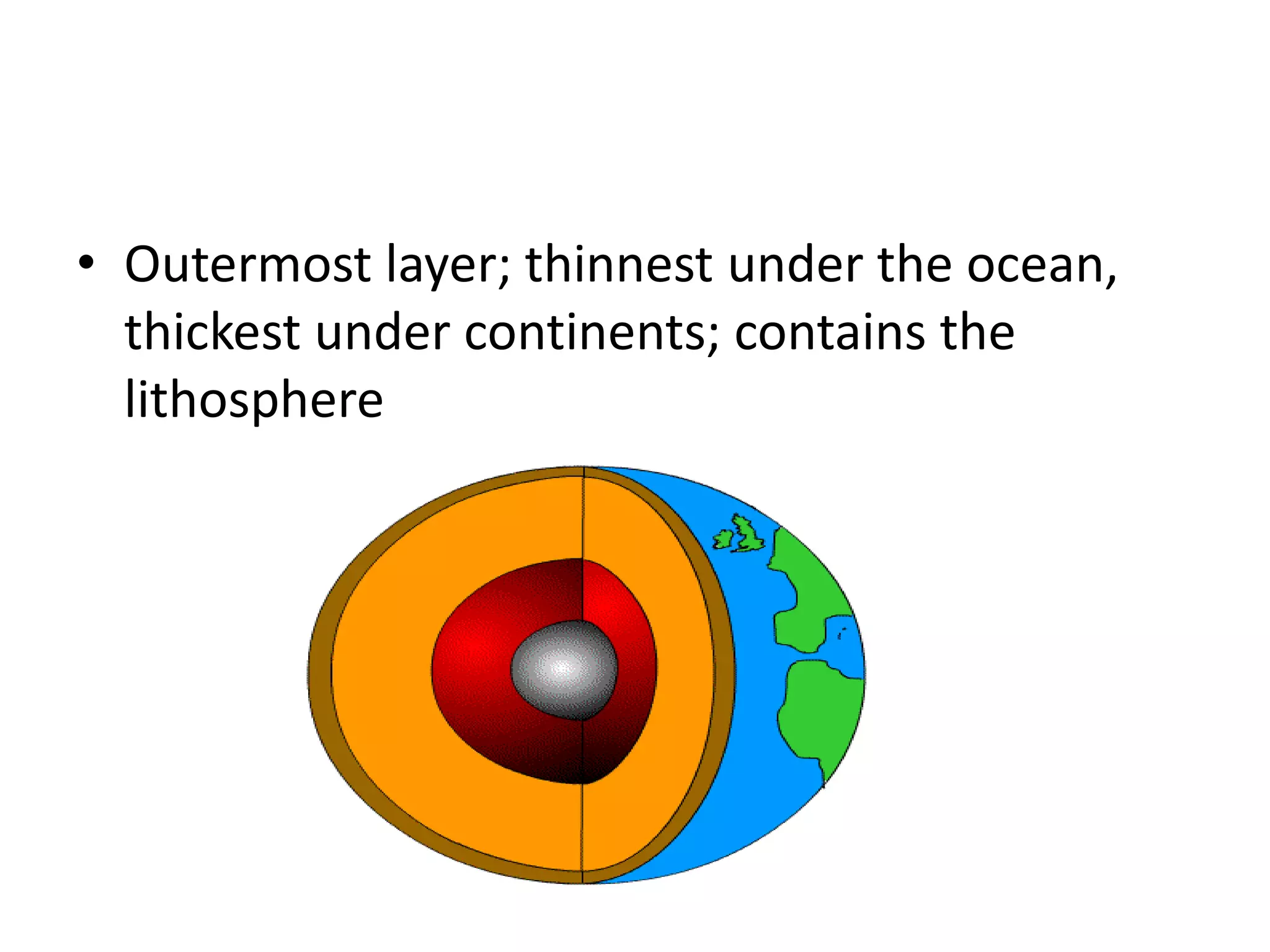
• Outermost layer; thinnest under the ocean,
  thickest under continents; contains the
  lithosphere
• Middle layer, thickest layer; top portion called
  the asthenosphere
• Inner layer, consists of two parts
• Heaviest material; most dense layer
• Density increases with depth because of
  increasing pressure
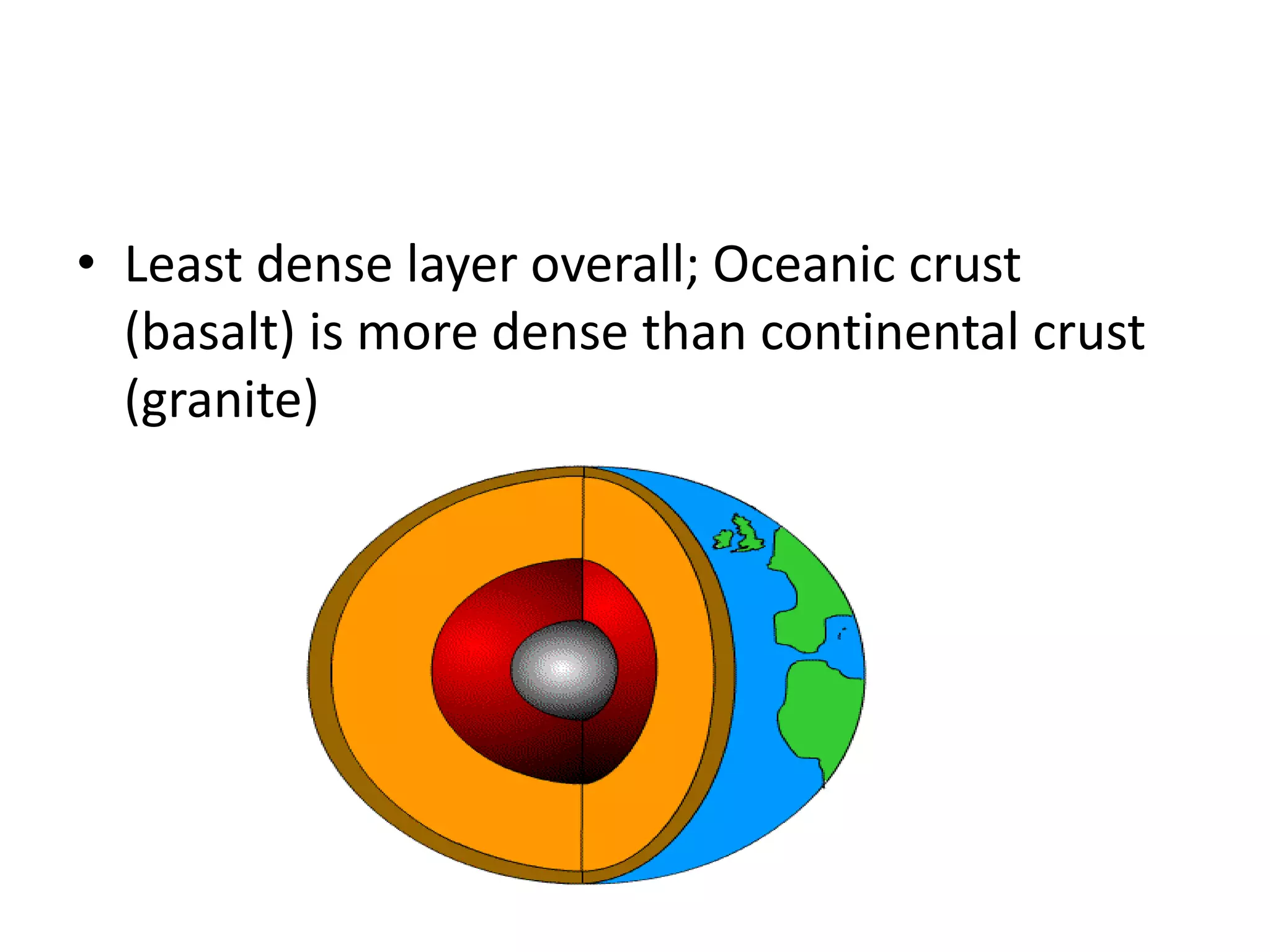
• Least dense layer overall; Oceanic crust
  (basalt) is more dense than continental crust
  (granite)
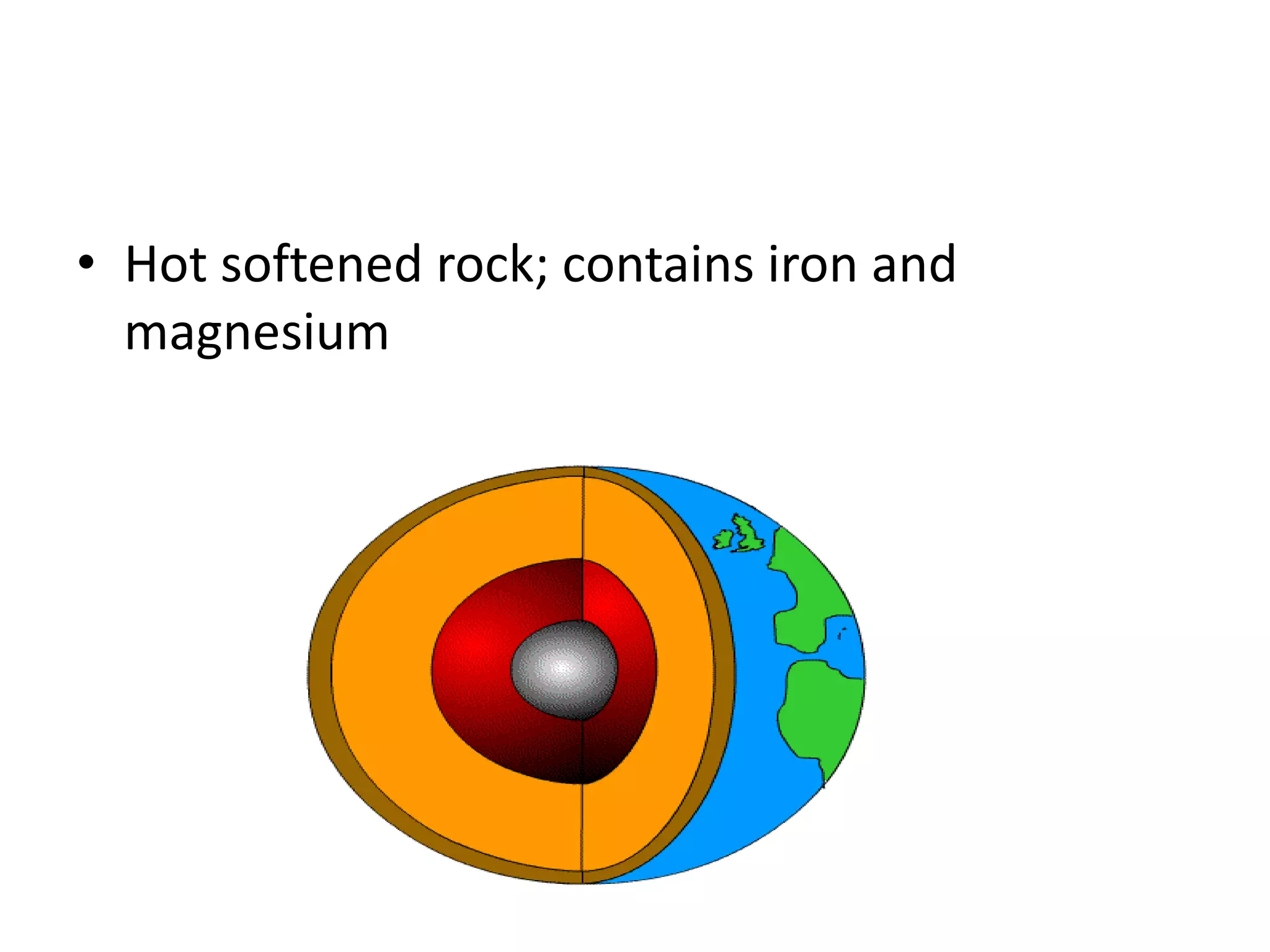
• Hot softened rock; contains iron and
  magnesium
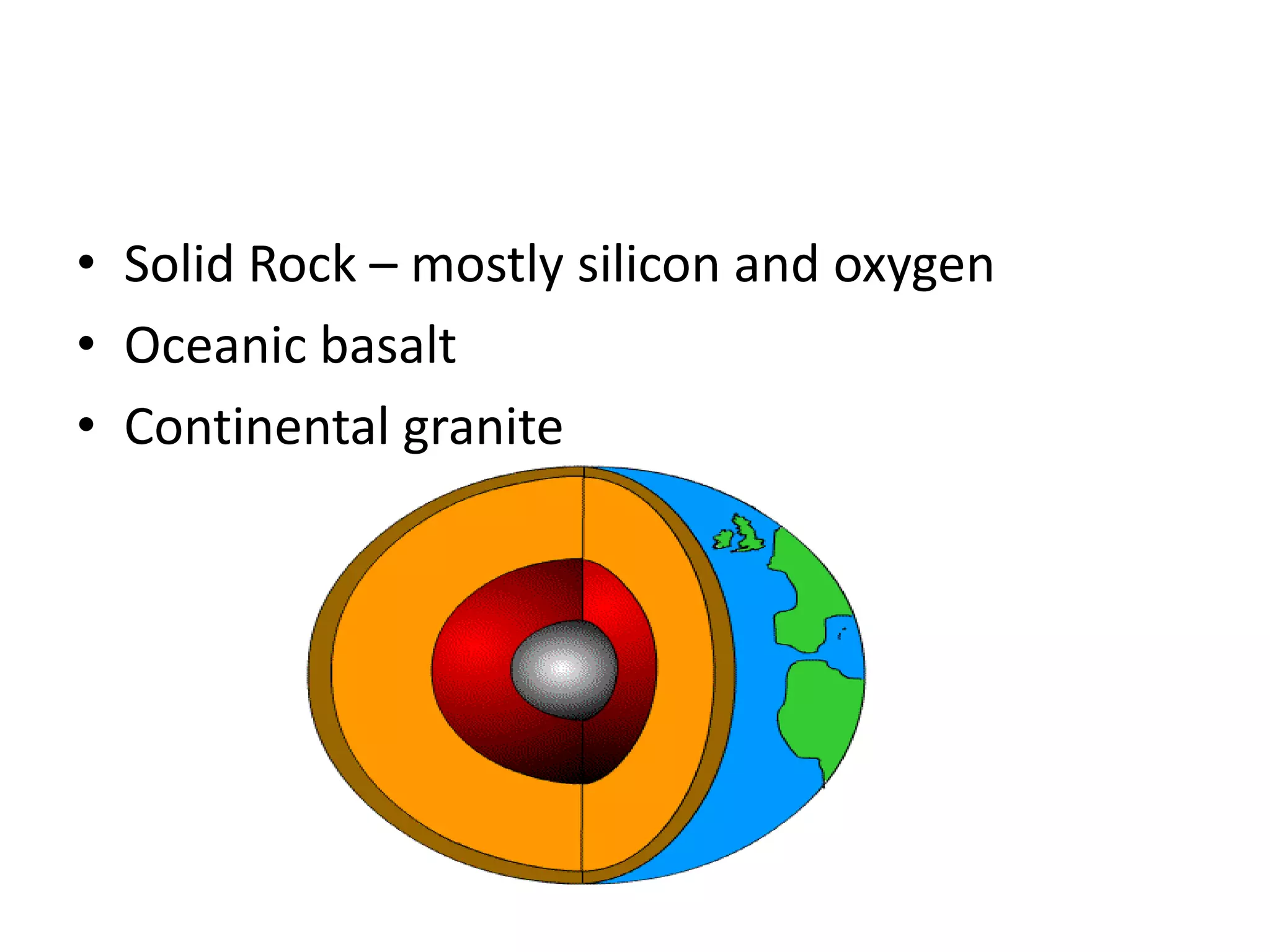
• Solid Rock – mostly silicon and oxygen
• Oceanic basalt
• Continental granite
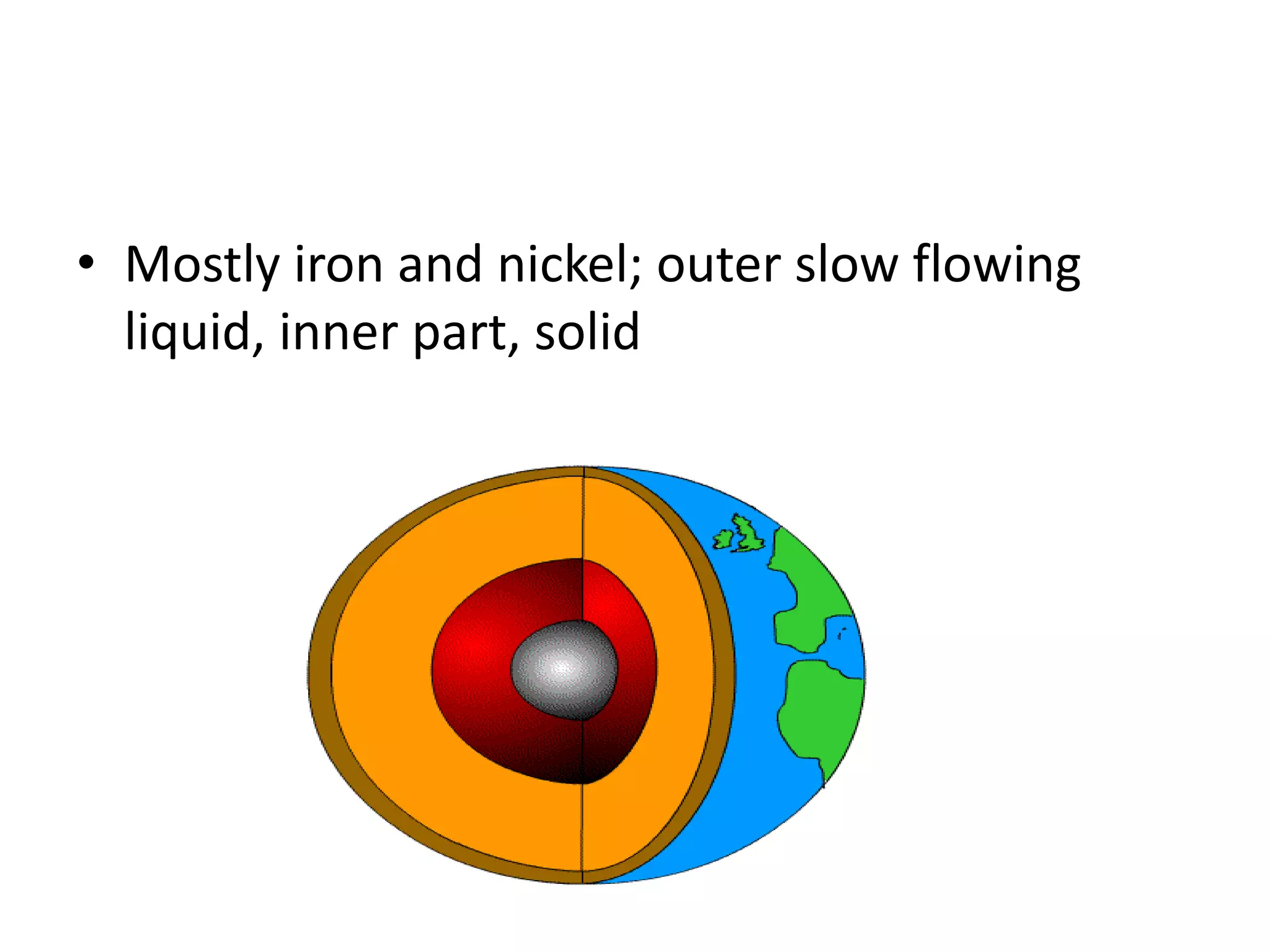
• Mostly iron and nickel; outer slow flowing
  liquid, inner part, solid
Solid Rock – mostly
silicon and oxygen
Oceanic crust – basalt;
Continental crust –
granite


Hot softened rock;
contains iron and
magnesium

Mostly iron and nickel;
outer core – slow flowing
liquid, inner core, solid
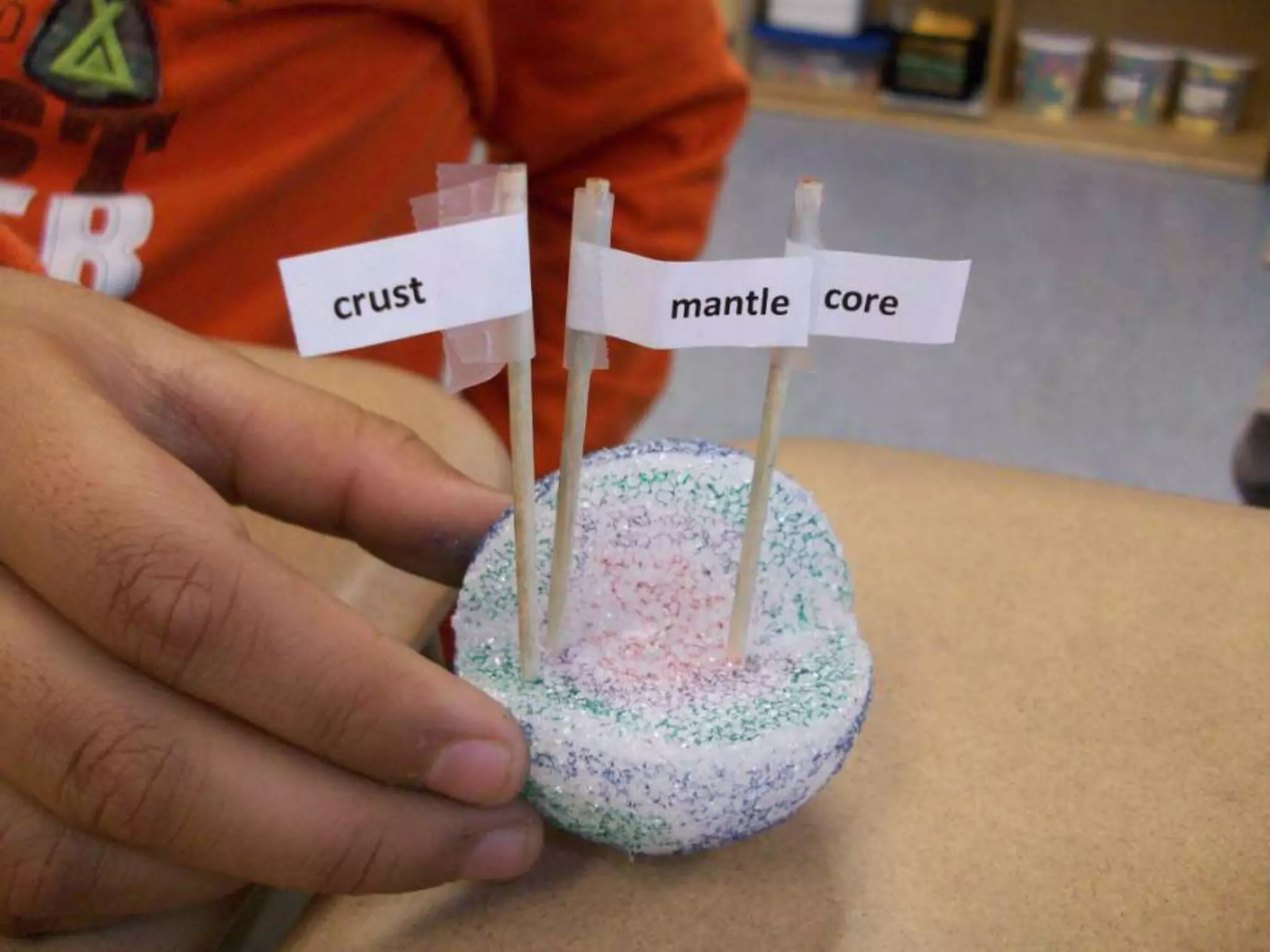
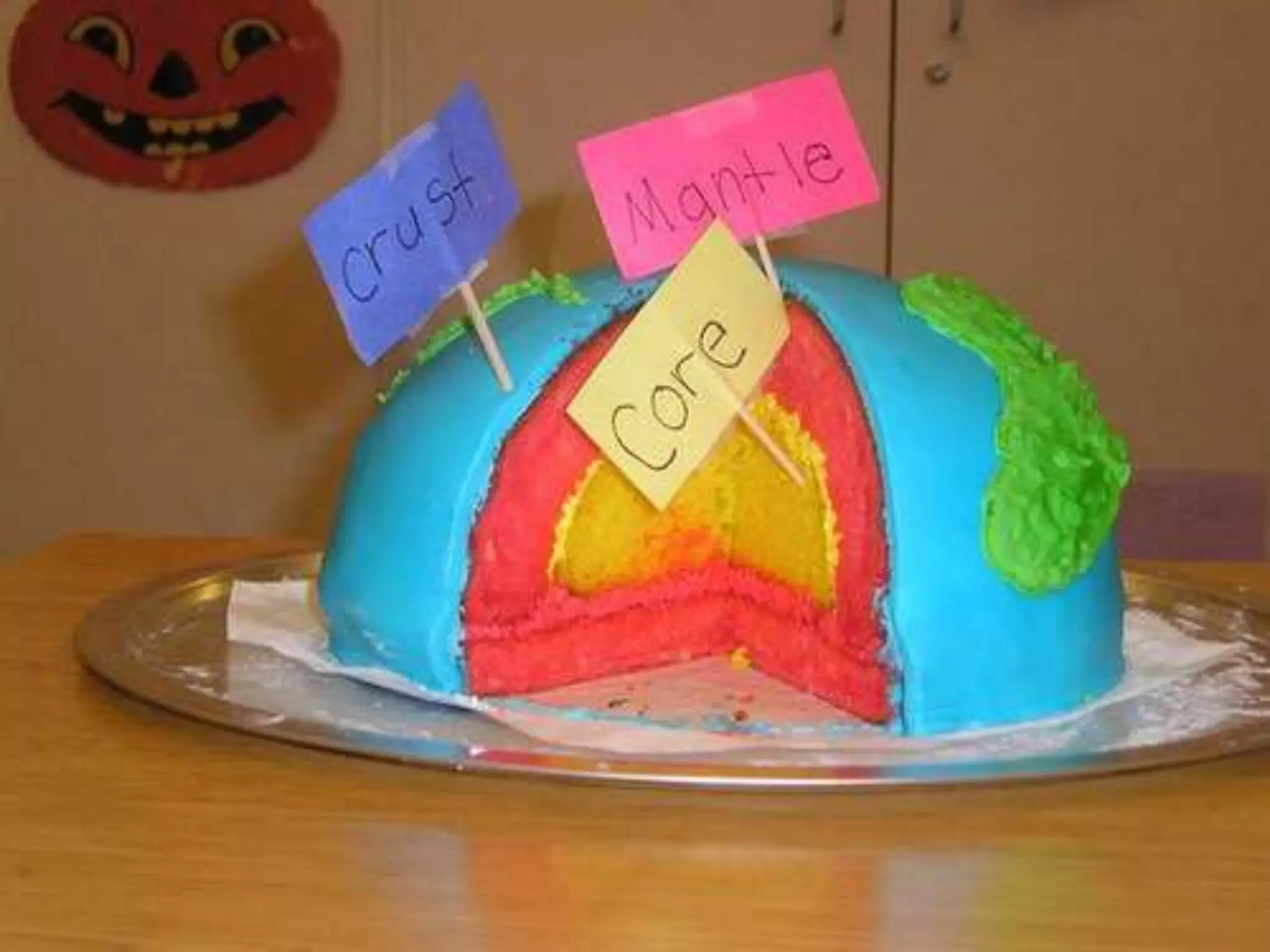
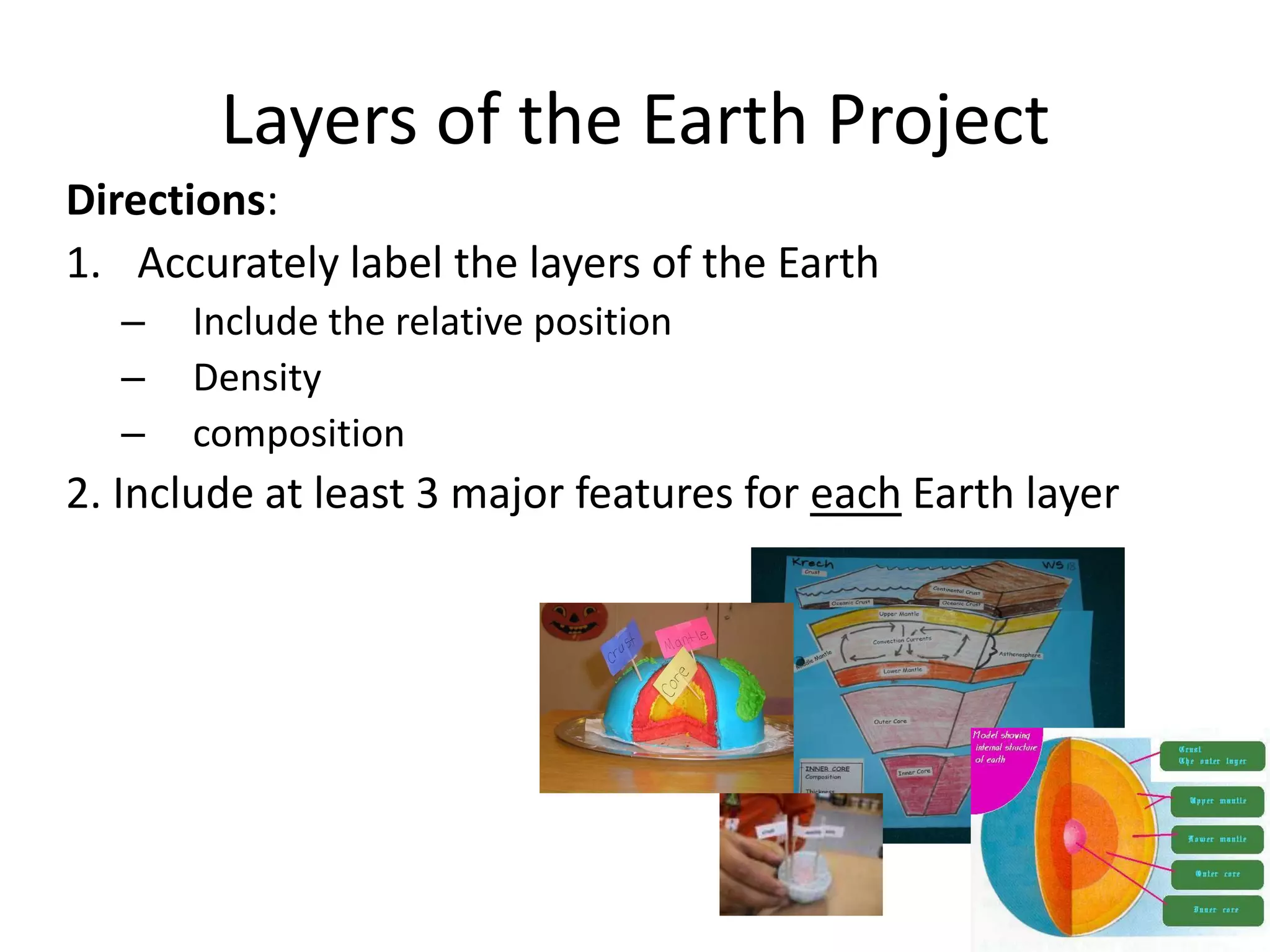
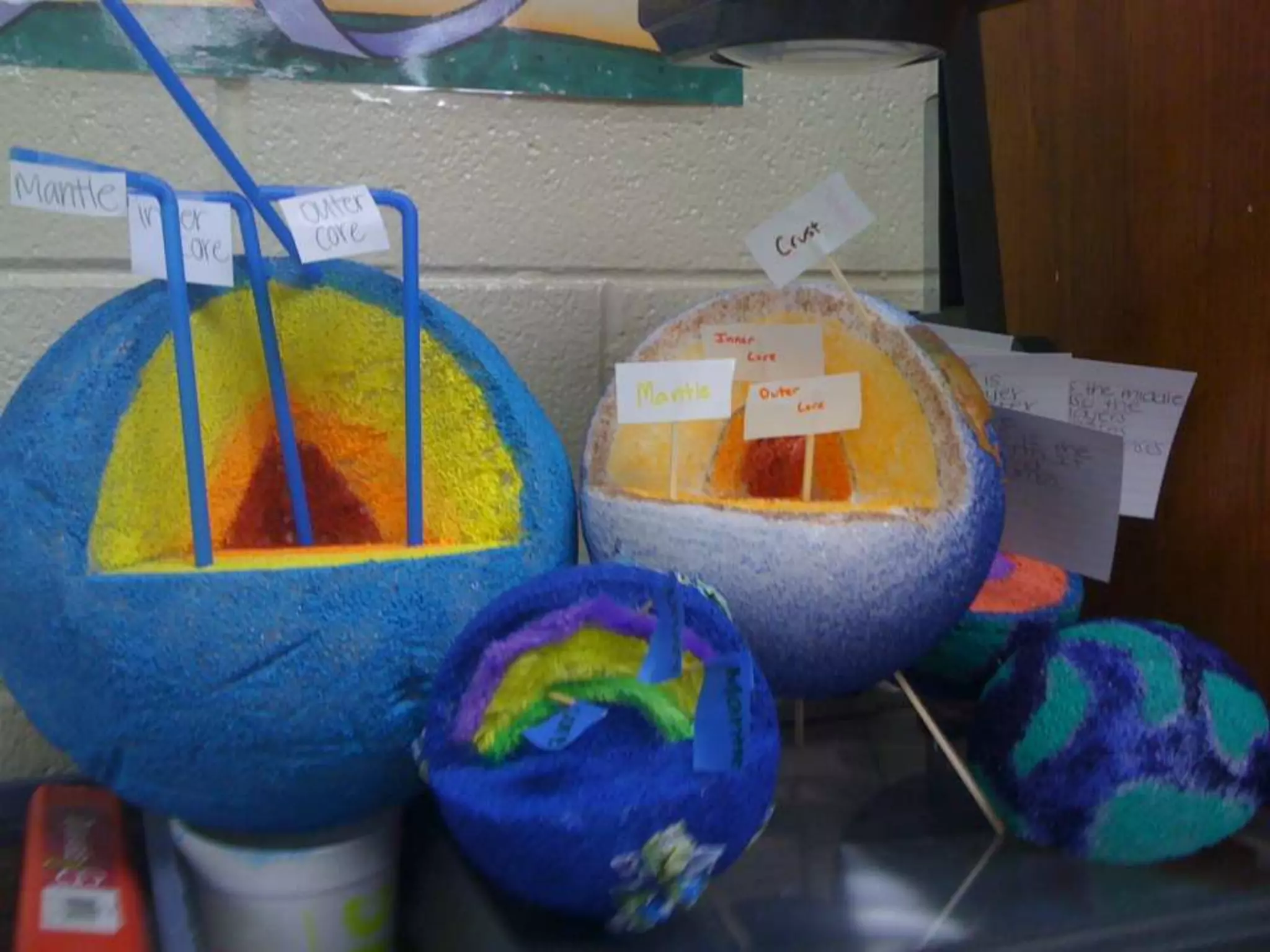
Layers of the Earth Project
Directions:
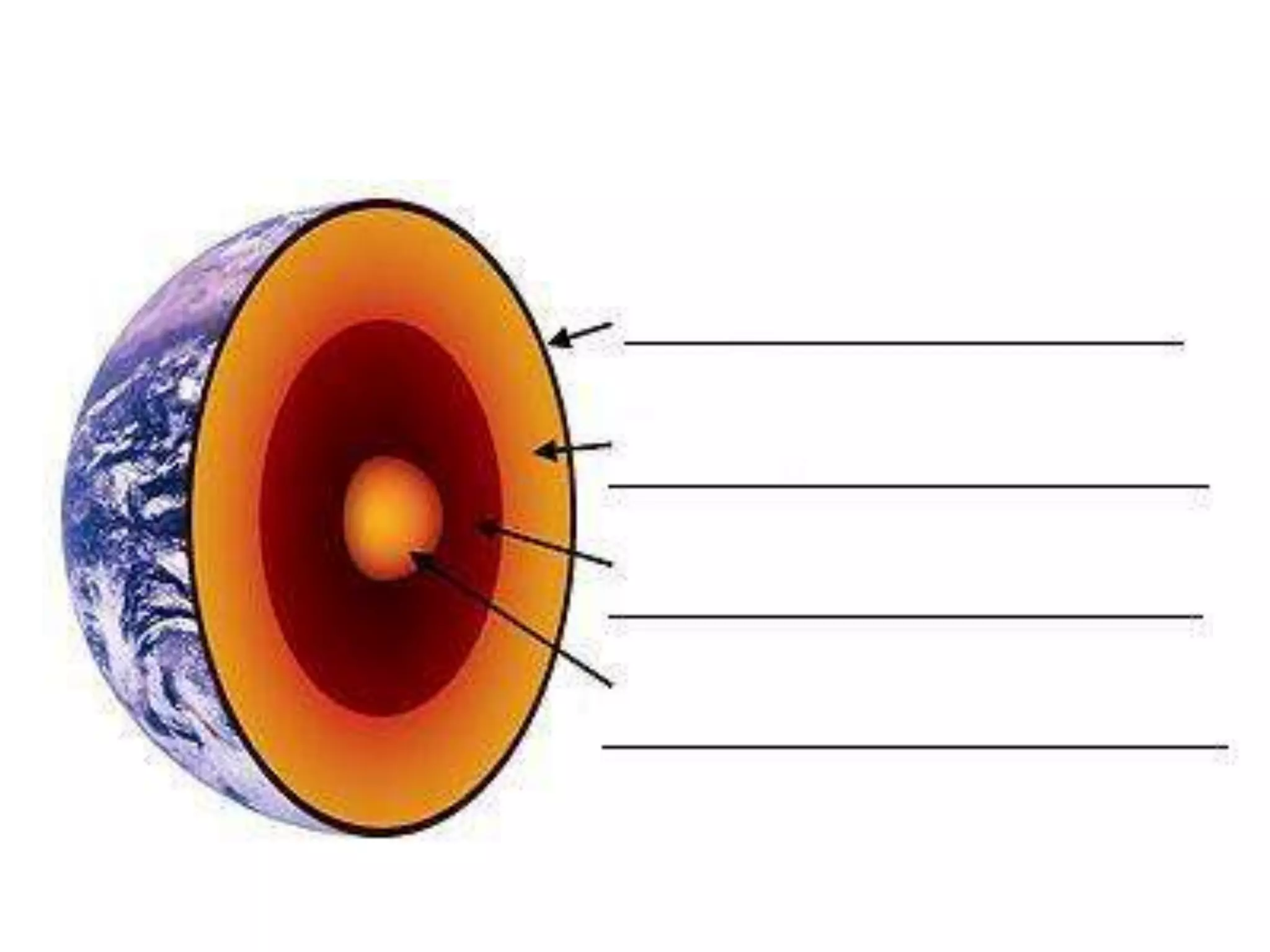
1. Accurately label the layers of the Earth
   –   Include the relative position
   –   Density
   –   composition
2. Include at least 3 major features for each Earth layer
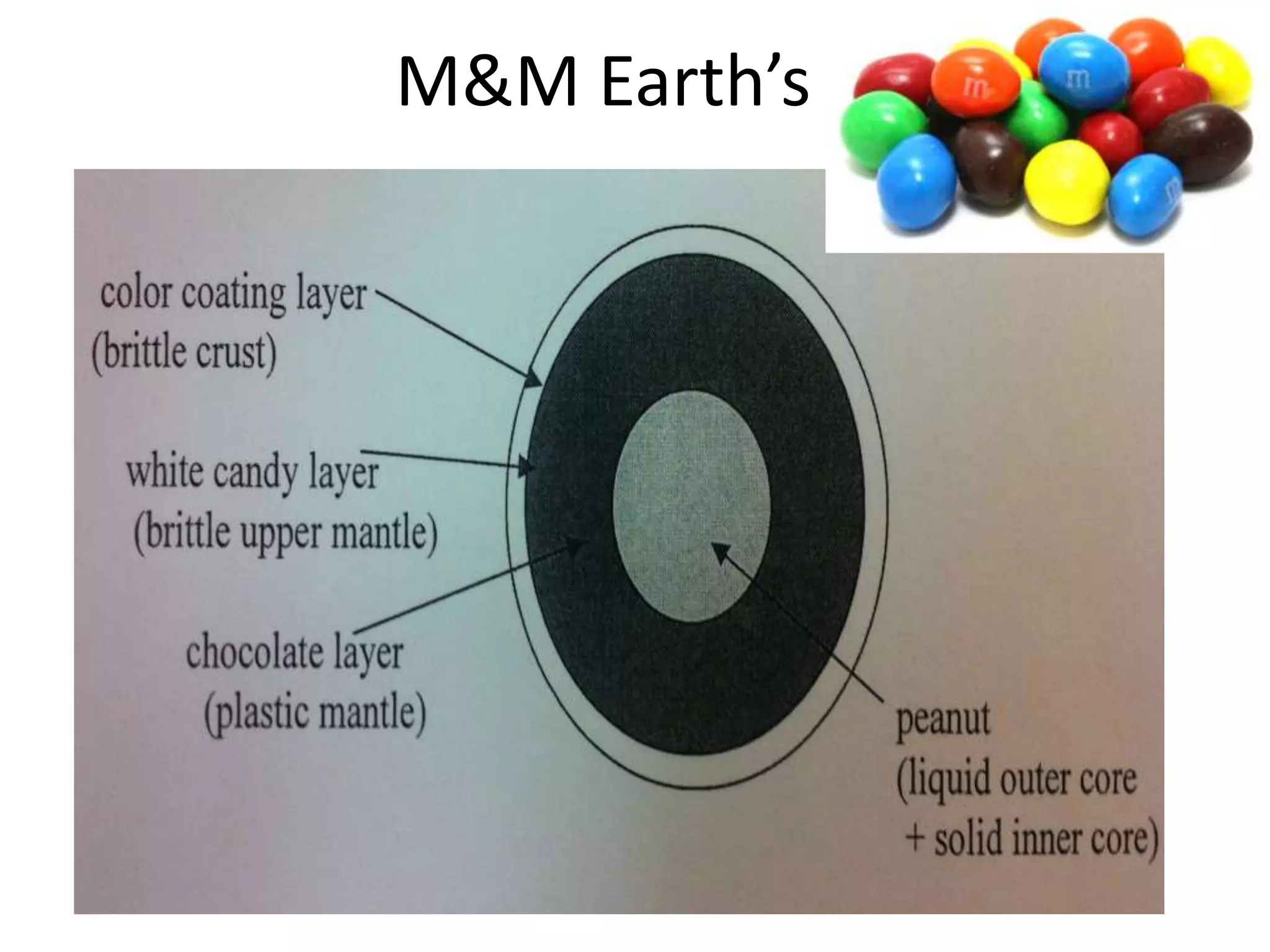
M&M Earth’s
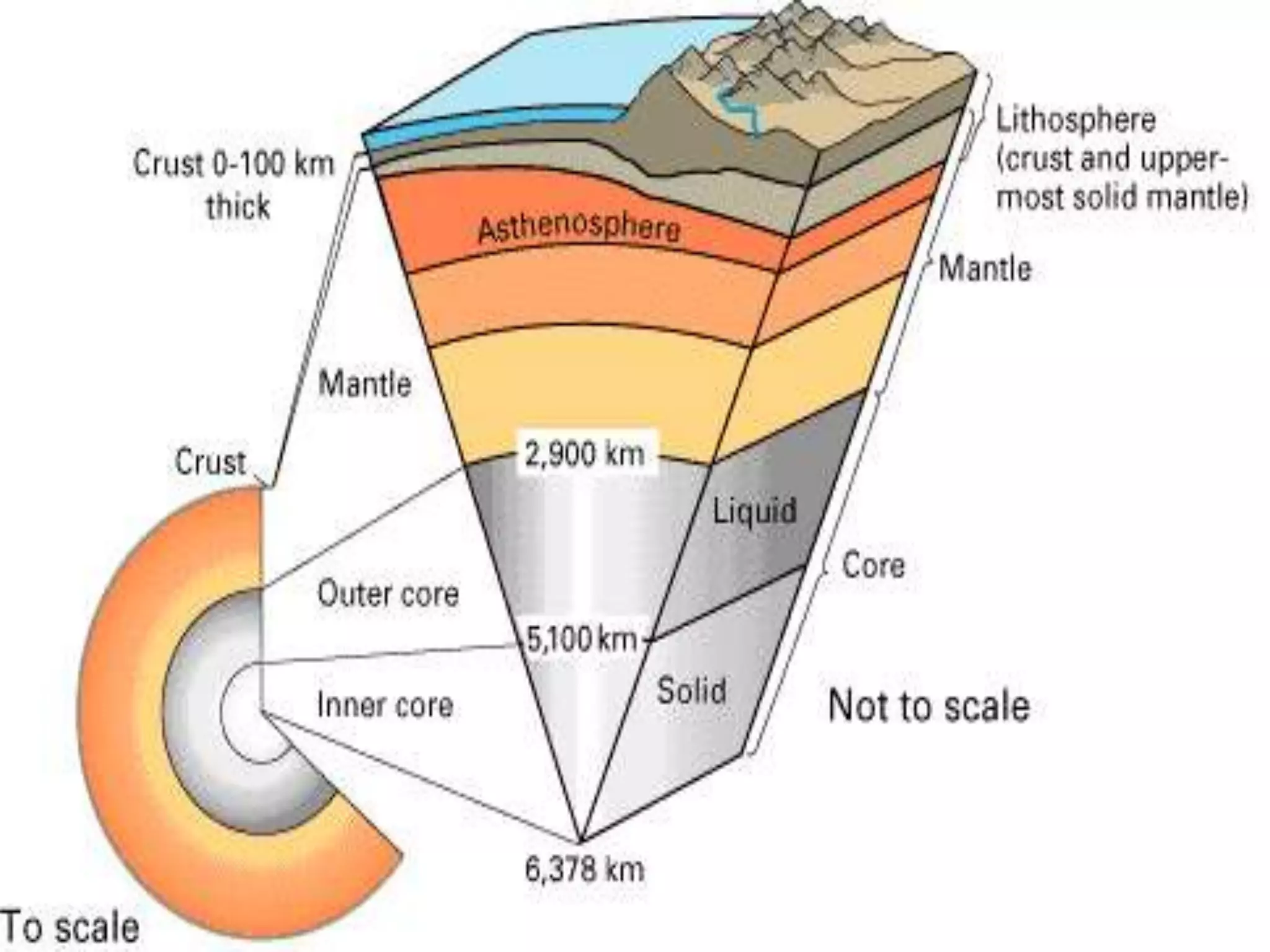
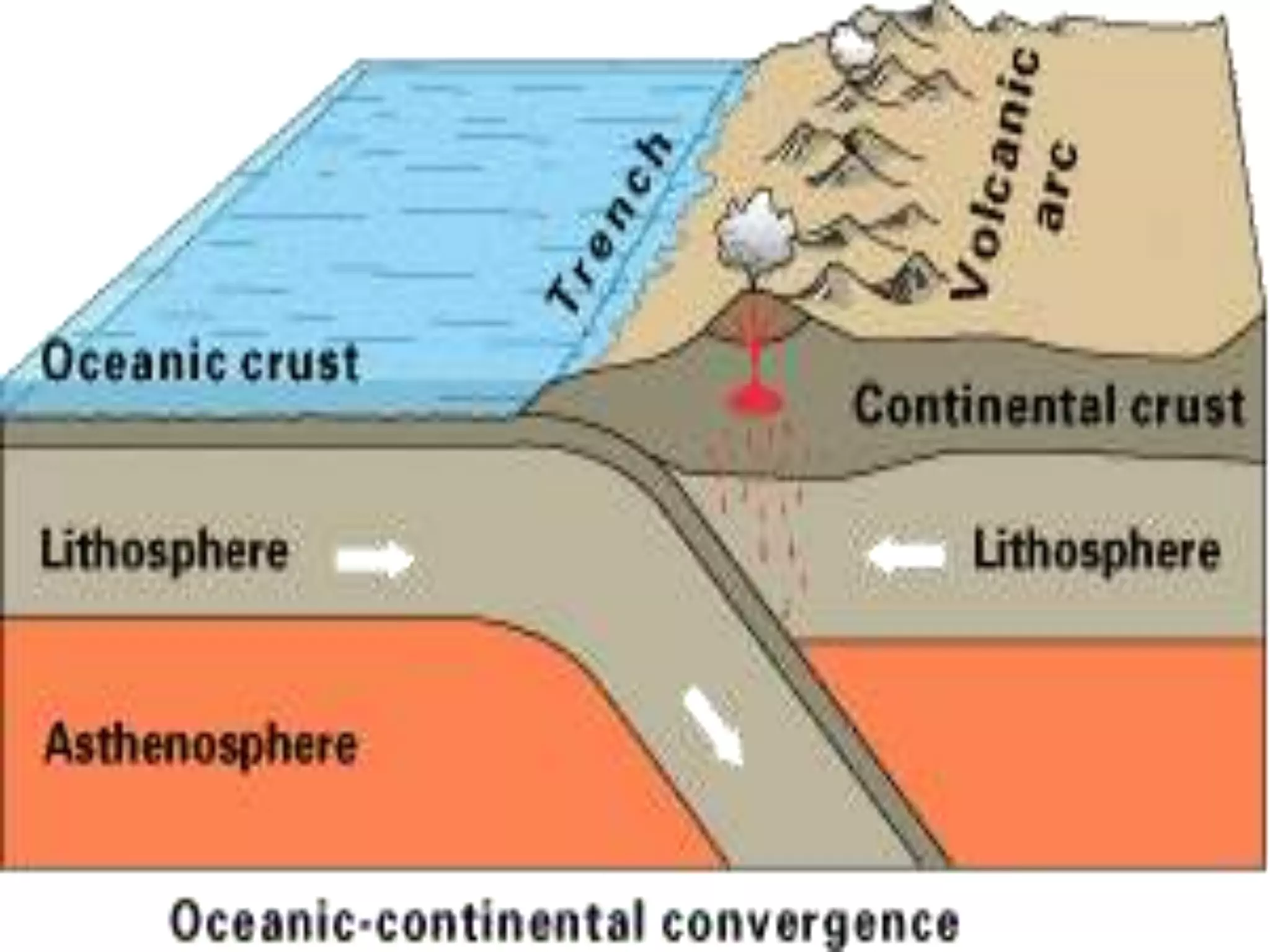
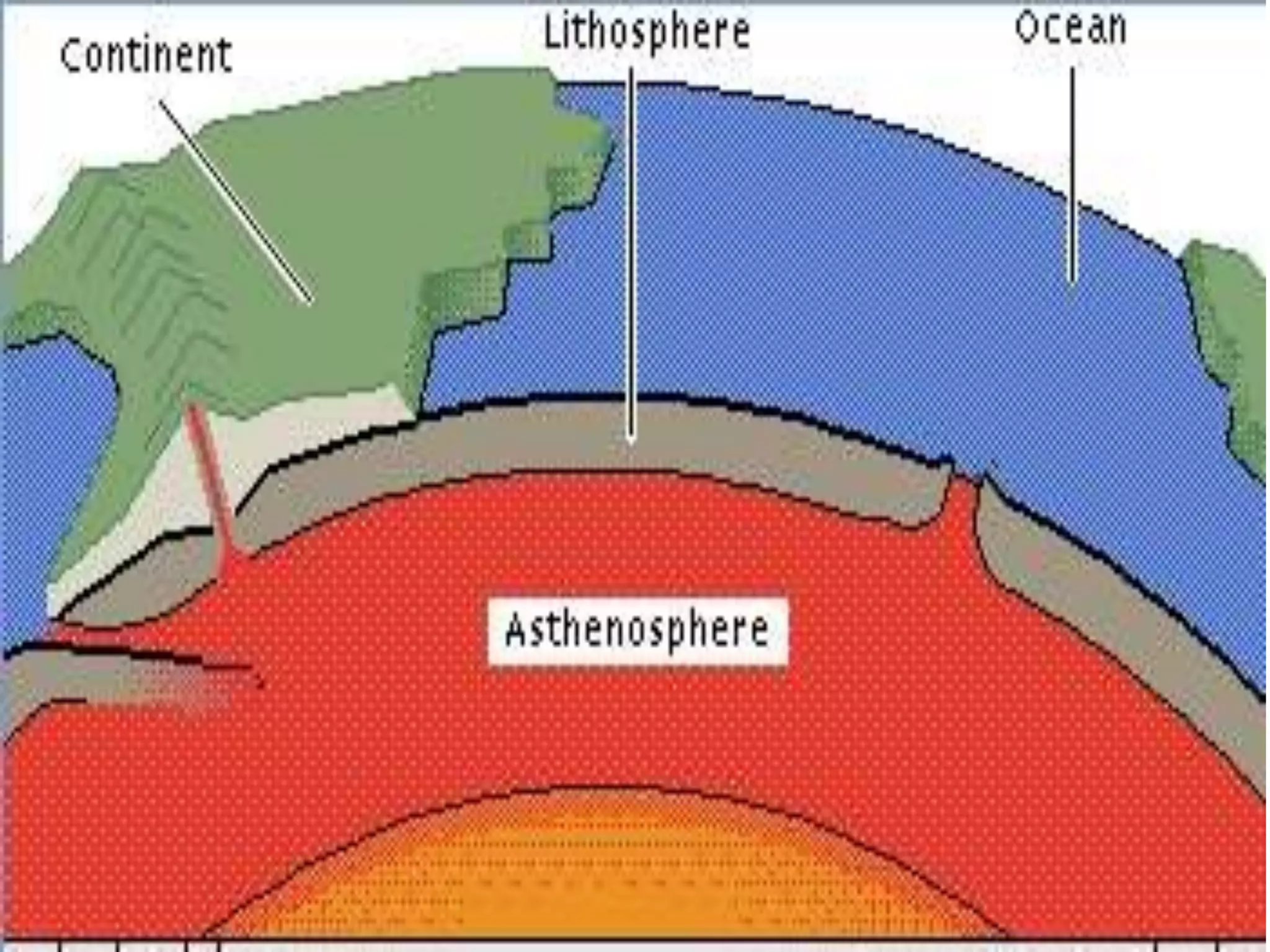
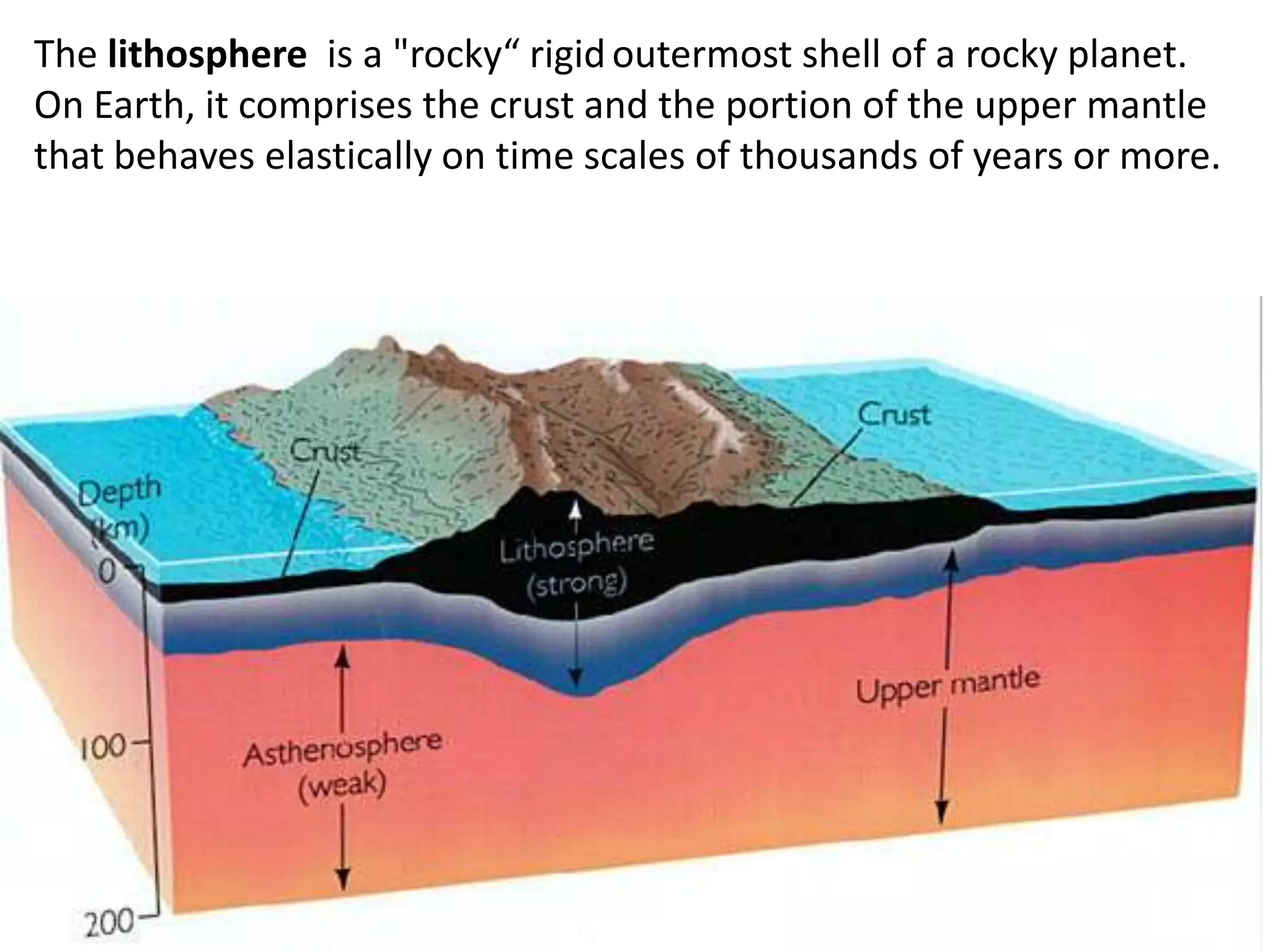
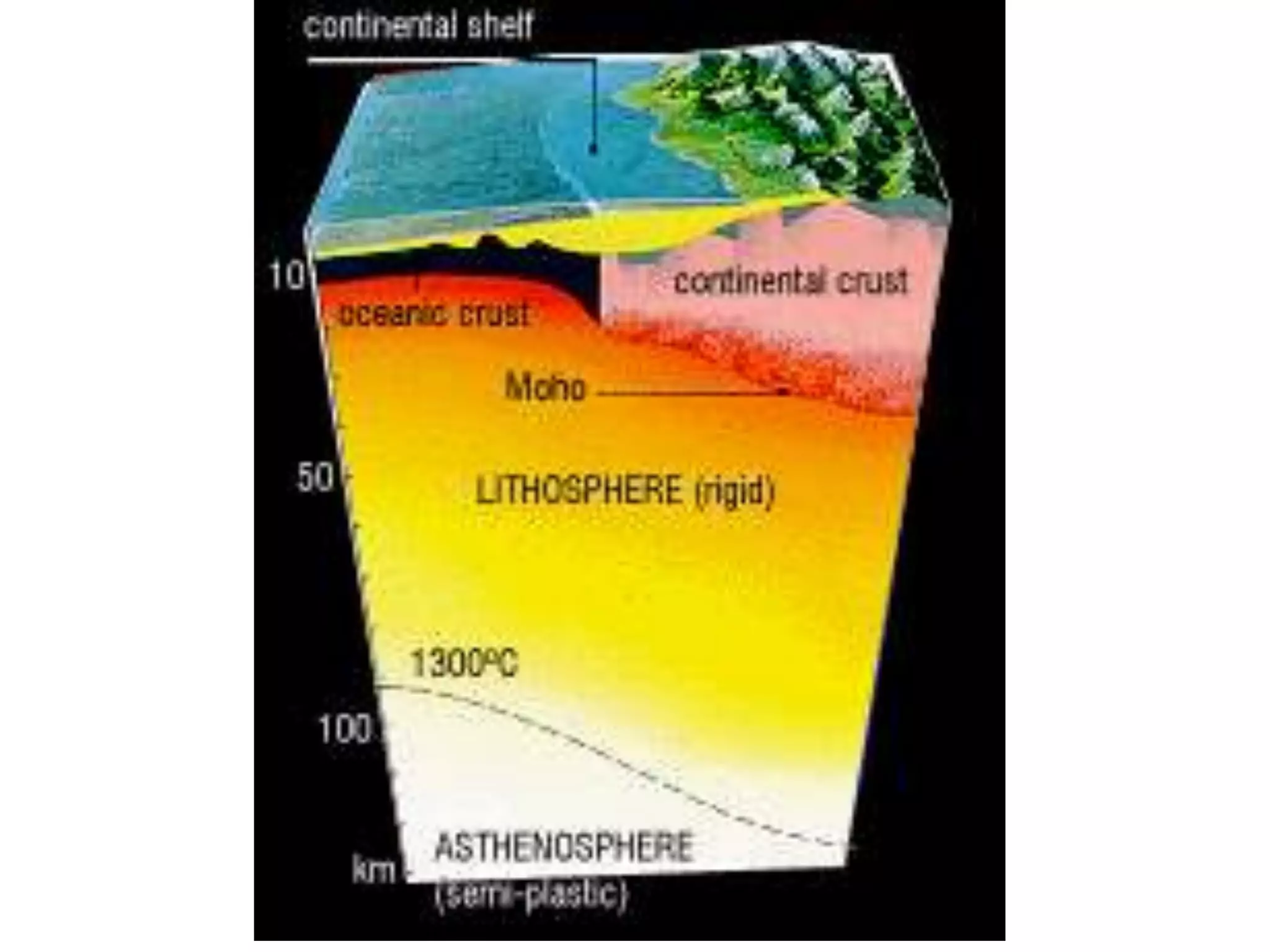
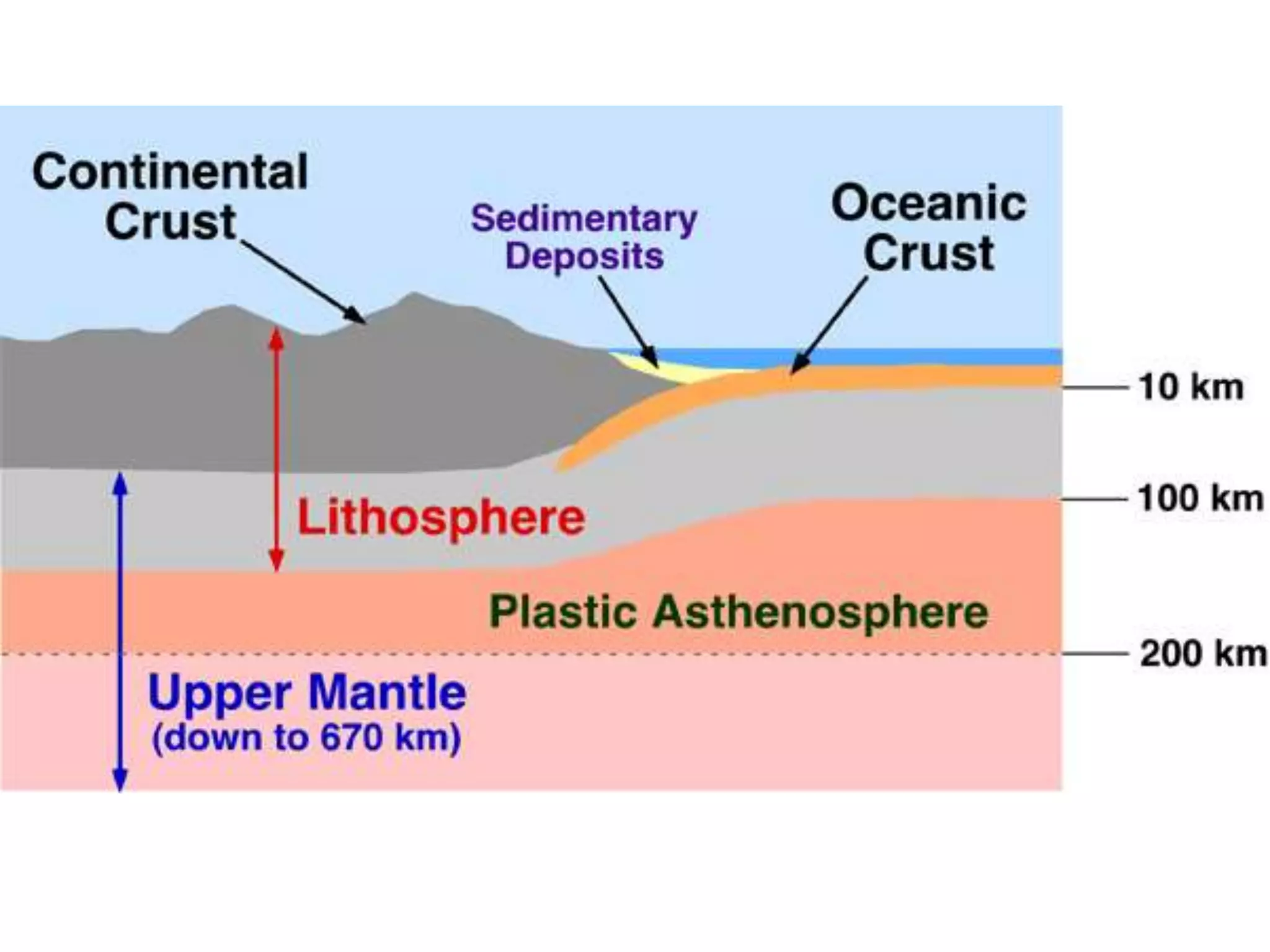
The lithosphere is a "rocky“ rigid outermost shell of a rocky planet.
On Earth, it comprises the crust and the portion of the upper mantle
that behaves elastically on time scales of thousands of years or more.
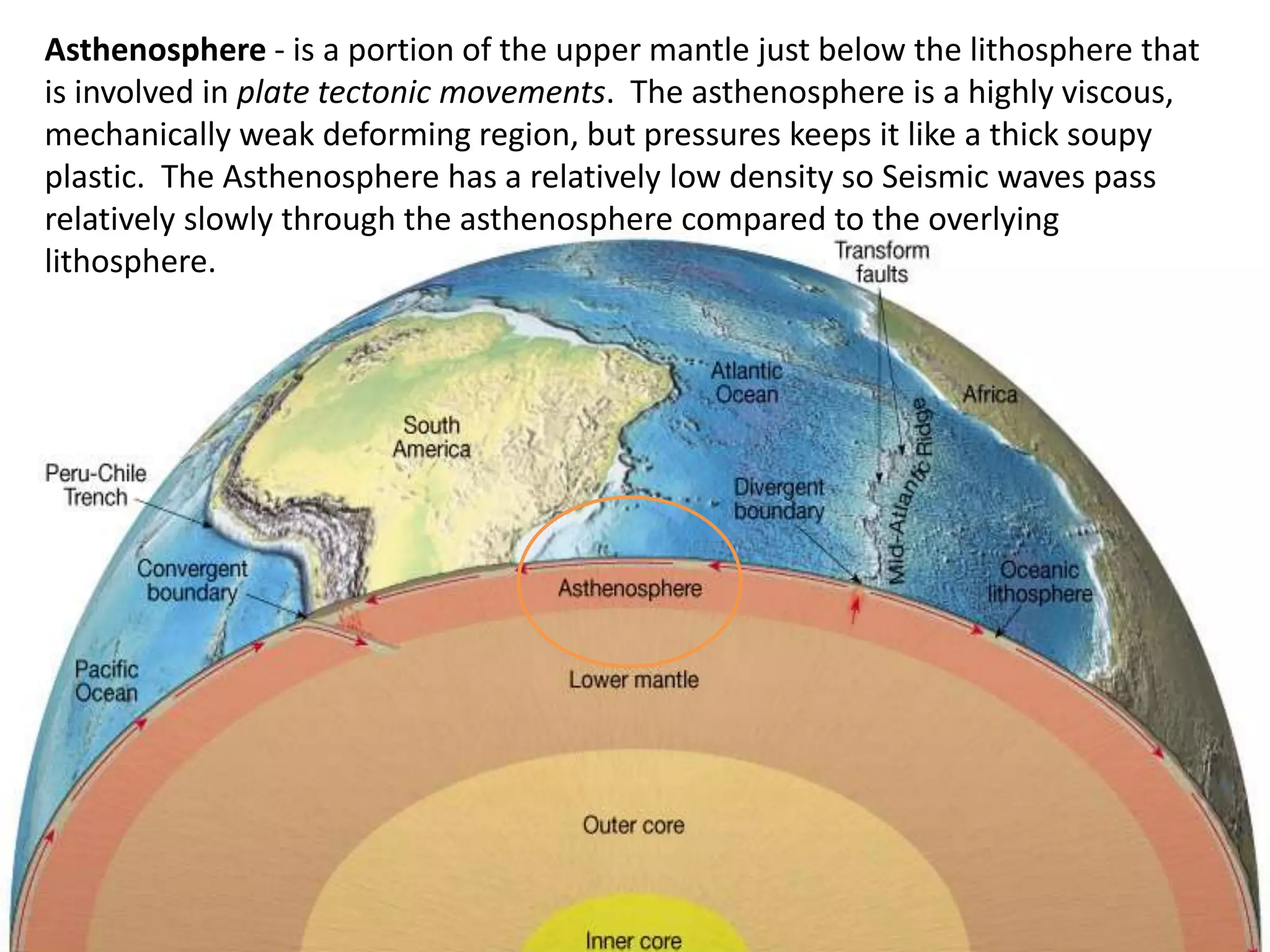
Asthenosphere - is a portion of the upper mantle just below the lithosphere that
is involved in plate tectonic movements. The asthenosphere is a highly viscous,
mechanically weak deforming region, but pressures keeps it like a thick soupy
plastic. The Asthenosphere has a relatively low density so Seismic waves pass
relatively slowly through the asthenosphere compared to the overlying
lithosphere.
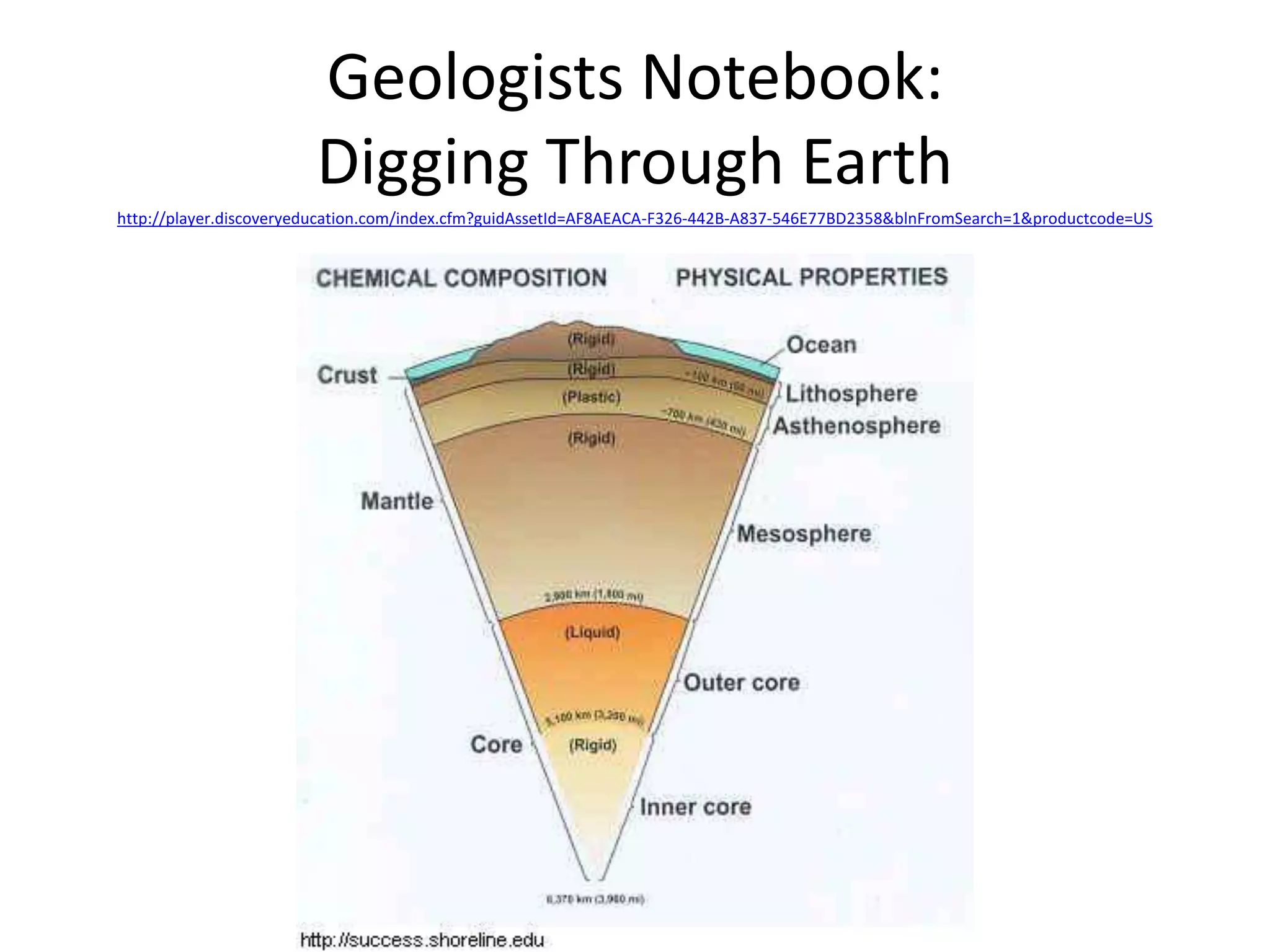
Geologists Notebook:
                        Digging Through Earth
http://player.discoveryeducation.com/index.cfm?guidAssetId=AF8AEACA-F326-442B-A837-546E77BD2358&blnFromSearch=1&productcode=US
PoP- Layers of the Earth
•   http://www.youtube.com/watch?v=Q9j1xGaxYzY
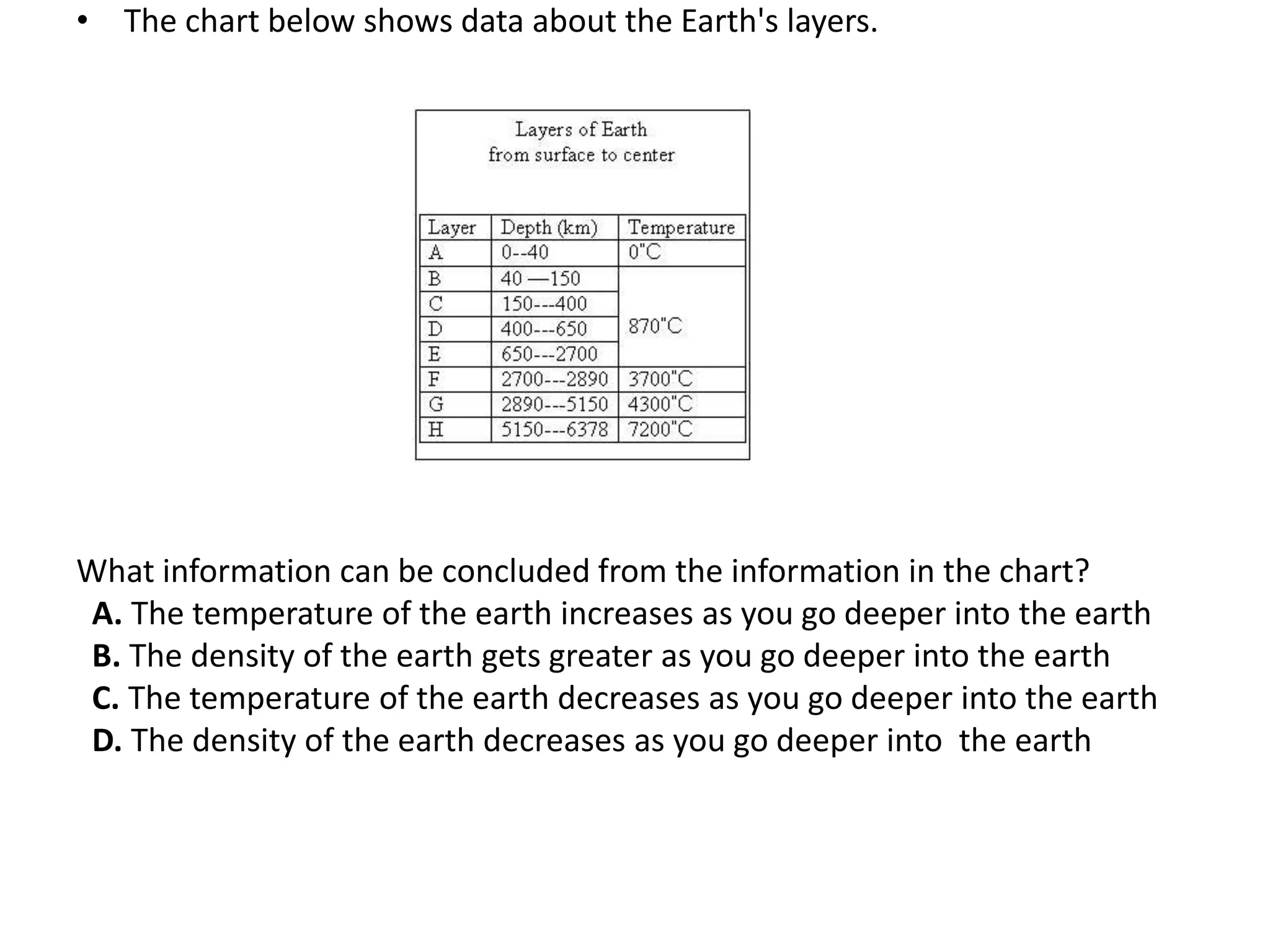
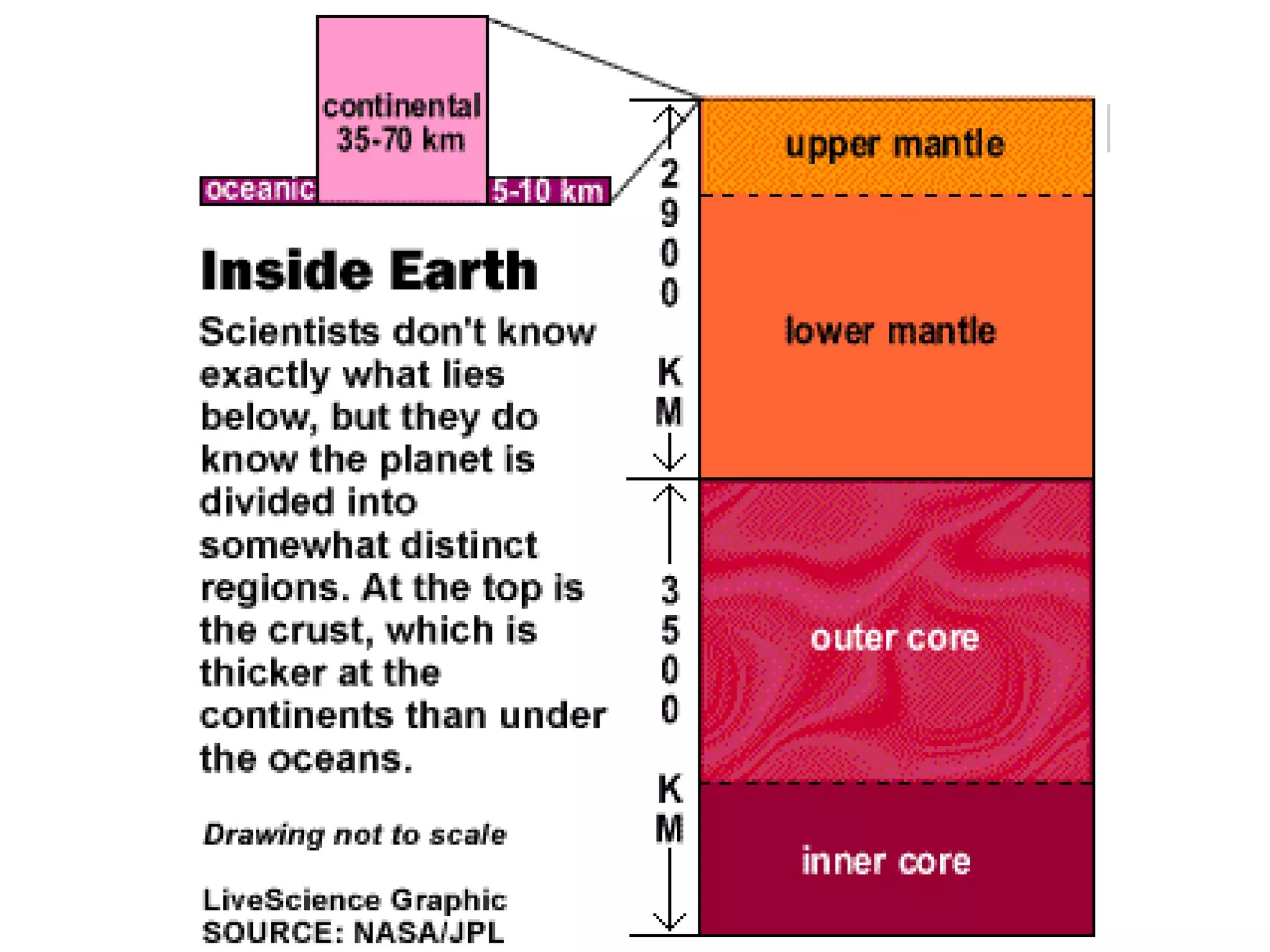
• The chart below shows data about the Earth's layers.


What information can be concluded from the information in the chart?
A. The temperature of the earth increases as you go deeper into the earth
B. The density of the earth gets greater as you go deeper into the earth
C. The temperature of the earth decreases as you go deeper into the earth
D. The density of the earth decreases as you go deeper into the earth
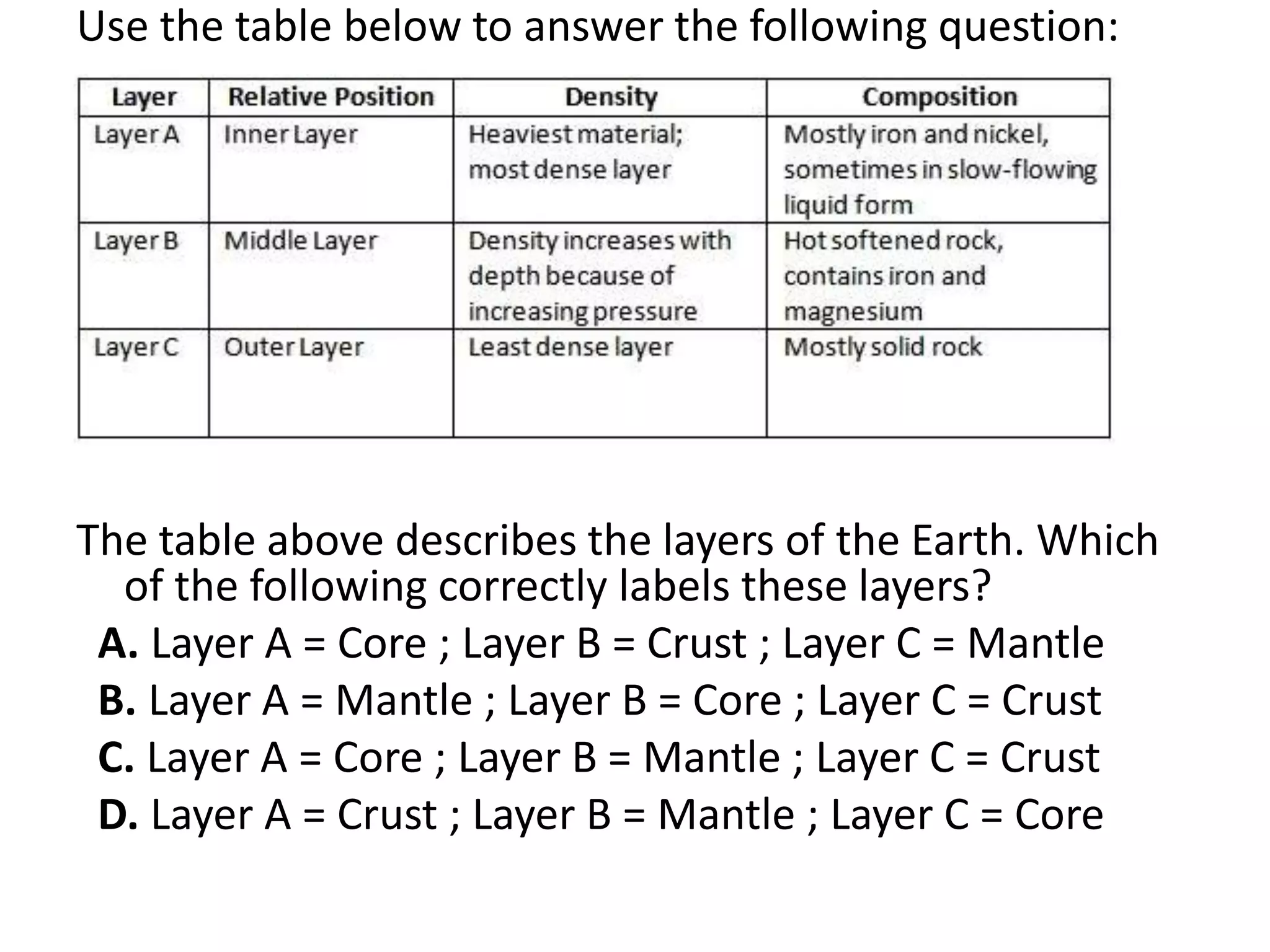
Use the table below to answer the following question:


The table above describes the layers of the Earth. Which
  of the following correctly labels these layers?
 A. Layer A = Core ; Layer B = Crust ; Layer C = Mantle
 B. Layer A = Mantle ; Layer B = Core ; Layer C = Crust
 C. Layer A = Core ; Layer B = Mantle ; Layer C = Crust
 D. Layer A = Crust ; Layer B = Mantle ; Layer C = Core
Which of the following statements is true about
  Earth’s crust?
 A. It is thicker under the continents than under the
  ocean.
 B. It is more dense than other layers.
 C. It is the only layer where gravity exists.
 D. It is the origin of the earth’s magnetic field.
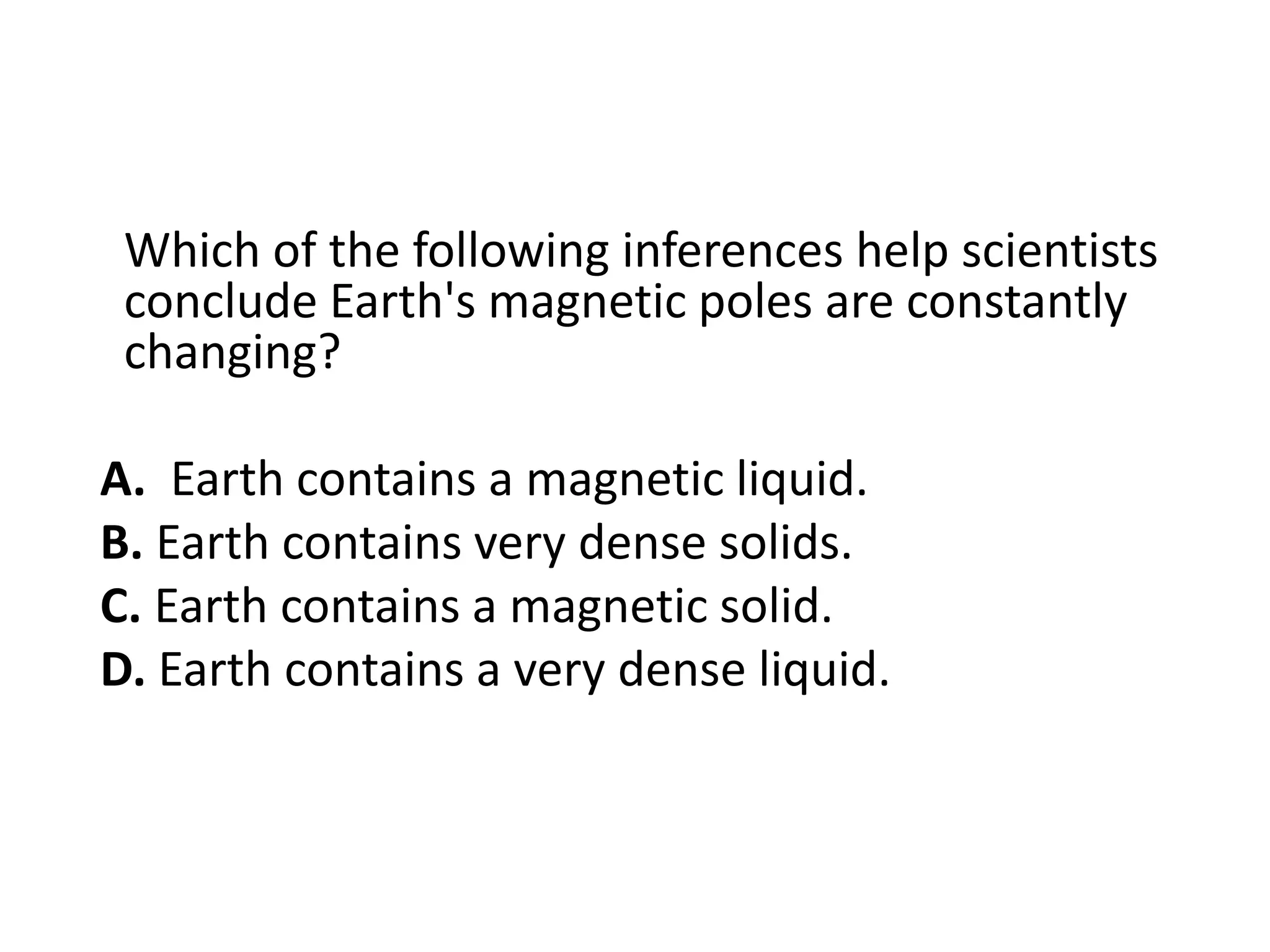
Which of the following inferences help scientists
 conclude Earth's magnetic poles are constantly
 changing?

A. Earth contains a magnetic liquid.
B. Earth contains very dense solids.
C. Earth contains a magnetic solid.
D. Earth contains a very dense liquid.
Assessment Checklist
Summarize major points about the layers of Earth
Generalize major points about the crust
Generalize major points about the mantle
Generalize major points about the core of Earth
Compare the layers of the Earth
Classify and sequence the layers using
 information
Identify each layer according to its properties
What does this evidence suggest
   about Earth’s Structure?
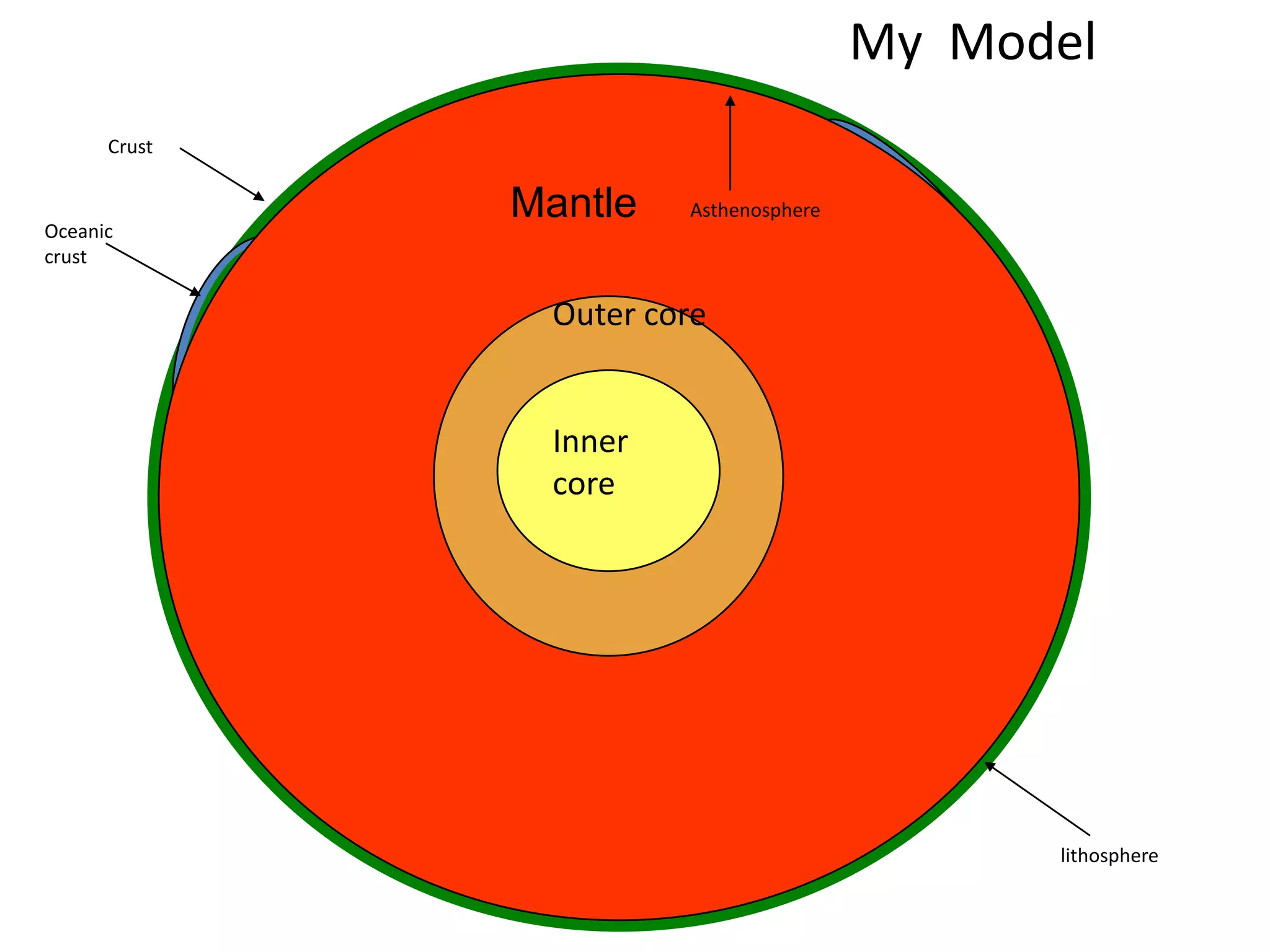
My Model
      Crust


Oceanic
              Mantle   Asthenosphere

crust

               Outer core


               Inner
               core


                                             lithosphere
Cool Websites
• http://www.youtube.com/watch?v=FgPbzEkzB
  ek&feature=related

8 3.1 layers of the earth

  • 1.
    Layers of theEarth Intro http://player.discoveryeducation.com/in 8-3.1 dex.cfm?guidAssetId=C1B0E416-A17D- 45B6-875C- 88CCC8403AA7&blnFromSearch=1&prod uctcode=US
  • 2.
    VIW’s 1. Crust 2. Mantle 3. Core 4. Density 5. Composition 6. Lithosphere 7. Asthenosphere 8. Oceanic crust – basalt 9. Continental crust - granite
  • 3.
    Learning Objectives 8-3 The student will demonstrate an understanding of materials that determine the structure of the Earth and the processes that have altered this structure. 8-3.1 Summarize the three layers of Earth – crust, mantle, and core – on the basis of relative position, density, and composition.
  • 4.
    Essential Information • TheEarth has layers that have specific conditions (states) and composition (made up of).
  • 5.
    Summary of Earth’sLayers Copy Table into Notebook Layer Relative Position Density Composition Crust Outermost layer; thinnest under the ocean, thickest under continents; crust and top of mantle called the lithosphere Mantle Core
  • 6.
    Summary of Earth’sLayers Copy Table into Notebook Layer Relative Position Density Composition Crust Outermost layer; thinnest under the ocean, thickest under continents; crust and top of mantle called the lithosphere Mantle Middle layer, thickest layer; top portion called the asthenosphere Core
  • 7.
    Summary of Earth’sLayers Copy Table into Notebook Layer Relative Position Density Composition Crust Outermost layer; thinnest under the ocean, thickest under continents; crust and top of mantle called the lithosphere Mantle Middle layer, thickest layer; top portion called the asthenosphere Core Inner layer, consists of two parts – outer core and inner core
  • 8.
    Summary of Earth’sLayers Copy Table into Notebook Layer Relative Position Density Composition Crust Outermost layer; Least dense layer thinnest under the overall; Oceanic ocean, thickest crust (basalt) is under continents; more dense than crust and top of continental crust mantle called the (granite) lithosphere Mantle Middle layer, thickest layer; top portion called the asthenosphere Core Inner layer, consists of two parts – outer core and inner core
  • 9.
    Summary of Earth’sLayers Copy Table into Notebook Layer Relative Position Density Composition Crust Outermost layer; Least dense layer thinnest under the overall; Oceanic ocean, thickest crust (basalt) is under continents; more dense than crust and top of continental crust mantle called the (granite) lithosphere Mantle Middle layer, Density increases thickest layer; top with depth because portion called the of increasing asthenosphere pressure Core Inner layer, consists of two parts – outer core and inner core
  • 10.
    Summary of Earth’sLayers Copy Table into Notebook Layer Relative Position Density Composition Crust Outermost layer; Least dense layer thinnest under the overall; Oceanic ocean, thickest crust (basalt) is under continents; more dense than crust and top of continental crust mantle called the (granite) lithosphere Mantle Middle layer, Density increases thickest layer; top with depth because portion called the of increasing asthenosphere pressure Core Inner layer, consists Heaviest material; of two parts – outer most dense layer core and inner core
  • 11.
    Summary of Earth’sLayers Copy Table into Notebook Layer Relative Position Density Composition Crust Outermost layer; Least dense layer Solid Rock – mostly thinnest under the overall; Oceanic silicon and oxygen ocean, thickest crust (basalt) is Oceanic crust – under continents; more dense than basalt; crust and top of continental crust Continental crust – mantle called the (granite) granite lithosphere Mantle Middle layer, Density increases thickest layer; top with depth because portion called the of increasing asthenosphere pressure Core Inner layer, consists Heaviest material; of two parts – outer most dense layer core and inner core
  • 12.
    Summary of Earth’sLayers Copy Table into Notebook Layer Relative Position Density Composition Crust Outermost layer; Least dense layer Solid Rock – mostly thinnest under the overall; Oceanic silicon and oxygen ocean, thickest crust (basalt) is Oceanic crust – under continents; more dense than basalt; crust and top of continental crust Continental crust – mantle called the (granite) granite lithosphere Mantle Middle layer, Density increases Hot softened rock; thickest layer; top with depth because contains iron and portion called the of increasing magnesium asthenosphere pressure Core Inner layer, consists Heaviest material; of two parts – outer most dense layer core and inner core
  • 13.
    Summary of Earth’sLayers Copy Table into Notebook Layer Relative Position Density Composition Crust Outermost layer; Least dense layer Solid Rock – mostly thinnest under the overall; Oceanic silicon and oxygen ocean, thickest crust (basalt) is Oceanic crust – under continents; more dense than basalt; crust and top of continental crust Continental crust – mantle called the (granite) granite lithosphere Mantle Middle layer, Density increases Hot softened rock; thickest layer; top with depth because contains iron and portion called the of increasing magnesium asthenosphere pressure Core Inner layer, consists Heaviest material; Mostly iron and of two parts – outer most dense layer nickel; outer core – core and inner core slow flowing liquid, inner core, solid
  • 17.
    How can youuse your hands to remember the layers of the Earth?
  • 19.
    Draw and labelall 3 layers of the Earth
  • 20.
    • Outermost layer;thinnest under the ocean, thickest under continents; contains the lithosphere
  • 21.
    • Middle layer,thickest layer; top portion called the asthenosphere
  • 22.
    • Inner layer,consists of two parts
  • 23.
    • Heaviest material;most dense layer
  • 24.
    • Density increaseswith depth because of increasing pressure
  • 25.
    • Least denselayer overall; Oceanic crust (basalt) is more dense than continental crust (granite)
  • 26.
    • Hot softenedrock; contains iron and magnesium
  • 27.
    • Solid Rock– mostly silicon and oxygen • Oceanic basalt • Continental granite
  • 28.
    • Mostly ironand nickel; outer slow flowing liquid, inner part, solid
  • 29.
    Solid Rock –mostly silicon and oxygen Oceanic crust – basalt; Continental crust – granite Hot softened rock; contains iron and magnesium Mostly iron and nickel; outer core – slow flowing liquid, inner core, solid
  • 33.
    Layers of theEarth Project Directions: 1. Accurately label the layers of the Earth – Include the relative position – Density – composition 2. Include at least 3 major features for each Earth layer
  • 34.
  • 37.
    The lithosphere isa "rocky“ rigid outermost shell of a rocky planet. On Earth, it comprises the crust and the portion of the upper mantle that behaves elastically on time scales of thousands of years or more.
  • 38.
    Asthenosphere - isa portion of the upper mantle just below the lithosphere that is involved in plate tectonic movements. The asthenosphere is a highly viscous, mechanically weak deforming region, but pressures keeps it like a thick soupy plastic. The Asthenosphere has a relatively low density so Seismic waves pass relatively slowly through the asthenosphere compared to the overlying lithosphere.
  • 42.
    Geologists Notebook: Digging Through Earth http://player.discoveryeducation.com/index.cfm?guidAssetId=AF8AEACA-F326-442B-A837-546E77BD2358&blnFromSearch=1&productcode=US
  • 43.
    PoP- Layers ofthe Earth • http://www.youtube.com/watch?v=Q9j1xGaxYzY
  • 44.
    • The chartbelow shows data about the Earth's layers. What information can be concluded from the information in the chart? A. The temperature of the earth increases as you go deeper into the earth B. The density of the earth gets greater as you go deeper into the earth C. The temperature of the earth decreases as you go deeper into the earth D. The density of the earth decreases as you go deeper into the earth
  • 45.
    Use the tablebelow to answer the following question: The table above describes the layers of the Earth. Which of the following correctly labels these layers? A. Layer A = Core ; Layer B = Crust ; Layer C = Mantle B. Layer A = Mantle ; Layer B = Core ; Layer C = Crust C. Layer A = Core ; Layer B = Mantle ; Layer C = Crust D. Layer A = Crust ; Layer B = Mantle ; Layer C = Core
  • 46.
    Which of thefollowing statements is true about Earth’s crust? A. It is thicker under the continents than under the ocean. B. It is more dense than other layers. C. It is the only layer where gravity exists. D. It is the origin of the earth’s magnetic field.
  • 47.
    Which of thefollowing inferences help scientists conclude Earth's magnetic poles are constantly changing? A. Earth contains a magnetic liquid. B. Earth contains very dense solids. C. Earth contains a magnetic solid. D. Earth contains a very dense liquid.
  • 48.
    Assessment Checklist Summarize majorpoints about the layers of Earth Generalize major points about the crust Generalize major points about the mantle Generalize major points about the core of Earth Compare the layers of the Earth Classify and sequence the layers using information Identify each layer according to its properties
  • 49.
    What does thisevidence suggest about Earth’s Structure?
  • 52.
    My Model Crust Oceanic Mantle Asthenosphere crust Outer core Inner core lithosphere
  • 55.