CONCEPT MAP OF SPHERES OF
THE EARTH
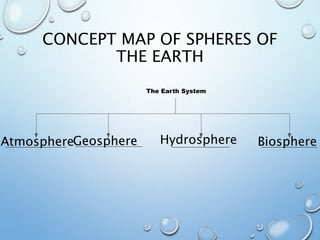
The Earth System
__________________________
______________________________
___________________________ _________________________
AtmosphereGeosphere Hydrosphere Biosphere
THE ATMOSPHERE
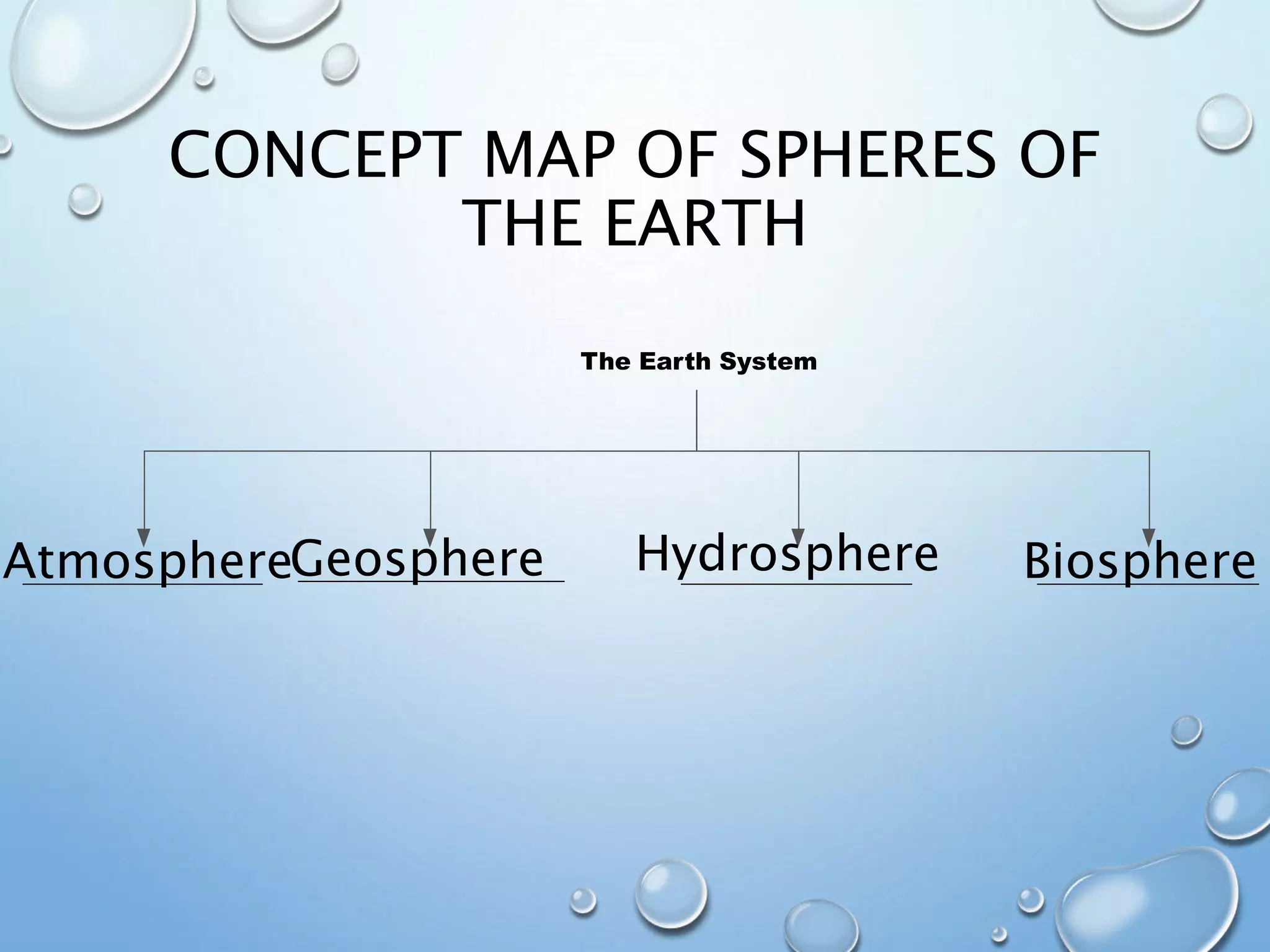
The Earth is surrounded by a blanket of air, called the
atmosphere.
The atmosphere is primarily composed of nitrogen (N) and
oxygen (O).
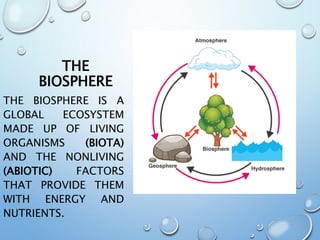
THE BIOSPHERE
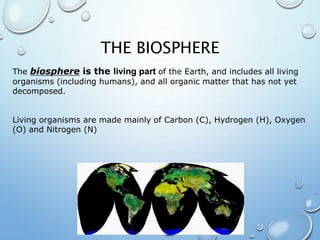
The biosphere is the living part of the Earth, and includes all living
organisms (including humans), and all organic matter that has not yet
decomposed.
Living organisms are made mainly of Carbon (C), Hydrogen (H), Oxygen
(O) and Nitrogen (N)
THE
BIOSPHERE
THE BIOSPHERE IS A
GLOBAL ECOSYSTEM
MADE UP OF LIVING
ORGANISMS (BIOTA)
AND THE NONLIVING
(ABIOTIC) FACTORS
THAT PROVIDE THEM
WITH ENERGY AND
NUTRIENTS.
IMPORTANCE OF BIOSPHERE
THE BIOSPHERE PROVIDES
THE ECOSYSTEM THAT IS
NEEDED FOR SURVIVAL.
ADAPTATION TO THE
BIOSPHERE’S CLIMATE IS
EXPECTED FOR LIVING
ORGANISMS. BIODIVERSITY
THRIVES WITHIN
ECOSYSTEMS, AND THE
BIOSPHERE IS A RELIABLE
SOURCE OF FOOD ON
EARTH.
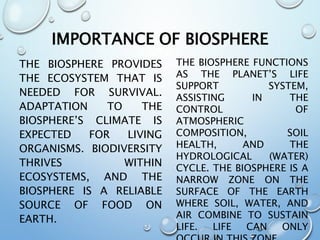
THE BIOSPHERE FUNCTIONS
AS THE PLANET’S LIFE
SUPPORT SYSTEM,
ASSISTING IN THE
CONTROL OF
ATMOSPHERIC
COMPOSITION, SOIL
HEALTH, AND THE
HYDROLOGICAL (WATER)
CYCLE. THE BIOSPHERE IS A
NARROW ZONE ON THE
SURFACE OF THE EARTH
WHERE SOIL, WATER, AND
AIR COMBINE TO SUSTAIN
LIFE. LIFE CAN ONLY
HYDROSPHERE
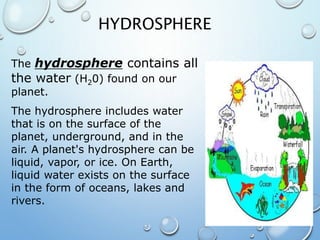
The hydrosphere contains all
the water (H20) found on our
planet.
The hydrosphere includes water
that is on the surface of the
planet, underground, and in the
air. A planet's hydrosphere can be
liquid, vapor, or ice. On Earth,
liquid water exists on the surface
in the form of oceans, lakes and
rivers.
HYDROSPHERE
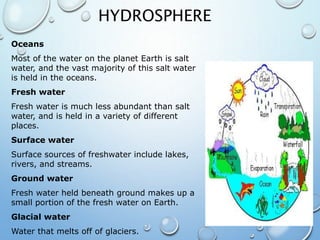
Oceans
Most of the water on the planet Earth is salt
water, and the vast majority of this salt water
is held in the oceans.
Fresh water
Fresh water is much less abundant than salt
water, and is held in a variety of different
places.
Surface water
Surface sources of freshwater include lakes,
rivers, and streams.
Ground water
Fresh water held beneath ground makes up a
small portion of the fresh water on Earth.
Glacial water
Water that melts off of glaciers.
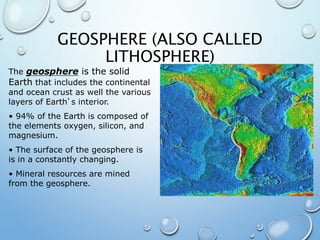
GEOSPHERE (ALSO CALLED
LITHOSPHERE)
The geosphere is the solid
Earth that includes the continental
and ocean crust as well the various
layers of Earth’s interior.
• 94% of the Earth is composed of
the elements oxygen, silicon, and
magnesium.
• The surface of the geosphere is
is in a constantly changing.
• Mineral resources are mined
from the geosphere.
LAYERS OF
THE
GEOSPHERE
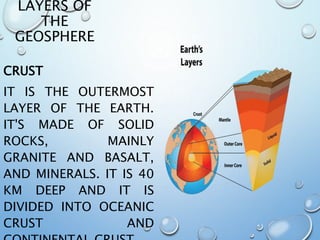
CRUST
IT IS THE OUTERMOST
LAYER OF THE EARTH.
IT'S MADE OF SOLID
ROCKS, MAINLY
GRANITE AND BASALT,
AND MINERALS. IT IS 40
KM DEEP AND IT IS
DIVIDED INTO OCEANIC
CRUST AND
LAYERS OF
THE
GEOSPHERE
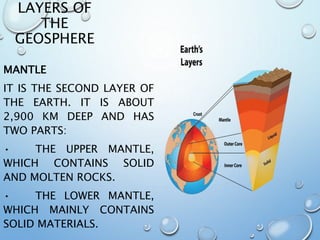
MANTLE
IT IS THE SECOND LAYER OF
THE EARTH. IT IS ABOUT
2,900 KM DEEP AND HAS
TWO PARTS:
• THE UPPER MANTLE,
WHICH CONTAINS SOLID
AND MOLTEN ROCKS.
• THE LOWER MANTLE,
WHICH MAINLY CONTAINS
SOLID MATERIALS.
LAYERS OF
THE
GEOSPHERE
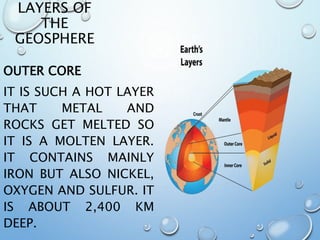
OUTER CORE
IT IS SUCH A HOT LAYER
THAT METAL AND
ROCKS GET MELTED SO
IT IS A MOLTEN LAYER.
IT CONTAINS MAINLY
IRON BUT ALSO NICKEL,
OXYGEN AND SULFUR. IT
IS ABOUT 2,400 KM
DEEP.
LAYERS OF
THE
GEOSPHERE
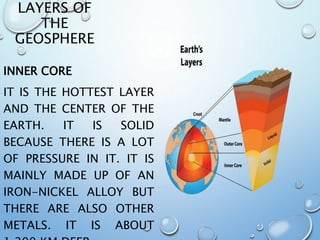
INNER CORE
IT IS THE HOTTEST LAYER
AND THE CENTER OF THE
EARTH. IT IS SOLID
BECAUSE THERE IS A LOT
OF PRESSURE IN IT. IT IS
MAINLY MADE UP OF AN
IRON-NICKEL ALLOY BUT
THERE ARE ALSO OTHER
METALS. IT IS ABOUT
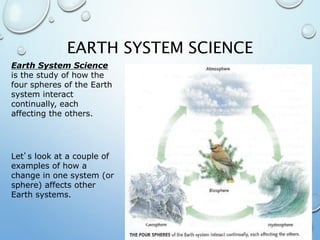
EARTH SYSTEM SCIENCE
Earth System Science
is the study of how the
four spheres of the Earth
system interact
continually, each
affecting the others.
Let’s look at a couple of
examples of how a
change in one system (or
sphere) affects other
Earth systems.
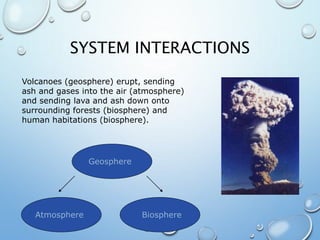
SYSTEM INTERACTIONS
Volcanoes (geosphere) erupt, sending
ash and gases into the air (atmosphere)
and sending lava and ash down onto
surrounding forests (biosphere) and
human habitations (biosphere).
Geosphere
Atmosphere Biosphere
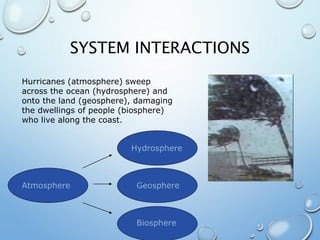
SYSTEM INTERACTIONS
Hurricanes (atmosphere) sweep
across the ocean (hydrosphere) and
onto the land (geosphere), damaging
the dwellings of people (biosphere)
who live along the coast.
Atmosphere
Hydrosphere
Geosphere
Biosphere
SYSTEM INTERACTIONS
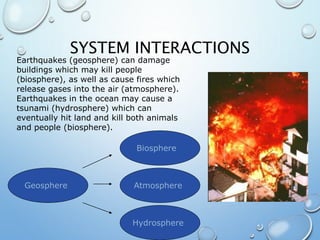
Earthquakes (geosphere) can damage
buildings which may kill people
(biosphere), as well as cause fires which
release gases into the air (atmosphere).
Earthquakes in the ocean may cause a
tsunami (hydrosphere) which can
eventually hit land and kill both animals
and people (biosphere).
Geosphere
Biosphere
Atmosphere
Hydrosphere

The Earth Spheres.ppt

  • 1.
    CONCEPT MAP OFSPHERES OF THE EARTH The Earth System __________________________ ______________________________ ___________________________ _________________________ AtmosphereGeosphere Hydrosphere Biosphere
  • 2.
    THE ATMOSPHERE The Earthis surrounded by a blanket of air, called the atmosphere. The atmosphere is primarily composed of nitrogen (N) and oxygen (O).
  • 3.
    THE BIOSPHERE The biosphereis the living part of the Earth, and includes all living organisms (including humans), and all organic matter that has not yet decomposed. Living organisms are made mainly of Carbon (C), Hydrogen (H), Oxygen (O) and Nitrogen (N)
  • 4.
    THE BIOSPHERE THE BIOSPHERE ISA GLOBAL ECOSYSTEM MADE UP OF LIVING ORGANISMS (BIOTA) AND THE NONLIVING (ABIOTIC) FACTORS THAT PROVIDE THEM WITH ENERGY AND NUTRIENTS.
  • 5.
    IMPORTANCE OF BIOSPHERE THEBIOSPHERE PROVIDES THE ECOSYSTEM THAT IS NEEDED FOR SURVIVAL. ADAPTATION TO THE BIOSPHERE’S CLIMATE IS EXPECTED FOR LIVING ORGANISMS. BIODIVERSITY THRIVES WITHIN ECOSYSTEMS, AND THE BIOSPHERE IS A RELIABLE SOURCE OF FOOD ON EARTH. THE BIOSPHERE FUNCTIONS AS THE PLANET’S LIFE SUPPORT SYSTEM, ASSISTING IN THE CONTROL OF ATMOSPHERIC COMPOSITION, SOIL HEALTH, AND THE HYDROLOGICAL (WATER) CYCLE. THE BIOSPHERE IS A NARROW ZONE ON THE SURFACE OF THE EARTH WHERE SOIL, WATER, AND AIR COMBINE TO SUSTAIN LIFE. LIFE CAN ONLY
  • 6.
    HYDROSPHERE The hydrosphere containsall the water (H20) found on our planet. The hydrosphere includes water that is on the surface of the planet, underground, and in the air. A planet's hydrosphere can be liquid, vapor, or ice. On Earth, liquid water exists on the surface in the form of oceans, lakes and rivers.
  • 7.
    HYDROSPHERE Oceans Most of thewater on the planet Earth is salt water, and the vast majority of this salt water is held in the oceans. Fresh water Fresh water is much less abundant than salt water, and is held in a variety of different places. Surface water Surface sources of freshwater include lakes, rivers, and streams. Ground water Fresh water held beneath ground makes up a small portion of the fresh water on Earth. Glacial water Water that melts off of glaciers.
  • 8.
    GEOSPHERE (ALSO CALLED LITHOSPHERE) Thegeosphere is the solid Earth that includes the continental and ocean crust as well the various layers of Earth’s interior. • 94% of the Earth is composed of the elements oxygen, silicon, and magnesium. • The surface of the geosphere is is in a constantly changing. • Mineral resources are mined from the geosphere.
  • 9.
    LAYERS OF THE GEOSPHERE CRUST IT ISTHE OUTERMOST LAYER OF THE EARTH. IT'S MADE OF SOLID ROCKS, MAINLY GRANITE AND BASALT, AND MINERALS. IT IS 40 KM DEEP AND IT IS DIVIDED INTO OCEANIC CRUST AND
  • 10.
    LAYERS OF THE GEOSPHERE MANTLE IT ISTHE SECOND LAYER OF THE EARTH. IT IS ABOUT 2,900 KM DEEP AND HAS TWO PARTS: • THE UPPER MANTLE, WHICH CONTAINS SOLID AND MOLTEN ROCKS. • THE LOWER MANTLE, WHICH MAINLY CONTAINS SOLID MATERIALS.
  • 11.
    LAYERS OF THE GEOSPHERE OUTER CORE ITIS SUCH A HOT LAYER THAT METAL AND ROCKS GET MELTED SO IT IS A MOLTEN LAYER. IT CONTAINS MAINLY IRON BUT ALSO NICKEL, OXYGEN AND SULFUR. IT IS ABOUT 2,400 KM DEEP.
  • 12.
    LAYERS OF THE GEOSPHERE INNER CORE ITIS THE HOTTEST LAYER AND THE CENTER OF THE EARTH. IT IS SOLID BECAUSE THERE IS A LOT OF PRESSURE IN IT. IT IS MAINLY MADE UP OF AN IRON-NICKEL ALLOY BUT THERE ARE ALSO OTHER METALS. IT IS ABOUT
  • 13.
    EARTH SYSTEM SCIENCE EarthSystem Science is the study of how the four spheres of the Earth system interact continually, each affecting the others. Let’s look at a couple of examples of how a change in one system (or sphere) affects other Earth systems.
  • 14.
    SYSTEM INTERACTIONS Volcanoes (geosphere)erupt, sending ash and gases into the air (atmosphere) and sending lava and ash down onto surrounding forests (biosphere) and human habitations (biosphere). Geosphere Atmosphere Biosphere
  • 15.
    SYSTEM INTERACTIONS Hurricanes (atmosphere)sweep across the ocean (hydrosphere) and onto the land (geosphere), damaging the dwellings of people (biosphere) who live along the coast. Atmosphere Hydrosphere Geosphere Biosphere
  • 16.
    SYSTEM INTERACTIONS Earthquakes (geosphere)can damage buildings which may kill people (biosphere), as well as cause fires which release gases into the air (atmosphere). Earthquakes in the ocean may cause a tsunami (hydrosphere) which can eventually hit land and kill both animals and people (biosphere). Geosphere Biosphere Atmosphere Hydrosphere