Learning Goals:
To understand what neutralisation is

To understand reactions between acids and
metals
To understand reactions between acids and
carbonates
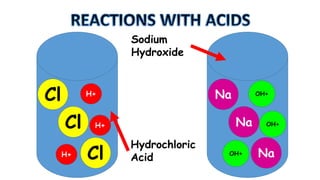
Sodium
Hydroxide

Cl

Na
Cl

H+

Cl
H+

Na
Cl

H+

Cl

OH+
H+

Hydrochloric
Acid

OH+
H+

OH+
H+

Na
Cl
Na

OH-

Cl

Cl

Na

Na
OH-

H+
H+

OH-

Cl
H+
Na

OH-

Cl

Cl

Na

Na
OH-

H+
H+

OH-

Cl
H+
Na
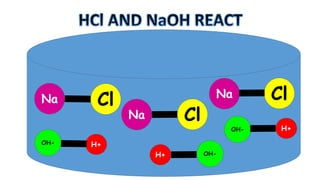
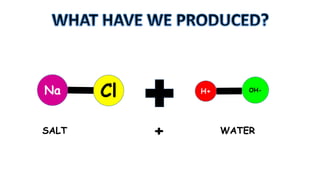
SALT

Cl

H+

+

OH-

WATER
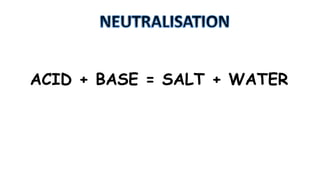
ACID + BASE = SALT + WATER
Concentration of acid (M)

Volume of gas produced (ml)

0.1

5

0.2

10

1

50

3

100

4

200

An acid reacts with a metal to produce a salt, water and
carbon dioxide.
An experiment was carried out testing 5 different
concentrations of acid, to see how gas each gives off when
reacting with a metal.
Draw a graph of these results
In your garage, you discover 3 identical bottles with no labels. Each contains
a clear liquid. You know that one is an acid used to clean the pool, one is a
base used to clean clothes, and the other is just water. But they all look the
same!
You’ve heard that some acids and bases give off dangerous fumes so having a
sniff is a bad idea.
You remember that in year 9 science, you used a plant to tell which samples
were bases, which were acids and which were neutral. You look out into the
garden and notice that you have this plant growing there.

Write down the steps you would take to tell which is the
acid, which is the base and which is the water

Chemical Reactions With Acids

  • 1.
    Learning Goals: To understandwhat neutralisation is To understand reactions between acids and metals To understand reactions between acids and carbonates
  • 2.
  • 3.
  • 4.
  • 5.
  • 6.
    ACID + BASE= SALT + WATER
  • 9.
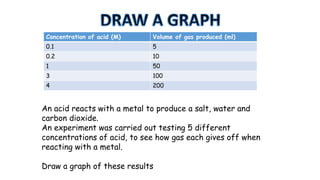
    Concentration of acid(M) Volume of gas produced (ml) 0.1 5 0.2 10 1 50 3 100 4 200 An acid reacts with a metal to produce a salt, water and carbon dioxide. An experiment was carried out testing 5 different concentrations of acid, to see how gas each gives off when reacting with a metal. Draw a graph of these results
  • 10.
    In your garage,you discover 3 identical bottles with no labels. Each contains a clear liquid. You know that one is an acid used to clean the pool, one is a base used to clean clothes, and the other is just water. But they all look the same! You’ve heard that some acids and bases give off dangerous fumes so having a sniff is a bad idea. You remember that in year 9 science, you used a plant to tell which samples were bases, which were acids and which were neutral. You look out into the garden and notice that you have this plant growing there. Write down the steps you would take to tell which is the acid, which is the base and which is the water