Earth Systems Overview
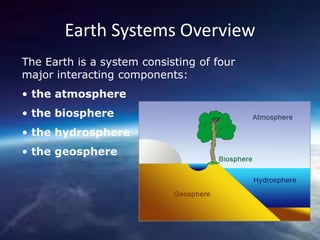
The Earth is a system consisting of four
major interacting components:
• the atmosphere
• the biosphere
• the hydrosphere
• the geosphere
The Atmosphere: a blanket of air that
surrounds the Earth
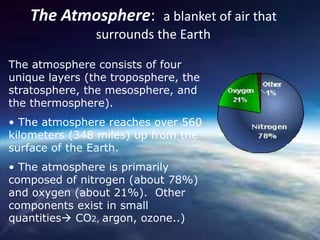
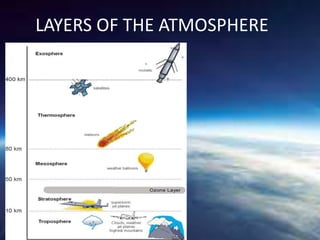
The atmosphere consists of four
unique layers (the troposphere, the
stratosphere, the mesosphere, and
the thermosphere).
• The atmosphere reaches over 560
kilometers (348 miles) up from the
surface of the Earth.
• The atmosphere is primarily
composed of nitrogen (about 78%)
and oxygen (about 21%). Other
components exist in small
quantities CO2, argon, ozone..)
LAYERS OF THE ATMOSPHERE
Geosphere
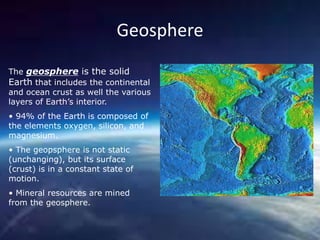
The geosphere is the solid
Earth that includes the continental
and ocean crust as well the various
layers of Earth’s interior.
• 94% of the Earth is composed of
the elements oxygen, silicon, and
magnesium.
• The geopsphere is not static
(unchanging), but its surface
(crust) is in a constant state of
motion.
• Mineral resources are mined
from the geosphere.
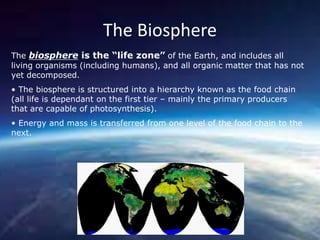
The Biosphere
The biosphere is the “life zone” of the Earth, and includes all
living organisms (including humans), and all organic matter that has not
yet decomposed.
• The biosphere is structured into a hierarchy known as the food chain
(all life is dependant on the first tier – mainly the primary producers
that are capable of photosynthesis).
• Energy and mass is transferred from one level of the food chain to the
next.
Hydrosphere
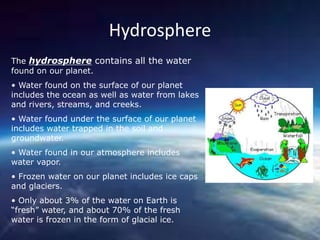
The hydrosphere contains all the water
found on our planet.
• Water found on the surface of our planet
includes the ocean as well as water from lakes
and rivers, streams, and creeks.
• Water found under the surface of our planet
includes water trapped in the soil and
groundwater.
• Water found in our atmosphere includes
water vapor.
• Frozen water on our planet includes ice caps
and glaciers.
• Only about 3% of the water on Earth is
“fresh” water, and about 70% of the fresh
water is frozen in the form of glacial ice.
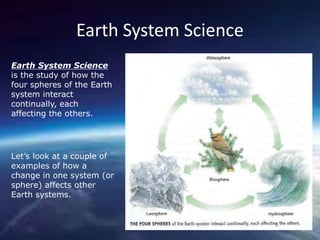
Earth System Science
is the study of how the
four spheres of the Earth
system interact
continually, each
affecting the others.
Let’s look at a couple of
examples of how a
change in one system (or
sphere) affects other
Earth systems.
System Interactions
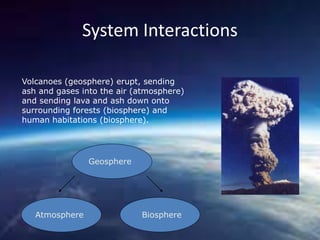
Volcanoes (geosphere) erupt, sending
ash and gases into the air (atmosphere)
and sending lava and ash down onto
surrounding forests (biosphere) and
human habitations (biosphere).
Geosphere
Atmosphere Biosphere
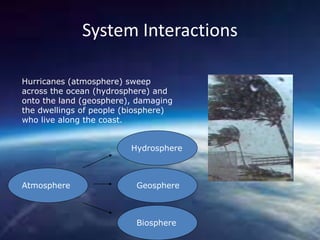
System Interactions
Hurricanes (atmosphere) sweep
across the ocean (hydrosphere) and
onto the land (geosphere), damaging
the dwellings of people (biosphere)
who live along the coast.
Atmosphere
Hydrosphere
Geosphere
Biosphere
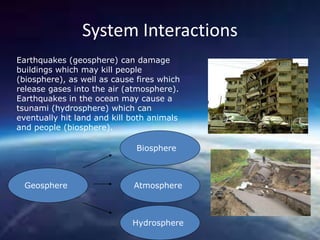
System Interactions
Earthquakes (geosphere) can damage
buildings which may kill people
(biosphere), as well as cause fires which
release gases into the air (atmosphere).
Earthquakes in the ocean may cause a
tsunami (hydrosphere) which can
eventually hit land and kill both animals
and people (biosphere).
Geosphere
Biosphere
Atmosphere
Hydrosphere

Earth's spheres

  • 1.
    Earth Systems Overview TheEarth is a system consisting of four major interacting components: • the atmosphere • the biosphere • the hydrosphere • the geosphere
  • 2.
    The Atmosphere: ablanket of air that surrounds the Earth The atmosphere consists of four unique layers (the troposphere, the stratosphere, the mesosphere, and the thermosphere). • The atmosphere reaches over 560 kilometers (348 miles) up from the surface of the Earth. • The atmosphere is primarily composed of nitrogen (about 78%) and oxygen (about 21%). Other components exist in small quantities CO2, argon, ozone..)
  • 3.
    LAYERS OF THEATMOSPHERE
  • 4.
    Geosphere The geosphere isthe solid Earth that includes the continental and ocean crust as well the various layers of Earth’s interior. • 94% of the Earth is composed of the elements oxygen, silicon, and magnesium. • The geopsphere is not static (unchanging), but its surface (crust) is in a constant state of motion. • Mineral resources are mined from the geosphere.
  • 5.
    The Biosphere The biosphereis the “life zone” of the Earth, and includes all living organisms (including humans), and all organic matter that has not yet decomposed. • The biosphere is structured into a hierarchy known as the food chain (all life is dependant on the first tier – mainly the primary producers that are capable of photosynthesis). • Energy and mass is transferred from one level of the food chain to the next.
  • 6.
    Hydrosphere The hydrosphere containsall the water found on our planet. • Water found on the surface of our planet includes the ocean as well as water from lakes and rivers, streams, and creeks. • Water found under the surface of our planet includes water trapped in the soil and groundwater. • Water found in our atmosphere includes water vapor. • Frozen water on our planet includes ice caps and glaciers. • Only about 3% of the water on Earth is “fresh” water, and about 70% of the fresh water is frozen in the form of glacial ice.
  • 7.
    Earth System Science EarthSystem Science is the study of how the four spheres of the Earth system interact continually, each affecting the others. Let’s look at a couple of examples of how a change in one system (or sphere) affects other Earth systems.
  • 8.
    System Interactions Volcanoes (geosphere)erupt, sending ash and gases into the air (atmosphere) and sending lava and ash down onto surrounding forests (biosphere) and human habitations (biosphere). Geosphere Atmosphere Biosphere
  • 9.
    System Interactions Hurricanes (atmosphere)sweep across the ocean (hydrosphere) and onto the land (geosphere), damaging the dwellings of people (biosphere) who live along the coast. Atmosphere Hydrosphere Geosphere Biosphere
  • 10.
    System Interactions Earthquakes (geosphere)can damage buildings which may kill people (biosphere), as well as cause fires which release gases into the air (atmosphere). Earthquakes in the ocean may cause a tsunami (hydrosphere) which can eventually hit land and kill both animals and people (biosphere). Geosphere Biosphere Atmosphere Hydrosphere