The Earth as a
System
Earth’s Spheres
Earth System Science (ESS)
• The study of the interactions
between and among events and
Earth’s spheres
• A relatively new science (1988)
Earth’s Sphere
• Atmosphere
• Hydrosphere
• Lithosphere
• Biosphere
• Cryosphere
• Anthrosphere
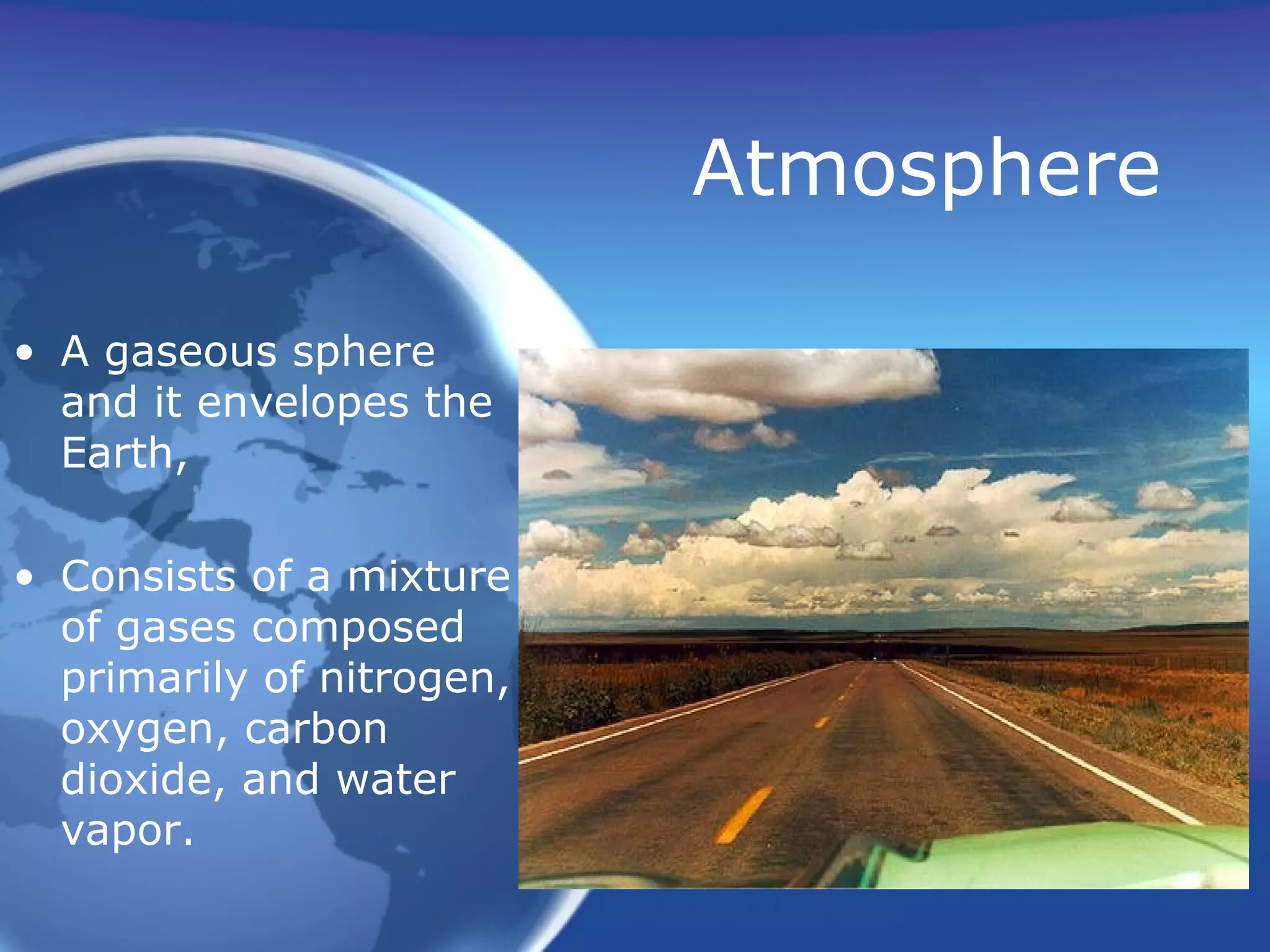
Atmosphere
• A gaseous sphere
and it envelopes the
Earth,
• Consists of a mixture
of gases composed
primarily of nitrogen,
oxygen, carbon
dioxide, and water
vapor.
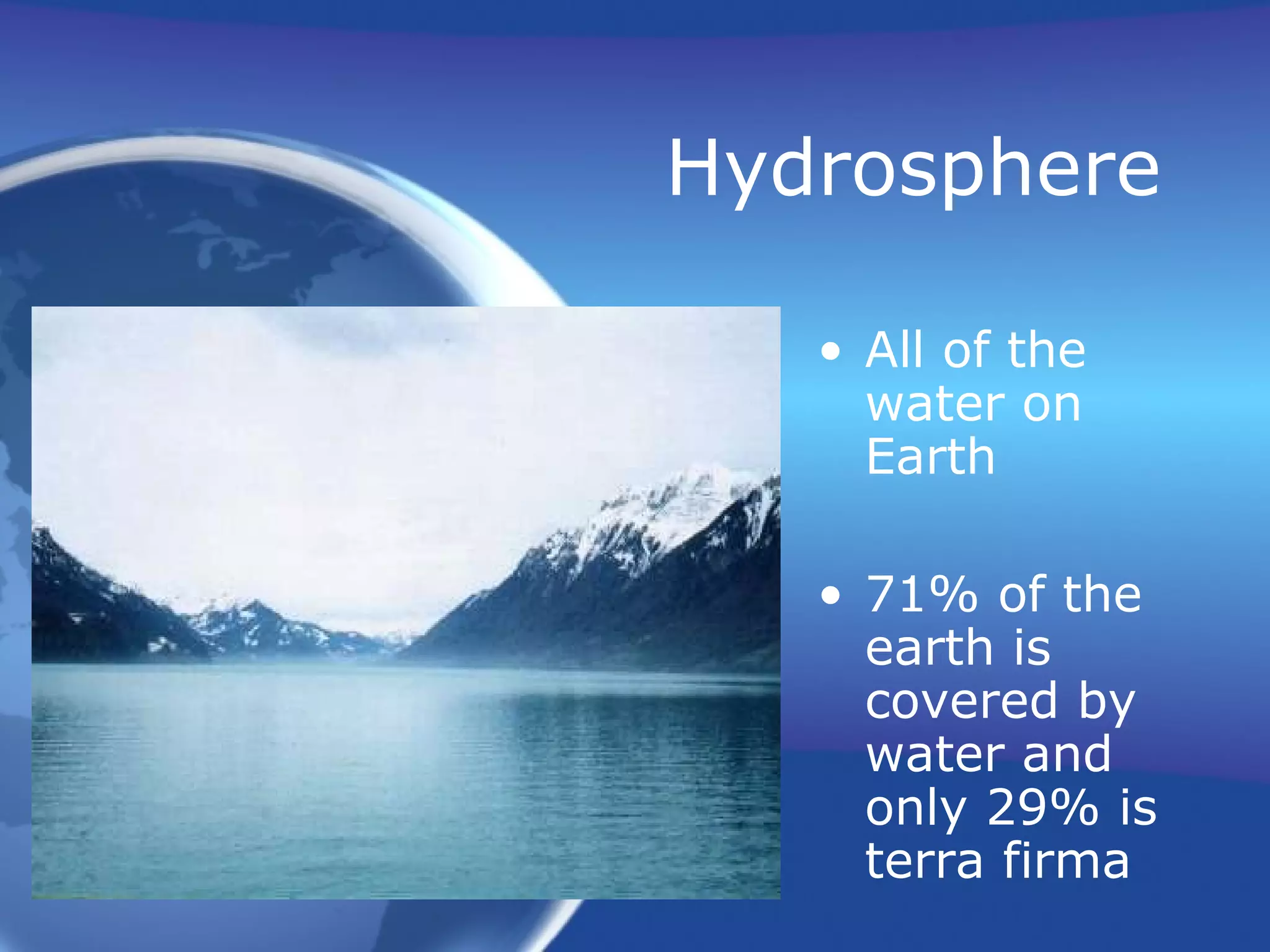
Hydrosphere
• All of the
water on
Earth
• 71% of the
earth is
covered by
water and
only 29% is
terra firma
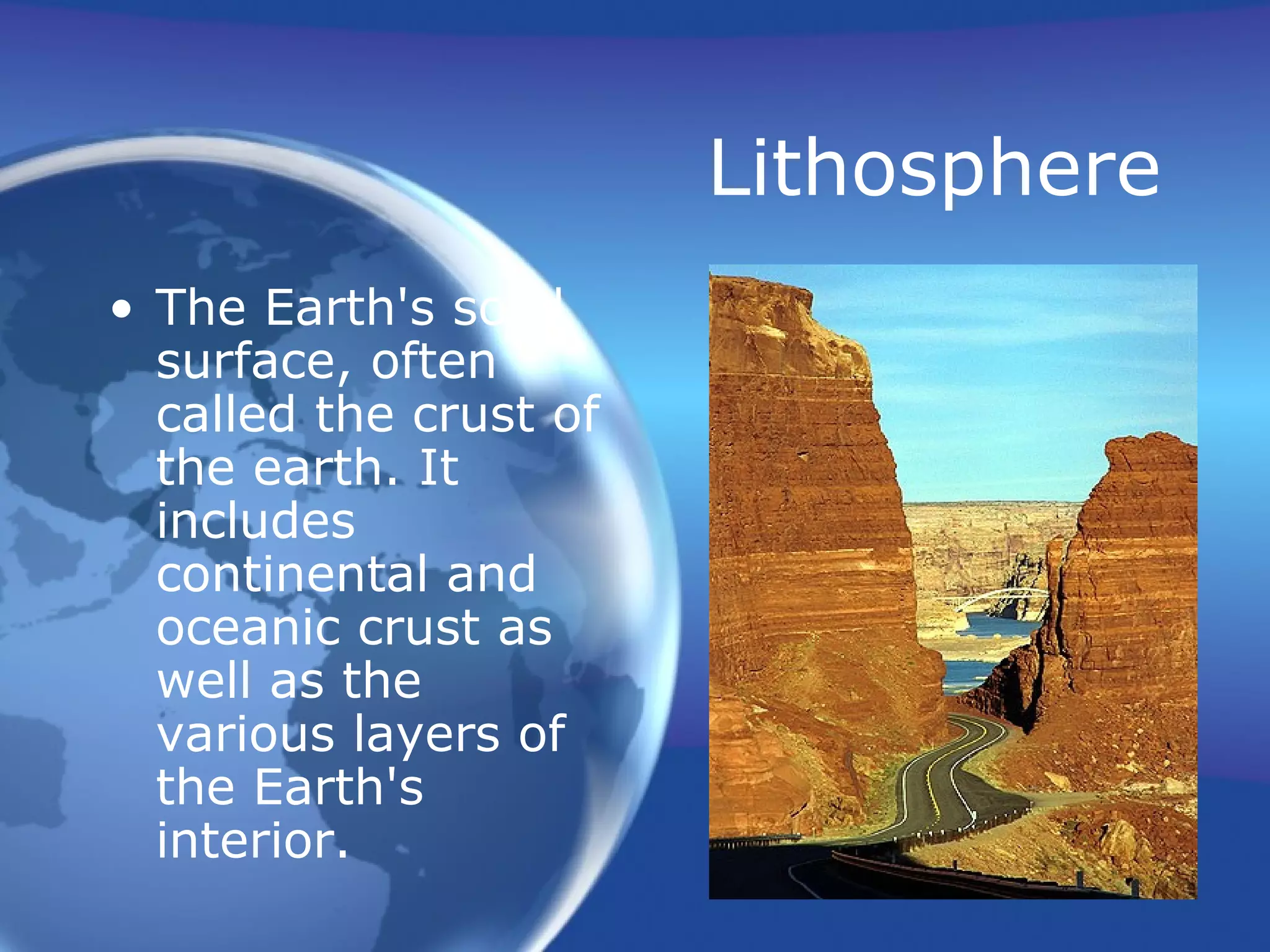
Lithosphere
• The Earth's solid
surface, often
called the crust of
the earth. It
includes
continental and
oceanic crust as
well as the
various layers of
the Earth's
interior.
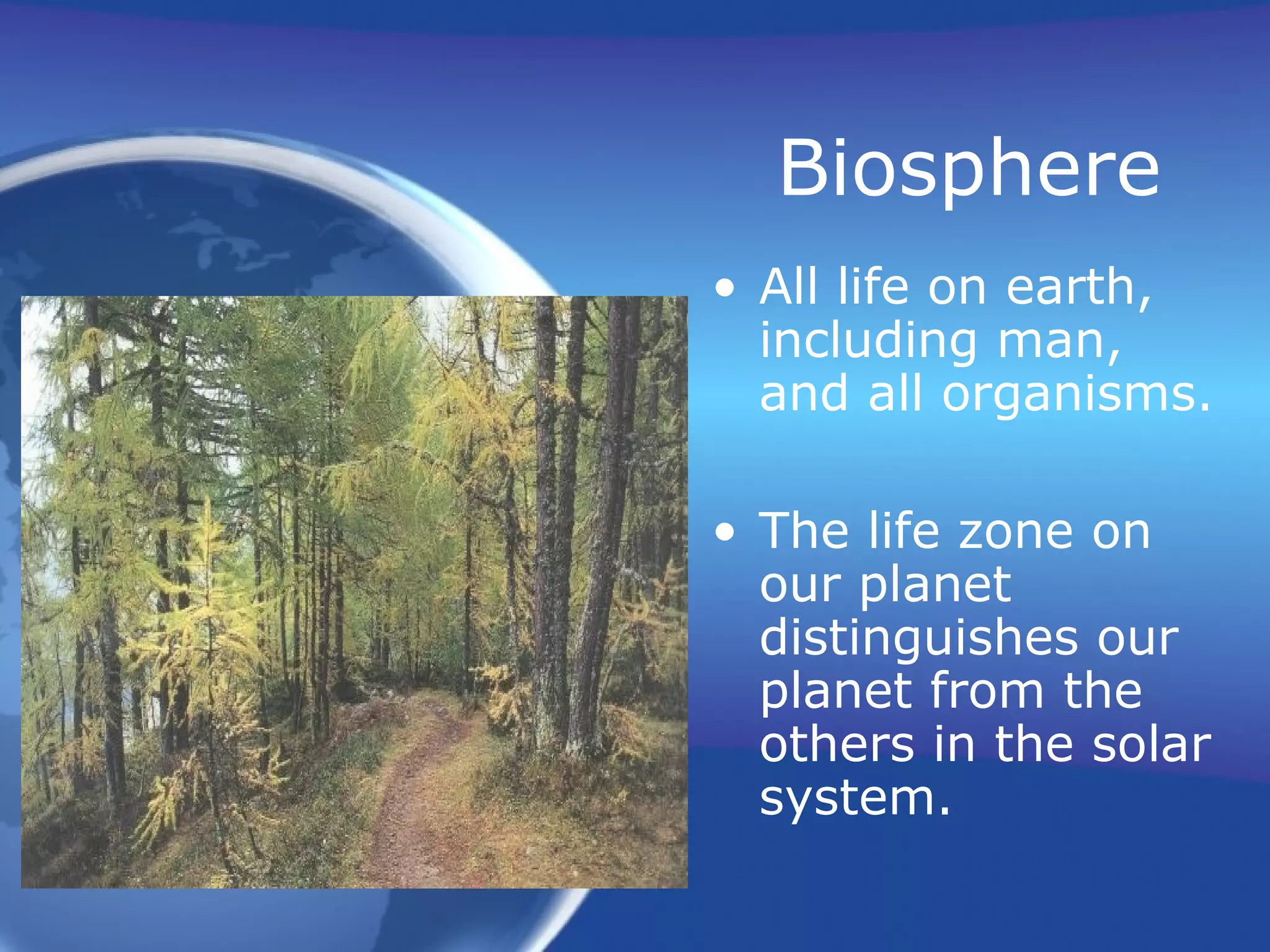
Biosphere
• All life on earth,
including man,
and all organisms.
• The life zone on
our planet
distinguishes our
planet from the
others in the solar
system.
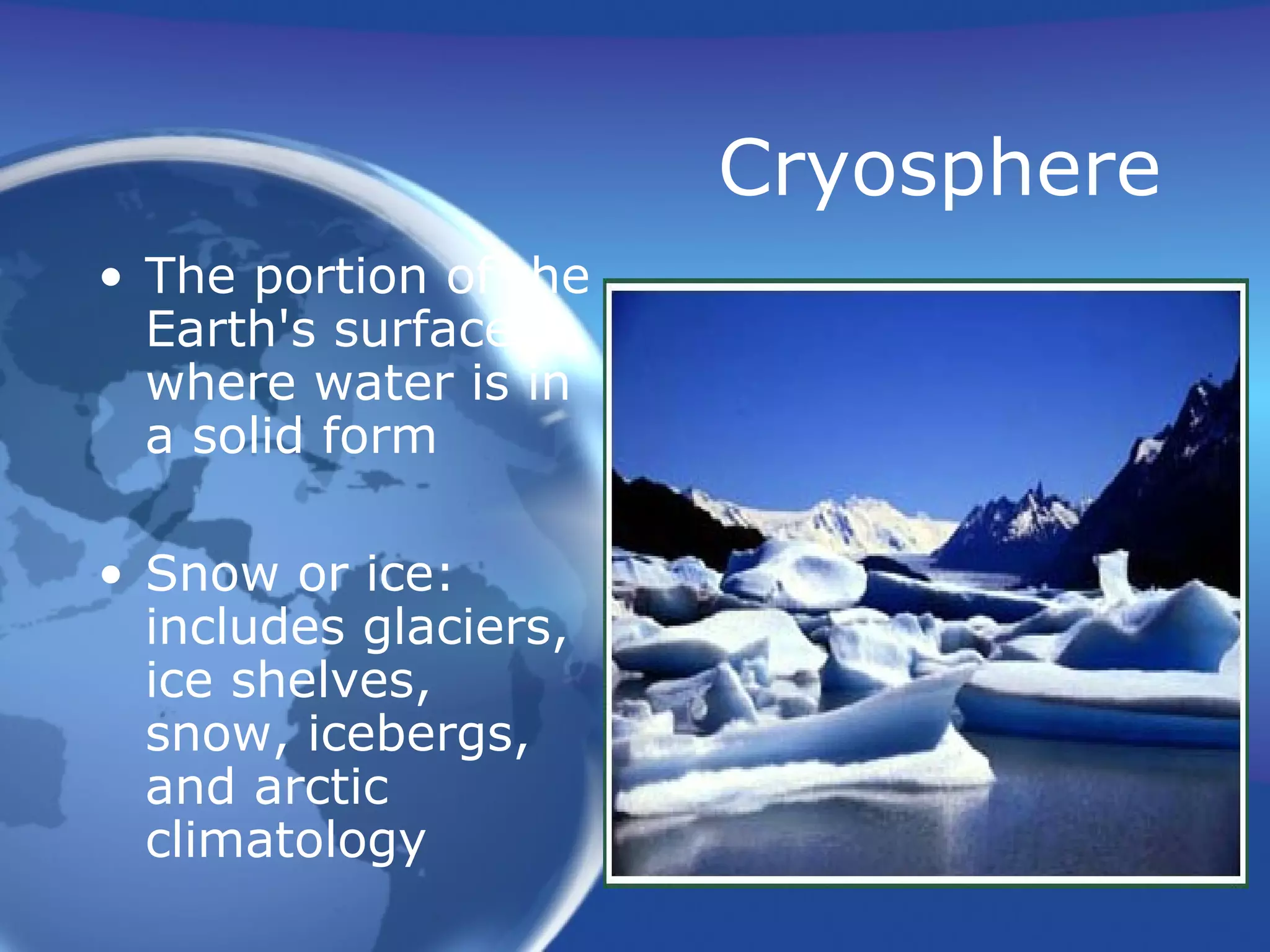
Cryosphere
• The portion of the
Earth's surface
where water is in
a solid form
• Snow or ice:
includes glaciers,
ice shelves,
snow, icebergs,
and arctic
climatology
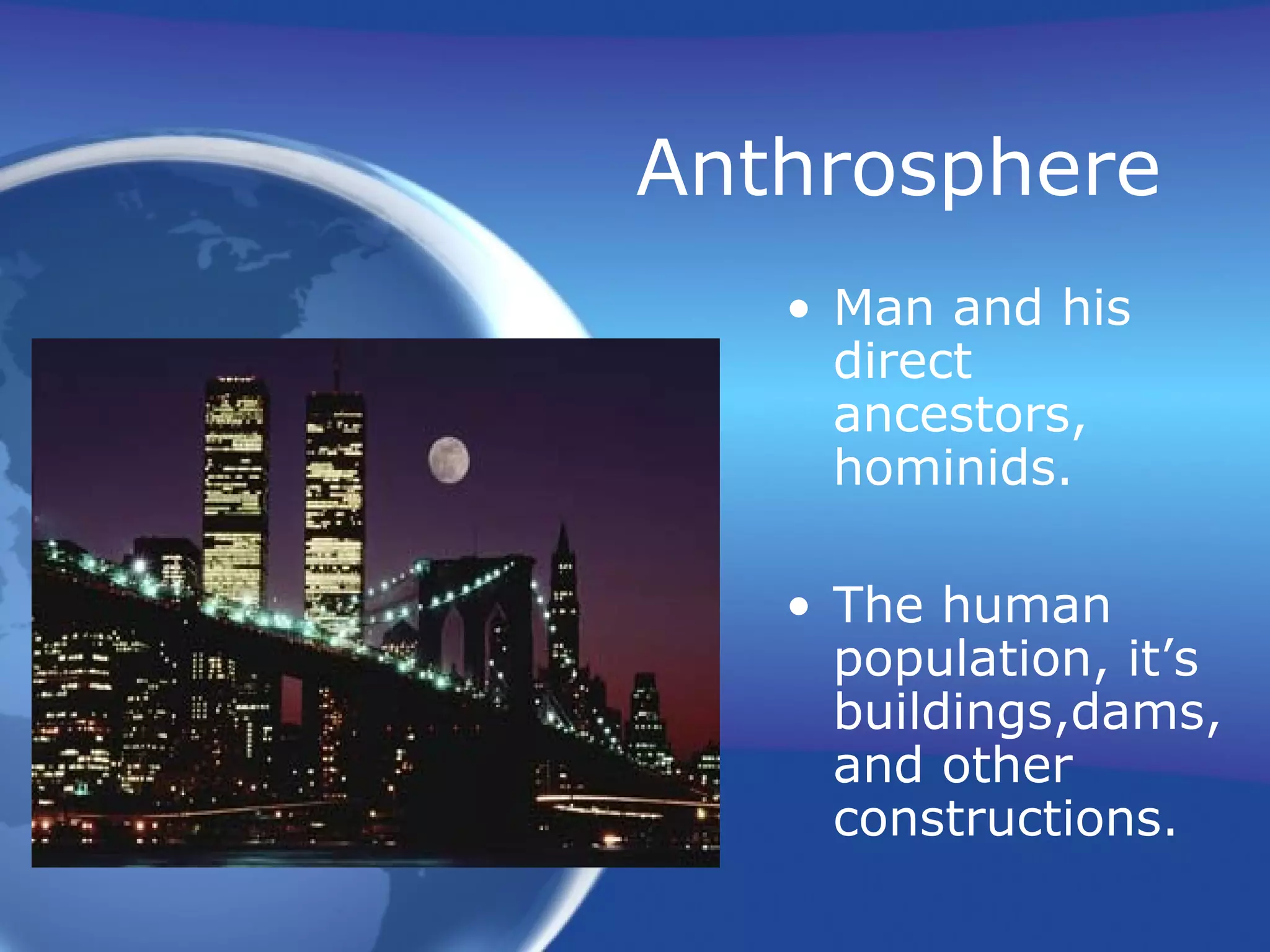
Anthrosphere
• Man and his
direct
ancestors,
hominids.
• The human
population, it’s
buildings,dams,
and other
constructions.
Interconnected Spheres
• Spheres are closely connected
• Changes are often chain reactions
• A change in one sphere results in
changes in others - called an event
– Forest fire destroys plants in an area
• Interactions between spheres
– No plants => erosion
– Soil in water => increased turbidity
– Turbidity => impacts water plants/animals
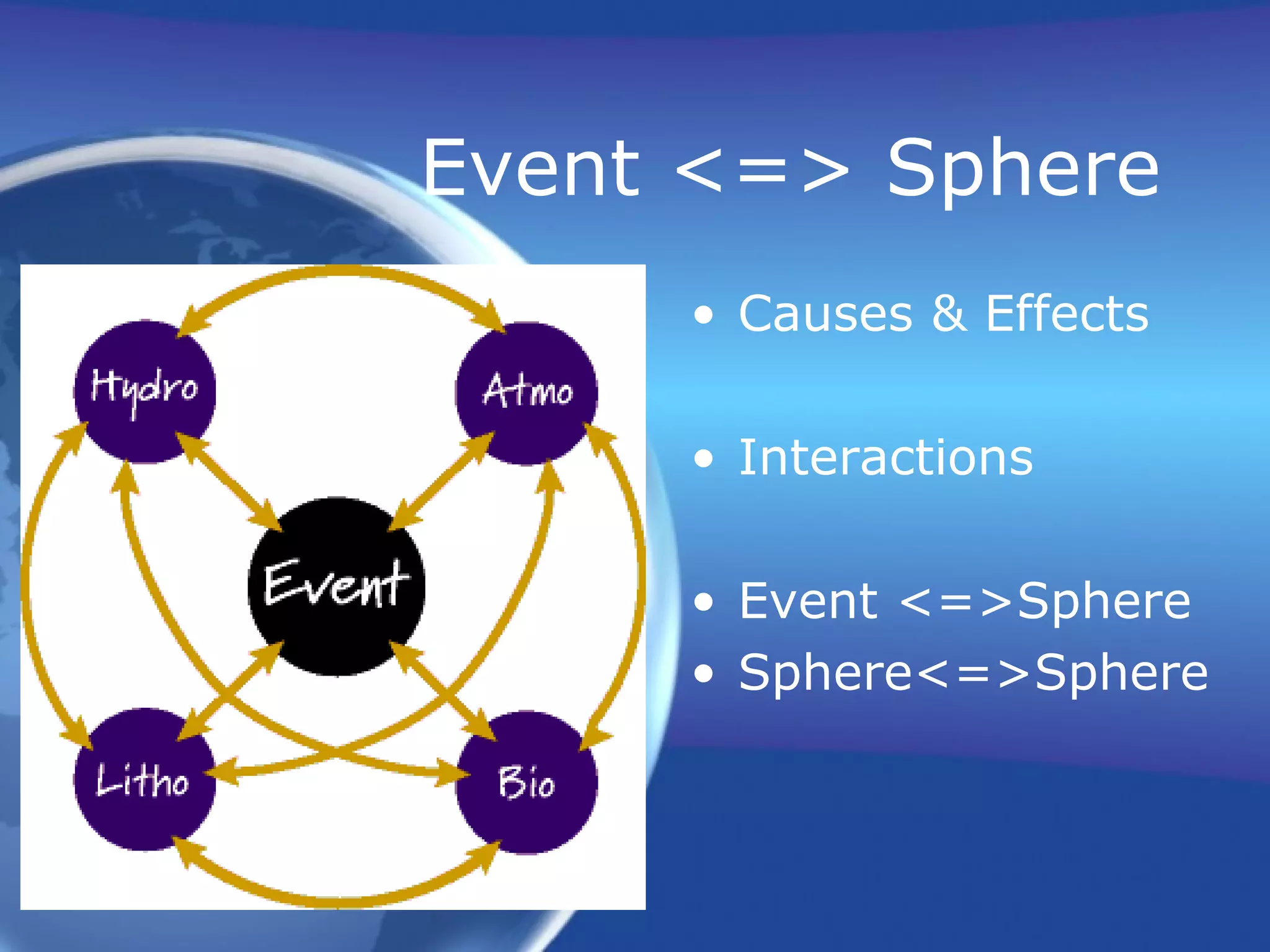
Event <=> Sphere
• Causes & Effects
• Interactions
• Event <=>Sphere
• Sphere<=>Sphere
Understanding Interactions
• Global implications
• Helps people predict outcomes
• Preparation for natural disasters
• Environmental impacts of human
activities
ESS Analysis
• Events
– Cause-effect events
– Interactions
– Natural events
• Earthquake, hurricane, forest fires
– Human caused events
• Oil spill, air pollution, construction

Earth as a system - Environmental Science

  • 1.
    The Earth asa System Earth’s Spheres
  • 2.
    Earth System Science(ESS) • The study of the interactions between and among events and Earth’s spheres • A relatively new science (1988)
  • 3.
    Earth’s Sphere • Atmosphere •Hydrosphere • Lithosphere • Biosphere • Cryosphere • Anthrosphere
  • 4.
    Atmosphere • A gaseoussphere and it envelopes the Earth, • Consists of a mixture of gases composed primarily of nitrogen, oxygen, carbon dioxide, and water vapor.
  • 5.
    Hydrosphere • All ofthe water on Earth • 71% of the earth is covered by water and only 29% is terra firma
  • 6.
    Lithosphere • The Earth'ssolid surface, often called the crust of the earth. It includes continental and oceanic crust as well as the various layers of the Earth's interior.
  • 7.
    Biosphere • All lifeon earth, including man, and all organisms. • The life zone on our planet distinguishes our planet from the others in the solar system.
  • 8.
    Cryosphere • The portionof the Earth's surface where water is in a solid form • Snow or ice: includes glaciers, ice shelves, snow, icebergs, and arctic climatology
  • 9.
    Anthrosphere • Man andhis direct ancestors, hominids. • The human population, it’s buildings,dams, and other constructions.
  • 10.
    Interconnected Spheres • Spheresare closely connected • Changes are often chain reactions • A change in one sphere results in changes in others - called an event – Forest fire destroys plants in an area • Interactions between spheres – No plants => erosion – Soil in water => increased turbidity – Turbidity => impacts water plants/animals
  • 11.
    Event <=> Sphere •Causes & Effects • Interactions • Event <=>Sphere • Sphere<=>Sphere
  • 12.
    Understanding Interactions • Globalimplications • Helps people predict outcomes • Preparation for natural disasters • Environmental impacts of human activities
  • 13.
    ESS Analysis • Events –Cause-effect events – Interactions – Natural events • Earthquake, hurricane, forest fires – Human caused events • Oil spill, air pollution, construction