Learning Goals:

• To understand what the biosphere and biodiversity
are
• To understand threats to the biosphere and
biodiversity
The biosphere is composed of
all living organisms.
Plants, animals, and one-celled
organisms are all part of the
biosphere.
Most of the planet's life is
found from three meters below
the ground to thirty meters
above it and in the top 200
meters of the oceans and seas.
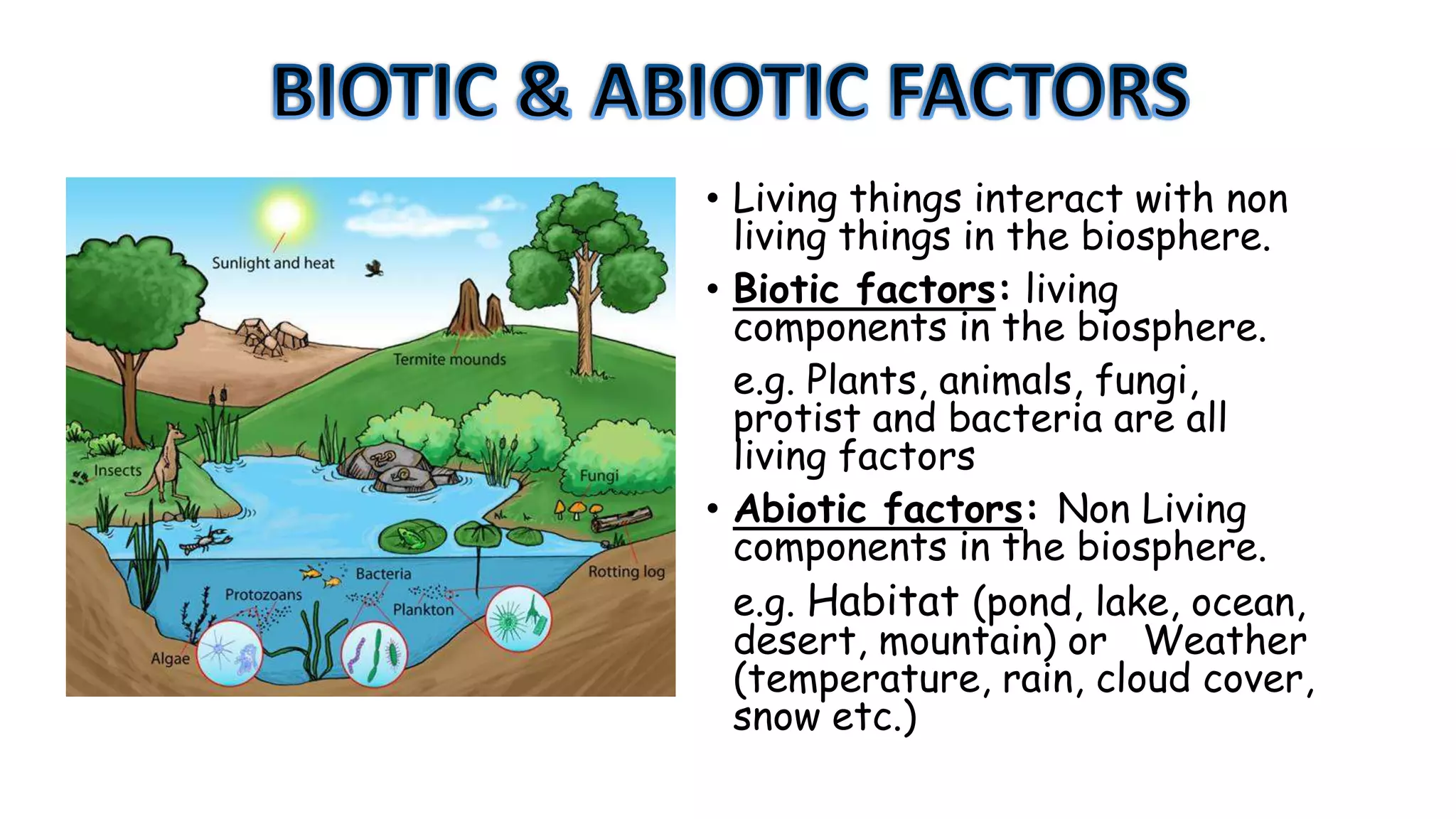
• Living things interact with non
living things in the biosphere.
• Biotic factors: living
components in the biosphere.
e.g. Plants, animals, fungi,
protist and bacteria are all
living factors
• Abiotic factors: Non Living
components in the biosphere.
e.g. Habitat (pond, lake, ocean,
desert, mountain) or Weather
(temperature, rain, cloud cover,
snow etc.)
• Biotic and Abiotic Factors combine to create a system called an
ecosystem.
An Ecosystem is a
community of living
and non living things
working together in
their environment.
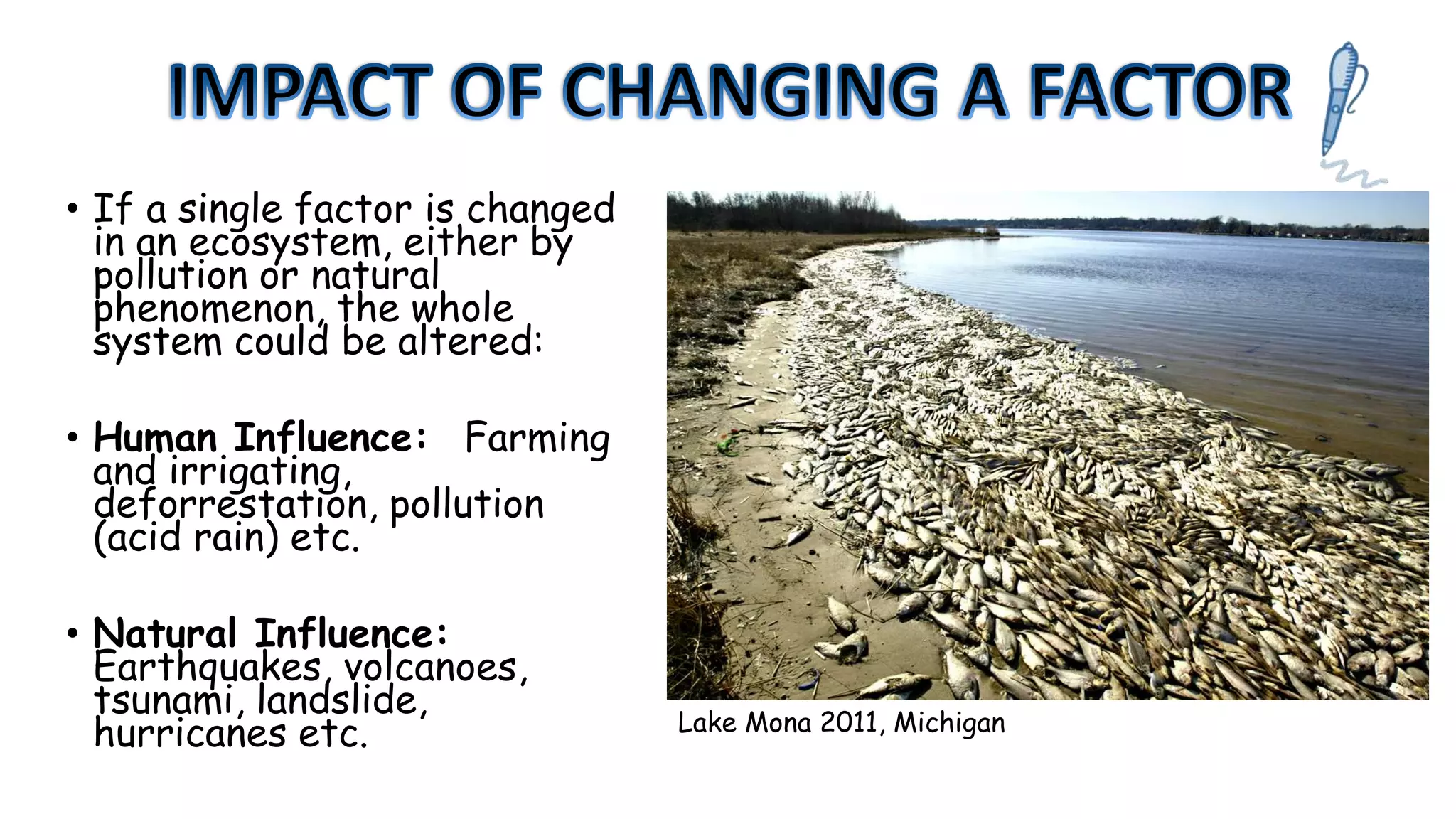
• If a single factor is changed
in an ecosystem, either by
pollution or natural
phenomenon, the whole
system could be altered:
• Human Influence: Farming
and irrigating,
deforrestation, pollution
(acid rain) etc.
• Natural Influence:
Earthquakes, volcanoes,
tsunami, landslide,
hurricanes etc.

Lake Mona 2011, Michigan
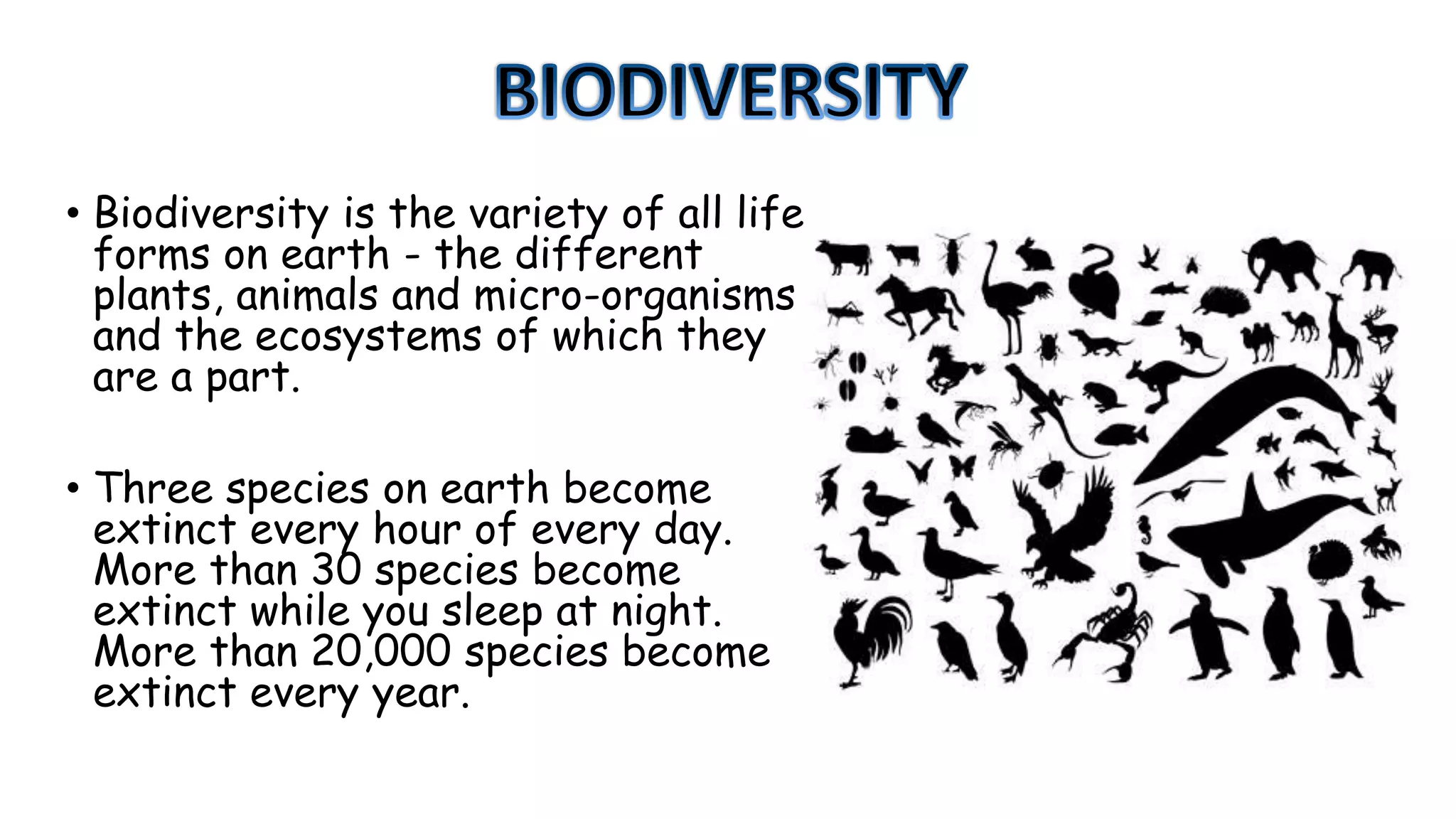
• Biodiversity is the variety of all life
forms on earth - the different
plants, animals and micro-organisms
and the ecosystems of which they
are a part.

• Three species on earth become
extinct every hour of every day.
More than 30 species become
extinct while you sleep at night.
More than 20,000 species become
extinct every year.
The Biosphere and Humans

The Biosphere and Humans

  • 1.
    Learning Goals: • Tounderstand what the biosphere and biodiversity are • To understand threats to the biosphere and biodiversity
  • 2.
    The biosphere iscomposed of all living organisms. Plants, animals, and one-celled organisms are all part of the biosphere. Most of the planet's life is found from three meters below the ground to thirty meters above it and in the top 200 meters of the oceans and seas.
  • 3.
    • Living thingsinteract with non living things in the biosphere. • Biotic factors: living components in the biosphere. e.g. Plants, animals, fungi, protist and bacteria are all living factors • Abiotic factors: Non Living components in the biosphere. e.g. Habitat (pond, lake, ocean, desert, mountain) or Weather (temperature, rain, cloud cover, snow etc.)
  • 4.
    • Biotic andAbiotic Factors combine to create a system called an ecosystem. An Ecosystem is a community of living and non living things working together in their environment.
  • 5.
    • If asingle factor is changed in an ecosystem, either by pollution or natural phenomenon, the whole system could be altered: • Human Influence: Farming and irrigating, deforrestation, pollution (acid rain) etc. • Natural Influence: Earthquakes, volcanoes, tsunami, landslide, hurricanes etc. Lake Mona 2011, Michigan
  • 6.
    • Biodiversity isthe variety of all life forms on earth - the different plants, animals and micro-organisms and the ecosystems of which they are a part. • Three species on earth become extinct every hour of every day. More than 30 species become extinct while you sleep at night. More than 20,000 species become extinct every year.