Sreeraj S R
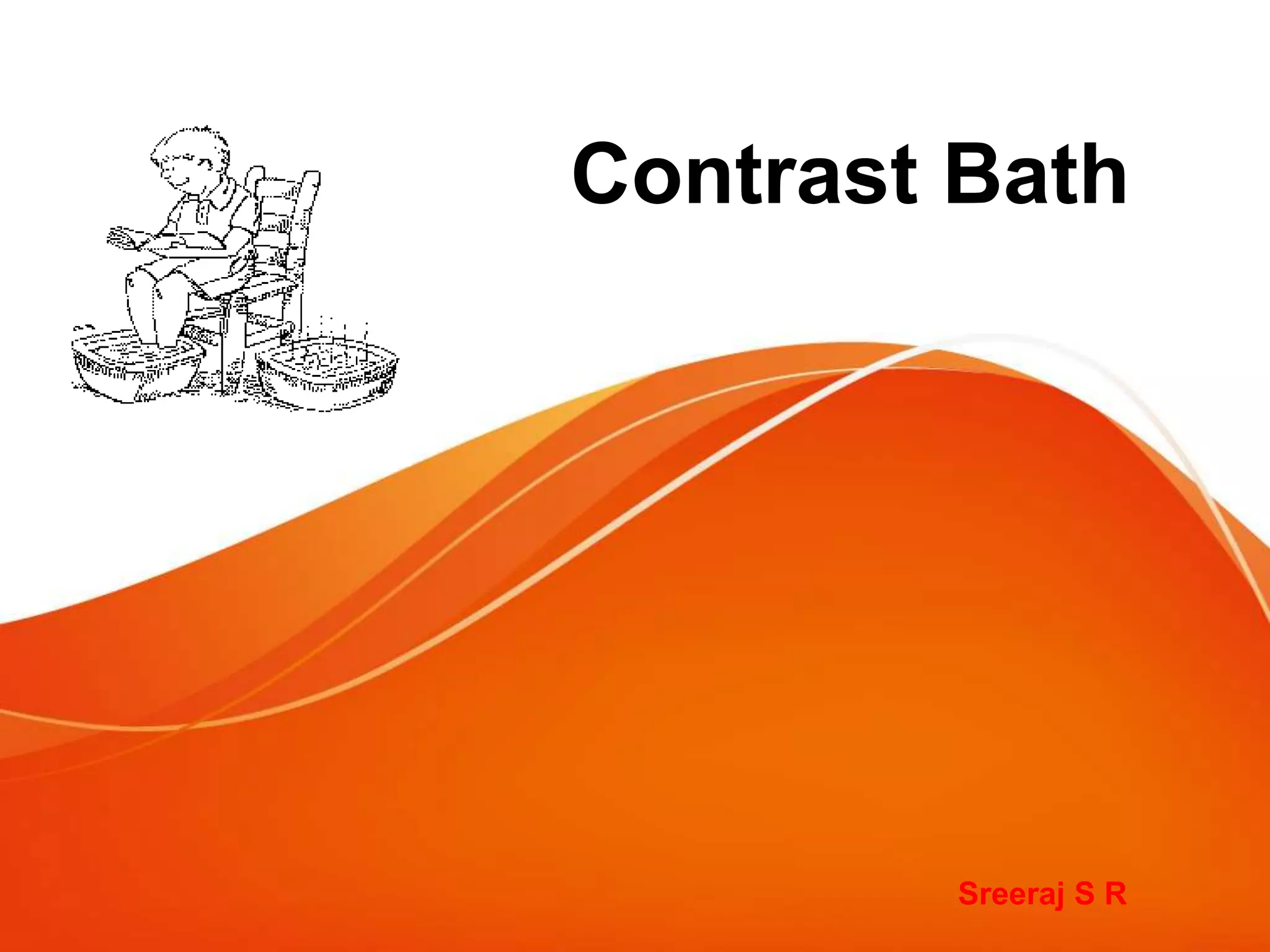
Contrast Bath
Sreeraj S R
Introduction
• Contrast bath therapy is a method of
application which involves soaking the
area to be treated in alternating baths of
hot and cold water.
• Contrast baths combine alternating hot
and cold water applications to increase
blood flow and to decrease joint stiffness
Sreeraj S R
Physiological mechanism
• contrast therapy produces a cycle of local
vasoconstriction and vasodilation resulting in
a “pumping effect” to facilitate the removal of
oedema by venous and lymphatic removal.
• Believed to alleviate
• pain,
• stiffness, and
• edema
by induced vasodilatation and vasoconstriction that
is usually produced by normally contracting
muscles.
Sreeraj S R
Equipment Needed
• Two containers large enough to
accommodate area to be treated
• one container is filled with cold water of
10° to 18° C (50° to 56° F) and
• another one is filled with hot water 38° to
44° C (100° to 110° F).
• Two test tubes for hot & cold
discrimination test prior to treatment
Sreeraj S R
Procedure
• Always begin with the warm water and end
with the warm water.
• Place part in the warm water for 10 minutes
• move the part around through the full, pain-free
range of motion.
• Remove and place immediately in cold water
for 1 minute.
• There will be an initial short period of tingling
until the part becomes accustomed to the cold.
• Continue alternating parts in hot water for 4
minutes and cold water for 1 minute
Sreeraj S R
Procedure
In Summary, soak in
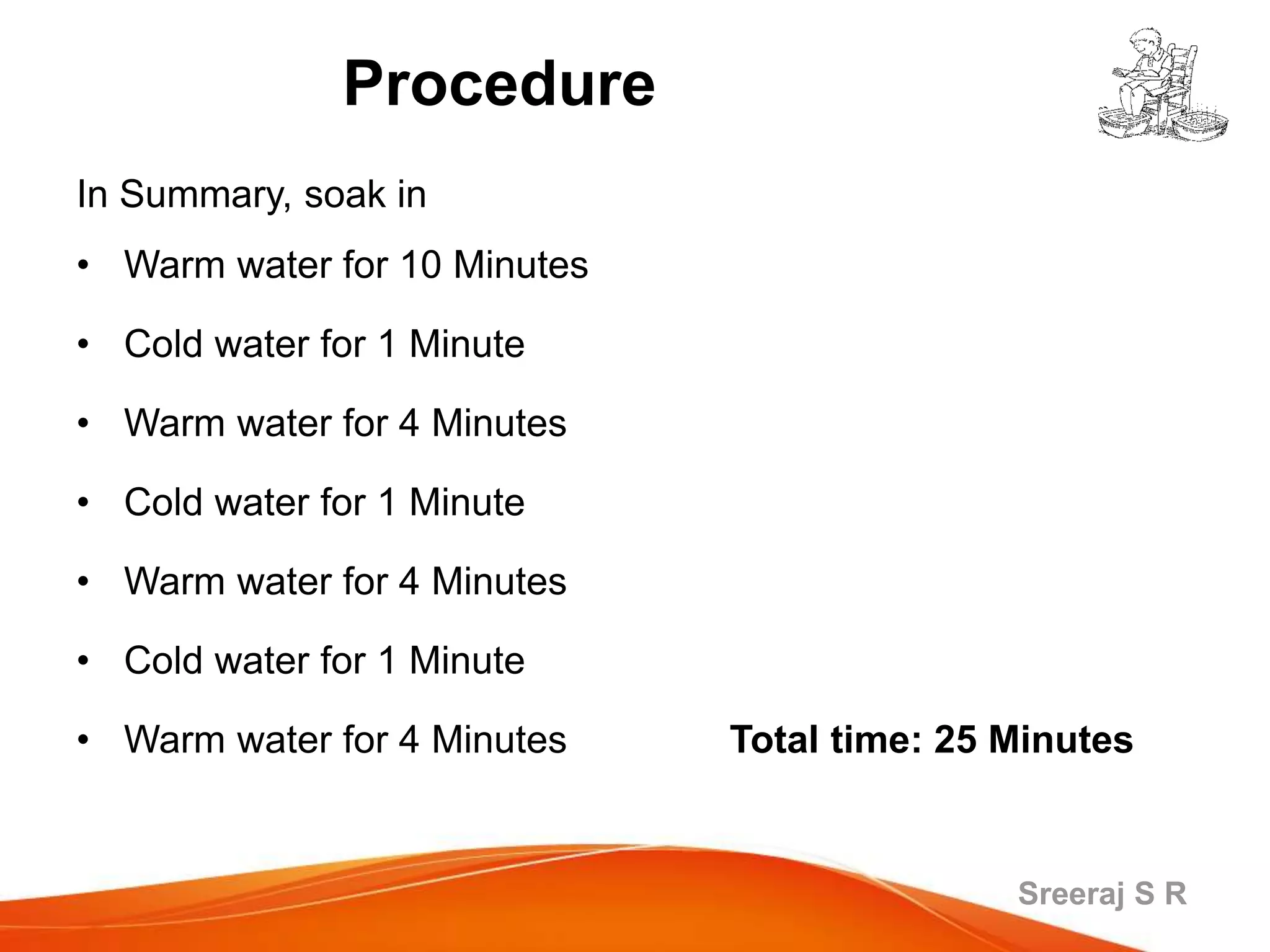
• Warm water for 10 Minutes
• Cold water for 1 Minute
• Warm water for 4 Minutes
• Cold water for 1 Minute
• Warm water for 4 Minutes
• Cold water for 1 Minute
• Warm water for 4 Minutes Total time: 25 Minutes
Sreeraj S R
Contraindications
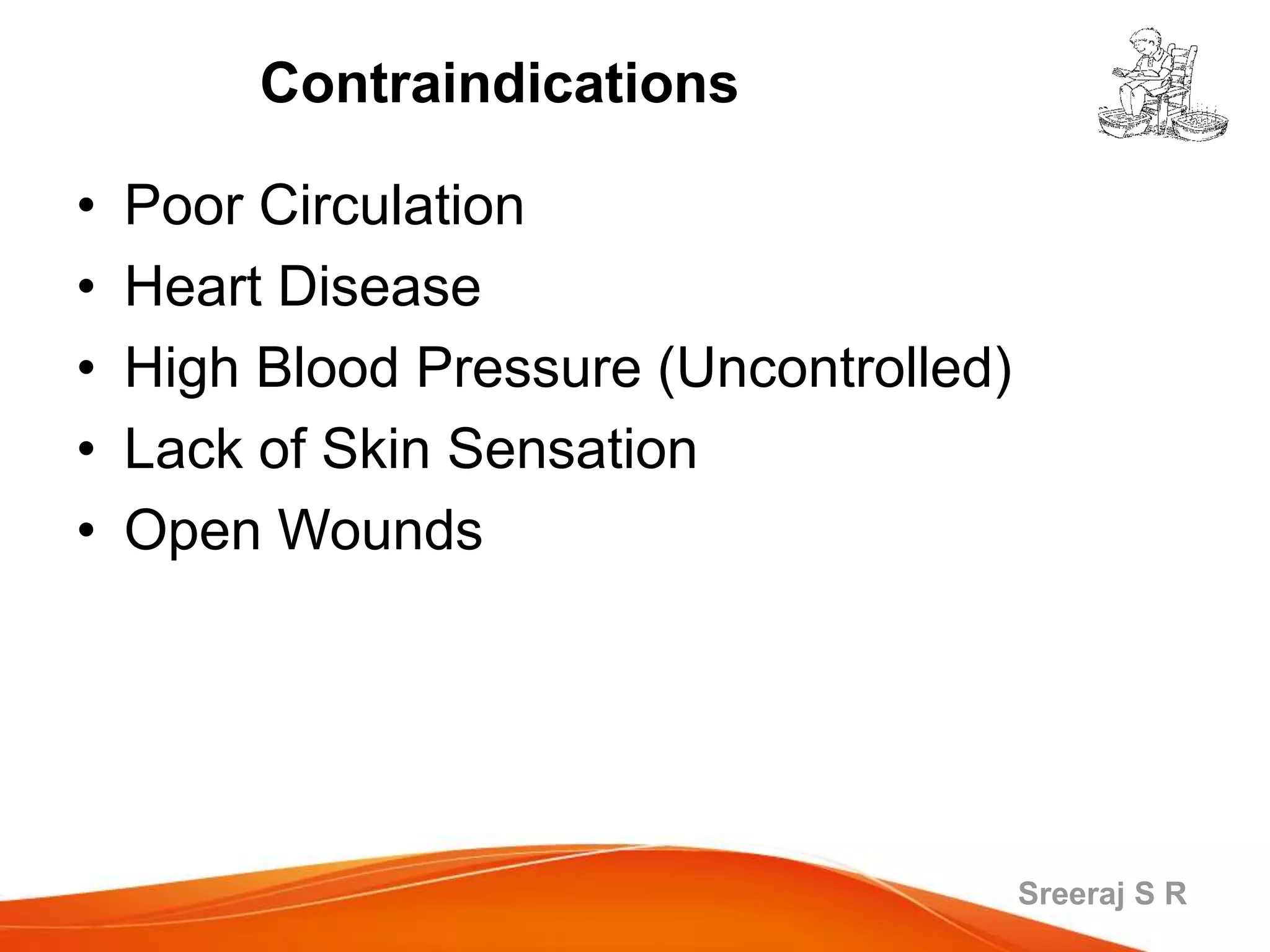
• Poor Circulation
• Heart Disease
• High Blood Pressure (Uncontrolled)
• Lack of Skin Sensation
• Open Wounds
Sreeraj S R
References
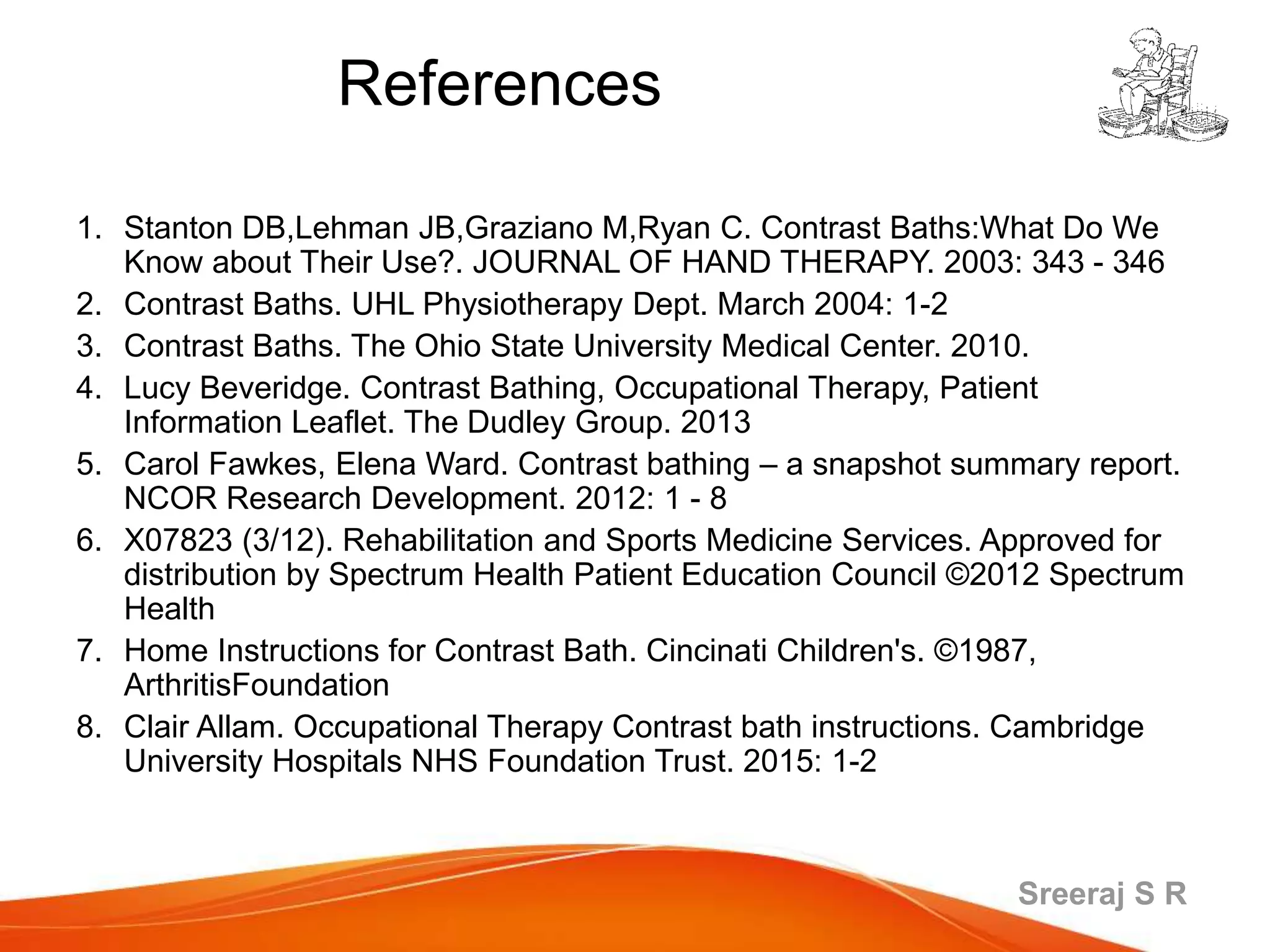
1. Stanton DB,Lehman JB,Graziano M,Ryan C. Contrast Baths:What Do We
Know about Their Use?. JOURNAL OF HAND THERAPY. 2003: 343 - 346
2. Contrast Baths. UHL Physiotherapy Dept. March 2004: 1-2
3. Contrast Baths. The Ohio State University Medical Center. 2010.
4. Lucy Beveridge. Contrast Bathing, Occupational Therapy, Patient
Information Leaflet. The Dudley Group. 2013
5. Carol Fawkes, Elena Ward. Contrast bathing – a snapshot summary report.
NCOR Research Development. 2012: 1 - 8
6. X07823 (3/12). Rehabilitation and Sports Medicine Services. Approved for
distribution by Spectrum Health Patient Education Council ©2012 Spectrum
Health
7. Home Instructions for Contrast Bath. Cincinati Children's. ©1987,
ArthritisFoundation
8. Clair Allam. Occupational Therapy Contrast bath instructions. Cambridge
University Hospitals NHS Foundation Trust. 2015: 1-2
Sreeraj S R
THANK YOU

Contrast Bath in Physiotherapy SRS

  • 1.
  • 2.
    Sreeraj S R Introduction •Contrast bath therapy is a method of application which involves soaking the area to be treated in alternating baths of hot and cold water. • Contrast baths combine alternating hot and cold water applications to increase blood flow and to decrease joint stiffness
  • 3.
    Sreeraj S R Physiologicalmechanism • contrast therapy produces a cycle of local vasoconstriction and vasodilation resulting in a “pumping effect” to facilitate the removal of oedema by venous and lymphatic removal. • Believed to alleviate • pain, • stiffness, and • edema by induced vasodilatation and vasoconstriction that is usually produced by normally contracting muscles.
  • 4.
    Sreeraj S R EquipmentNeeded • Two containers large enough to accommodate area to be treated • one container is filled with cold water of 10° to 18° C (50° to 56° F) and • another one is filled with hot water 38° to 44° C (100° to 110° F). • Two test tubes for hot & cold discrimination test prior to treatment
  • 5.
    Sreeraj S R Procedure •Always begin with the warm water and end with the warm water. • Place part in the warm water for 10 minutes • move the part around through the full, pain-free range of motion. • Remove and place immediately in cold water for 1 minute. • There will be an initial short period of tingling until the part becomes accustomed to the cold. • Continue alternating parts in hot water for 4 minutes and cold water for 1 minute
  • 6.
    Sreeraj S R Procedure InSummary, soak in • Warm water for 10 Minutes • Cold water for 1 Minute • Warm water for 4 Minutes • Cold water for 1 Minute • Warm water for 4 Minutes • Cold water for 1 Minute • Warm water for 4 Minutes Total time: 25 Minutes
  • 7.
    Sreeraj S R Contraindications •Poor Circulation • Heart Disease • High Blood Pressure (Uncontrolled) • Lack of Skin Sensation • Open Wounds
  • 8.
    Sreeraj S R References 1.Stanton DB,Lehman JB,Graziano M,Ryan C. Contrast Baths:What Do We Know about Their Use?. JOURNAL OF HAND THERAPY. 2003: 343 - 346 2. Contrast Baths. UHL Physiotherapy Dept. March 2004: 1-2 3. Contrast Baths. The Ohio State University Medical Center. 2010. 4. Lucy Beveridge. Contrast Bathing, Occupational Therapy, Patient Information Leaflet. The Dudley Group. 2013 5. Carol Fawkes, Elena Ward. Contrast bathing – a snapshot summary report. NCOR Research Development. 2012: 1 - 8 6. X07823 (3/12). Rehabilitation and Sports Medicine Services. Approved for distribution by Spectrum Health Patient Education Council ©2012 Spectrum Health 7. Home Instructions for Contrast Bath. Cincinati Children's. ©1987, ArthritisFoundation 8. Clair Allam. Occupational Therapy Contrast bath instructions. Cambridge University Hospitals NHS Foundation Trust. 2015: 1-2
  • 9.