Introduction to
TENS Electrotherapy
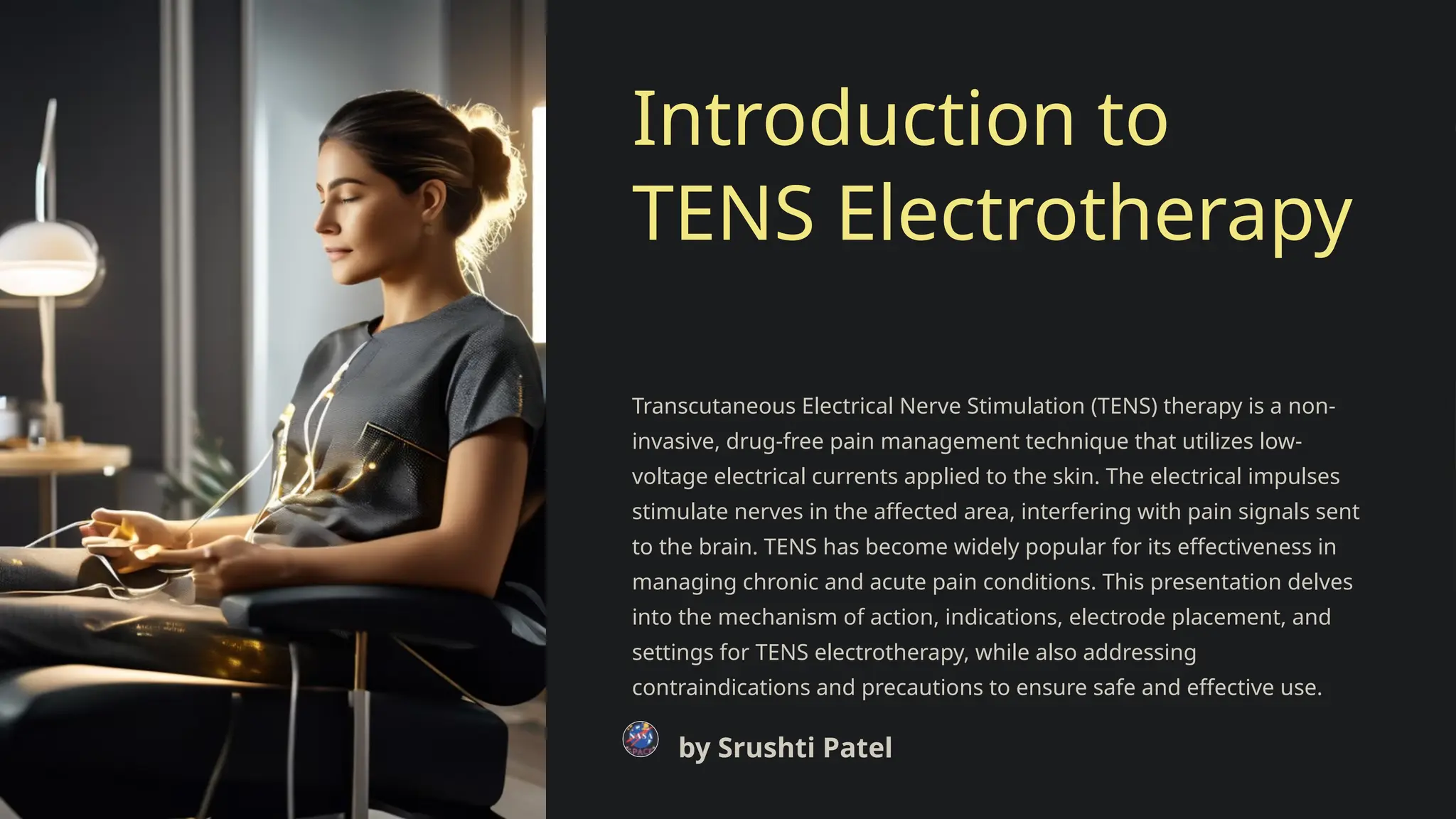
Transcutaneous Electrical Nerve Stimulation (TENS) therapy is a non-
invasive, drug-free pain management technique that utilizes low-
voltage electrical currents applied to the skin. The electrical impulses
stimulate nerves in the affected area, interfering with pain signals sent
to the brain. TENS has become widely popular for its effectiveness in
managing chronic and acute pain conditions. This presentation delves
into the mechanism of action, indications, electrode placement, and
settings for TENS electrotherapy, while also addressing
contraindications and precautions to ensure safe and effective use.
by Srushti Patel
Mechanism of Action
Gate Control Theory
TENS works primarily by engaging the gate control
theory of pain. This theory postulates that the
transmission of pain signals from the periphery to the
brain can be modulated by other sensory input. By
stimulating non-painful nerves, TENS effectively “closes
the gate” to pain signals, reducing the perception of
pain. The electrical impulses delivered by TENS activate
large-diameter fibers, which compete with pain signals
carried by smaller fibers, blocking their transmission.
Endorphin Release
Another important mechanism is the release of
endorphins, natural pain-relieving chemicals produced
by the body. TENS stimulates the release of endorphins,
which bind to receptors in the nervous system, reducing
pain perception and providing a sense of well-being.
This effect is similar to that of opioid analgesics, but
without the potential for addiction or side effects.
Indications for Use
1 Chronic Pain
TENS is often used to manage chronic
pain conditions like lower back pain,
neck pain, arthritis pain, and
fibromyalgia. It can provide long-term
pain relief and improve quality of life
for patients suffering from these
conditions.
2 Acute Pain
TENS can also be effective in reducing
acute pain, such as pain after surgery,
trauma, or sports injuries. By providing
immediate pain relief, TENS can help
reduce the need for opioid
medications and accelerate recovery.
3 Post-Operative Pain
TENS is frequently used to manage
post-operative pain, especially after
orthopedic surgeries, such as knee or
hip replacements. By reducing pain
levels, TENS can help patients move
more freely and regain mobility sooner.
4 Neuropathic Pain
TENS is a promising treatment for
neuropathic pain, a type of pain
caused by damage to nerves. This type
of pain is often difficult to manage, but
TENS can provide significant relief by
stimulating nerve fibers and reducing
abnormal nerve activity.
Electrode Placement
Painful Area
Electrodes are typically placed directly over the painful area. If the
pain is localized, two electrodes can be placed on either side of the
painful area.
Acupuncture Points
Electrodes can also be placed on specific acupuncture points that
correspond to the affected area. These points are believed to have a
particular connection to the nervous system and can enhance the
effectiveness of TENS.
Motor Points
For muscle spasms, electrodes can be placed over motor points,
which are points where nerves stimulate muscle contraction. This
can help reduce muscle tension and improve mobility.
Intensity and Duration Settings
Intensity
The intensity of the electrical
current should be adjusted to a
comfortable level, usually a tingling
sensation, not a sharp or painful
shock. It's important to start with a
low intensity and gradually increase
it until the desired effect is achieved.
Duration
TENS therapy sessions typically last
20-30 minutes, but the duration may
vary depending on the condition
and individual response. The
frequency and duration of
treatment sessions are best
determined by a healthcare
professional.
Frequency
TENS can be applied continuously or intermittently, depending on the pain and
the desired effect. The frequency of treatment sessions is also determined by the
type of pain and individual needs.
Contraindications and
Precautions
Pacemaker or other implanted
electronic devices
TENS can interfere with these
devices.
Pregnancy TENS should not be used during
pregnancy, as it can potentially
affect fetal development.
Active bleeding TENS should not be applied to
areas of active bleeding.
Skin infections or open wounds TENS should not be used on areas
of skin infection or open wounds.
Epilepsy TENS can trigger seizures in
individuals with epilepsy.
Benefits of TENS Electrotherapy
Pain Relief
TENS provides effective pain relief by
modulating pain signals and releasing
endorphins.
Muscle Relaxation
TENS can help relax tight muscles and
reduce muscle spasms, improving
mobility and reducing discomfort.
Improved Mobility
By reducing pain and muscle tension,
TENS can help improve range of
motion and overall mobility.
Reduced Medication
Dependence
TENS can often reduce the need for
pain medications, minimizing side
effects and improving overall well-
being.
Conclusion and Summary
1 Pain Management
TENS is a valuable tool for managing a wide range of pain conditions, both chronic and
acute. It provides a non-invasive, drug-free alternative to pain management.
2 User-Friendly
TENS devices are relatively easy to use and can be applied at home, giving individuals
more control over their pain management.
3 Potential Side Effects
While generally safe, TENS can have some side effects, such as skin irritation or burns. It is
important to follow proper instructions and consult with a healthcare professional for
guidance.
4 Consult a Healthcare Professional
It is crucial to consult with a healthcare professional before using TENS therapy, especially
if you have any underlying medical conditions or are taking any medications.

Introduction-to-TENS-Electrotherapy.pptx

  • 1.
    Introduction to TENS Electrotherapy TranscutaneousElectrical Nerve Stimulation (TENS) therapy is a non- invasive, drug-free pain management technique that utilizes low- voltage electrical currents applied to the skin. The electrical impulses stimulate nerves in the affected area, interfering with pain signals sent to the brain. TENS has become widely popular for its effectiveness in managing chronic and acute pain conditions. This presentation delves into the mechanism of action, indications, electrode placement, and settings for TENS electrotherapy, while also addressing contraindications and precautions to ensure safe and effective use. by Srushti Patel
  • 2.
    Mechanism of Action GateControl Theory TENS works primarily by engaging the gate control theory of pain. This theory postulates that the transmission of pain signals from the periphery to the brain can be modulated by other sensory input. By stimulating non-painful nerves, TENS effectively “closes the gate” to pain signals, reducing the perception of pain. The electrical impulses delivered by TENS activate large-diameter fibers, which compete with pain signals carried by smaller fibers, blocking their transmission. Endorphin Release Another important mechanism is the release of endorphins, natural pain-relieving chemicals produced by the body. TENS stimulates the release of endorphins, which bind to receptors in the nervous system, reducing pain perception and providing a sense of well-being. This effect is similar to that of opioid analgesics, but without the potential for addiction or side effects.
  • 3.
    Indications for Use 1Chronic Pain TENS is often used to manage chronic pain conditions like lower back pain, neck pain, arthritis pain, and fibromyalgia. It can provide long-term pain relief and improve quality of life for patients suffering from these conditions. 2 Acute Pain TENS can also be effective in reducing acute pain, such as pain after surgery, trauma, or sports injuries. By providing immediate pain relief, TENS can help reduce the need for opioid medications and accelerate recovery. 3 Post-Operative Pain TENS is frequently used to manage post-operative pain, especially after orthopedic surgeries, such as knee or hip replacements. By reducing pain levels, TENS can help patients move more freely and regain mobility sooner. 4 Neuropathic Pain TENS is a promising treatment for neuropathic pain, a type of pain caused by damage to nerves. This type of pain is often difficult to manage, but TENS can provide significant relief by stimulating nerve fibers and reducing abnormal nerve activity.
  • 4.
    Electrode Placement Painful Area Electrodesare typically placed directly over the painful area. If the pain is localized, two electrodes can be placed on either side of the painful area. Acupuncture Points Electrodes can also be placed on specific acupuncture points that correspond to the affected area. These points are believed to have a particular connection to the nervous system and can enhance the effectiveness of TENS. Motor Points For muscle spasms, electrodes can be placed over motor points, which are points where nerves stimulate muscle contraction. This can help reduce muscle tension and improve mobility.
  • 5.
    Intensity and DurationSettings Intensity The intensity of the electrical current should be adjusted to a comfortable level, usually a tingling sensation, not a sharp or painful shock. It's important to start with a low intensity and gradually increase it until the desired effect is achieved. Duration TENS therapy sessions typically last 20-30 minutes, but the duration may vary depending on the condition and individual response. The frequency and duration of treatment sessions are best determined by a healthcare professional. Frequency TENS can be applied continuously or intermittently, depending on the pain and the desired effect. The frequency of treatment sessions is also determined by the type of pain and individual needs.
  • 6.
    Contraindications and Precautions Pacemaker orother implanted electronic devices TENS can interfere with these devices. Pregnancy TENS should not be used during pregnancy, as it can potentially affect fetal development. Active bleeding TENS should not be applied to areas of active bleeding. Skin infections or open wounds TENS should not be used on areas of skin infection or open wounds. Epilepsy TENS can trigger seizures in individuals with epilepsy.
  • 7.
    Benefits of TENSElectrotherapy Pain Relief TENS provides effective pain relief by modulating pain signals and releasing endorphins. Muscle Relaxation TENS can help relax tight muscles and reduce muscle spasms, improving mobility and reducing discomfort. Improved Mobility By reducing pain and muscle tension, TENS can help improve range of motion and overall mobility. Reduced Medication Dependence TENS can often reduce the need for pain medications, minimizing side effects and improving overall well- being.
  • 8.
    Conclusion and Summary 1Pain Management TENS is a valuable tool for managing a wide range of pain conditions, both chronic and acute. It provides a non-invasive, drug-free alternative to pain management. 2 User-Friendly TENS devices are relatively easy to use and can be applied at home, giving individuals more control over their pain management. 3 Potential Side Effects While generally safe, TENS can have some side effects, such as skin irritation or burns. It is important to follow proper instructions and consult with a healthcare professional for guidance. 4 Consult a Healthcare Professional It is crucial to consult with a healthcare professional before using TENS therapy, especially if you have any underlying medical conditions or are taking any medications.