T.E.N.S.
(Trancutaneous Electrical
Nerve Stimulation)
Prof. Dr. M. Rajesh, PT, M.P.T(cardio), B.C.R.C
TRINITY MISSION AND MEDICAL FOUNDATION
MADURAI
General Concepts:
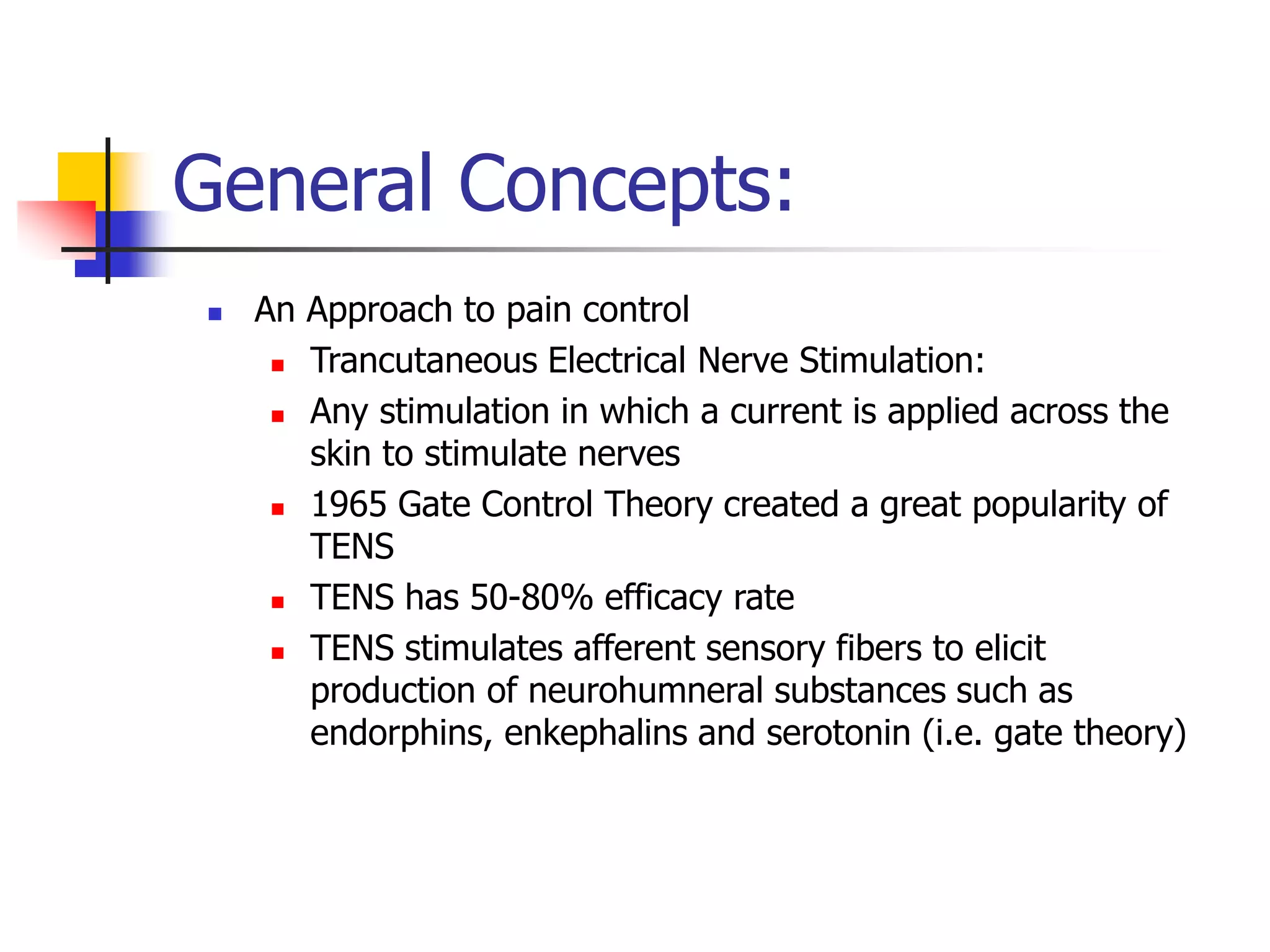
 An Approach to pain control
 Trancutaneous Electrical Nerve Stimulation:
 Any stimulation in which a current is applied across the
skin to stimulate nerves
 1965 Gate Control Theory created a great popularity of
TENS
 TENS has 50-80% efficacy rate
 TENS stimulates afferent sensory fibers to elicit
production of neurohumneral substances such as
endorphins, enkephalins and serotonin (i.e. gate theory)
TENS
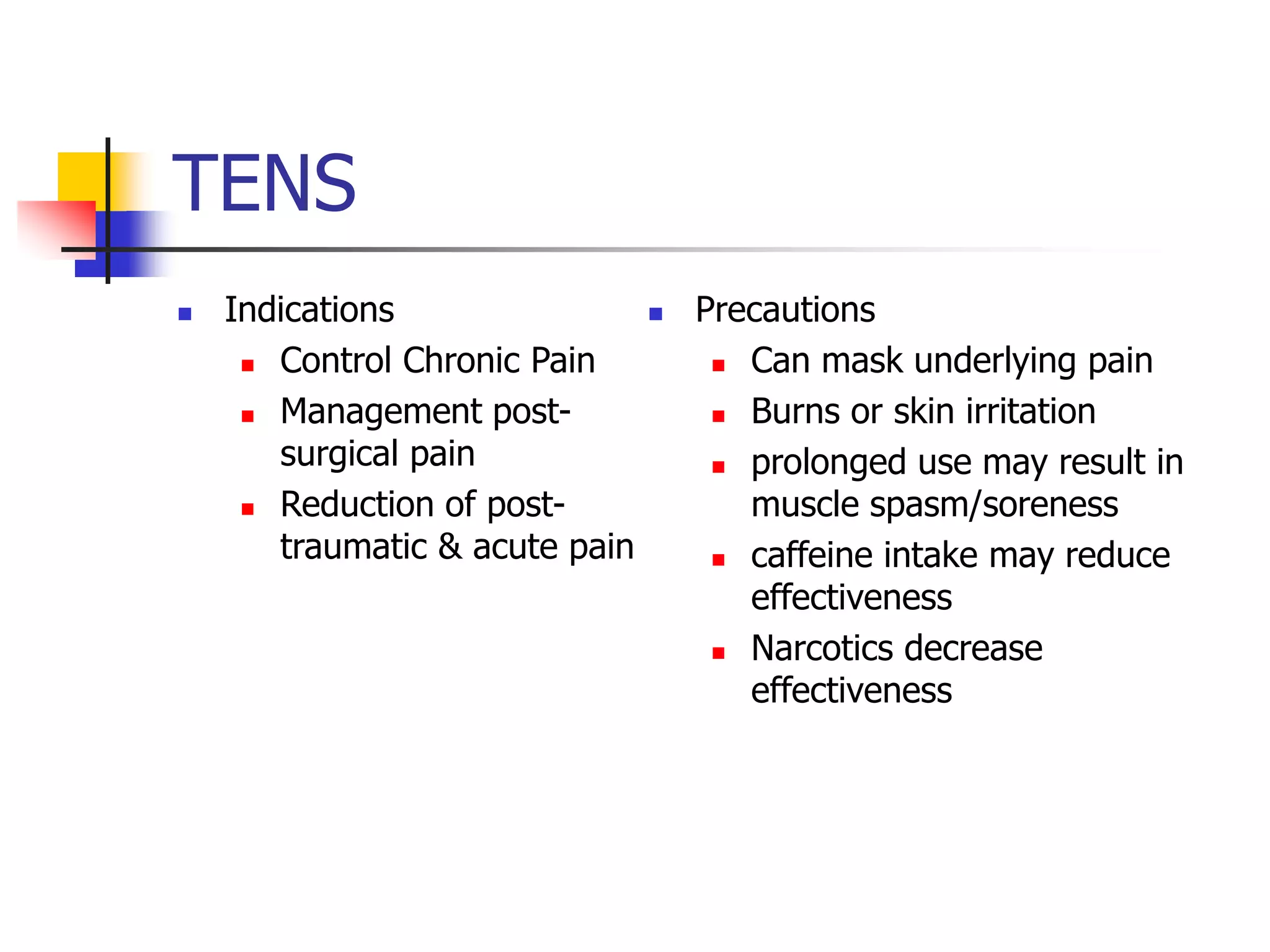
 Indications
 Control Chronic Pain
 Management post-
surgical pain
 Reduction of post-
traumatic & acute pain
 Precautions
 Can mask underlying pain
 Burns or skin irritation
 prolonged use may result in
muscle spasm/soreness
 caffeine intake may reduce
effectiveness
 Narcotics decrease
effectiveness
Biophysical Effects
 Primary use is to control pain through Gate Control Theory
 May produce muscle contractions
 Various methods
 High TENS (Activate A-delta fibers)
 Low TENS (release of -endorphins from pituitary)
 Brief-Intense TENS (noxious stimulation to active C fibers)
Techniques of TENS
application:
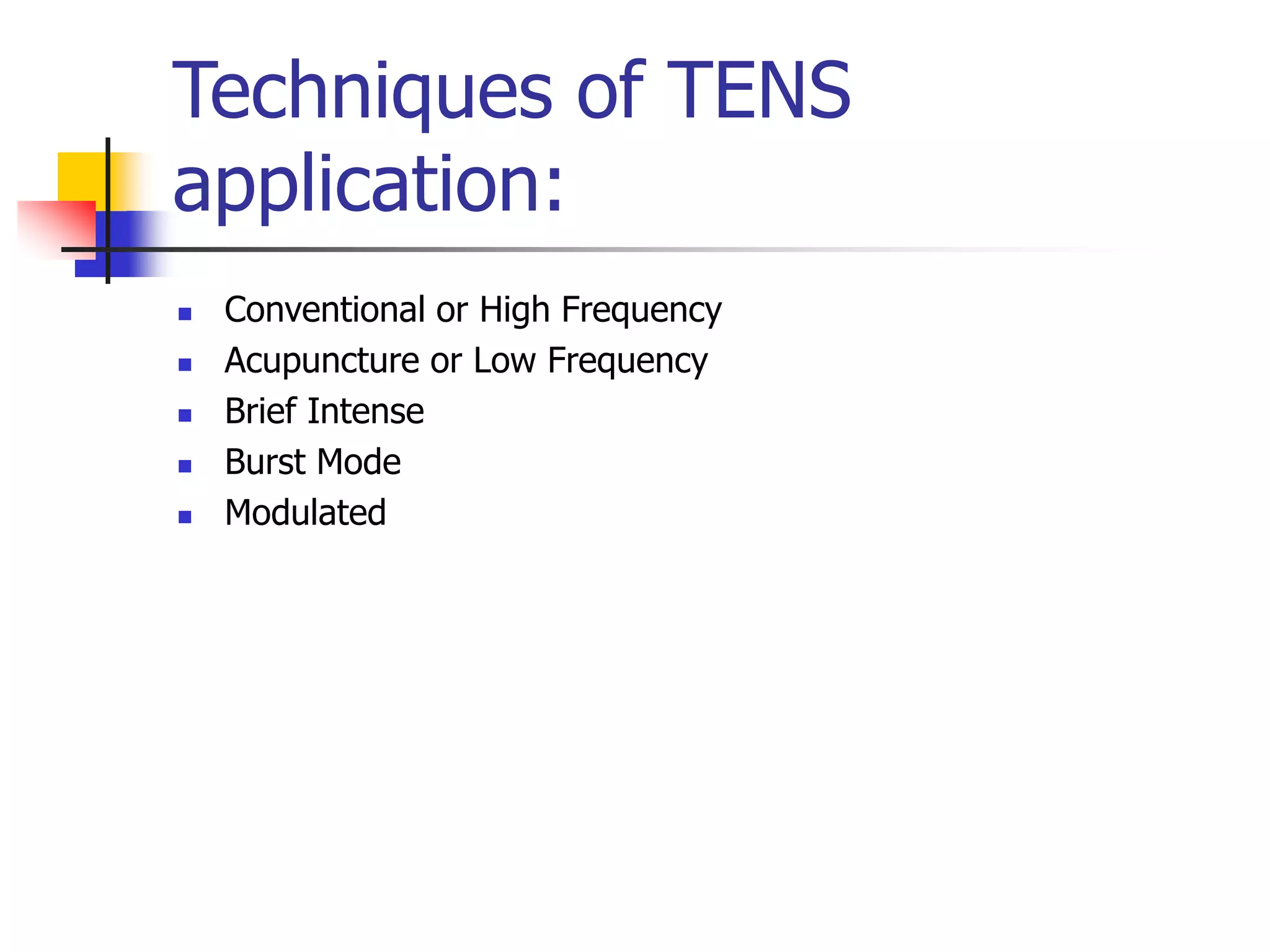
 Conventional or High Frequency
 Acupuncture or Low Frequency
 Brief Intense
 Burst Mode
 Modulated
Various Methods of TENS
Parameter High TENS Low TENS Brief-Intense
TENS
Intensity Sensory Motor Noxious
Pulse Fq 60-100 pps 2-4 pps Variable
Pulse
Duration
60-100 sec 150-250 sec 300-1000sec
Mode Modulated Modulated
Burst
Modluated
Tx Duration As needed 30 min 15-30 min
Onset of
Relief
< 10 min 20-40 min <15 min
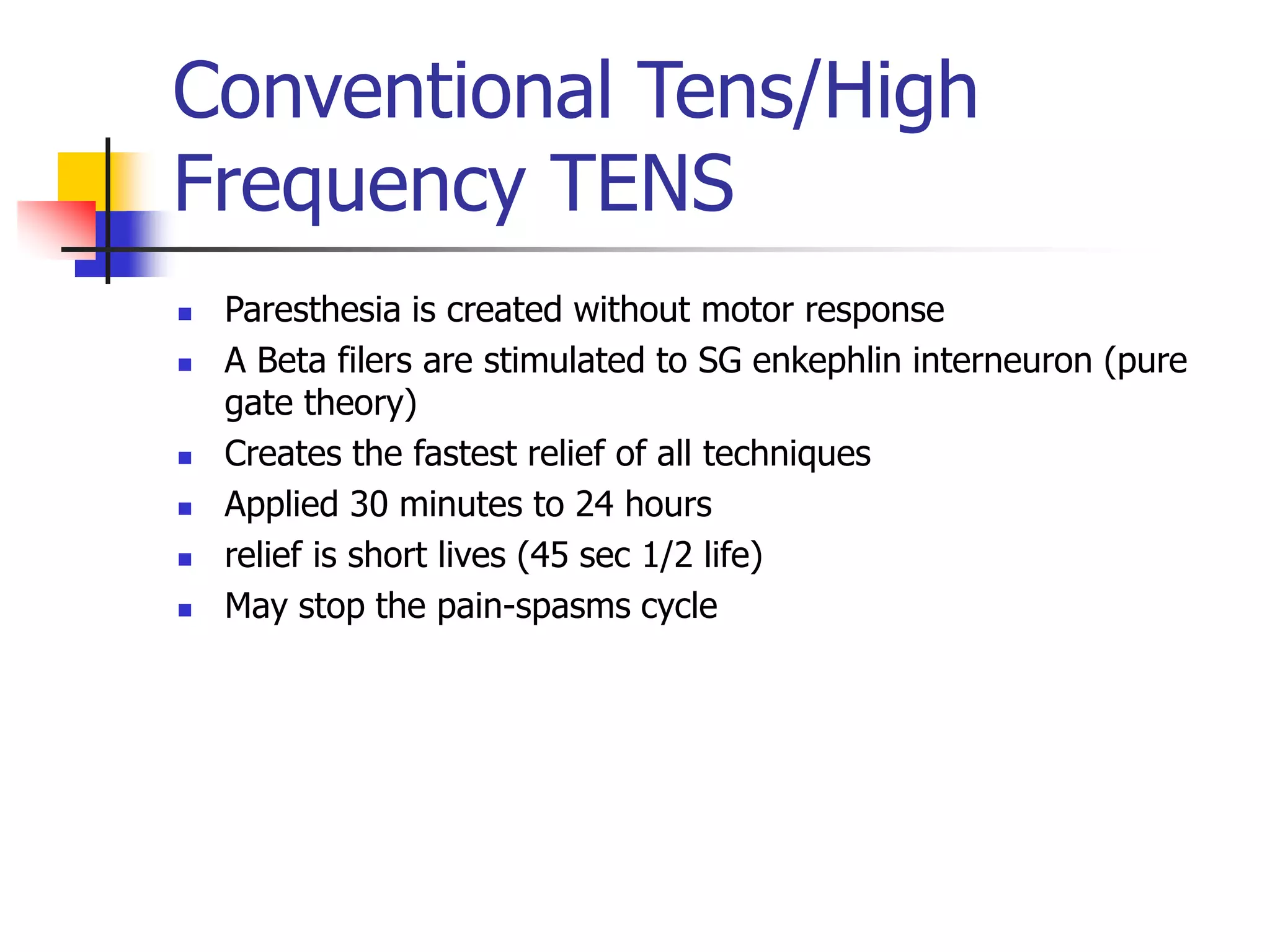
Conventional Tens/High
Frequency TENS
 Paresthesia is created without motor response
 A Beta filers are stimulated to SG enkephlin interneuron (pure
gate theory)
 Creates the fastest relief of all techniques
 Applied 30 minutes to 24 hours
 relief is short lives (45 sec 1/2 life)
 May stop the pain-spasms cycle
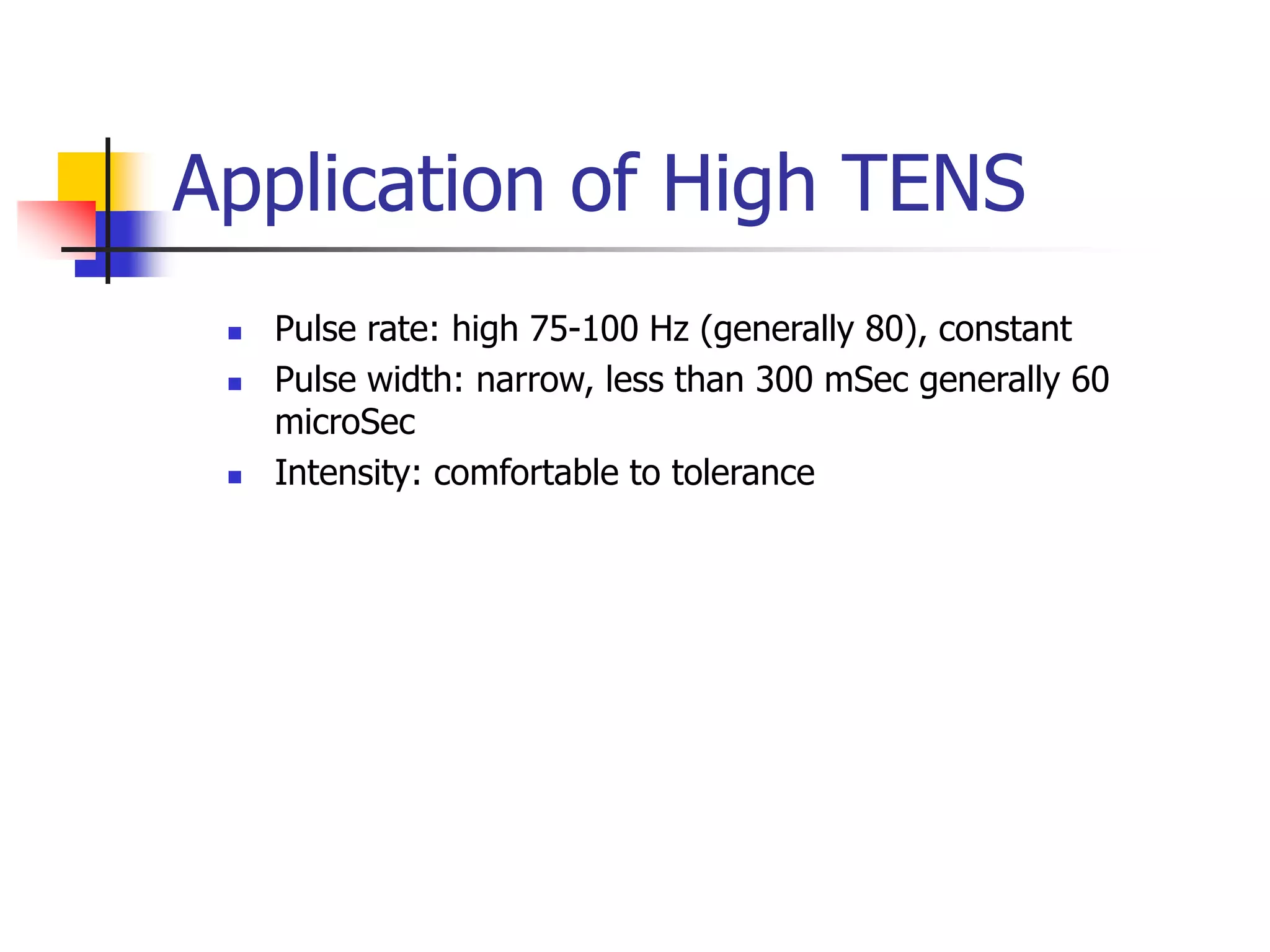
Application of High TENS
 Pulse rate: high 75-100 Hz (generally 80), constant
 Pulse width: narrow, less than 300 mSec generally 60
microSec
 Intensity: comfortable to tolerance
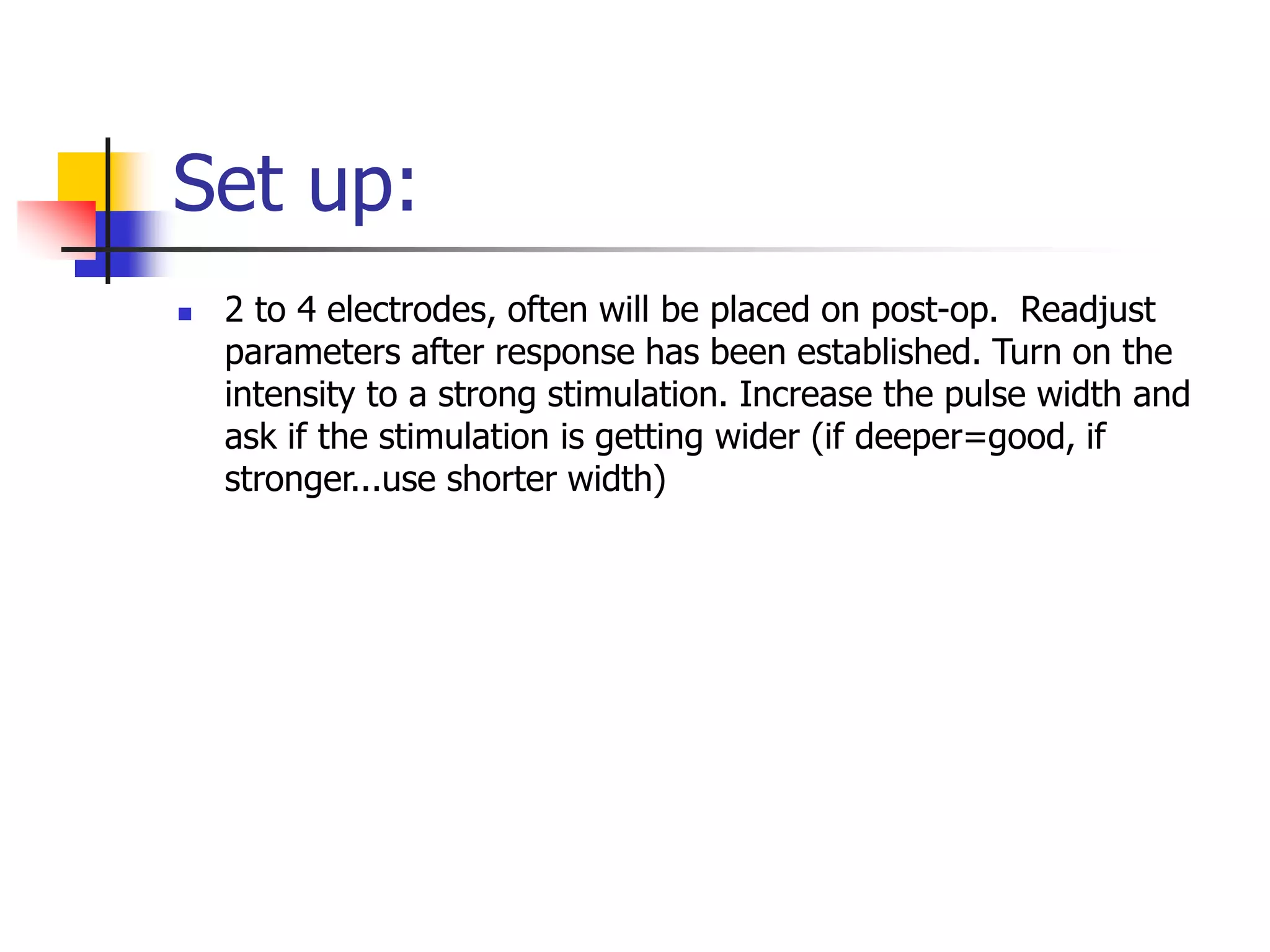
Set up:
 2 to 4 electrodes, often will be placed on post-op. Readjust
parameters after response has been established. Turn on the
intensity to a strong stimulation. Increase the pulse width and
ask if the stimulation is getting wider (if deeper=good, if
stronger...use shorter width)
Low Frequency/Acupuncture-
like TENS:
 Level III pain relief, A delta fibers get Beta endorphins
 Longer lasting pain relief but slower to start
 Application
 pulse rate low 1-5ppx (below 10)
 Pulse width: 200-300 microSec
 Intensity: strong you want rhythmical contractions within the
patient’s tolerance
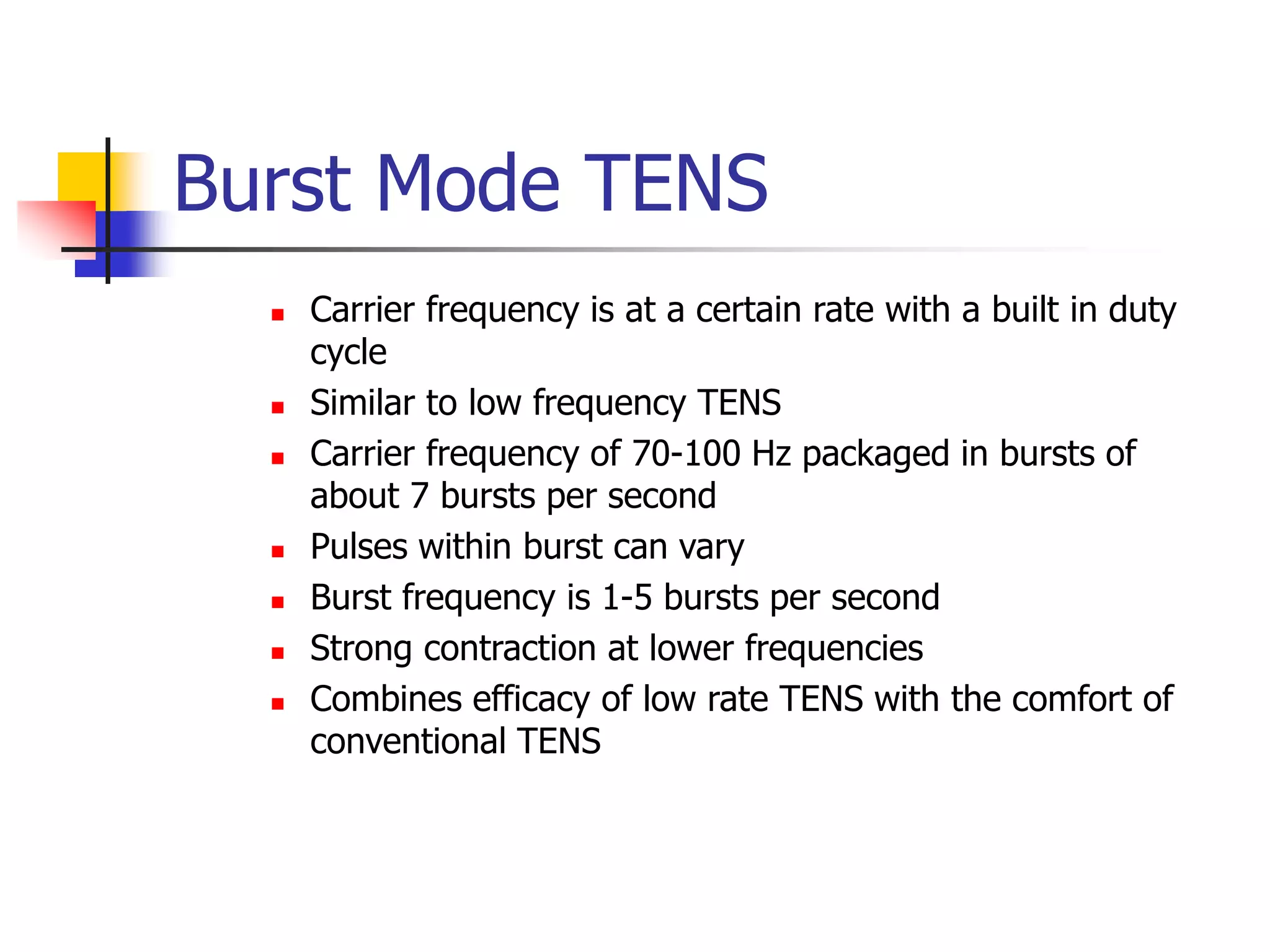
Burst Mode TENS
 Carrier frequency is at a certain rate with a built in duty
cycle
 Similar to low frequency TENS
 Carrier frequency of 70-100 Hz packaged in bursts of
about 7 bursts per second
 Pulses within burst can vary
 Burst frequency is 1-5 bursts per second
 Strong contraction at lower frequencies
 Combines efficacy of low rate TENS with the comfort of
conventional TENS
Burst Mode TENS - Application
 Pulse width: high 100-200 microSec
 Pulse rate: 70-100 pps modulated to 1-5 burst/sec
 Intensity: strong but comfortable
 treatment length: 20-60 minutes
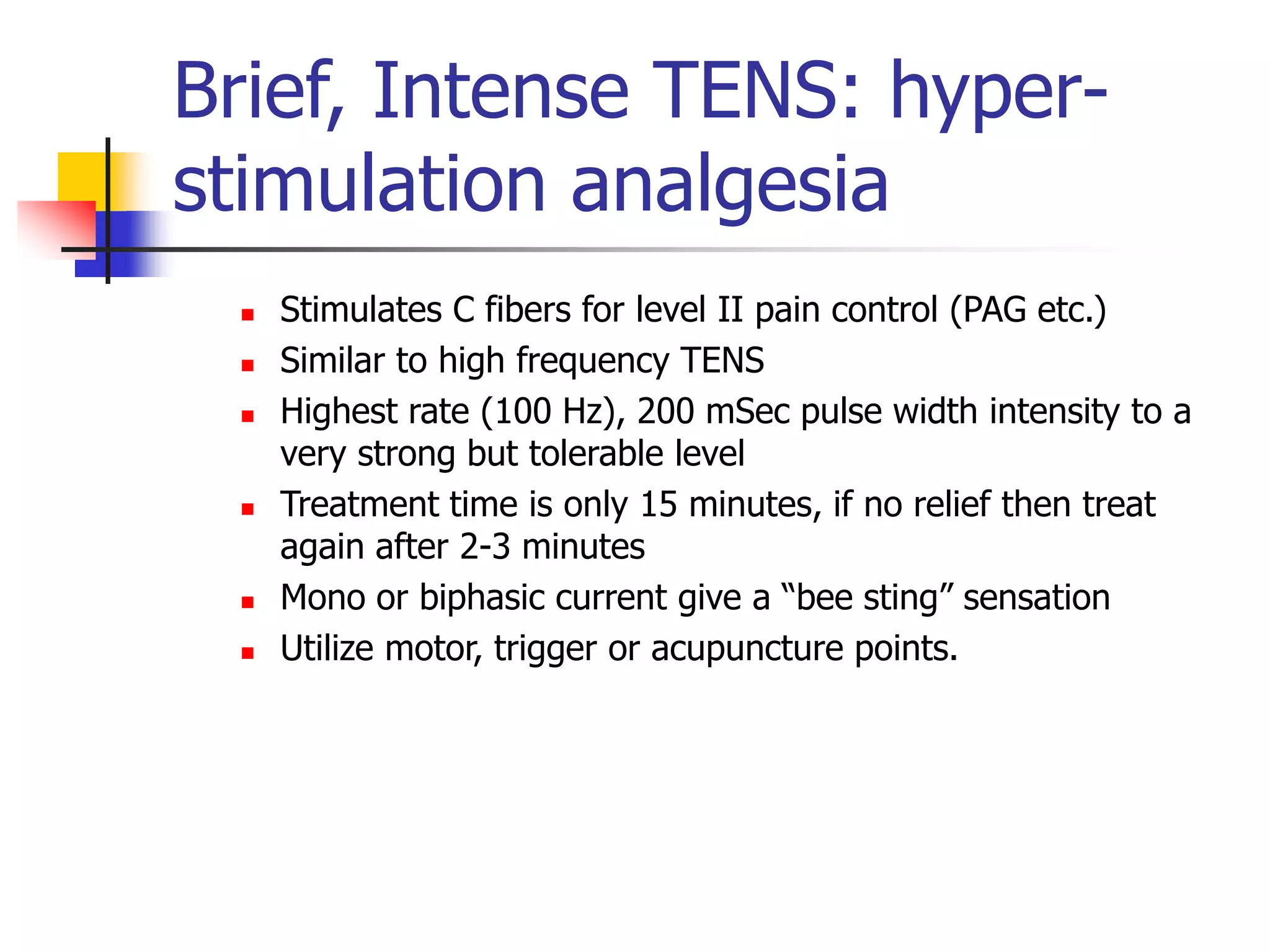
Brief, Intense TENS: hyper-
stimulation analgesia
 Stimulates C fibers for level II pain control (PAG etc.)
 Similar to high frequency TENS
 Highest rate (100 Hz), 200 mSec pulse width intensity to a
very strong but tolerable level
 Treatment time is only 15 minutes, if no relief then treat
again after 2-3 minutes
 Mono or biphasic current give a “bee sting” sensation
 Utilize motor, trigger or acupuncture points.
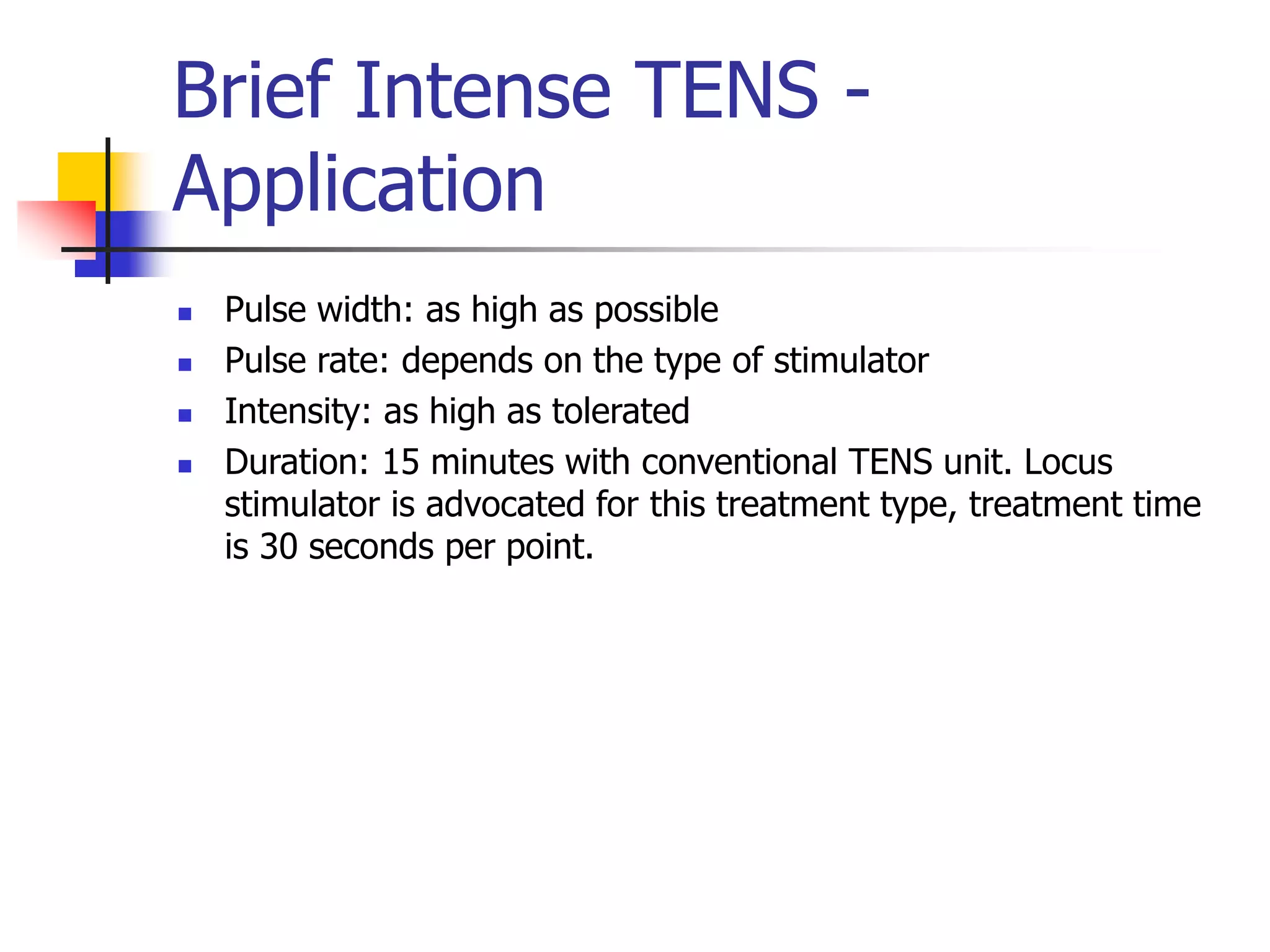
Brief Intense TENS -
Application
 Pulse width: as high as possible
 Pulse rate: depends on the type of stimulator
 Intensity: as high as tolerated
 Duration: 15 minutes with conventional TENS unit. Locus
stimulator is advocated for this treatment type, treatment time
is 30 seconds per point.
Modulated Stimulation:
 Keeps tissues reactive so no accommodation occurs
 Simultaneous modulation of amplitude and pulse width
 As amplitude is decreased, pulse width is automatically
increased to deliver more consistent energy per pulse
 Rate can also be modulated
Electrode Placement:
 May be over the painful sites, dermatomes, myotomes, trigger
points, acupuncture points or spinal nerve roots.
 May be crossed or uncrossed (horizontal or vertical)
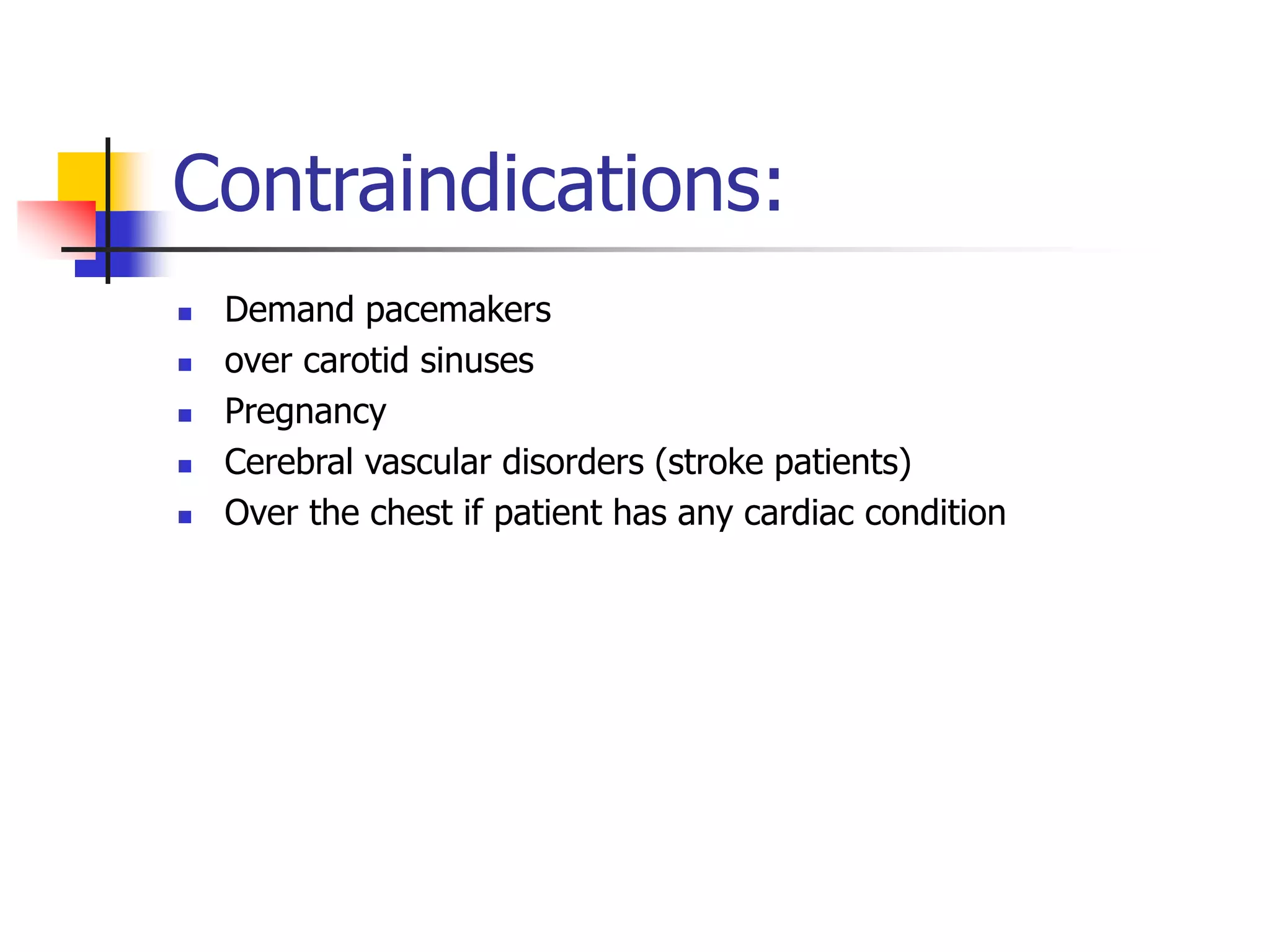
Contraindications:
 Demand pacemakers
 over carotid sinuses
 Pregnancy
 Cerebral vascular disorders (stroke patients)
 Over the chest if patient has any cardiac condition
THANK YOU
Prof. Dr. M. RAJESH, PT,M.P.T(cardio),B.C.R.C
TRINITY MISSIOIN AND MEDICAL FOUNDATION
MADURAI.
Visit:
www.skpfc.wordpress.com

TENS

  • 1.
    T.E.N.S. (Trancutaneous Electrical Nerve Stimulation) Prof.Dr. M. Rajesh, PT, M.P.T(cardio), B.C.R.C TRINITY MISSION AND MEDICAL FOUNDATION MADURAI
  • 2.
    General Concepts:  AnApproach to pain control  Trancutaneous Electrical Nerve Stimulation:  Any stimulation in which a current is applied across the skin to stimulate nerves  1965 Gate Control Theory created a great popularity of TENS  TENS has 50-80% efficacy rate  TENS stimulates afferent sensory fibers to elicit production of neurohumneral substances such as endorphins, enkephalins and serotonin (i.e. gate theory)
  • 3.
    TENS  Indications  ControlChronic Pain  Management post- surgical pain  Reduction of post- traumatic & acute pain  Precautions  Can mask underlying pain  Burns or skin irritation  prolonged use may result in muscle spasm/soreness  caffeine intake may reduce effectiveness  Narcotics decrease effectiveness
  • 4.
    Biophysical Effects  Primaryuse is to control pain through Gate Control Theory  May produce muscle contractions  Various methods  High TENS (Activate A-delta fibers)  Low TENS (release of -endorphins from pituitary)  Brief-Intense TENS (noxious stimulation to active C fibers)
  • 5.
    Techniques of TENS application: Conventional or High Frequency  Acupuncture or Low Frequency  Brief Intense  Burst Mode  Modulated
  • 6.
    Various Methods ofTENS Parameter High TENS Low TENS Brief-Intense TENS Intensity Sensory Motor Noxious Pulse Fq 60-100 pps 2-4 pps Variable Pulse Duration 60-100 sec 150-250 sec 300-1000sec Mode Modulated Modulated Burst Modluated Tx Duration As needed 30 min 15-30 min Onset of Relief < 10 min 20-40 min <15 min
  • 7.
    Conventional Tens/High Frequency TENS Paresthesia is created without motor response  A Beta filers are stimulated to SG enkephlin interneuron (pure gate theory)  Creates the fastest relief of all techniques  Applied 30 minutes to 24 hours  relief is short lives (45 sec 1/2 life)  May stop the pain-spasms cycle
  • 8.
    Application of HighTENS  Pulse rate: high 75-100 Hz (generally 80), constant  Pulse width: narrow, less than 300 mSec generally 60 microSec  Intensity: comfortable to tolerance
  • 9.
    Set up:  2to 4 electrodes, often will be placed on post-op. Readjust parameters after response has been established. Turn on the intensity to a strong stimulation. Increase the pulse width and ask if the stimulation is getting wider (if deeper=good, if stronger...use shorter width)
  • 10.
    Low Frequency/Acupuncture- like TENS: Level III pain relief, A delta fibers get Beta endorphins  Longer lasting pain relief but slower to start  Application  pulse rate low 1-5ppx (below 10)  Pulse width: 200-300 microSec  Intensity: strong you want rhythmical contractions within the patient’s tolerance
  • 11.
    Burst Mode TENS Carrier frequency is at a certain rate with a built in duty cycle  Similar to low frequency TENS  Carrier frequency of 70-100 Hz packaged in bursts of about 7 bursts per second  Pulses within burst can vary  Burst frequency is 1-5 bursts per second  Strong contraction at lower frequencies  Combines efficacy of low rate TENS with the comfort of conventional TENS
  • 12.
    Burst Mode TENS- Application  Pulse width: high 100-200 microSec  Pulse rate: 70-100 pps modulated to 1-5 burst/sec  Intensity: strong but comfortable  treatment length: 20-60 minutes
  • 13.
    Brief, Intense TENS:hyper- stimulation analgesia  Stimulates C fibers for level II pain control (PAG etc.)  Similar to high frequency TENS  Highest rate (100 Hz), 200 mSec pulse width intensity to a very strong but tolerable level  Treatment time is only 15 minutes, if no relief then treat again after 2-3 minutes  Mono or biphasic current give a “bee sting” sensation  Utilize motor, trigger or acupuncture points.
  • 14.
    Brief Intense TENS- Application  Pulse width: as high as possible  Pulse rate: depends on the type of stimulator  Intensity: as high as tolerated  Duration: 15 minutes with conventional TENS unit. Locus stimulator is advocated for this treatment type, treatment time is 30 seconds per point.
  • 15.
    Modulated Stimulation:  Keepstissues reactive so no accommodation occurs  Simultaneous modulation of amplitude and pulse width  As amplitude is decreased, pulse width is automatically increased to deliver more consistent energy per pulse  Rate can also be modulated
  • 16.
    Electrode Placement:  Maybe over the painful sites, dermatomes, myotomes, trigger points, acupuncture points or spinal nerve roots.  May be crossed or uncrossed (horizontal or vertical)
  • 17.
    Contraindications:  Demand pacemakers over carotid sinuses  Pregnancy  Cerebral vascular disorders (stroke patients)  Over the chest if patient has any cardiac condition
  • 18.
    THANK YOU Prof. Dr.M. RAJESH, PT,M.P.T(cardio),B.C.R.C TRINITY MISSIOIN AND MEDICAL FOUNDATION MADURAI. Visit: www.skpfc.wordpress.com