



SYSTEMIC LUPUS
ERYTHEMATOSUS
BY ROD PRASAD
What is SLE?
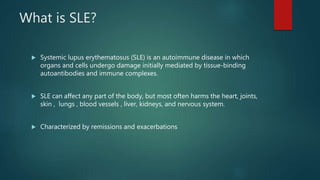
 Systemic lupus erythematosus (SLE) is an autoimmune disease in which
organs and cells undergo damage initially mediated by tissue-binding
autoantibodies and immune complexes.
 SLE can affect any part of the body, but most often harms the heart, joints,
skin , lungs , blood vessels , liver, kidneys, and nervous system.
 Characterized by remissions and exacerbations
Prevalence
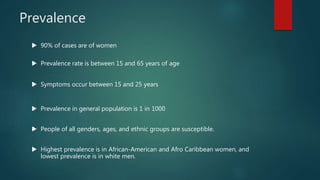
 90% of cases are of women
 Prevalence rate is between 15 and 65 years of age
 Symptoms occur between 15 and 25 years
 Prevalence in general population is 1 in 1000
 People of all genders, ages, and ethnic groups are susceptible.
 Highest prevalence is in African-American and Afro Caribbean women, and
lowest prevalence is in white men.
Etiology
HormonesEnvironmental
Genetics
 The cause of SLE is currently unknown but there may be environmental,
hormonal and genetic factors to it.
Environmental
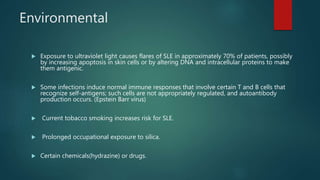
 Exposure to ultraviolet light causes flares of SLE in approximately 70% of patients, possibly
by increasing apoptosis in skin cells or by altering DNA and intracellular proteins to make
them antigenic.
 Some infections induce normal immune responses that involve certain T and B cells that
recognize self-antigens; such cells are not appropriately regulated, and autoantibody
production occurs. (Epstein Barr virus)
 Current tobacco smoking increases risk for SLE.
 Prolonged occupational exposure to silica.
 Certain chemicals(hydrazine) or drugs.
Hormonal
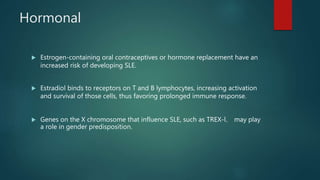
 Estrogen-containing oral contraceptives or hormone replacement have an
increased risk of developing SLE.
 Estradiol binds to receptors on T and B lymphocytes, increasing activation
and survival of those cells, thus favoring prolonged immune response.
 Genes on the X chromosome that influence SLE, such as TREX-l, may play
a role in gender predisposition.
Genetic
 Approximately 45 predisposing genes have been identified to predispose the occurrence
of SLE.
 HLA molecules are most commonly found, in multiple ethnic groups as well as multiple
genes across the MHC.
 Other genetic factors in whites include;
1. innate immunity pathway gene polymorphisms (associated with IFN α)
2. genes in lymphocyte signaling pathways
3. genes that affect clearance of apoptotic cells or immune complexes
4. genes that influence neutrophil adherence
5. and genes that influence DNA repair
Pathophysiology
 Interactions between susceptibility genes and environmental factors result in
abnormal immune responses. These responses are:
1. Activation of innate immunity(dendritic cells, monocyte/macrophages)
2. Lowered activation thresholds and abnormal activation pathways in adaptive immunity
cells (mature T and B lymphocytes)
3. Ineffective regulatory CD4+ and CD8+ T cells, B cells, and myeloid-derived suppressor
cells.
4. Reduced clearance of immune complexes and apoptotic cells
Pathogenesis
Clinical Manifestations
 Achy joints / arthralgia
 Fever of more than 38 ° C
 Arthritis / swollen joints
 Prolonged or extreme fatigue
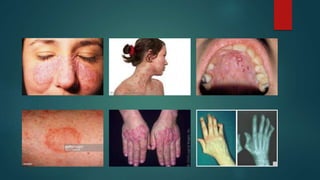
 Skin Rashes
 Anaemia
 Kidney Involvement
 Pain in the chest on deep breathing / pleurisy
 Butterfly-shaped rash across the cheeks and nose
 Sun or light sensitivity / photosensitivity
 Hair loss / Alopecia
 Abnormal blood clotting problems
 Fingers turning white and/or blue in the cold
 Mouth or nose ulcers
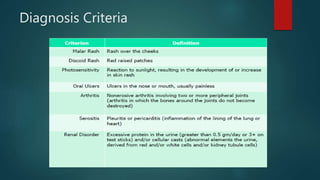
Diagnosis Criteria
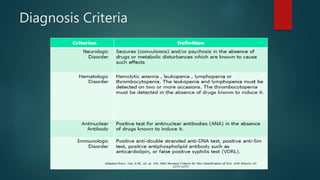
Diagnosis Criteria
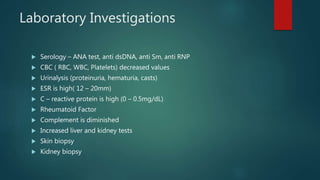
Laboratory Investigations
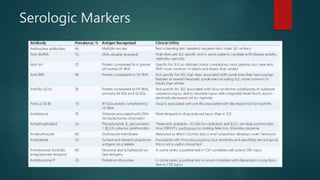
 Serology – ANA test, anti dsDNA, anti Sm, anti RNP
 CBC ( RBC, WBC, Platelets) decreased values
 Urinalysis (proteinuria, hematuria, casts)
 ESR is high( 12 – 20mm)
 C – reactive protein is high (0 – 0.5mg/dL)
 Rheumatoid Factor
 Complement is diminished
 Increased liver and kidney tests
 Skin biopsy
 Kidney biopsy
Serologic Markers
Treatment and Management
 Treatment goals
 Use of drugs with:
least side effects
lowest dosage to control disease
long term damage control
 Mild case : avoid use of steroids
 Severe case : aggressive treatment
Treatment and Management
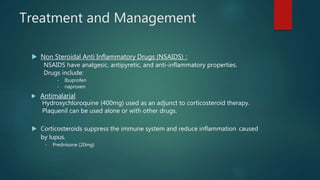
 Non Steroidal Anti Inflammatory Drugs (NSAIDS) :
NSAIDS have analgesic, antipyretic, and anti-inflammatory properties.
Drugs include:
• Ibuprofen
• naproxen
 Antimalarial
Hydroxychloroquine (400mg) used as an adjunct to corticosteroid therapy.
Plaquenil can be used alone or with other drugs.
 Corticosteroids suppress the immune system and reduce inflammation caused
by lupus.
• Prednisone (20mg)
Treatment and Management
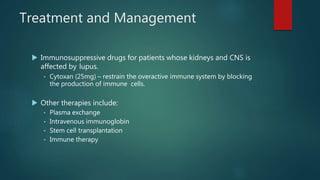
 Immunosuppressive drugs for patients whose kidneys and CNS is
affected by lupus.
• Cytoxan (25mg) – restrain the overactive immune system by blocking
the production of immune cells.
 Other therapies include:
• Plasma exchange
• Intravenous immunoglobin
• Stem cell transplantation
• Immune therapy
THANK YOU

Systemic lupus erythematosus

  • 1.
  • 2.
    What is SLE? Systemic lupus erythematosus (SLE) is an autoimmune disease in which organs and cells undergo damage initially mediated by tissue-binding autoantibodies and immune complexes.  SLE can affect any part of the body, but most often harms the heart, joints, skin , lungs , blood vessels , liver, kidneys, and nervous system.  Characterized by remissions and exacerbations
  • 3.
    Prevalence  90% ofcases are of women  Prevalence rate is between 15 and 65 years of age  Symptoms occur between 15 and 25 years  Prevalence in general population is 1 in 1000  People of all genders, ages, and ethnic groups are susceptible.  Highest prevalence is in African-American and Afro Caribbean women, and lowest prevalence is in white men.
  • 4.
    Etiology HormonesEnvironmental Genetics  The causeof SLE is currently unknown but there may be environmental, hormonal and genetic factors to it.
  • 5.
    Environmental  Exposure toultraviolet light causes flares of SLE in approximately 70% of patients, possibly by increasing apoptosis in skin cells or by altering DNA and intracellular proteins to make them antigenic.  Some infections induce normal immune responses that involve certain T and B cells that recognize self-antigens; such cells are not appropriately regulated, and autoantibody production occurs. (Epstein Barr virus)  Current tobacco smoking increases risk for SLE.  Prolonged occupational exposure to silica.  Certain chemicals(hydrazine) or drugs.
  • 6.
    Hormonal  Estrogen-containing oralcontraceptives or hormone replacement have an increased risk of developing SLE.  Estradiol binds to receptors on T and B lymphocytes, increasing activation and survival of those cells, thus favoring prolonged immune response.  Genes on the X chromosome that influence SLE, such as TREX-l, may play a role in gender predisposition.
  • 7.
    Genetic  Approximately 45predisposing genes have been identified to predispose the occurrence of SLE.  HLA molecules are most commonly found, in multiple ethnic groups as well as multiple genes across the MHC.  Other genetic factors in whites include; 1. innate immunity pathway gene polymorphisms (associated with IFN α) 2. genes in lymphocyte signaling pathways 3. genes that affect clearance of apoptotic cells or immune complexes 4. genes that influence neutrophil adherence 5. and genes that influence DNA repair
  • 8.
    Pathophysiology  Interactions betweensusceptibility genes and environmental factors result in abnormal immune responses. These responses are: 1. Activation of innate immunity(dendritic cells, monocyte/macrophages) 2. Lowered activation thresholds and abnormal activation pathways in adaptive immunity cells (mature T and B lymphocytes) 3. Ineffective regulatory CD4+ and CD8+ T cells, B cells, and myeloid-derived suppressor cells. 4. Reduced clearance of immune complexes and apoptotic cells
  • 9.
  • 10.
    Clinical Manifestations  Achyjoints / arthralgia  Fever of more than 38 ° C  Arthritis / swollen joints  Prolonged or extreme fatigue  Skin Rashes  Anaemia  Kidney Involvement  Pain in the chest on deep breathing / pleurisy  Butterfly-shaped rash across the cheeks and nose  Sun or light sensitivity / photosensitivity  Hair loss / Alopecia  Abnormal blood clotting problems  Fingers turning white and/or blue in the cold  Mouth or nose ulcers
  • 12.
  • 13.
  • 14.
    Laboratory Investigations  Serology– ANA test, anti dsDNA, anti Sm, anti RNP  CBC ( RBC, WBC, Platelets) decreased values  Urinalysis (proteinuria, hematuria, casts)  ESR is high( 12 – 20mm)  C – reactive protein is high (0 – 0.5mg/dL)  Rheumatoid Factor  Complement is diminished  Increased liver and kidney tests  Skin biopsy  Kidney biopsy
  • 15.
  • 16.
    Treatment and Management Treatment goals  Use of drugs with: least side effects lowest dosage to control disease long term damage control  Mild case : avoid use of steroids  Severe case : aggressive treatment
  • 17.
    Treatment and Management Non Steroidal Anti Inflammatory Drugs (NSAIDS) : NSAIDS have analgesic, antipyretic, and anti-inflammatory properties. Drugs include: • Ibuprofen • naproxen  Antimalarial Hydroxychloroquine (400mg) used as an adjunct to corticosteroid therapy. Plaquenil can be used alone or with other drugs.  Corticosteroids suppress the immune system and reduce inflammation caused by lupus. • Prednisone (20mg)
  • 18.
    Treatment and Management Immunosuppressive drugs for patients whose kidneys and CNS is affected by lupus. • Cytoxan (25mg) – restrain the overactive immune system by blocking the production of immune cells.  Other therapies include: • Plasma exchange • Intravenous immunoglobin • Stem cell transplantation • Immune therapy
  • 19.