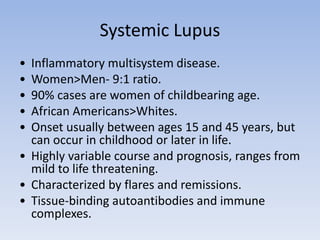
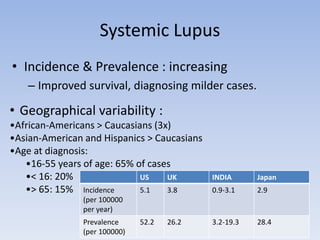
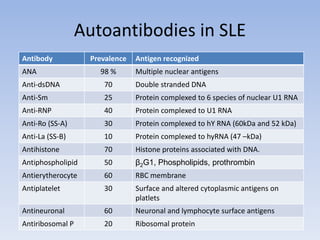
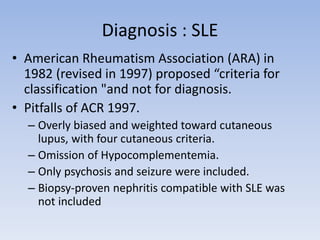
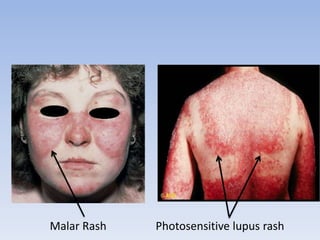
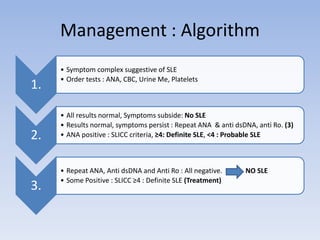
This document provides an overview of systemic lupus erythematosus (SLE). It discusses the definition, epidemiology, pathogenesis, diagnosis, clinical manifestations, management, and complications of SLE. The pathogenesis involves genetic susceptibility and environmental triggers leading to abnormal immune responses and autoantibody production. Diagnosis is based on the SLICC classification criteria. Management involves controlling symptoms, preventing organ damage, and treating flares and complications using medications like glucocorticoids, antimalarials, immunosuppressants, and biologics. Life-threatening complications can include renal disease, neurological involvement, hematological abnormalities and vasculitis.