OM SAKTHI
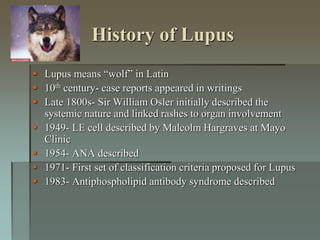
History of Lupus
 Lupus means “wolf” in Latin
 10th century- case reports appeared in writings
 Late 1800s- Sir William Osler initially described the
systemic nature and linked rashes to organ involvement
 1949- LE cell described by Malcolm Hargraves at Mayo
Clinic
 1954- ANA described
 1971- First set of classification criteria proposed for Lupus
 1983- Antiphospholipid antibody syndrome described
History
 1948 – Malcolm Hargraves discovers the lupus
erythematosus (LE) cell.
 1957 – The first anti-DNA antibody is identified.
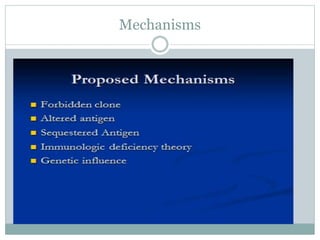
Mechanisms
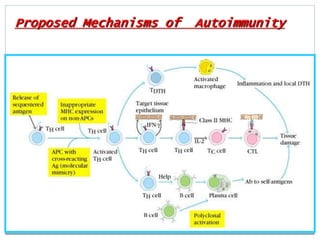
Proposed Mechanisms of Autoimmunity
What exactly is Lupus?
 Autoimmune disease where one’s immune system
attacks itself
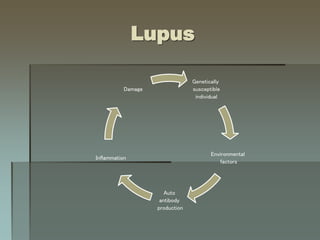
 Autoantibody production -> immune complex
deposition -> inflammation -> damage
 Chronic disease, characterized by flares and
remission
 Pleomorphic with different phenotypic expressions
 Multisystem involvement
Types Of Lupus
 Drug Induced Lupus
 Neonatal Lupus
 Cutaneous Lupus
 Systemic Lupus Erythematosus
Cutaneous
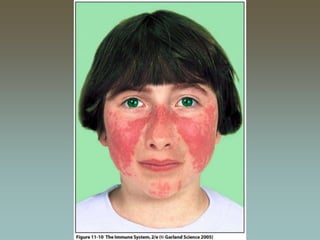
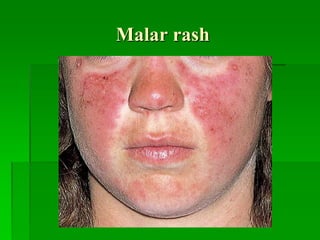
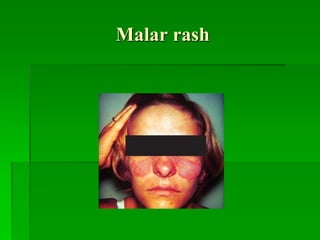
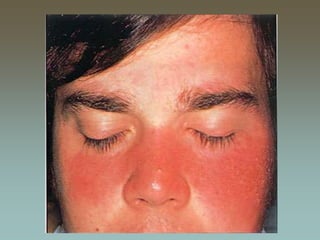
 Most common rash is photosensitive, raised
erythematous malar rash. 55-85% develop at
some point in disease
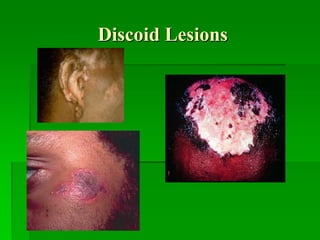
 Discoid Lupus Erythematosus (DLE): 15-30%
circular, scaly hyperpimented lesions with
erythematous rim, atrophic center—can be
disfiguring involving the bridge of the nose and
adjacent cheeks.
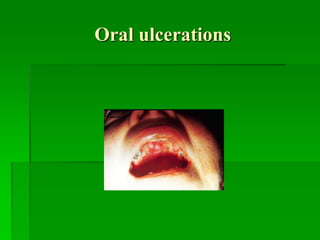
 Mouth/vaginal/nasal ulcers
 Alopecia: may be diffuse or patchy. Occurs
50%
Drug- Induced Lupus
 Approximately 80 offending agents can cause
lupus
 15,000- 30,000 cases reported annually
 Production of autoantibodies more common
than clinical symptoms
 99% disappear within 3 months of stopping
the medicine.
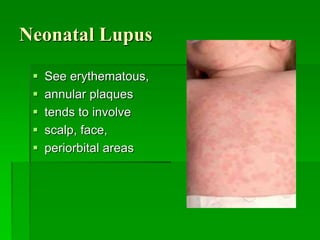
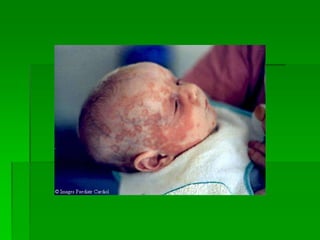
Neonatal Lupus
 Rare condition
 not true lupus, passively transferred autoimmune
disease
 Occurs when mother is SSA/SSB positive
 Transplacental transfer of IgG anti SSA or SSB
antibodies
 5-7% babies will have a transient rash, resolves by
6-8 months
 2% of babies will have cardiac complications with
congenital heart block
SYSTEMIC LUPUS
ERYTHEMATOSUS (SLE)
 Prevalence of 40 to 50 cases / 100,000
 Major causes of mortality
 Infections and nephritis (early)
 Athrosclerosis (late)
 Risk factors
 Genetics (HLA-A1, HLA-B8 and HLA-DR3)
 Race (AA, Hispanic, Asia > Caucasian)
 Hormones
 Chemicals
 Microorganisms
SYSTEMIC LUPUS
ERYTHEMATOSUS (SLE)
 Autoimmune disease affecting multiple organ
systems
 Relapsing (flares) and remitting course
 Protean clinical manifestations
 Etiology is unknown
 Female to male ratio is 9:1
 Age of onset
 16 to 55 years (65%)
 < 16 years (20%)
Who get’s Lupus?
 Prevalence is over 1.5 million Americans
 Incidence difficult due to lack of strict
definition
 Bimodal peak presentation: ages 20-40 and
again after age 60
 Prevalence is higher in African Americans,
Asians, Hispanics
 Female to male predominance
pathogenesis
 Immunologic factors;
 Inherited defect in B cells
 Stimulation of B cells by microorganisms
 T helper cell hyperactivity
 T suppressor cell defect
pathogenesis
 Genetic factors ;immunoregulatory
function of class II HLA genes
 Other factors
 Drugs ; pencillamineD
 Viral infections; EBV infection
 Hormones; oestrogen
pathogenesis
 Type II hypersensitivity ; formation of
autoantibodies against red blood
cell,platelets, leucocytes results in
haematologic derangement
 Type III hypersensitivity; Ag and Ab
complex and deposited at renal
glomeruli and walls of small blood
vessels
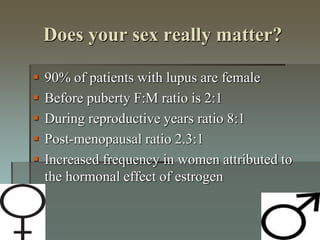
Does your sex really matter?
 90% of patients with lupus are female
 Before puberty F:M ratio is 2:1
 During reproductive years ratio 8:1
 Post-menopausal ratio 2.3:1
 Increased frequency in women attributed to
the hormonal effect of estrogen
Does your sex really matter?
 Nurses Health Study
 use of estrogen-containing contraceptive agents
associated with an 50 percent increase in risk of
developing SLE
 either early onset of menarche (age ≤ 10 years) or
administration of estrogen to postmenopausal
women doubles their risk
 Treatment of clinically stable SLE with oral
contraceptives for one year does not increase
disease flares
Overactive B-cells
 Estrogen is a stimulator of B-cell activity
 Lupus is much more prevalent in females of ages
15-45
 Height of Estrogen production
 IL-10, also a B-cell stimulator is in high
concentration in lupus patient serum.
 High concentration linked to cell damage caused by
inflammation
Genetic Associations
 HLA’s are loci on genes that code for
certain β chain on the MHC complex
 HLA-DR2
 HLA-DR3
 HLA-DQB1 – Involved in mediating
production of antibodies to ds-DNA
Genetics of Lupus
 High concordance in monozygotic twins
 5-12% or relatives with lupus have the disease
 No single lupus gene
 Disease is polygenic
 At least 30 susceptiblility genes identified
 HLADR2, HLADR3, HLADR4, HLADR8 (present
in 75%)
 Homozygous deficiency of C1q complement
Environmental Factors
 UVA and UVB light can stimulate/ up-regulate
autoimmunity
stimulating keratinocytes to produce cytokines -> activate B
cells to produce ab
 Viruses/Bacteria: molecular mimicry
SLE patients have higher titers of antibodies to Epstein-Barr
virus (EBV), increased circulating EBV viral loads; SSA ab
has a sequence similar to EBV nuclear ag 1
Parvovirus B19
 Drugs
 Silica exposure, tobacco smoke, emotional stress
Lupus
Genetically
susceptible
individual
Environmental
factors
Auto
antibody
production
Inflammation
Damage
Immune dysregulation
 Upregulation of innate immunity
 Delayed clearance of apoptotic cells, resulting in
antigenic stimulation
 Loss of tolerance via failed elimination of
autoreactive T lymphocytes
 Abnormalities in B cells
 Abnormalities in T regulatory cells (CD4+/CD25+
cells down regulate immune system responses)
Autoantibodies in Lupus
 Study of US army recruits revealed lupus autoab
present for up to 9 years prior to dx in 85%
 ANA
 dsDNA
 Anti-Smith
 Anti-RNP
 Anti-SSA, anti-SSB-ANTI RIBONUCLEOPROTEIN
 Anticardiolipin,ANTIPHOSPHOLIPID ,anti-histone
 Anti B2 glycoprotein,antiribosomal
Immunoglobulins
 Anti-dsDNA IgG: very specific, may
correlate with disease activity
 Anti-Sm: specific, but only present in
25% of cases, does not correlate with
activity
 APLA: not specific. Used to identify
patients at increased risk for clots,
thrombocytopenia and fetal loss
Activation of Complement
System
 Complement system is activated by the
binding of antibodies to foreign debris.
 In this case its over activation
 RBCs lack CR1 receptor
 Decreasing the effective removal of
complexes
How do patients present?
 Myriad of symptoms
 Symptoms are often non-specific
 No two patients are alike
 50% of patients have organ threatening
disease
 50% do not have organ threatening disease
CLINICAL
MANIFESTATIONS OF SLE
 General (Constitutional)
 Fever, chills, headache, fatigue, malaise and weight loss
 Renal
 Hematuria, proteinuria
 Skin
 Malar “Butterfly” rash
 Photosensitivity rash
 Cardiac
 Myocarditis, pericarditis, endocarditis
CLINICAL
MANIFESTATIONS OF SLE
 Central nervous system
 Cognitive dysfunction
 Pulmonary
 Pleurisy
 Musculoskeletal
 Myalgias, arthralgias and arthritis
 Hematologic
 Anemia, leukemia, thrombocytopenia
 Lymphatic system
 Lymphadenopathy
Symptoms
 Non-specific:
 Fatigue
 Weight loss
 Malaise = generally feeling ill
 Fever
 Anorexia (over time)
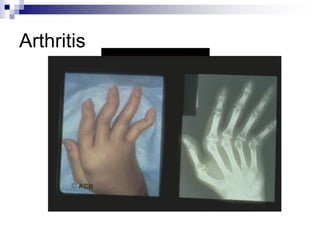
 Arthritis
 90% of patients experience arthritic symptoms
 Symmetrical
 Appears in hands, wrists, and knees mainly
CUTANEOUS LESIONS
 Butter fly area on nose and cheek
 LM shows liquefactive degeneration of
basal layer of epidermis ,oedema at
dermoepidermal junction, acute
necrotising vasculitis in dermis
 IF shows immune complex deposits
(IgG and C3) at dermoepidermal
junction.
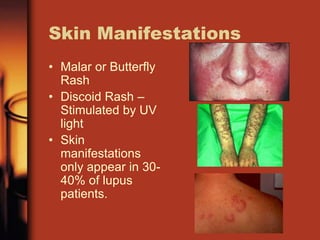
Skin Manifestations
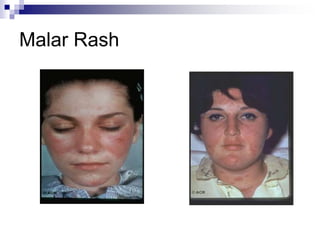
• Malar or Butterfly
Rash
• Discoid Rash –
Stimulated by UV
light
• Skin
manifestations
only appear in 30-
40% of lupus
patients.
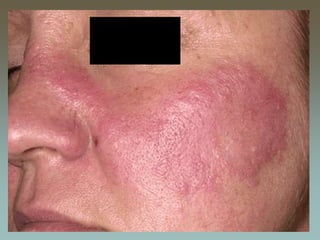
Malar Rash
Malar rash
Malar rash
Discoid Lesions
Neonatal Lupus
 See erythematous,
 annular plaques
 tends to involve
 scalp, face,
 periorbital areas
Blood vessels
 Skin and muscles involved
 Light microscopy shows fibrinoid
deposits in the vessel wall ,perivascular
infiltrate of mononuclear cells.
 Acute necrotising vasculitis
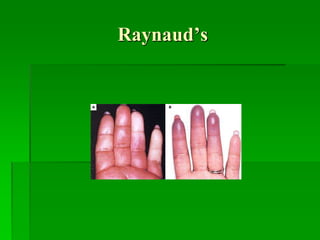
Raynaud’s
Oral ulcerations
Jaccoud’s arthropathy
Arthritis
Serositis - Pulmonary
 Pleuritis with or without effusion
- if case is mild, tx: NSAIDS
- if case is severe, tx: steroids
 Life-threatening manifestations: interstitial
inflammation which can lead to fibrosis and
intra-alveolar hemorrhage.
 Also pneumothorax and pulmonary HTN can
occur
Other Manifestations
 Cardiac
 Central Nervous System
 Hematological
Serositis – Cardiac
 Pericarditis: most common cardiac manifestation
 Myocarditis (rare) and fibrinous endocarditis
(Libman-Sacks) may occur.
 MI due to atherosclerosis can occur in <35 y/o
 Vegetations on mitral and tricuspid valve
 Vegetations show fibrinoid material ,necrotic
debris, inflammatory cells.
 Endocardium and myocardium shows focal
inflammation and necrotising vasculitis
Neuro
 Cranial or peripheral neuropathy occurs in 10-15%, it is
probably secondary to vasculitis in small arteries
supplying nerves.
 Diffuse CNS dysfunction: memory and reasoning
difficulty
 Headache: if excruciating, often indicate acute flare
 Seizures of any type
 Psychosis: must distinguish from steroid-induced
psychosis (occurs in 1st weeks of tx at doses ≥40mg
prednisone and resolves after several days of reducing
or stopping tx)
Cont.
 TIA, Stroke: mostly increased among
patients that are APLA positive
 50-fold increase in risk of vascular events
in women under 45 compared to healthy
women
 Treatment for clotting event is long-term
anticoagulation
Heme
 Anemia: usually Normochromic,
normocytic
 Leukopenia: almost always consists of
lymphopenia, not granulocytopenia
 Thrombocytopenia
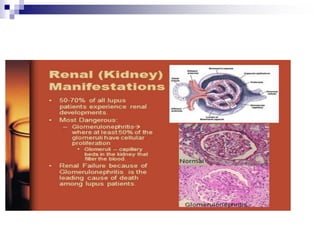
Renal
 Nephritis: usually asymptomatic, so
always check UA if patient has known or
suspected SLE
 Occurs early in course of disease-if not
present w/in 1 yr, probably will not occur.
 Histologic classification by renal biopsy is
useful to plan therapy
Histologic Classifications
 Class I is minimal mesangial glomerulonephritis which is
histologically normal on light microscopy but with
mesangial deposits on electron microscopy
class II is based on a finding of mesangial proliferative
lupus nephritis. Mesangial hypercellularity, subepithelial or
subendothelial deposits on electron microscopy.
Class III is focal lupus nephritis ;proliferation of
endothelial , mesangial and epithelial cells.
Focal sub endothelial deposits on electron
microscopy
 Class IV is diffuse proliferative nephritis.
Proliferation of endothelial,mesangial and
epithelial cells.diffuse subendothelial deposits
on electron microscopy.
 Class V is membranous nephritis and diffuse
basement membrane thickening electron
microscopy shows segmental subepithelial
deposits.
 Class VI Glomerulosclerosis- sclerosis of
90%glomeruli.
Laboratory Findings in SLE
 97% positive ANA
 61% low complement levels (C3, C4)
 50% dsDNA ab
 46% leukopenia
 42% anemia
 40% proteinuria, nephritis
 35% anticardiolipin antibodies
 25% sjogren’s syndrome with positive SSA, SSB
 12% pleural effusion
 Others: thrombocytopenia, anti SM, antiRNP, elevated
LFTs, splenomegaly, thrombophilia, miscarriages
Criteria
1. Butterfly rash
2. Discoid lupus
3. Photosensitivity
4. Oral ulcers
5. Arthritis
6. Serositis
7. Neurologic d/o
8. Hematologic d/o
9. Renal d/o
10.Immunologic: anti-
DNA, anti-Sm,
11.Anti-nuclear
antibody
AMERICAN COLLEGE OF RHEUMATOLOGY (ACR)
CRITERIA FOR DIAGNOSIS OF SLE
 Serositis (Pleurisy, pericarditis)
 Oral ulcers
 Arthritis
 Photosensitivity
 Blood disorders (Leukopenia, thrombocytopenia)
 Renal involvement
 Antinuclear antibodies (ANA)
 Immunologic phenomena [false-positive Rapid Plasma Reagin
(RPR)]
 Neurologic disorder
 Malar rash
 Discoid rash
ACR 1997 revised criteria
 1. malar rash
 2. discoid rash
 3. photosensitivity
 4. oral or nasal ulcers
 5. arthritis
 6. serositis: pleuritis or pericarditis
 7. renal disorder: proteinuria > 500mg/day, cells
 8. immunologic: anti SM, anti dsDNA, ACL, lupus ac
 9. hematologic: anemia, leukopenia, thrombocytopenia
 10. neurologic: seizures or psychosis
 11. positive ANA in absence of drugs
Diagnosis of SLE
 Initial criteria proposed by the ACR in 1971,
revised in 1982 and 1997
 Criteria designed for research purposes
 Need 4 of 11 criteria for diagnosis of SLE
 Not perfect, but have over 90% sensitivity
and specificity
 Currently two international groups are re-
evaluating the criteria
2012 SLICC Classification Criteria
 Need at least 4 criteria (1 clinical and 1
lab)
 Or biopsy proven Lupus Nephritis with
Pos ANA or pos dsDNA
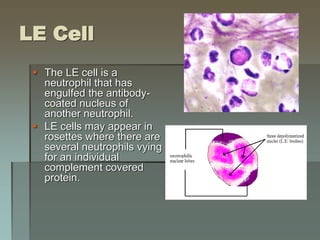
LE Cell
 The LE cell is a
neutrophil that has
engulfed the antibody-
coated nucleus of
another neutrophil.
 LE cells may appear in
rosettes where there are
several neutrophils vying
for an individual
complement covered
protein.
Autoantibodies in Lupus
 Study of US army recruits revealed lupus autoab
present for up to 9 years prior to dx in 85%
 ANA
 dsDNA
 Anti-Smith
 Anti-RNP
 Anti-SSA, anti-SSB
 Anticardiolipin
 Anti B2 glycoprotein
Meaning of ANAs
What exactly are they?
 Antibodies that bind to various antigens in
the nucleus of a cell
How is it measured?
 Indirect Immunofluorescence
ANTINUCLEAR
ANTIBODY (ANA)
TEST
 Diagnostic test for autoimmune diseases
 Detects autoantibodies against nuclear and cytoplasmic
antigens
 Nuclear and cytoplasmic antigens
 DS-DNA, SS-A, SS-B, Smith, RNP,
 Laboratory methods
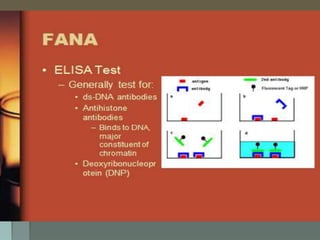
 Enzyme immunoassay (EIA)
 Immunofluorescence assay (IFA)
 Indirect or direct
ANA in Lupus
 Sensitivity 93-99% in SLE
 Sensitivity 95-100% in drug induced Lupus
 Specificity is not great
 Higher the titer, higher the specificity
1:40- 30% normal population
1:160- seen in 5% of the population
ANA
 ANA: positive in 95% of cases. Pretest
probability affects interpretation. In PCP setting,
2% for SLE. In rheum: 30%
 Low Positive (1:160 or lower): SLE likelihood
<2% (<26% for rheumatologists)
 High Positive (1:320 or higher): SLE likelihood:
2-17% (32-81% for rheumatologists)
 SLE specific patterns: Rim and Homogenous
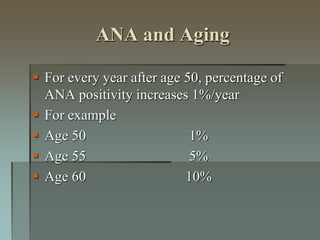
ANA and Aging
 For every year after age 50, percentage of
ANA positivity increases 1%/year
 For example
 Age 50 1%
 Age 55 5%
 Age 60 10%
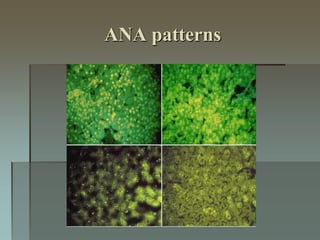
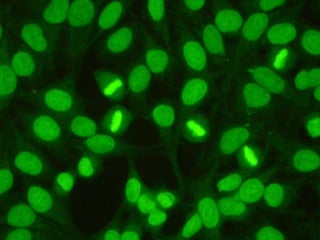
ANA patterns
ANA patterns
Staining Patterns
 Observer dependent
 Not sensitive
 Not specific
 Only LOOSELY associated with certain
disease states
ANA measurement
Indirect Immunofluorescence Assay
1. Take patient serum and add it cells
2. If there are antibodies they will bind
3. Add a fluorochrome tag
4. View under a fluorescent microscope
5. If it lights up in the nucleus then it is positive
6. Dilute sample and repeat steps 1-5 until nuclear
fluorescence disappears
Clinical Indications for ANA
 ANA is NOT a good screening test given its low
specificity
 Presence of ANA does NOT mandate the presence
of rheumatologic illness
 A negative ANA is more useful and makes Lupus
very unlikely
 ANA titers correlate poorly with disease activity so
serial measurements are not recommended
 A positive ANA with anti-centromere pattern is
very specific for limited scleroderma
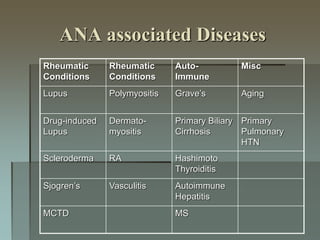
ANA associated Diseases
Rheumatic
Conditions
Rheumatic
Conditions
Auto-
Immune
Misc
Lupus Polymyositis Grave’s Aging
Drug-induced
Lupus
Dermato-
myositis
Primary Biliary
Cirrhosis
Primary
Pulmonary
HTN
Scleroderma RA Hashimoto
Thyroiditis
Sjogren’s Vasculitis Autoimmune
Hepatitis
MCTD MS
Poor Prognostic Factors
 Renal disease (esp DPGN)
 Hypertension
 Male sex
 Young age
 Older age at presentation
 Poor socioeconomic status
 Black race, which may primarily reflect low socioeconomic
status
 Presence of antiphospholipid antibodies
 Antiphospholipid syndrome
 High overall disease activity
Mortality
 Bimodal mortality
 Early deaths: infection and renal
involvement
 Later deaths: atherosclerotic disease
 Premenopausal women with lupus have
30-50x higher risk of CAD than their non-
lupus counterparts
THANKYOU

systemic lupus erythematosus

  • 1.
  • 2.
    History of Lupus Lupus means “wolf” in Latin  10th century- case reports appeared in writings  Late 1800s- Sir William Osler initially described the systemic nature and linked rashes to organ involvement  1949- LE cell described by Malcolm Hargraves at Mayo Clinic  1954- ANA described  1971- First set of classification criteria proposed for Lupus  1983- Antiphospholipid antibody syndrome described
  • 3.
    History  1948 –Malcolm Hargraves discovers the lupus erythematosus (LE) cell.  1957 – The first anti-DNA antibody is identified.
  • 4.
  • 5.
  • 6.
    What exactly isLupus?  Autoimmune disease where one’s immune system attacks itself  Autoantibody production -> immune complex deposition -> inflammation -> damage  Chronic disease, characterized by flares and remission  Pleomorphic with different phenotypic expressions  Multisystem involvement
  • 7.
    Types Of Lupus Drug Induced Lupus  Neonatal Lupus  Cutaneous Lupus  Systemic Lupus Erythematosus
  • 8.
    Cutaneous  Most commonrash is photosensitive, raised erythematous malar rash. 55-85% develop at some point in disease  Discoid Lupus Erythematosus (DLE): 15-30% circular, scaly hyperpimented lesions with erythematous rim, atrophic center—can be disfiguring involving the bridge of the nose and adjacent cheeks.  Mouth/vaginal/nasal ulcers  Alopecia: may be diffuse or patchy. Occurs 50%
  • 9.
    Drug- Induced Lupus Approximately 80 offending agents can cause lupus  15,000- 30,000 cases reported annually  Production of autoantibodies more common than clinical symptoms  99% disappear within 3 months of stopping the medicine.
  • 10.
    Neonatal Lupus  Rarecondition  not true lupus, passively transferred autoimmune disease  Occurs when mother is SSA/SSB positive  Transplacental transfer of IgG anti SSA or SSB antibodies  5-7% babies will have a transient rash, resolves by 6-8 months  2% of babies will have cardiac complications with congenital heart block
  • 11.
    SYSTEMIC LUPUS ERYTHEMATOSUS (SLE) Prevalence of 40 to 50 cases / 100,000  Major causes of mortality  Infections and nephritis (early)  Athrosclerosis (late)  Risk factors  Genetics (HLA-A1, HLA-B8 and HLA-DR3)  Race (AA, Hispanic, Asia > Caucasian)  Hormones  Chemicals  Microorganisms
  • 12.
    SYSTEMIC LUPUS ERYTHEMATOSUS (SLE) Autoimmune disease affecting multiple organ systems  Relapsing (flares) and remitting course  Protean clinical manifestations  Etiology is unknown  Female to male ratio is 9:1  Age of onset  16 to 55 years (65%)  < 16 years (20%)
  • 13.
    Who get’s Lupus? Prevalence is over 1.5 million Americans  Incidence difficult due to lack of strict definition  Bimodal peak presentation: ages 20-40 and again after age 60  Prevalence is higher in African Americans, Asians, Hispanics  Female to male predominance
  • 14.
    pathogenesis  Immunologic factors; Inherited defect in B cells  Stimulation of B cells by microorganisms  T helper cell hyperactivity  T suppressor cell defect
  • 15.
    pathogenesis  Genetic factors;immunoregulatory function of class II HLA genes  Other factors  Drugs ; pencillamineD  Viral infections; EBV infection  Hormones; oestrogen
  • 16.
    pathogenesis  Type IIhypersensitivity ; formation of autoantibodies against red blood cell,platelets, leucocytes results in haematologic derangement  Type III hypersensitivity; Ag and Ab complex and deposited at renal glomeruli and walls of small blood vessels
  • 17.
    Does your sexreally matter?  90% of patients with lupus are female  Before puberty F:M ratio is 2:1  During reproductive years ratio 8:1  Post-menopausal ratio 2.3:1  Increased frequency in women attributed to the hormonal effect of estrogen
  • 18.
    Does your sexreally matter?  Nurses Health Study  use of estrogen-containing contraceptive agents associated with an 50 percent increase in risk of developing SLE  either early onset of menarche (age ≤ 10 years) or administration of estrogen to postmenopausal women doubles their risk  Treatment of clinically stable SLE with oral contraceptives for one year does not increase disease flares
  • 19.
    Overactive B-cells  Estrogenis a stimulator of B-cell activity  Lupus is much more prevalent in females of ages 15-45  Height of Estrogen production  IL-10, also a B-cell stimulator is in high concentration in lupus patient serum.  High concentration linked to cell damage caused by inflammation
  • 20.
    Genetic Associations  HLA’sare loci on genes that code for certain β chain on the MHC complex  HLA-DR2  HLA-DR3  HLA-DQB1 – Involved in mediating production of antibodies to ds-DNA
  • 21.
    Genetics of Lupus High concordance in monozygotic twins  5-12% or relatives with lupus have the disease  No single lupus gene  Disease is polygenic  At least 30 susceptiblility genes identified  HLADR2, HLADR3, HLADR4, HLADR8 (present in 75%)  Homozygous deficiency of C1q complement
  • 22.
    Environmental Factors  UVAand UVB light can stimulate/ up-regulate autoimmunity stimulating keratinocytes to produce cytokines -> activate B cells to produce ab  Viruses/Bacteria: molecular mimicry SLE patients have higher titers of antibodies to Epstein-Barr virus (EBV), increased circulating EBV viral loads; SSA ab has a sequence similar to EBV nuclear ag 1 Parvovirus B19  Drugs  Silica exposure, tobacco smoke, emotional stress
  • 23.
  • 24.
    Immune dysregulation  Upregulationof innate immunity  Delayed clearance of apoptotic cells, resulting in antigenic stimulation  Loss of tolerance via failed elimination of autoreactive T lymphocytes  Abnormalities in B cells  Abnormalities in T regulatory cells (CD4+/CD25+ cells down regulate immune system responses)
  • 26.
    Autoantibodies in Lupus Study of US army recruits revealed lupus autoab present for up to 9 years prior to dx in 85%  ANA  dsDNA  Anti-Smith  Anti-RNP  Anti-SSA, anti-SSB-ANTI RIBONUCLEOPROTEIN  Anticardiolipin,ANTIPHOSPHOLIPID ,anti-histone  Anti B2 glycoprotein,antiribosomal
  • 27.
    Immunoglobulins  Anti-dsDNA IgG:very specific, may correlate with disease activity  Anti-Sm: specific, but only present in 25% of cases, does not correlate with activity  APLA: not specific. Used to identify patients at increased risk for clots, thrombocytopenia and fetal loss
  • 28.
    Activation of Complement System Complement system is activated by the binding of antibodies to foreign debris.  In this case its over activation  RBCs lack CR1 receptor  Decreasing the effective removal of complexes
  • 31.
    How do patientspresent?  Myriad of symptoms  Symptoms are often non-specific  No two patients are alike  50% of patients have organ threatening disease  50% do not have organ threatening disease
  • 32.
    CLINICAL MANIFESTATIONS OF SLE General (Constitutional)  Fever, chills, headache, fatigue, malaise and weight loss  Renal  Hematuria, proteinuria  Skin  Malar “Butterfly” rash  Photosensitivity rash  Cardiac  Myocarditis, pericarditis, endocarditis
  • 33.
    CLINICAL MANIFESTATIONS OF SLE Central nervous system  Cognitive dysfunction  Pulmonary  Pleurisy  Musculoskeletal  Myalgias, arthralgias and arthritis  Hematologic  Anemia, leukemia, thrombocytopenia  Lymphatic system  Lymphadenopathy
  • 34.
    Symptoms  Non-specific:  Fatigue Weight loss  Malaise = generally feeling ill  Fever  Anorexia (over time)  Arthritis  90% of patients experience arthritic symptoms  Symmetrical  Appears in hands, wrists, and knees mainly
  • 35.
    CUTANEOUS LESIONS  Butterfly area on nose and cheek  LM shows liquefactive degeneration of basal layer of epidermis ,oedema at dermoepidermal junction, acute necrotising vasculitis in dermis  IF shows immune complex deposits (IgG and C3) at dermoepidermal junction.
  • 36.
    Skin Manifestations • Malaror Butterfly Rash • Discoid Rash – Stimulated by UV light • Skin manifestations only appear in 30- 40% of lupus patients.
  • 38.
  • 41.
  • 42.
  • 43.
  • 44.
    Neonatal Lupus  Seeerythematous,  annular plaques  tends to involve  scalp, face,  periorbital areas
  • 46.
    Blood vessels  Skinand muscles involved  Light microscopy shows fibrinoid deposits in the vessel wall ,perivascular infiltrate of mononuclear cells.  Acute necrotising vasculitis
  • 47.
  • 48.
  • 49.
  • 50.
  • 51.
    Serositis - Pulmonary Pleuritis with or without effusion - if case is mild, tx: NSAIDS - if case is severe, tx: steroids  Life-threatening manifestations: interstitial inflammation which can lead to fibrosis and intra-alveolar hemorrhage.  Also pneumothorax and pulmonary HTN can occur
  • 52.
    Other Manifestations  Cardiac Central Nervous System  Hematological
  • 53.
    Serositis – Cardiac Pericarditis: most common cardiac manifestation  Myocarditis (rare) and fibrinous endocarditis (Libman-Sacks) may occur.  MI due to atherosclerosis can occur in <35 y/o  Vegetations on mitral and tricuspid valve  Vegetations show fibrinoid material ,necrotic debris, inflammatory cells.  Endocardium and myocardium shows focal inflammation and necrotising vasculitis
  • 54.
    Neuro  Cranial orperipheral neuropathy occurs in 10-15%, it is probably secondary to vasculitis in small arteries supplying nerves.  Diffuse CNS dysfunction: memory and reasoning difficulty  Headache: if excruciating, often indicate acute flare  Seizures of any type  Psychosis: must distinguish from steroid-induced psychosis (occurs in 1st weeks of tx at doses ≥40mg prednisone and resolves after several days of reducing or stopping tx)
  • 55.
    Cont.  TIA, Stroke:mostly increased among patients that are APLA positive  50-fold increase in risk of vascular events in women under 45 compared to healthy women  Treatment for clotting event is long-term anticoagulation
  • 56.
    Heme  Anemia: usuallyNormochromic, normocytic  Leukopenia: almost always consists of lymphopenia, not granulocytopenia  Thrombocytopenia
  • 57.
    Renal  Nephritis: usuallyasymptomatic, so always check UA if patient has known or suspected SLE  Occurs early in course of disease-if not present w/in 1 yr, probably will not occur.  Histologic classification by renal biopsy is useful to plan therapy
  • 58.
    Histologic Classifications  ClassI is minimal mesangial glomerulonephritis which is histologically normal on light microscopy but with mesangial deposits on electron microscopy class II is based on a finding of mesangial proliferative lupus nephritis. Mesangial hypercellularity, subepithelial or subendothelial deposits on electron microscopy. Class III is focal lupus nephritis ;proliferation of endothelial , mesangial and epithelial cells. Focal sub endothelial deposits on electron microscopy
  • 59.
     Class IVis diffuse proliferative nephritis. Proliferation of endothelial,mesangial and epithelial cells.diffuse subendothelial deposits on electron microscopy.  Class V is membranous nephritis and diffuse basement membrane thickening electron microscopy shows segmental subepithelial deposits.  Class VI Glomerulosclerosis- sclerosis of 90%glomeruli.
  • 61.
    Laboratory Findings inSLE  97% positive ANA  61% low complement levels (C3, C4)  50% dsDNA ab  46% leukopenia  42% anemia  40% proteinuria, nephritis  35% anticardiolipin antibodies  25% sjogren’s syndrome with positive SSA, SSB  12% pleural effusion  Others: thrombocytopenia, anti SM, antiRNP, elevated LFTs, splenomegaly, thrombophilia, miscarriages
  • 62.
    Criteria 1. Butterfly rash 2.Discoid lupus 3. Photosensitivity 4. Oral ulcers 5. Arthritis 6. Serositis 7. Neurologic d/o 8. Hematologic d/o 9. Renal d/o 10.Immunologic: anti- DNA, anti-Sm, 11.Anti-nuclear antibody
  • 63.
    AMERICAN COLLEGE OFRHEUMATOLOGY (ACR) CRITERIA FOR DIAGNOSIS OF SLE  Serositis (Pleurisy, pericarditis)  Oral ulcers  Arthritis  Photosensitivity  Blood disorders (Leukopenia, thrombocytopenia)  Renal involvement  Antinuclear antibodies (ANA)  Immunologic phenomena [false-positive Rapid Plasma Reagin (RPR)]  Neurologic disorder  Malar rash  Discoid rash
  • 64.
    ACR 1997 revisedcriteria  1. malar rash  2. discoid rash  3. photosensitivity  4. oral or nasal ulcers  5. arthritis  6. serositis: pleuritis or pericarditis  7. renal disorder: proteinuria > 500mg/day, cells  8. immunologic: anti SM, anti dsDNA, ACL, lupus ac  9. hematologic: anemia, leukopenia, thrombocytopenia  10. neurologic: seizures or psychosis  11. positive ANA in absence of drugs
  • 65.
    Diagnosis of SLE Initial criteria proposed by the ACR in 1971, revised in 1982 and 1997  Criteria designed for research purposes  Need 4 of 11 criteria for diagnosis of SLE  Not perfect, but have over 90% sensitivity and specificity  Currently two international groups are re- evaluating the criteria
  • 66.
    2012 SLICC ClassificationCriteria  Need at least 4 criteria (1 clinical and 1 lab)  Or biopsy proven Lupus Nephritis with Pos ANA or pos dsDNA
  • 67.
    LE Cell  TheLE cell is a neutrophil that has engulfed the antibody- coated nucleus of another neutrophil.  LE cells may appear in rosettes where there are several neutrophils vying for an individual complement covered protein.
  • 68.
    Autoantibodies in Lupus Study of US army recruits revealed lupus autoab present for up to 9 years prior to dx in 85%  ANA  dsDNA  Anti-Smith  Anti-RNP  Anti-SSA, anti-SSB  Anticardiolipin  Anti B2 glycoprotein
  • 69.
    Meaning of ANAs Whatexactly are they?  Antibodies that bind to various antigens in the nucleus of a cell How is it measured?  Indirect Immunofluorescence
  • 70.
    ANTINUCLEAR ANTIBODY (ANA) TEST  Diagnostictest for autoimmune diseases  Detects autoantibodies against nuclear and cytoplasmic antigens  Nuclear and cytoplasmic antigens  DS-DNA, SS-A, SS-B, Smith, RNP,  Laboratory methods  Enzyme immunoassay (EIA)  Immunofluorescence assay (IFA)  Indirect or direct
  • 71.
    ANA in Lupus Sensitivity 93-99% in SLE  Sensitivity 95-100% in drug induced Lupus  Specificity is not great  Higher the titer, higher the specificity 1:40- 30% normal population 1:160- seen in 5% of the population
  • 72.
    ANA  ANA: positivein 95% of cases. Pretest probability affects interpretation. In PCP setting, 2% for SLE. In rheum: 30%  Low Positive (1:160 or lower): SLE likelihood <2% (<26% for rheumatologists)  High Positive (1:320 or higher): SLE likelihood: 2-17% (32-81% for rheumatologists)  SLE specific patterns: Rim and Homogenous
  • 74.
    ANA and Aging For every year after age 50, percentage of ANA positivity increases 1%/year  For example  Age 50 1%  Age 55 5%  Age 60 10%
  • 75.
  • 76.
    ANA patterns Staining Patterns Observer dependent  Not sensitive  Not specific  Only LOOSELY associated with certain disease states
  • 78.
    ANA measurement Indirect ImmunofluorescenceAssay 1. Take patient serum and add it cells 2. If there are antibodies they will bind 3. Add a fluorochrome tag 4. View under a fluorescent microscope 5. If it lights up in the nucleus then it is positive 6. Dilute sample and repeat steps 1-5 until nuclear fluorescence disappears
  • 79.
    Clinical Indications forANA  ANA is NOT a good screening test given its low specificity  Presence of ANA does NOT mandate the presence of rheumatologic illness  A negative ANA is more useful and makes Lupus very unlikely  ANA titers correlate poorly with disease activity so serial measurements are not recommended  A positive ANA with anti-centromere pattern is very specific for limited scleroderma
  • 80.
    ANA associated Diseases Rheumatic Conditions Rheumatic Conditions Auto- Immune Misc LupusPolymyositis Grave’s Aging Drug-induced Lupus Dermato- myositis Primary Biliary Cirrhosis Primary Pulmonary HTN Scleroderma RA Hashimoto Thyroiditis Sjogren’s Vasculitis Autoimmune Hepatitis MCTD MS
  • 83.
    Poor Prognostic Factors Renal disease (esp DPGN)  Hypertension  Male sex  Young age  Older age at presentation  Poor socioeconomic status  Black race, which may primarily reflect low socioeconomic status  Presence of antiphospholipid antibodies  Antiphospholipid syndrome  High overall disease activity
  • 84.
    Mortality  Bimodal mortality Early deaths: infection and renal involvement  Later deaths: atherosclerotic disease  Premenopausal women with lupus have 30-50x higher risk of CAD than their non- lupus counterparts
  • 89.