B Y : - N U H A FA D H I L
U N I V E R S I T Y O F B A G H D A D / C O L L E G E O F
D E N T I S T R Y
VIRAL INFECTION
INTRODUCTION
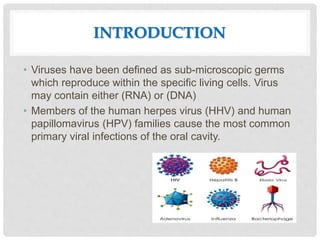
• Viruses have been defined as sub-microscopic germs
which reproduce within the specific living cells. Virus
may contain either (RNA) or (DNA)
• Members of the human herpes virus (HHV) and human
papillomavirus (HPV) families cause the most common
primary viral infections of the oral cavity.
HERPES SIMPLEX VIRUS INFECTIONS
Herpes Virus :-
• are DNA viruses with icosahedral nucleocapsid,
tegument and outer lipid envelope.
• transmitted through saliva or body fluids.
Classification
• 1-Primary herpetic gingivostomatitis
• 2-Secondary or recrudescent herpetic lesions.
HERPES SIMPLEX VIRUS INFECTIONS
Etiopathogenesis
• The virus binds to cell surface of mucosae or abraded
skin via heparin sulfate and mediates cell attachment
and penetration
• HSV is neuro-invasive and neurotoxic and establish
latent infection in the sensory ganglion (trigeminal
ganglion)
• Extraheuronal latency (i.e., HSV remaining latent in
cells other than neurons such as the epithelium)
HERPES SIMPLEX VIRUS INFECTIONS
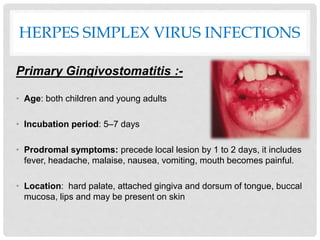
Primary Gingivostomatitis :-
• Age: both children and young adults
• Incubation period: 5–7 days
• Prodromal symptoms: precede local lesion by 1 to 2 days, it includes
fever, headache, malaise, nausea, vomiting, mouth becomes painful.
• Location: hard palate, attached gingiva and dorsum of tongue, buccal
mucosa, lips and may be present on skin
HERPES SIMPLEX VIRUS INFECTIONS
• Appearance: After few days of prodrome, Multiple small vesicles which
are thin walled, surrounded by inflammatory base are formed They
quickly rupture leaving small, shallow, oval-shaped discrete ulcers (1 to
5mm) . Base of the ulcer is covered with grayish white or yellow plaque.
HERPES SIMPLEX VIRUS INFECTIONS
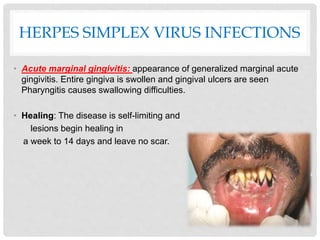
• Acute marginal gingivitis: appearance of generalized marginal acute
gingivitis. Entire gingiva is swollen and gingival ulcers are seen
Pharyngitis causes swallowing difficulties.
• Healing: The disease is self-limiting and
lesions begin healing in
a week to 14 days and leave no scar.
HERPES SIMPLEX VIRUS INFECTIONS
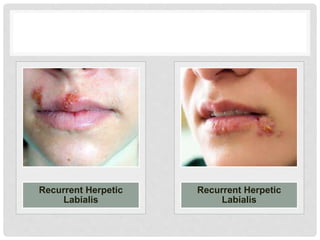
Recurrent Herpetic Labialis :-
• Prodromal symptoms: lesion is preceded by tingling and
burning sensation, swelling or slight soreness (edema)
with subsequent development of vesicle.
• Location : Most lesions appear on vermillion of lip and
surrounding skin.
• Healing: The lesions gradually heal within 6–10 days and
leave no scars
Recurrent Herpetic
Labialis
Recurrent Herpetic
Labialis
HERPES SIMPLEX VIRUS INFECTIONS
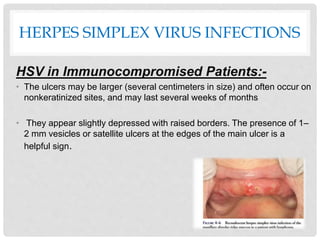
HSV in Immunocompromised Patients:-
• The ulcers may be larger (several centimeters in size) and often occur on
nonkeratinized sites, and may last several weeks of months
• They appear slightly depressed with raised borders. The presence of 1–
2 mm vesicles or satellite ulcers at the edges of the main ulcer is a
helpful sign.
HERPES SIMPLEX VIRUS INFECTIONS
Other lestions :-
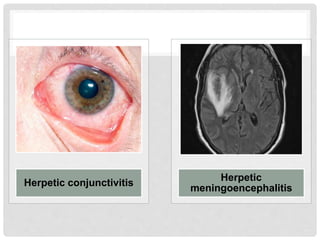
• Herpetic meningoencephalitis: This is serious form
characterized by sudden fever and symptoms of increased
intracranial pressure. Paralysis even death may occur .
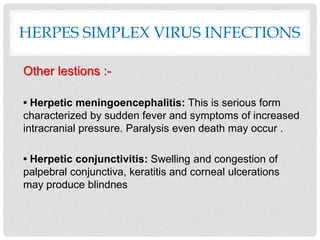
• Herpetic conjunctivitis: Swelling and congestion of
palpebral conjunctiva, keratitis and corneal ulcerations
may produce blindnes
Herpetic conjunctivitis
Herpetic
meningoencephalitis
HERPES SIMPLEX VIRUS INFECTIONS
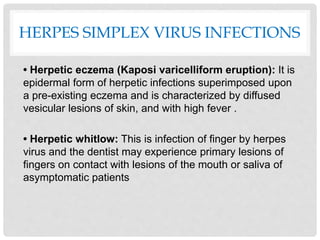
• Herpetic eczema (Kaposi varicelliform eruption): It is
epidermal form of herpetic infections superimposed upon
a pre-existing eczema and is characterized by diffused
vesicular lesions of skin, and with high fever .
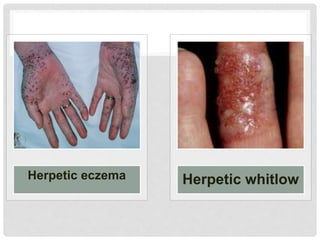
• Herpetic whitlow: This is infection of finger by herpes
virus and the dentist may experience primary lesions of
fingers on contact with lesions of the mouth or saliva of
asymptomatic patients
Herpetic eczema Herpetic whitlow
HERPES SIMPLEX VIRUS INFECTIONS
Diagnosis
• History: previous infection or history of close contact with
infected person
• Typical clinical features: Prodromal symptoms followed by
eruption of oral vesicles and acute marginal gingivitis and do
not have history of recurrent herpes
• HSV isolation: Isolation and neutralization of virus in tissue
culture is most positive method of identification.
• Antibody titer: Antibodies to HSV appear in a week and
reach peak in 3 weeks. Direct fluorescent antigen detection
testing is more accurate than routine cytology.
HERPES SIMPLEX VIRUS INFECTIONS
Management
1-Primary HSV Infection
• Pain control :- 2% lidocaine, 0.5% benzocaine hydrochloride.
• Supportive care:- hydration and electrolyte balance, OHI.
• Definitive treatment:- Acyclovir suspension 15 mg/kg or
acyclovir tablets 200 mg five times daily for 5 days
Valacyclovir tablets 500 mg or famciclovir 250 mg twice/day
for 5 days
HERPES SIMPLEX VIRUS INFECTIONS
2- Recrudescent HSV
• For intraoral lesions, treatment is with 500–1000 mg
valacyclovir three times a day or 400–800 mg of acyclovir
for 7–10 days.
• For herpes labialis Topical antiviral medications such as 5%
acyclovir cream, 1% penciclovir cream, and 10% docosanol
cream applied 5 to 8 times day at the first prodrome or sign
of a lesion.
• Systemic therapy with valacyclovir (2 g every 12 hours for
one day) or famciclovir (1500 mg single dose)
HERPES SIMPLEX VIRUS INFECTIONS
3- HSV in Immunocompromised Patients
• For patients undergoing hematopoietic cell transplantation
who are HSV seropositive (acyclovir 400 mg three times a
day or 500 mg valacyclovir twice a day).
• Acyclovir-resistant HSV is most frequently seen in this group
of patients, In such cases, foscarnet or cidofovir is effective.
VARICELLA ZOSTER INFECTIONS
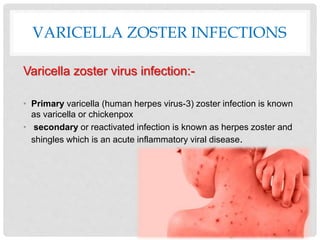
Varicella zoster virus infection:-
• Primary varicella (human herpes virus-3) zoster infection is known
as varicella or chickenpox
• secondary or reactivated infection is known as herpes zoster and
shingles which is an acute inflammatory viral disease.
VARICELLA ZOSTER INFECTIONS
Pathogenesis
• Transmission:- respiratory route During incubation period 2-3
weeks virus proliferates in macrophages, and dissemination to the
skin and other organs. Then become latenet within dorsal root or
cranial nerves ganglion
• Predisposing factors:- increase with the age
,Immunocompromised patients, HIV infection, leukemia or cance,
trauma, and radiation.
VARICELLA ZOSTER INFECTIONS
Chickenpox or Primary Varicella Zoster
Infection:-
• Incubation period: 2 weeks
• Prodromal symptoms:headache, nasopharyngitis and
anorexia, followed by maculopapular or vesicular eruptions
on skin and low grade fever
• Location: begin on the trunk and spread to involve the face
and extremities
• Healing: heals by desquamation seldom leaving any after
effects recover at 2-3 weeks.
VARICELLA ZOSTER INFECTIONS
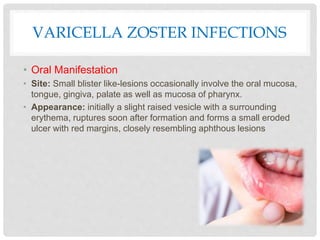
• Oral Manifestation
• Site: Small blister like-lesions occasionally involve the oral mucosa,
tongue, gingiva, palate as well as mucosa of pharynx.
• Appearance: initially a slight raised vesicle with a surrounding
erythema, ruptures soon after formation and forms a small eroded
ulcer with red margins, closely resembling aphthous lesions
VARICELLA ZOSTER INFECTIONS
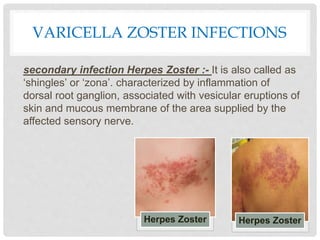
secondary infection Herpes Zoster :- It is also called as
‘shingles’ or ‘zona’. characterized by inflammation of
dorsal root ganglion, associated with vesicular eruptions of
skin and mucous membrane of the area supplied by the
affected sensory nerve.
Herpes Zoster Herpes Zoster
VARICELLA ZOSTER INFECTIONS
• Age and sex distribution: It affects adults and there is no sex
prediction
• Prodromal symptoms :- aching, or burning pain. There is usually
little to no fever or lymphadenopathy. This is followed within(2 to 4
days by the appearance of crops of vesicles in a dermatomal or
zosteriform pattern.
• Appearance: Unilateral vesicles on an erythematous base appear
in clusters.
• Healing: Vesicle turns into scab in 1 week and healing takes place
in 2–4 weeks, usually followed by scarring and hypopigmentation
VARICELLA ZOSTER INFECTIONS
• Nerves: Nerves commonly affected are C3, T5, L1, L2 and first
division of trigeminal nerve It may affect motor nerve
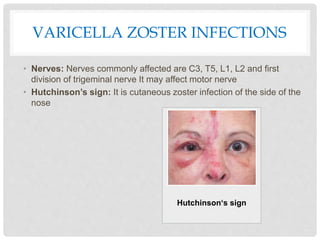
• Hutchinson’s sign: It is cutaneous zoster infection of the side of the
nose
Hutchinson‘s sign
VARICELLA ZOSTER INFECTIONS
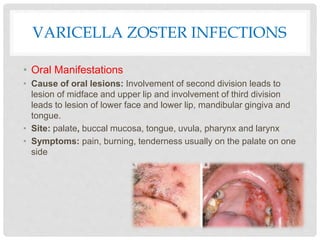
• Oral Manifestations
• Cause of oral lesions: Involvement of second division leads to
lesion of midface and upper lip and involvement of third division
leads to lesion of lower face and lower lip, mandibular gingiva and
tongue.
• Site: palate, buccal mucosa, tongue, uvula, pharynx and larynx
• Symptoms: pain, burning, tenderness usually on the palate on one
side
VARICELLA ZOSTER INFECTIONS
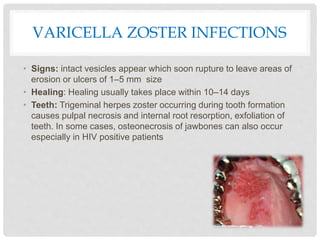
• Signs: intact vesicles appear which soon rupture to leave areas of
erosion or ulcers of 1–5 mm size
• Healing: Healing usually takes place within 10–14 days
• Teeth: Trigeminal herpes zoster occurring during tooth formation
causes pulpal necrosis and internal root resorption, exfoliation of
teeth. In some cases, osteonecrosis of jawbones can also occur
especially in HIV positive patients
VARICELLA ZOSTER INFECTIONS
Diagnosis
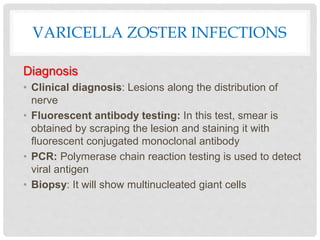
• Clinical diagnosis: Lesions along the distribution of
nerve
• Fluorescent antibody testing: In this test, smear is
obtained by scraping the lesion and staining it with
fluorescent conjugated monoclonal antibody
• PCR: Polymerase chain reaction testing is used to detect
viral antigen
• Biopsy: It will show multinucleated giant cells
VARICELLA ZOSTER INFECTIONS
Management
1-Chickenpox or Primary Varicella Zoster Infection:-
• Pain control: ibuprofen is the preferred analgesig. Aspirin use
especially in children is contraindicated as it’s associated with the
development of(Reye syndrome)
• Control of pruritis: Warm baths with soap application of calamine
lotion
• Antiviral drug: Acyclovir (800 mg five times a day. Valacyclovir (1000
mg 3 times a day) or famciclovir (500 mg) 3 times a day)
• **this treatment should be started within 72 hours of disease onset.
VARICELLA ZOSTER INFECTIONS
2- secondary infection Herpes Zoster :-
• Local antiseptic:- be applied to the skin. At the first sign of secondary
infection
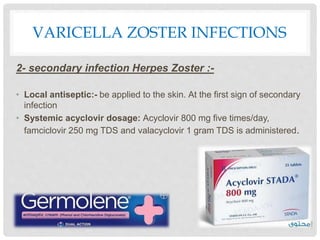
• Systemic acyclovir dosage: Acyclovir 800 mg five times/day,
famciclovir 250 mg TDS and valacyclovir 1 gram TDS is administered.
VARICELLA ZOSTER INFECTIONS
Complication :-
Post herpetic neuralgia a morbid sequela of HZI, defined as pain
that remainds for 120 days after onset of rash is a neuropathy
resulting from peripheral and central nervous system injury
Symptoms: rash which is followed by pain thatcontinue for weeks
to months.There may be paresthesia, hyperesthesia and allodynia.
In some cases, there is also presence of deficit. Sensory deficit
The first line of treatment
Gabapentin, 5% lidocaine patch, and 0.025%-0.8% topical
capsaicin,
The second 1line of treatment
Opioid analgesics and Tricyclic antidepressants.
VARICELLA ZOSTER INFECTIONS
COXSACKIEVIRUS
Coxsackievirus Infection They are RNA retroviruses They
are divided into 2 groups:
•Type A: 24 types
• Type B: 6 types.
• These viruses can cause hepatitis, meningitis, myocarditis,
pericarditis and respiratory disease. These diseases occur
more frequently from June to October
Transmission
• Fecal oral route: It is major path of transmission.
• Saliva: during acute condition.
• Predisposing factors: Overcrowding, poor oral hygiene
may aid to infection .
COXSACKIEVIRUS
Herpangina:-
• It is also called as ‘aphthous pharyngitis’, ‘ vesicular pharyngitis’.
Clinical Features
• Age: young children aged 3 to 10 years
• Incubation period: 2 to 10 days
• Site: It occurs on posterior pharynx, tonsil, faucial pillars and soft palate
COXSACKIEVIRUS
• Prodromal symptoms: fever, chills, headache, anorexia, prostration,
abdominal pain and sometimes vomiting. Sore throat, dysphagia and
occasionally, sore mouth can occur
• Ulceration: Lesion starts as punctate macule which evolves into papules
and vesicles . Within 24 to 48 hours, vesicles get ruptured forming small
1 to 2 mm ulcers show a gray base and inflamed periphery
• Healing: They generally heal without treatment in 1 week .
Diagnosis
Lesions are seen in posterior part of oral mucosa.
COXSACKIEVIRUS
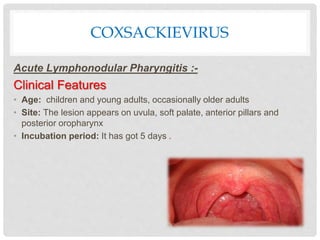
Acute Lymphonodular Pharyngitis :-
Clinical Features
• Age: children and young adults, occasionally older adults
• Site: The lesion appears on uvula, soft palate, anterior pillars and
posterior oropharynx
• Incubation period: It has got 5 days .
COXSACKIEVIRUS
• Symptoms: sore throat, 41°C temperature, mild headache, anorexia
and loss of apetite
• Appearance: Lesion is non-vascular, non-ulcerated, tender, superficial
and bilateral and whitish to yellowish solid papules of 3 to 6 mm in
diameter, surrounded by narrow well-defined zone of erythema
Diagnosis
Whitish nodule with sore throat can lead to diagnosis.
Management
• Symptomatic treatment: anti-pyretic and topical anesthetics
• Nutritional supplement: As eating and swallowing is difficult, patient
should be given proper hydration
COXSACKIEVIRUS
Hand, Foot and Mouth Disease:-
Clinical Features
• Age: children between the age of 6 months and 5 years
• Symptoms: There is anorexia, low grade fever, diarrhea, nausea and vomiting
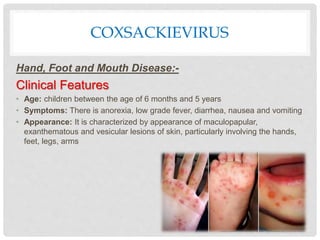
• Appearance: It is characterized by appearance of maculopapular,
exanthematous and vesicular lesions of skin, particularly involving the hands,
feet, legs, arms
COXSACKIEVIRUS
Oral Manifestations
• Sites: hard palate, tongue and buccal mucosa
• Symptoms: A sore mouth with refusal to eat
• Appearance: Oral lesions are more extensive than
herpangina. The tongue may become red and edematous.
Clinical manifestations last for 3 to 7days .
Diagnosis
Oral lesion in association with skin lesion.
CYTOMEGALOVIRUS
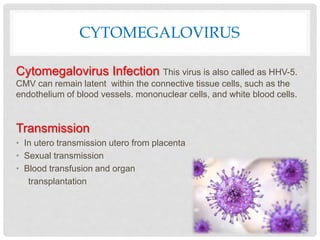
Cytomegalovirus Infection This virus is also called as HHV-5.
CMV can remain latent within the connective tissue cells, such as the
endothelium of blood vessels. mononuclear cells, and white blood cells.
Transmission
• In utero transmission utero from placenta
• Sexual transmission
• Blood transfusion and organ
transplantation
CYTOMEGALOVIRUS
Clinical Features
• Adult’s infection: There is fever, malaise, myalgia, abnormal liver function.
Petechial hemorrhages can also occur. Patient may also suffer from pneumonia,
microcephaly, cerebral calcification and hearing defect.
• Primary CMV infection infectious mononucleosis-like disease with marked
lymphocytosis
• Serious complications include meningoencephalitis, myocarditis, and
thrombocytopenia.
• patients with AIDS Approximately 90% of have circulating antibodies against
CMV. In these patients infection include the eye (CMV retinitis ) gastrointestinal
tract ( CMV enteritis), and mucocutaneous sites, especially perianal and
perigenital areas.
CYTOMEGALOVIRUS
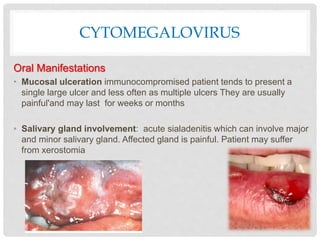
Oral Manifestations
• Mucosal ulceration immunocompromised patient tends to present a
single large ulcer and less often as multiple ulcers They are usually
painful'and may last for weeks or months
• Salivary gland involvement: acute sialadenitis which can involve major
and minor salivary gland. Affected gland is painful. Patient may suffer
from xerostomia
CYTOMEGALOVIRUS
Diagnosis
• Clinical diagnosis: CMV produces deep, penetrating oral ulcerations
on the lips, tongue, pharynx, or any mucosal site
• Laboratory diagnosis: Characteristic “owl’s eye” appearance of
cellular inclusions during the histologic examination.
Management
• Pain control :- topical anesthetics and systemic analgesics as
needed
• Supportive care :- dietary modifications and good hydration.
• Anti-viral drugs :- ganciclovir, valganciclovir
MEASLES VIRUS
measles virus (MV) is a single-stranded, negative-sense, enveloped,
non-segmented RNA virus of the genus Morbillivirus within the family
Paramyxoviridae.
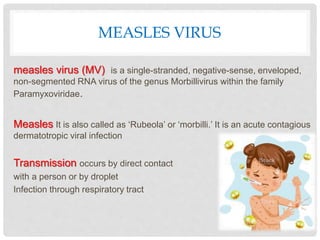
Measles It is also called as ‘Rubeola’ or ‘morbilli.’ It is an acute contagious
dermatotropic viral infection
Transmission occurs by direct contact
with a person or by droplet
Infection through respiratory tract
MEASLES VIRUS
Clinical Features
• Incubation period: 8 to 10 days
• Prodromal symptoms: Onset of fever, malaise, cough and
coryza (running nose)
Oral Manifestations
• Onset: Oral lesions in buccal mucosa
precede 2 to 3 days before cutaneous rash
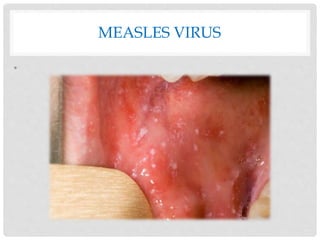
Koplik’s spots: Intraoral occur in 97% of cases They are
small, irregularly shaped flecks which appear as bluish white
specks surrounded by bright red margins.
MEASLES VIRUS
•
MEASLES VIRUS
Diagnosis
• Clinical diagnosis: Typical clinical features like Koplik’s
spots and history
• Laboratory diagnosis: It is done by virus isolation and
raised antibody titers.
Symptomatic treatment: Analgesic, anti-pyretic should be given
to patient to control pain and fever.
Drugs which are tried are ribavirin,
interferon, immunoglobulin and vitamin A.
Vaccination: MMR. Subcutaneous injection
in children over one year.
Second dose is given in 12 to 15 months
RUBELLA VIRUS
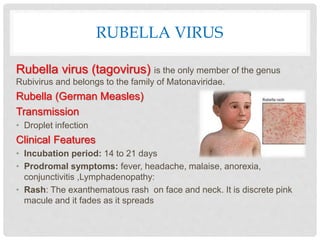
Rubella virus (tagovirus) is the only member of the genus
Rubivirus and belongs to the family of Matonaviridae.
Rubella (German Measles)
Transmission
• Droplet infection
Clinical Features
• Incubation period: 14 to 21 days
• Prodromal symptoms: fever, headache, malaise, anorexia,
conjunctivitis ,Lymphadenopathy:
• Rash: The exanthematous rash on face and neck. It is discrete pink
macule and it fades as it spreads
RUBELLA VIRUS
Oral Manifestation
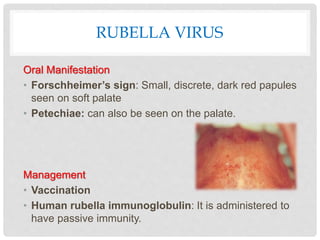
• Forschheimer’s sign: Small, discrete, dark red papules
seen on soft palate
• Petechiae: can also be seen on the palate.
Management
• Vaccination
• Human rubella immunoglobulin: It is administered to
have passive immunity.
HUMAN PAPILLOMAVIRUS
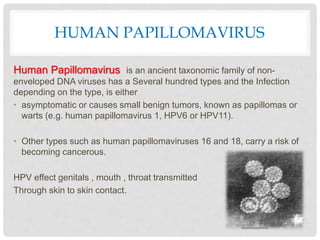
Human Papillomavirus is an ancient taxonomic family of non-
enveloped DNA viruses has a Several hundred types and the Infection
depending on the type, is either
• asymptomatic or causes small benign tumors, known as papillomas or
warts (e.g. human papillomavirus 1, HPV6 or HPV11).
• Other types such as human papillomaviruses 16 and 18, carry a risk of
becoming cancerous.
HPV effect genitals , mouth , throat transmitted
Through skin to skin contact.
HUMAN PAPILLOMAVIRUS
Mucosal human papillomaviruses (HPV) are the cause of head and
neck squamous cell carcinomas (HNSCC), yet the global prevalence and
type distribution of HPV in HNSCC remains unclear.
there may be no signs or symptoms of cervical cancer until it has progressed
to a dangerous stage.
Diagnosis :-
• Colposcopy and acetic acid test
• Biopsy
• DNA test (PCR, Southern Blot Hybridization, In Situ Hybridization)
• Pap smear
HUMAN PAPILLOMAVIRUS
Management
• Salicylic acid. acid work by removing layers of a wart
• Imiquimod (Aldara, Zyclara) cream might enhance your
immune system's ability
• Podofilox (Condylox). works by destroying genital wart
tissue
• Trichloroacetic acid. This chemical treatment burns off
warts on the palms, soles and genitals
• Surgical Treatment
i. Freezing with liquid nitrogen (cryotherapy)
ii. Burning with an electrical current (electrocautery)
iii. Surgical removal
iv. Laser surgery
EPSTEIN-BARR VIRUS (EBV)
• Epstein-Barr Virus (EBV) Infection The prevalence of EBV
antibodies increase in adolescence and early adulthood EBV
may occur as blood borne infection. And saliva
• EBV is associated with:
• Infectious mononucleosis
• Anaplastic nasopharyngeal carcinoma
• Burkitt’s lymphoma
• B cell lymphoma
• Hairy leukoplakia
Viral infection ppt

Viral infection ppt

  • 1.
    B Y :- N U H A FA D H I L U N I V E R S I T Y O F B A G H D A D / C O L L E G E O F D E N T I S T R Y VIRAL INFECTION
  • 2.
    INTRODUCTION • Viruses havebeen defined as sub-microscopic germs which reproduce within the specific living cells. Virus may contain either (RNA) or (DNA) • Members of the human herpes virus (HHV) and human papillomavirus (HPV) families cause the most common primary viral infections of the oral cavity.
  • 3.
    HERPES SIMPLEX VIRUSINFECTIONS Herpes Virus :- • are DNA viruses with icosahedral nucleocapsid, tegument and outer lipid envelope. • transmitted through saliva or body fluids. Classification • 1-Primary herpetic gingivostomatitis • 2-Secondary or recrudescent herpetic lesions.
  • 4.
  • 5.
    HERPES SIMPLEX VIRUSINFECTIONS Etiopathogenesis • The virus binds to cell surface of mucosae or abraded skin via heparin sulfate and mediates cell attachment and penetration • HSV is neuro-invasive and neurotoxic and establish latent infection in the sensory ganglion (trigeminal ganglion) • Extraheuronal latency (i.e., HSV remaining latent in cells other than neurons such as the epithelium)
  • 6.
    HERPES SIMPLEX VIRUSINFECTIONS Primary Gingivostomatitis :- • Age: both children and young adults • Incubation period: 5–7 days • Prodromal symptoms: precede local lesion by 1 to 2 days, it includes fever, headache, malaise, nausea, vomiting, mouth becomes painful. • Location: hard palate, attached gingiva and dorsum of tongue, buccal mucosa, lips and may be present on skin
  • 7.
    HERPES SIMPLEX VIRUSINFECTIONS • Appearance: After few days of prodrome, Multiple small vesicles which are thin walled, surrounded by inflammatory base are formed They quickly rupture leaving small, shallow, oval-shaped discrete ulcers (1 to 5mm) . Base of the ulcer is covered with grayish white or yellow plaque.
  • 8.
    HERPES SIMPLEX VIRUSINFECTIONS • Acute marginal gingivitis: appearance of generalized marginal acute gingivitis. Entire gingiva is swollen and gingival ulcers are seen Pharyngitis causes swallowing difficulties. • Healing: The disease is self-limiting and lesions begin healing in a week to 14 days and leave no scar.
  • 9.
    HERPES SIMPLEX VIRUSINFECTIONS Recurrent Herpetic Labialis :- • Prodromal symptoms: lesion is preceded by tingling and burning sensation, swelling or slight soreness (edema) with subsequent development of vesicle. • Location : Most lesions appear on vermillion of lip and surrounding skin. • Healing: The lesions gradually heal within 6–10 days and leave no scars
  • 10.
  • 11.
    HERPES SIMPLEX VIRUSINFECTIONS HSV in Immunocompromised Patients:- • The ulcers may be larger (several centimeters in size) and often occur on nonkeratinized sites, and may last several weeks of months • They appear slightly depressed with raised borders. The presence of 1– 2 mm vesicles or satellite ulcers at the edges of the main ulcer is a helpful sign.
  • 12.
    HERPES SIMPLEX VIRUSINFECTIONS Other lestions :- • Herpetic meningoencephalitis: This is serious form characterized by sudden fever and symptoms of increased intracranial pressure. Paralysis even death may occur . • Herpetic conjunctivitis: Swelling and congestion of palpebral conjunctiva, keratitis and corneal ulcerations may produce blindnes
  • 13.
  • 14.
    HERPES SIMPLEX VIRUSINFECTIONS • Herpetic eczema (Kaposi varicelliform eruption): It is epidermal form of herpetic infections superimposed upon a pre-existing eczema and is characterized by diffused vesicular lesions of skin, and with high fever . • Herpetic whitlow: This is infection of finger by herpes virus and the dentist may experience primary lesions of fingers on contact with lesions of the mouth or saliva of asymptomatic patients
  • 15.
  • 16.
    HERPES SIMPLEX VIRUSINFECTIONS Diagnosis • History: previous infection or history of close contact with infected person • Typical clinical features: Prodromal symptoms followed by eruption of oral vesicles and acute marginal gingivitis and do not have history of recurrent herpes • HSV isolation: Isolation and neutralization of virus in tissue culture is most positive method of identification. • Antibody titer: Antibodies to HSV appear in a week and reach peak in 3 weeks. Direct fluorescent antigen detection testing is more accurate than routine cytology.
  • 17.
    HERPES SIMPLEX VIRUSINFECTIONS Management 1-Primary HSV Infection • Pain control :- 2% lidocaine, 0.5% benzocaine hydrochloride. • Supportive care:- hydration and electrolyte balance, OHI. • Definitive treatment:- Acyclovir suspension 15 mg/kg or acyclovir tablets 200 mg five times daily for 5 days Valacyclovir tablets 500 mg or famciclovir 250 mg twice/day for 5 days
  • 18.
    HERPES SIMPLEX VIRUSINFECTIONS 2- Recrudescent HSV • For intraoral lesions, treatment is with 500–1000 mg valacyclovir three times a day or 400–800 mg of acyclovir for 7–10 days. • For herpes labialis Topical antiviral medications such as 5% acyclovir cream, 1% penciclovir cream, and 10% docosanol cream applied 5 to 8 times day at the first prodrome or sign of a lesion. • Systemic therapy with valacyclovir (2 g every 12 hours for one day) or famciclovir (1500 mg single dose)
  • 19.
    HERPES SIMPLEX VIRUSINFECTIONS 3- HSV in Immunocompromised Patients • For patients undergoing hematopoietic cell transplantation who are HSV seropositive (acyclovir 400 mg three times a day or 500 mg valacyclovir twice a day). • Acyclovir-resistant HSV is most frequently seen in this group of patients, In such cases, foscarnet or cidofovir is effective.
  • 20.
    VARICELLA ZOSTER INFECTIONS Varicellazoster virus infection:- • Primary varicella (human herpes virus-3) zoster infection is known as varicella or chickenpox • secondary or reactivated infection is known as herpes zoster and shingles which is an acute inflammatory viral disease.
  • 21.
    VARICELLA ZOSTER INFECTIONS Pathogenesis •Transmission:- respiratory route During incubation period 2-3 weeks virus proliferates in macrophages, and dissemination to the skin and other organs. Then become latenet within dorsal root or cranial nerves ganglion • Predisposing factors:- increase with the age ,Immunocompromised patients, HIV infection, leukemia or cance, trauma, and radiation.
  • 22.
    VARICELLA ZOSTER INFECTIONS Chickenpoxor Primary Varicella Zoster Infection:- • Incubation period: 2 weeks • Prodromal symptoms:headache, nasopharyngitis and anorexia, followed by maculopapular or vesicular eruptions on skin and low grade fever • Location: begin on the trunk and spread to involve the face and extremities • Healing: heals by desquamation seldom leaving any after effects recover at 2-3 weeks.
  • 23.
    VARICELLA ZOSTER INFECTIONS •Oral Manifestation • Site: Small blister like-lesions occasionally involve the oral mucosa, tongue, gingiva, palate as well as mucosa of pharynx. • Appearance: initially a slight raised vesicle with a surrounding erythema, ruptures soon after formation and forms a small eroded ulcer with red margins, closely resembling aphthous lesions
  • 24.
    VARICELLA ZOSTER INFECTIONS secondaryinfection Herpes Zoster :- It is also called as ‘shingles’ or ‘zona’. characterized by inflammation of dorsal root ganglion, associated with vesicular eruptions of skin and mucous membrane of the area supplied by the affected sensory nerve. Herpes Zoster Herpes Zoster
  • 25.
    VARICELLA ZOSTER INFECTIONS •Age and sex distribution: It affects adults and there is no sex prediction • Prodromal symptoms :- aching, or burning pain. There is usually little to no fever or lymphadenopathy. This is followed within(2 to 4 days by the appearance of crops of vesicles in a dermatomal or zosteriform pattern. • Appearance: Unilateral vesicles on an erythematous base appear in clusters. • Healing: Vesicle turns into scab in 1 week and healing takes place in 2–4 weeks, usually followed by scarring and hypopigmentation
  • 26.
    VARICELLA ZOSTER INFECTIONS •Nerves: Nerves commonly affected are C3, T5, L1, L2 and first division of trigeminal nerve It may affect motor nerve • Hutchinson’s sign: It is cutaneous zoster infection of the side of the nose Hutchinson‘s sign
  • 27.
    VARICELLA ZOSTER INFECTIONS •Oral Manifestations • Cause of oral lesions: Involvement of second division leads to lesion of midface and upper lip and involvement of third division leads to lesion of lower face and lower lip, mandibular gingiva and tongue. • Site: palate, buccal mucosa, tongue, uvula, pharynx and larynx • Symptoms: pain, burning, tenderness usually on the palate on one side
  • 28.
    VARICELLA ZOSTER INFECTIONS •Signs: intact vesicles appear which soon rupture to leave areas of erosion or ulcers of 1–5 mm size • Healing: Healing usually takes place within 10–14 days • Teeth: Trigeminal herpes zoster occurring during tooth formation causes pulpal necrosis and internal root resorption, exfoliation of teeth. In some cases, osteonecrosis of jawbones can also occur especially in HIV positive patients
  • 29.
    VARICELLA ZOSTER INFECTIONS Diagnosis •Clinical diagnosis: Lesions along the distribution of nerve • Fluorescent antibody testing: In this test, smear is obtained by scraping the lesion and staining it with fluorescent conjugated monoclonal antibody • PCR: Polymerase chain reaction testing is used to detect viral antigen • Biopsy: It will show multinucleated giant cells
  • 30.
    VARICELLA ZOSTER INFECTIONS Management 1-Chickenpoxor Primary Varicella Zoster Infection:- • Pain control: ibuprofen is the preferred analgesig. Aspirin use especially in children is contraindicated as it’s associated with the development of(Reye syndrome) • Control of pruritis: Warm baths with soap application of calamine lotion • Antiviral drug: Acyclovir (800 mg five times a day. Valacyclovir (1000 mg 3 times a day) or famciclovir (500 mg) 3 times a day) • **this treatment should be started within 72 hours of disease onset.
  • 31.
    VARICELLA ZOSTER INFECTIONS 2-secondary infection Herpes Zoster :- • Local antiseptic:- be applied to the skin. At the first sign of secondary infection • Systemic acyclovir dosage: Acyclovir 800 mg five times/day, famciclovir 250 mg TDS and valacyclovir 1 gram TDS is administered.
  • 32.
    VARICELLA ZOSTER INFECTIONS Complication:- Post herpetic neuralgia a morbid sequela of HZI, defined as pain that remainds for 120 days after onset of rash is a neuropathy resulting from peripheral and central nervous system injury Symptoms: rash which is followed by pain thatcontinue for weeks to months.There may be paresthesia, hyperesthesia and allodynia. In some cases, there is also presence of deficit. Sensory deficit The first line of treatment Gabapentin, 5% lidocaine patch, and 0.025%-0.8% topical capsaicin, The second 1line of treatment Opioid analgesics and Tricyclic antidepressants.
  • 33.
  • 34.
    COXSACKIEVIRUS Coxsackievirus Infection Theyare RNA retroviruses They are divided into 2 groups: •Type A: 24 types • Type B: 6 types. • These viruses can cause hepatitis, meningitis, myocarditis, pericarditis and respiratory disease. These diseases occur more frequently from June to October Transmission • Fecal oral route: It is major path of transmission. • Saliva: during acute condition. • Predisposing factors: Overcrowding, poor oral hygiene may aid to infection .
  • 35.
    COXSACKIEVIRUS Herpangina:- • It isalso called as ‘aphthous pharyngitis’, ‘ vesicular pharyngitis’. Clinical Features • Age: young children aged 3 to 10 years • Incubation period: 2 to 10 days • Site: It occurs on posterior pharynx, tonsil, faucial pillars and soft palate
  • 36.
    COXSACKIEVIRUS • Prodromal symptoms:fever, chills, headache, anorexia, prostration, abdominal pain and sometimes vomiting. Sore throat, dysphagia and occasionally, sore mouth can occur • Ulceration: Lesion starts as punctate macule which evolves into papules and vesicles . Within 24 to 48 hours, vesicles get ruptured forming small 1 to 2 mm ulcers show a gray base and inflamed periphery • Healing: They generally heal without treatment in 1 week . Diagnosis Lesions are seen in posterior part of oral mucosa.
  • 37.
    COXSACKIEVIRUS Acute Lymphonodular Pharyngitis:- Clinical Features • Age: children and young adults, occasionally older adults • Site: The lesion appears on uvula, soft palate, anterior pillars and posterior oropharynx • Incubation period: It has got 5 days .
  • 38.
    COXSACKIEVIRUS • Symptoms: sorethroat, 41°C temperature, mild headache, anorexia and loss of apetite • Appearance: Lesion is non-vascular, non-ulcerated, tender, superficial and bilateral and whitish to yellowish solid papules of 3 to 6 mm in diameter, surrounded by narrow well-defined zone of erythema Diagnosis Whitish nodule with sore throat can lead to diagnosis. Management • Symptomatic treatment: anti-pyretic and topical anesthetics • Nutritional supplement: As eating and swallowing is difficult, patient should be given proper hydration
  • 39.
    COXSACKIEVIRUS Hand, Foot andMouth Disease:- Clinical Features • Age: children between the age of 6 months and 5 years • Symptoms: There is anorexia, low grade fever, diarrhea, nausea and vomiting • Appearance: It is characterized by appearance of maculopapular, exanthematous and vesicular lesions of skin, particularly involving the hands, feet, legs, arms
  • 40.
    COXSACKIEVIRUS Oral Manifestations • Sites:hard palate, tongue and buccal mucosa • Symptoms: A sore mouth with refusal to eat • Appearance: Oral lesions are more extensive than herpangina. The tongue may become red and edematous. Clinical manifestations last for 3 to 7days . Diagnosis Oral lesion in association with skin lesion.
  • 41.
    CYTOMEGALOVIRUS Cytomegalovirus Infection Thisvirus is also called as HHV-5. CMV can remain latent within the connective tissue cells, such as the endothelium of blood vessels. mononuclear cells, and white blood cells. Transmission • In utero transmission utero from placenta • Sexual transmission • Blood transfusion and organ transplantation
  • 42.
    CYTOMEGALOVIRUS Clinical Features • Adult’sinfection: There is fever, malaise, myalgia, abnormal liver function. Petechial hemorrhages can also occur. Patient may also suffer from pneumonia, microcephaly, cerebral calcification and hearing defect. • Primary CMV infection infectious mononucleosis-like disease with marked lymphocytosis • Serious complications include meningoencephalitis, myocarditis, and thrombocytopenia. • patients with AIDS Approximately 90% of have circulating antibodies against CMV. In these patients infection include the eye (CMV retinitis ) gastrointestinal tract ( CMV enteritis), and mucocutaneous sites, especially perianal and perigenital areas.
  • 43.
    CYTOMEGALOVIRUS Oral Manifestations • Mucosalulceration immunocompromised patient tends to present a single large ulcer and less often as multiple ulcers They are usually painful'and may last for weeks or months • Salivary gland involvement: acute sialadenitis which can involve major and minor salivary gland. Affected gland is painful. Patient may suffer from xerostomia
  • 44.
    CYTOMEGALOVIRUS Diagnosis • Clinical diagnosis:CMV produces deep, penetrating oral ulcerations on the lips, tongue, pharynx, or any mucosal site • Laboratory diagnosis: Characteristic “owl’s eye” appearance of cellular inclusions during the histologic examination. Management • Pain control :- topical anesthetics and systemic analgesics as needed • Supportive care :- dietary modifications and good hydration. • Anti-viral drugs :- ganciclovir, valganciclovir
  • 45.
    MEASLES VIRUS measles virus(MV) is a single-stranded, negative-sense, enveloped, non-segmented RNA virus of the genus Morbillivirus within the family Paramyxoviridae. Measles It is also called as ‘Rubeola’ or ‘morbilli.’ It is an acute contagious dermatotropic viral infection Transmission occurs by direct contact with a person or by droplet Infection through respiratory tract
  • 46.
    MEASLES VIRUS Clinical Features •Incubation period: 8 to 10 days • Prodromal symptoms: Onset of fever, malaise, cough and coryza (running nose) Oral Manifestations • Onset: Oral lesions in buccal mucosa precede 2 to 3 days before cutaneous rash Koplik’s spots: Intraoral occur in 97% of cases They are small, irregularly shaped flecks which appear as bluish white specks surrounded by bright red margins.
  • 47.
  • 48.
    MEASLES VIRUS Diagnosis • Clinicaldiagnosis: Typical clinical features like Koplik’s spots and history • Laboratory diagnosis: It is done by virus isolation and raised antibody titers. Symptomatic treatment: Analgesic, anti-pyretic should be given to patient to control pain and fever. Drugs which are tried are ribavirin, interferon, immunoglobulin and vitamin A. Vaccination: MMR. Subcutaneous injection in children over one year. Second dose is given in 12 to 15 months
  • 49.
    RUBELLA VIRUS Rubella virus(tagovirus) is the only member of the genus Rubivirus and belongs to the family of Matonaviridae. Rubella (German Measles) Transmission • Droplet infection Clinical Features • Incubation period: 14 to 21 days • Prodromal symptoms: fever, headache, malaise, anorexia, conjunctivitis ,Lymphadenopathy: • Rash: The exanthematous rash on face and neck. It is discrete pink macule and it fades as it spreads
  • 50.
    RUBELLA VIRUS Oral Manifestation •Forschheimer’s sign: Small, discrete, dark red papules seen on soft palate • Petechiae: can also be seen on the palate. Management • Vaccination • Human rubella immunoglobulin: It is administered to have passive immunity.
  • 51.
    HUMAN PAPILLOMAVIRUS Human Papillomavirusis an ancient taxonomic family of non- enveloped DNA viruses has a Several hundred types and the Infection depending on the type, is either • asymptomatic or causes small benign tumors, known as papillomas or warts (e.g. human papillomavirus 1, HPV6 or HPV11). • Other types such as human papillomaviruses 16 and 18, carry a risk of becoming cancerous. HPV effect genitals , mouth , throat transmitted Through skin to skin contact.
  • 52.
    HUMAN PAPILLOMAVIRUS Mucosal humanpapillomaviruses (HPV) are the cause of head and neck squamous cell carcinomas (HNSCC), yet the global prevalence and type distribution of HPV in HNSCC remains unclear. there may be no signs or symptoms of cervical cancer until it has progressed to a dangerous stage. Diagnosis :- • Colposcopy and acetic acid test • Biopsy • DNA test (PCR, Southern Blot Hybridization, In Situ Hybridization) • Pap smear
  • 53.
    HUMAN PAPILLOMAVIRUS Management • Salicylicacid. acid work by removing layers of a wart • Imiquimod (Aldara, Zyclara) cream might enhance your immune system's ability • Podofilox (Condylox). works by destroying genital wart tissue • Trichloroacetic acid. This chemical treatment burns off warts on the palms, soles and genitals • Surgical Treatment i. Freezing with liquid nitrogen (cryotherapy) ii. Burning with an electrical current (electrocautery) iii. Surgical removal iv. Laser surgery
  • 54.
    EPSTEIN-BARR VIRUS (EBV) •Epstein-Barr Virus (EBV) Infection The prevalence of EBV antibodies increase in adolescence and early adulthood EBV may occur as blood borne infection. And saliva • EBV is associated with: • Infectious mononucleosis • Anaplastic nasopharyngeal carcinoma • Burkitt’s lymphoma • B cell lymphoma • Hairy leukoplakia