Dr Mohsin Fazal
Senior Registrar
Islamic International Dental College
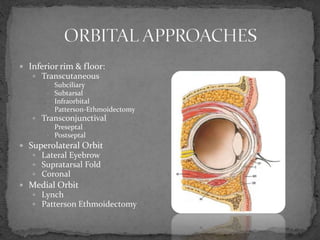
 Inferior rim & floor:
 Transcutaneous
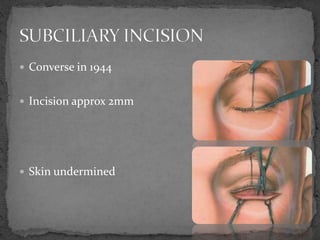
 Subciliary
 Subtarsal
 Infraorbital
 Patterson-Ethmoidectomy
 Transconjunctival
 Preseptal
 Postseptal
 Superolateral Orbit
 Lateral Eyebrow
 Supratarsal Fold
 Coronal
 Medial Orbit
 Lynch
 Patterson Ethmoidectomy
 Converse in 1944
 Incision approx 2mm
 Skin undermined
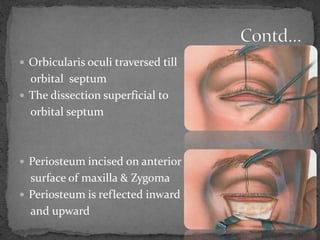
 Orbicularis oculi traversed till
orbital septum
 The dissection superficial to
orbital septum
 Periosteum incised on anterior
surface of maxilla & Zygoma
 Periosteum is reflected inward
and upward
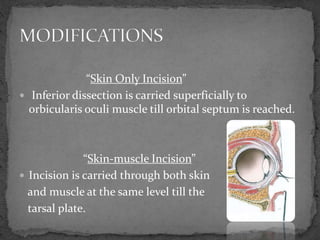
“Skin Only Incision”
 Inferior dissection is carried superficially to
orbicularis oculi muscle till orbital septum is reached.
“Skin-muscle Incision”
 Incision is carried through both skin
and muscle at the same level till the
tarsal plate.
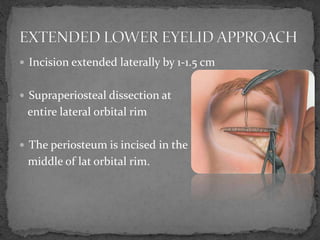
 Incision extended laterally by 1-1.5 cm
 Supraperiosteal dissection at
entire lateral orbital rim
 The periosteum is incised in the
middle of lat orbital rim.
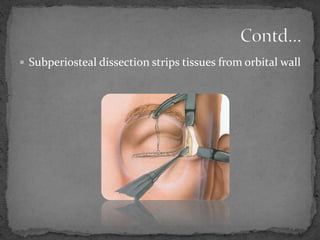
 Subperiosteal dissection strips tissues from orbital wall
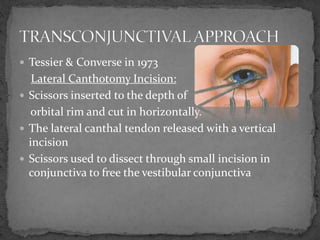
 Tessier & Converse in 1973
Lateral Canthotomy Incision:
 Scissors inserted to the depth of
orbital rim and cut in horizontally.
 The lateral canthal tendon released with a vertical
incision
 Scissors used to dissect through small incision in
conjunctiva to free the vestibular conjunctiva
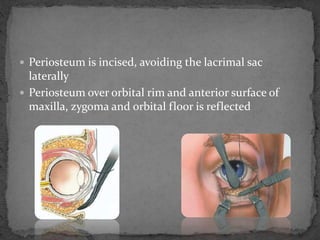
 Periosteum is incised, avoiding the lacrimal sac
laterally
 Periosteum over orbital rim and anterior surface of
maxilla, zygoma and orbital floor is reflected
 Lateral Eyebrow Incision
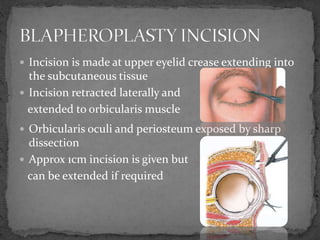
 Upper blepheroplasty Incision
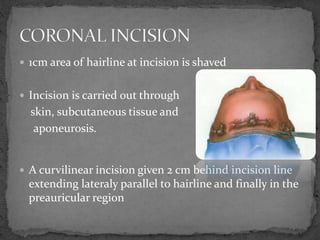
 Coronal Incision
 Lateral Canthotomy Incision
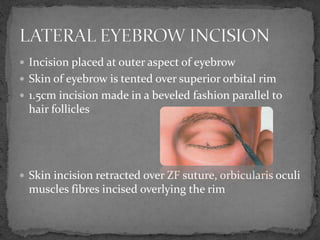
 Incision placed at outer aspect of eyebrow
 Skin of eyebrow is tented over superior orbital rim
 1.5cm incision made in a beveled fashion parallel to
hair follicles
 Skin incision retracted over ZF suture, orbicularis oculi
muscles fibres incised overlying the rim
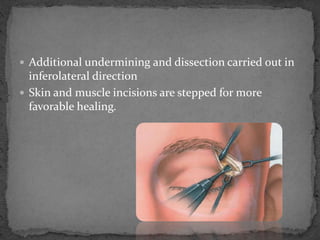
 Additional undermining and dissection carried out in
inferolateral direction
 Skin and muscle incisions are stepped for more
favorable healing.
 Incision is made at upper eyelid crease extending into
the subcutaneous tissue
 Incision retracted laterally and
extended to orbicularis muscle
 Orbicularis oculi and periosteum exposed by sharp
dissection
 Approx 1cm incision is given but
can be extended if required
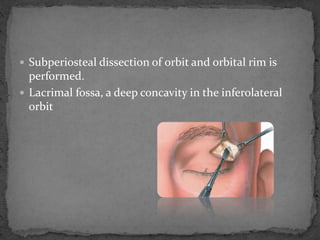
 Subperiosteal dissection of orbit and orbital rim is
performed.
 Lacrimal fossa, a deep concavity in the inferolateral
orbit
 1cm area of hairline at incision is shaved
 Incision is carried out through
skin, subcutaneous tissue and
aponeurosis.
 A curvilinear incision given 2 cm behind incision line
extending lateraly parallel to hairline and finally in the
preauricular region
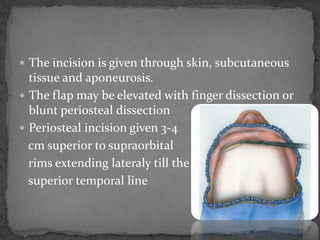
 The incision is given through skin, subcutaneous
tissue and aponeurosis.
 The flap may be elevated with finger dissection or
blunt periosteal dissection
 Periosteal incision given 3-4
cm superior to supraorbital
rims extending lateraly till the
superior temporal line
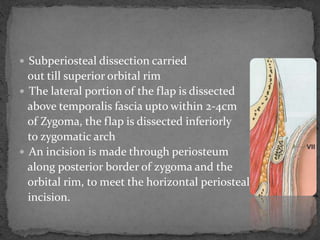
 Subperiosteal dissection carried
out till superior orbital rim
 The lateral portion of the flap is dissected
above temporalis fascia upto within 2-4cm
of Zygoma, the flap is dissected inferiorly
to zygomatic arch
 An incision is made through periosteum
along posterior border of zygoma and the
orbital rim, to meet the horizontal periosteal
incision.
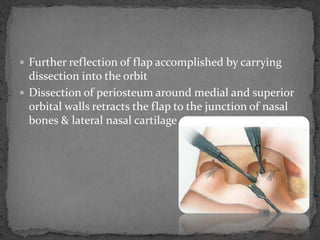
 Further reflection of flap accomplished by carrying
dissection into the orbit
 Dissection of periosteum around medial and superior
orbital walls retracts the flap to the junction of nasal
bones & lateral nasal cartilage
 A vertical curvilinear 1cm incision 5-10mm medial to
insertion of medial canthus
 Incisoin is placed over lateral nasal structures, the
dissection is made medially through skin,
subcutaneous tissue and periosteum.
 The medial canthal tendon and lacrimal sac lie
posterior and superior to the incision.
THANK YOU

surgical approaches to the orbit

  • 2.
    Dr Mohsin Fazal SeniorRegistrar Islamic International Dental College
  • 3.
     Inferior rim& floor:  Transcutaneous  Subciliary  Subtarsal  Infraorbital  Patterson-Ethmoidectomy  Transconjunctival  Preseptal  Postseptal  Superolateral Orbit  Lateral Eyebrow  Supratarsal Fold  Coronal  Medial Orbit  Lynch  Patterson Ethmoidectomy
  • 4.
     Converse in1944  Incision approx 2mm  Skin undermined
  • 5.
     Orbicularis oculitraversed till orbital septum  The dissection superficial to orbital septum  Periosteum incised on anterior surface of maxilla & Zygoma  Periosteum is reflected inward and upward
  • 6.
    “Skin Only Incision” Inferior dissection is carried superficially to orbicularis oculi muscle till orbital septum is reached. “Skin-muscle Incision”  Incision is carried through both skin and muscle at the same level till the tarsal plate.
  • 7.
     Incision extendedlaterally by 1-1.5 cm  Supraperiosteal dissection at entire lateral orbital rim  The periosteum is incised in the middle of lat orbital rim.
  • 8.
     Subperiosteal dissectionstrips tissues from orbital wall
  • 9.
     Tessier &Converse in 1973 Lateral Canthotomy Incision:  Scissors inserted to the depth of orbital rim and cut in horizontally.  The lateral canthal tendon released with a vertical incision  Scissors used to dissect through small incision in conjunctiva to free the vestibular conjunctiva
  • 10.
     Periosteum isincised, avoiding the lacrimal sac laterally  Periosteum over orbital rim and anterior surface of maxilla, zygoma and orbital floor is reflected
  • 11.
     Lateral EyebrowIncision  Upper blepheroplasty Incision  Coronal Incision  Lateral Canthotomy Incision
  • 12.
     Incision placedat outer aspect of eyebrow  Skin of eyebrow is tented over superior orbital rim  1.5cm incision made in a beveled fashion parallel to hair follicles  Skin incision retracted over ZF suture, orbicularis oculi muscles fibres incised overlying the rim
  • 13.
     Additional underminingand dissection carried out in inferolateral direction  Skin and muscle incisions are stepped for more favorable healing.
  • 14.
     Incision ismade at upper eyelid crease extending into the subcutaneous tissue  Incision retracted laterally and extended to orbicularis muscle  Orbicularis oculi and periosteum exposed by sharp dissection  Approx 1cm incision is given but can be extended if required
  • 15.
     Subperiosteal dissectionof orbit and orbital rim is performed.  Lacrimal fossa, a deep concavity in the inferolateral orbit
  • 16.
     1cm areaof hairline at incision is shaved  Incision is carried out through skin, subcutaneous tissue and aponeurosis.  A curvilinear incision given 2 cm behind incision line extending lateraly parallel to hairline and finally in the preauricular region
  • 17.
     The incisionis given through skin, subcutaneous tissue and aponeurosis.  The flap may be elevated with finger dissection or blunt periosteal dissection  Periosteal incision given 3-4 cm superior to supraorbital rims extending lateraly till the superior temporal line
  • 18.
     Subperiosteal dissectioncarried out till superior orbital rim  The lateral portion of the flap is dissected above temporalis fascia upto within 2-4cm of Zygoma, the flap is dissected inferiorly to zygomatic arch  An incision is made through periosteum along posterior border of zygoma and the orbital rim, to meet the horizontal periosteal incision.
  • 19.
     Further reflectionof flap accomplished by carrying dissection into the orbit  Dissection of periosteum around medial and superior orbital walls retracts the flap to the junction of nasal bones & lateral nasal cartilage
  • 20.
     A verticalcurvilinear 1cm incision 5-10mm medial to insertion of medial canthus  Incisoin is placed over lateral nasal structures, the dissection is made medially through skin, subcutaneous tissue and periosteum.  The medial canthal tendon and lacrimal sac lie posterior and superior to the incision.
  • 21.