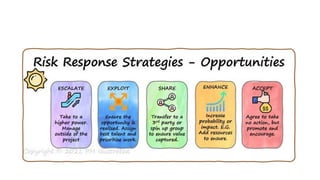
Risk management principle
• Continually evaluate exposure to risk, both opportunities and threats,
to maximize positive impacts and minimize negative impacts to the
project and its outcomes" (PMBOK® Guide, 7th Edition, The
Standard for Project Management, p. 53).
Risk management definition:
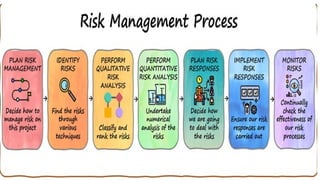
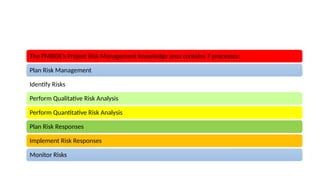
The PMBOK’s Project Risk Management knowledge area contains 7 processes:
Plan Risk Management
Identify Risks
Perform Qualitative Risk Analysis
Perform Quantitative Risk Analysis
Plan Risk Responses
Implement Risk Responses
Monitor Risks
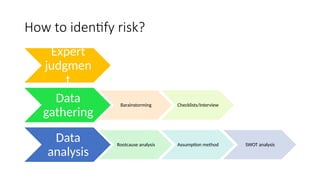
How to identify risk?
Expert
judgmen
t
Data
gathering
Barainstorming Checklists/Interview
Data
analysis
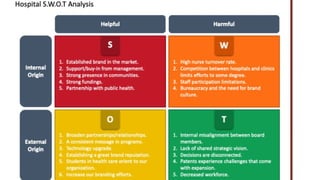
Rootcause analysis Assumption method SWOT analysis
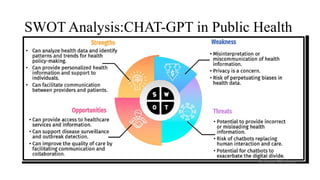
SWOT Analysis:CHAT-GPT in Public Health
Risk register
• After identification the risk are documented into risk register
1. This include list of identified risk
2. List of potential risk sources
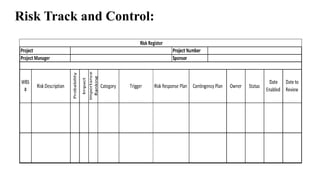
Risk Track and Control:
Qualitative risk analysis:
11
Stephen Hartley, Project Management 4th
edition, 2018 slide
page 345
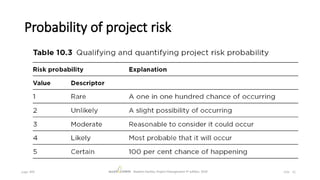
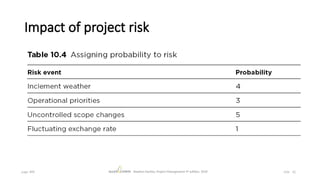
Probability of project risk
12
Stephen Hartley, Project Management 4th
edition, 2018 slide
page 345
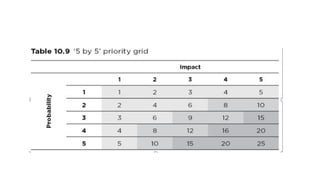
Impact of project risk
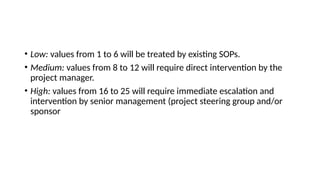
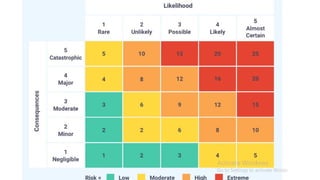
• Low: values from 1 to 6 will be treated by existing SOPs.
• Medium: values from 8 to 12 will require direct intervention by the
project manager.
• High: values from 16 to 25 will require immediate escalation and
intervention by senior management (project steering group and/or
sponsor
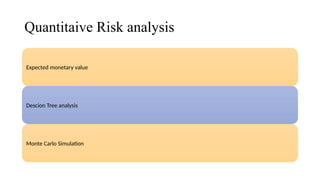
Quantitaive Risk analysis
Expected monetary value
Descion Tree analysis
Monte Carlo Simulation
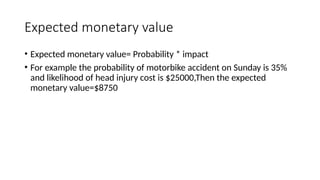
Expected monetary value
• Expected monetary value= Probability * impact
• For example the probability of motorbike accident on Sunday is 35%
and likelihood of head injury cost is $25000,Then the expected
monetary value=$8750
Descion Tree analysis
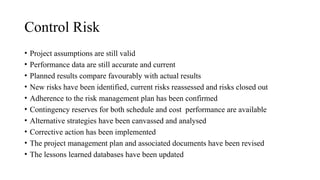
Control Risk
• Project assumptions are still valid
• Performance data are still accurate and current
• Planned results compare favourably with actual results
• New risks have been identified, current risks reassessed and risks closed out
• Adherence to the risk management plan has been confirmed
• Contingency reserves for both schedule and cost performance are available
• Alternative strategies have been canvassed and analysed
• Corrective action has been implemented
• The project management plan and associated documents have been revised
• The lessons learned databases have been updated

risk management principles in project management

  • 1.
    Risk management principle •Continually evaluate exposure to risk, both opportunities and threats, to maximize positive impacts and minimize negative impacts to the project and its outcomes" (PMBOK® Guide, 7th Edition, The Standard for Project Management, p. 53).
  • 2.
  • 4.
    The PMBOK’s ProjectRisk Management knowledge area contains 7 processes: Plan Risk Management Identify Risks Perform Qualitative Risk Analysis Perform Quantitative Risk Analysis Plan Risk Responses Implement Risk Responses Monitor Risks
  • 5.
    How to identifyrisk? Expert judgmen t Data gathering Barainstorming Checklists/Interview Data analysis Rootcause analysis Assumption method SWOT analysis
  • 6.
  • 8.
    Risk register • Afteridentification the risk are documented into risk register 1. This include list of identified risk 2. List of potential risk sources
  • 9.
  • 10.
  • 11.
    11 Stephen Hartley, ProjectManagement 4th edition, 2018 slide page 345 Probability of project risk
  • 12.
    12 Stephen Hartley, ProjectManagement 4th edition, 2018 slide page 345 Impact of project risk
  • 13.
    • Low: valuesfrom 1 to 6 will be treated by existing SOPs. • Medium: values from 8 to 12 will require direct intervention by the project manager. • High: values from 16 to 25 will require immediate escalation and intervention by senior management (project steering group and/or sponsor
  • 16.
    Quantitaive Risk analysis Expectedmonetary value Descion Tree analysis Monte Carlo Simulation
  • 17.
    Expected monetary value •Expected monetary value= Probability * impact • For example the probability of motorbike accident on Sunday is 35% and likelihood of head injury cost is $25000,Then the expected monetary value=$8750
  • 18.
  • 21.
    Control Risk • Projectassumptions are still valid • Performance data are still accurate and current • Planned results compare favourably with actual results • New risks have been identified, current risks reassessed and risks closed out • Adherence to the risk management plan has been confirmed • Contingency reserves for both schedule and cost performance are available • Alternative strategies have been canvassed and analysed • Corrective action has been implemented • The project management plan and associated documents have been revised • The lessons learned databases have been updated