INTRODUCTION TO DISASTER
MANAGEMENT
COMMON TERMINOLOGIES:
Vulnerability: The likelihood of being affected by a disaster.
Resilience: The ability to withstand and recover from disasters.
Risk reduction: Efforts to minimize the likelihood or impact of disasters.
Emergency planning: Developing plans and procedures for responding to disasters.
LEARNING OBJECTIVES:
1. To have basic knowledge about types of disasters
2. To have knowledge about which disasters are more common
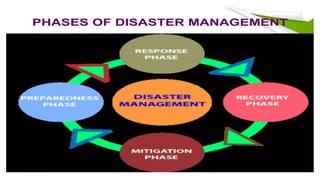
3. To have basic knowledge about disaster management steps
WHAT IS DISASTER
MANAGEMENT?
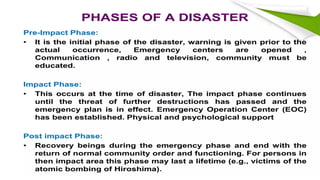
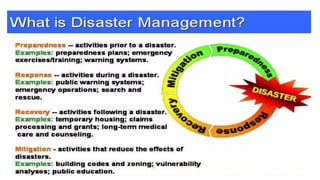
🢝 Disaster management refers to the coordinated
efforts of governments, organizations, and
communities to prepare for, respond to, and recover
from disasters.
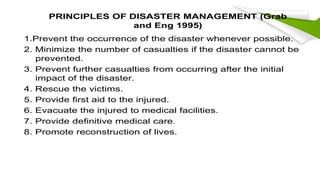
GOALS OF DISASTER MANAGEMENT:
The main goals of disaster management are to
1. Save lives
2. Reduce injuries and illnesses
3. Protect property and infrastructure
4. Minimize economic losses
5. Support affected communities
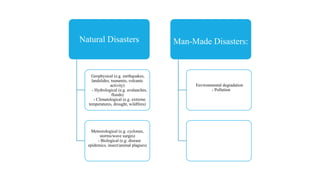
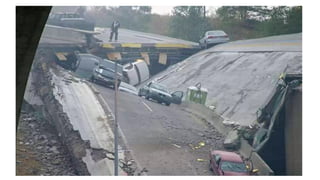
Natural Disasters
Geophysical (e.g. earthquakes,
landslides, tsunamis, volcanic
activity)
- Hydrological (e.g. avalanches,
floods)
- Climatological (e.g. extreme
temperatures, drought, wildfires)
Meteorological (e.g. cyclones,
storms/wave surges)
- Biological (e.g. disease
epidemics, insect/animal plagues)
Man-Made Disasters:
Environmental degradation
- Pollution
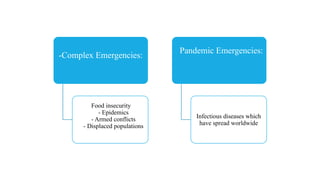
-Complex Emergencies:
Food insecurity
- Epidemics
- Armed conflicts
- Displaced populations
Pandemic Emergencies:
Infectious diseases which
have spread worldwide
introduction to disaster management suit

introduction to disaster management suit

  • 1.
  • 2.
    COMMON TERMINOLOGIES: Vulnerability: Thelikelihood of being affected by a disaster. Resilience: The ability to withstand and recover from disasters. Risk reduction: Efforts to minimize the likelihood or impact of disasters. Emergency planning: Developing plans and procedures for responding to disasters.
  • 3.
    LEARNING OBJECTIVES: 1. Tohave basic knowledge about types of disasters 2. To have knowledge about which disasters are more common 3. To have basic knowledge about disaster management steps
  • 4.
    WHAT IS DISASTER MANAGEMENT? 🢝Disaster management refers to the coordinated efforts of governments, organizations, and communities to prepare for, respond to, and recover from disasters.
  • 5.
    GOALS OF DISASTERMANAGEMENT: The main goals of disaster management are to 1. Save lives 2. Reduce injuries and illnesses 3. Protect property and infrastructure 4. Minimize economic losses 5. Support affected communities
  • 8.
    Natural Disasters Geophysical (e.g.earthquakes, landslides, tsunamis, volcanic activity) - Hydrological (e.g. avalanches, floods) - Climatological (e.g. extreme temperatures, drought, wildfires) Meteorological (e.g. cyclones, storms/wave surges) - Biological (e.g. disease epidemics, insect/animal plagues) Man-Made Disasters: Environmental degradation - Pollution
  • 9.
    -Complex Emergencies: Food insecurity -Epidemics - Armed conflicts - Displaced populations Pandemic Emergencies: Infectious diseases which have spread worldwide