Downloaded 115 times


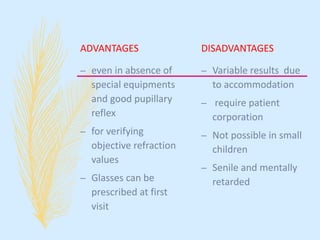
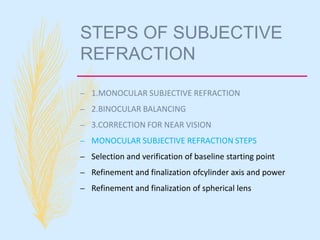
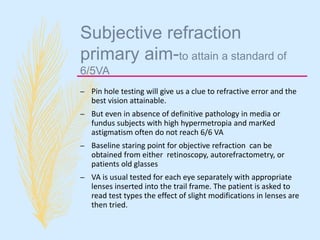

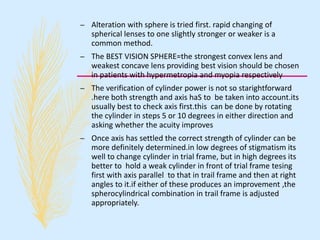


This document provides information on subjective refraction testing including the steps, advantages, disadvantages, and techniques used. The key points are: 1. Subjective refraction testing involves determining the best corrective lenses for a patient through their feedback, and aims for a visual acuity of 6/5. 2. Techniques include monocular and binocular testing, refinement of the cylinder and sphere powers, and verification of near vision after age 40. 3. Advantages are that it can be done without special equipment, but disadvantages include variable results due to accommodation and lack of patient cooperation in some cases.


