OPTOM FASLU MUHAMMED
 Most necessary repairs will be minor.
 As a result, replacement of broken parts is
usually more cost effective.
 Correctly Using an Optical Screwdriver
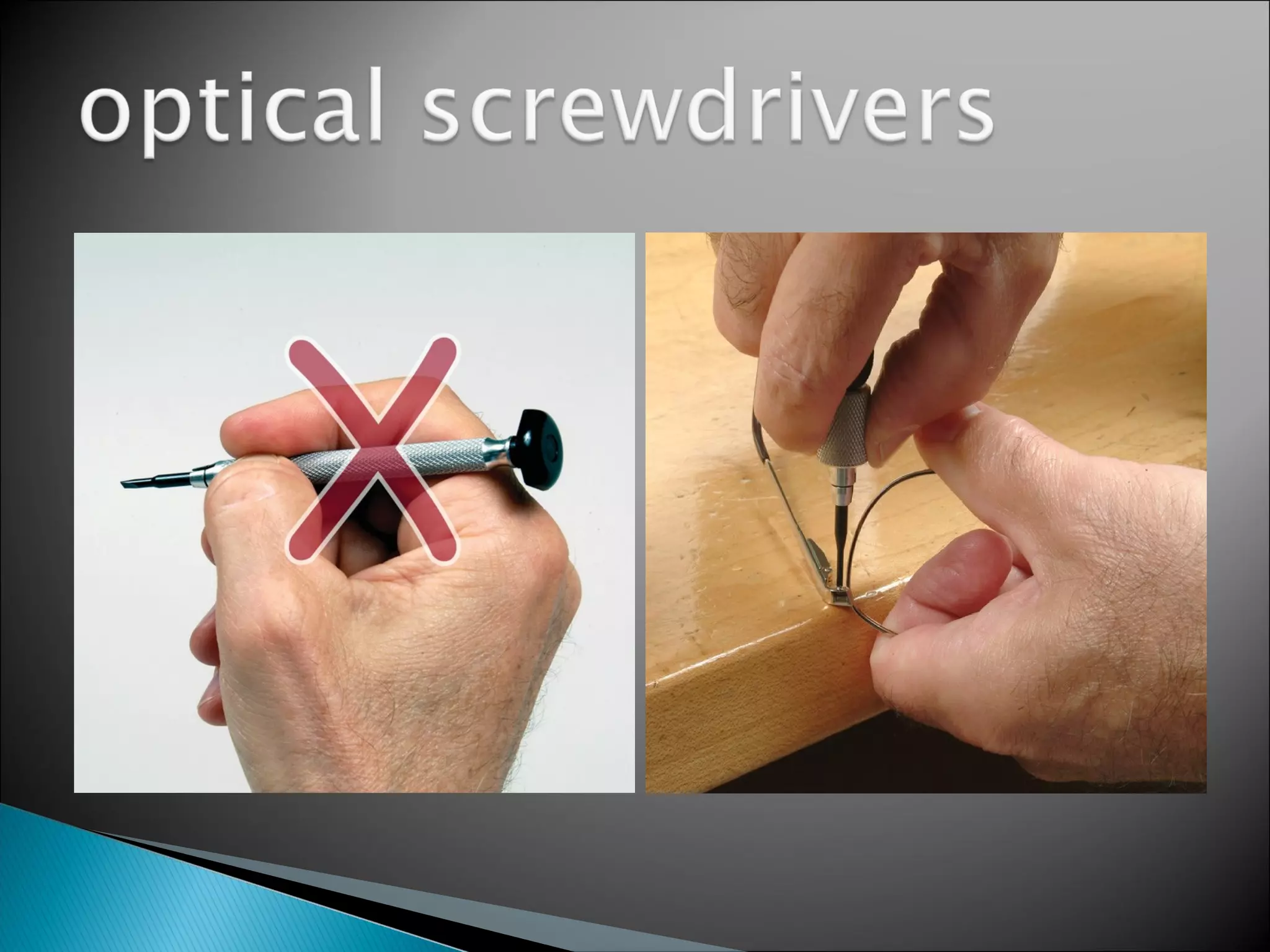
When using an optical screwdriver, the
screwdriver should not be held like a pencil.
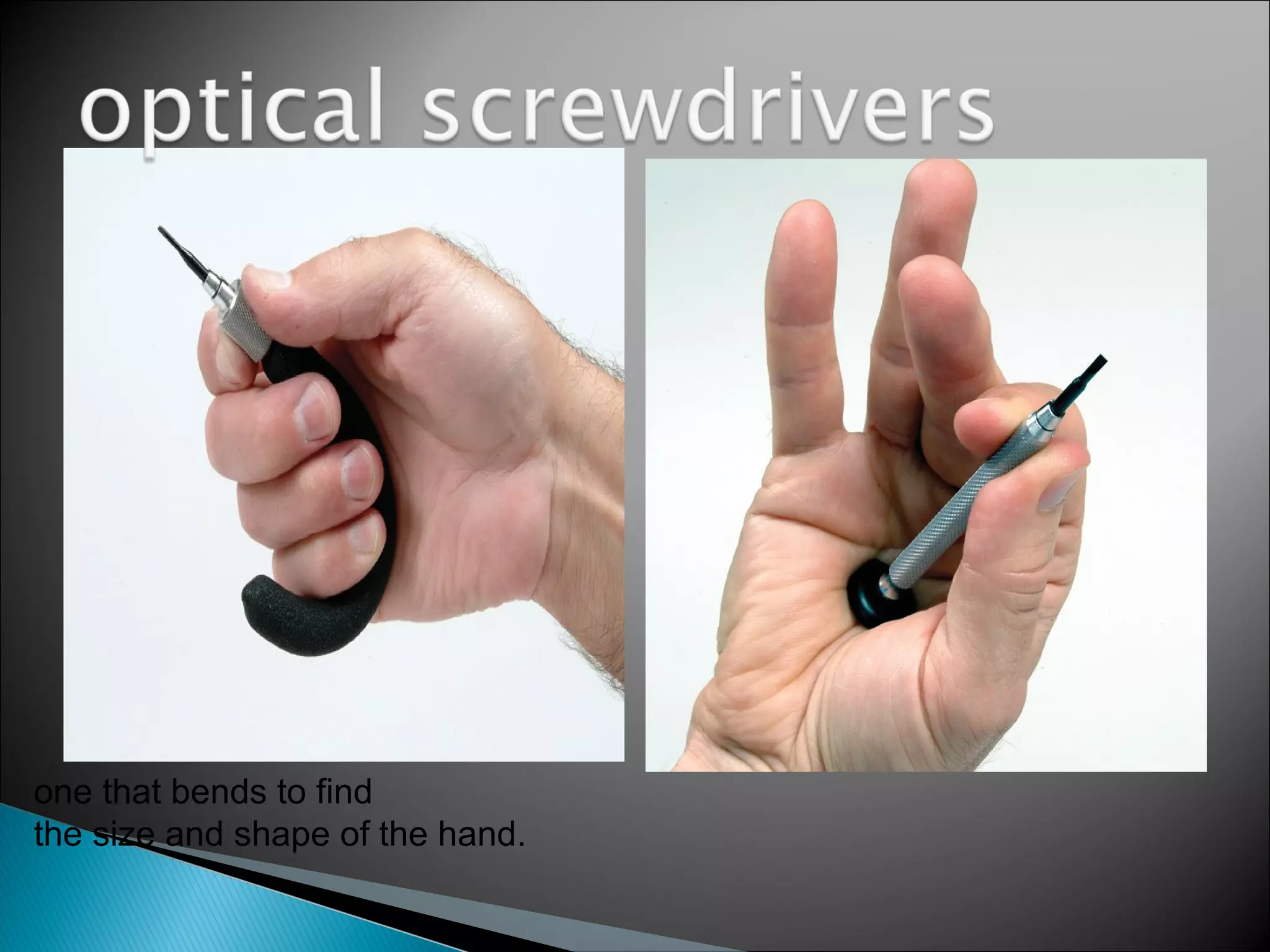
 There are many different types of optical
screwdrivers available, from ones with brass
shafts and no-roll handles, large, round
hardwood handles that fill the palm of the
hand.
one that bends to find
the size and shape of the hand.
The screw-holding tool places the screw in
hard-to-reach places where fingers cannot always go.
Flaring pliers will flare a rivet or screw tip to
prevent it from backing out.
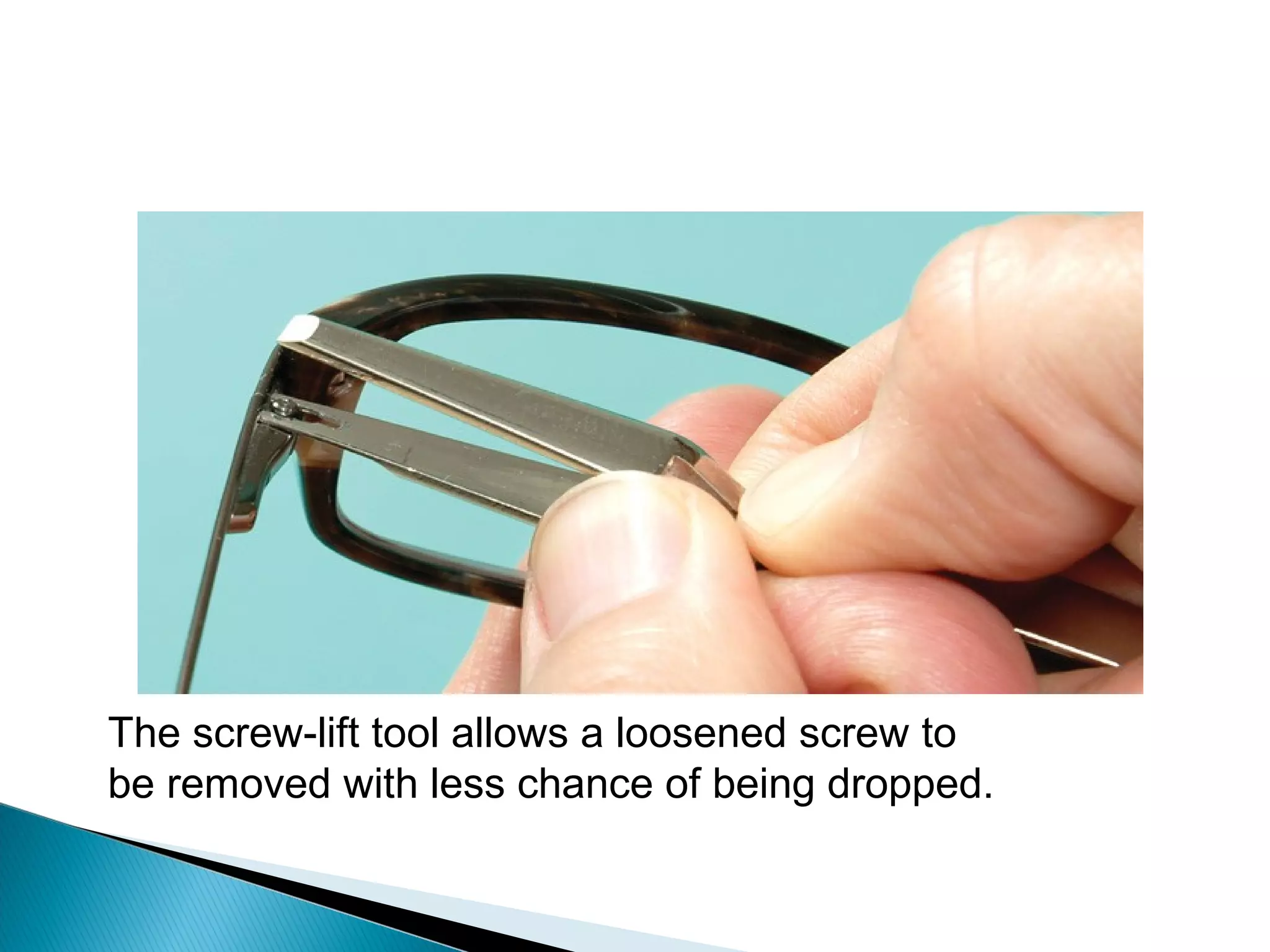
The screw-lift tool allows a loosened screw to
be removed with less chance of being dropped.
 There are many different types of nose pad
assemblies.
 The screw-on and push-on type nose pad
assemblies are the most dominant.
 The push-on pad is one of the easiest pads to
remove and replace.
 It has a small I-beamlike shape that snaps into
an indented box on the pad arm.
 Although a push-on pad can be removed without
the aid of tools, it is possible to use a small
device called a pad popper.
pad popper
 The screw-on type of attachment has a small
post on the back of the pad with a horizontal
hole in the post.
 Replacing Missing or Broken Temples
If a pair of glasses has an irreparably
broken temple, it must be replaced. The first
choice is to replace it with a new, identical
temple.
 Replacing the Plastic Earpiece Covers on Metal
Temples
 Covering the Temples to Reduce Allergic
Reactions
 Broken Plastic Bridges
 Replacing Nose pads on Plastic Frames
 Soldering is the only possible way to repair a
broken metal portion of a frame unless the
entire front or temple is replaced.
Flame Soldering
 Some flame soldering units use one gas, butane.
Others use two independently regulated gases,
either oxygen and acetylene or oxygen and
butane. The oxygen will be used up at twice the
rate of either the acetylene or the butane.
 Electric Soldering
Thank u…..

Frame repairs and tools

  • 1.
  • 2.
     Most necessaryrepairs will be minor.  As a result, replacement of broken parts is usually more cost effective.
  • 3.
     Correctly Usingan Optical Screwdriver When using an optical screwdriver, the screwdriver should not be held like a pencil.  There are many different types of optical screwdrivers available, from ones with brass shafts and no-roll handles, large, round hardwood handles that fill the palm of the hand.
  • 5.
    one that bendsto find the size and shape of the hand.
  • 6.
    The screw-holding toolplaces the screw in hard-to-reach places where fingers cannot always go.
  • 7.
    Flaring pliers willflare a rivet or screw tip to prevent it from backing out.
  • 8.
    The screw-lift toolallows a loosened screw to be removed with less chance of being dropped.
  • 9.
     There aremany different types of nose pad assemblies.  The screw-on and push-on type nose pad assemblies are the most dominant.
  • 10.
     The push-onpad is one of the easiest pads to remove and replace.  It has a small I-beamlike shape that snaps into an indented box on the pad arm.  Although a push-on pad can be removed without the aid of tools, it is possible to use a small device called a pad popper.
  • 11.
  • 12.
     The screw-ontype of attachment has a small post on the back of the pad with a horizontal hole in the post.
  • 13.
     Replacing Missingor Broken Temples If a pair of glasses has an irreparably broken temple, it must be replaced. The first choice is to replace it with a new, identical temple.
  • 14.
     Replacing thePlastic Earpiece Covers on Metal Temples  Covering the Temples to Reduce Allergic Reactions
  • 15.
     Broken PlasticBridges  Replacing Nose pads on Plastic Frames
  • 16.
     Soldering isthe only possible way to repair a broken metal portion of a frame unless the entire front or temple is replaced. Flame Soldering  Some flame soldering units use one gas, butane. Others use two independently regulated gases, either oxygen and acetylene or oxygen and butane. The oxygen will be used up at twice the rate of either the acetylene or the butane.
  • 17.
  • 18.