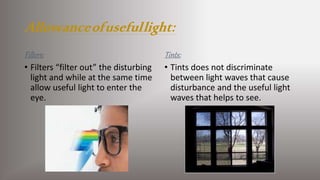
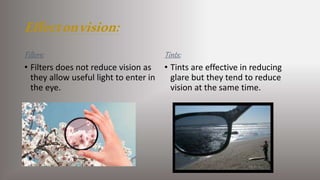
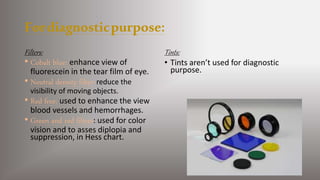
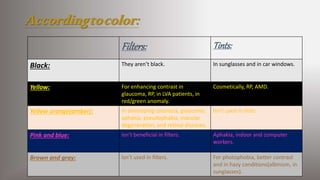
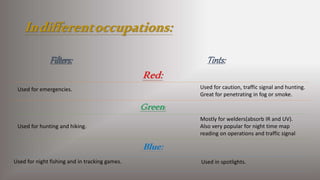
Filters allow useful light to enter the eye while filtering out disturbing light, maintaining vision. Tints do not discriminate between light waves and can reduce vision by blocking both useful and disturbing light. Filters come in various colors for specific diagnostic purposes like enhancing blood vessel visibility, while tints are not used diagnostically. Therapeutically, filters are used to control light sensitivity and enhance contrast for various eye conditions, while tints only help reduce glare in cataracts and albinism without enhancing contrast. Filters are available only in plastic while tints come in both plastic and glass.