Structure of DNA By
Watson and Crick
Presented by
P.Sripathi
Department of Biotechnology
Srivasan college of Arts & science
What is DNA?
 DNA stands for Deoxyribonucleic acid.
 It is the genetic material for all living
organism (e.g. Plants , Animals..)
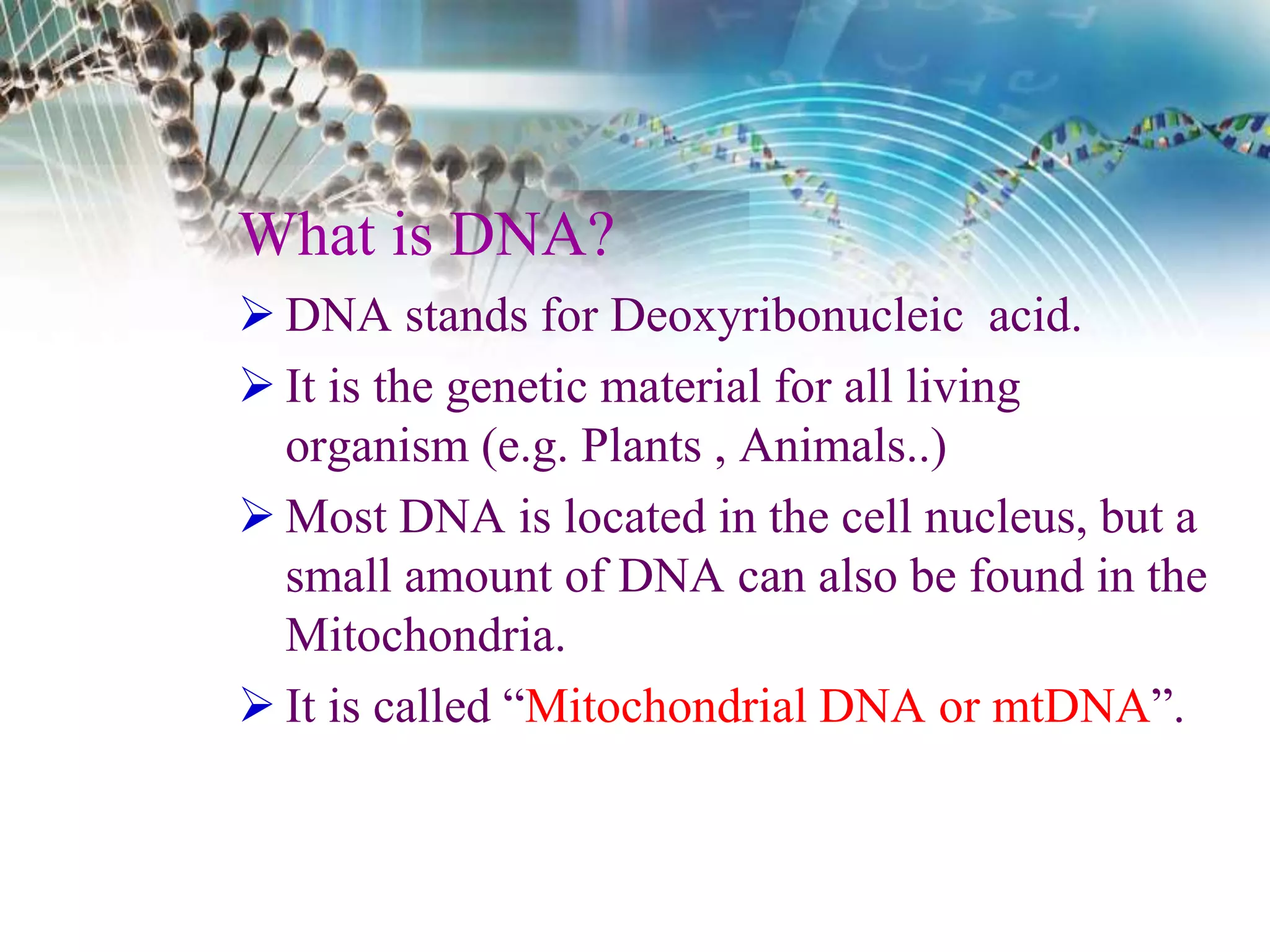
 Most DNA is located in the cell nucleus, but a
small amount of DNA can also be found in the
Mitochondria.
 It is called “Mitochondrial DNA or mtDNA”.
MITOCHONDRIAL DNA
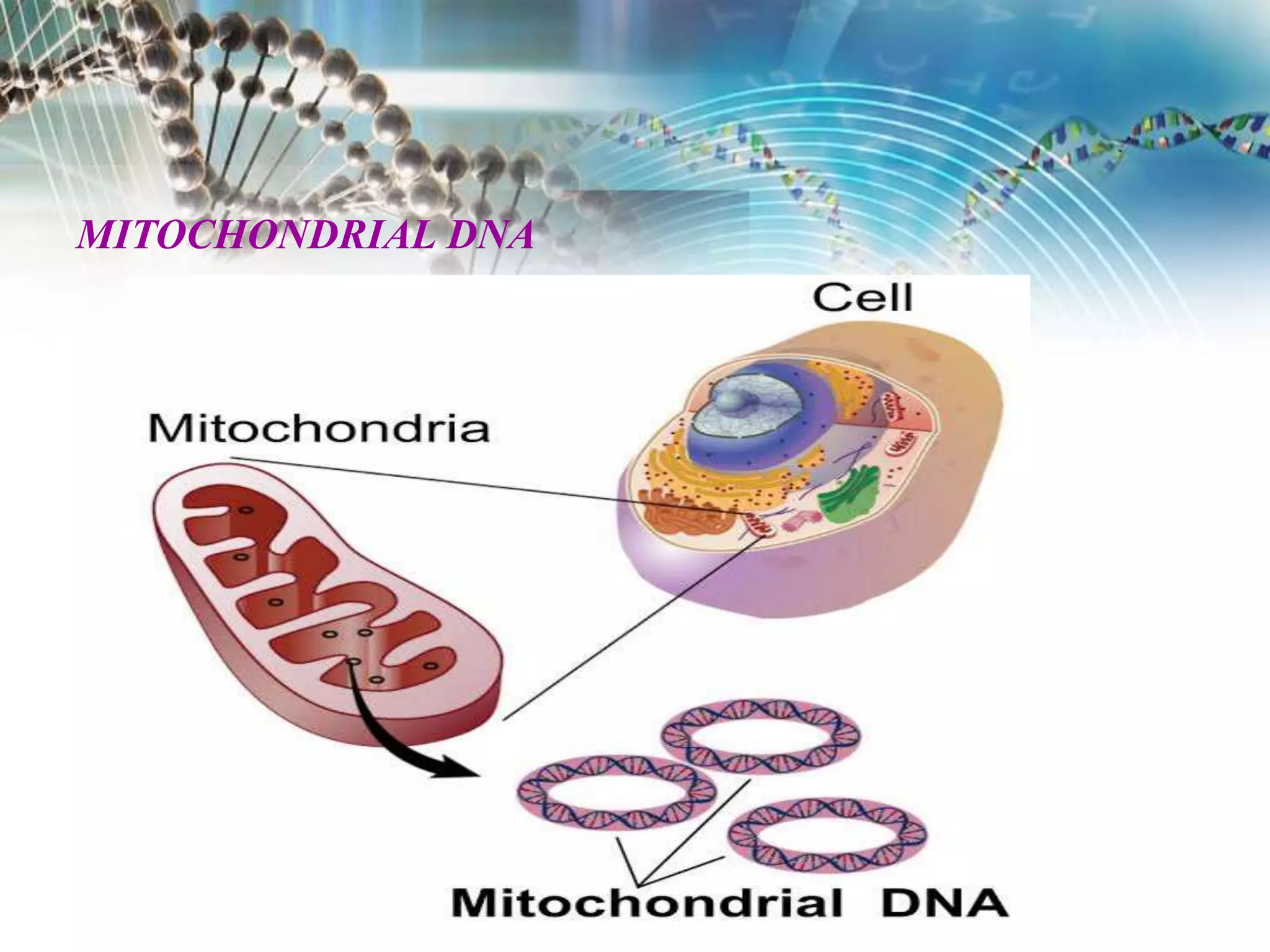
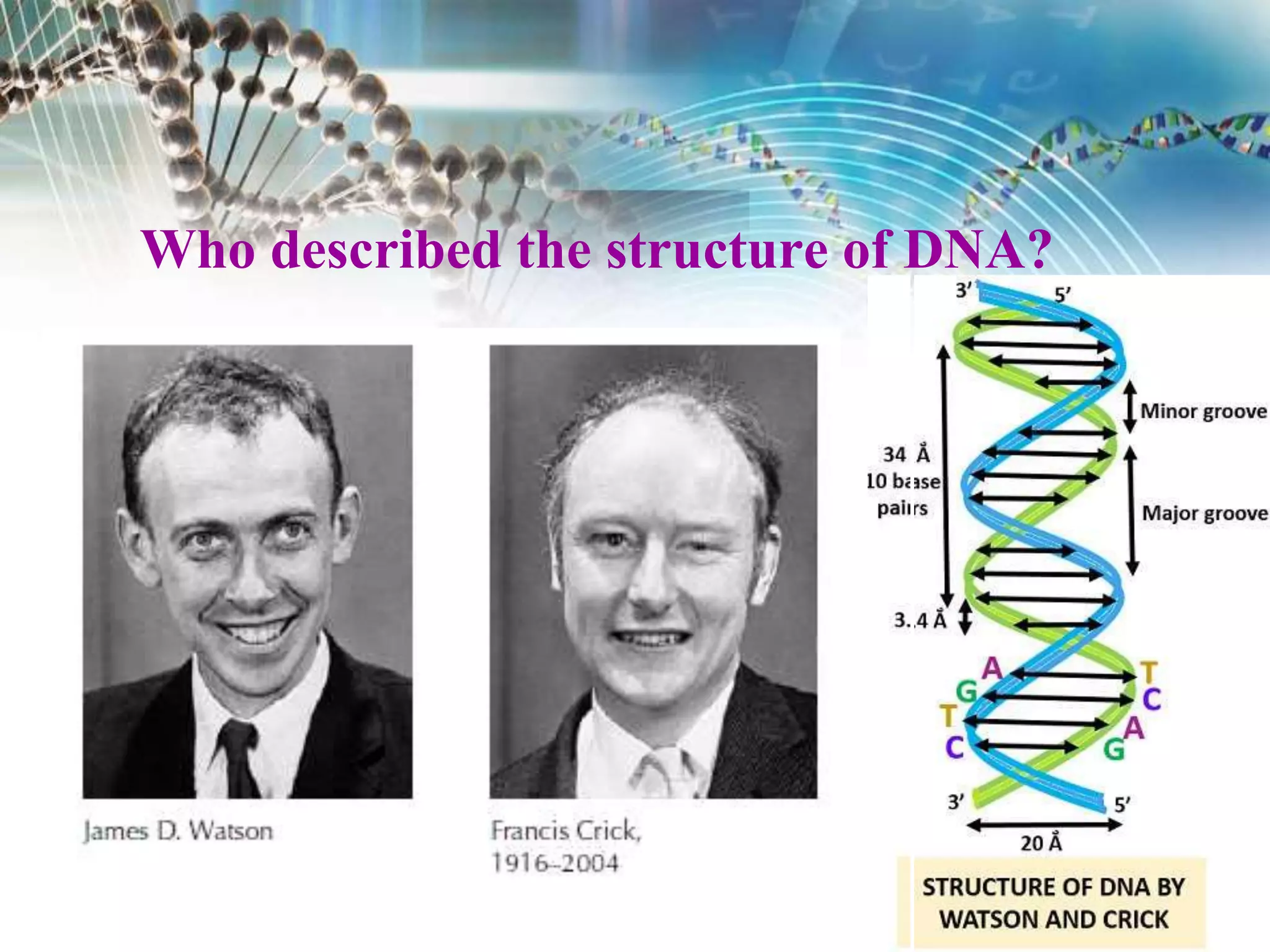
Who described the structure of DNA?
Physical Properties of DNA
 The DNA is double stranded helix , which consists of Two
polynucleotide chain.
 Two polynucleotide chain are spirally or helically twisted like “Twisted
ladder”
 It move in antiparallel direction from 5’ to 3’.
 The Diameter of double stranded DNA helix 20A.
 The distance between the two nucleotides is 3.4Å which also refers to
as “Internuclear distance”.
 The helical structure repeats every 34 Å, so there are 10 bases (= 34 Å
per repeat/3.4 Å per base) per turn of helix.
 The DNA is twisted in “Right-handed direction”, or we can say in a
“Clockwise direction”.
 Turning of DNA causes a formation of deep or wide groove refers as
“Major groove”. The distance between the two strands forms a narrow
groove refers as “Minor groove”.
 The formation of major and minor grooves form as a result of DNA
coiling which acts as a site of “DNA binding proteins” that is necessary
to carry out the process of replication, transcription etc.
Chemical Properties of DNA
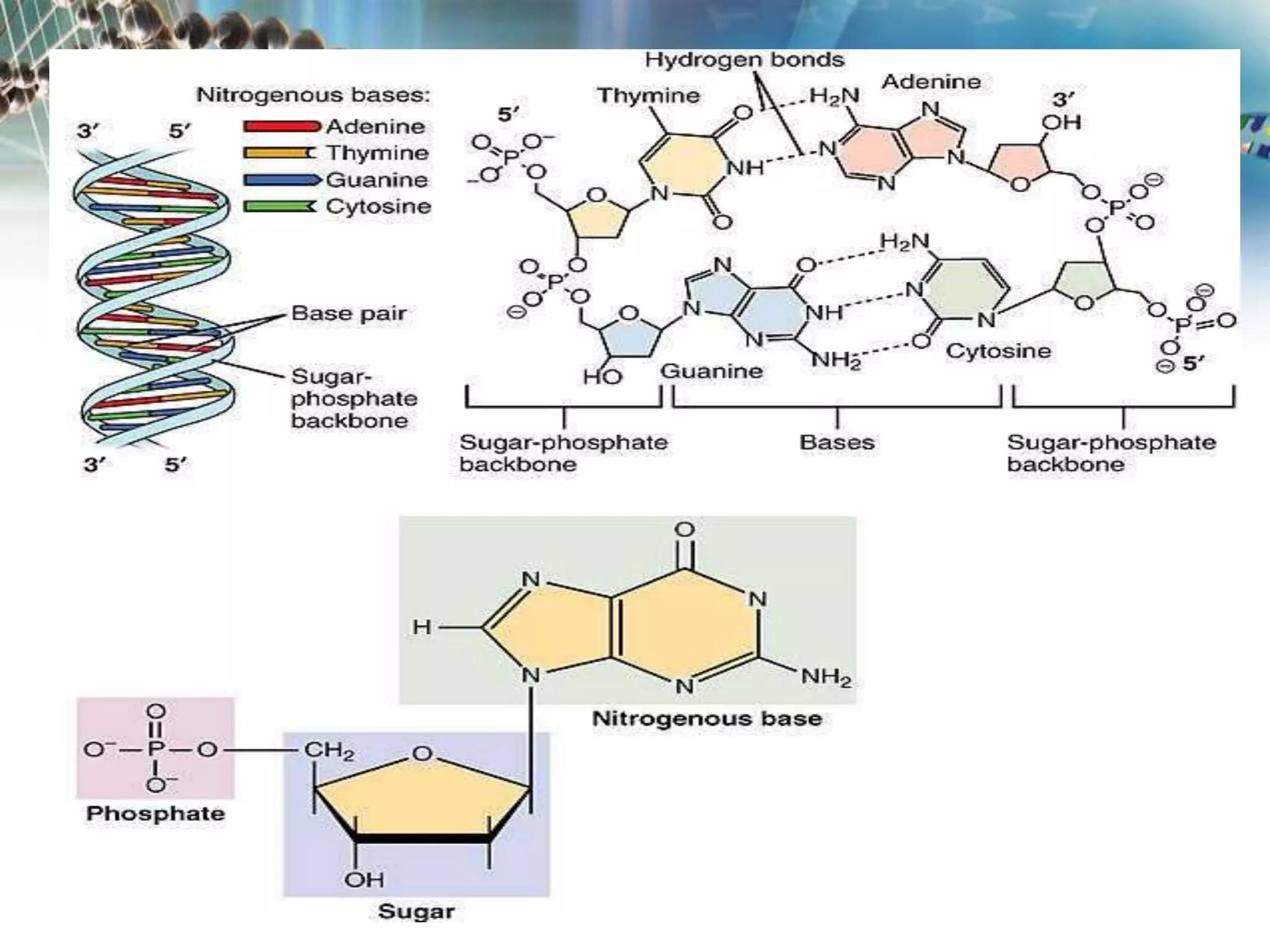
 There are four nucleotide bases present in the polynucleotide chain
like adenine(A) , guanine(G), cytosine(C) and thymine(T).
 Adenine and guanine are the two purine bases, which are the single
ring structure. Cytosine and thymine are the two pyrimidine bases,
which are the double ring structure.
 Therefore a purine base will complementarily pair with the pyrimidine
base where ‘Adenine’ pairs with ‘Thymine’ and ‘Guanine’ pairs with
‘Cytosine’.
 join with each other through a strong hydrogen bond
 The nucleotide base composition of DNA follows the Chargaff’s rule
where the sum of purines is equal to the number of pyrimidines.
 The base composition of A + G = T + C obeys the Chargaff’s rule, but
the base composition of A + T is not equal to the G+C.
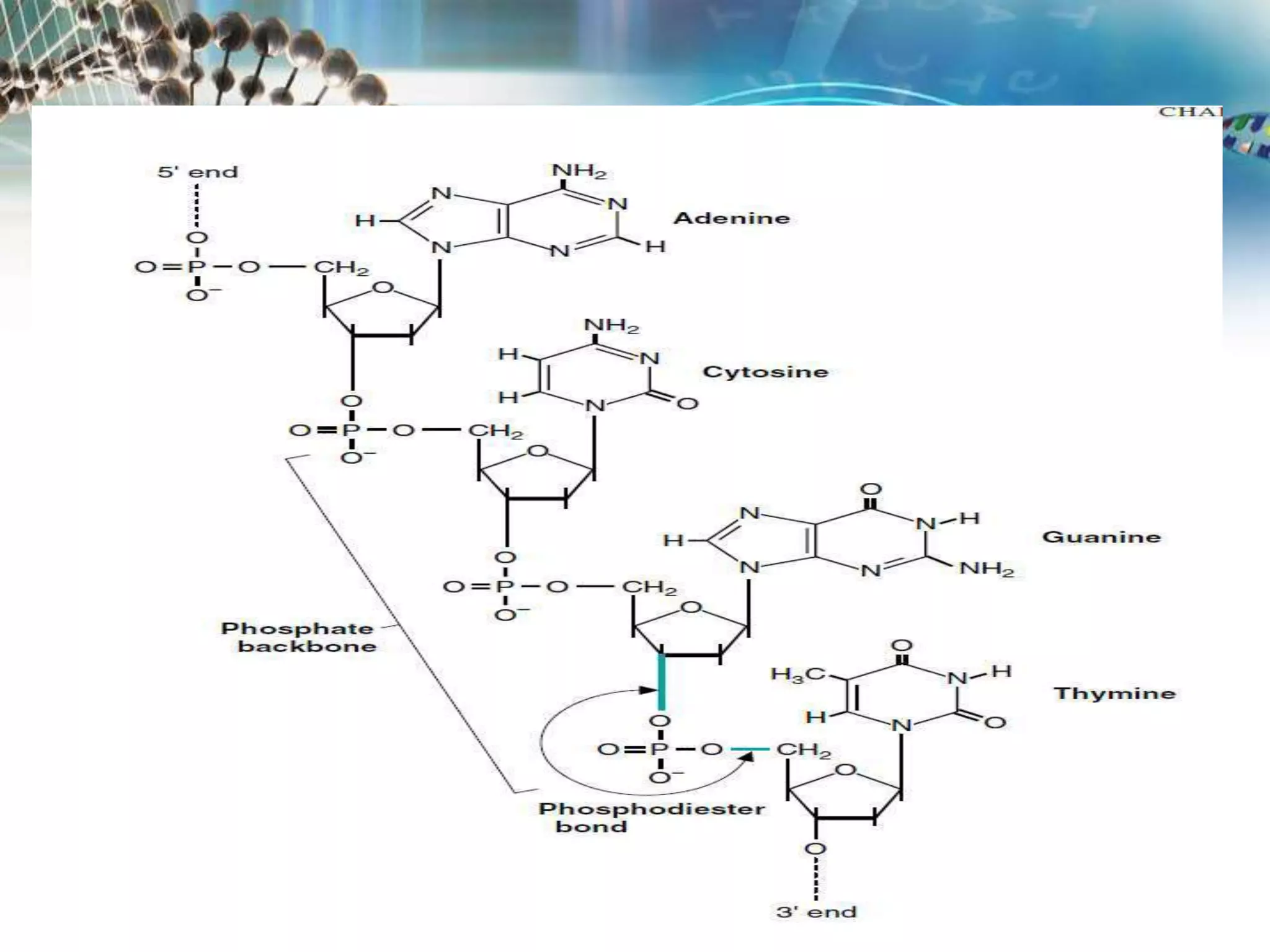
 Polynucleotide strands of DNA consist of three major components,
namely nitrogenous bases, deoxyribose sugar and a phosphate group.
 The backbone of DNA consists of the sugar-phosphate backbone. The
sugar-phosphate backbone holds both the polynucleotide strands of
DNA by means of “Phosphodiester bond”.
 Therefore the bonding between sugar and phosphates, i.e.
Phosphodiester bond and the bonding between nitrogenous bases, i.e.
hydrogen bond contributes to the “Stability” of the DNA
Structure of DNA
Structure of DNA

Structure of DNA

  • 1.
    Structure of DNABy Watson and Crick Presented by P.Sripathi Department of Biotechnology Srivasan college of Arts & science
  • 2.
    What is DNA? DNA stands for Deoxyribonucleic acid.  It is the genetic material for all living organism (e.g. Plants , Animals..)  Most DNA is located in the cell nucleus, but a small amount of DNA can also be found in the Mitochondria.  It is called “Mitochondrial DNA or mtDNA”.
  • 3.
  • 4.
    Who described thestructure of DNA?
  • 5.
    Physical Properties ofDNA  The DNA is double stranded helix , which consists of Two polynucleotide chain.  Two polynucleotide chain are spirally or helically twisted like “Twisted ladder”  It move in antiparallel direction from 5’ to 3’.  The Diameter of double stranded DNA helix 20A.  The distance between the two nucleotides is 3.4Å which also refers to as “Internuclear distance”.  The helical structure repeats every 34 Å, so there are 10 bases (= 34 Å per repeat/3.4 Å per base) per turn of helix.  The DNA is twisted in “Right-handed direction”, or we can say in a “Clockwise direction”.
  • 6.
     Turning ofDNA causes a formation of deep or wide groove refers as “Major groove”. The distance between the two strands forms a narrow groove refers as “Minor groove”.  The formation of major and minor grooves form as a result of DNA coiling which acts as a site of “DNA binding proteins” that is necessary to carry out the process of replication, transcription etc.
  • 7.
    Chemical Properties ofDNA  There are four nucleotide bases present in the polynucleotide chain like adenine(A) , guanine(G), cytosine(C) and thymine(T).  Adenine and guanine are the two purine bases, which are the single ring structure. Cytosine and thymine are the two pyrimidine bases, which are the double ring structure.  Therefore a purine base will complementarily pair with the pyrimidine base where ‘Adenine’ pairs with ‘Thymine’ and ‘Guanine’ pairs with ‘Cytosine’.  join with each other through a strong hydrogen bond
  • 9.
     The nucleotidebase composition of DNA follows the Chargaff’s rule where the sum of purines is equal to the number of pyrimidines.  The base composition of A + G = T + C obeys the Chargaff’s rule, but the base composition of A + T is not equal to the G+C.  Polynucleotide strands of DNA consist of three major components, namely nitrogenous bases, deoxyribose sugar and a phosphate group.  The backbone of DNA consists of the sugar-phosphate backbone. The sugar-phosphate backbone holds both the polynucleotide strands of DNA by means of “Phosphodiester bond”.  Therefore the bonding between sugar and phosphates, i.e. Phosphodiester bond and the bonding between nitrogenous bases, i.e. hydrogen bond contributes to the “Stability” of the DNA