Downloaded 1,595 times


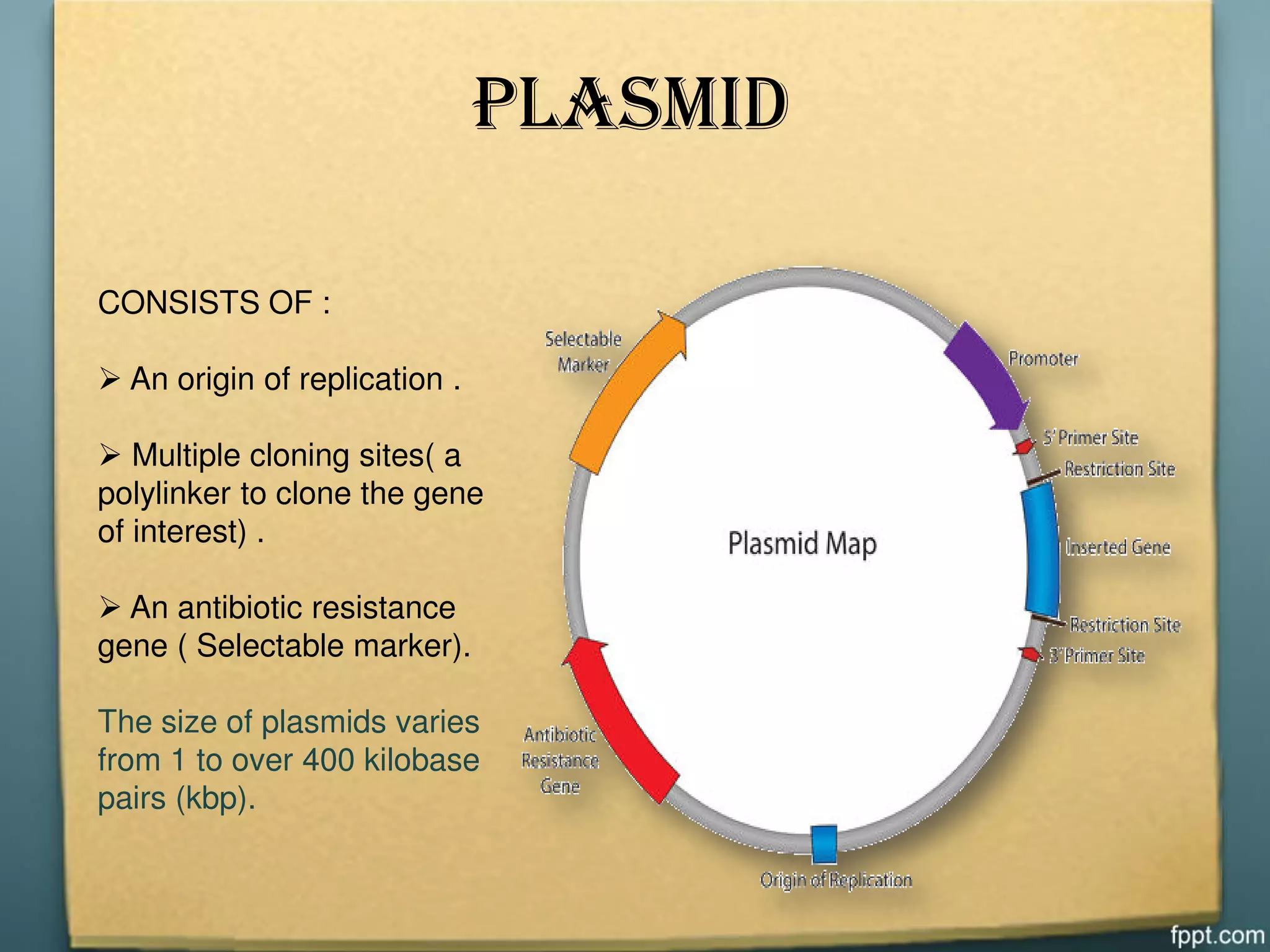

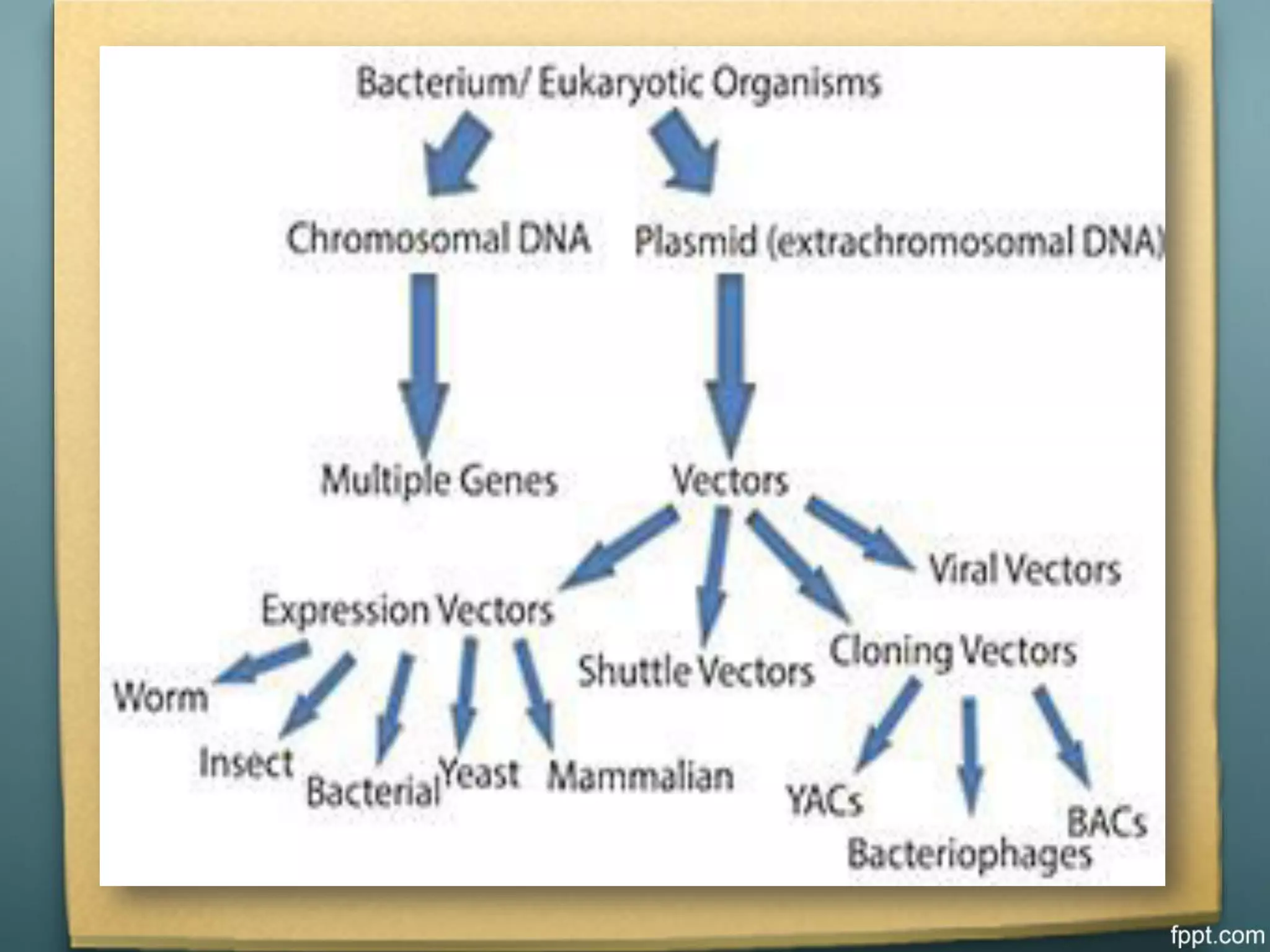


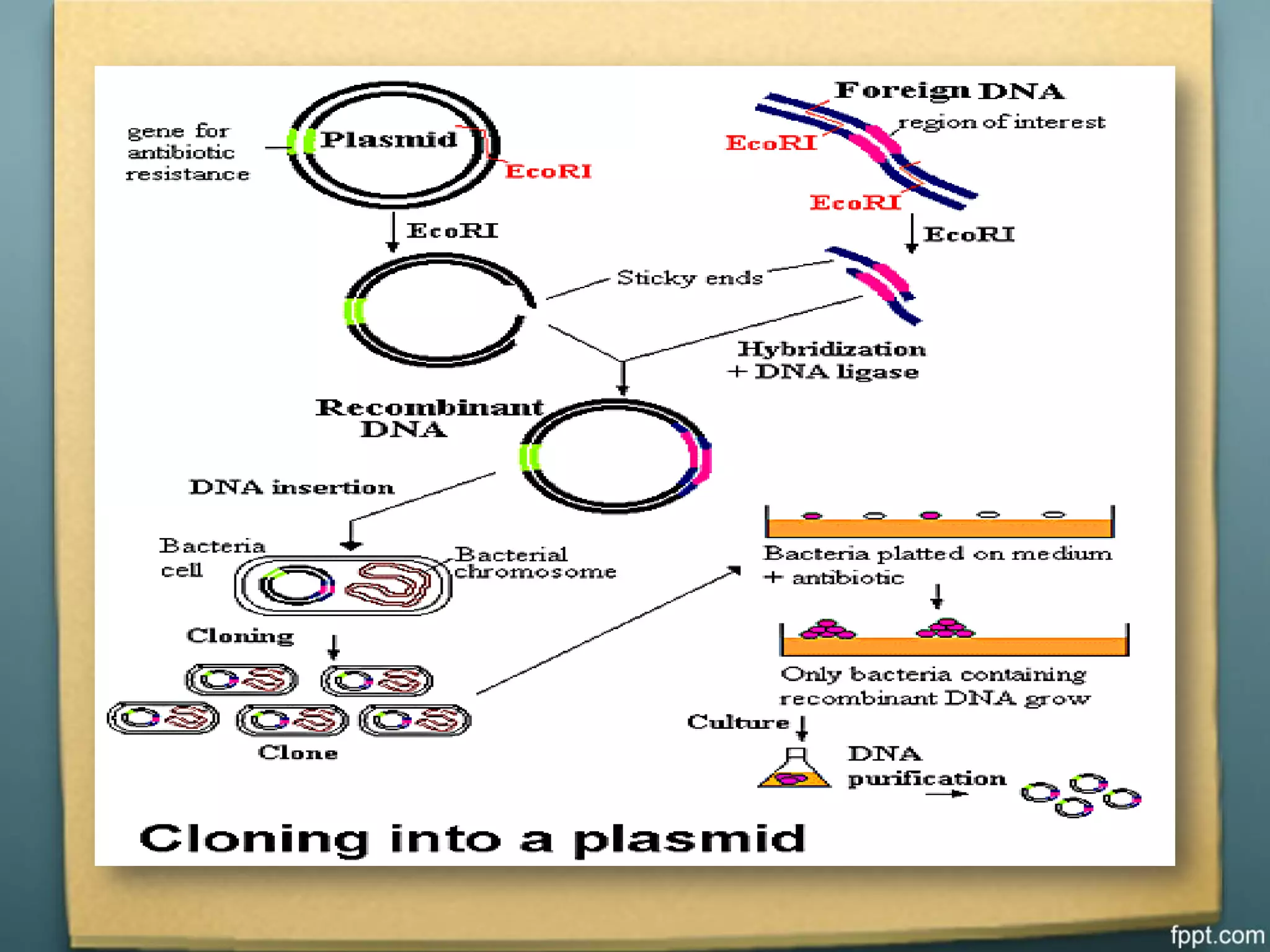

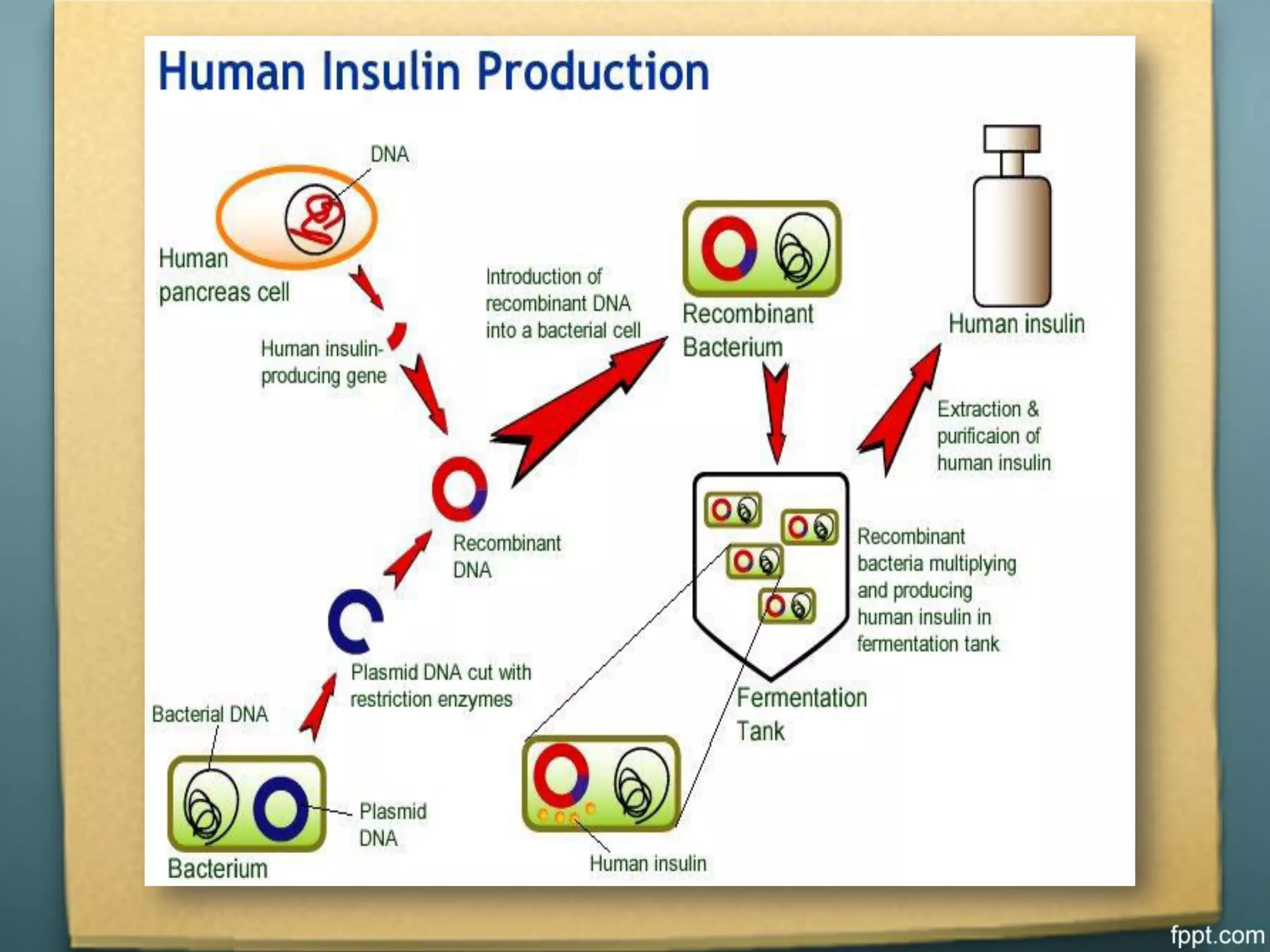
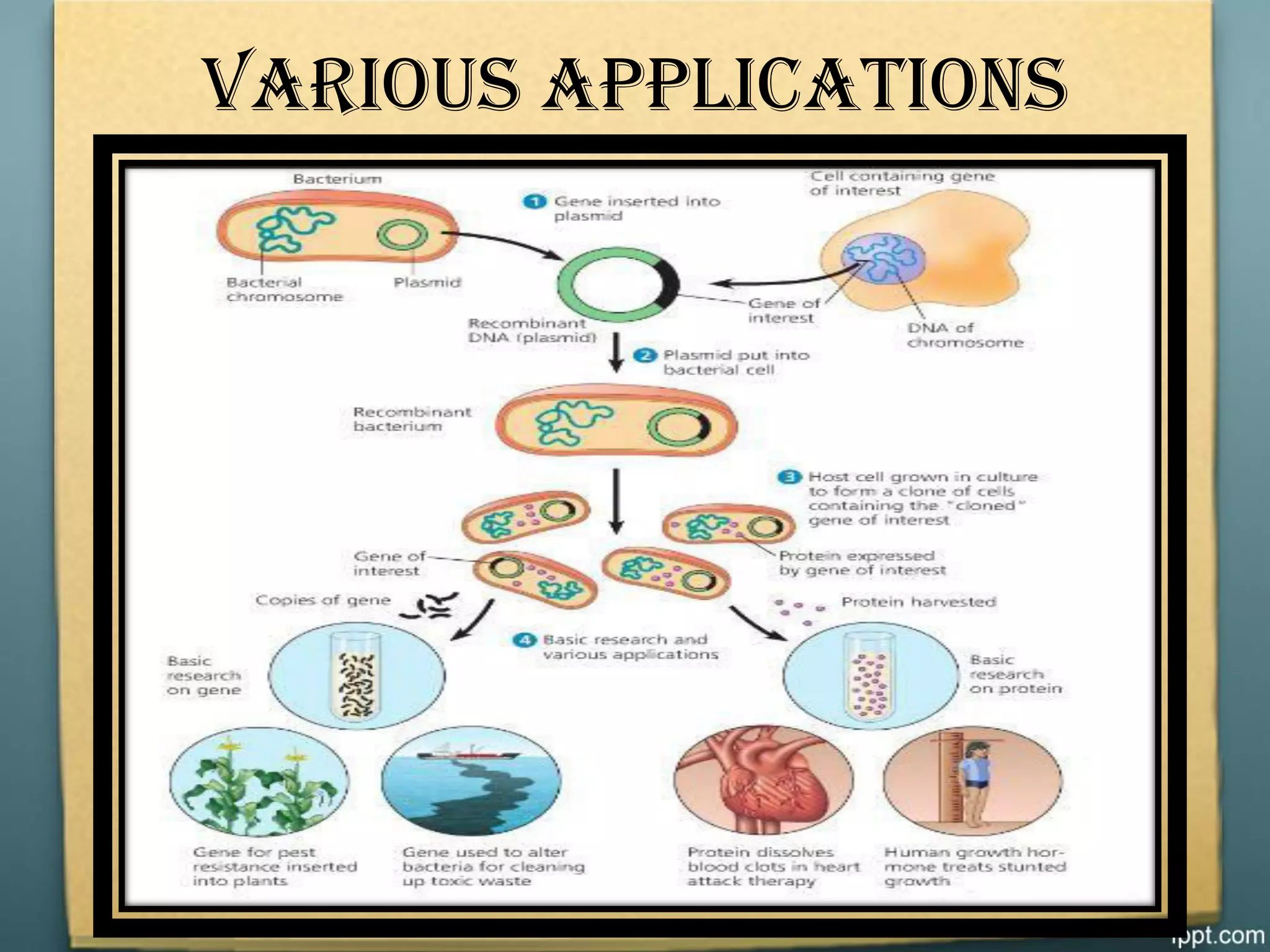
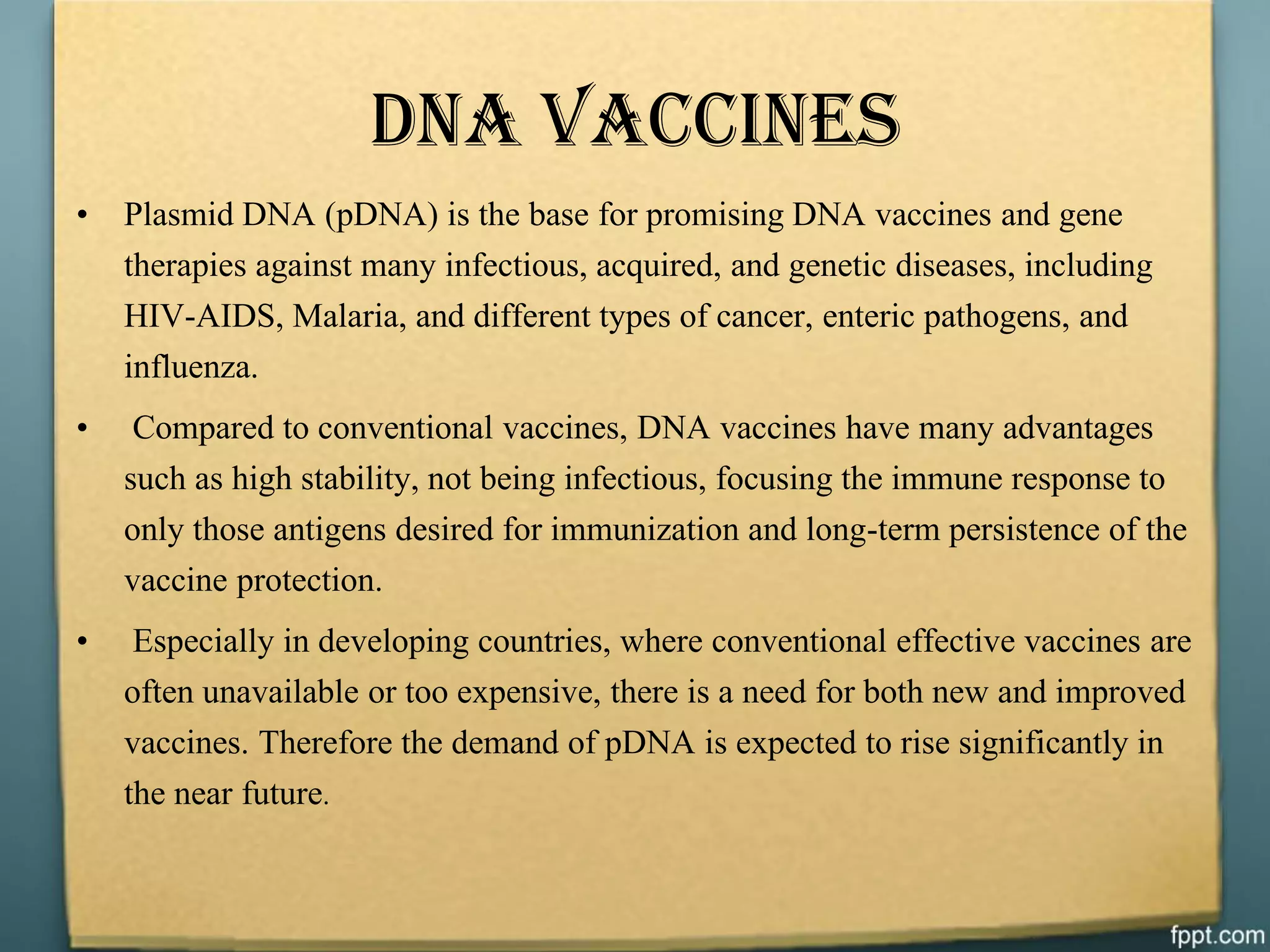


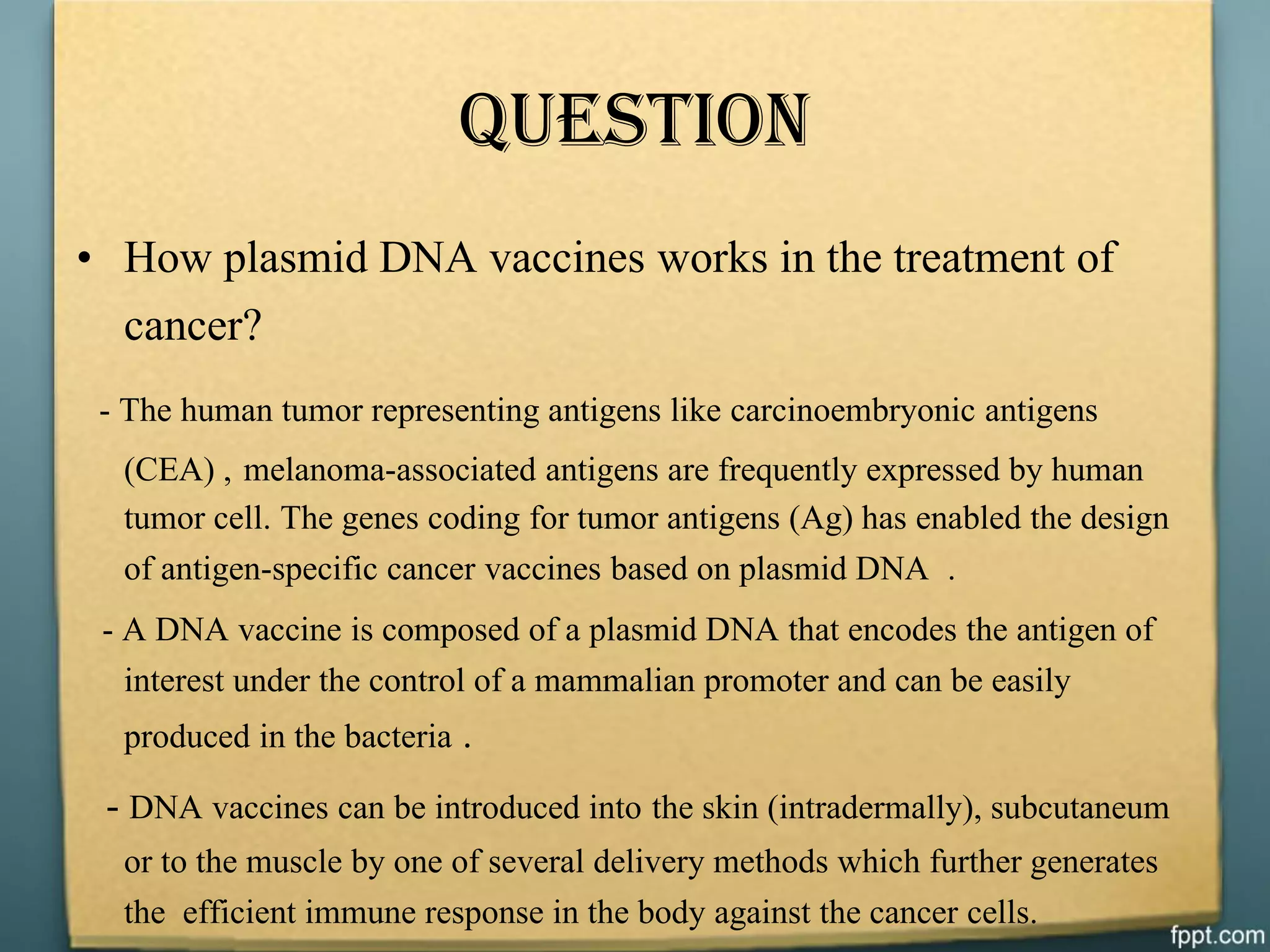

Plasmids are small, circular DNA molecules that are separate from the bacterial chromosome and can replicate independently. They were first described by American molecular biologist Joshua Lederberg in 1952. Plasmids often contain genes that provide bacteria with functions not necessary for survival, such as antibiotic resistance or virulence factors. They are commonly used as cloning vectors in genetic engineering to generate copies of genes of interest in bacteria. Plasmids have an origin of replication, selectable marker gene, and cloning site that allow them to be used to replicate, select for, and clone DNA fragments in bacteria.


![Reporter gene[2]](https://cdn.slidesharecdn.com/ss_thumbnails/reportergene2-160424161339-thumbnail.jpg?width=640&height=640&fit=bounds)

![Chloroplasts[1]](https://cdn.slidesharecdn.com/ss_thumbnails/chloroplasts1-160424155457-thumbnail.jpg?width=640&height=640&fit=bounds)


![Agro[2]](https://cdn.slidesharecdn.com/ss_thumbnails/agro2-160424160833-thumbnail.jpg?width=640&height=640&fit=bounds)
![Endoplasmic reticulum[1]](https://cdn.slidesharecdn.com/ss_thumbnails/endoplasmicreticulum1-160424155701-thumbnail.jpg?width=640&height=640&fit=bounds)


![Cell signaling -_introduction[1]](https://cdn.slidesharecdn.com/ss_thumbnails/cellsignaling-introduction1-160424161032-thumbnail.jpg?width=640&height=640&fit=bounds)
![Glyoxysomes[1]](https://cdn.slidesharecdn.com/ss_thumbnails/glyoxysomes1-160424155746-thumbnail.jpg?width=640&height=640&fit=bounds)

![Centrioles[1]](https://cdn.slidesharecdn.com/ss_thumbnails/centrioles1-160424155317-thumbnail.jpg?width=640&height=640&fit=bounds)

![Rna i[2]](https://cdn.slidesharecdn.com/ss_thumbnails/rnai2-160424161447-thumbnail.jpg?width=640&height=640&fit=bounds)
![Plasma membrane robertson_jd[1]](https://cdn.slidesharecdn.com/ss_thumbnails/plasmamembranerobertsonjd1-160424161203-thumbnail.jpg?width=640&height=640&fit=bounds)

![Chromosome pdf[1]](https://cdn.slidesharecdn.com/ss_thumbnails/chromosomepdf1-160424155550-thumbnail.jpg?width=640&height=640&fit=bounds)


