

STRIP PACKAGING
PRESENTATION
ON
KAUSHAL GADARIYA
SUBJECT
FOOD PACKAGING TECHNOLOGY
CONTENTS
1. Introduction
2. Process of packaging
3. Designing of strip
4. Inspection of seal
5. Material used for strip packaging
INTRODUCTION
 Strip packaging is an alternate form of
pack for a unit dosage.
 It is a method of enclosing the article
concerned between the two web of
material so that each is contained
between separate compartments.
 The two web of material may not be
necessary to be identical.
PROCESS OF PACKAGING
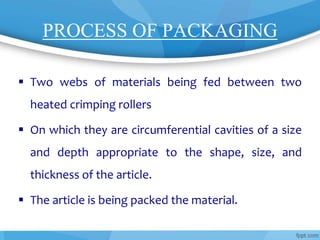
 Two webs of materials being fed between two
heated crimping rollers
 On which they are circumferential cavities of a size
and depth appropriate to the shape, size, and
thickness of the article.
 The article is being packed the material.
 The material is fed from a hopper through channels
to drop between the crimping rollers.
 The cavities present in the webs are sealed
together by the activation of the thermoplastic
coating on their inner surface and pockets.
 At the end, pockets are formed around the
contents.
DESIGNING OF STRIP
 Strip design are very basic, as the
emerging units are invariably
rectangular or square strip.
 The pockets can round, oval or square
shape.
 The pocket area is depends on
diameter, shape and thickness of
product.
 If the pockets is too ‘tight’, it affect the
- perforation of pockets
- wrinkling of seal
 If the seal area likely to be wrinkle or crease
shown, then wider seals may be necessary.
 Generally, the width of seal taken as 5mm and
above.
INSPECTION OF SEAL
 To check the seal of packaging material either
periphery of pockets is perforated or not, the
heating of seals are very efficient method.
 Samples strips are taken at regular interval and
exposed them briefly.
 After that get packaged material immersed in a
water to a vacuum of about 680Mb.
MATERIAL USED FOR STRIP
PACKAGING
 Material employing foil provides the best,
excellent, protection provided and effective seal is
achieved.
 Two plastic pipes, each with a vacuumised foil,
when laminated in direct contact with one another,
it gives excellent barrier property.
 PET (POLYETHYLENE TEREPHTHALATE) is very
resistant to tear, hence it needs a tear feature and
also confers child resistance.
 The most widely used material for excellent
moisture protection are:
- Extrusion coated foil(12gram per sq.meter)
- paper with 40-50 gsm..
- Soft aluminum foil (7 – 9µm).
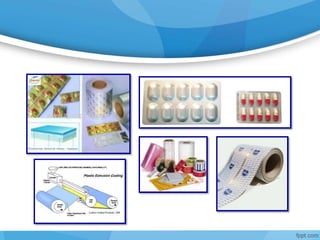
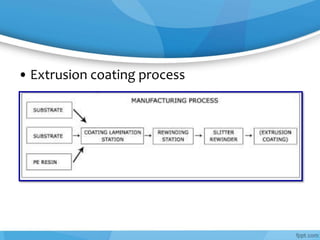
• Extrusion coating process
Strip packaging kvg

Strip packaging kvg

  • 2.
  • 3.
    CONTENTS 1. Introduction 2. Processof packaging 3. Designing of strip 4. Inspection of seal 5. Material used for strip packaging
  • 4.
    INTRODUCTION  Strip packagingis an alternate form of pack for a unit dosage.  It is a method of enclosing the article concerned between the two web of material so that each is contained between separate compartments.  The two web of material may not be necessary to be identical.
  • 6.
    PROCESS OF PACKAGING Two webs of materials being fed between two heated crimping rollers  On which they are circumferential cavities of a size and depth appropriate to the shape, size, and thickness of the article.  The article is being packed the material.
  • 7.
     The materialis fed from a hopper through channels to drop between the crimping rollers.  The cavities present in the webs are sealed together by the activation of the thermoplastic coating on their inner surface and pockets.  At the end, pockets are formed around the contents.
  • 8.
    DESIGNING OF STRIP Strip design are very basic, as the emerging units are invariably rectangular or square strip.  The pockets can round, oval or square shape.  The pocket area is depends on diameter, shape and thickness of product.
  • 9.
     If thepockets is too ‘tight’, it affect the - perforation of pockets - wrinkling of seal  If the seal area likely to be wrinkle or crease shown, then wider seals may be necessary.  Generally, the width of seal taken as 5mm and above.
  • 10.
    INSPECTION OF SEAL To check the seal of packaging material either periphery of pockets is perforated or not, the heating of seals are very efficient method.  Samples strips are taken at regular interval and exposed them briefly.  After that get packaged material immersed in a water to a vacuum of about 680Mb.
  • 11.
    MATERIAL USED FORSTRIP PACKAGING  Material employing foil provides the best, excellent, protection provided and effective seal is achieved.  Two plastic pipes, each with a vacuumised foil, when laminated in direct contact with one another, it gives excellent barrier property.
  • 12.
     PET (POLYETHYLENETEREPHTHALATE) is very resistant to tear, hence it needs a tear feature and also confers child resistance.  The most widely used material for excellent moisture protection are: - Extrusion coated foil(12gram per sq.meter) - paper with 40-50 gsm.. - Soft aluminum foil (7 – 9µm).
  • 13.