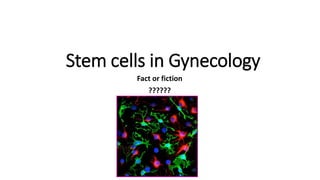
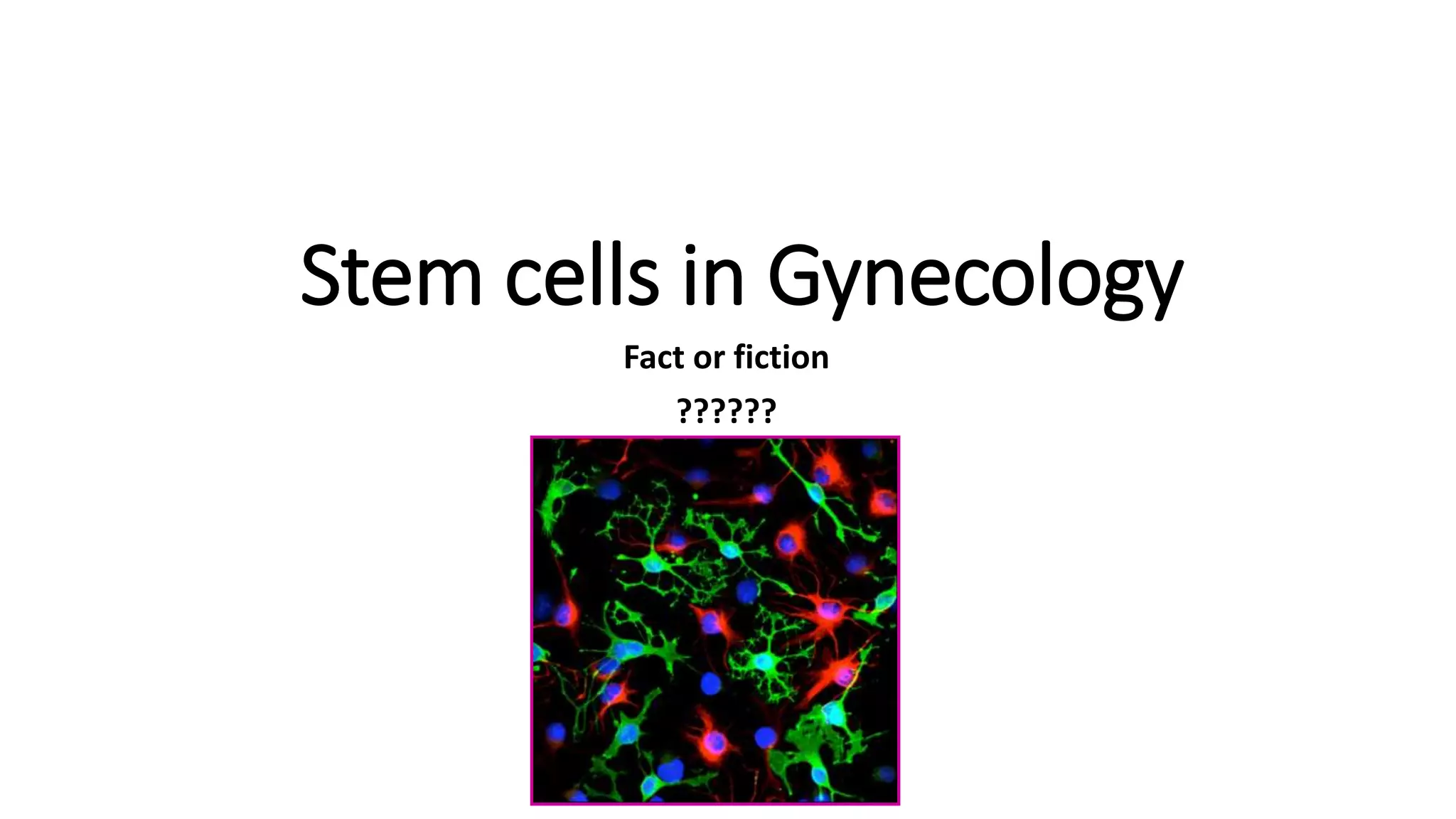
Stem cells in Gynecology
Fact or fiction
??????
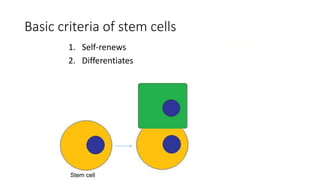
Basic criteria of stem cells
1. Self-renews
2. Differentiates
Progenitor cell
Stem cell Stem cell
3/2/2015 Dr. Hariom Yadav
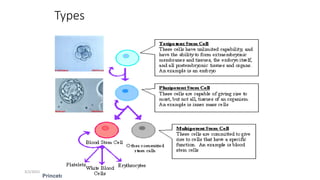
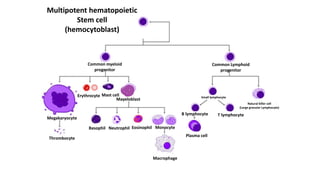
Types
Princeton University
Multipotent hematopoietic
Stem cell
(hemocytoblast)
Common myeloid
progenitor
Common Lymphoid
progenitor
Small lymphocyte
B lymphocyte T lymphocyte
Natural killer cell
(Large granular Lymphocyte)
Plasma cell
Monocyte
Macrophage
EosinophilBasophil
Thrombocyte
Megakaryocyte
Erythrocyte Mast cell
Mayeloblast
Neutrophil
3/2/2015 Dr. Hariom Yadav
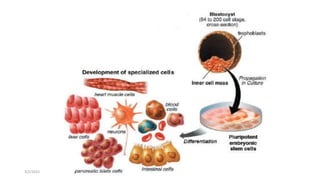
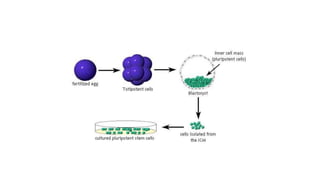
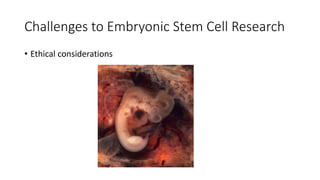
Challenges to Embryonic Stem Cell Research
• Ethical considerations
3/2/2015
Not only ethics
• The use of mouse “feeder” cells to grow ESC could result in problems
due to xenotransplantation (complicating FDA requirements for
clinical use).
3/2/2015
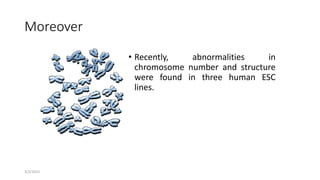
Moreover
• Recently, abnormalities in
chromosome number and structure
were found in three human ESC
lines.
3/2/2015 Dr. Hariom Yadav
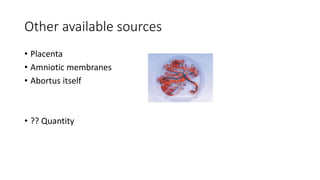
Other available sources
• Placenta
• Amniotic membranes
• Abortus itself
• ?? Quantity
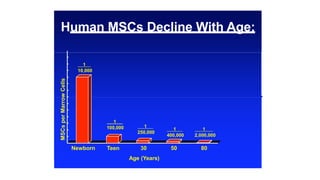
Human MSCs Decline With Age:
1
10,000
1
100,000 1
250,000
1
400,000
1
2,000,000
MSCsperMarrowCells
Newborn Teen 30
Age (Years)
50 80
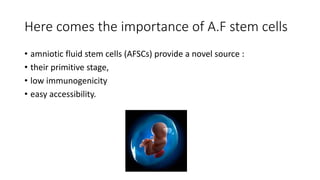
Here comes the importance of A.F stem cells
• amniotic fluid stem cells (AFSCs) provide a novel source :
• their primitive stage,
• low immunogenicity
• easy accessibility.
The question is: Fact or Fiction!!!
• urogenital tract
• intrauterine stem cell transplantation
• Infertility
Urogenital tract disorders
• Urinary incontinence
• Bladder reconstruction
• Pelvic floor
U.I
• stem cell injection for sphincteric muscle regeneration is the subject
of research in a number of centers
• Both animal and human studies have been conducted
• Results are conflicting
• Unresolved question : ??transient or permanent
Bladder reconstruction (entero–cystoplasty)
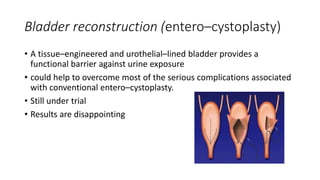
• A tissue–engineered and urothelial–lined bladder provides a
functional barrier against urine exposure
• could help to overcome most of the serious complications associated
with conventional entero–cystoplasty.
• Still under trial
• Results are disappointing
Pelvic prolapse
• The idea is to generate new muscle which can perform in an
integrated manner with the existing organs
• Avoid mesh complications (erosions and extrusion)
• Needs to be tested
intrauterine stem cell transplantation (IUSCT)
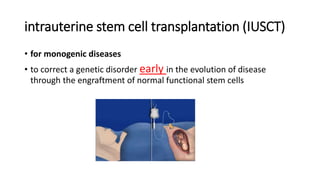
• for monogenic diseases
• to correct a genetic disorder early in the evolution of disease
through the engraftment of normal functional stem cells
Quantity needed is much less
• fetal size offers a distinct advantage over the several–fold larger
neonate
• Avoid the need of postnatal bone marrow transplantation
Real model
• hfMSC have been collected from the liver of fetus for intrauterine
transplantation targeting osteogenesis imperfect
(Mattar et al, 2012)
IUSCT applications
• β–thalassaemia and sickle cell anaemia, muscular dystrophies
• successful treatment has only been achieved in a very few fetuses
How it was done?
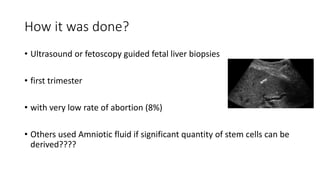
• Ultrasound or fetoscopy guided fetal liver biopsies
• first trimester
• with very low rate of abortion (8%)
• Others used Amniotic fluid if significant quantity of stem cells can be
derived????
The major question is :
• Can this be a complete cure?!!!
• Days will tell.
What about infertility: In POF?
• AFSCs were transplanted into the ovaries of mice with POF six weeks
post induction using chemotherapeutic drugs.
• the transplanted AFSCs did not differentiate into germ line cells in
vivo.
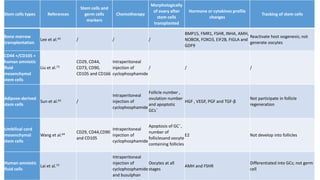
Stem cells types References
Stem cells and
germ cells
markers
Chemotherapy
Morphologically
of ovary after
stem cells
transplanted
Hormone or cytokines profile
changes
Tracking of stem cells
Bone marrow
transplantation
Lee et al.43 / / /
BMP15, FMR1, FSHR, INHA, AMH,
NOBOX, FOXO3, EIF2B, FIGLA and
GDF9
Reactivate host oogenesis; not
generate oocytes
CD44 +/CD105 +
human amniotic
fluid
mesenchymal
stem cells
Liu et al.73
CD29, CD44,
CD73, CD90,
CD105 and CD166
Intraperitoneal
injection of
cyclophosphamide
/ / /
Adipose-derived
stem cells
Sun et al.63 /
Intraperitoneal
injection of
cyclophosphamide
Follicle number ,
ovulation number
and apoptotic
GCs¯
HGF , VEGF, PGF and TGF-β
Not participate in follicle
regeneration
Umbilical cord
mesenchymal
stem cells
Wang et al.64
CD29, CD44,CD90
and CD105
Intraperitoneal
injection of
cyclophosphamide
Apoptosis of GC¯,
number of
folliclesand oocyte
containing follicles
E2 Not develop into follicles
Human amniotic
fluid cells
Lai et al.72
Intraperitoneal
injection of
cyclophosphamide
and busulphan
Oocytes at all
stages
AMH and FSHR
Differentiated into GCs; not germ
cell
Summary of results
• No evidence of differentiation into oocytes
• But risk of developing GC tumour is potential (Botman , 2014)
• So till now, use of stem cells for POF in human is not valid
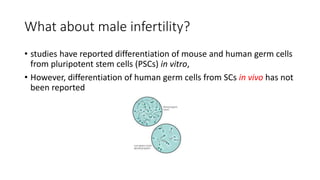
What about male infertility?
• studies have reported differentiation of mouse and human germ cells
from pluripotent stem cells (PSCs) in vitro,
• However, differentiation of human germ cells from SCs in vivo has not
been reported
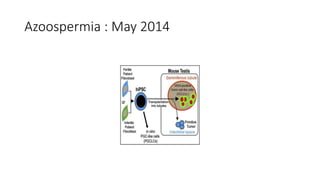
Azoospermia : May 2014
Beware
• Testicular teratoma has been reported after SC injection in
azoospermic man
human trials?
• Only Two clinical trials are registered in human
• Unfortunately both from the Middle East (Egypt & Jordan)
• Patients accepted such treatments and were eager to take part
because they have no other choice (RBMonline, 2014)
Patients asks: Is there any hope??
• Using the patient miserable condition is not ethical
• Taking money from patients in context of clinical research is not
ethical
Conclusion
• It is not fiction
• But far from being Fact
• Its use should stay within research rather than practice
Keep in Mind

Stem cells in gynecology

  • 1.
    Stem cells inGynecology Fact or fiction ??????
  • 2.
    Basic criteria ofstem cells 1. Self-renews 2. Differentiates Progenitor cell Stem cell Stem cell
  • 3.
    3/2/2015 Dr. HariomYadav Types Princeton University
  • 4.
    Multipotent hematopoietic Stem cell (hemocytoblast) Commonmyeloid progenitor Common Lymphoid progenitor Small lymphocyte B lymphocyte T lymphocyte Natural killer cell (Large granular Lymphocyte) Plasma cell Monocyte Macrophage EosinophilBasophil Thrombocyte Megakaryocyte Erythrocyte Mast cell Mayeloblast Neutrophil
  • 5.
  • 7.
    Challenges to EmbryonicStem Cell Research • Ethical considerations
  • 8.
    3/2/2015 Not only ethics •The use of mouse “feeder” cells to grow ESC could result in problems due to xenotransplantation (complicating FDA requirements for clinical use).
  • 9.
    3/2/2015 Moreover • Recently, abnormalitiesin chromosome number and structure were found in three human ESC lines.
  • 10.
  • 11.
    Other available sources •Placenta • Amniotic membranes • Abortus itself • ?? Quantity
  • 12.
    Human MSCs DeclineWith Age: 1 10,000 1 100,000 1 250,000 1 400,000 1 2,000,000 MSCsperMarrowCells Newborn Teen 30 Age (Years) 50 80
  • 13.
    Here comes theimportance of A.F stem cells • amniotic fluid stem cells (AFSCs) provide a novel source : • their primitive stage, • low immunogenicity • easy accessibility.
  • 14.
    The question is:Fact or Fiction!!! • urogenital tract • intrauterine stem cell transplantation • Infertility
  • 15.
    Urogenital tract disorders •Urinary incontinence • Bladder reconstruction • Pelvic floor
  • 16.
    U.I • stem cellinjection for sphincteric muscle regeneration is the subject of research in a number of centers • Both animal and human studies have been conducted • Results are conflicting • Unresolved question : ??transient or permanent
  • 17.
    Bladder reconstruction (entero–cystoplasty) •A tissue–engineered and urothelial–lined bladder provides a functional barrier against urine exposure • could help to overcome most of the serious complications associated with conventional entero–cystoplasty. • Still under trial • Results are disappointing
  • 18.
    Pelvic prolapse • Theidea is to generate new muscle which can perform in an integrated manner with the existing organs • Avoid mesh complications (erosions and extrusion) • Needs to be tested
  • 19.
    intrauterine stem celltransplantation (IUSCT) • for monogenic diseases • to correct a genetic disorder early in the evolution of disease through the engraftment of normal functional stem cells
  • 20.
    Quantity needed ismuch less • fetal size offers a distinct advantage over the several–fold larger neonate • Avoid the need of postnatal bone marrow transplantation
  • 21.
    Real model • hfMSChave been collected from the liver of fetus for intrauterine transplantation targeting osteogenesis imperfect (Mattar et al, 2012)
  • 22.
    IUSCT applications • β–thalassaemiaand sickle cell anaemia, muscular dystrophies • successful treatment has only been achieved in a very few fetuses
  • 23.
    How it wasdone? • Ultrasound or fetoscopy guided fetal liver biopsies • first trimester • with very low rate of abortion (8%) • Others used Amniotic fluid if significant quantity of stem cells can be derived????
  • 24.
    The major questionis : • Can this be a complete cure?!!! • Days will tell.
  • 25.
    What about infertility:In POF? • AFSCs were transplanted into the ovaries of mice with POF six weeks post induction using chemotherapeutic drugs. • the transplanted AFSCs did not differentiate into germ line cells in vivo.
  • 26.
    Stem cells typesReferences Stem cells and germ cells markers Chemotherapy Morphologically of ovary after stem cells transplanted Hormone or cytokines profile changes Tracking of stem cells Bone marrow transplantation Lee et al.43 / / / BMP15, FMR1, FSHR, INHA, AMH, NOBOX, FOXO3, EIF2B, FIGLA and GDF9 Reactivate host oogenesis; not generate oocytes CD44 +/CD105 + human amniotic fluid mesenchymal stem cells Liu et al.73 CD29, CD44, CD73, CD90, CD105 and CD166 Intraperitoneal injection of cyclophosphamide / / / Adipose-derived stem cells Sun et al.63 / Intraperitoneal injection of cyclophosphamide Follicle number , ovulation number and apoptotic GCs¯ HGF , VEGF, PGF and TGF-β Not participate in follicle regeneration Umbilical cord mesenchymal stem cells Wang et al.64 CD29, CD44,CD90 and CD105 Intraperitoneal injection of cyclophosphamide Apoptosis of GC¯, number of folliclesand oocyte containing follicles E2 Not develop into follicles Human amniotic fluid cells Lai et al.72 Intraperitoneal injection of cyclophosphamide and busulphan Oocytes at all stages AMH and FSHR Differentiated into GCs; not germ cell
  • 27.
    Summary of results •No evidence of differentiation into oocytes • But risk of developing GC tumour is potential (Botman , 2014) • So till now, use of stem cells for POF in human is not valid
  • 28.
    What about maleinfertility? • studies have reported differentiation of mouse and human germ cells from pluripotent stem cells (PSCs) in vitro, • However, differentiation of human germ cells from SCs in vivo has not been reported
  • 29.
  • 30.
    Beware • Testicular teratomahas been reported after SC injection in azoospermic man
  • 31.
    human trials? • OnlyTwo clinical trials are registered in human • Unfortunately both from the Middle East (Egypt & Jordan) • Patients accepted such treatments and were eager to take part because they have no other choice (RBMonline, 2014)
  • 32.
    Patients asks: Isthere any hope?? • Using the patient miserable condition is not ethical • Taking money from patients in context of clinical research is not ethical
  • 33.
    Conclusion • It isnot fiction • But far from being Fact
  • 34.
    • Its useshould stay within research rather than practice Keep in Mind