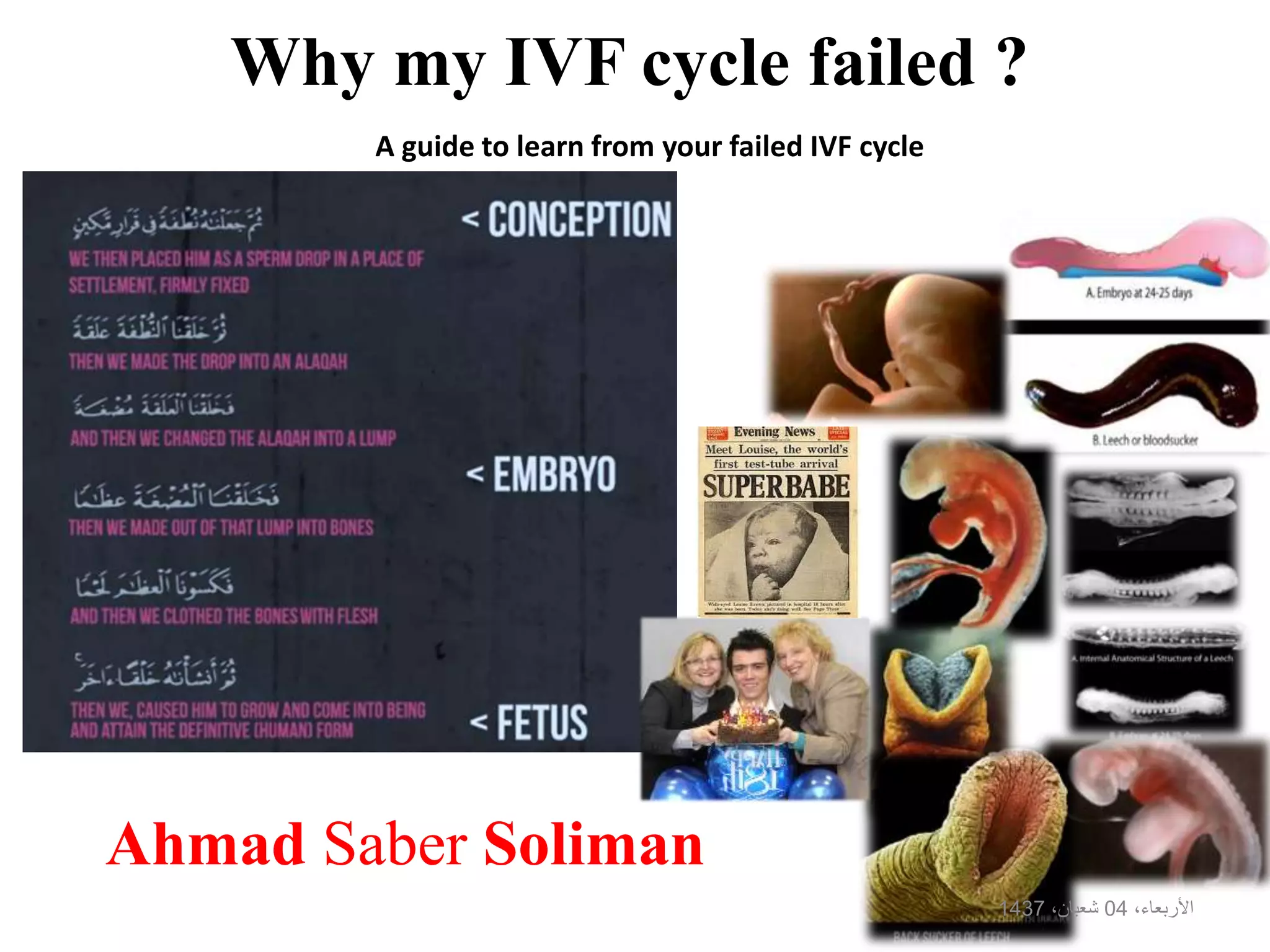
Why my IVF cycle failed ?
Ahmad Saber Soliman
A guide to learn from your failed IVF cycle
،‫األربعاء‬04،‫شعبان‬1437
Objectives
• Definition of repeated IVF failure
How many attempts ?
How many embryos ?
• Avoidable causes of IVF failure
Failure in the presence of potential obstacles
،‫األربعاء‬04،‫شعبان‬1437
Definition
،‫األربعاء‬04،‫شعبان‬1437
Its definition is dynamic and depends on the population
of patients studied, as well as the type and quality of clinical
practice. Mitri et al; 2016
no universally accepted definition for RIF, despite many
publications on this topic (Das and Holzer, 2012; Laufer and Simon,
2012; Penzias, 2012; Simon and Laufer, 2012a,b; Urman et al., 2005).
،‫األربعاء‬04،‫شعبان‬1437
Implantation failure after transfer of three high-quality
embryo or with transfer of ≥10 embryos in multiple
transfers with exact numbers to be determined by each
center .
[Thornhill AR, ESHRE PGD Consortium, et al. Best practice guidelines for clinical
preimplantation genetic diagnosis (PGD) and preimplantation genetic screening (PGS). Hum
Reprod. 2005;20(1):35–48.]
Should be revised after the era of SET/DET
،‫األربعاء‬04،‫شعبان‬1437
Recurrent implantation failure
vs
Recurrent IVF failure
RIF is not the same as recurrent IVF failure.
Recurrent IVF failure is the failure to achieve a pregnancy
after several IVF attempts, a common cause being poor
response to ovarian stimulation (Ferraretti et al., 2011).
The term ‘recurrent implantation failure’ is a subgroup of
recurrent IVF failure and should not be used to replace it.
،‫األربعاء‬04،‫شعبان‬1437
What is implantation rate ?
number of embryos which have produced US evidence of
an intrauterine gestational sac per the total number of
embryos transferred into the uterine cavity (Zegers-Hochschild et
al., 2009).
when day-2 or -3 embryos are transferred is about 25%,
But when day-5 or -6 embryos are transferred is usually
higher, about 40%.
،‫األربعاء‬04،‫شعبان‬1437
Is chemical pregnancy considered as
implantation failure?
Clinically:
Implantation failure refers to the failure of the embryo to
reach a stage when an IU gestational sac is recognized by
ultrasonography.
i.e: the only clinical evidence of implantation is appearance
of IU gestational sac .
،‫األربعاء‬04،‫شعبان‬1437
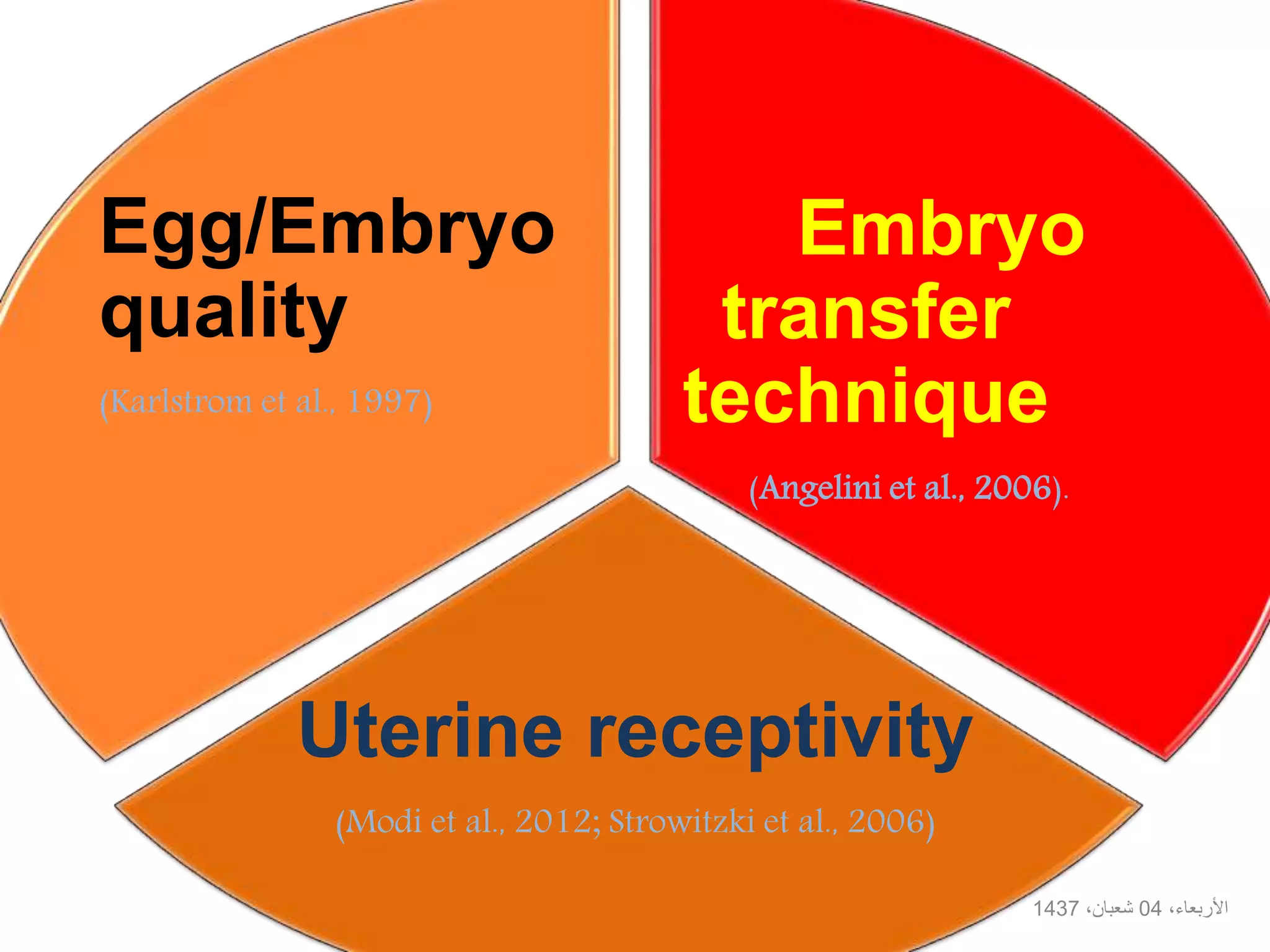
The common defendants
،‫األربعاء‬04،‫شعبان‬1437
Embryo
transfer
technique
(Angelini et al., 2006).
Uterine receptivity
(Modi et al., 2012; Strowitzki et al., 2006)
Egg/Embryo
quality
(Karlstrom et al., 1997)
،‫األربعاء‬04،‫شعبان‬1437
Age is the most important single variable affecting outcome
in ART. (Rosenwaks et al; 1995).
Effect on oocyte quality and endometrial receptivity ????
Age
cause or prognosticator
،‫األربعاء‬04،‫شعبان‬1437
Pregnancy depends on implantation of
a developmentally competent embryo to
dip in a receptive endometrium.
،‫األربعاء‬04،‫شعبان‬1437
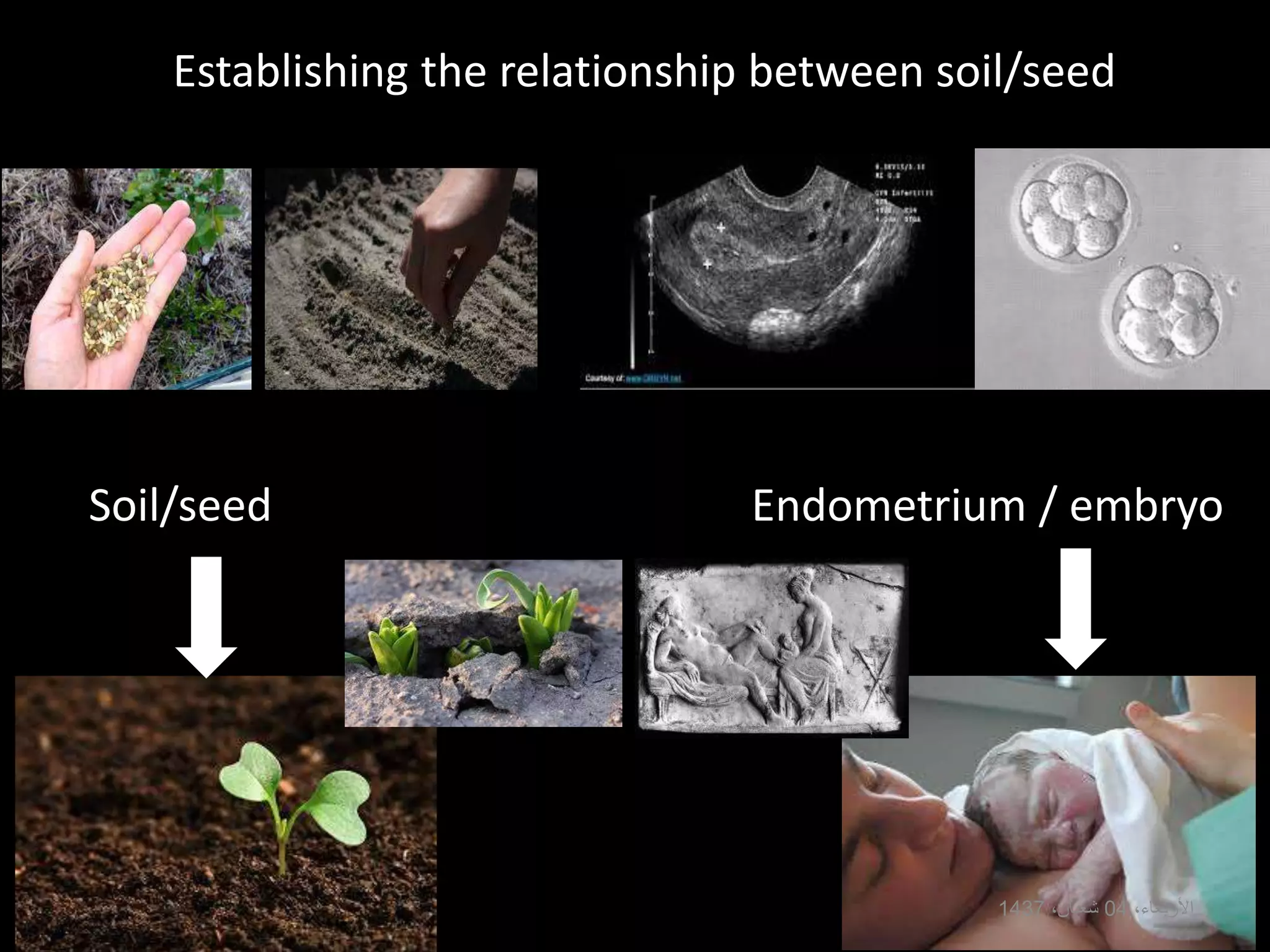
Establishing the relationship between soil/seed
Endometrium / embryoSoil/seed
،‫األربعاء‬04،‫شعبان‬1437
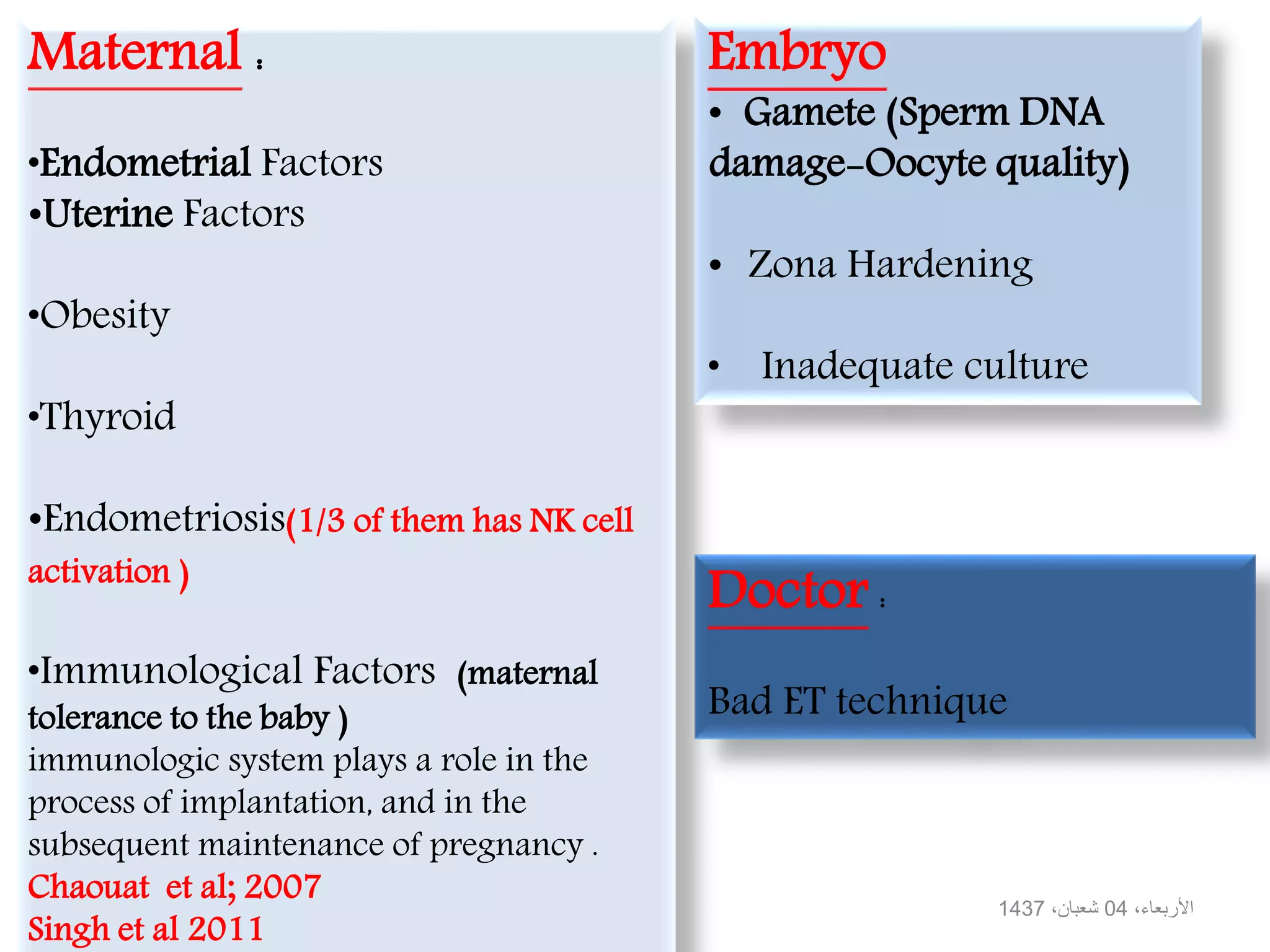
Maternal :
•Endometrial Factors
•Uterine Factors
•Obesity
•Thyroid
•Endometriosis(1/3 of them has NK cell
activation )
•Immunological Factors (maternal
tolerance to the baby )
immunologic system plays a role in the
process of implantation, and in the
subsequent maintenance of pregnancy .
Chaouat et al; 2007
Singh et al 2011
Embryo
• Gamete (Sperm DNA
damage-Oocyte quality)
• Zona Hardening
• Inadequate culture
Doctor :
Bad ET technique
،‫األربعاء‬04،‫شعبان‬1437
Management of RIF
،‫األربعاء‬04،‫شعبان‬1437
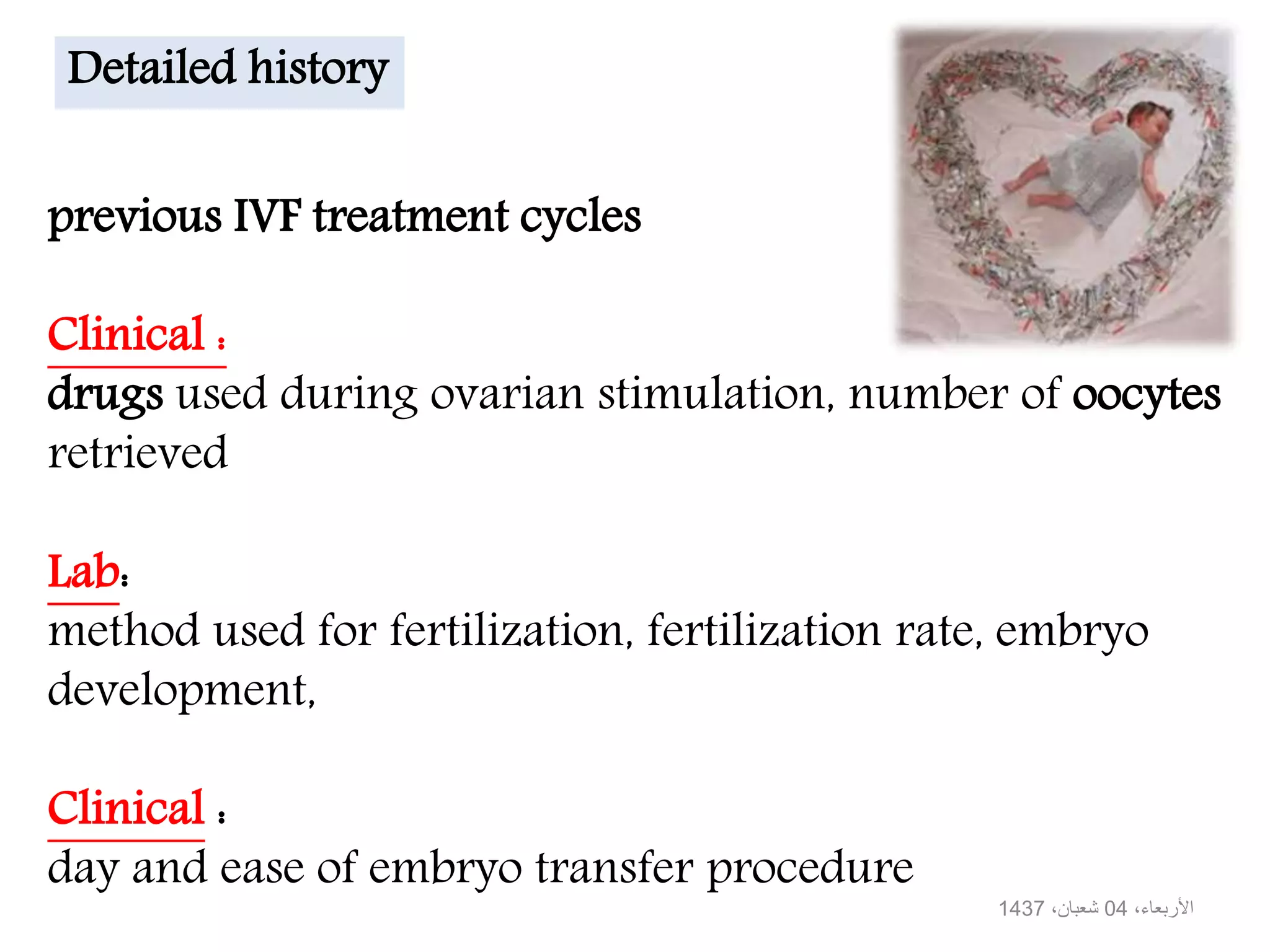
previous IVF treatment cycles
Clinical :
drugs used during ovarian stimulation, number of oocytes
retrieved
Lab:
method used for fertilization, fertilization rate, embryo
development,
Clinical :
day and ease of embryo transfer procedure
Detailed history
،‫األربعاء‬04،‫شعبان‬1437
Counseling should precede the investigative process to:
ensure patients understand the rationale, potential benefit
and cost implications of the proposed tests.
Preferably,
information leaflets should augment the counseling process
،‫األربعاء‬04،‫شعبان‬1437
 High-resolution ultrasound scanning,
 Hysteroscopy
 Screening for congenital and acquired thrombophilic
conditions.
Evidence-based investigations should include :
،‫األربعاء‬04،‫شعبان‬1437
Other commonly performed investigations with weaker
evidence base include :
 karyotype analysis for the couple,
 laparoscopy for diagnosis and treatment of endometriosis
and
 endometrial biopsy. Has it had a place in modern practice??!!
The role of immunologic testing for natural killer cell
counts and cytotoxicity assay remains controversial.
،‫األربعاء‬04،‫شعبان‬1437
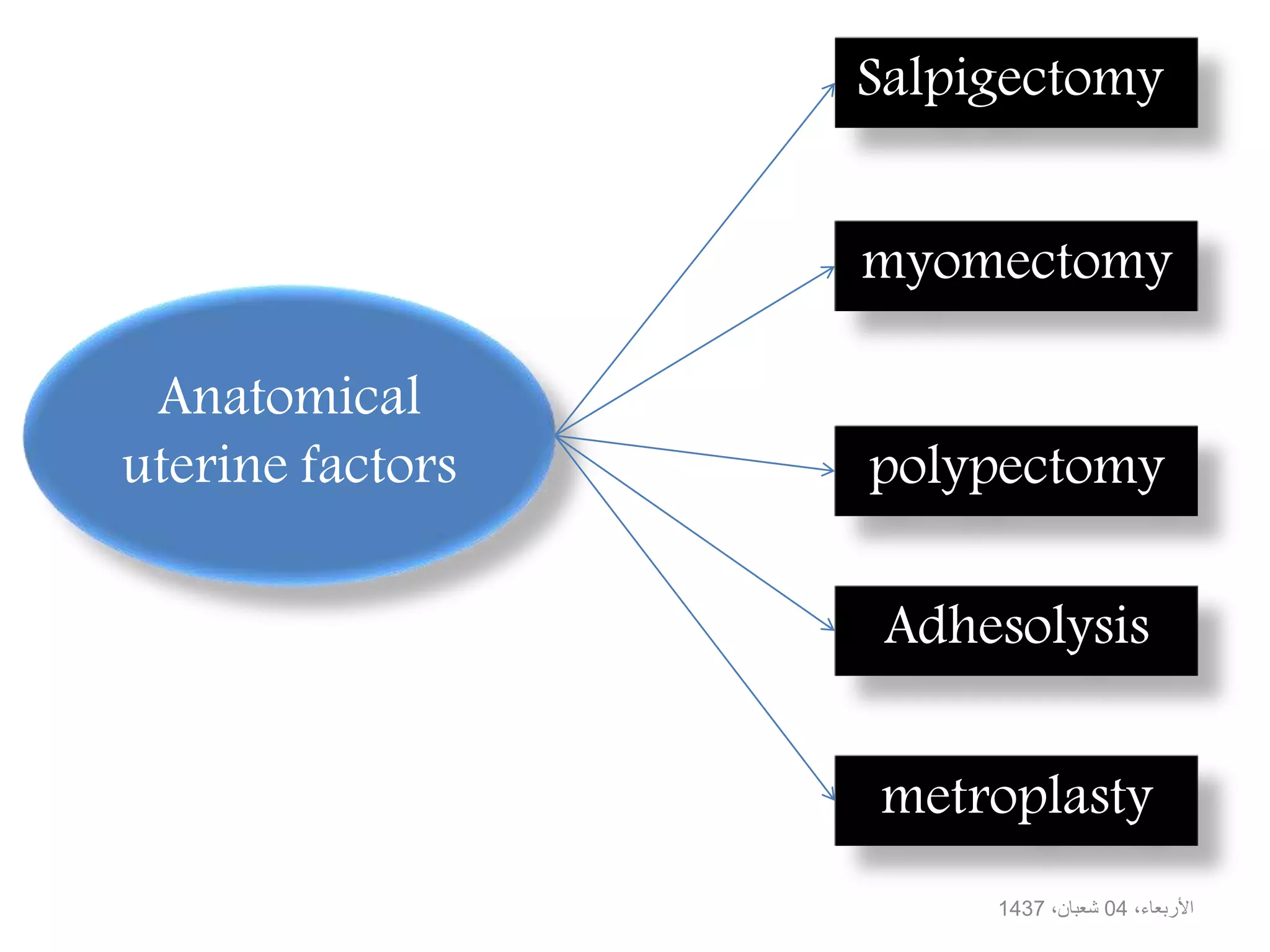
Anatomical
uterine factors
Salpigectomy
myomectomy
polypectomy
metroplasty
Adhesolysis
• Polyps
• adhesions,
• submucous fibroids (FIGO 0-2)
• endometritis .
Rationale :
Searching for correctable pathology in up to 45%
of patients with RIF.
Even in the absence of identifiable pathology, there is evidence that
performing hysteroscopy could still improve the likelihood of
pregnancy in the subsequent IVF cycle [El-Toukhy et al; 2008 systematic review
and metaanalysis ].
،‫األربعاء‬04،‫شعبان‬1437
Hysteroscopic resection of the septum improves the
reproductive outcome of infertile women (Bakas et al., 2012;
Mollo et al., 2009).
Uterine septum
• After polypectomy ??!!
patients can undergo ovarian stimulation after their next
menses after a polypectomy without affecting assisted
reproductive treatment outcomes (Pereira et al., 2016).
Postpone assisted reproductive treatment for 2 months
after hysteroscopic septoplasty and for 3 months after
myomectomy or adhesiolysis. Yang et al. (2013)
،‫األربعاء‬04،‫شعبان‬1437
Hydrosalpinx
،‫األربعاء‬04،‫شعبان‬1437
Does it affect IVF results ?
،‫األربعاء‬04،‫شعبان‬1437
altered endometrial histology and a lack of expression of endometrial
adhesion molecules (integrins), which may play important roles in the
implantation process (Meyer et al; 1997).
Reflux of hydrosalpinx results in mechanical factors diminishing
embryonic endometrial apposition (Sharara 1999).
Hydrosalpinx fluid contains embryotoxic inflammatory compounds
(Mukherjee et al; 1996).
Two meta-analyses estimated that hydrosalpinges
diminished implantation rates by 35–50% And also
responsible for early pregnancy loss (Zeyneloglu et al; 1998 ,
Camus et al; 1999).
Laparoscopic salpingectomy or proximal tubal occlusion .
،‫األربعاء‬04،‫شعبان‬1437
Options for management?
Bilateral salpingectomy results in improved implantation as
well as pregnancy rates compared with controls who
harbor hydrosalpinges (Bredkjaer et al; 1999). Dechaud et al 1998 ,
Strandell et al; 1999
All studies were done on females aged <39 years .
Improved pregnancy rates in patients who had
hydrosalpinges and underwent laparoscopic salpingectomy
after experiencing repeated implantation failure (Dechaud et
al; 2000).
،‫األربعاء‬04،‫شعبان‬1437
Complications of salpigectomy
salpingectomy prior to IVF may impair ovarian response.
Fan et al; 2016 Fetril Steril Meta-analysis
For women with diminished ovarian reserve either
interruption of tubal uterine patency or ultrasound-guided
drainage of hydrosalpinges might also be considered .
،‫األربعاء‬04،‫شعبان‬1437
Endometrial
thickness and
receptivity
Asprin?
G-CSF?
Sildenafil?
Endometrial
scratching
High dose
estrogen?
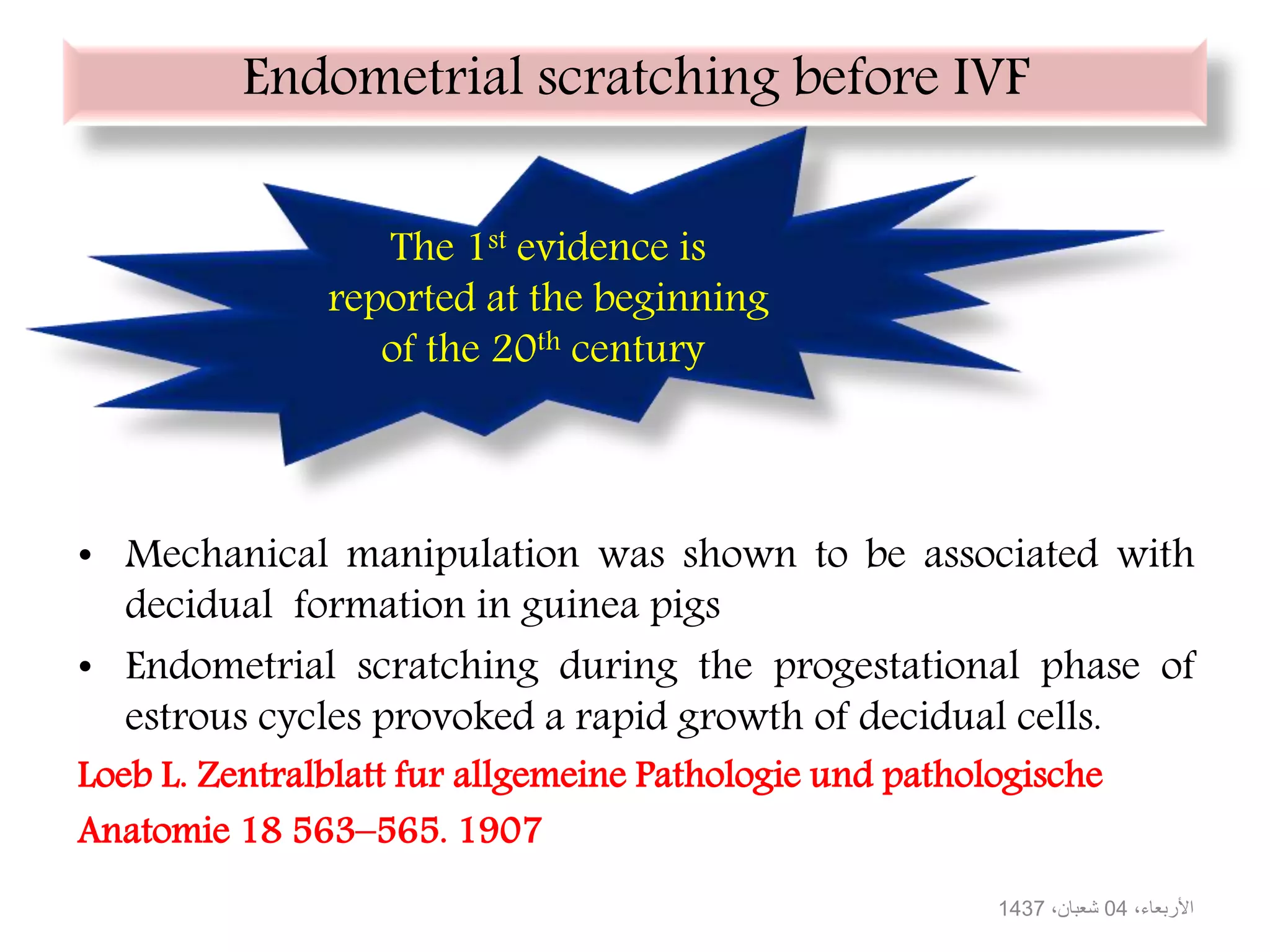
Endometrial scratching before IVF
• Mechanical manipulation was shown to be associated with
decidual formation in guinea pigs
• Endometrial scratching during the progestational phase of
estrous cycles provoked a rapid growth of decidual cells.
Loeb L. Zentralblatt fur allgemeine Pathologie und pathologische
Anatomie 18 563–565. 1907
،‫األربعاء‬04،‫شعبان‬1437
The 1st evidence is
reported at the beginning
of the 20th century
In women with RIF , inducing local injury to the endometrium in
the cycle prior to starting ovarian stimulation for IVF can improve
pregnancy outcomes However, large studies are required before this
can be adopted in routine clinical practice. Potdar et al; 2012 a
systematic review and meta-analysis
،‫األربعاء‬04،‫شعبان‬1437
Timing :
Endometrial injury performed between day 7 of the previous cycle
and day 7 of the embryo transfer (ET) cycle is associated with an
improvement in live birth and clinical pregnancy rates in women
with more than two previous embryo transfers.
Not advised in day of oocyte retrieval as it was associated with a
reduction of clinical and ongoing pregnancy rates.
[Cochrane Database Syst Rev. 2015]
Poor Endometrium
،‫األربعاء‬04،‫شعبان‬1437
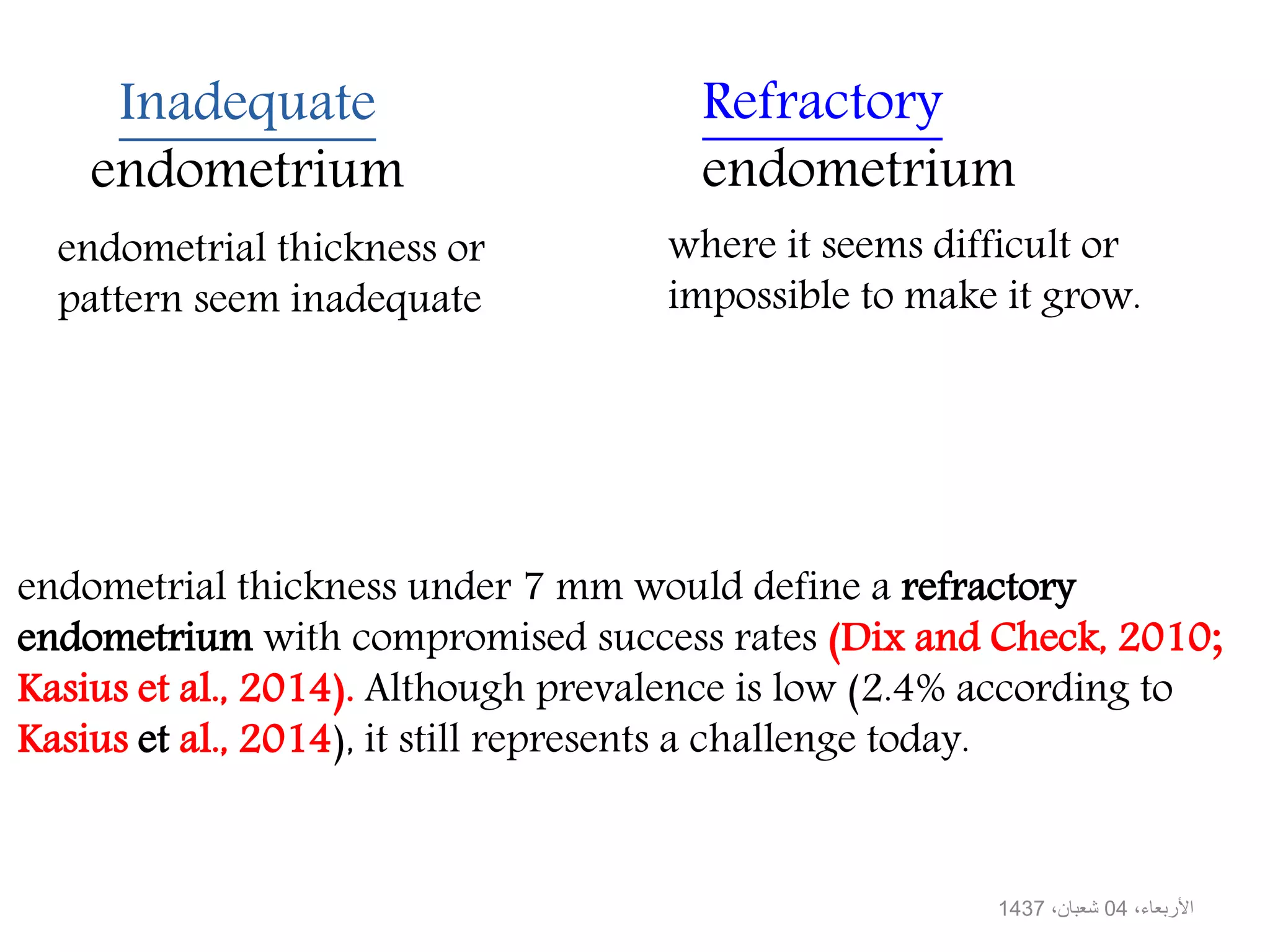
Inadequate
endometrium
Refractory
endometrium
endometrial thickness or
pattern seem inadequate
where it seems difficult or
impossible to make it grow.
،‫األربعاء‬04،‫شعبان‬1437
endometrial thickness under 7 mm would define a refractory
endometrium with compromised success rates (Dix and Check, 2010;
Kasius et al., 2014). Although prevalence is low (2.4% according to
Kasius et al., 2014), it still represents a challenge today.
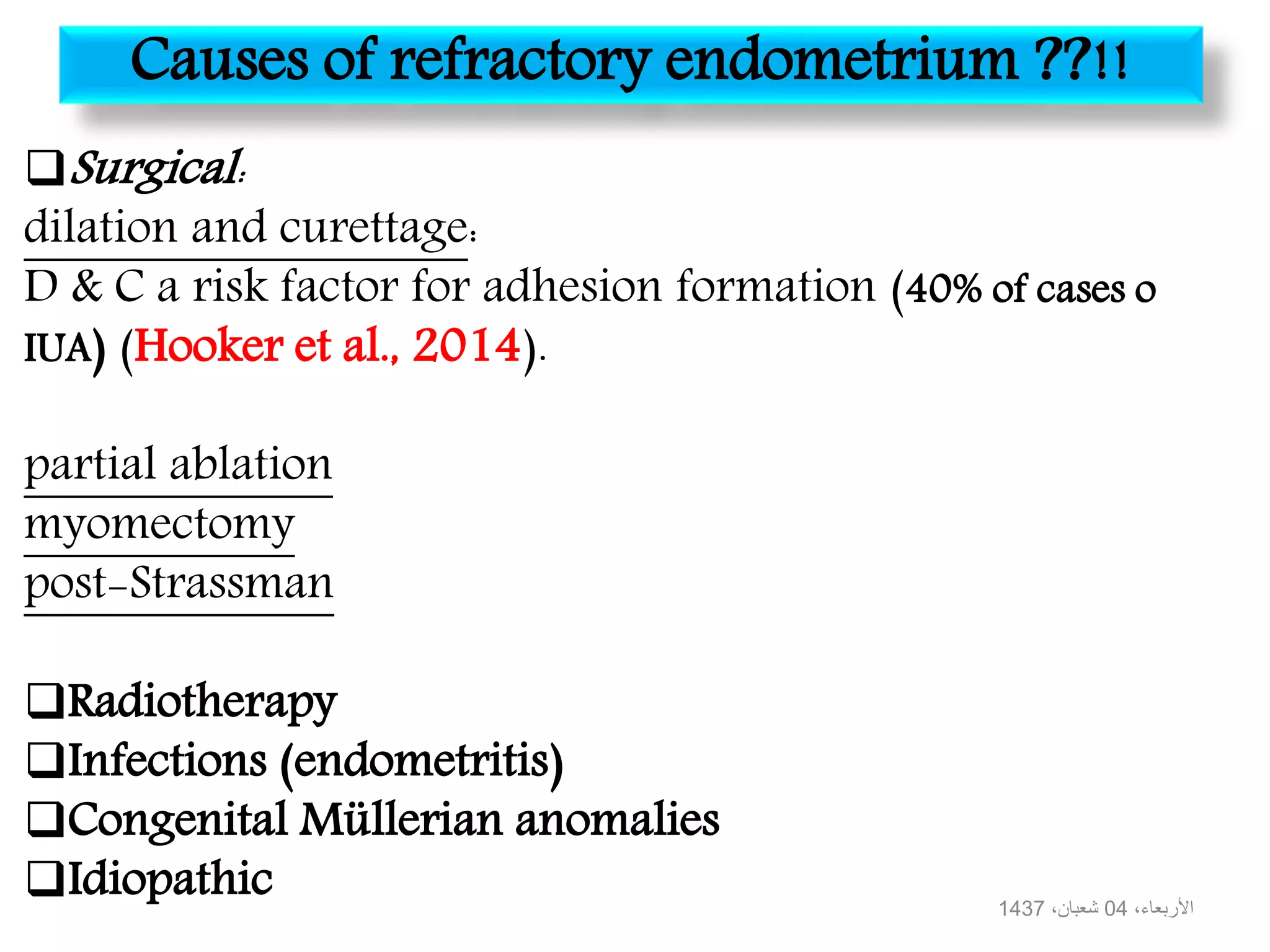
Causes of refractory endometrium ??!!
Surgical:
dilation and curettage:
D & C a risk factor for adhesion formation (40% of cases o
IUA) (Hooker et al., 2014).
partial ablation
myomectomy
post-Strassman
Radiotherapy
Infections (endometritis)
Congenital Müllerian anomalies
Idiopathic ،‫األربعاء‬04،‫شعبان‬1437
US assessment of endometrial receptivity of clinical
significance
• Thickness
• Echogenicity
• Doppler assessment of uterine and spiral artery flow.
،‫األربعاء‬04،‫شعبان‬1437
imaging technologies can provide information about endometrial
receptivity up to a certain stage, as pregnancies have been described
even in thin endometria <5 mm, as well as in hyperechogenic
endometria.
So molecular technologies will help us to further understand
endometrial receptivity but still needs to be validated in a prospective
trials (Cruz and Bellver, 2014).
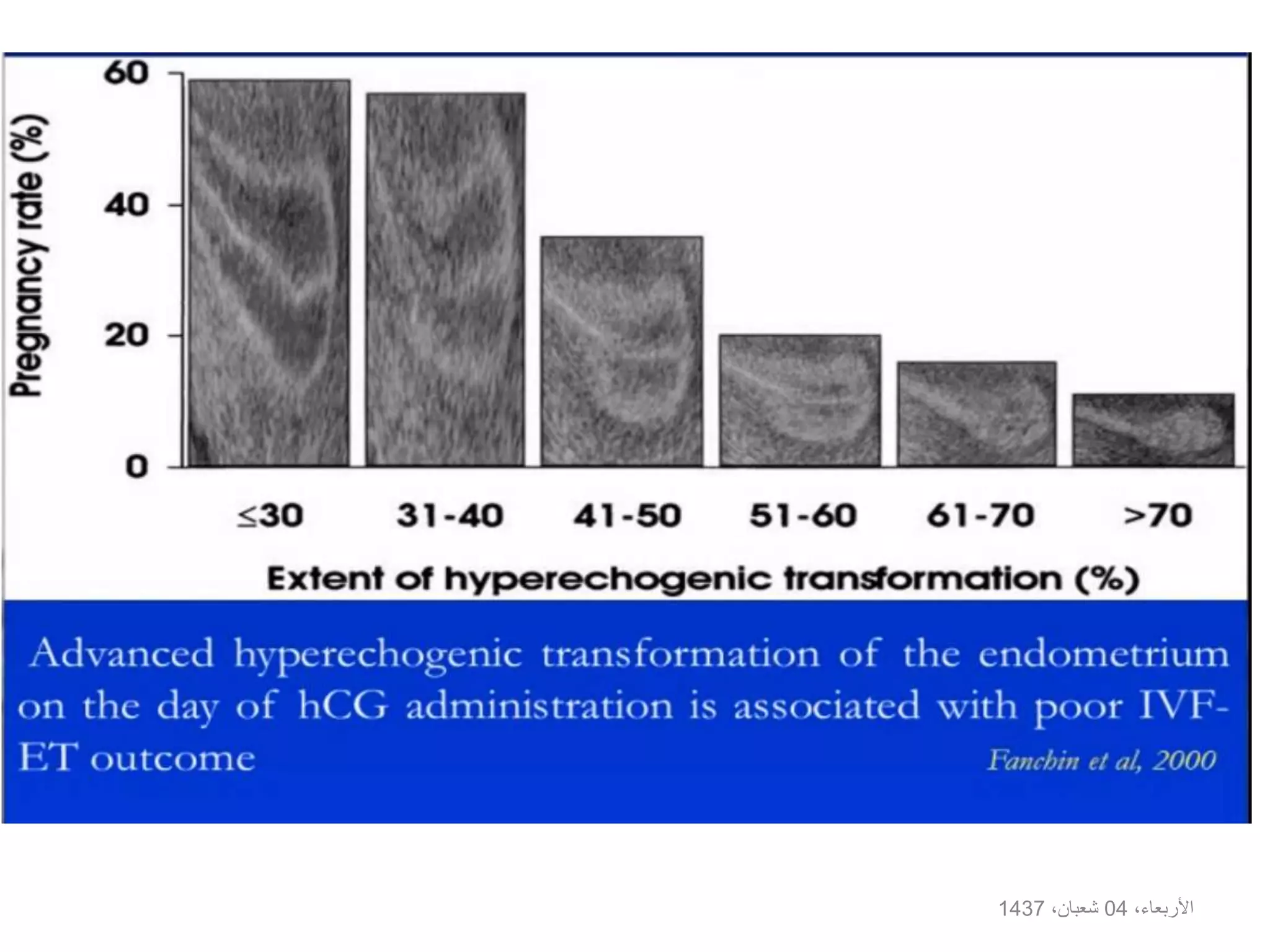
hypoechogenic endometrium was more receptive than the iso- or
hyperechogenic endometrium before hCG triggering. i.e progesterone
effect (Check et al., 1993)
Echogenicity ??!!
،‫األربعاء‬04،‫شعبان‬1437
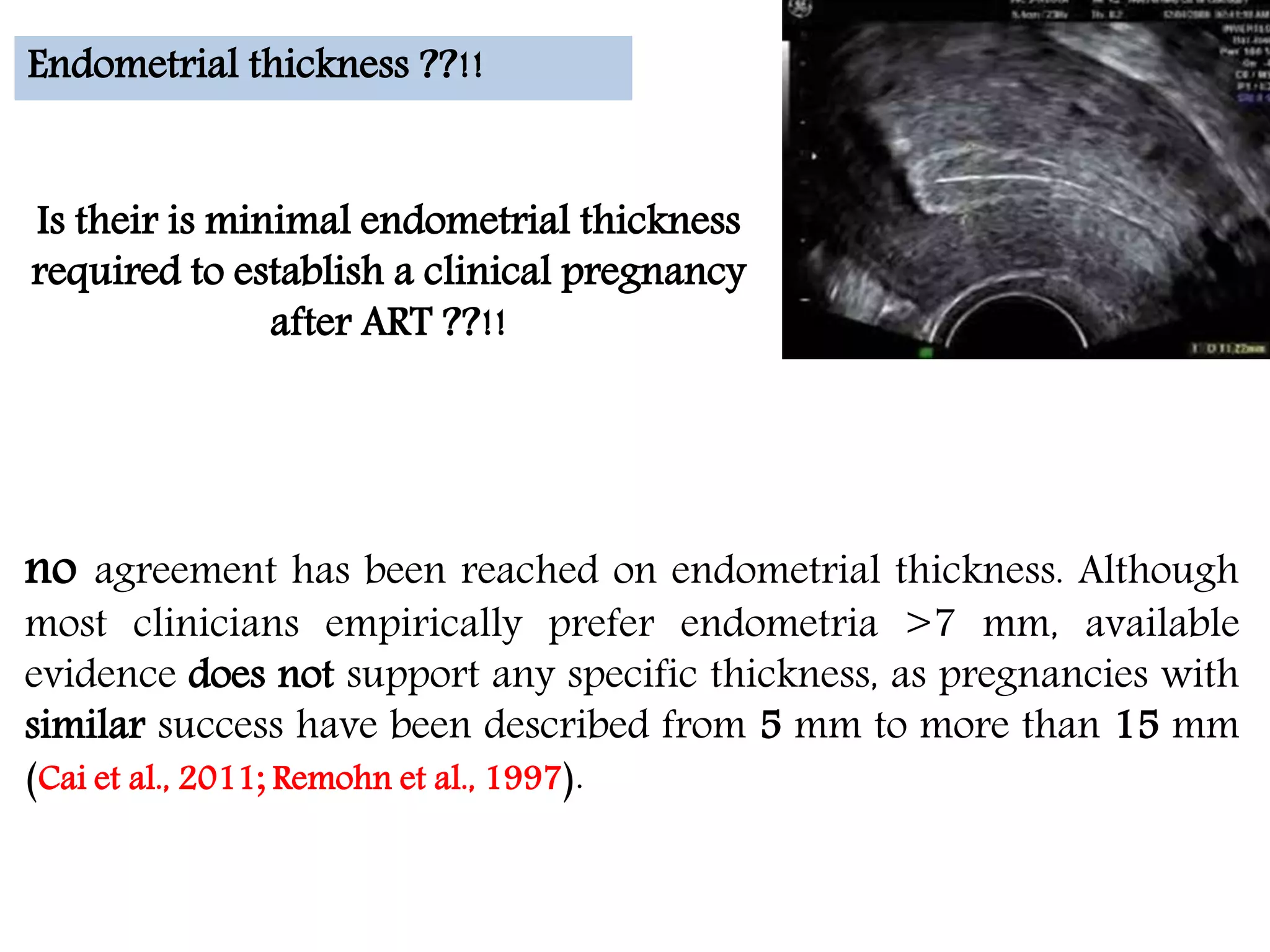
no agreement has been reached on endometrial thickness. Although
most clinicians empirically prefer endometria >7 mm, available
evidence does not support any specific thickness, as pregnancies with
similar success have been described from 5 mm to more than 15 mm
(Cai et al., 2011; Remohn et al., 1997).
Endometrial thickness ??!!
Is their is minimal endometrial thickness
required to establish a clinical pregnancy
after ART ??!!
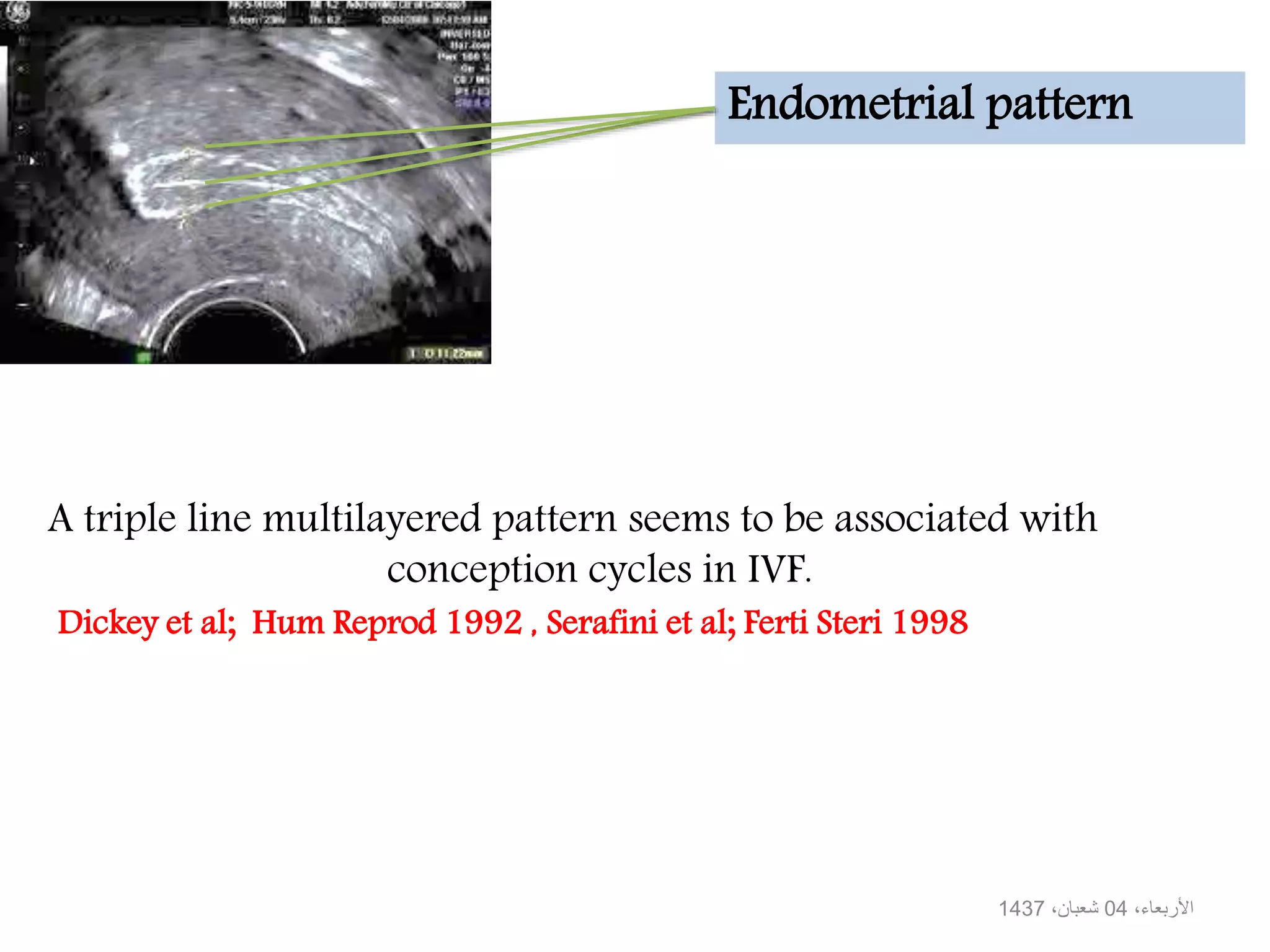
Endometrial pattern
،‫األربعاء‬04،‫شعبان‬1437
A triple line multilayered pattern seems to be associated with
conception cycles in IVF.
Dickey et al; Hum Reprod 1992 , Serafini et al; Ferti Steri 1998
Chronic endometritis
women with CE show altered uterine contractility may
explain the symptoms related to CE and infertility (Pinto et al.,
2015).
،‫األربعاء‬04،‫شعبان‬1437
Kasius et al; 2011 reported a 2.8% prevelance of
chronic endometritis among infertile women
Clinical relation between RIF and CE??
،‫األربعاء‬04،‫شعبان‬1437
Diagnosing CE
Hysteroscopy is reliable in diagnosing Chronic
endometritis and it can assess clinical effectiveness of
antibiotic therapy (Among 211 patients with CE diagnosed
by hysteroscopy, 200 cases were confirmed histologically)
(Guo et al; 2013).
،‫األربعاء‬04،‫شعبان‬1437
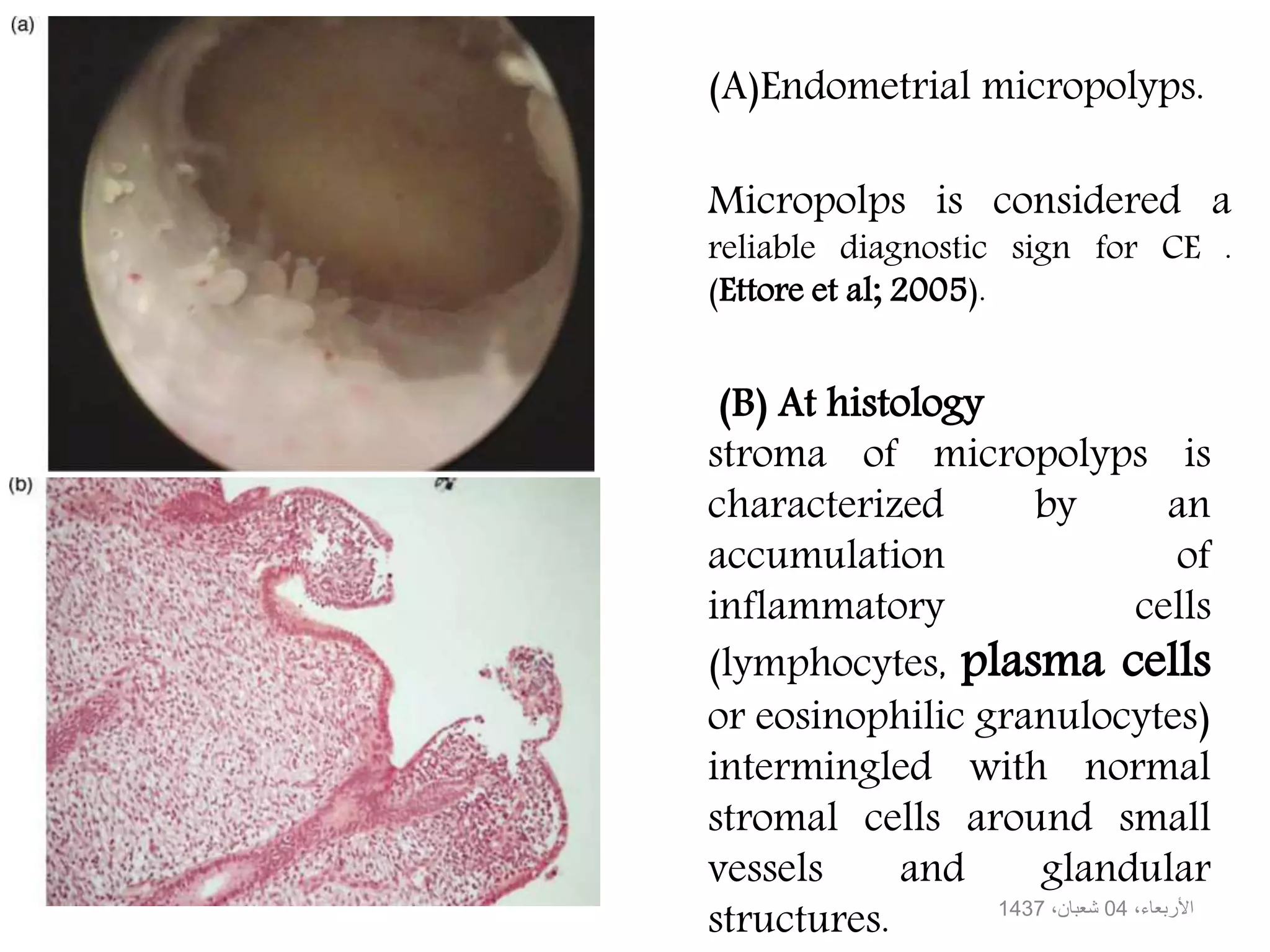
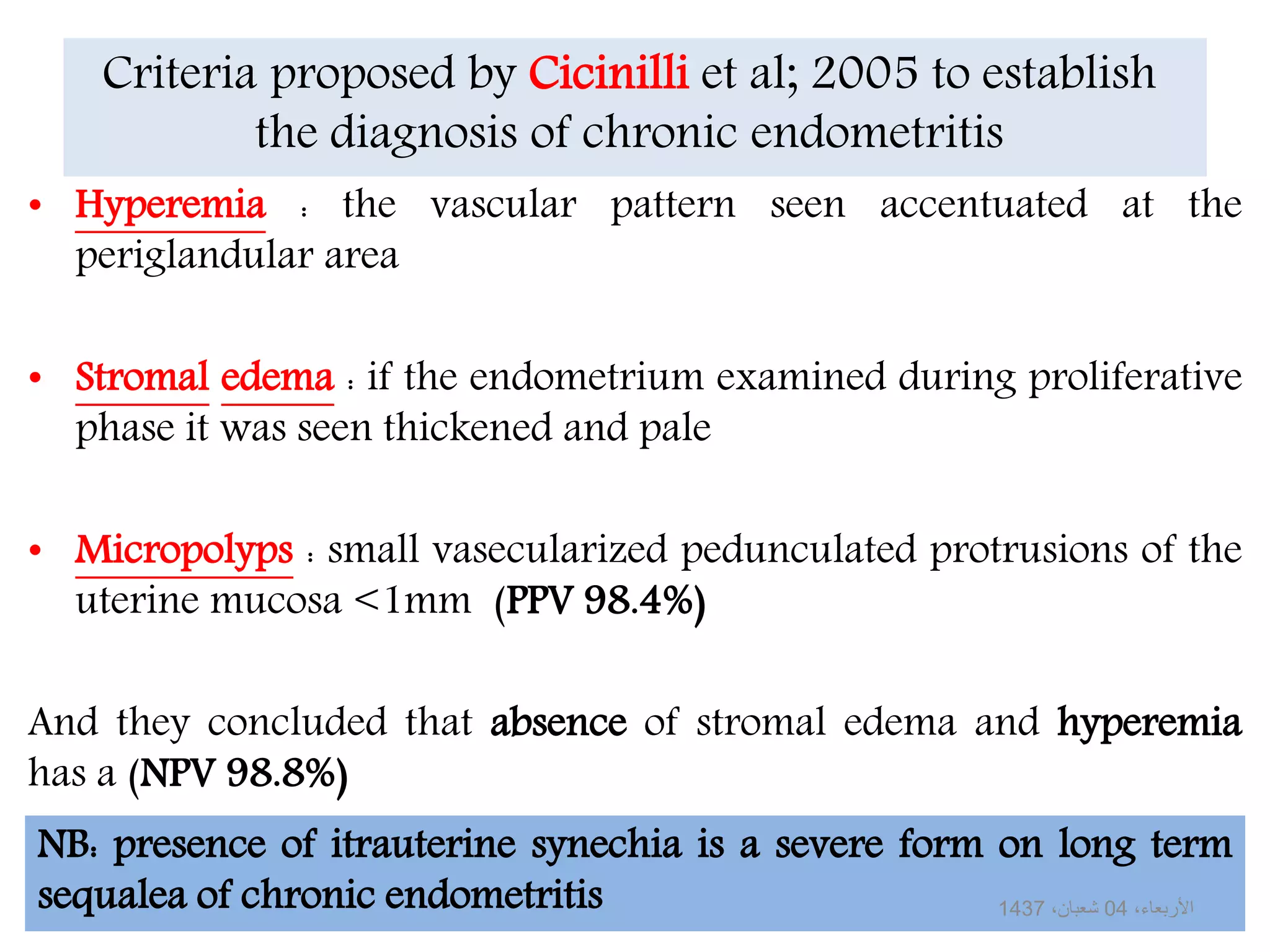
(B) At histology
stroma of micropolyps is
characterized by an
accumulation of
inflammatory cells
(lymphocytes, plasma cells
or eosinophilic granulocytes)
intermingled with normal
stromal cells around small
vessels and glandular
structures.
(A)Endometrial micropolyps.
Micropolps is considered a
reliable diagnostic sign for CE .
(Ettore et al; 2005).
،‫األربعاء‬04،‫شعبان‬1437
Criteria proposed by Cicinilli et al; 2005 to establish
the diagnosis of chronic endometritis
• Hyperemia : the vascular pattern seen accentuated at the
periglandular area
• Stromal edema : if the endometrium examined during proliferative
phase it was seen thickened and pale
• Micropolyps : small vasecularized pedunculated protrusions of the
uterine mucosa <1mm (PPV 98.4%)
And they concluded that absence of stromal edema and hyperemia
has a (NPV 98.8%)
NB: presence of itrauterine synechia is a severe form on long term
sequalea of chronic endometritis ،‫األربعاء‬04،‫شعبان‬1437
Prehysteroscopic diagnosis
No pathognomonic features !!!
While may be suspected by indirect features :
• Tender probing
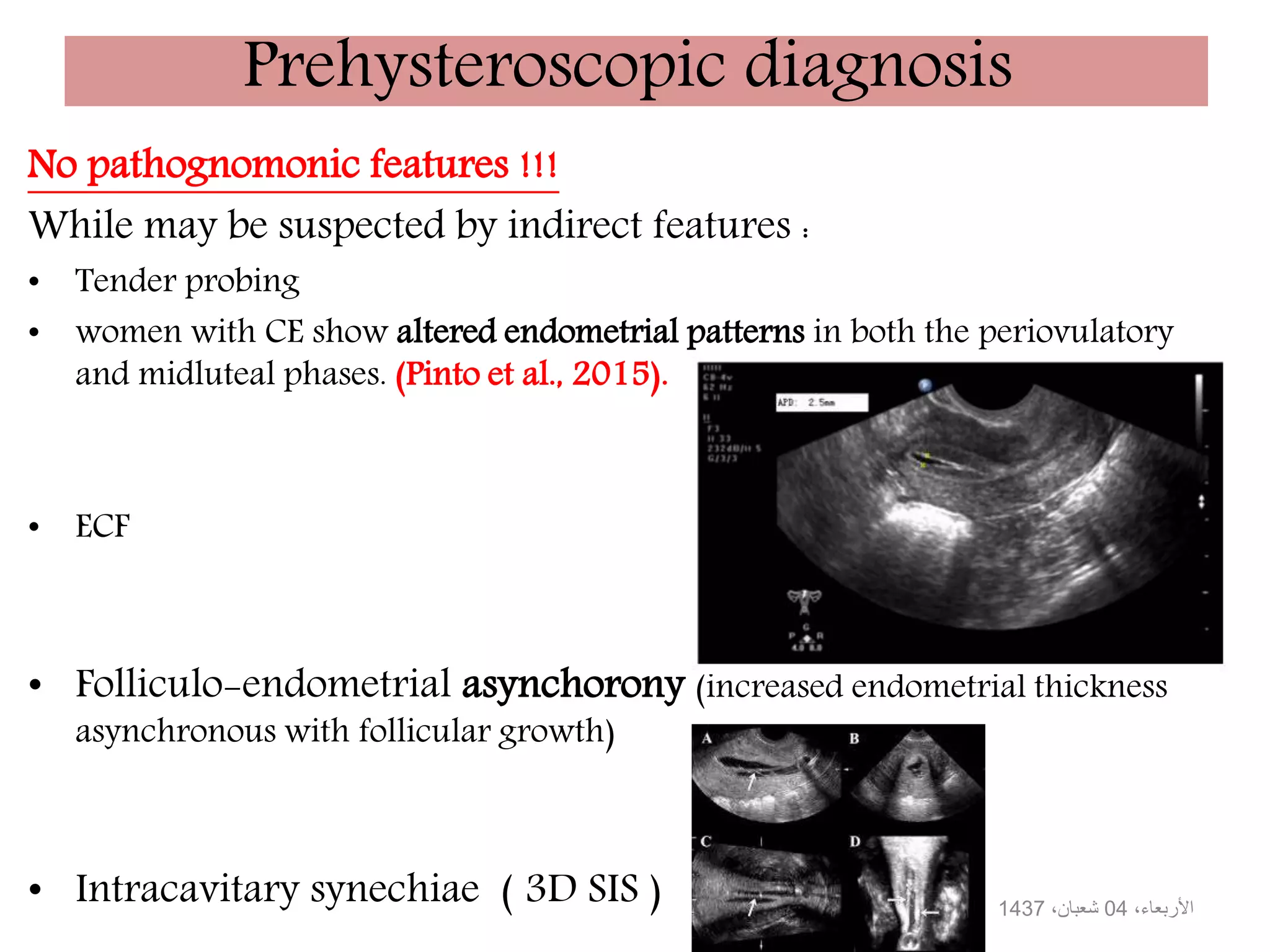
• women with CE show altered endometrial patterns in both the periovulatory
and midluteal phases. (Pinto et al., 2015).
• ECF
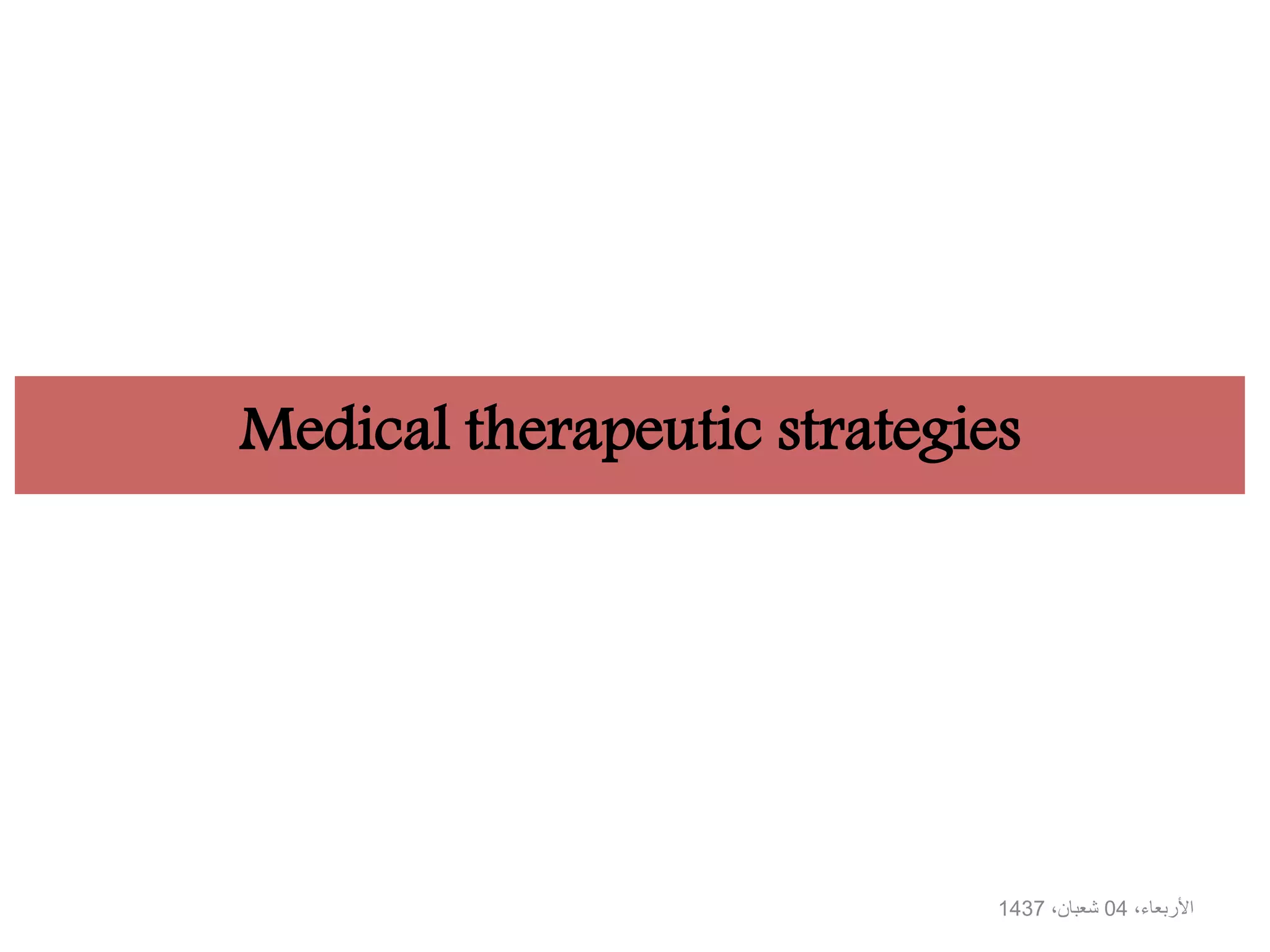
• Folliculo-endometrial asynchorony (increased endometrial thickness
asynchronous with follicular growth)
• Intracavitary synechiae ( 3D SIS ) ،‫األربعاء‬04،‫شعبان‬1437
Management of refractory endometrium
،‫األربعاء‬04،‫شعبان‬1437
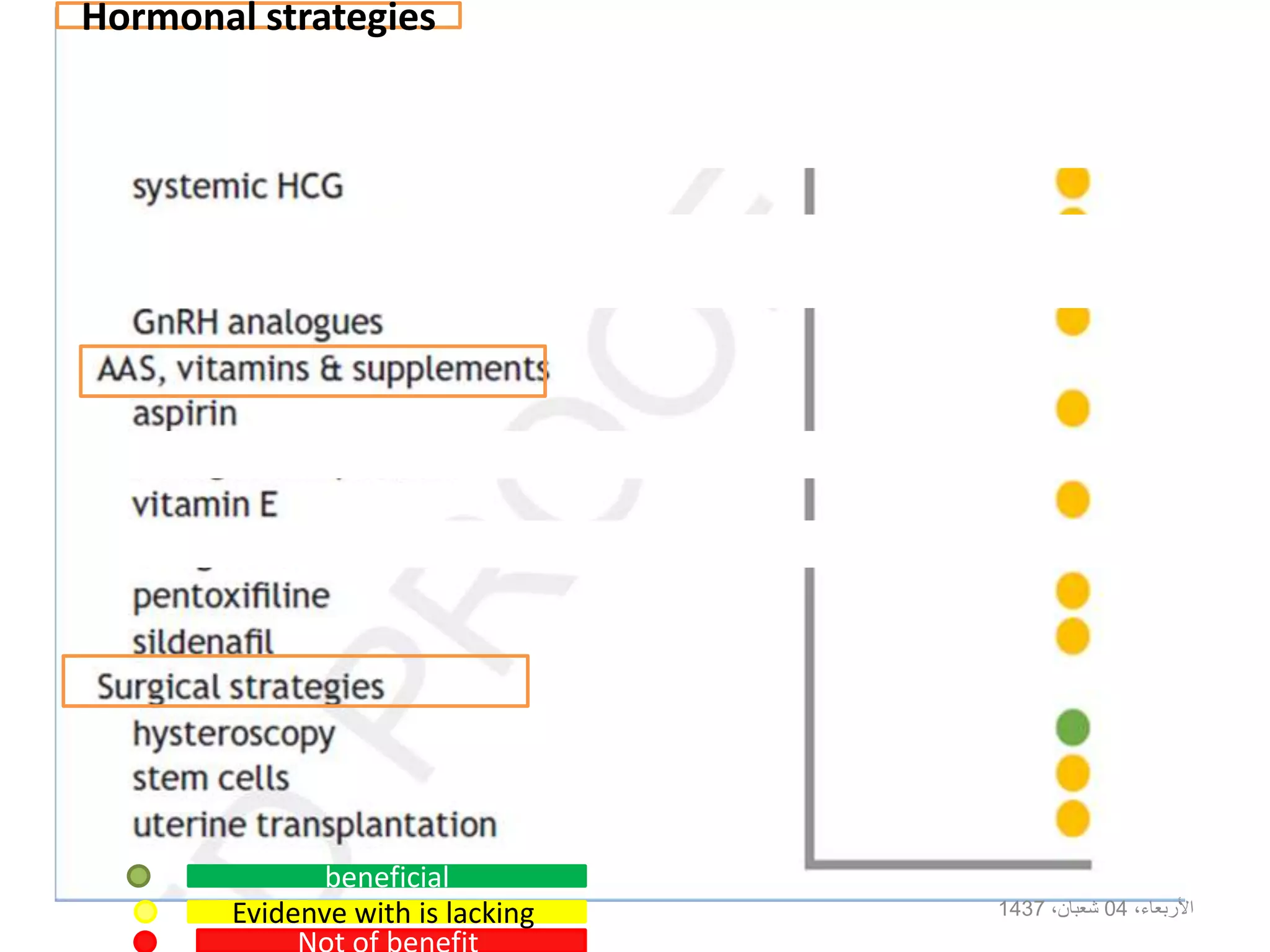
Medical therapeutic strategies
،‫األربعاء‬04،‫شعبان‬1437
beneficial
Evidenve with is lacking
Hormonal strategies
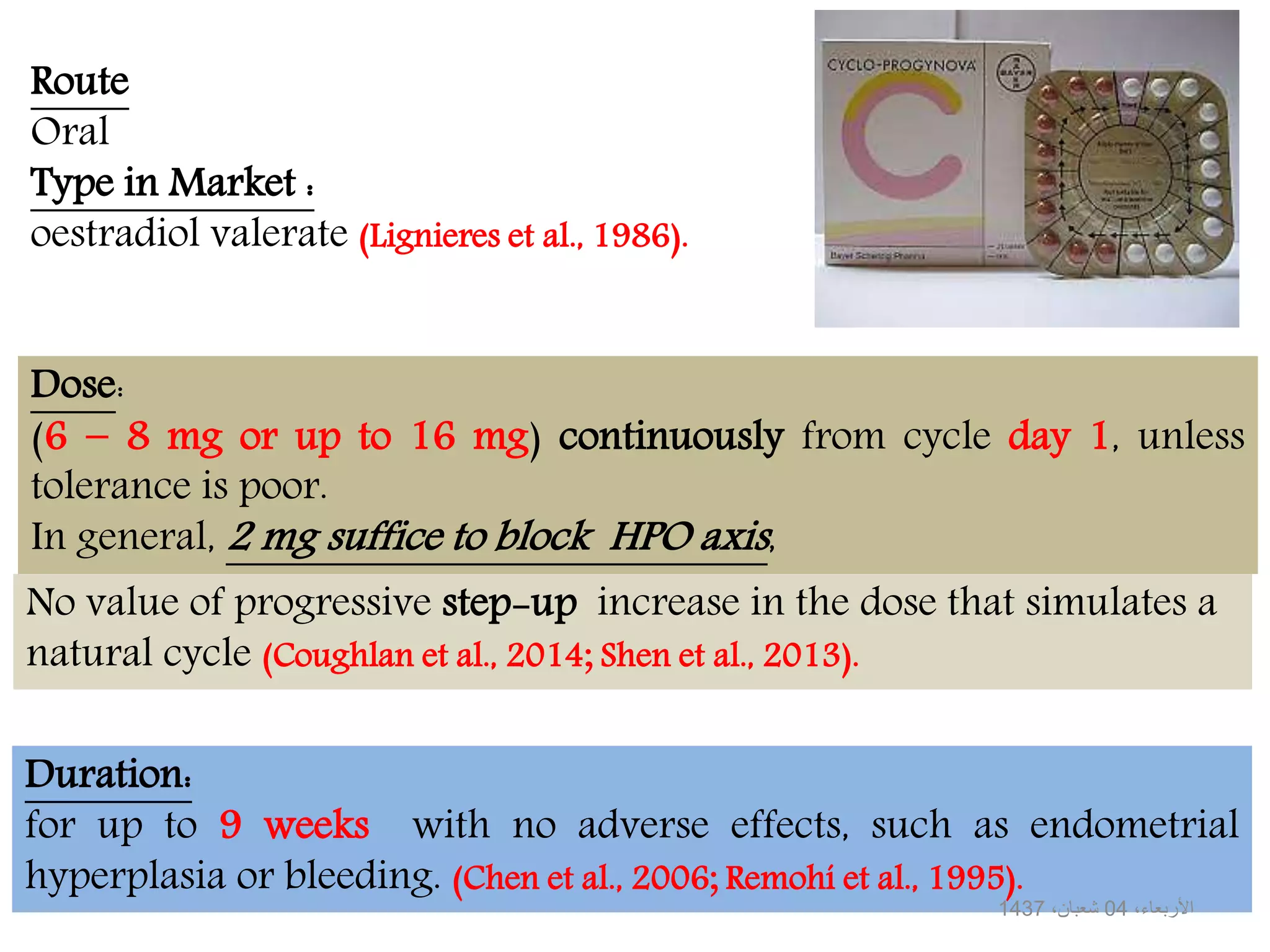
Route
Oral
Type in Market :
oestradiol valerate (Lignieres et al., 1986).
Duration:
for up to 9 weeks with no adverse effects, such as endometrial
hyperplasia or bleeding. (Chen et al., 2006; Remohí et al., 1995).
Dose:
(6 − 8 mg or up to 16 mg) continuously from cycle day 1, unless
tolerance is poor.
In general, 2 mg suffice to block HPO axis,
،‫األربعاء‬04،‫شعبان‬1437
No value of progressive step-up increase in the dose that simulates a
natural cycle (Coughlan et al., 2014; Shen et al., 2013).
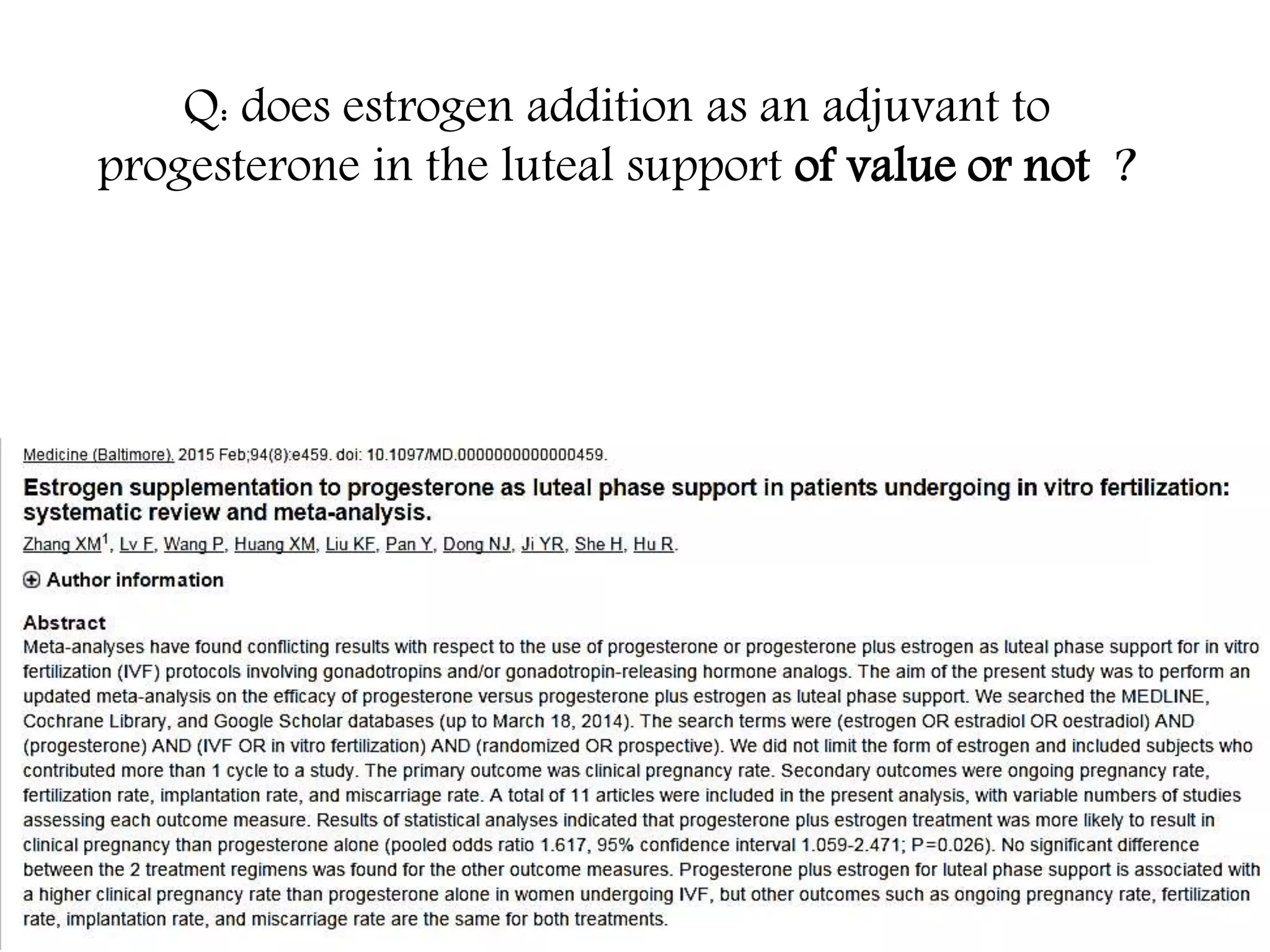
Q: does estrogen addition as an adjuvant to
progesterone in the luteal support of value or not ?
Estrogen increase clinical pregnancy rate
but its role in management of refractory
endometrium is still lacking an evidence
،‫األربعاء‬04،‫شعبان‬1437
HCG injection in the proliferative phase
،‫األربعاء‬04،‫شعبان‬1437
Where receptors of hCG present ?!
،‫األربعاء‬04،‫شعبان‬1437
Granulocyte-colony stimulating factor (G-CSF)
،‫األربعاء‬04،‫شعبان‬1437
G-CSF supplementation modulated expression of genes
that play a role in endometrial vascular remodelling, local
immune regulation and cell adhesion (Rahmati et al., 2014).
Limited experience in women with recurrent miscarriage
(Santjohanser et al., 2013) and repeated implantation failure
(Wurfel et al., 2010) after undergoing IVF with G-CSF
supplementation is available.
،‫األربعاء‬04،‫شعبان‬1437
when a well-designed, adequately powered, proper RCT
was done by the pioneers of this concept,
they were unable to demonstrate any effect of G-CSF on either
endometrial growth or pregnancy rates in women undergoing IVF
(Baradet al., 2014).
Low-dose aspirin
،‫األربعاء‬04،‫شعبان‬1437
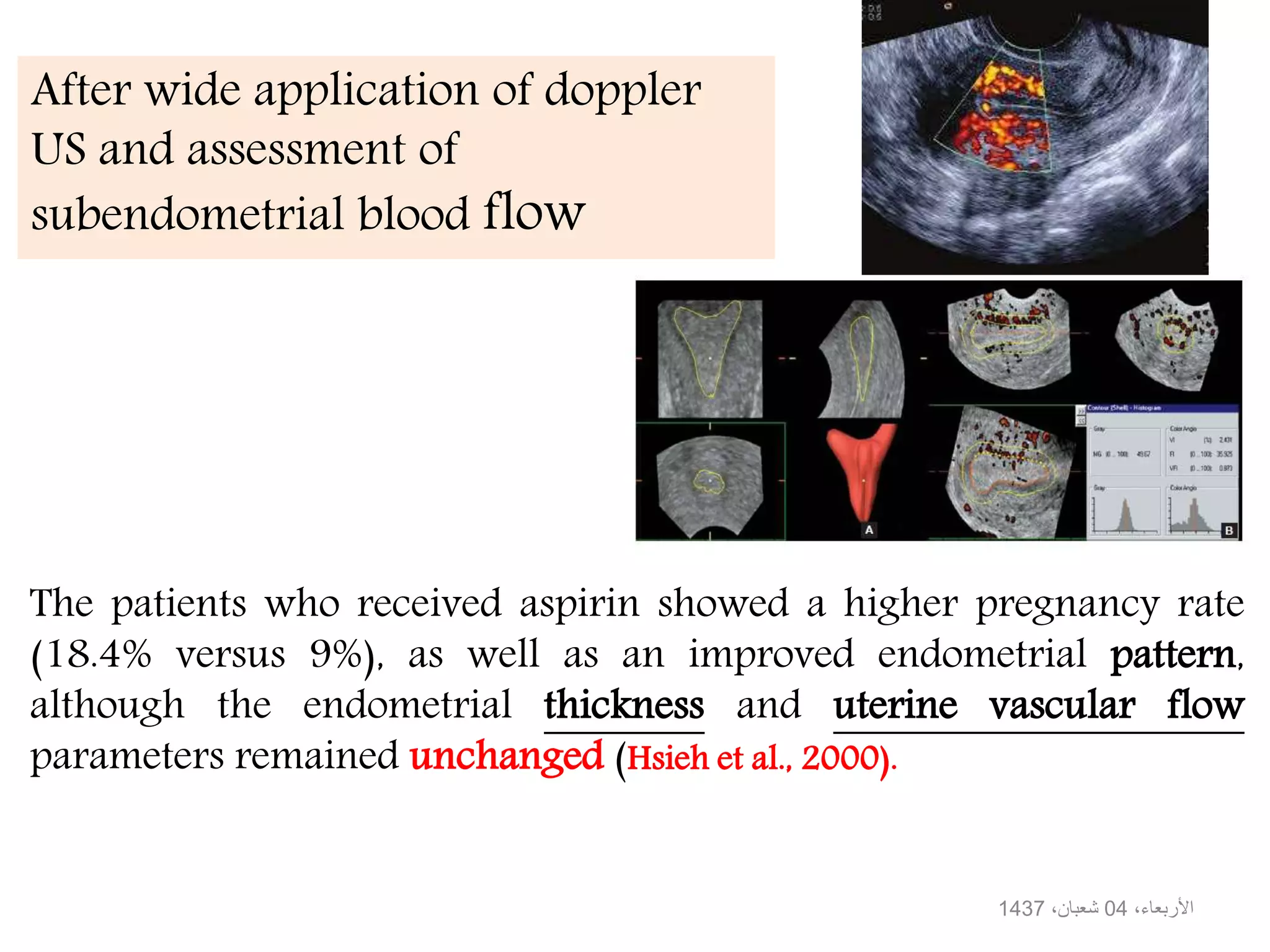
After wide application of doppler
US and assessment of
subendometrial blood flow
The patients who received aspirin showed a higher pregnancy rate
(18.4% versus 9%), as well as an improved endometrial pattern,
although the endometrial thickness and uterine vascular flow
parameters remained unchanged (Hsieh et al., 2000).
،‫األربعاء‬04،‫شعبان‬1437
Use of LDA to improve pregnancy rate in patients
undergoing IVF treatment if not supported .
Dentali et al; 2012
Meta analysis – systematic review
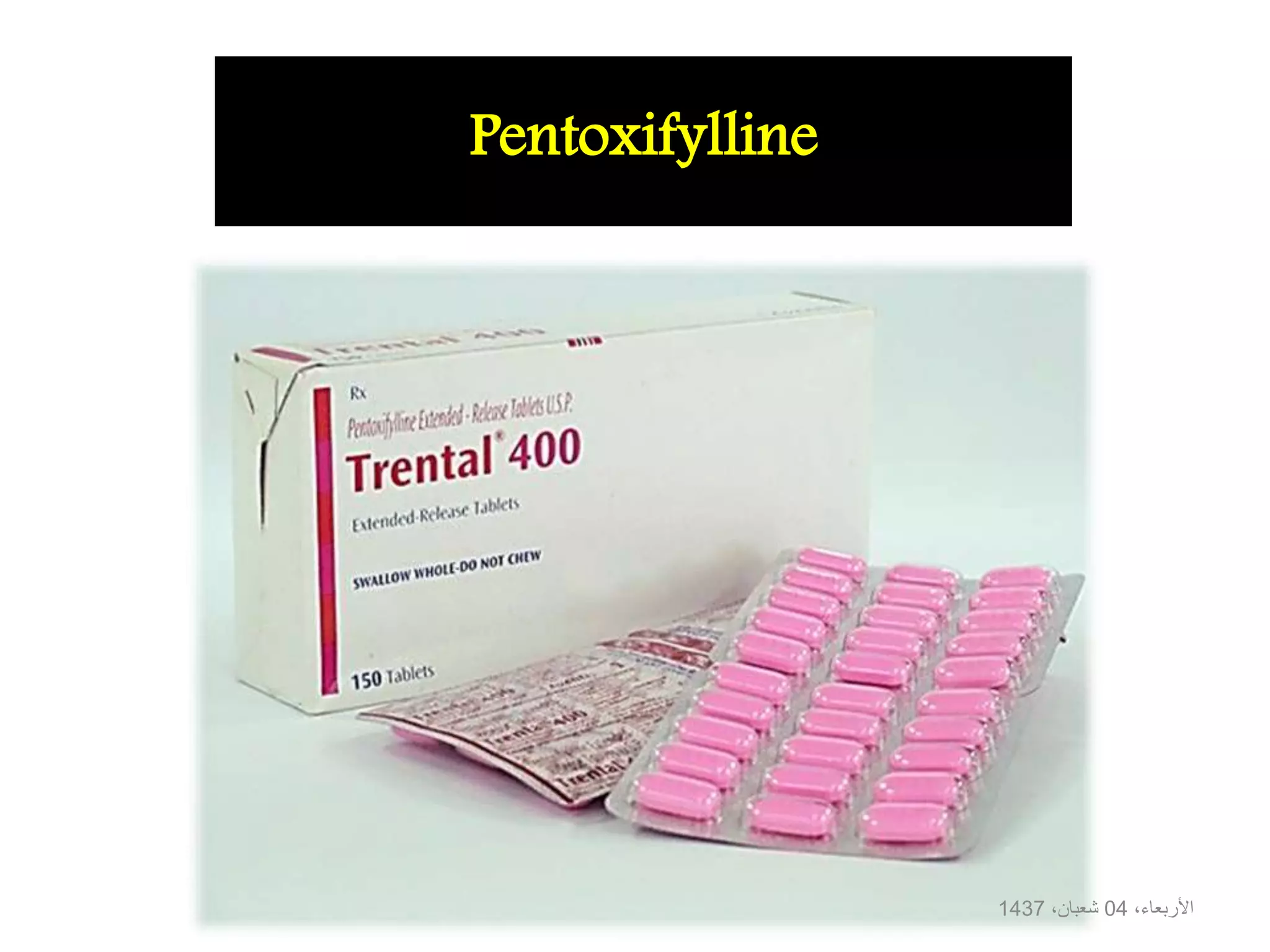
Pentoxifylline
،‫األربعاء‬04،‫شعبان‬1437
synthetic derivate of methylated xanthine
Mechanism of action:
intracellular cAMP.
VD-increased RBCs deformability
Dose :
800 mg pentoxifyllin plus 1000 IU vitamin E for 6 − 8 months
Its administration is associated with increased ET (Letur-Konirsch and
Delanian, 2003). Acharya et al. (2009)
Effect is enhanced when co-administered with vitamin E (Chiao and
Lee, 2005).
Administration should be suspended before ET
،‫األربعاء‬04،‫شعبان‬1437
Nitroglycerin
،‫األربعاء‬04،‫شعبان‬1437
There is no current evidence to support the use of nitroglycerin
patches in women with a thin endometrium.
Nitric oxide (NO) is involved in endometrial cycle control and uterine
preparation for pregnancy.
،‫األربعاء‬04،‫شعبان‬1437
Sildenafil
،‫األربعاء‬04،‫شعبان‬1437
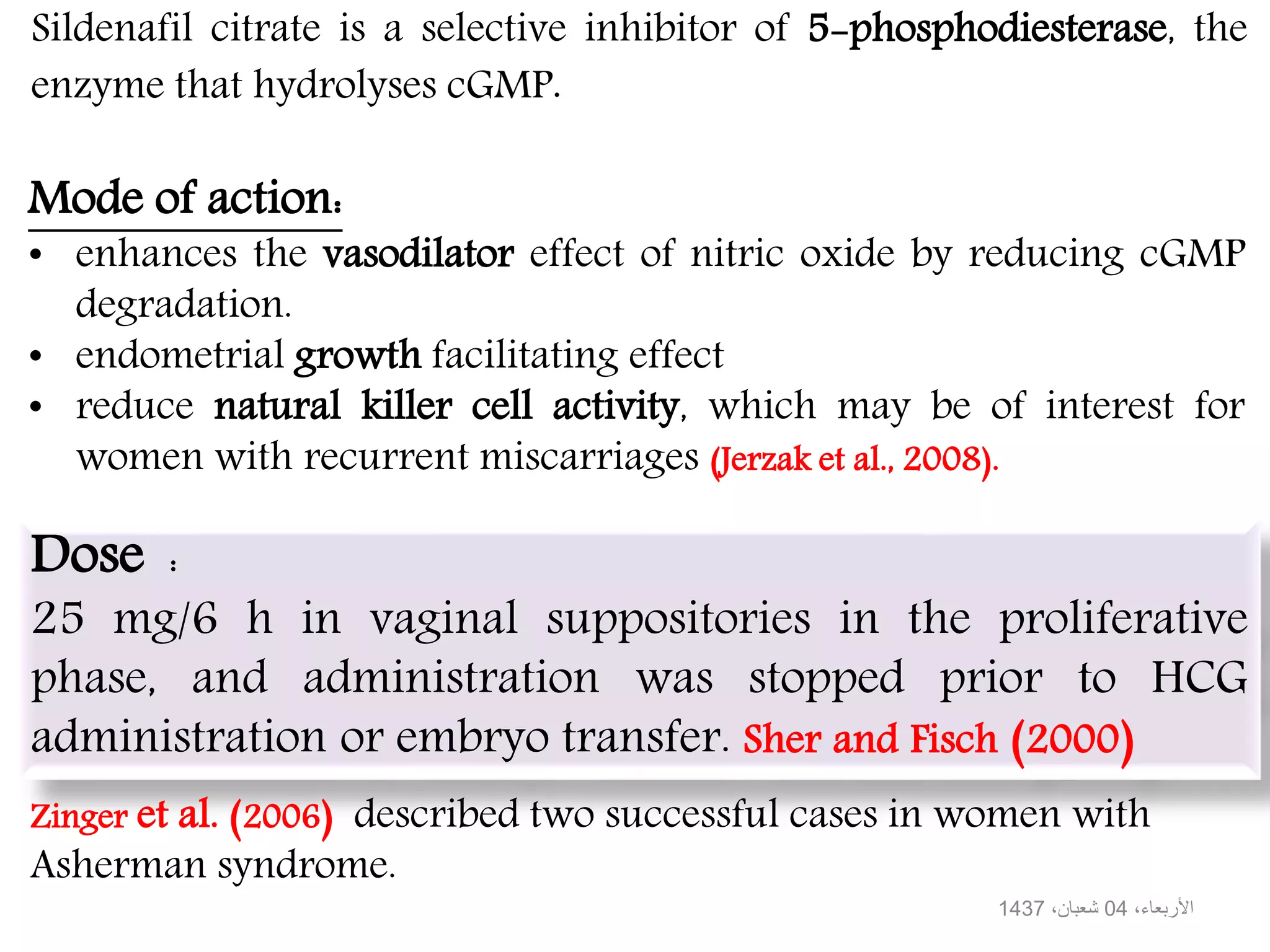
Sildenafil citrate is a selective inhibitor of 5-phosphodiesterase, the
enzyme that hydrolyses cGMP.
Mode of action:
• enhances the vasodilator effect of nitric oxide by reducing cGMP
degradation.
• endometrial growth facilitating effect
• reduce natural killer cell activity, which may be of interest for
women with recurrent miscarriages (Jerzak et al., 2008).
Dose :
25 mg/6 h in vaginal suppositories in the proliferative
phase, and administration was stopped prior to HCG
administration or embryo transfer. Sher and Fisch (2000)
Zinger et al. (2006) described two successful cases in women with
Asherman syndrome.
،‫األربعاء‬04،‫شعبان‬1437
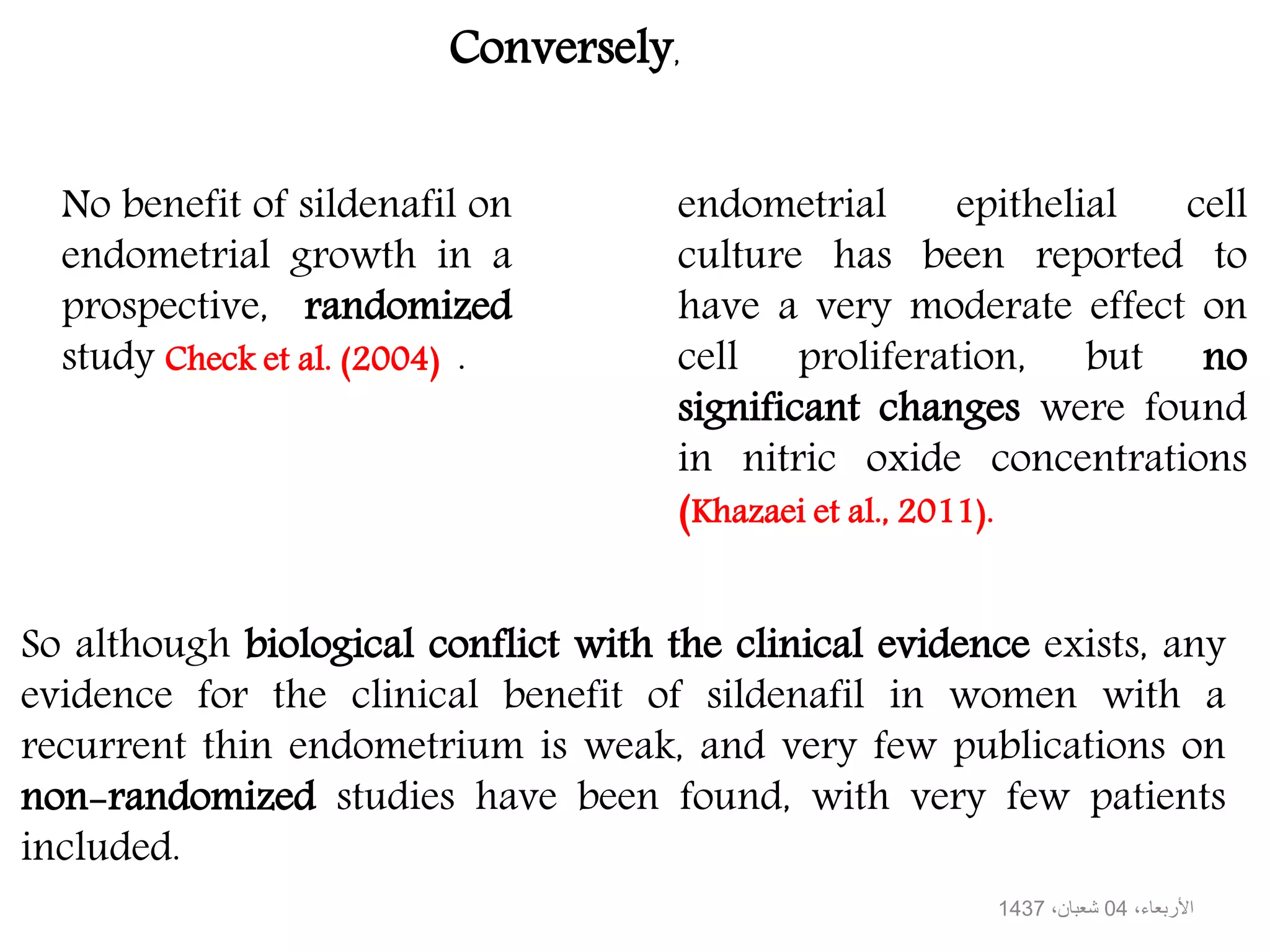
endometrial epithelial cell
culture has been reported to
have a very moderate effect on
cell proliferation, but no
significant changes were found
in nitric oxide concentrations
(Khazaei et al., 2011).
So although biological conflict with the clinical evidence exists, any
evidence for the clinical benefit of sildenafil in women with a
recurrent thin endometrium is weak, and very few publications on
non-randomized studies have been found, with very few patients
included.
No benefit of sildenafil on
endometrial growth in a
prospective, randomized
study Check et al. (2004) .
Conversely,
،‫األربعاء‬04،‫شعبان‬1437
GnRH analogues
،‫األربعاء‬04،‫شعبان‬1437
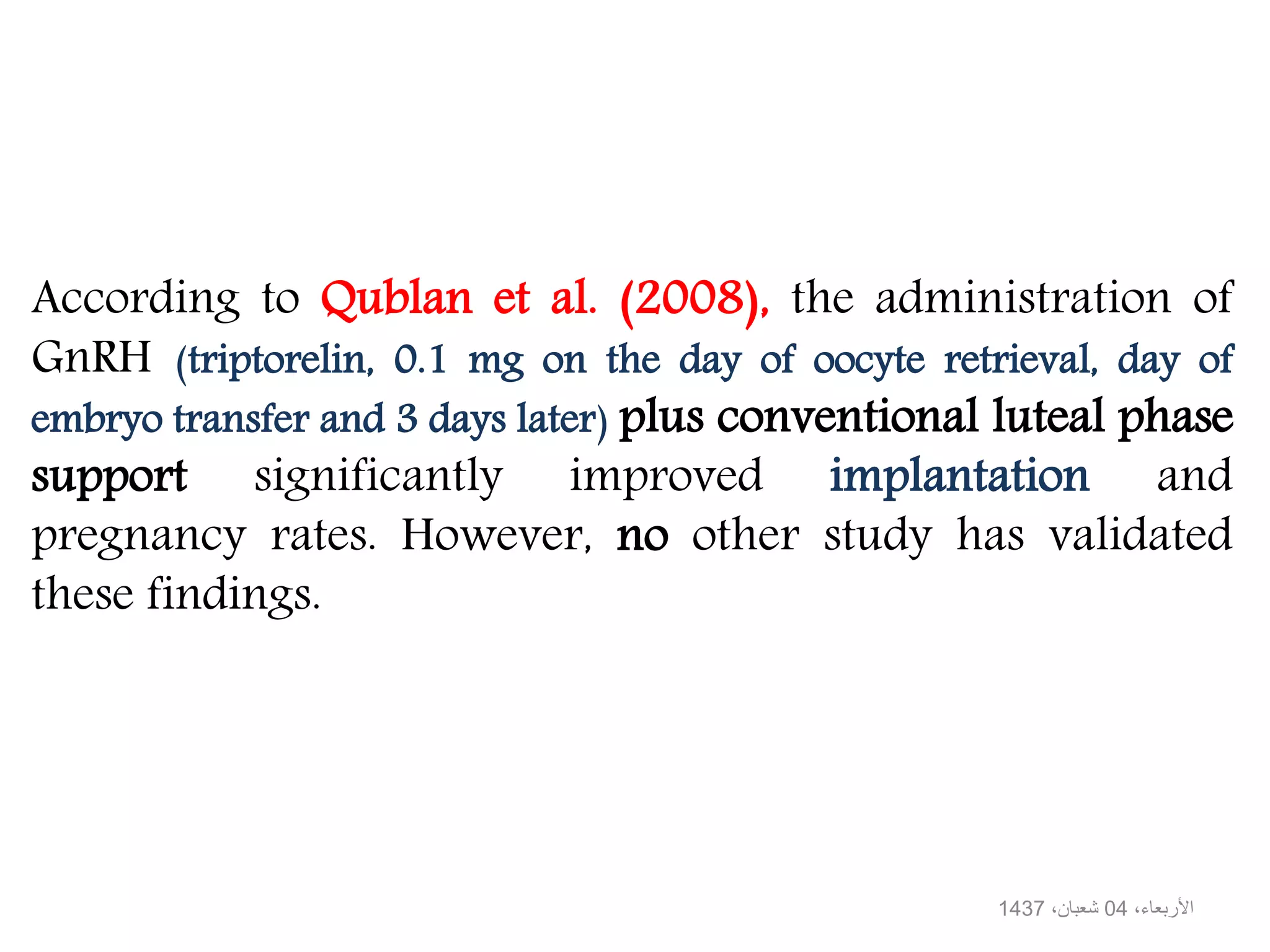
According to Qublan et al. (2008), the administration of
GnRH (triptorelin, 0.1 mg on the day of oocyte retrieval, day of
embryo transfer and 3 days later) plus conventional luteal phase
support significantly improved implantation and
pregnancy rates. However, no other study has validated
these findings.
،‫األربعاء‬04،‫شعبان‬1437
Luteal phase GnRH agonists in cases of RIF
،‫األربعاء‬04،‫شعبان‬1437
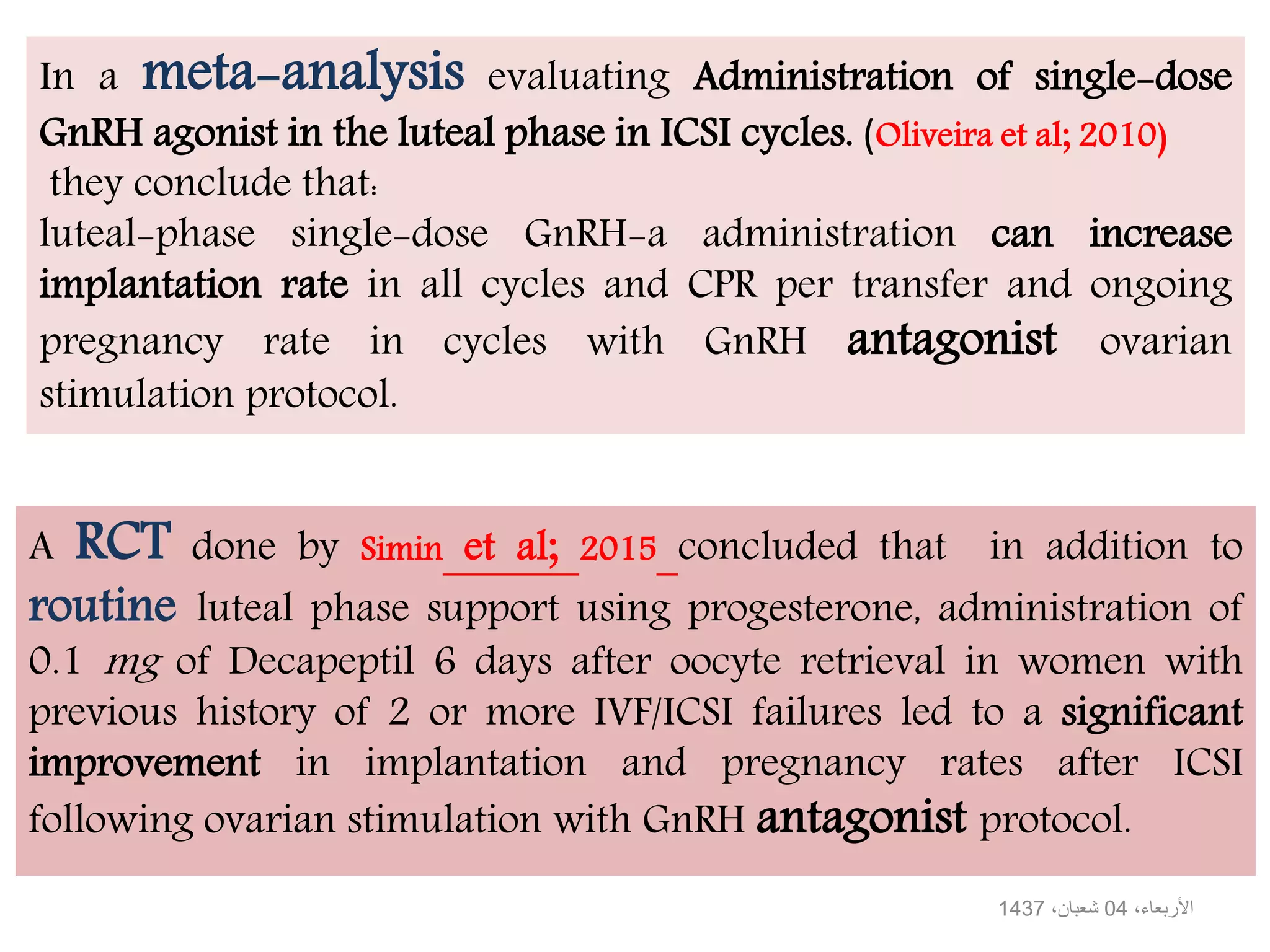
A RCT done by Simin et al; 2015 concluded that in addition to
routine luteal phase support using progesterone, administration of
0.1 mg of Decapeptil 6 days after oocyte retrieval in women with
previous history of 2 or more IVF/ICSI failures led to a significant
improvement in implantation and pregnancy rates after ICSI
following ovarian stimulation with GnRH antagonist protocol.
In a meta-analysis evaluating Administration of single-dose
GnRH agonist in the luteal phase in ICSI cycles. (Oliveira et al; 2010)
they conclude that:
luteal-phase single-dose GnRH-a administration can increase
implantation rate in all cycles and CPR per transfer and ongoing
pregnancy rate in cycles with GnRH antagonist ovarian
stimulation protocol.
،‫األربعاء‬04،‫شعبان‬1437
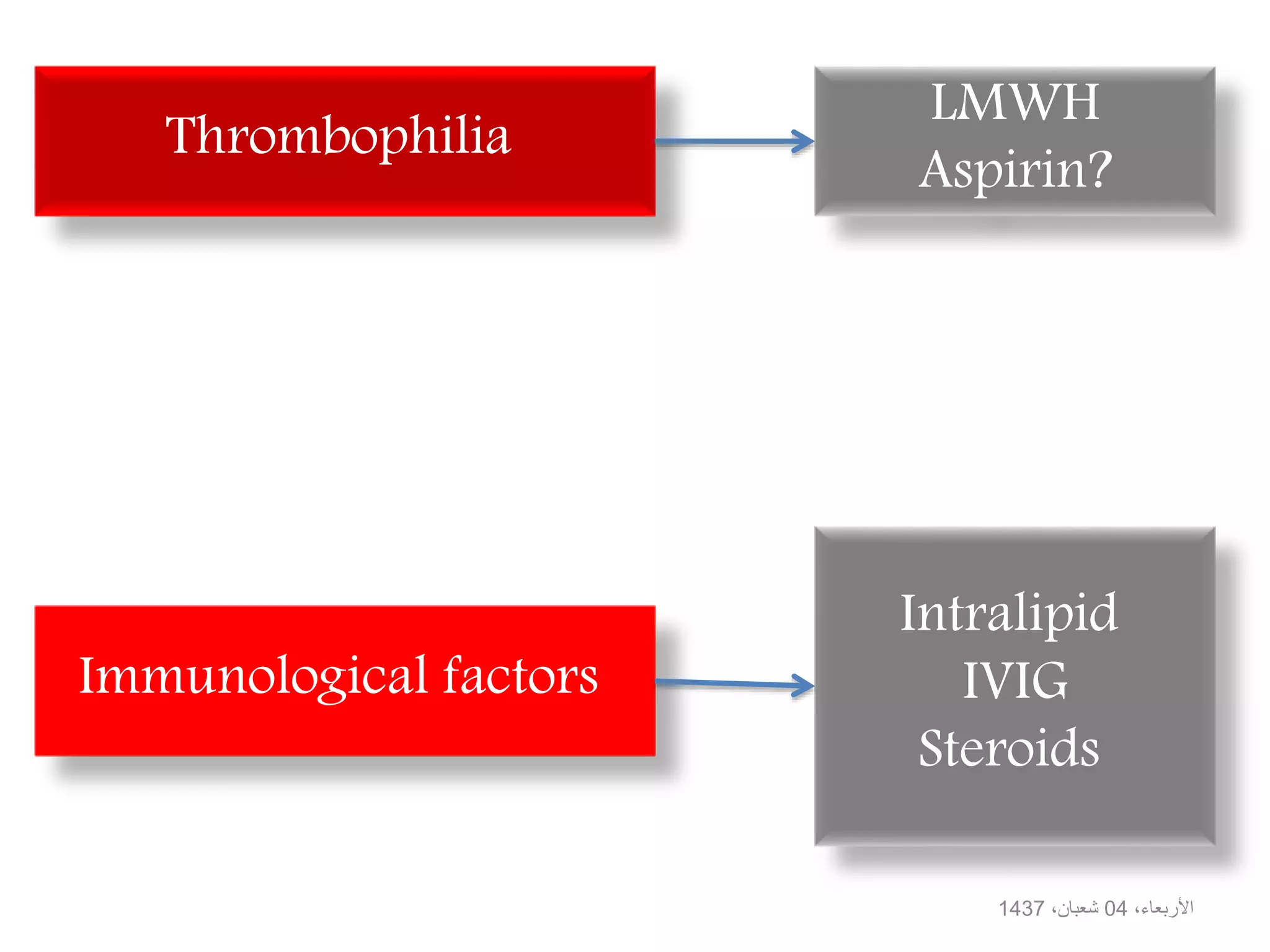
Thrombophilia
LMWH
Aspirin?
Immunological factors
Intralipid
IVIG
Steroids
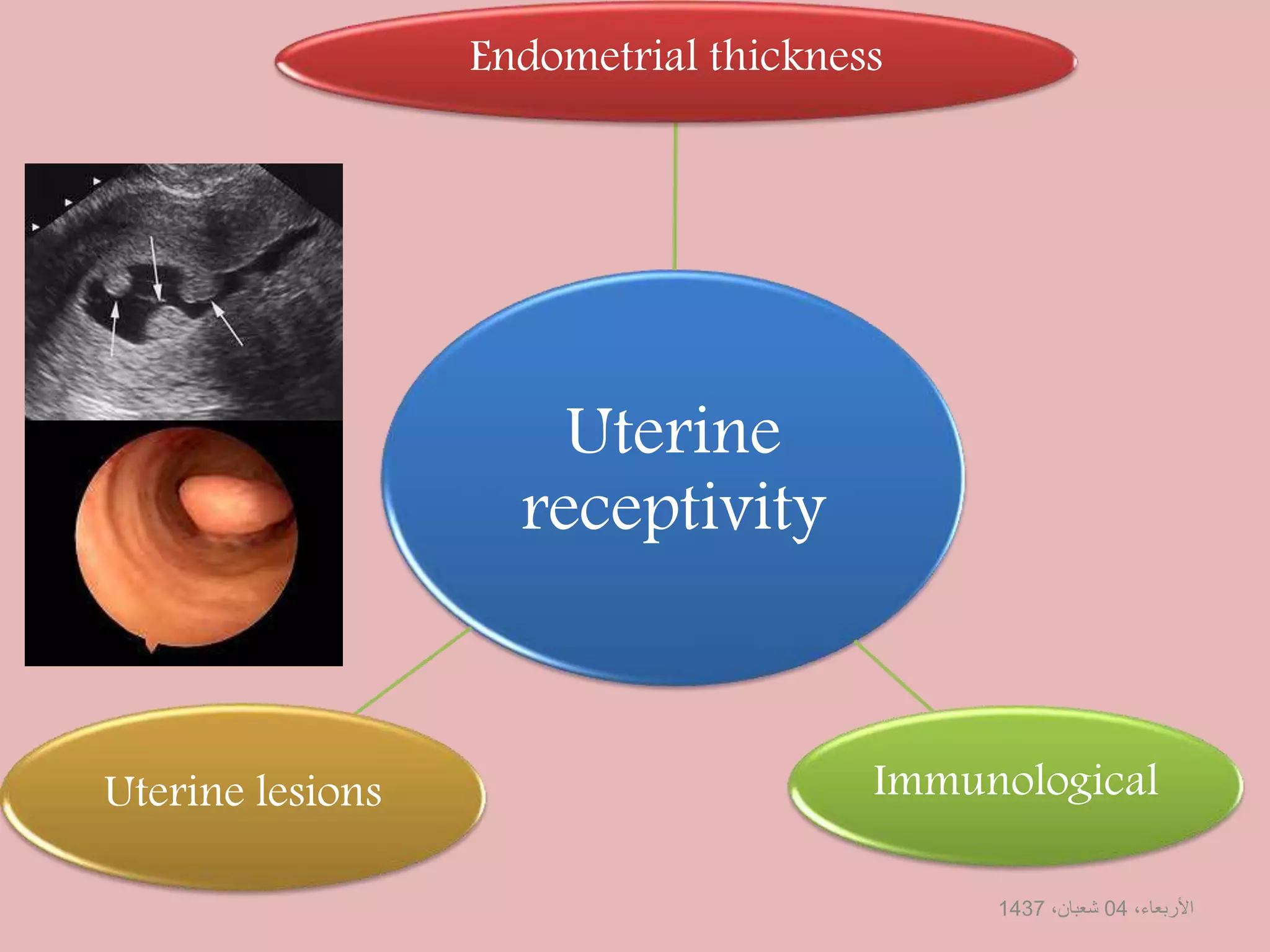
Uterine
receptivity
Endometrial thickness
Uterine lesions Immunological
،‫األربعاء‬04،‫شعبان‬1437
Immunological implantation
dysfunction
،‫األربعاء‬04،‫شعبان‬1437
• Autoimmunity:
Misdirected immune response when an immune
system attacks its own tissues .
• Alloimmunity :
The immune system attacks foreigen tissues from the
same species e.g: graft rejection
More than 85% of immunological
causes of RIF is autoimmune in
origin
،‫األربعاء‬04،‫شعبان‬1437
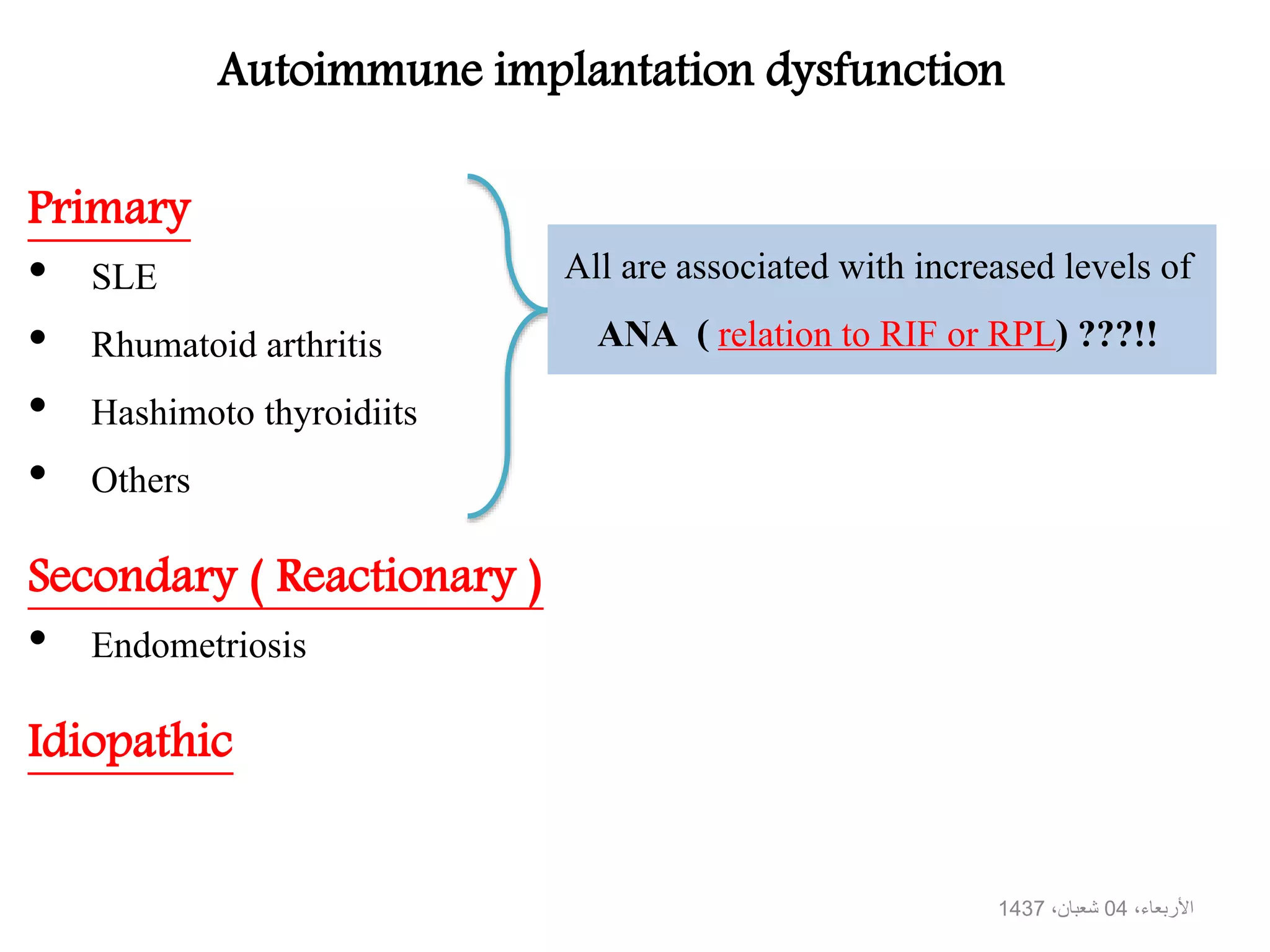
Autoimmune implantation dysfunction
Primary
• SLE
• Rhumatoid arthritis
• Hashimoto thyroidiits
• Others
Secondary ( Reactionary )
• Endometriosis
Idiopathic
All are associated with increased levels of
ANA ( relation to RIF or RPL) ???!!
،‫األربعاء‬04،‫شعبان‬1437
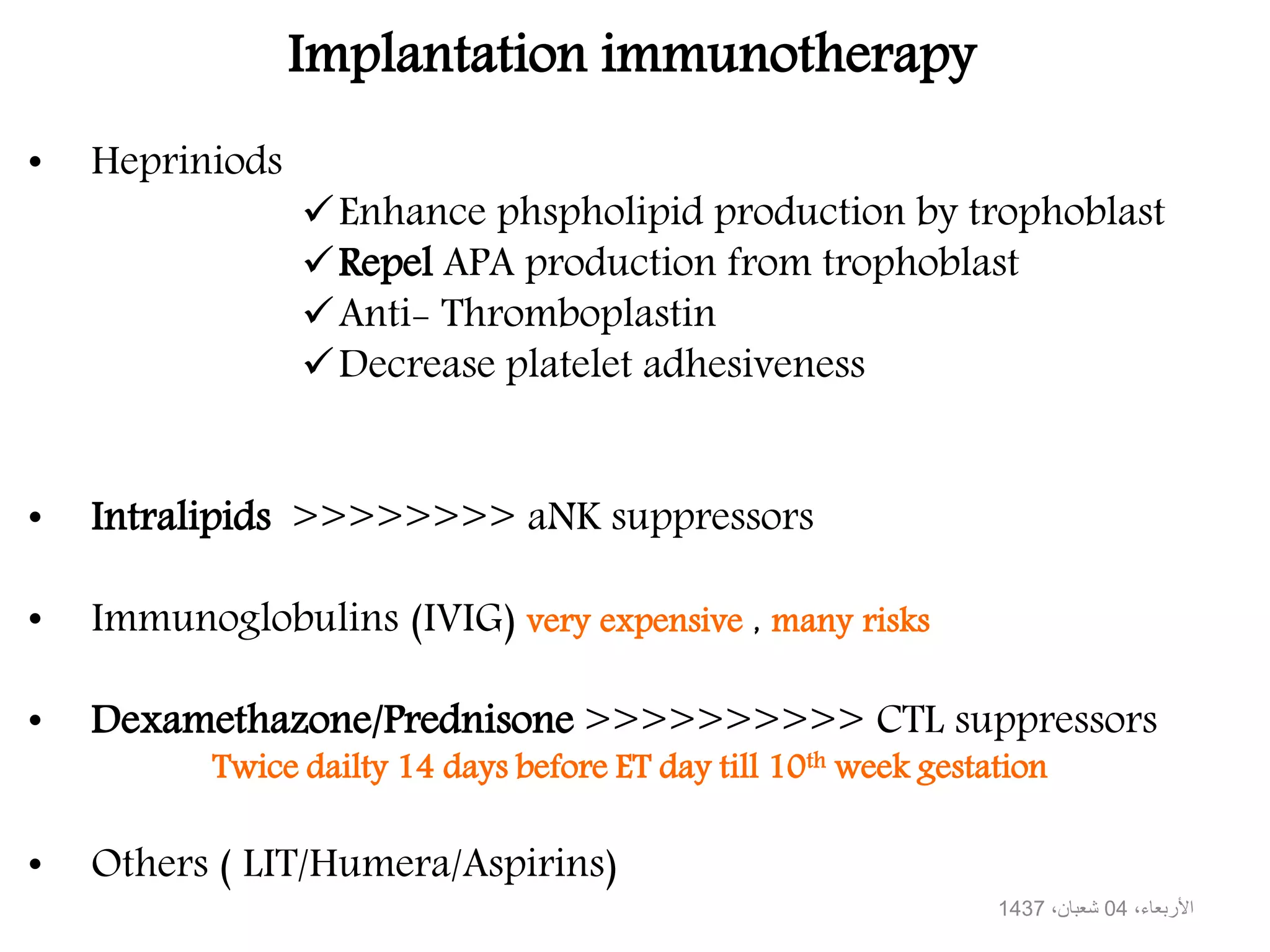
• Hepriniods
Enhance phspholipid production by trophoblast
Repel APA production from trophoblast
Anti- Thromboplastin
Decrease platelet adhesiveness
• Intralipids >>>>>>>> aNK suppressors
• Immunoglobulins (IVIG) very expensive , many risks
• Dexamethazone/Prednisone >>>>>>>>>> CTL suppressors
Twice dailty 14 days before ET day till 10th week gestation
• Others ( LIT/Humera/Aspirins)
Implantation immunotherapy
،‫األربعاء‬04،‫شعبان‬1437
Intralipid 20% ??!!
Routinely used for parenteral nutrition, intralipid is a fat emulsion
that was reported to suppress abnormal NK cytotoxic activity in
peripheral NK cells from women with recurrent reproductive failure
both in vitro and in vivo Roussev et al; 2008
،‫األربعاء‬04،‫شعبان‬1437
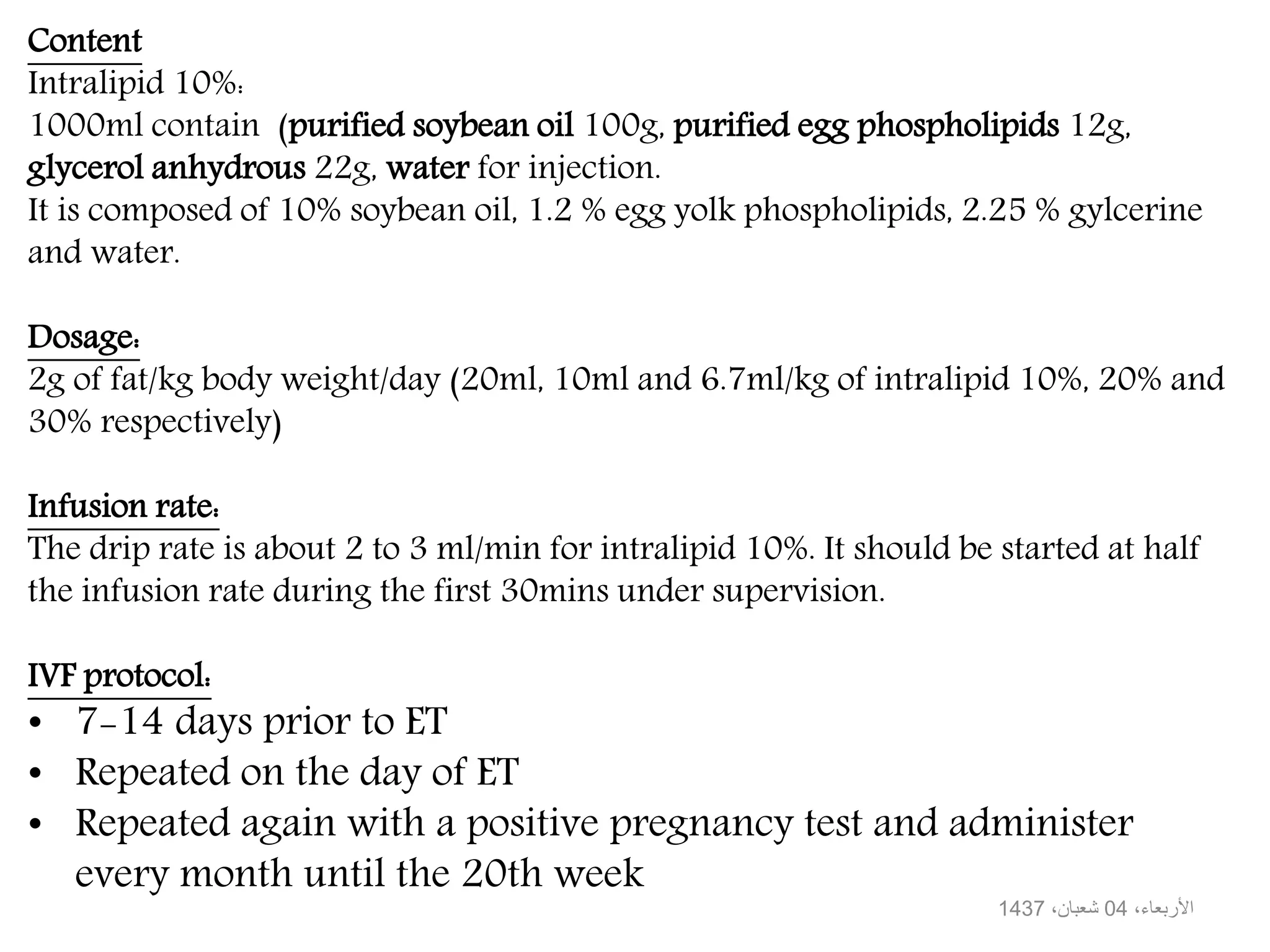
Content
Intralipid 10%:
1000ml contain (purified soybean oil 100g, purified egg phospholipids 12g,
glycerol anhydrous 22g, water for injection.
It is composed of 10% soybean oil, 1.2 % egg yolk phospholipids, 2.25 % gylcerine
and water.
Dosage:
2g of fat/kg body weight/day (20ml, 10ml and 6.7ml/kg of intralipid 10%, 20% and
30% respectively)
Infusion rate:
The drip rate is about 2 to 3 ml/min for intralipid 10%. It should be started at half
the infusion rate during the first 30mins under supervision.
IVF protocol:
• 7-14 days prior to ET
• Repeated on the day of ET
• Repeated again with a positive pregnancy test and administer
every month until the 20th week
،‫األربعاء‬04،‫شعبان‬1437
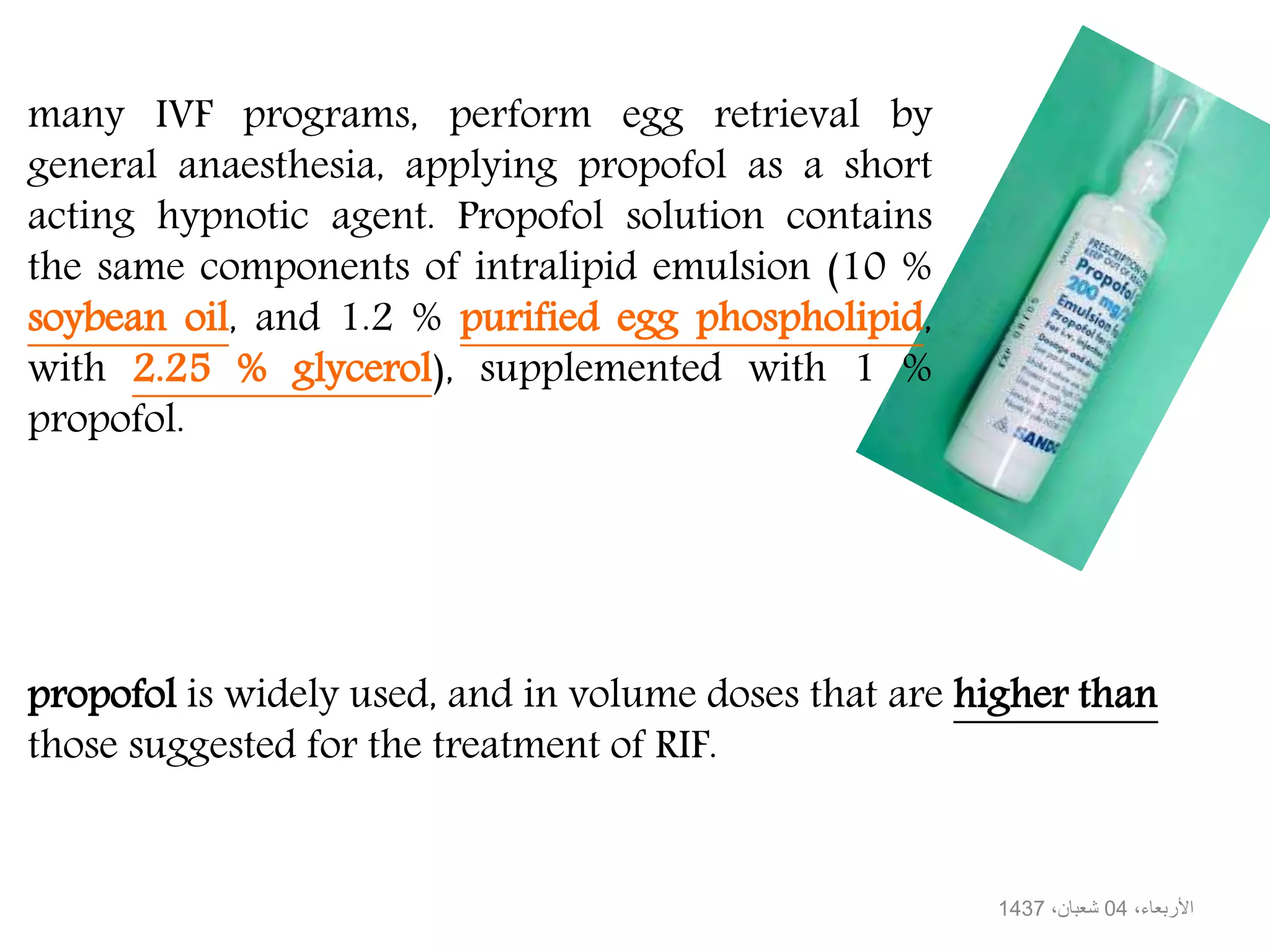
propofol is widely used, and in volume doses that are higher than
those suggested for the treatment of RIF.
many IVF programs, perform egg retrieval by
general anaesthesia, applying propofol as a short
acting hypnotic agent. Propofol solution contains
the same components of intralipid emulsion (10 %
soybean oil, and 1.2 % purified egg phospholipid,
with 2.25 % glycerol), supplemented with 1 %
propofol.
،‫األربعاء‬04،‫شعبان‬1437
Role of IVIG
The only properly conducted prospective RCT by
stephenson & Flucker (2000) involving 51 women with 2
or more IVF failure showed IVIG of no benefit .
،‫األربعاء‬04،‫شعبان‬1437
Role of steroids
A meta analysis of 13 RCT by Boomsma et al ( Cochrane
data base 2007 ) showed no evidencing benefit routine
use of steroids in women undergoing IVF.
،‫األربعاء‬04،‫شعبان‬1437
Empiric use of Aspirin
• No benefit in cases of RIF ( Gelbaya et al Hum Reprod 2007 )
،‫األربعاء‬04،‫شعبان‬1437
Anticardiolipin antibodies
• Two studies showed higher prevalence of ACA in
women with RIF ( Kaider et al 1996 & Qublan et al 2006 ) .
• However the only RCT in the use of LDA or/ Heparin in
cases of high levels of ACA shows no benefit in cases of
RIF (stern et al 2003 ).
،‫األربعاء‬04،‫شعبان‬1437
Alloimmune implantation dysfunction
Repeated exposures to matching implanting embryos lead
to NK cells activation that become permanent.
Screening for Inherited and acquired
thrombophilic conditions
،‫األربعاء‬04،‫شعبان‬1437
when summarizing all studies focusing on gene
polymorphisms and the thrombophilia trait, it seems that
prothrombotic disorders are more prevalent in RIF
patients than in controls [Toth et al; 2011].
،‫األربعاء‬04،‫شعبان‬1437
Relation between thrombophilia and RIF
??
While , empiric treatment with heparin is not justifiable .
Altogether, it is recommended that patients diagnosed with
RIF be investigated for acquired as well as hereditary
thrombophilia disorders , and be treated accordingly.
Berker et al; 2011
Seshadri et al; 2011
Urman et al; 2009
serum testing for congenital and acquired thrombophilia
could be useful in identifying patients who could benefit
from adjuvant LMWH and low dose aspirin [Qublan et al; 2008].
What about empiric use of LMWH in ART patients ?
،‫األربعاء‬04،‫شعبان‬1437
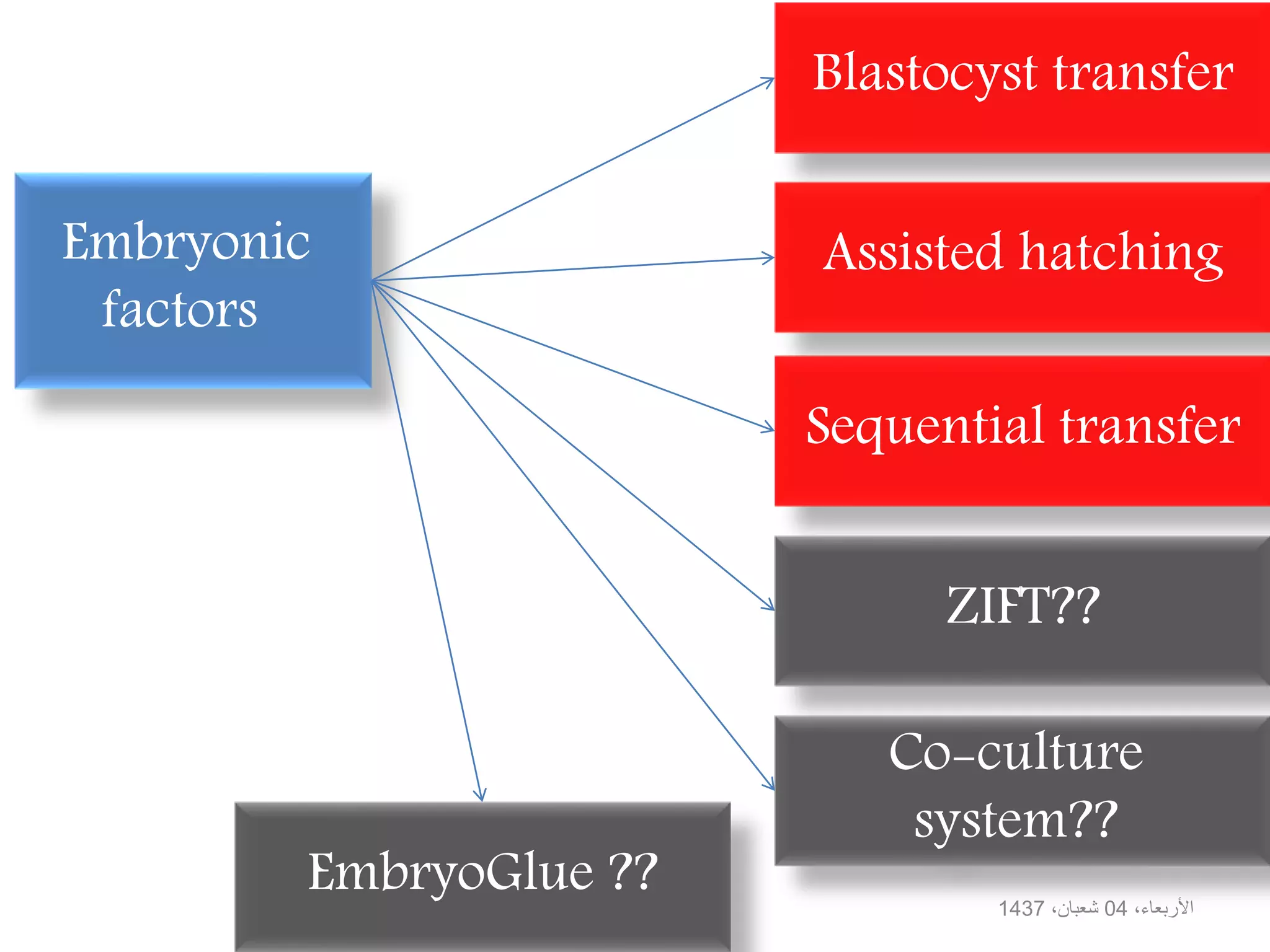
Embryonic
factors
Blastocyst transfer
Assisted hatching
Sequential transfer
ZIFT??
Co-culture
system??
EmbryoGlue ??
،‫األربعاء‬04،‫شعبان‬1437
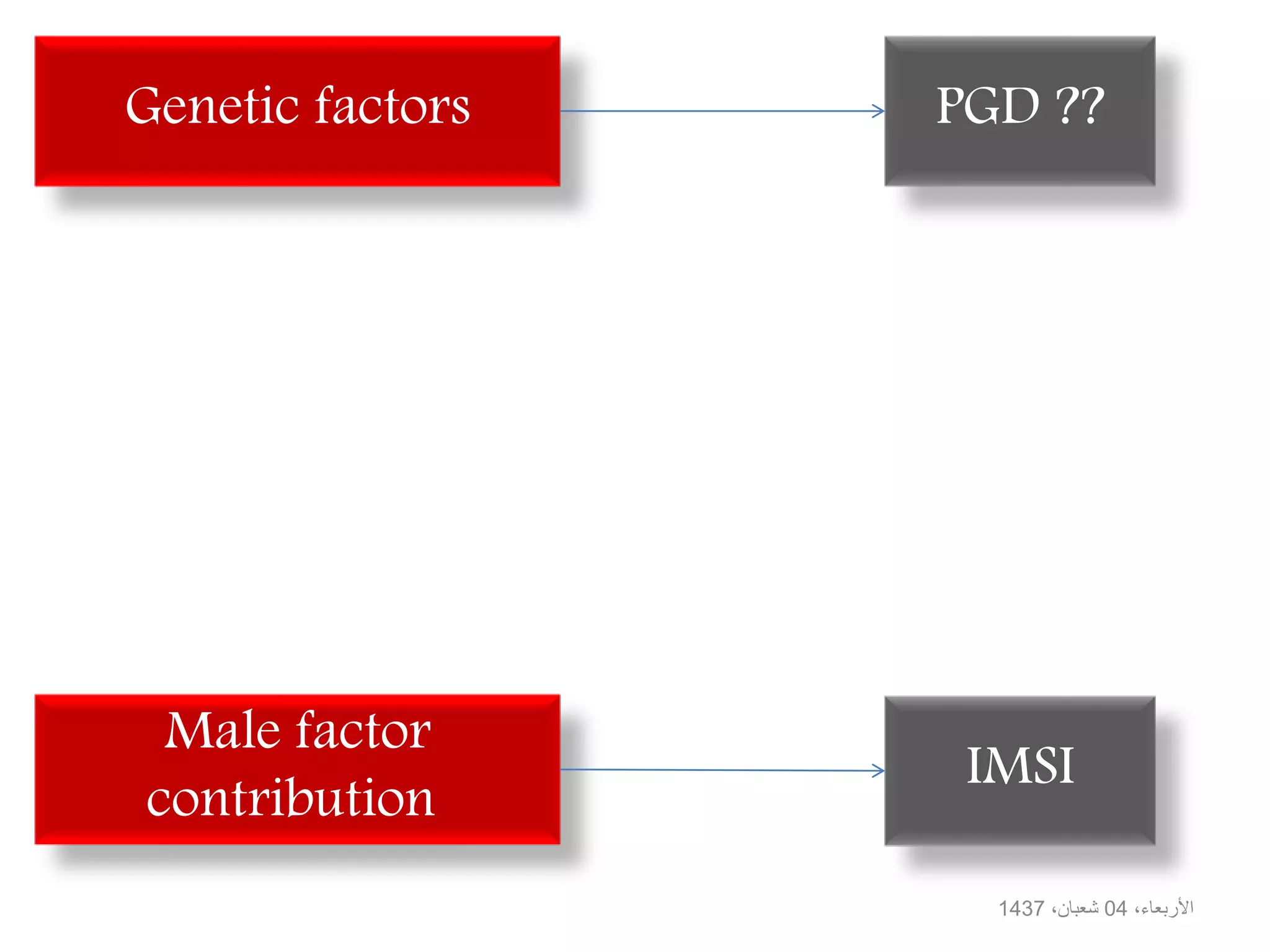
Male factor
contribution
IMSI
Genetic factors PGD ??
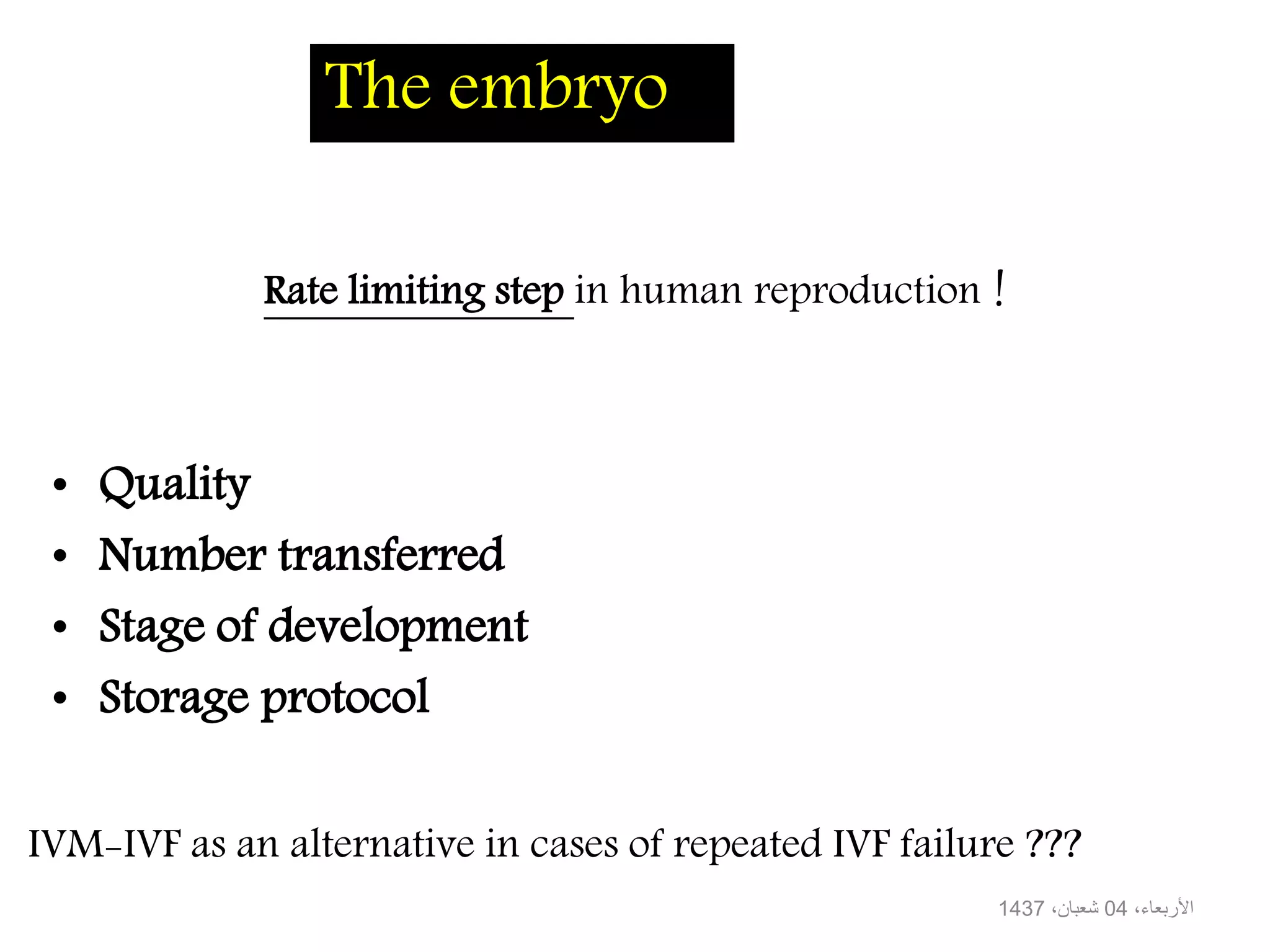
The embryo
• Quality
• Number transferred
• Stage of development
• Storage protocol
IVM-IVF as an alternative in cases of repeated IVF failure ???
،‫األربعاء‬04،‫شعبان‬1437
Rate limiting step in human reproduction !
Is morphological grading is sufficient !!
،‫األربعاء‬04،‫شعبان‬1437
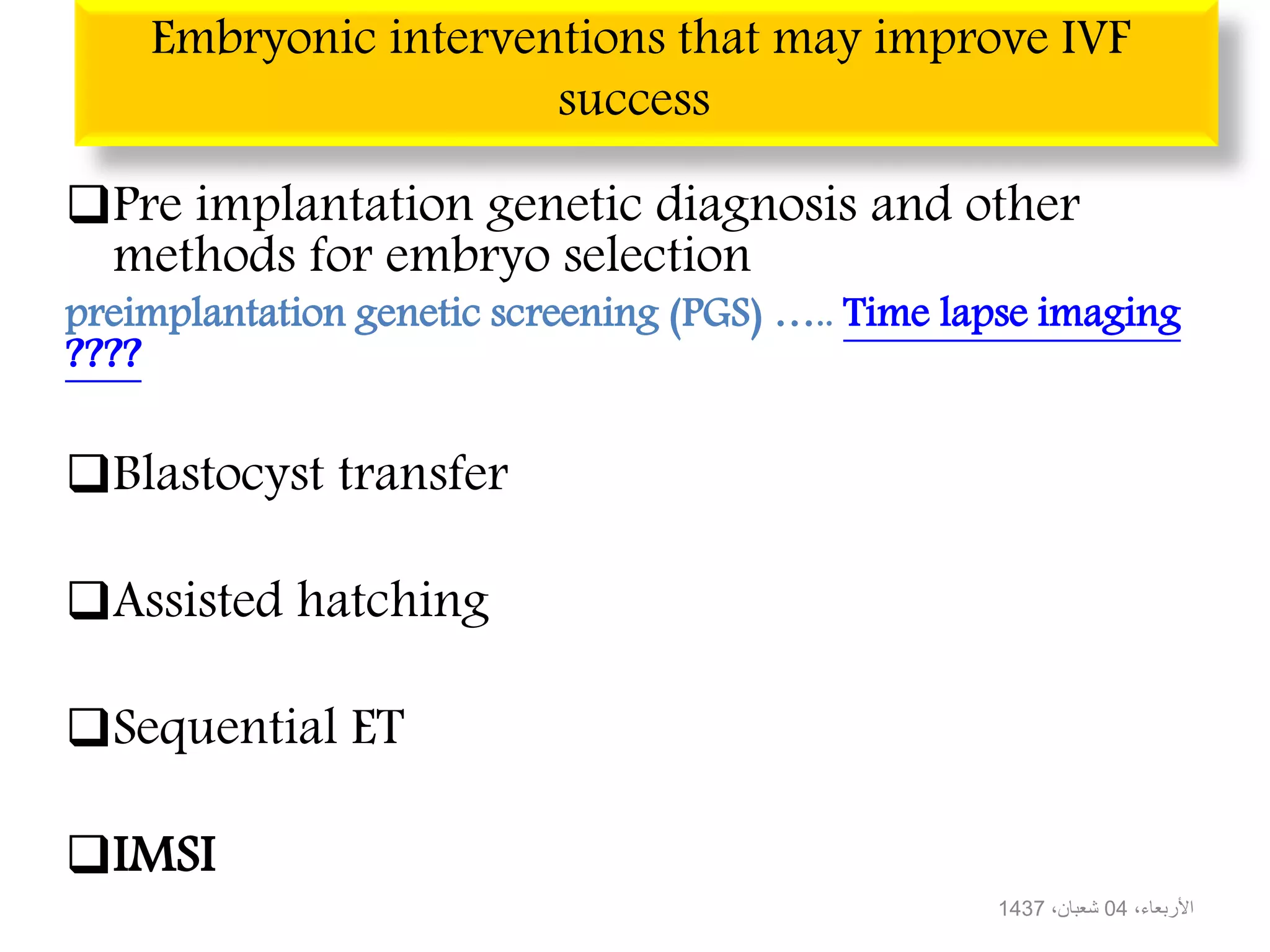
Embryonic interventions that may improve IVF
success
Pre implantation genetic diagnosis and other
methods for embryo selection
preimplantation genetic screening (PGS) ….. Time lapse imaging
????
Blastocyst transfer
Assisted hatching
Sequential ET
IMSI
،‫األربعاء‬04،‫شعبان‬1437
Not suitable for all patients: ??
• to patients who are younger in age and produce over six
oocytes.[Levitas et al; 2004].
Blastocyst transfer
،‫األربعاء‬04،‫شعبان‬1437
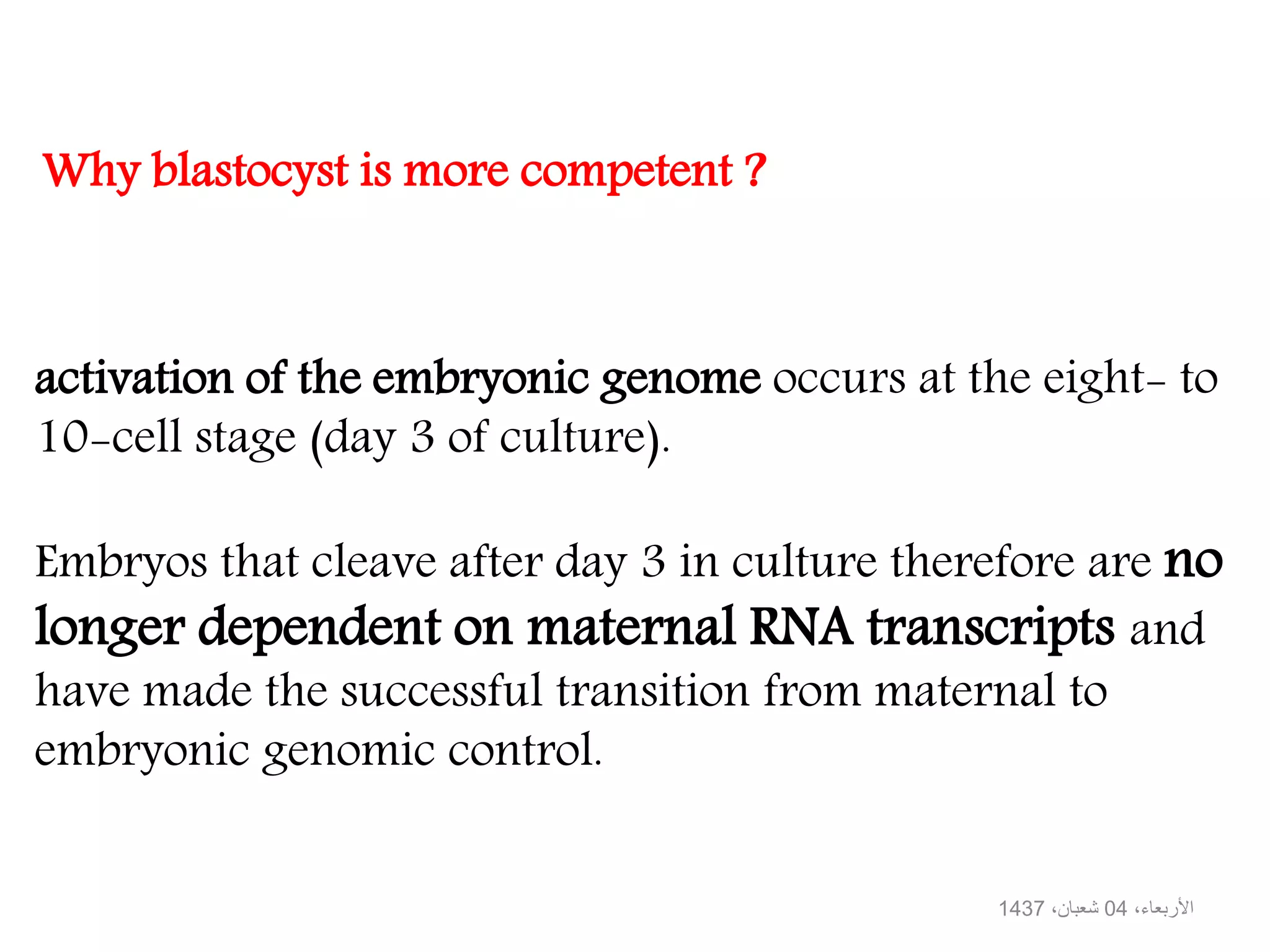
activation of the embryonic genome occurs at the eight- to
10-cell stage (day 3 of culture).
Embryos that cleave after day 3 in culture therefore are no
longer dependent on maternal RNA transcripts and
have made the successful transition from maternal to
embryonic genomic control.
Why blastocyst is more competent ?
،‫األربعاء‬04،‫شعبان‬1437
Q : Is blastocyst transfer is a successful
treatment in cases of RIF?
live birth after fresh IVF is significantly higher after
blastocyst-stage embryo transfer as compared to cleavage-
stage embryo transfer when equal number of embryos are
transferred in the two groups compared. Papanikolaou et al;
2008 systematic review and meta-analysis
،‫األربعاء‬04،‫شعبان‬1437
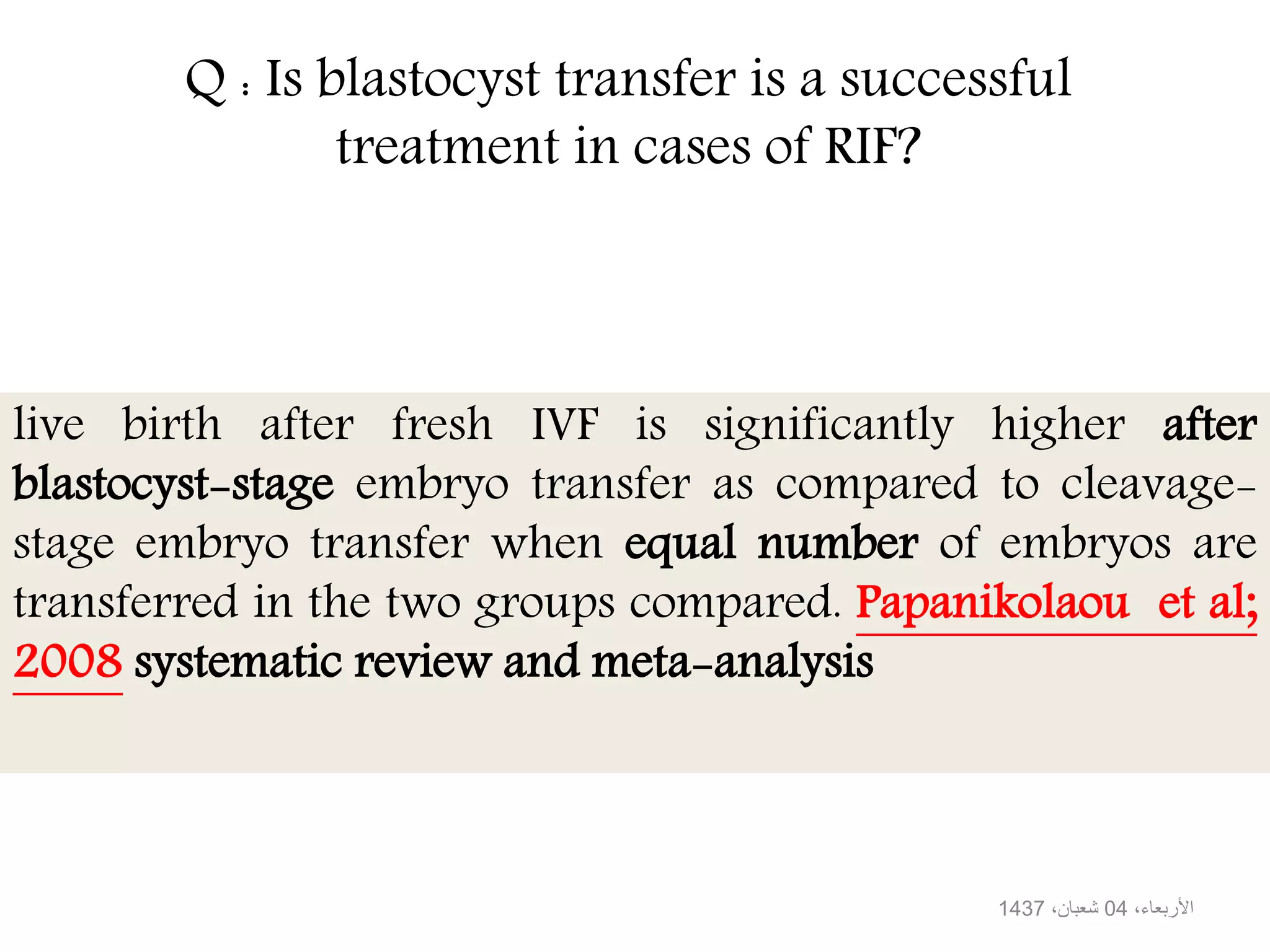
Assissted hatching (AH)
It was also noted that cleavage-stage embryos with a reduced zona
thickness seemed to have a good prognosis for implantation (Cohen et
al; 1989).
Methods:
Mechanical or with a piezo-micromanipulator (Nakayama et al;1998) or
by laser (Hsieh et al; 2002).
Hazards:
• Direct damage to blastomeres-Incomplete hatching-Premature
hatching
،‫األربعاء‬04،‫شعبان‬1437
AH was related to increased clinical pregnancy and multiple
pregnancy rates in women with RIF.
Das et al; 2009 Cochrane review
Meta-analysis 2011 Martins et al
AH slightly improves clinical pregnancy rates, particularly in poor
prognosis patients, including those with RIF, Poor quality embryo and
Older women (38 or more), while routine practice is not supported .
ASRM 2007 committee opinion
،‫األربعاء‬04،‫شعبان‬1437
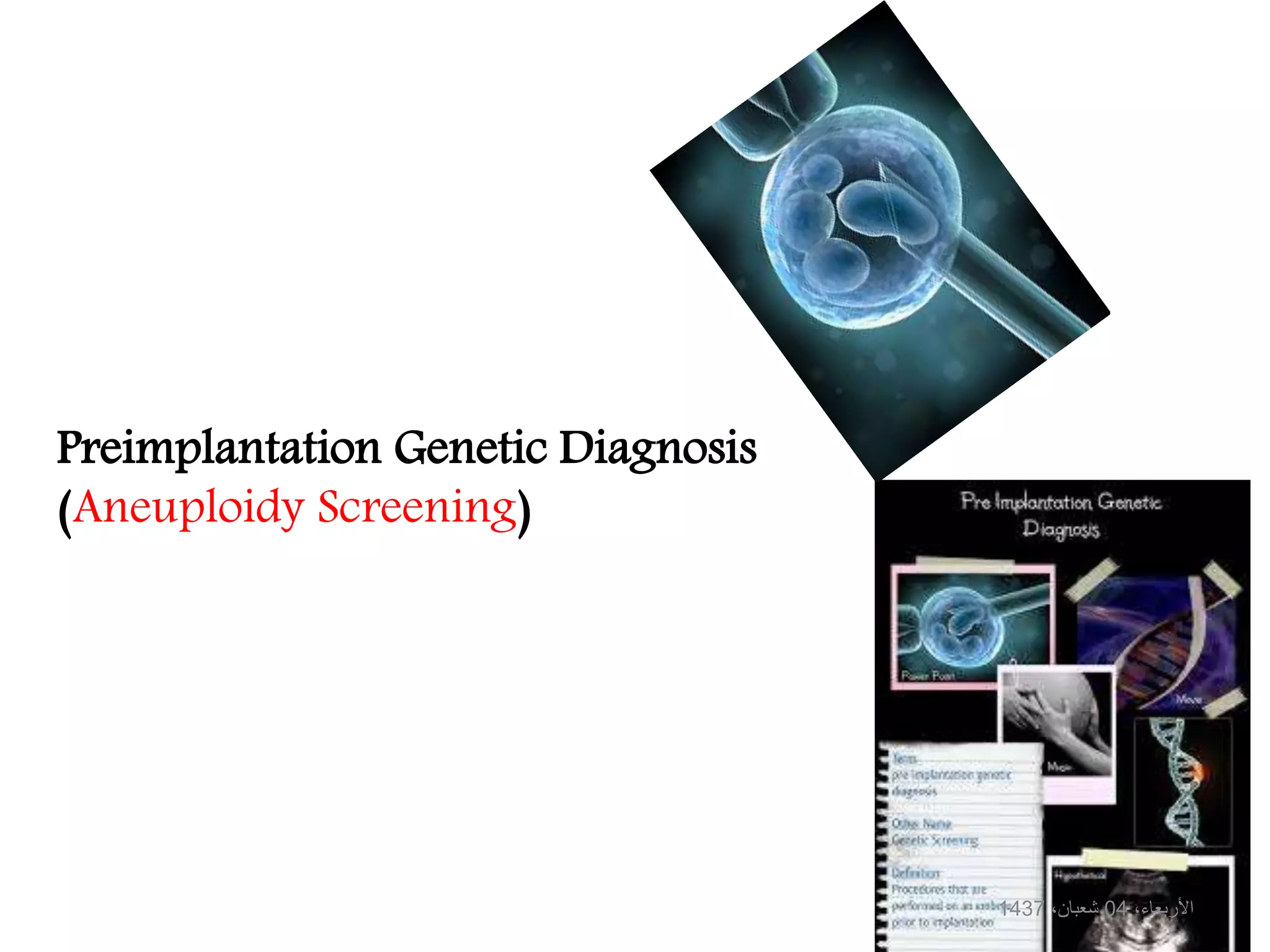
Preimplantation Genetic Diagnosis
(Aneuploidy Screening)
،‫األربعاء‬04،‫شعبان‬1437
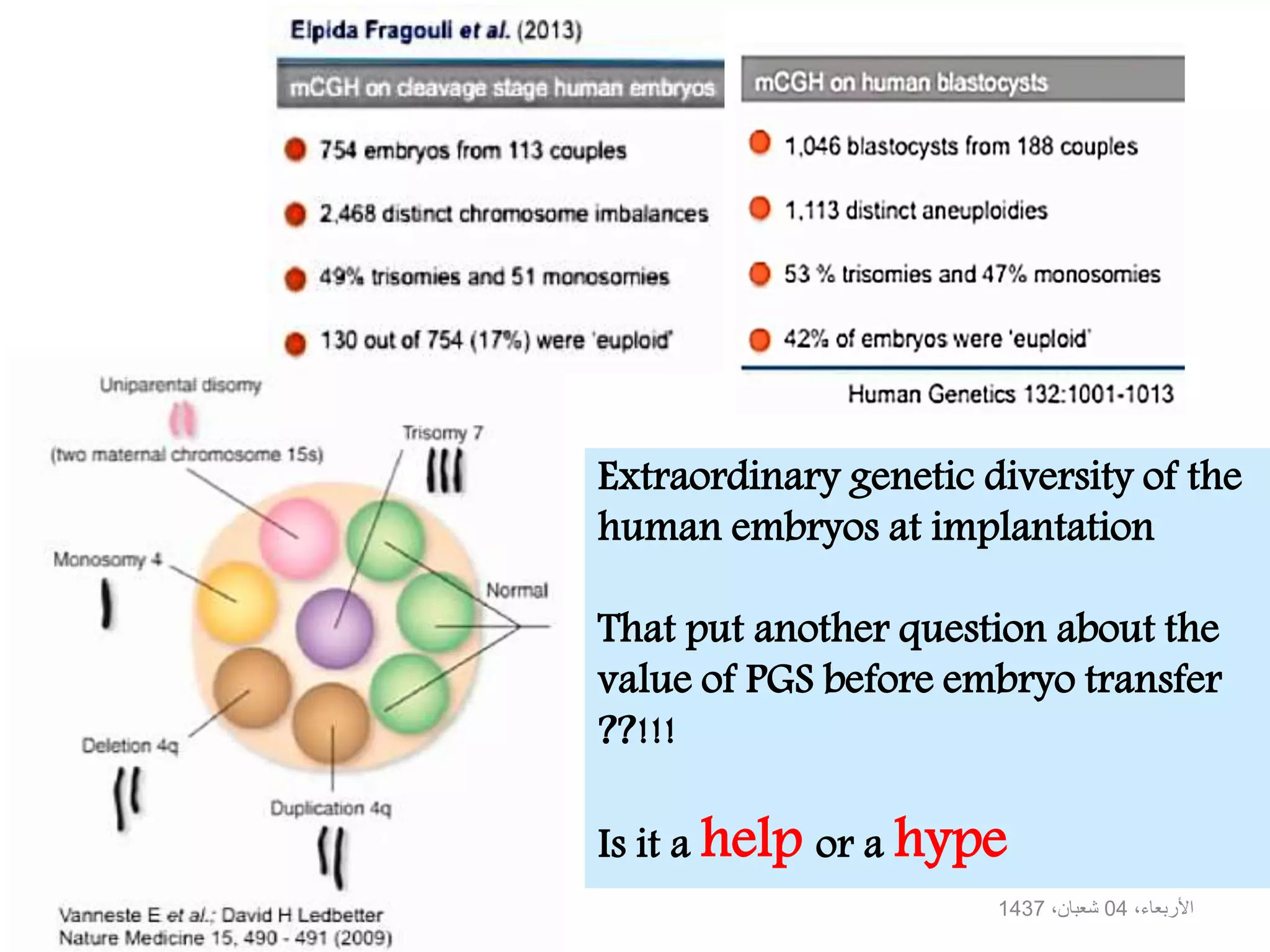
Extraordinary genetic diversity of the
human embryos at implantation
That put another question about the
value of PGS before embryo transfer
??!!!
Is it a help or a hype
،‫األربعاء‬04،‫شعبان‬1437
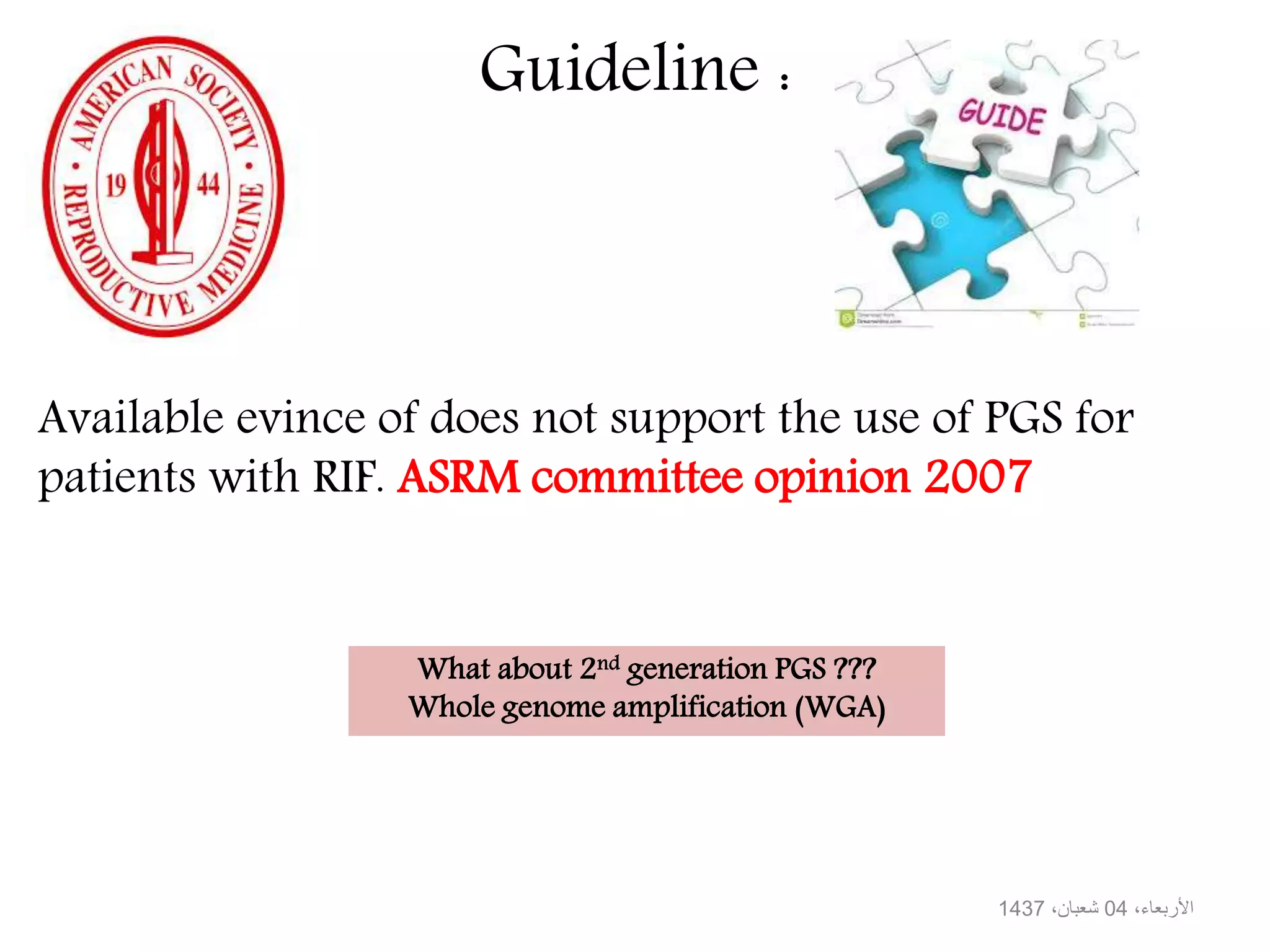
Guideline :
Available evince of does not support the use of PGS for
patients with RIF. ASRM committee opinion 2007
What about 2nd generation PGS ???
Whole genome amplification (WGA)
،‫األربعاء‬04،‫شعبان‬1437
Hyaluron enriched embryo transfer medium (EmbryoGlue)
،‫األربعاء‬04،‫شعبان‬1437
In 42 women undergoing IVF, embryos were transferred
into 50 μL of EmbryoGlue for 10 min prior to transfer
inside uterine cavity. In the control group (n = 42),
embryos were transferred to conventional blastocyst
culture medium.
in patients with recurrent implantation failure, it may be
considered as a useful transfer medium Neeta et al; 2015.
،‫األربعاء‬04،‫شعبان‬1437
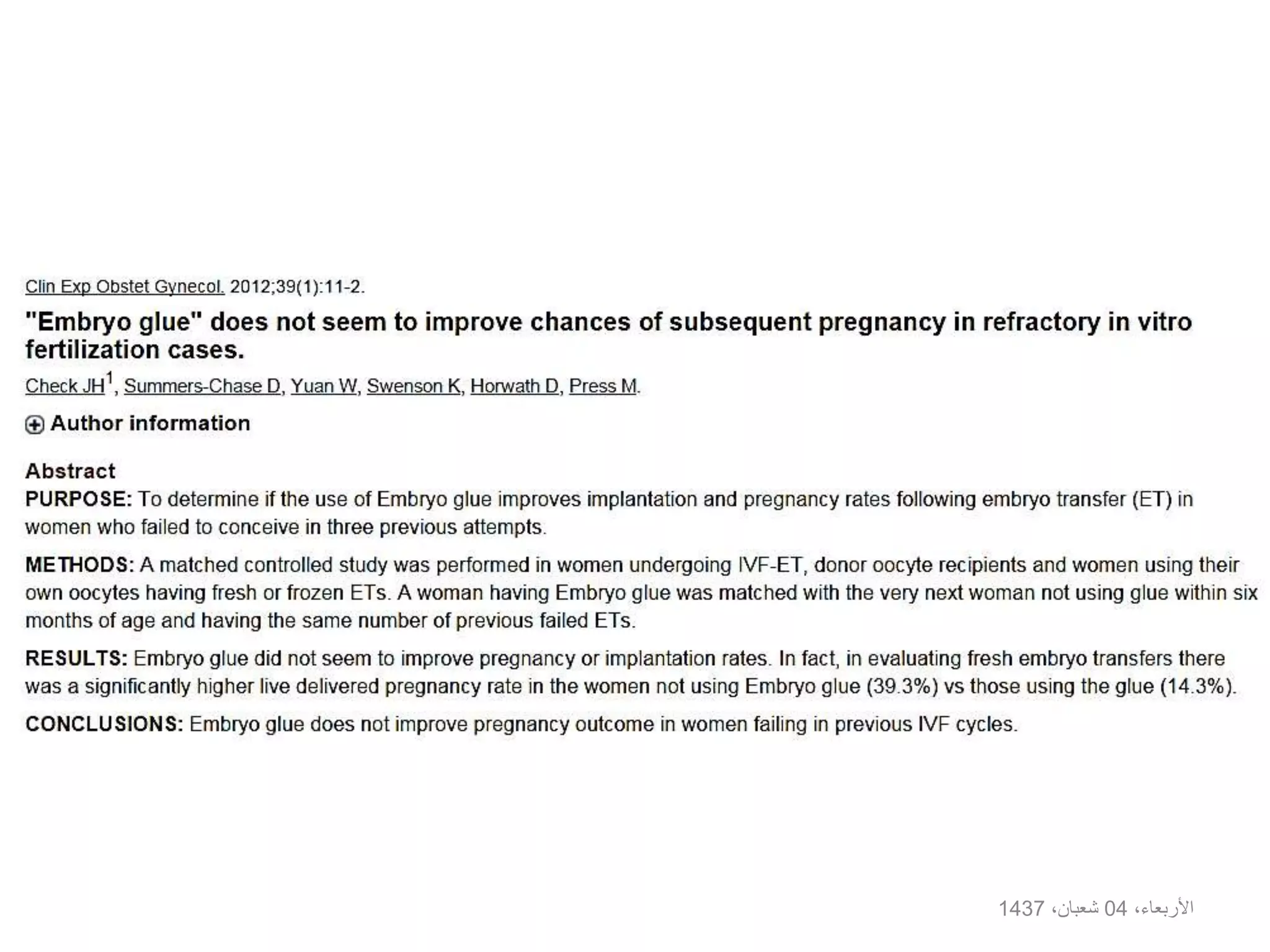
Evidence suggests improved clinical pregnancy and live
birth rates with the use of functional concentrations of
EmbryoGlue as an adherence compound in ART cycles.
However, the evidence obtained is of moderate quality. The
increase in multiple pregnancy rate may be the result of
use of a combination of an adherence compound and a
policy of transferring more than one embryo. Further
studies of adherence compounds with single embryo
transfer need to be undertaken. Cochrane review 2015
،‫األربعاء‬04،‫شعبان‬1437
Two tests encountered with cases of RIF !!
Sperm Chromatin Structure Assay (SCSA):
Sperm chromatin dispersion test (SCD)
DNA fragmentation index >27%: RIF (Larson et al.,2000; Larson-Cook
et al., 2003)
Sperm as a cause of RIF ?
DNA fragmentation
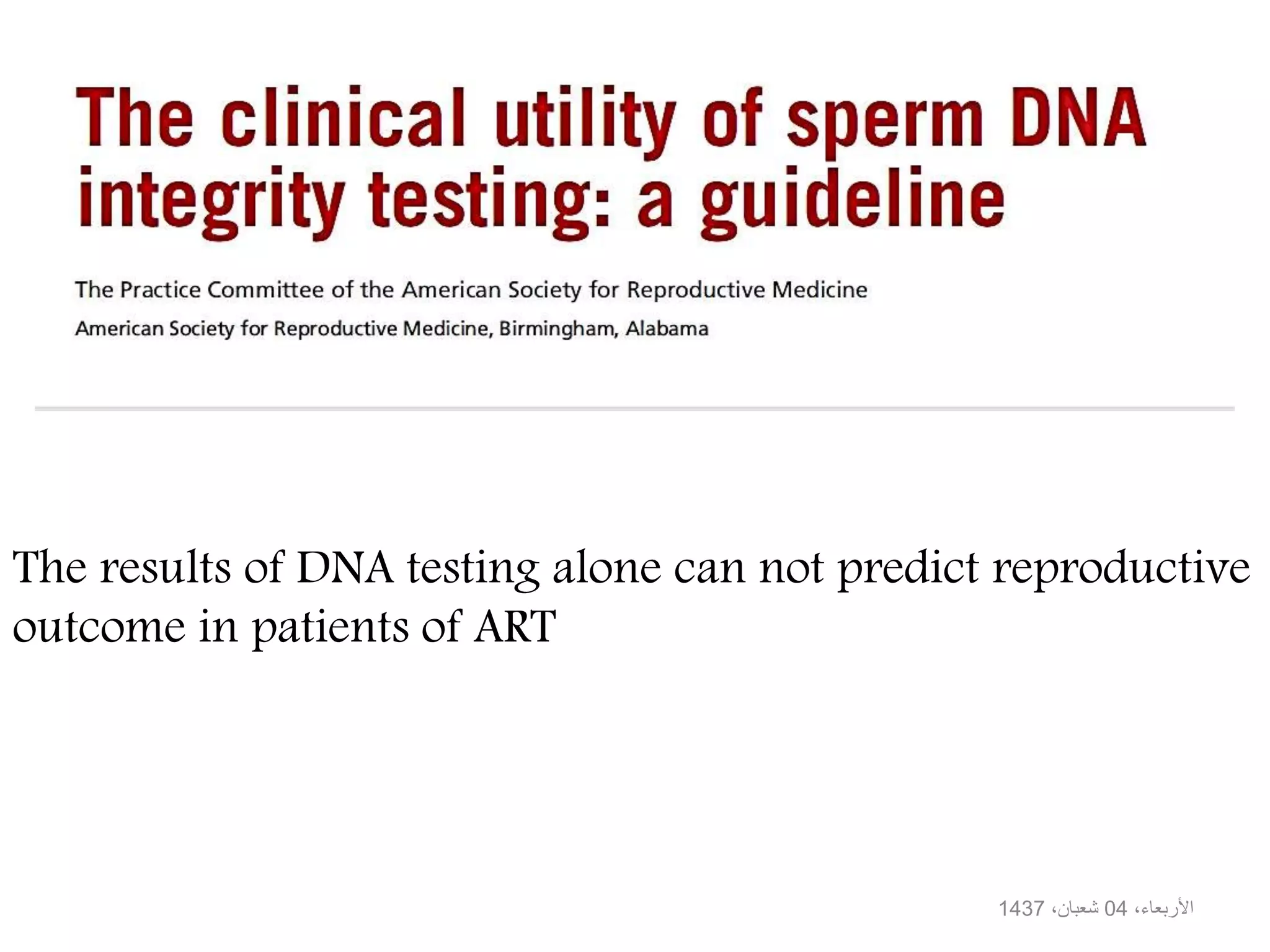
sperm DNA fragmentation is not an important cause of
RIF and there is a significant differences between test
methodologies in interpreting the data . Carol et al ; 2015
SDF is not related to chromosomal anomalies in embryos
from patients with implantation failure. Furthermore, the
different methods used to evaluate DNA fragmentation may
produce different results. F. Bronet human reprod 2012
،‫األربعاء‬04،‫شعبان‬1437
The results of DNA testing alone can not predict reproductive
outcome in patients of ART
،‫األربعاء‬04،‫شعبان‬1437
IMSI
،‫األربعاء‬04،‫شعبان‬1437
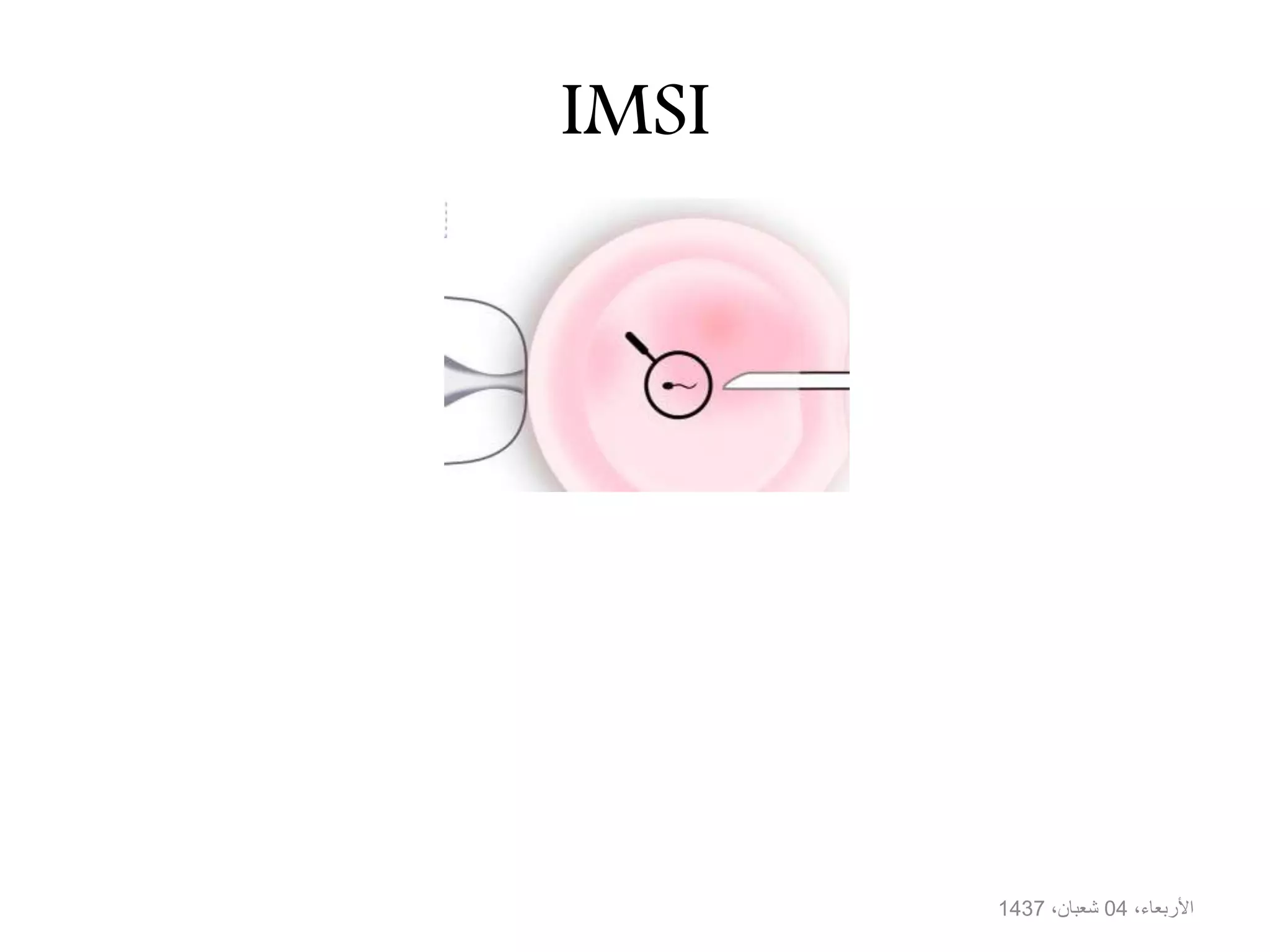
IMSI is a real-time method where sperm is selected before
the microinjection takes place to identify spermatozoa
devoid of surface vacuoles.
By using an inverted microscope that is able to provide
much greater magnifying power (around 6000 times) than
that normally used in reproductive laboratories (400 times)
to carry out ICSI
(Bartoov et al., 2003).
The only confirmed indication for IMSI is RIF while routine
use in IVF practice still not recommended . (Boitrelle et al,
2014)
،‫األربعاء‬04،‫شعبان‬1437
ET Technique
as a cause of IVF failure
• Mock transfer in prior cycles ???
Introducing infection ?? Better to map your transfer technique before
• Full Bladder ???
• US guidance
Their in no excuse for non US guided ET
،‫األربعاء‬04،‫شعبان‬1437
• Sequential embryo transfer
• Interval double ET (on days 2 and 4 or 5): improves CPR
Is FET cycles is an easy and good
alternative ??!!!!
،‫األربعاء‬04،‫شعبان‬1437
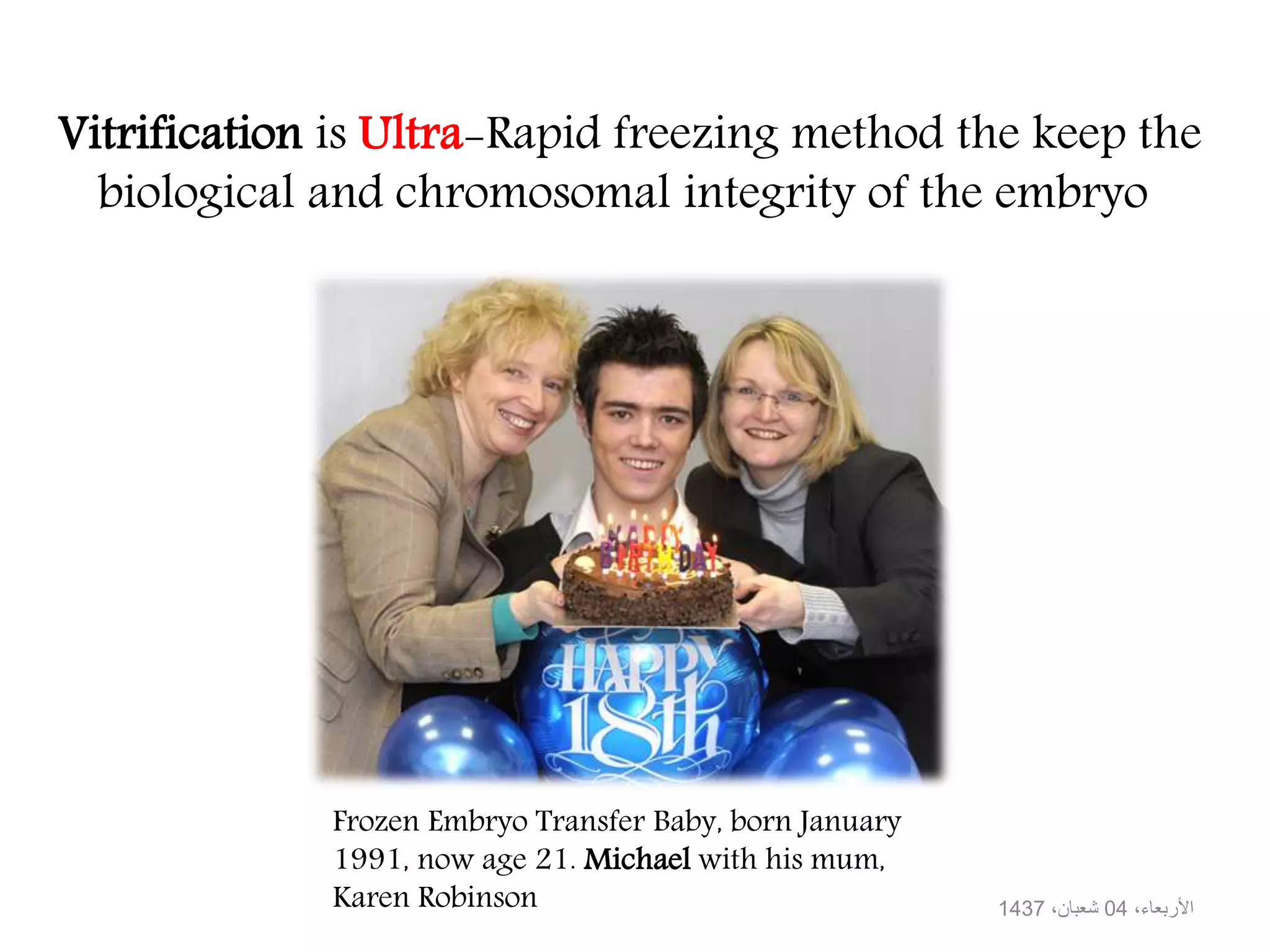
Vitrification is Ultra-Rapid freezing method the keep the
biological and chromosomal integrity of the embryo
،‫األربعاء‬04،‫شعبان‬1437
Frozen Embryo Transfer Baby, born January
1991, now age 21. Michael with his mum,
Karen Robinson
One in 4 females has displaced window of
implantation so need PET and ERA test
،‫األربعاء‬04،‫شعبان‬1437
Personalized embryo transfer (pET)
ERA test to determine endometrium is receptive or not
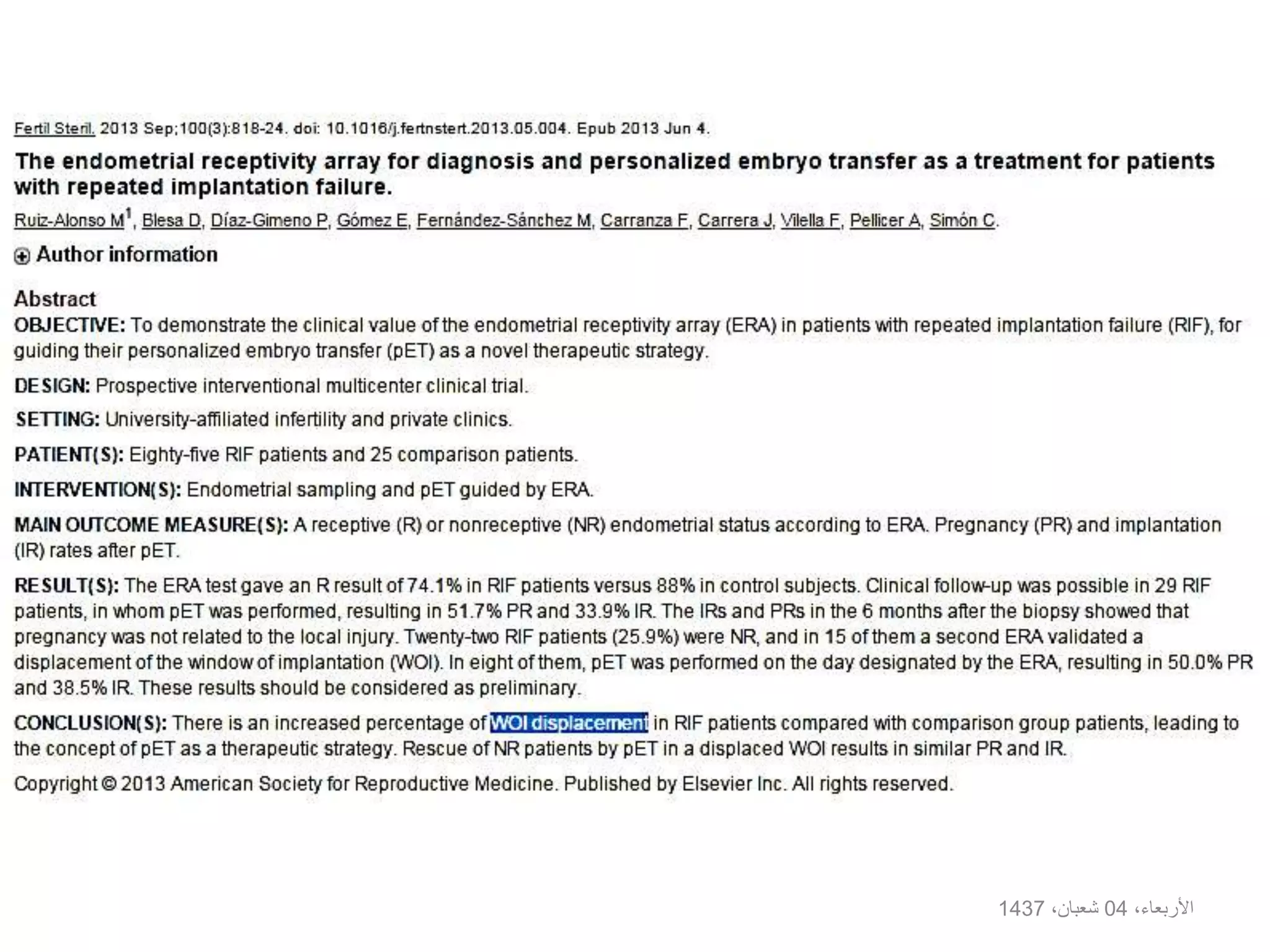
pET performed on the day designated by the ERA: 50.0%
PR and 38.5% IR (Ruiz-Alonso et al, 2013).
،‫األربعاء‬04،‫شعبان‬1437
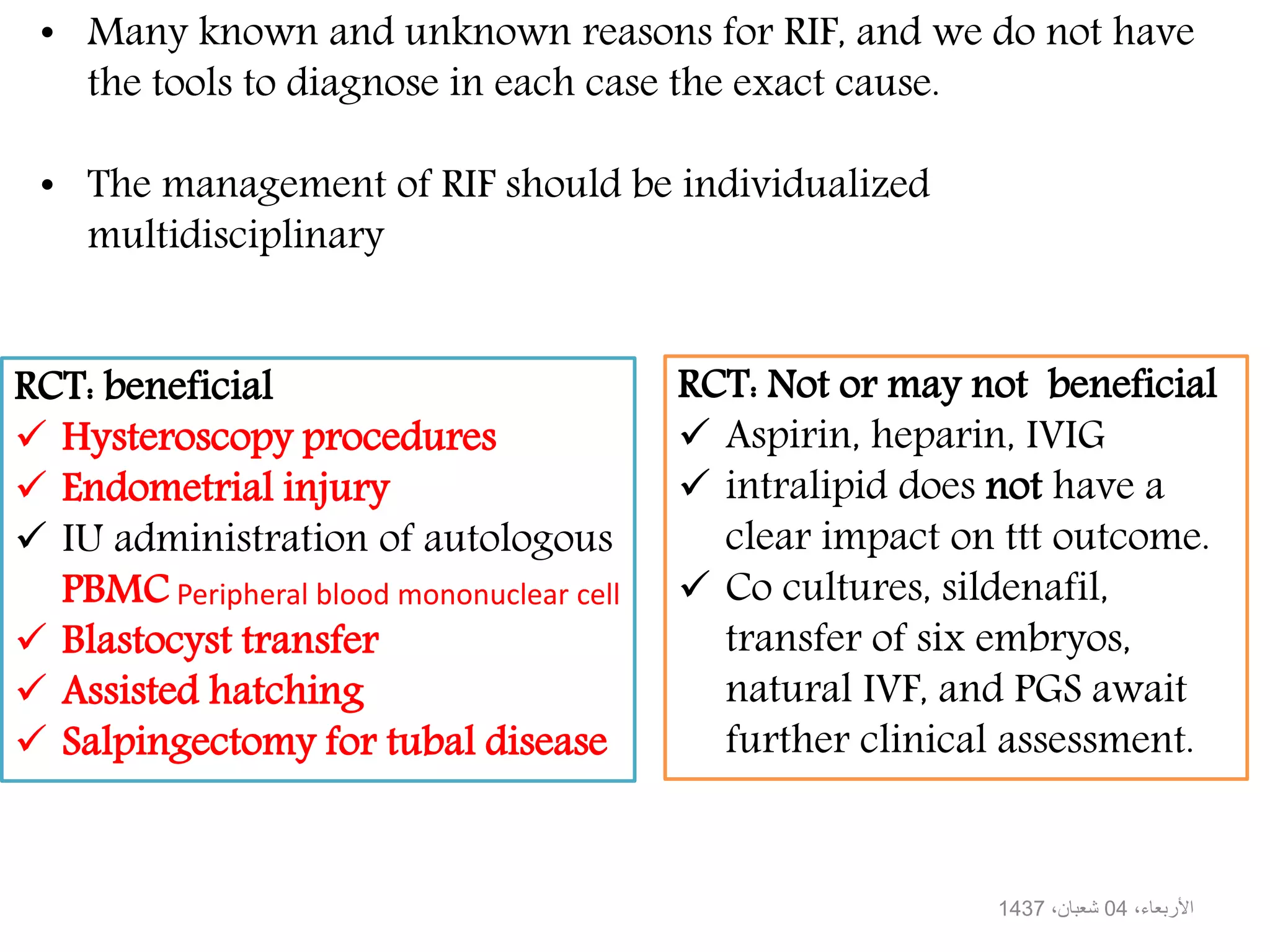
• Many known and unknown reasons for RIF, and we do not have
the tools to diagnose in each case the exact cause.
• The management of RIF should be individualized
multidisciplinary
،‫األربعاء‬04،‫شعبان‬1437
RCT: beneficial
 Hysteroscopy procedures
 Endometrial injury
 IU administration of autologous
PBMC Peripheral blood mononuclear cell
 Blastocyst transfer
 Assisted hatching
 Salpingectomy for tubal disease
RCT: Not or may not beneficial
 Aspirin, heparin, IVIG
 intralipid does not have a
clear impact on ttt outcome.
 Co cultures, sildenafil,
transfer of six embryos,
natural IVF, and PGS await
further clinical assessment.
Thank
you
،‫األربعاء‬04،‫شعبان‬1437

Repeated Implantation failure

  • 1.
    Why my IVFcycle failed ? Ahmad Saber Soliman A guide to learn from your failed IVF cycle ،‫األربعاء‬04،‫شعبان‬1437
  • 2.
    Objectives • Definition ofrepeated IVF failure How many attempts ? How many embryos ? • Avoidable causes of IVF failure Failure in the presence of potential obstacles ،‫األربعاء‬04،‫شعبان‬1437
  • 3.
  • 4.
    Its definition isdynamic and depends on the population of patients studied, as well as the type and quality of clinical practice. Mitri et al; 2016 no universally accepted definition for RIF, despite many publications on this topic (Das and Holzer, 2012; Laufer and Simon, 2012; Penzias, 2012; Simon and Laufer, 2012a,b; Urman et al., 2005). ،‫األربعاء‬04،‫شعبان‬1437
  • 5.
    Implantation failure aftertransfer of three high-quality embryo or with transfer of ≥10 embryos in multiple transfers with exact numbers to be determined by each center . [Thornhill AR, ESHRE PGD Consortium, et al. Best practice guidelines for clinical preimplantation genetic diagnosis (PGD) and preimplantation genetic screening (PGS). Hum Reprod. 2005;20(1):35–48.] Should be revised after the era of SET/DET ،‫األربعاء‬04،‫شعبان‬1437
  • 6.
    Recurrent implantation failure vs RecurrentIVF failure RIF is not the same as recurrent IVF failure. Recurrent IVF failure is the failure to achieve a pregnancy after several IVF attempts, a common cause being poor response to ovarian stimulation (Ferraretti et al., 2011). The term ‘recurrent implantation failure’ is a subgroup of recurrent IVF failure and should not be used to replace it. ،‫األربعاء‬04،‫شعبان‬1437
  • 7.
    What is implantationrate ? number of embryos which have produced US evidence of an intrauterine gestational sac per the total number of embryos transferred into the uterine cavity (Zegers-Hochschild et al., 2009). when day-2 or -3 embryos are transferred is about 25%, But when day-5 or -6 embryos are transferred is usually higher, about 40%. ،‫األربعاء‬04،‫شعبان‬1437
  • 8.
    Is chemical pregnancyconsidered as implantation failure? Clinically: Implantation failure refers to the failure of the embryo to reach a stage when an IU gestational sac is recognized by ultrasonography. i.e: the only clinical evidence of implantation is appearance of IU gestational sac . ،‫األربعاء‬04،‫شعبان‬1437
  • 9.
  • 10.
    Embryo transfer technique (Angelini et al.,2006). Uterine receptivity (Modi et al., 2012; Strowitzki et al., 2006) Egg/Embryo quality (Karlstrom et al., 1997) ،‫األربعاء‬04،‫شعبان‬1437
  • 11.
    Age is themost important single variable affecting outcome in ART. (Rosenwaks et al; 1995). Effect on oocyte quality and endometrial receptivity ???? Age cause or prognosticator ،‫األربعاء‬04،‫شعبان‬1437
  • 12.
    Pregnancy depends onimplantation of a developmentally competent embryo to dip in a receptive endometrium. ،‫األربعاء‬04،‫شعبان‬1437
  • 13.
    Establishing the relationshipbetween soil/seed Endometrium / embryoSoil/seed ،‫األربعاء‬04،‫شعبان‬1437
  • 14.
    Maternal : •Endometrial Factors •UterineFactors •Obesity •Thyroid •Endometriosis(1/3 of them has NK cell activation ) •Immunological Factors (maternal tolerance to the baby ) immunologic system plays a role in the process of implantation, and in the subsequent maintenance of pregnancy . Chaouat et al; 2007 Singh et al 2011 Embryo • Gamete (Sperm DNA damage-Oocyte quality) • Zona Hardening • Inadequate culture Doctor : Bad ET technique ،‫األربعاء‬04،‫شعبان‬1437
  • 15.
  • 16.
    previous IVF treatmentcycles Clinical : drugs used during ovarian stimulation, number of oocytes retrieved Lab: method used for fertilization, fertilization rate, embryo development, Clinical : day and ease of embryo transfer procedure Detailed history ،‫األربعاء‬04،‫شعبان‬1437
  • 17.
    Counseling should precedethe investigative process to: ensure patients understand the rationale, potential benefit and cost implications of the proposed tests. Preferably, information leaflets should augment the counseling process ،‫األربعاء‬04،‫شعبان‬1437
  • 18.
     High-resolution ultrasoundscanning,  Hysteroscopy  Screening for congenital and acquired thrombophilic conditions. Evidence-based investigations should include : ،‫األربعاء‬04،‫شعبان‬1437
  • 19.
    Other commonly performedinvestigations with weaker evidence base include :  karyotype analysis for the couple,  laparoscopy for diagnosis and treatment of endometriosis and  endometrial biopsy. Has it had a place in modern practice??!! The role of immunologic testing for natural killer cell counts and cytotoxicity assay remains controversial. ،‫األربعاء‬04،‫شعبان‬1437
  • 20.
  • 21.
    • Polyps • adhesions, •submucous fibroids (FIGO 0-2) • endometritis . Rationale : Searching for correctable pathology in up to 45% of patients with RIF. Even in the absence of identifiable pathology, there is evidence that performing hysteroscopy could still improve the likelihood of pregnancy in the subsequent IVF cycle [El-Toukhy et al; 2008 systematic review and metaanalysis ]. ،‫األربعاء‬04،‫شعبان‬1437
  • 22.
    Hysteroscopic resection ofthe septum improves the reproductive outcome of infertile women (Bakas et al., 2012; Mollo et al., 2009). Uterine septum
  • 23.
    • After polypectomy??!! patients can undergo ovarian stimulation after their next menses after a polypectomy without affecting assisted reproductive treatment outcomes (Pereira et al., 2016). Postpone assisted reproductive treatment for 2 months after hysteroscopic septoplasty and for 3 months after myomectomy or adhesiolysis. Yang et al. (2013) ،‫األربعاء‬04،‫شعبان‬1437
  • 24.
  • 25.
  • 26.
    Does it affectIVF results ? ،‫األربعاء‬04،‫شعبان‬1437 altered endometrial histology and a lack of expression of endometrial adhesion molecules (integrins), which may play important roles in the implantation process (Meyer et al; 1997). Reflux of hydrosalpinx results in mechanical factors diminishing embryonic endometrial apposition (Sharara 1999). Hydrosalpinx fluid contains embryotoxic inflammatory compounds (Mukherjee et al; 1996). Two meta-analyses estimated that hydrosalpinges diminished implantation rates by 35–50% And also responsible for early pregnancy loss (Zeyneloglu et al; 1998 , Camus et al; 1999).
  • 27.
    Laparoscopic salpingectomy orproximal tubal occlusion . ،‫األربعاء‬04،‫شعبان‬1437 Options for management?
  • 28.
    Bilateral salpingectomy resultsin improved implantation as well as pregnancy rates compared with controls who harbor hydrosalpinges (Bredkjaer et al; 1999). Dechaud et al 1998 , Strandell et al; 1999 All studies were done on females aged <39 years . Improved pregnancy rates in patients who had hydrosalpinges and underwent laparoscopic salpingectomy after experiencing repeated implantation failure (Dechaud et al; 2000). ،‫األربعاء‬04،‫شعبان‬1437
  • 29.
    Complications of salpigectomy salpingectomyprior to IVF may impair ovarian response. Fan et al; 2016 Fetril Steril Meta-analysis For women with diminished ovarian reserve either interruption of tubal uterine patency or ultrasound-guided drainage of hydrosalpinges might also be considered . ،‫األربعاء‬04،‫شعبان‬1437
  • 30.
  • 31.
    Endometrial scratching beforeIVF • Mechanical manipulation was shown to be associated with decidual formation in guinea pigs • Endometrial scratching during the progestational phase of estrous cycles provoked a rapid growth of decidual cells. Loeb L. Zentralblatt fur allgemeine Pathologie und pathologische Anatomie 18 563–565. 1907 ،‫األربعاء‬04،‫شعبان‬1437 The 1st evidence is reported at the beginning of the 20th century
  • 32.
    In women withRIF , inducing local injury to the endometrium in the cycle prior to starting ovarian stimulation for IVF can improve pregnancy outcomes However, large studies are required before this can be adopted in routine clinical practice. Potdar et al; 2012 a systematic review and meta-analysis ،‫األربعاء‬04،‫شعبان‬1437 Timing : Endometrial injury performed between day 7 of the previous cycle and day 7 of the embryo transfer (ET) cycle is associated with an improvement in live birth and clinical pregnancy rates in women with more than two previous embryo transfers. Not advised in day of oocyte retrieval as it was associated with a reduction of clinical and ongoing pregnancy rates. [Cochrane Database Syst Rev. 2015]
  • 33.
  • 34.
    Inadequate endometrium Refractory endometrium endometrial thickness or patternseem inadequate where it seems difficult or impossible to make it grow. ،‫األربعاء‬04،‫شعبان‬1437 endometrial thickness under 7 mm would define a refractory endometrium with compromised success rates (Dix and Check, 2010; Kasius et al., 2014). Although prevalence is low (2.4% according to Kasius et al., 2014), it still represents a challenge today.
  • 35.
    Causes of refractoryendometrium ??!! Surgical: dilation and curettage: D & C a risk factor for adhesion formation (40% of cases o IUA) (Hooker et al., 2014). partial ablation myomectomy post-Strassman Radiotherapy Infections (endometritis) Congenital Müllerian anomalies Idiopathic ،‫األربعاء‬04،‫شعبان‬1437
  • 36.
    US assessment ofendometrial receptivity of clinical significance • Thickness • Echogenicity • Doppler assessment of uterine and spiral artery flow. ،‫األربعاء‬04،‫شعبان‬1437 imaging technologies can provide information about endometrial receptivity up to a certain stage, as pregnancies have been described even in thin endometria <5 mm, as well as in hyperechogenic endometria. So molecular technologies will help us to further understand endometrial receptivity but still needs to be validated in a prospective trials (Cruz and Bellver, 2014).
  • 37.
    hypoechogenic endometrium wasmore receptive than the iso- or hyperechogenic endometrium before hCG triggering. i.e progesterone effect (Check et al., 1993) Echogenicity ??!! ،‫األربعاء‬04،‫شعبان‬1437
  • 38.
  • 39.
    no agreement hasbeen reached on endometrial thickness. Although most clinicians empirically prefer endometria >7 mm, available evidence does not support any specific thickness, as pregnancies with similar success have been described from 5 mm to more than 15 mm (Cai et al., 2011; Remohn et al., 1997). Endometrial thickness ??!! Is their is minimal endometrial thickness required to establish a clinical pregnancy after ART ??!!
  • 40.
    Endometrial pattern ،‫األربعاء‬04،‫شعبان‬1437 A tripleline multilayered pattern seems to be associated with conception cycles in IVF. Dickey et al; Hum Reprod 1992 , Serafini et al; Ferti Steri 1998
  • 41.
    Chronic endometritis women withCE show altered uterine contractility may explain the symptoms related to CE and infertility (Pinto et al., 2015). ،‫األربعاء‬04،‫شعبان‬1437 Kasius et al; 2011 reported a 2.8% prevelance of chronic endometritis among infertile women
  • 42.
    Clinical relation betweenRIF and CE?? ،‫األربعاء‬04،‫شعبان‬1437
  • 43.
    Diagnosing CE Hysteroscopy isreliable in diagnosing Chronic endometritis and it can assess clinical effectiveness of antibiotic therapy (Among 211 patients with CE diagnosed by hysteroscopy, 200 cases were confirmed histologically) (Guo et al; 2013). ،‫األربعاء‬04،‫شعبان‬1437
  • 44.
    (B) At histology stromaof micropolyps is characterized by an accumulation of inflammatory cells (lymphocytes, plasma cells or eosinophilic granulocytes) intermingled with normal stromal cells around small vessels and glandular structures. (A)Endometrial micropolyps. Micropolps is considered a reliable diagnostic sign for CE . (Ettore et al; 2005). ،‫األربعاء‬04،‫شعبان‬1437
  • 45.
    Criteria proposed byCicinilli et al; 2005 to establish the diagnosis of chronic endometritis • Hyperemia : the vascular pattern seen accentuated at the periglandular area • Stromal edema : if the endometrium examined during proliferative phase it was seen thickened and pale • Micropolyps : small vasecularized pedunculated protrusions of the uterine mucosa <1mm (PPV 98.4%) And they concluded that absence of stromal edema and hyperemia has a (NPV 98.8%) NB: presence of itrauterine synechia is a severe form on long term sequalea of chronic endometritis ،‫األربعاء‬04،‫شعبان‬1437
  • 46.
    Prehysteroscopic diagnosis No pathognomonicfeatures !!! While may be suspected by indirect features : • Tender probing • women with CE show altered endometrial patterns in both the periovulatory and midluteal phases. (Pinto et al., 2015). • ECF • Folliculo-endometrial asynchorony (increased endometrial thickness asynchronous with follicular growth) • Intracavitary synechiae ( 3D SIS ) ،‫األربعاء‬04،‫شعبان‬1437
  • 47.
    Management of refractoryendometrium ،‫األربعاء‬04،‫شعبان‬1437
  • 48.
  • 49.
  • 50.
    Route Oral Type in Market: oestradiol valerate (Lignieres et al., 1986). Duration: for up to 9 weeks with no adverse effects, such as endometrial hyperplasia or bleeding. (Chen et al., 2006; Remohí et al., 1995). Dose: (6 − 8 mg or up to 16 mg) continuously from cycle day 1, unless tolerance is poor. In general, 2 mg suffice to block HPO axis, ،‫األربعاء‬04،‫شعبان‬1437 No value of progressive step-up increase in the dose that simulates a natural cycle (Coughlan et al., 2014; Shen et al., 2013).
  • 51.
    Q: does estrogenaddition as an adjuvant to progesterone in the luteal support of value or not ?
  • 52.
    Estrogen increase clinicalpregnancy rate but its role in management of refractory endometrium is still lacking an evidence ،‫األربعاء‬04،‫شعبان‬1437
  • 53.
    HCG injection inthe proliferative phase ،‫األربعاء‬04،‫شعبان‬1437
  • 54.
    Where receptors ofhCG present ?! ،‫األربعاء‬04،‫شعبان‬1437
  • 55.
    Granulocyte-colony stimulating factor(G-CSF) ،‫األربعاء‬04،‫شعبان‬1437
  • 56.
    G-CSF supplementation modulatedexpression of genes that play a role in endometrial vascular remodelling, local immune regulation and cell adhesion (Rahmati et al., 2014). Limited experience in women with recurrent miscarriage (Santjohanser et al., 2013) and repeated implantation failure (Wurfel et al., 2010) after undergoing IVF with G-CSF supplementation is available. ،‫األربعاء‬04،‫شعبان‬1437 when a well-designed, adequately powered, proper RCT was done by the pioneers of this concept, they were unable to demonstrate any effect of G-CSF on either endometrial growth or pregnancy rates in women undergoing IVF (Baradet al., 2014).
  • 57.
  • 58.
    After wide applicationof doppler US and assessment of subendometrial blood flow The patients who received aspirin showed a higher pregnancy rate (18.4% versus 9%), as well as an improved endometrial pattern, although the endometrial thickness and uterine vascular flow parameters remained unchanged (Hsieh et al., 2000). ،‫األربعاء‬04،‫شعبان‬1437
  • 59.
    Use of LDAto improve pregnancy rate in patients undergoing IVF treatment if not supported . Dentali et al; 2012 Meta analysis – systematic review
  • 60.
  • 61.
    synthetic derivate ofmethylated xanthine Mechanism of action: intracellular cAMP. VD-increased RBCs deformability Dose : 800 mg pentoxifyllin plus 1000 IU vitamin E for 6 − 8 months Its administration is associated with increased ET (Letur-Konirsch and Delanian, 2003). Acharya et al. (2009) Effect is enhanced when co-administered with vitamin E (Chiao and Lee, 2005). Administration should be suspended before ET ،‫األربعاء‬04،‫شعبان‬1437
  • 62.
  • 63.
    There is nocurrent evidence to support the use of nitroglycerin patches in women with a thin endometrium. Nitric oxide (NO) is involved in endometrial cycle control and uterine preparation for pregnancy. ،‫األربعاء‬04،‫شعبان‬1437
  • 64.
  • 65.
    Sildenafil citrate isa selective inhibitor of 5-phosphodiesterase, the enzyme that hydrolyses cGMP. Mode of action: • enhances the vasodilator effect of nitric oxide by reducing cGMP degradation. • endometrial growth facilitating effect • reduce natural killer cell activity, which may be of interest for women with recurrent miscarriages (Jerzak et al., 2008). Dose : 25 mg/6 h in vaginal suppositories in the proliferative phase, and administration was stopped prior to HCG administration or embryo transfer. Sher and Fisch (2000) Zinger et al. (2006) described two successful cases in women with Asherman syndrome. ،‫األربعاء‬04،‫شعبان‬1437
  • 66.
    endometrial epithelial cell culturehas been reported to have a very moderate effect on cell proliferation, but no significant changes were found in nitric oxide concentrations (Khazaei et al., 2011). So although biological conflict with the clinical evidence exists, any evidence for the clinical benefit of sildenafil in women with a recurrent thin endometrium is weak, and very few publications on non-randomized studies have been found, with very few patients included. No benefit of sildenafil on endometrial growth in a prospective, randomized study Check et al. (2004) . Conversely, ،‫األربعاء‬04،‫شعبان‬1437
  • 67.
  • 68.
    According to Qublanet al. (2008), the administration of GnRH (triptorelin, 0.1 mg on the day of oocyte retrieval, day of embryo transfer and 3 days later) plus conventional luteal phase support significantly improved implantation and pregnancy rates. However, no other study has validated these findings. ،‫األربعاء‬04،‫شعبان‬1437
  • 69.
    Luteal phase GnRHagonists in cases of RIF ،‫األربعاء‬04،‫شعبان‬1437
  • 70.
    A RCT doneby Simin et al; 2015 concluded that in addition to routine luteal phase support using progesterone, administration of 0.1 mg of Decapeptil 6 days after oocyte retrieval in women with previous history of 2 or more IVF/ICSI failures led to a significant improvement in implantation and pregnancy rates after ICSI following ovarian stimulation with GnRH antagonist protocol. In a meta-analysis evaluating Administration of single-dose GnRH agonist in the luteal phase in ICSI cycles. (Oliveira et al; 2010) they conclude that: luteal-phase single-dose GnRH-a administration can increase implantation rate in all cycles and CPR per transfer and ongoing pregnancy rate in cycles with GnRH antagonist ovarian stimulation protocol. ،‫األربعاء‬04،‫شعبان‬1437
  • 71.
  • 72.
    Uterine receptivity Endometrial thickness Uterine lesionsImmunological ،‫األربعاء‬04،‫شعبان‬1437
  • 73.
  • 74.
    • Autoimmunity: Misdirected immuneresponse when an immune system attacks its own tissues . • Alloimmunity : The immune system attacks foreigen tissues from the same species e.g: graft rejection More than 85% of immunological causes of RIF is autoimmune in origin ،‫األربعاء‬04،‫شعبان‬1437
  • 75.
    Autoimmune implantation dysfunction Primary •SLE • Rhumatoid arthritis • Hashimoto thyroidiits • Others Secondary ( Reactionary ) • Endometriosis Idiopathic All are associated with increased levels of ANA ( relation to RIF or RPL) ???!! ،‫األربعاء‬04،‫شعبان‬1437
  • 76.
    • Hepriniods Enhance phspholipidproduction by trophoblast Repel APA production from trophoblast Anti- Thromboplastin Decrease platelet adhesiveness • Intralipids >>>>>>>> aNK suppressors • Immunoglobulins (IVIG) very expensive , many risks • Dexamethazone/Prednisone >>>>>>>>>> CTL suppressors Twice dailty 14 days before ET day till 10th week gestation • Others ( LIT/Humera/Aspirins) Implantation immunotherapy ،‫األربعاء‬04،‫شعبان‬1437
  • 77.
    Intralipid 20% ??!! Routinelyused for parenteral nutrition, intralipid is a fat emulsion that was reported to suppress abnormal NK cytotoxic activity in peripheral NK cells from women with recurrent reproductive failure both in vitro and in vivo Roussev et al; 2008 ،‫األربعاء‬04،‫شعبان‬1437
  • 78.
    Content Intralipid 10%: 1000ml contain(purified soybean oil 100g, purified egg phospholipids 12g, glycerol anhydrous 22g, water for injection. It is composed of 10% soybean oil, 1.2 % egg yolk phospholipids, 2.25 % gylcerine and water. Dosage: 2g of fat/kg body weight/day (20ml, 10ml and 6.7ml/kg of intralipid 10%, 20% and 30% respectively) Infusion rate: The drip rate is about 2 to 3 ml/min for intralipid 10%. It should be started at half the infusion rate during the first 30mins under supervision. IVF protocol: • 7-14 days prior to ET • Repeated on the day of ET • Repeated again with a positive pregnancy test and administer every month until the 20th week ،‫األربعاء‬04،‫شعبان‬1437
  • 79.
    propofol is widelyused, and in volume doses that are higher than those suggested for the treatment of RIF. many IVF programs, perform egg retrieval by general anaesthesia, applying propofol as a short acting hypnotic agent. Propofol solution contains the same components of intralipid emulsion (10 % soybean oil, and 1.2 % purified egg phospholipid, with 2.25 % glycerol), supplemented with 1 % propofol. ،‫األربعاء‬04،‫شعبان‬1437
  • 80.
    Role of IVIG Theonly properly conducted prospective RCT by stephenson & Flucker (2000) involving 51 women with 2 or more IVF failure showed IVIG of no benefit . ،‫األربعاء‬04،‫شعبان‬1437
  • 81.
    Role of steroids Ameta analysis of 13 RCT by Boomsma et al ( Cochrane data base 2007 ) showed no evidencing benefit routine use of steroids in women undergoing IVF. ،‫األربعاء‬04،‫شعبان‬1437
  • 82.
    Empiric use ofAspirin • No benefit in cases of RIF ( Gelbaya et al Hum Reprod 2007 ) ،‫األربعاء‬04،‫شعبان‬1437
  • 83.
    Anticardiolipin antibodies • Twostudies showed higher prevalence of ACA in women with RIF ( Kaider et al 1996 & Qublan et al 2006 ) . • However the only RCT in the use of LDA or/ Heparin in cases of high levels of ACA shows no benefit in cases of RIF (stern et al 2003 ). ،‫األربعاء‬04،‫شعبان‬1437
  • 84.
    ،‫األربعاء‬04،‫شعبان‬1437 Alloimmune implantation dysfunction Repeatedexposures to matching implanting embryos lead to NK cells activation that become permanent.
  • 85.
    Screening for Inheritedand acquired thrombophilic conditions ،‫األربعاء‬04،‫شعبان‬1437
  • 86.
    when summarizing allstudies focusing on gene polymorphisms and the thrombophilia trait, it seems that prothrombotic disorders are more prevalent in RIF patients than in controls [Toth et al; 2011]. ،‫األربعاء‬04،‫شعبان‬1437 Relation between thrombophilia and RIF ??
  • 87.
    While , empirictreatment with heparin is not justifiable . Altogether, it is recommended that patients diagnosed with RIF be investigated for acquired as well as hereditary thrombophilia disorders , and be treated accordingly. Berker et al; 2011 Seshadri et al; 2011 Urman et al; 2009 serum testing for congenital and acquired thrombophilia could be useful in identifying patients who could benefit from adjuvant LMWH and low dose aspirin [Qublan et al; 2008]. What about empiric use of LMWH in ART patients ? ،‫األربعاء‬04،‫شعبان‬1437
  • 88.
  • 89.
  • 90.
    The embryo • Quality •Number transferred • Stage of development • Storage protocol IVM-IVF as an alternative in cases of repeated IVF failure ??? ،‫األربعاء‬04،‫شعبان‬1437 Rate limiting step in human reproduction !
  • 91.
    Is morphological gradingis sufficient !! ،‫األربعاء‬04،‫شعبان‬1437
  • 92.
    Embryonic interventions thatmay improve IVF success Pre implantation genetic diagnosis and other methods for embryo selection preimplantation genetic screening (PGS) ….. Time lapse imaging ???? Blastocyst transfer Assisted hatching Sequential ET IMSI ،‫األربعاء‬04،‫شعبان‬1437
  • 93.
    Not suitable forall patients: ?? • to patients who are younger in age and produce over six oocytes.[Levitas et al; 2004]. Blastocyst transfer ،‫األربعاء‬04،‫شعبان‬1437
  • 94.
    activation of theembryonic genome occurs at the eight- to 10-cell stage (day 3 of culture). Embryos that cleave after day 3 in culture therefore are no longer dependent on maternal RNA transcripts and have made the successful transition from maternal to embryonic genomic control. Why blastocyst is more competent ? ،‫األربعاء‬04،‫شعبان‬1437
  • 95.
    Q : Isblastocyst transfer is a successful treatment in cases of RIF? live birth after fresh IVF is significantly higher after blastocyst-stage embryo transfer as compared to cleavage- stage embryo transfer when equal number of embryos are transferred in the two groups compared. Papanikolaou et al; 2008 systematic review and meta-analysis ،‫األربعاء‬04،‫شعبان‬1437
  • 96.
    Assissted hatching (AH) Itwas also noted that cleavage-stage embryos with a reduced zona thickness seemed to have a good prognosis for implantation (Cohen et al; 1989). Methods: Mechanical or with a piezo-micromanipulator (Nakayama et al;1998) or by laser (Hsieh et al; 2002). Hazards: • Direct damage to blastomeres-Incomplete hatching-Premature hatching ،‫األربعاء‬04،‫شعبان‬1437
  • 97.
    AH was relatedto increased clinical pregnancy and multiple pregnancy rates in women with RIF. Das et al; 2009 Cochrane review Meta-analysis 2011 Martins et al AH slightly improves clinical pregnancy rates, particularly in poor prognosis patients, including those with RIF, Poor quality embryo and Older women (38 or more), while routine practice is not supported . ASRM 2007 committee opinion ،‫األربعاء‬04،‫شعبان‬1437
  • 98.
    Preimplantation Genetic Diagnosis (AneuploidyScreening) ،‫األربعاء‬04،‫شعبان‬1437
  • 99.
    Extraordinary genetic diversityof the human embryos at implantation That put another question about the value of PGS before embryo transfer ??!!! Is it a help or a hype ،‫األربعاء‬04،‫شعبان‬1437
  • 100.
    Guideline : Available evinceof does not support the use of PGS for patients with RIF. ASRM committee opinion 2007 What about 2nd generation PGS ??? Whole genome amplification (WGA) ،‫األربعاء‬04،‫شعبان‬1437
  • 101.
    Hyaluron enriched embryotransfer medium (EmbryoGlue) ،‫األربعاء‬04،‫شعبان‬1437
  • 102.
  • 103.
    In 42 womenundergoing IVF, embryos were transferred into 50 μL of EmbryoGlue for 10 min prior to transfer inside uterine cavity. In the control group (n = 42), embryos were transferred to conventional blastocyst culture medium. in patients with recurrent implantation failure, it may be considered as a useful transfer medium Neeta et al; 2015. ،‫األربعاء‬04،‫شعبان‬1437
  • 104.
    Evidence suggests improvedclinical pregnancy and live birth rates with the use of functional concentrations of EmbryoGlue as an adherence compound in ART cycles. However, the evidence obtained is of moderate quality. The increase in multiple pregnancy rate may be the result of use of a combination of an adherence compound and a policy of transferring more than one embryo. Further studies of adherence compounds with single embryo transfer need to be undertaken. Cochrane review 2015 ،‫األربعاء‬04،‫شعبان‬1437
  • 105.
    ،‫األربعاء‬04،‫شعبان‬1437 Two tests encounteredwith cases of RIF !! Sperm Chromatin Structure Assay (SCSA): Sperm chromatin dispersion test (SCD) DNA fragmentation index >27%: RIF (Larson et al.,2000; Larson-Cook et al., 2003) Sperm as a cause of RIF ? DNA fragmentation
  • 106.
    sperm DNA fragmentationis not an important cause of RIF and there is a significant differences between test methodologies in interpreting the data . Carol et al ; 2015 SDF is not related to chromosomal anomalies in embryos from patients with implantation failure. Furthermore, the different methods used to evaluate DNA fragmentation may produce different results. F. Bronet human reprod 2012 ،‫األربعاء‬04،‫شعبان‬1437
  • 107.
    The results ofDNA testing alone can not predict reproductive outcome in patients of ART ،‫األربعاء‬04،‫شعبان‬1437
  • 108.
  • 109.
    IMSI is areal-time method where sperm is selected before the microinjection takes place to identify spermatozoa devoid of surface vacuoles. By using an inverted microscope that is able to provide much greater magnifying power (around 6000 times) than that normally used in reproductive laboratories (400 times) to carry out ICSI (Bartoov et al., 2003). The only confirmed indication for IMSI is RIF while routine use in IVF practice still not recommended . (Boitrelle et al, 2014) ،‫األربعاء‬04،‫شعبان‬1437
  • 110.
  • 111.
    ET Technique as acause of IVF failure • Mock transfer in prior cycles ??? Introducing infection ?? Better to map your transfer technique before • Full Bladder ??? • US guidance Their in no excuse for non US guided ET ،‫األربعاء‬04،‫شعبان‬1437 • Sequential embryo transfer • Interval double ET (on days 2 and 4 or 5): improves CPR
  • 112.
    Is FET cyclesis an easy and good alternative ??!!!! ،‫األربعاء‬04،‫شعبان‬1437
  • 113.
    Vitrification is Ultra-Rapidfreezing method the keep the biological and chromosomal integrity of the embryo ،‫األربعاء‬04،‫شعبان‬1437 Frozen Embryo Transfer Baby, born January 1991, now age 21. Michael with his mum, Karen Robinson
  • 114.
    One in 4females has displaced window of implantation so need PET and ERA test ،‫األربعاء‬04،‫شعبان‬1437 Personalized embryo transfer (pET) ERA test to determine endometrium is receptive or not pET performed on the day designated by the ERA: 50.0% PR and 38.5% IR (Ruiz-Alonso et al, 2013).
  • 115.
  • 116.
  • 117.
    • Many knownand unknown reasons for RIF, and we do not have the tools to diagnose in each case the exact cause. • The management of RIF should be individualized multidisciplinary ،‫األربعاء‬04،‫شعبان‬1437 RCT: beneficial  Hysteroscopy procedures  Endometrial injury  IU administration of autologous PBMC Peripheral blood mononuclear cell  Blastocyst transfer  Assisted hatching  Salpingectomy for tubal disease RCT: Not or may not beneficial  Aspirin, heparin, IVIG  intralipid does not have a clear impact on ttt outcome.  Co cultures, sildenafil, transfer of six embryos, natural IVF, and PGS await further clinical assessment.
  • 118.