Downloaded 46 times
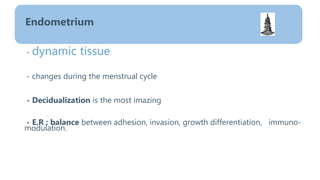
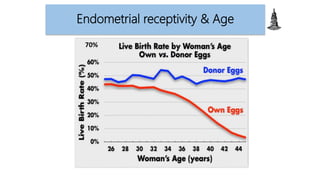
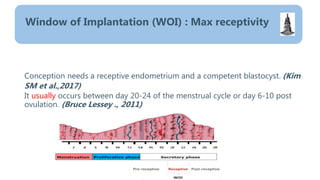
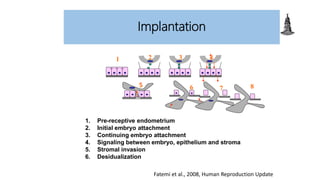
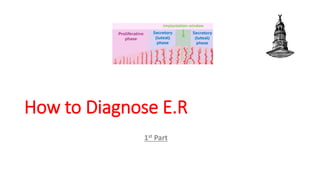
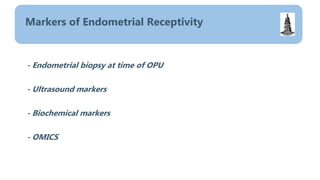
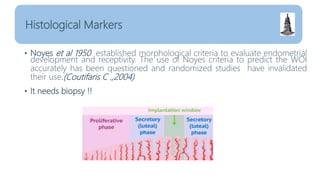
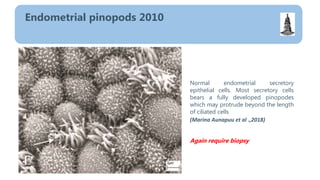
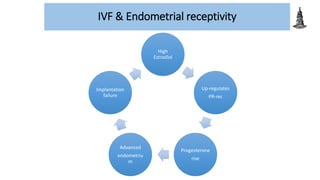
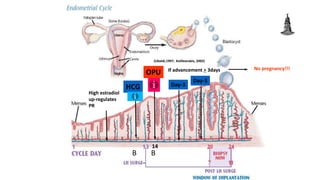
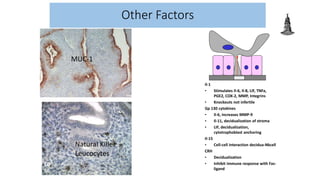
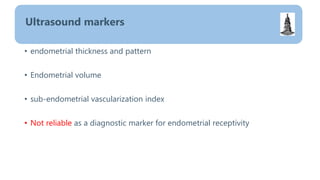
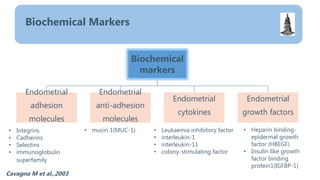
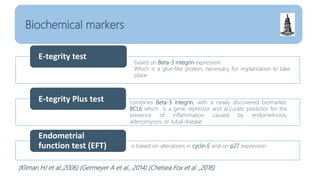

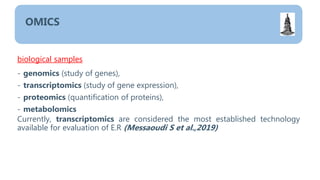
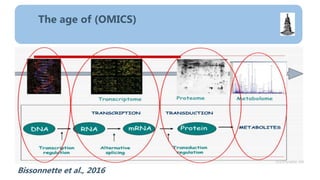
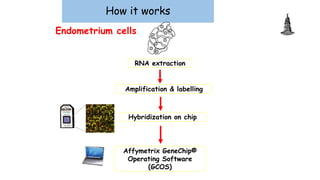
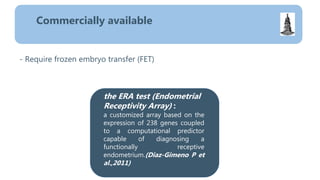
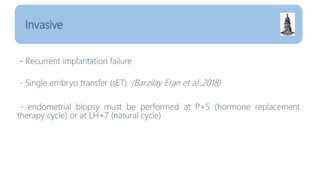
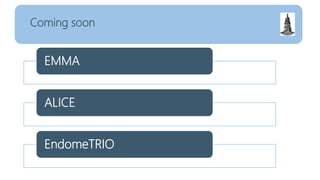
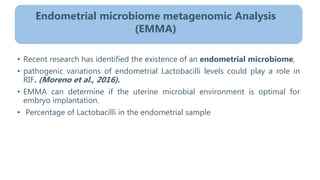
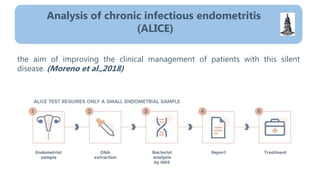
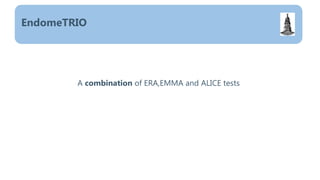
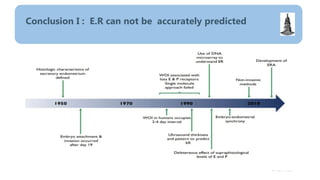

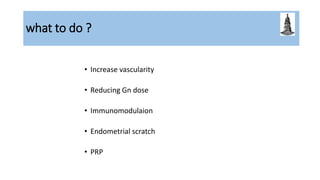
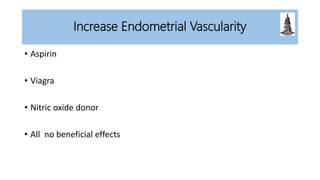
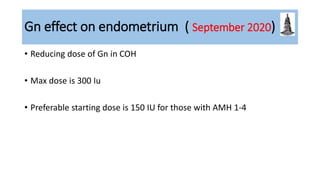
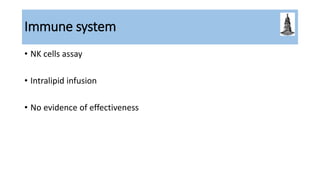
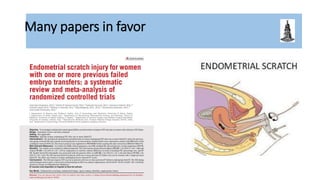
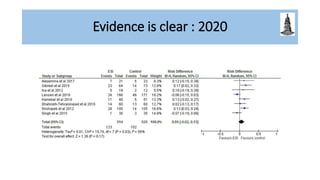
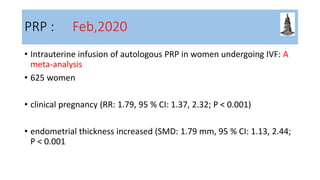
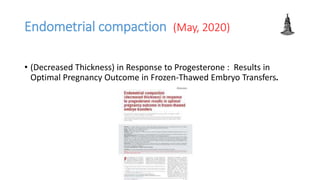



The document discusses endometrial receptivity, emphasizing its importance for successful conception and the complex physiological changes during the menstrual cycle. It explores diagnostic methods, including endometrial biopsies, ultrasound, and biochemical markers, while critiquing traditional prediction methods and highlighting emerging omics technologies. The conclusion suggests strategies to enhance endometrial receptivity, such as adjusting gonadotropin doses and considering intrauterine procedures like platelet-rich plasma infusion.


![CTEV [ clubfoot] DR ARUN LAL ,DR MOHAMED ASHRAF travancore medical college k...](https://cdn.slidesharecdn.com/ss_thumbnails/ctevclubfootdrarunlaldrmohamedashraftravancoremedicalcollegekollamkeralaindia-260208063247-18fc466c-thumbnail.jpg?width=640&height=640&fit=bounds)


![PERI-PROSTHETIC FRACTURE NAIL-PLATE CONSTRUCT [NPC].pptx](https://cdn.slidesharecdn.com/ss_thumbnails/drarunkumardrmohamedashrafperiprostheticfrasturenail-plateconstructnpc-260209164459-7e9d15a1-thumbnail.jpg?width=640&height=640&fit=bounds)

