








‫ا‬ ِ‫ن‬ َٰ‫م‬ْ‫ح‬‫ه‬‫الر‬ ِ ‫ه‬‫اَّلل‬ ِ‫م‬ْ‫س‬ِ‫ب‬ِ‫يم‬ ِ‫ح‬‫ه‬‫لر‬
EBM IS CHANGING
ATTITUDES IN
GYNECOLOGIC PRACTICE
kasr al ainy school of Medicine
Cairo University
WHY
 Clinical medicine is currently in transition
from experience-oriented practice to an
evidence-based one which requires the best
available evidence that answers our clinical
questions
FOR
 Better efficacy
 Better safety
HOW RCTS WOULD
CHANGE ATTITUDE
THE BEST MODEL
 Breech Trial
WHAT ABOUT GYNECOLOGY
 HRT: WHI study
OUTLINE OF THIS TALK
 Why changing attitude
 How RCTs would change attitude
 How Economic evaluation would change attitude
 How Prognosis evaluation would change attitude
 How Diagnostic tests would change attitude
 Others
MODEL IN DETAILS
CURRENT PRACTICE OF O.I IN IUI
Clomiphene Citrate
hMG or FSH
______________________________________________
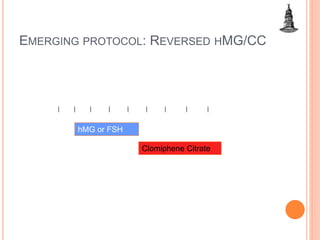
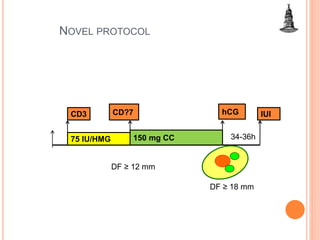
EMERGING PROTOCOL: REVERSED HMG/CC
Clomiphene Citrate
hMG or FSH
______________________________________________
Some cases are CC resistant
 about 25% of IUI cycles suffer from
premature LH surge cancellation.
WHY
IF TRUE : DOUBLE BENEFITS
The use of hMG at start of cycle for few
days will avoid CC resistant cases
use of CC till the day of hCG will prevent
LH surge
RATIONAL
its antiestrogenic effect may suppress
premature LH rise while maintaining a
positive influence on ovarian follicle
development if continued till the day of
hCG
OUTCOME PARAMETERS
Primary outcome parameters
 Clinical pregnancy rate per women randomised
(i.e. fetal heart pulsations demonstrated by TVS at
6 –7 weeks’ gestation)
 Premature LH
Secondary outcome parameters
 E2 levels,
 Number of mature follicles
 Endometrial thickness
On day of HCG
SAMPLE SIZE CALCULATION
 if premature LH surge rate among the hMG only
group is 20%.
 Assuming CC is effective by reducing it by 15%
 Then hMG + CC group will be 5%,
 So we will need to study 75 couples in each arm
in order to reach a power of 80%.
DROP OUT CASES
 In order to compensate for discontinuations, we
recruited 115 women in each arm
 If more than 10% drop out cases, this would
affect the validity of the trial
18
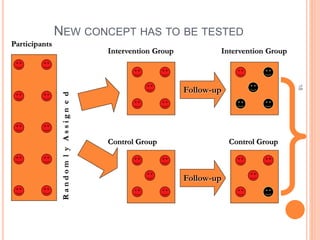
NEW CONCEPT HAS TO BE TESTED
Participants
RandomlyAssigned
Intervention Group
Control Group
Follow-up
Follow-up
Intervention Group
Control Group
NOVEL PROTOCOL
75 IU/HMG
CD3 CD?7
150 mg CC
hCG IUI
DF ≥ 18 mm
34-36h
DF ≥ 12 mm
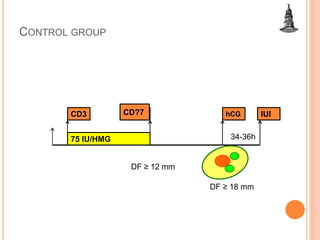
CONTROL GROUP
75 IU/HMG
CD3 hCG IUI
DF ≥ 18 mm
CD7
34-36h
DF ≥ 12 mm
CD?7
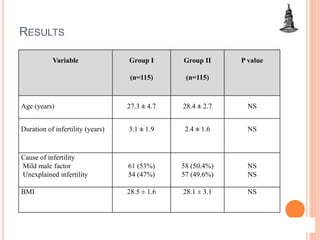
RESULTS
Variable Group I
(n=115)
Group II
(n=115)
P value
Age (years) 27.3 ± 4.7 28.4 ± 2.7 NS
Duration of infertility (years) 3.1 ± 1.9 2.4 ± 1.6 NS
Cause of infertility
Mild male factor
Unexplained infertility
61 (53%)
54 (47%)
58 (50.4%)
57 (49.6%)
NS
NS
BMI 28.5 ± 1.6 28.1 ± 3.1 NS
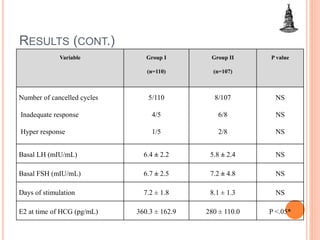
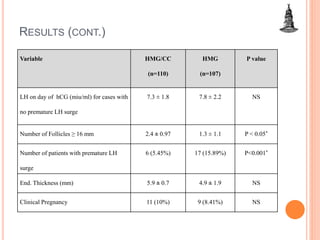
RESULTS (CONT.)
Variable Group I
(n=110)
Group II
(n=107)
P value
Number of cancelled cycles
Inadequate response
Hyper response
5/110
4/5
1/5
8/107
6/8
2/8
NS
NS
NS
Basal LH (mIU/mL) 6.4 ± 2.2 5.8 ± 2.4 NS
Basal FSH (mIU/mL) 6.7 ± 2.5 7.2 ± 4.8 NS
Days of stimulation 7.2 ± 1.8 8.1 ± 1.3 NS
E2 at time of HCG (pg/mL) 360.3 ± 162.9 280 ± 110.0 P <.05*
RESULTS (CONT.)
Variable HMG/CC
(n=110)
HMG
(n=107)
P value
LH on day of hCG (miu/ml) for cases with
no premature LH surge
7.3 ± 1.8 7.8 ± 2.2 NS
Number of Follicles ≥ 16 mm 2.4 ± 0.97 1.3 ± 1.1 P < 0.05*
Number of patients with premature LH
surge
6 (5.45%) 17 (15.89%) P<0.001*
End. Thickness (mm) 5.9 ± 0.7 4.9 ± 1.9 NS
Clinical Pregnancy 11 (10%) 9 (8.41%) NS
FOR WHOM
 This protocol is especially suitable for young
women, for those with unexplained infertility or mild
male factor i.e good responders
EVIDENCE BASED PROGNOSIS
EVALUATION WOULD CHANGE
ATTITUDES
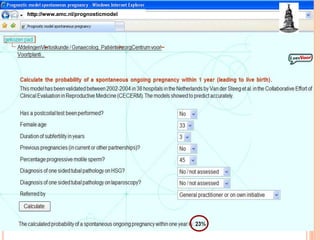
IN INFERTILITY: HOW TO ESTIMATE
 Chance to conceive naturally (home conception)
(treatment independent pregnancy)
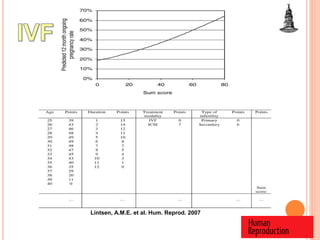
 Chance to get pregnant after IVF
http://www.amc.nl/prognosticmodelhttp://www.amc.nl/prognosticmodel
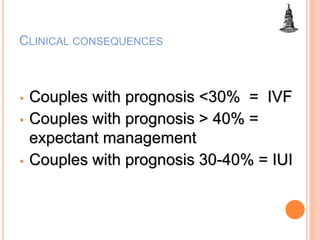
CLINICAL CONSEQUENCES
• Couples with prognosis <30% = IVF
• Couples with prognosis > 40% =
expectant management
• Couples with prognosis 30-40% = IUI
Lintsen, A.M.E. et al. Hum. Reprod. 2007
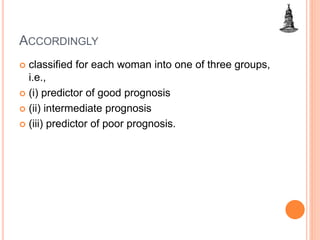
ACCORDINGLY
 classified for each woman into one of three groups,
i.e.,
 (i) predictor of good prognosis
 (ii) intermediate prognosis
 (iii) predictor of poor prognosis.
EVIDENCE BASED DIAGNOSIS WOULD
CHANGE YOUR ATTITUDE
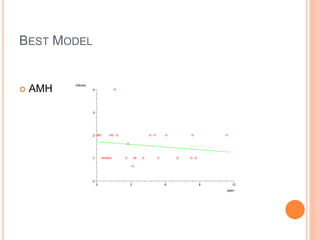
BEST MODEL
 AMH
0 3 6 9 12
0
1
2
3
4
follicles
AMH
THE MOST RECENTLY EMERGING ATTITUDE
Cytogenetic Medicine
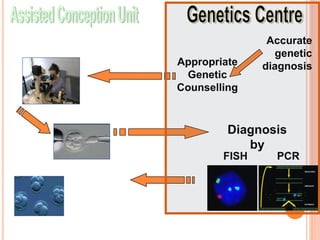
Embryo biopsy
Diagnosis
by
Transfer
2 unaffected
embryos
Fertilisation in vitro
(IVF or ICSI)
PCRFISH
Accurate
genetic
diagnosisAppropriate
Genetic
Counselling
DENATURING
ANNEALING
EXTENSION
PRIMER
TAQ
TAQ
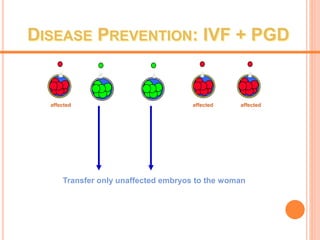
DISEASE PREVENTION: IVF + PGD
Transfer only unaffected embryos to the woman
affected affectedaffected
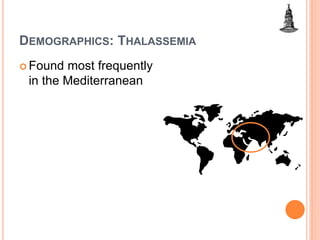
DEMOGRAPHICS: THALASSEMIA
 Found most frequently
in the Mediterranean
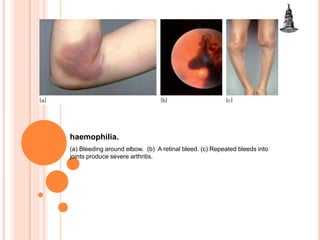
haemophilia.
(a) Bleeding around elbow. (b) A retinal bleed. (c) Repeated bleeds into
joints produce severe arthritis.
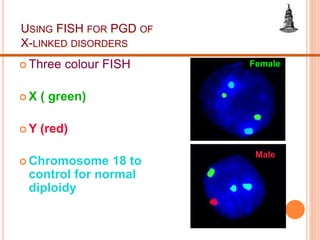
USING FISH FOR PGD OF
X-LINKED DISORDERS
 Three colour FISH
 X ( green)
 Y (red)
 Chromosome 18 to
control for normal
diploidy
Male
Female
EVIDENCE BASED ECONOMIC
ANALYSIS WOULD CHANGE
ATTITUDE: GN
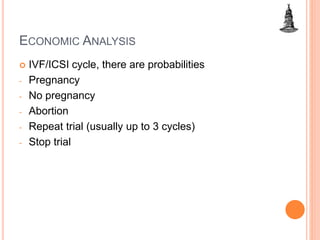
ECONOMIC ANALYSIS
 IVF/ICSI cycle, there are probabilities
- Pregnancy
- No pregnancy
- Abortion
- Repeat trial (usually up to 3 cycles)
- Stop trial
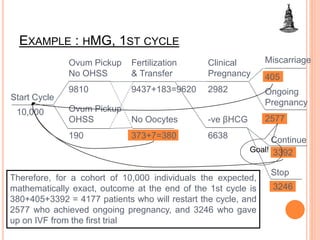
EXAMPLE : HMG, 1ST CYCLE
Start Cycle
10,000
Ovum Pickup
No OHSS
Ovum Pickup
OHSS
9810
190
Fertilization
& Transfer
No Oocytes
373+7=380
9437+183=9620
Clinical
Pregnancy
-ve βHCG
2982
6638
Ongoing
Pregnancy
Miscarriage
405
2577
3246
3392
Continue
Stop
Goal!
Therefore, for a cohort of 10,000 individuals the expected,
mathematically exact, outcome at the end of the 1st cycle is
380+405+3392 = 4177 patients who will restart the cycle, and
2577 who achieved ongoing pregnancy, and 3246 who gave
up on IVF from the first trial
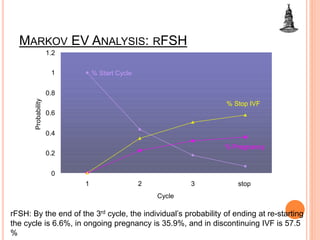
MARKOV EV ANALYSIS: RFSH
rFSH: By the end of the 3rd cycle, the individual’s probability of ending at re-starting
the cycle is 6.6%, in ongoing pregnancy is 35.9%, and in discontinuing IVF is 57.5
%
% Start Cycle
% Pregnancy
% Stop IVF
0
0.2
0.4
0.6
0.8
1
1.2
1 2 3 stop
Cycle
Probability
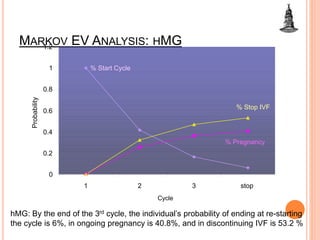
MARKOV EV ANALYSIS: HMG
% Start Cycle
% Pregnancy
% Stop IVF
0
0.2
0.4
0.6
0.8
1
1.2
1 2 3 stop
Cycle
Probability
hMG: By the end of the 3rd cycle, the individual’s probability of ending at re-starting
the cycle is 6%, in ongoing pregnancy is 40.8%, and in discontinuing IVF is 53.2 %
HOW TO MAKE DECISION ABOUT DRUG
OTHERS
IN IVF
 Multiple pregnancy is no longer considered as a
bless
 Mild IVF
 Blastocyst transfer
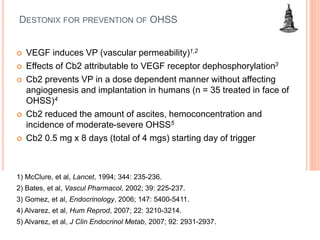
DESTONIX FOR PREVENTION OF OHSS
 VEGF induces VP (vascular permeability)1,2
 Effects of Cb2 attributable to VEGF receptor dephosphorylation3
 Cb2 prevents VP in a dose dependent manner without affecting
angiogenesis and implantation in humans (n = 35 treated in face of
OHSS)4
 Cb2 reduced the amount of ascites, hemoconcentration and
incidence of moderate-severe OHSS5
 Cb2 0.5 mg x 8 days (total of 4 mgs) starting day of trigger
1) McClure, et al, Lancet, 1994; 344: 235-236.
2) Bates, et al, Vascul Pharmacol, 2002; 39: 225-237.
3) Gomez, et al, Endocrinology, 2006; 147: 5400-5411.
4) Alvarez, et al, Hum Reprod, 2007; 22: 3210-3214.
5) Alvarez, et al, J Clin Endocrinol Metab, 2007; 92: 2931-2937.
PCOS
 Metformin is not an effective addition to
clomifene citrate as the primary method of inducing
ovulation in women with PCOS
 It can be added in cases with CC resistant women
BMJ & NEJM studies
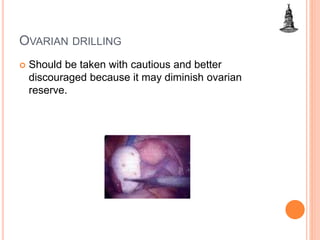
OVARIAN DRILLING
 Should be taken with cautious and better
discouraged because it may diminish ovarian
reserve.
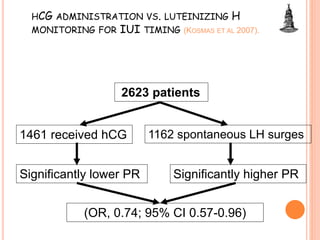
HCG ADMINISTRATION VS. LUTEINIZING H
MONITORING FOR IUI TIMING (KOSMAS ET AL 2007).
2623 patients
1461 received hCG 1162 spontaneous LH surges
Significantly lower PR Significantly higher PR
(OR, 0.74; 95% CI 0.57-0.96)
ET
 Women undergoing in vitro fertilisation treatment
should be offered ultrasound-guided embryo
transfer because this improves pregnancy rates.
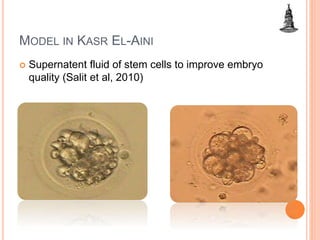
MODEL IN KASR EL-AINI
 Supernatent fluid of stem cells to improve embryo
quality (Salit et al, 2010)
WHY EVIDENCE BASED TREATMENT
For Tomorrow Better
Health
THANK YOU
Dr. Hesham Al-Inany MD, PhD
e-mail : hesham@khosoba.com

How evidence can change practice

  • 1.
    ‫ا‬ ِ‫ن‬ َٰ‫م‬ْ‫ح‬‫ه‬‫الر‬ِ ‫ه‬‫اَّلل‬ ِ‫م‬ْ‫س‬ِ‫ب‬ِ‫يم‬ ِ‫ح‬‫ه‬‫لر‬
  • 2.
    EBM IS CHANGING ATTITUDESIN GYNECOLOGIC PRACTICE kasr al ainy school of Medicine Cairo University
  • 3.
    WHY  Clinical medicineis currently in transition from experience-oriented practice to an evidence-based one which requires the best available evidence that answers our clinical questions
  • 4.
  • 5.
  • 6.
    THE BEST MODEL Breech Trial
  • 7.
  • 8.
    OUTLINE OF THISTALK  Why changing attitude  How RCTs would change attitude  How Economic evaluation would change attitude  How Prognosis evaluation would change attitude  How Diagnostic tests would change attitude  Others
  • 9.
  • 10.
    CURRENT PRACTICE OFO.I IN IUI Clomiphene Citrate hMG or FSH ______________________________________________
  • 11.
    EMERGING PROTOCOL: REVERSEDHMG/CC Clomiphene Citrate hMG or FSH ______________________________________________
  • 12.
    Some cases areCC resistant  about 25% of IUI cycles suffer from premature LH surge cancellation. WHY
  • 13.
    IF TRUE :DOUBLE BENEFITS The use of hMG at start of cycle for few days will avoid CC resistant cases use of CC till the day of hCG will prevent LH surge
  • 14.
    RATIONAL its antiestrogenic effectmay suppress premature LH rise while maintaining a positive influence on ovarian follicle development if continued till the day of hCG
  • 15.
    OUTCOME PARAMETERS Primary outcomeparameters  Clinical pregnancy rate per women randomised (i.e. fetal heart pulsations demonstrated by TVS at 6 –7 weeks’ gestation)  Premature LH Secondary outcome parameters  E2 levels,  Number of mature follicles  Endometrial thickness On day of HCG
  • 16.
    SAMPLE SIZE CALCULATION if premature LH surge rate among the hMG only group is 20%.  Assuming CC is effective by reducing it by 15%  Then hMG + CC group will be 5%,  So we will need to study 75 couples in each arm in order to reach a power of 80%.
  • 17.
    DROP OUT CASES In order to compensate for discontinuations, we recruited 115 women in each arm  If more than 10% drop out cases, this would affect the validity of the trial
  • 18.
    18 NEW CONCEPT HASTO BE TESTED Participants RandomlyAssigned Intervention Group Control Group Follow-up Follow-up Intervention Group Control Group
  • 19.
    NOVEL PROTOCOL 75 IU/HMG CD3CD?7 150 mg CC hCG IUI DF ≥ 18 mm 34-36h DF ≥ 12 mm
  • 20.
    CONTROL GROUP 75 IU/HMG CD3hCG IUI DF ≥ 18 mm CD7 34-36h DF ≥ 12 mm CD?7
  • 21.
    RESULTS Variable Group I (n=115) GroupII (n=115) P value Age (years) 27.3 ± 4.7 28.4 ± 2.7 NS Duration of infertility (years) 3.1 ± 1.9 2.4 ± 1.6 NS Cause of infertility Mild male factor Unexplained infertility 61 (53%) 54 (47%) 58 (50.4%) 57 (49.6%) NS NS BMI 28.5 ± 1.6 28.1 ± 3.1 NS
  • 22.
    RESULTS (CONT.) Variable GroupI (n=110) Group II (n=107) P value Number of cancelled cycles Inadequate response Hyper response 5/110 4/5 1/5 8/107 6/8 2/8 NS NS NS Basal LH (mIU/mL) 6.4 ± 2.2 5.8 ± 2.4 NS Basal FSH (mIU/mL) 6.7 ± 2.5 7.2 ± 4.8 NS Days of stimulation 7.2 ± 1.8 8.1 ± 1.3 NS E2 at time of HCG (pg/mL) 360.3 ± 162.9 280 ± 110.0 P <.05*
  • 23.
    RESULTS (CONT.) Variable HMG/CC (n=110) HMG (n=107) Pvalue LH on day of hCG (miu/ml) for cases with no premature LH surge 7.3 ± 1.8 7.8 ± 2.2 NS Number of Follicles ≥ 16 mm 2.4 ± 0.97 1.3 ± 1.1 P < 0.05* Number of patients with premature LH surge 6 (5.45%) 17 (15.89%) P<0.001* End. Thickness (mm) 5.9 ± 0.7 4.9 ± 1.9 NS Clinical Pregnancy 11 (10%) 9 (8.41%) NS
  • 24.
    FOR WHOM  Thisprotocol is especially suitable for young women, for those with unexplained infertility or mild male factor i.e good responders
  • 25.
  • 26.
    IN INFERTILITY: HOWTO ESTIMATE  Chance to conceive naturally (home conception) (treatment independent pregnancy)  Chance to get pregnant after IVF
  • 27.
  • 28.
    CLINICAL CONSEQUENCES • Coupleswith prognosis <30% = IVF • Couples with prognosis > 40% = expectant management • Couples with prognosis 30-40% = IUI
  • 29.
    Lintsen, A.M.E. etal. Hum. Reprod. 2007
  • 30.
    ACCORDINGLY  classified foreach woman into one of three groups, i.e.,  (i) predictor of good prognosis  (ii) intermediate prognosis  (iii) predictor of poor prognosis.
  • 31.
    EVIDENCE BASED DIAGNOSISWOULD CHANGE YOUR ATTITUDE
  • 32.
    BEST MODEL  AMH 03 6 9 12 0 1 2 3 4 follicles AMH
  • 33.
    THE MOST RECENTLYEMERGING ATTITUDE Cytogenetic Medicine
  • 35.
    Embryo biopsy Diagnosis by Transfer 2 unaffected embryos Fertilisationin vitro (IVF or ICSI) PCRFISH Accurate genetic diagnosisAppropriate Genetic Counselling DENATURING ANNEALING EXTENSION PRIMER TAQ TAQ
  • 36.
    DISEASE PREVENTION: IVF+ PGD Transfer only unaffected embryos to the woman affected affectedaffected
  • 37.
    DEMOGRAPHICS: THALASSEMIA  Foundmost frequently in the Mediterranean
  • 38.
    haemophilia. (a) Bleeding aroundelbow. (b) A retinal bleed. (c) Repeated bleeds into joints produce severe arthritis.
  • 39.
    USING FISH FORPGD OF X-LINKED DISORDERS  Three colour FISH  X ( green)  Y (red)  Chromosome 18 to control for normal diploidy Male Female
  • 40.
    EVIDENCE BASED ECONOMIC ANALYSISWOULD CHANGE ATTITUDE: GN
  • 41.
    ECONOMIC ANALYSIS  IVF/ICSIcycle, there are probabilities - Pregnancy - No pregnancy - Abortion - Repeat trial (usually up to 3 cycles) - Stop trial
  • 42.
    EXAMPLE : HMG,1ST CYCLE Start Cycle 10,000 Ovum Pickup No OHSS Ovum Pickup OHSS 9810 190 Fertilization & Transfer No Oocytes 373+7=380 9437+183=9620 Clinical Pregnancy -ve βHCG 2982 6638 Ongoing Pregnancy Miscarriage 405 2577 3246 3392 Continue Stop Goal! Therefore, for a cohort of 10,000 individuals the expected, mathematically exact, outcome at the end of the 1st cycle is 380+405+3392 = 4177 patients who will restart the cycle, and 2577 who achieved ongoing pregnancy, and 3246 who gave up on IVF from the first trial
  • 43.
    MARKOV EV ANALYSIS:RFSH rFSH: By the end of the 3rd cycle, the individual’s probability of ending at re-starting the cycle is 6.6%, in ongoing pregnancy is 35.9%, and in discontinuing IVF is 57.5 % % Start Cycle % Pregnancy % Stop IVF 0 0.2 0.4 0.6 0.8 1 1.2 1 2 3 stop Cycle Probability
  • 44.
    MARKOV EV ANALYSIS:HMG % Start Cycle % Pregnancy % Stop IVF 0 0.2 0.4 0.6 0.8 1 1.2 1 2 3 stop Cycle Probability hMG: By the end of the 3rd cycle, the individual’s probability of ending at re-starting the cycle is 6%, in ongoing pregnancy is 40.8%, and in discontinuing IVF is 53.2 %
  • 45.
    HOW TO MAKEDECISION ABOUT DRUG
  • 46.
  • 47.
    IN IVF  Multiplepregnancy is no longer considered as a bless  Mild IVF  Blastocyst transfer
  • 48.
    DESTONIX FOR PREVENTIONOF OHSS  VEGF induces VP (vascular permeability)1,2  Effects of Cb2 attributable to VEGF receptor dephosphorylation3  Cb2 prevents VP in a dose dependent manner without affecting angiogenesis and implantation in humans (n = 35 treated in face of OHSS)4  Cb2 reduced the amount of ascites, hemoconcentration and incidence of moderate-severe OHSS5  Cb2 0.5 mg x 8 days (total of 4 mgs) starting day of trigger 1) McClure, et al, Lancet, 1994; 344: 235-236. 2) Bates, et al, Vascul Pharmacol, 2002; 39: 225-237. 3) Gomez, et al, Endocrinology, 2006; 147: 5400-5411. 4) Alvarez, et al, Hum Reprod, 2007; 22: 3210-3214. 5) Alvarez, et al, J Clin Endocrinol Metab, 2007; 92: 2931-2937.
  • 49.
    PCOS  Metformin isnot an effective addition to clomifene citrate as the primary method of inducing ovulation in women with PCOS  It can be added in cases with CC resistant women BMJ & NEJM studies
  • 50.
    OVARIAN DRILLING  Shouldbe taken with cautious and better discouraged because it may diminish ovarian reserve.
  • 51.
    HCG ADMINISTRATION VS.LUTEINIZING H MONITORING FOR IUI TIMING (KOSMAS ET AL 2007). 2623 patients 1461 received hCG 1162 spontaneous LH surges Significantly lower PR Significantly higher PR (OR, 0.74; 95% CI 0.57-0.96)
  • 52.
    ET  Women undergoingin vitro fertilisation treatment should be offered ultrasound-guided embryo transfer because this improves pregnancy rates.
  • 53.
    MODEL IN KASREL-AINI  Supernatent fluid of stem cells to improve embryo quality (Salit et al, 2010)
  • 54.
    WHY EVIDENCE BASEDTREATMENT For Tomorrow Better Health
  • 55.
    THANK YOU Dr. HeshamAl-Inany MD, PhD e-mail : hesham@khosoba.com