Spectroscopy
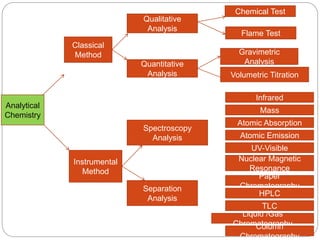
Analytical 
Chemistry 
Spectroscopy 
Analysis 
Separation 
Analysis 
Classical 
Method 
Instrumental 
Method 
Qualitative 
Analysis 
Quantitative 
Analysis 
Chemical Test 
Flame Test 
Gravimetric 
Analysis 
Volumetric Titration 
Infrared 
Mass 
Atomic Absorption 
Atomic Emission 
UV-Visible 
Nuclear Magnetic 
Resonance 
Paper 
Chromatography 
HPLC 
TLC 
Liquid /Gas 
ChromCatoolugmranp hy 
Chromatography
Spectroscopy 
the study of interaction between electromagnetic radiation 
and matters. 
Particles (molecules, ions,atoms) can interact/adsorb a 
quantum of light. 
The instrument that perform the measurement is called 
spectrometer 
Measure the intensity of energy absorbed or emitted 
The plot/graph recorded as a function of 
wavelength/frequency is called Spectrum
Spectroscopy 
Spectra are recorded : 
1. to observe how substance behave at certain 
energy levels 
2. serves as identification tools for chemical 
substance 
3. help predict the behaviour of unknown substance 
or newly synthesized materials from ones already 
characterized
Spectroscopy 
3 types of spectroscopy: 
Absorption spectroscopy – uses electromagnetic 
spectra in which a substance absorbs: IR, NMR 
Emission spectroscopy – uses electromagnetic 
spectra in which a substance emits: Luminescence 
Scattering spectroscopy – measures the amount of 
light that a substance scatter at certain 
wavelengths, incident angles and polarization 
angles: Raman
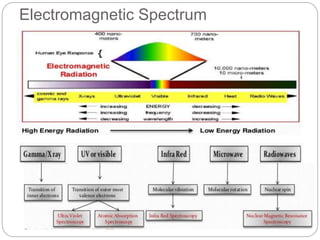
Electromagnetic Spectrum
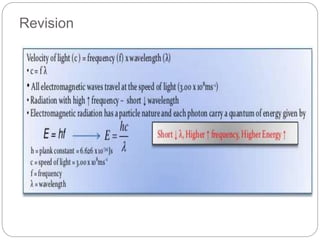
Revision
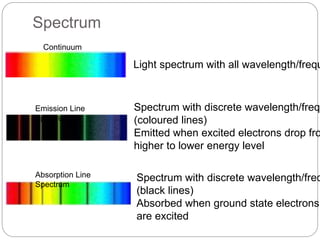
Spectrum 
Continuum 
Spectrum 
Emission Line 
Spectrum 
Absorption Line 
Spectrum 
Light spectrum with all wavelength/frequency 
Spectrum with discrete wavelength/frequency 
(coloured lines) 
Emitted when excited electrons drop from 
higher to lower energy level 
Spectrum with discrete wavelength/frequency 
(black lines) 
Absorbed when ground state electrons 
are excited
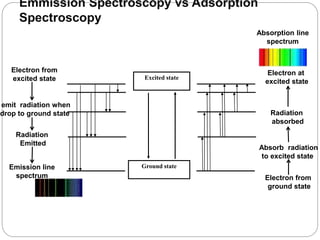
Emmission Spectroscopy vs Adsorption 
Spectroscopy 
Excited state 
Ground state 
Absorption line 
spectrum 
Electron at 
excited state 
Radiation 
absorbed 
Absorb radiation 
to excited state 
Electron from 
ground state 
Electron from 
excited state 
emit radiation when 
drop to ground state 
Radiation 
Emitted 
Emission line 
spectrum
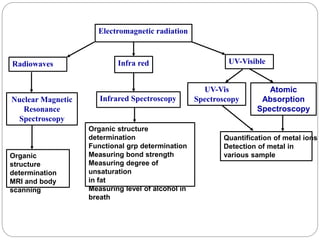
Electromagnetic radiation 
Radiowaves Infra red UV-Visible 
Nuclear Magnetic 
Resonance 
Spectroscopy 
Infrared Spectroscopy 
UV-Vis 
Spectroscopy 
Atomic 
Absorption 
Spectroscopy 
Organic 
structure 
determination 
MRI and body 
scanning 
Organic structure 
determination 
Functional grp determination 
Measuring bond strength 
Measuring degree of 
unsaturation 
in fat 
Measuring level of alcohol in 
breath 
Quantification of metal ions 
Detection of metal in 
various sample

Spectroscopy 5201

  • 1.
  • 2.
    Analytical Chemistry Spectroscopy Analysis Separation Analysis Classical Method Instrumental Method Qualitative Analysis Quantitative Analysis Chemical Test Flame Test Gravimetric Analysis Volumetric Titration Infrared Mass Atomic Absorption Atomic Emission UV-Visible Nuclear Magnetic Resonance Paper Chromatography HPLC TLC Liquid /Gas ChromCatoolugmranp hy Chromatography
  • 3.
    Spectroscopy the studyof interaction between electromagnetic radiation and matters. Particles (molecules, ions,atoms) can interact/adsorb a quantum of light. The instrument that perform the measurement is called spectrometer Measure the intensity of energy absorbed or emitted The plot/graph recorded as a function of wavelength/frequency is called Spectrum
  • 4.
    Spectroscopy Spectra arerecorded : 1. to observe how substance behave at certain energy levels 2. serves as identification tools for chemical substance 3. help predict the behaviour of unknown substance or newly synthesized materials from ones already characterized
  • 5.
    Spectroscopy 3 typesof spectroscopy: Absorption spectroscopy – uses electromagnetic spectra in which a substance absorbs: IR, NMR Emission spectroscopy – uses electromagnetic spectra in which a substance emits: Luminescence Scattering spectroscopy – measures the amount of light that a substance scatter at certain wavelengths, incident angles and polarization angles: Raman
  • 6.
  • 7.
  • 8.
    Spectrum Continuum Spectrum Emission Line Spectrum Absorption Line Spectrum Light spectrum with all wavelength/frequency Spectrum with discrete wavelength/frequency (coloured lines) Emitted when excited electrons drop from higher to lower energy level Spectrum with discrete wavelength/frequency (black lines) Absorbed when ground state electrons are excited
  • 9.
    Emmission Spectroscopy vsAdsorption Spectroscopy Excited state Ground state Absorption line spectrum Electron at excited state Radiation absorbed Absorb radiation to excited state Electron from ground state Electron from excited state emit radiation when drop to ground state Radiation Emitted Emission line spectrum
  • 10.
    Electromagnetic radiation RadiowavesInfra red UV-Visible Nuclear Magnetic Resonance Spectroscopy Infrared Spectroscopy UV-Vis Spectroscopy Atomic Absorption Spectroscopy Organic structure determination MRI and body scanning Organic structure determination Functional grp determination Measuring bond strength Measuring degree of unsaturation in fat Measuring level of alcohol in breath Quantification of metal ions Detection of metal in various sample