Downloaded 1,197 times
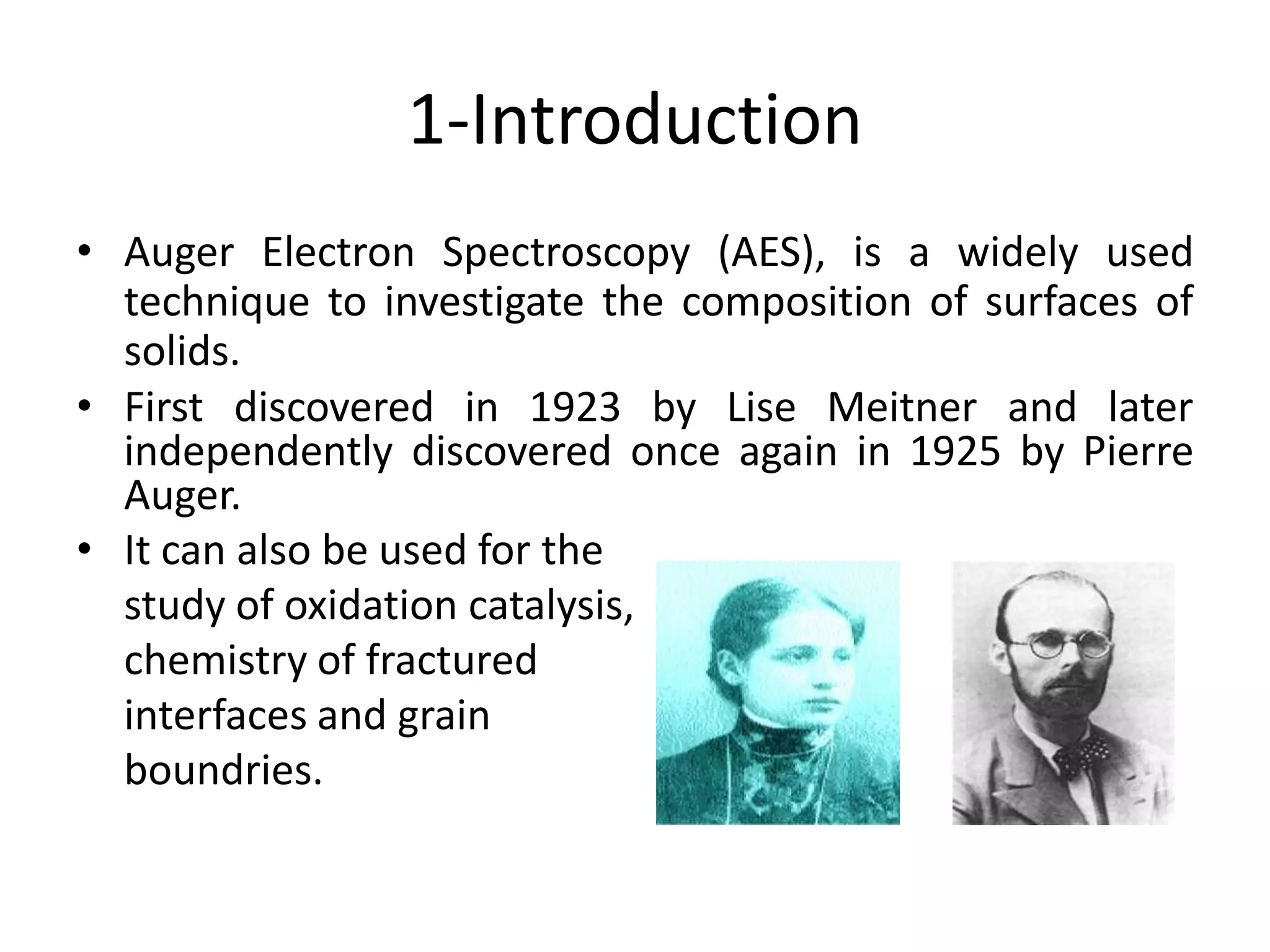


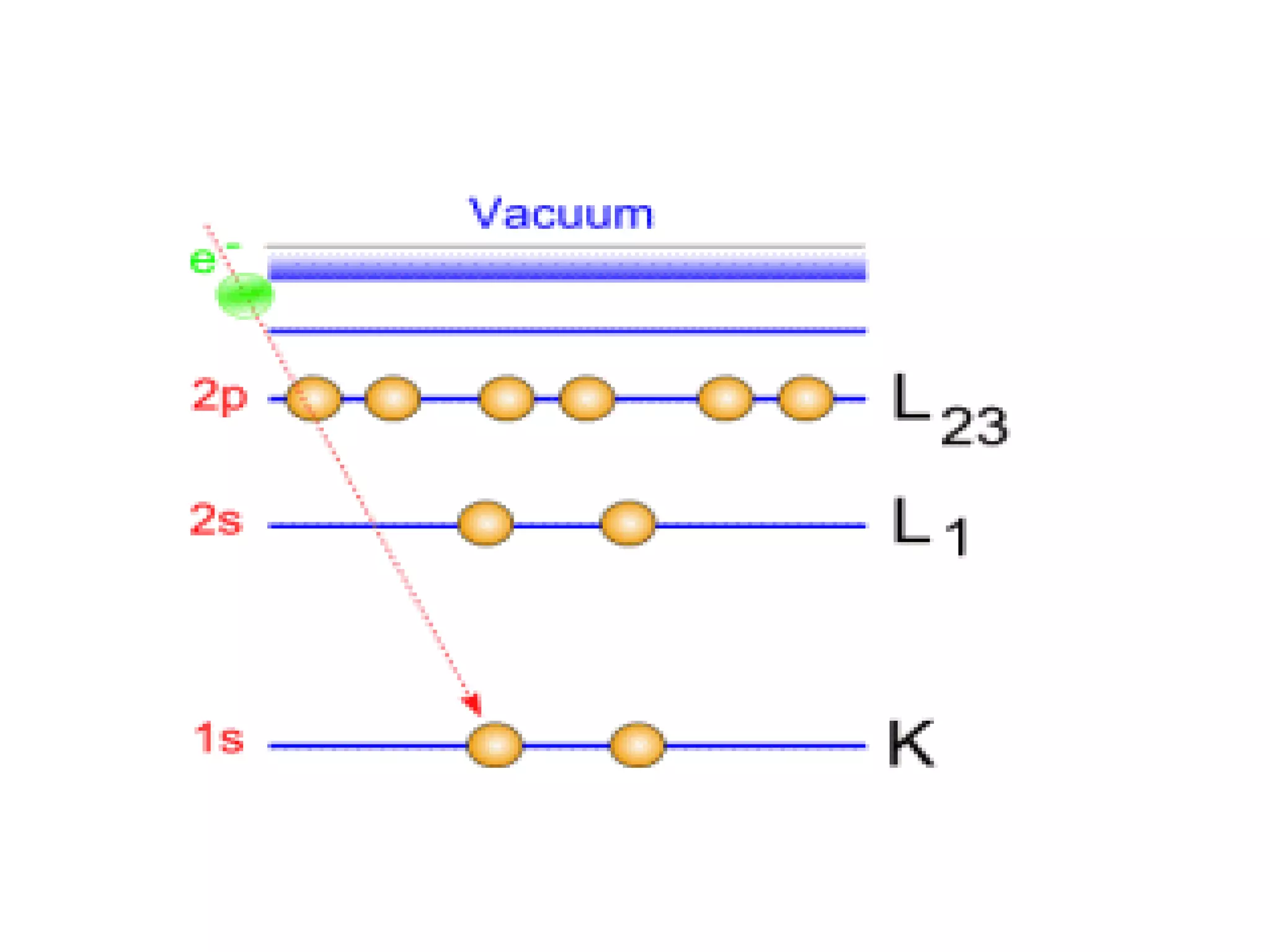









Auger Electron Spectroscopy (AES) uses a focused electron beam to eject inner shell electrons from the surface of a sample. The vacancies are filled by higher-energy electrons, emitting characteristic "Auger electrons" that can be analyzed to determine the elemental composition of the top few atomic layers. The key components of an AES system are an electron gun, electron energy analyzer, electron detector, and ultra-high vacuum environment. AES provides surface sensitivity, elemental analysis, and depth profiling capabilities. Limitations include inability to analyze non-conductive samples and lack of hydrogen/helium detection.


