University of Salahaddin 
College of Education 
Environmental Science department 
1 
Halala Rahman Qadir 
M.Sc. Plant physiology
The objectives are: 
Definition of soil colour 
2 
Causes of soil colour 
Classification of soil colour 
Causes of soil colour
Definition of Soil colour 
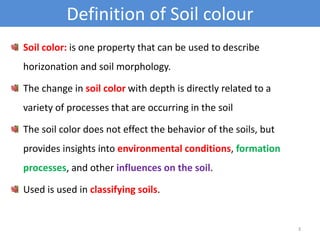
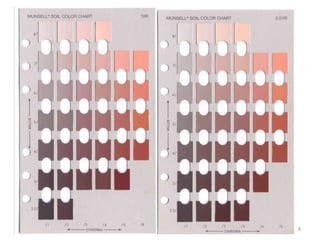
Soil color: is one property that can be used to describe 
horizonation and soil morphology. 
The change in soil color with depth is directly related to a 
variety of processes that are occurring in the soil 
The soil color does not effect the behavior of the soils, but 
provides insights into environmental conditions, formation 
processes, and other influences on the soil. 
Used is used in classifying soils. 
3
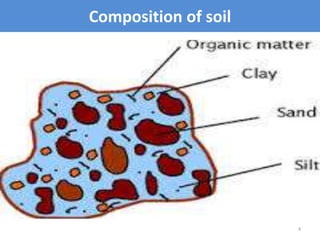
Composition of soil 
4
Soil colour 
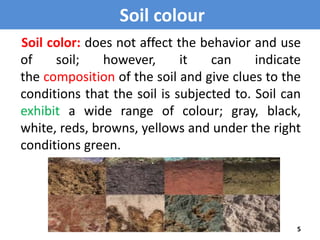
Soil color: does not affect the behavior and use 
of soil; however, it can indicate 
the composition of the soil and give clues to the 
conditions that the soil is subjected to. Soil can 
exhibit a wide range of colour; gray, black, 
white, reds, browns, yellows and under the right 
conditions green. 
5
Definition of vascular tissue 
Vascular tissue: is a complex 
conducting tissue, formed of more than 
one cell type, found in vascular plants. The 
primary components of vascular tissue are 
the xylem and phloem. 
6 
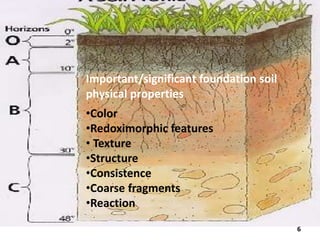
Important/significant foundation soil 
physical properties 
•Color 
•Redoximorphic features 
• Texture 
•Structure 
•Consistence 
•Coarse fragments 
•Reaction
Classification of Soil colour 
Soil colour is usually due to 3 main pigments: 
•black—from organic matter 
•red—from iron and aluminium oxides 
•white—from silicates and salt. 
Colour can be a useful indicator of some of the 
general properties of a soil, as well as some of the 
chemical processes that are occurring beneath 
the surface. 
7
8
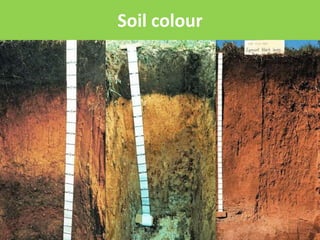
Soil colour 
9
Causes of sol colour 
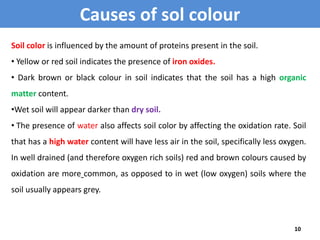
Soil color is influenced by the amount of proteins present in the soil. 
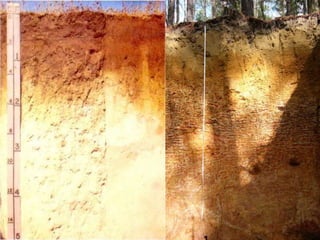
• Yellow or red soil indicates the presence of iron oxides. 
• Dark brown or black colour in soil indicates that the soil has a high organic 
matter content. 
•Wet soil will appear darker than dry soil. 
• The presence of water also affects soil color by affecting the oxidation rate. Soil 
that has a high water content will have less air in the soil, specifically less oxygen. 
In well drained (and therefore oxygen rich soils) red and brown colours caused by 
oxidation are more common, as opposed to in wet (low oxygen) soils where the 
soil usually appears grey. 
10
11 
Types of vascular tissue-xylem
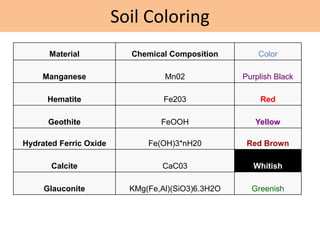
Soil Coloring 
Material Chemical Composition Color 
Manganese Mn02 Purplish Black 
Hematite Fe203 Red 
Geothite FeOOH Yellow 
Hydrated Ferric Oxide Fe(OH)3*nH20 Red Brown 
Calcite CaC03 Whitish 
Glauconite KMg(Fe,Al)(SiO3)6.3H2O Greenish
13
14

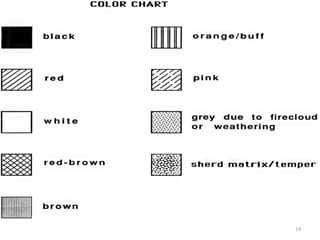
Soil colour

  • 1.
    University of Salahaddin College of Education Environmental Science department 1 Halala Rahman Qadir M.Sc. Plant physiology
  • 2.
    The objectives are: Definition of soil colour 2 Causes of soil colour Classification of soil colour Causes of soil colour
  • 3.
    Definition of Soilcolour Soil color: is one property that can be used to describe horizonation and soil morphology. The change in soil color with depth is directly related to a variety of processes that are occurring in the soil The soil color does not effect the behavior of the soils, but provides insights into environmental conditions, formation processes, and other influences on the soil. Used is used in classifying soils. 3
  • 4.
  • 5.
    Soil colour Soilcolor: does not affect the behavior and use of soil; however, it can indicate the composition of the soil and give clues to the conditions that the soil is subjected to. Soil can exhibit a wide range of colour; gray, black, white, reds, browns, yellows and under the right conditions green. 5
  • 6.
    Definition of vasculartissue Vascular tissue: is a complex conducting tissue, formed of more than one cell type, found in vascular plants. The primary components of vascular tissue are the xylem and phloem. 6 Important/significant foundation soil physical properties •Color •Redoximorphic features • Texture •Structure •Consistence •Coarse fragments •Reaction
  • 7.
    Classification of Soilcolour Soil colour is usually due to 3 main pigments: •black—from organic matter •red—from iron and aluminium oxides •white—from silicates and salt. Colour can be a useful indicator of some of the general properties of a soil, as well as some of the chemical processes that are occurring beneath the surface. 7
  • 8.
  • 9.
  • 10.
    Causes of solcolour Soil color is influenced by the amount of proteins present in the soil. • Yellow or red soil indicates the presence of iron oxides. • Dark brown or black colour in soil indicates that the soil has a high organic matter content. •Wet soil will appear darker than dry soil. • The presence of water also affects soil color by affecting the oxidation rate. Soil that has a high water content will have less air in the soil, specifically less oxygen. In well drained (and therefore oxygen rich soils) red and brown colours caused by oxidation are more common, as opposed to in wet (low oxygen) soils where the soil usually appears grey. 10
  • 11.
    11 Types ofvascular tissue-xylem
  • 12.
    Soil Coloring MaterialChemical Composition Color Manganese Mn02 Purplish Black Hematite Fe203 Red Geothite FeOOH Yellow Hydrated Ferric Oxide Fe(OH)3*nH20 Red Brown Calcite CaC03 Whitish Glauconite KMg(Fe,Al)(SiO3)6.3H2O Greenish
  • 13.
  • 14.