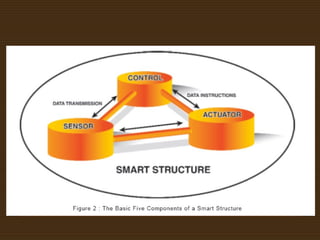
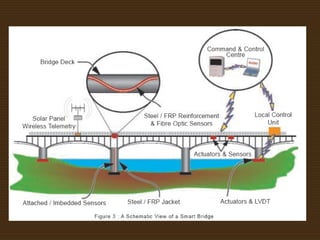


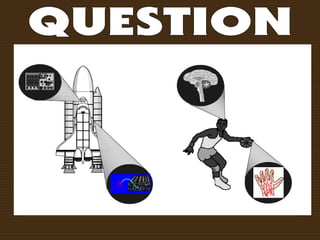
Smart structure incorporates
sensors and actuators into the material of
the structure in such a way that enables
the structure to sense its environment and
then respond appropriately in a pre-
programmed manner.
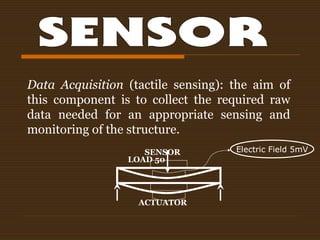
Data Acquisition (tactile sensing): the aim of
this component is to collect the required raw
data needed for an appropriate sensing and
monitoring of the structure.
LOAD 50
SENSOR
ACTUATOR
Electric Field 5mV
Data Transmission (sensory nerves): the
purpose of this part is to forward the raw data to
the local and/or central command and control
units.
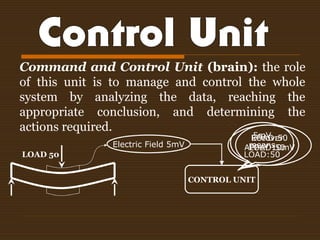
Command and Control Unit (brain): the role
of this unit is to manage and control the whole
system by analyzing the data, reaching the
appropriate conclusion, and determining the
actions required.
LOAD 50
Electric Field 5mV
CONTROL UNIT
5mV
means
LOAD:50
Recover
LOAD:50
LOAD:50
APPLY 10mV
Data Instructions (motor nerves): the
function of this part is to transmit the
decisions and the associated instructions back
to the members of the structure.
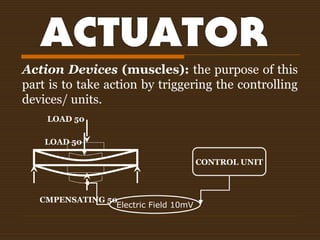
Action Devices (muscles): the purpose of this
part is to take action by triggering the controlling
devices/ units.
CONTROL UNIT
LOAD 50
Electric Field 10mV
LOAD 50
CMPENSATING 50
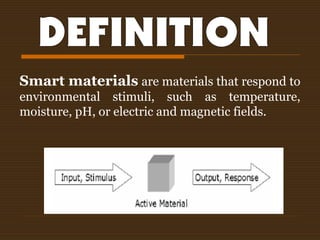
Smart materials are materials that respond to
environmental stimuli, such as temperature,
moisture, pH, or electric and magnetic fields.
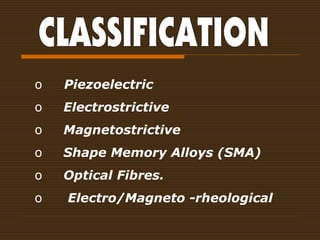
o Piezoelectric
o Electrostrictive
o Magnetostrictive
o Shape Memory Alloys (SMA)
o Optical Fibres.
o Electro/Magneto -rheological
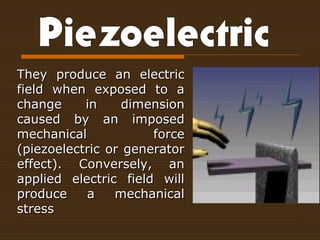
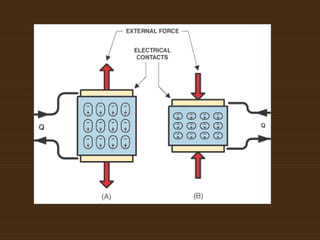
They produce an electricThey produce an electric
field when exposed to afield when exposed to a
change in dimensionchange in dimension
caused by an imposedcaused by an imposed
mechanical forcemechanical force
(piezoelectric or generator(piezoelectric or generator
effect). Conversely, aneffect). Conversely, an
applied electric field willapplied electric field will
produce a mechanicalproduce a mechanical
stressstress
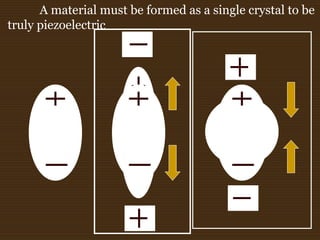
A material must be formed as a single crystal to be
truly piezoelectric
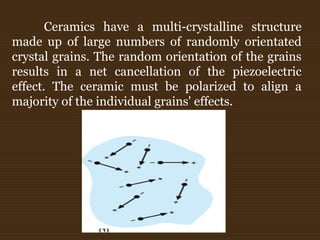
Ceramics have a multi-crystalline structure
made up of large numbers of randomly orientated
crystal grains. The random orientation of the grains
results in a net cancellation of the piezoelectric
effect. The ceramic must be polarized to align a
majority of the individual grains' effects.
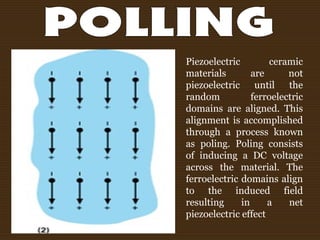
Piezoelectric ceramic
materials are not
piezoelectric until the
random ferroelectric
domains are aligned. This
alignment is accomplished
through a process known
as poling. Poling consists
of inducing a DC voltage
across the material. The
ferroelectric domains align
to the induced field
resulting in a net
piezoelectric effect
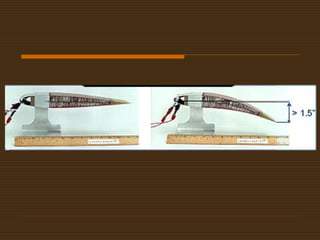
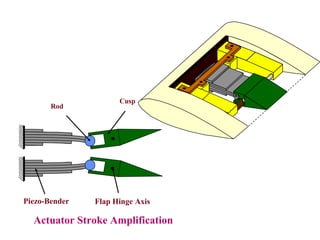
Actuator Stroke Amplification
Rod
Cusp
Piezo-Bender Flap Hinge Axis
Electrostrictive. This material has the same
properties as piezoelectric material, but the
mechanical change is proportional to the square of
the electric field. This characteristic will always
produce displacements in the same direction.
PMN (lead magnesium niobate).
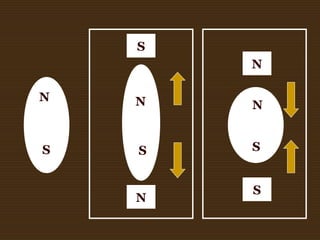
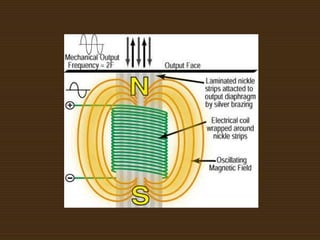
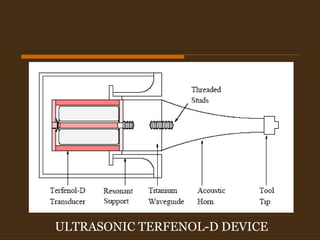
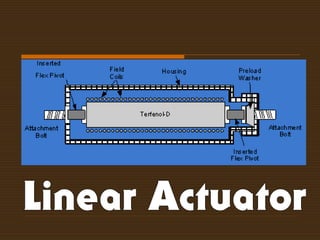
Magnetostrictive. When subjected to a
magnetic field, and vice versa (direct and converse
effects), this material will undergo an induced
mechanical strain. Consequently, it can be used as
sensors and/or actuators. (Example: Terfenol-D.)
N
S
N
S
N
S
S
N
N
S
ULTRASONIC TERFENOL-D DEVICE
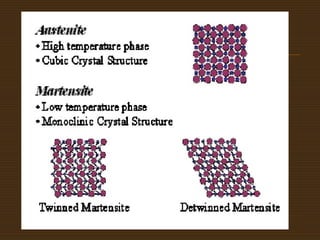
Shape Memory Alloys. When subjected to a
thermal field, this material will undergo phase
transformations which will produce shape
changes. It deforms to its ‘martensitic’ condition
with low temperature, and regains its original
shape in its ‘austenite’ condition when heated
(high temperature). (Example: Nitinol TiNi.)
Nitinol is an alloy based on Ni and Ti. It exhibits the
shape-memory effect (SME). Above a certain
temperature it exists in a phase called ‘austenite’, and
makes a transition to ‘martensite’ on cooling through
that temperature. It can be deformed severely when in
the martensitic phase, and yet it recovers its shape on
heating to the austenitic phase. In other words, it
behaves as if it has a memory of the shape it had while
in the austenitic phase. This effect finds two types of
uses in smart structures.
Either the shape-recovery tendency is used for
achieving large-throw actuation; or, if the material is
prevented from recovering its shape, a strong internal
stress is generated which changes the effective
stiffness of the medium, thus finding uses in
vibration-control applications. A large number of
applications exist for shape-memory alloys (SMAs)
like Nitinol. An example of an actively smart structure
in this context is the folding-box type protective
shroud. On being heated by solar energy in outer
space, the SMA actuator converts itself from a stowed
to a fully deployed (unfolded) shape, thus providing
protection to the satellite from being hit by the debris
of earlier or abandoned satellite parts.
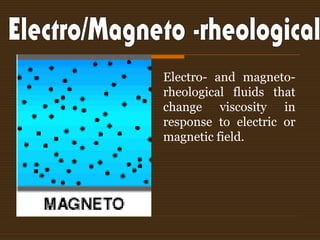
Electro- and magneto-
rheological fluids that
change viscosity in
response to electric or
magnetic field.
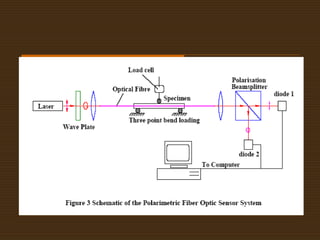
Optical Fibres. Fibres that use intensity,
phase, frequency or polarization of modulation to
measure strain, temperature, electrical/magnetic
fields, pressure and other measurable quantities.
They are excellent sensors.
They are highly compatible with composites
(because both are fibres).
Today, the most promising technologies for lifetime efficiency and
improved reliability include the use of smart materials and structures.
Understanding and controlling the composition and microstructure of
any new materials are the ultimate objectives of research in this field,
and is crucial to the production of good smart materials. The insights
gained by gathering data on the behaviour of a material’s crystal inner
structure as it heats and cools, deforms and changes, will speed the
development of new materials for use in different applications.
Structural ceramics, superconducting wires and nanostructural
materials are good examples of the complex materials that will
fashion nanotechnology. New or advanced materials to reduce weight,
eliminate sound, reflect more light, dampen vibration and handle
more heat will lead to smart structures and systems which will
definitively enhance our quality of life.
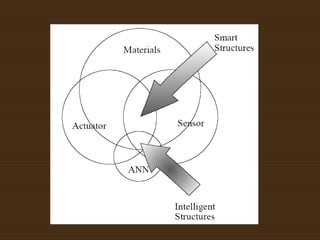
Intelligent structures are smart
structures that have the added capability of
learning and adapting rather than simply
responding in a pre-programmed manner. This
learning and adapting is usually accomplished
by the inclusion of an artificial neural network
(ANN) into the smart structure.
Smart material & structure

Smart material & structure

  • 2.
    Smart structure incorporates sensorsand actuators into the material of the structure in such a way that enables the structure to sense its environment and then respond appropriately in a pre- programmed manner.
  • 6.
    Data Acquisition (tactilesensing): the aim of this component is to collect the required raw data needed for an appropriate sensing and monitoring of the structure. LOAD 50 SENSOR ACTUATOR Electric Field 5mV
  • 7.
    Data Transmission (sensorynerves): the purpose of this part is to forward the raw data to the local and/or central command and control units.
  • 8.
    Command and ControlUnit (brain): the role of this unit is to manage and control the whole system by analyzing the data, reaching the appropriate conclusion, and determining the actions required. LOAD 50 Electric Field 5mV CONTROL UNIT 5mV means LOAD:50 Recover LOAD:50 LOAD:50 APPLY 10mV
  • 9.
    Data Instructions (motornerves): the function of this part is to transmit the decisions and the associated instructions back to the members of the structure.
  • 10.
    Action Devices (muscles):the purpose of this part is to take action by triggering the controlling devices/ units. CONTROL UNIT LOAD 50 Electric Field 10mV LOAD 50 CMPENSATING 50
  • 11.
    Smart materials arematerials that respond to environmental stimuli, such as temperature, moisture, pH, or electric and magnetic fields.
  • 12.
    o Piezoelectric o Electrostrictive oMagnetostrictive o Shape Memory Alloys (SMA) o Optical Fibres. o Electro/Magneto -rheological
  • 13.
    They produce anelectricThey produce an electric field when exposed to afield when exposed to a change in dimensionchange in dimension caused by an imposedcaused by an imposed mechanical forcemechanical force (piezoelectric or generator(piezoelectric or generator effect). Conversely, aneffect). Conversely, an applied electric field willapplied electric field will produce a mechanicalproduce a mechanical stressstress
  • 17.
    A material mustbe formed as a single crystal to be truly piezoelectric
  • 18.
    Ceramics have amulti-crystalline structure made up of large numbers of randomly orientated crystal grains. The random orientation of the grains results in a net cancellation of the piezoelectric effect. The ceramic must be polarized to align a majority of the individual grains' effects.
  • 19.
    Piezoelectric ceramic materials arenot piezoelectric until the random ferroelectric domains are aligned. This alignment is accomplished through a process known as poling. Poling consists of inducing a DC voltage across the material. The ferroelectric domains align to the induced field resulting in a net piezoelectric effect
  • 22.
  • 23.
    Electrostrictive. This materialhas the same properties as piezoelectric material, but the mechanical change is proportional to the square of the electric field. This characteristic will always produce displacements in the same direction. PMN (lead magnesium niobate).
  • 24.
    Magnetostrictive. When subjectedto a magnetic field, and vice versa (direct and converse effects), this material will undergo an induced mechanical strain. Consequently, it can be used as sensors and/or actuators. (Example: Terfenol-D.)
  • 25.
  • 27.
  • 29.
    Shape Memory Alloys.When subjected to a thermal field, this material will undergo phase transformations which will produce shape changes. It deforms to its ‘martensitic’ condition with low temperature, and regains its original shape in its ‘austenite’ condition when heated (high temperature). (Example: Nitinol TiNi.)
  • 30.
    Nitinol is analloy based on Ni and Ti. It exhibits the shape-memory effect (SME). Above a certain temperature it exists in a phase called ‘austenite’, and makes a transition to ‘martensite’ on cooling through that temperature. It can be deformed severely when in the martensitic phase, and yet it recovers its shape on heating to the austenitic phase. In other words, it behaves as if it has a memory of the shape it had while in the austenitic phase. This effect finds two types of uses in smart structures.
  • 31.
    Either the shape-recoverytendency is used for achieving large-throw actuation; or, if the material is prevented from recovering its shape, a strong internal stress is generated which changes the effective stiffness of the medium, thus finding uses in vibration-control applications. A large number of applications exist for shape-memory alloys (SMAs) like Nitinol. An example of an actively smart structure in this context is the folding-box type protective shroud. On being heated by solar energy in outer space, the SMA actuator converts itself from a stowed to a fully deployed (unfolded) shape, thus providing protection to the satellite from being hit by the debris of earlier or abandoned satellite parts.
  • 34.
    Electro- and magneto- rheologicalfluids that change viscosity in response to electric or magnetic field.
  • 36.
    Optical Fibres. Fibresthat use intensity, phase, frequency or polarization of modulation to measure strain, temperature, electrical/magnetic fields, pressure and other measurable quantities. They are excellent sensors. They are highly compatible with composites (because both are fibres).
  • 38.
    Today, the mostpromising technologies for lifetime efficiency and improved reliability include the use of smart materials and structures. Understanding and controlling the composition and microstructure of any new materials are the ultimate objectives of research in this field, and is crucial to the production of good smart materials. The insights gained by gathering data on the behaviour of a material’s crystal inner structure as it heats and cools, deforms and changes, will speed the development of new materials for use in different applications. Structural ceramics, superconducting wires and nanostructural materials are good examples of the complex materials that will fashion nanotechnology. New or advanced materials to reduce weight, eliminate sound, reflect more light, dampen vibration and handle more heat will lead to smart structures and systems which will definitively enhance our quality of life.
  • 39.
    Intelligent structures aresmart structures that have the added capability of learning and adapting rather than simply responding in a pre-programmed manner. This learning and adapting is usually accomplished by the inclusion of an artificial neural network (ANN) into the smart structure.