Downloaded 45 times

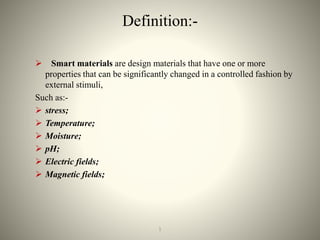


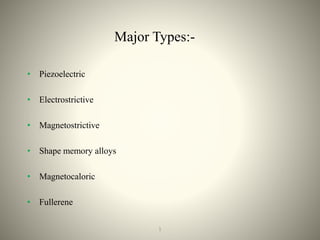







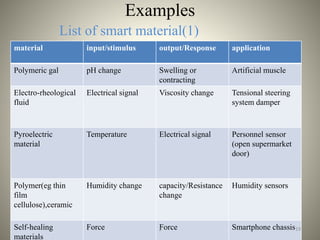

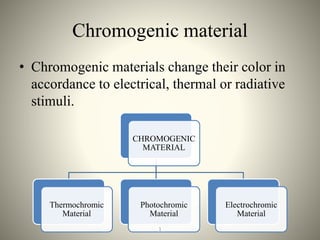
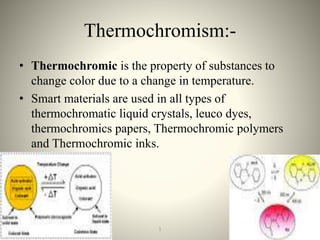


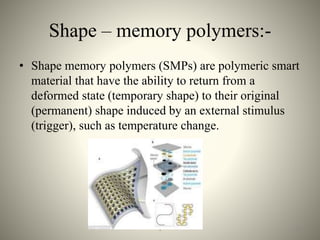



This document provides an overview of smart materials. It defines smart materials as materials that can significantly change one or more properties in a controlled manner due to external stimuli like stress, temperature, moisture, pH, or electric/magnetic fields. The major types of smart materials discussed are piezoelectric, electrostrictive, shape memory alloys, and magnetostrictive materials. Examples of applications include smart glass, mirrors, sensors, and actuators. Both advantages like high energy density and simplified packing and disadvantages like high costs and unknown long term effects are outlined.


