Lupus nephritis
recent advices andslicc classifications
Presenter: Dr. Kushal.D.P
HOD: Prof. Dr. Gadwalkar Srikant. R
Moderator: Prof. Dr. Shashibhushan. J
Introduction
• Systemic lupus erythematosis is an autoimmune disease in
which organs and cells undergo damage initially mediated by
tissue binding autoantibodies and immune complexes.
• The term lupus means ‘wolf’.
• The median age of onset in Indian SLE is 24.5 years and the
sex ratio (F:M) is 9:1.
• Incidence and prevalence SLE is rare in India. A prevalence
study in India (carried out in a rural population near Delhi)
found a point prevalence of 3 per 100,000. This is a much
lower figure than reported from the west (varying from 12.5
per100,000 adults in England to 39 per 100,000 in Finland
and 124 per 100,000 in USA).
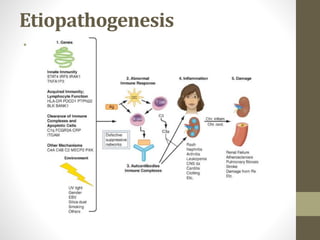
Etiopathogenesis
•
• Some polymorphisms influence clinical manifestations; such
as single nucleotide polymorphisms (SNPs) of STAT 4 that
associate with severe disease, anti-DNA, nephritis, and anti-
phospholipid syndrome , and an allele of FCGRIIA encoding a
receptor that binds immune complexes poorly and
predisposes to nephritis.
• ECM components and cell surface glycoproteins act as
autoantigens in lupus nephritis.
• Lupus nephritis is rare in drug induced lupus(DILE).
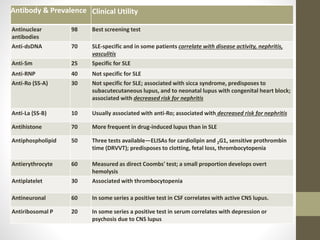
Antibody & Prevalence Clinical Utility
Antinuclear
antibodies
98 Best screening test
Anti-dsDNA 70 SLE-specific and in some patients correlate with disease activity, nephritis,
vasculitis
Anti-Sm 25 Specific for SLE
Anti-RNP 40 Not specific for SLE
Anti-Ro (SS-A) 30 Not specific for SLE; associated with sicca syndrome, predisposes to
subacutecutaneous lupus, and to neonatal lupus with congenital heart block;
associated with decreased risk for nephritis
Anti-La (SS-B) 10 Usually associated with anti-Ro; associated with decreased risk for nephritis
Antihistone 70 More frequent in drug-induced lupus than in SLE
Antiphospholipid 50 Three tests available—ELISAs for cardiolipin and 2G1, sensitive prothrombin
time (DRVVT); predisposes to clotting, fetal loss, thrombocytopenia
Antierythrocyte 60 Measured as direct Coombs' test; a small proportion develops overt
hemolysis
Antiplatelet 30 Associated with thrombocytopenia
Antineuronal 60 In some series a positive test in CSF correlates with active CNS lupus.
Antiribosomal P 20 In some series a positive test in serum correlates with depression or
psychosis due to CNS lupus
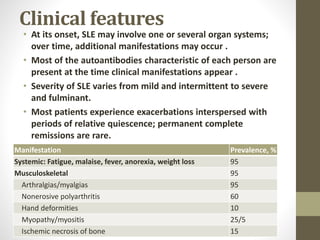
Clinical features
• At its onset, SLE may involve one or several organ systems;
over time, additional manifestations may occur .
• Most of the autoantibodies characteristic of each person are
present at the time clinical manifestations appear .
• Severity of SLE varies from mild and intermittent to severe
and fulminant.
• Most patients experience exacerbations interspersed with
periods of relative quiescence; permanent complete
remissions are rare.
Manifestation Prevalence, %
Systemic: Fatigue, malaise, fever, anorexia, weight loss 95
Musculoskeletal 95
Arthralgias/myalgias 95
Nonerosive polyarthritis 60
Hand deformities 10
Myopathy/myositis 25/5
Ischemic necrosis of bone 15
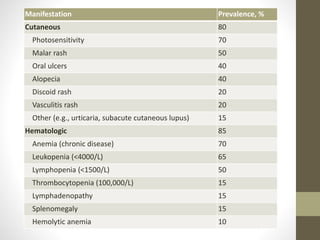
Manifestation Prevalence, %
Cutaneous 80
Photosensitivity 70
Malar rash 50
Oral ulcers 40
Alopecia 40
Discoid rash 20
Vasculitis rash 20
Other (e.g., urticaria, subacute cutaneous lupus) 15
Hematologic 85
Anemia (chronic disease) 70
Leukopenia (<4000/L) 65
Lymphopenia (<1500/L) 50
Thrombocytopenia (100,000/L) 15
Lymphadenopathy 15
Splenomegaly 15
Hemolytic anemia 10
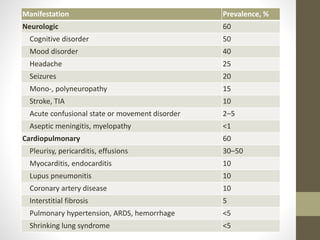
Manifestation Prevalence, %
Neurologic 60
Cognitive disorder 50
Mood disorder 40
Headache 25
Seizures 20
Mono-, polyneuropathy 15
Stroke, TIA 10
Acute confusional state or movement disorder 2–5
Aseptic meningitis, myelopathy <1
Cardiopulmonary 60
Pleurisy, pericarditis, effusions 30–50
Myocarditis, endocarditis 10
Lupus pneumonitis 10
Coronary artery disease 10
Interstitial fibrosis 5
Pulmonary hypertension, ARDS, hemorrhage <5
Shrinking lung syndrome <5
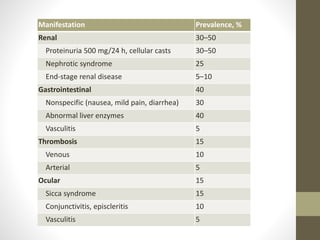
Manifestation Prevalence, %
Renal 30–50
Proteinuria 500 mg/24 h, cellular casts 30–50
Nephrotic syndrome 25
End-stage renal disease 5–10
Gastrointestinal 40
Nonspecific (nausea, mild pain, diarrhea) 30
Abnormal liver enzymes 40
Vasculitis 5
Thrombosis 15
Venous 10
Arterial 5
Ocular 15
Sicca syndrome 15
Conjunctivitis, episcleritis 10
Vasculitis 5
Diagnosis
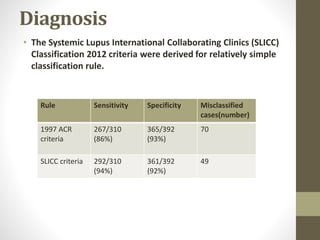
• The Systemic Lupus International Collaborating Clinics (SLICC)
Classification 2012 criteria were derived for relatively simple
classification rule.
Rule Sensitivity Specificity Misclassified
cases(number)
1997 ACR
criteria
267/310
(86%)
365/392
(93%)
70
SLICC criteria 292/310
(94%)
361/392
(92%)
49
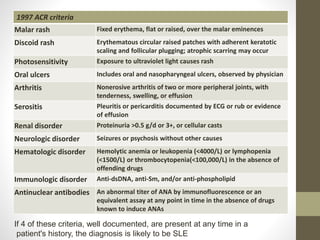
1997 ACR criteria
Malar rash Fixed erythema, flat or raised, over the malar eminences
Discoid rash Erythematous circular raised patches with adherent keratotic
scaling and follicular plugging; atrophic scarring may occur
Photosensitivity Exposure to ultraviolet light causes rash
Oral ulcers Includes oral and nasopharyngeal ulcers, observed by physician
Arthritis Nonerosive arthritis of two or more peripheral joints, with
tenderness, swelling, or effusion
Serositis Pleuritis or pericarditis documented by ECG or rub or evidence
of effusion
Renal disorder Proteinuria >0.5 g/d or 3+, or cellular casts
Neurologic disorder Seizures or psychosis without other causes
Hematologic disorder Hemolytic anemia or leukopenia (<4000/L) or lymphopenia
(<1500/L) or thrombocytopenia(<100,000/L) in the absence of
offending drugs
Immunologic disorder Anti-dsDNA, anti-Sm, and/or anti-phospholipid
Antinuclear antibodies An abnormal titer of ANA by immunofluorescence or an
equivalent assay at any point in time in the absence of drugs
known to induce ANAs
If 4 of these criteria, well documented, are present at any time in a
patient's history, the diagnosis is likely to be SLE
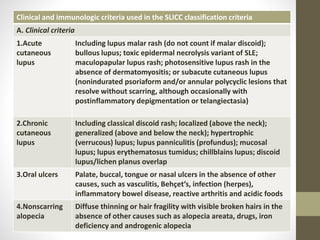
Clinical and immunologic criteria used in the SLICC classification criteria
A. Clinical criteria
1.Acute
cutaneous
lupus
Including lupus malar rash (do not count if malar discoid);
bullous lupus; toxic epidermal necrolysis variant of SLE;
maculopapular lupus rash; photosensitive lupus rash in the
absence of dermatomyositis; or subacute cutaneous lupus
(nonindurated psoriaform and/or annular polycyclic lesions that
resolve without scarring, although occasionally with
postinflammatory depigmentation or telangiectasia)
2.Chronic
cutaneous
lupus
Including classical discoid rash; localized (above the neck);
generalized (above and below the neck); hypertrophic
(verrucous) lupus; lupus panniculitis (profundus); mucosal
lupus; lupus erythematosus tumidus; chillblains lupus; discoid
lupus/lichen planus overlap
3.Oral ulcers Palate, buccal, tongue or nasal ulcers in the absence of other
causes, such as vasculitis, Behçet’s, infection (herpes),
inflammatory bowel disease, reactive arthritis and acidic foods
4.Nonscarring
alopecia
Diffuse thinning or hair fragility with visible broken hairs in the
absence of other causes such as alopecia areata, drugs, iron
deficiency and androgenic alopecia
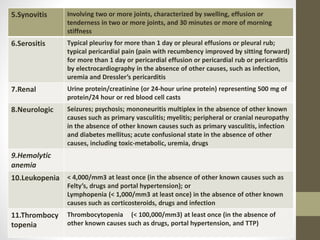
5.Synovitis Involving two or more joints, characterized by swelling, effusion or
tenderness in two or more joints, and 30 minutes or more of morning
stiffness
6.Serositis Typical pleurisy for more than 1 day or pleural effusions or pleural rub;
typical pericardial pain (pain with recumbency improved by sitting forward)
for more than 1 day or pericardial effusion or pericardial rub or pericarditis
by electrocardiography in the absence of other causes, such as infection,
uremia and Dressler’s pericarditis
7.Renal Urine protein/creatinine (or 24-hour urine protein) representing 500 mg of
protein/24 hour or red blood cell casts
8.Neurologic Seizures; psychosis; mononeuritis multiplex in the absence of other known
causes such as primary vasculitis; myelitis; peripheral or cranial neuropathy
in the absence of other known causes such as primary vasculitis, infection
and diabetes mellitus; acute confusional state in the absence of other
causes, including toxic-metabolic, uremia, drugs
9.Hemolytic
anemia
10.Leukopenia < 4,000/mm3 at least once (in the absence of other known causes such as
Felty’s, drugs and portal hypertension); or
Lymphopenia (< 1,000/mm3 at least once) in the absence of other known
causes such as corticosteroids, drugs and infection
11.Thrombocy
topenia
Thrombocytopenia (< 100,000/mm3) at least once (in the absence of
other known causes such as drugs, portal hypertension, and TTP)
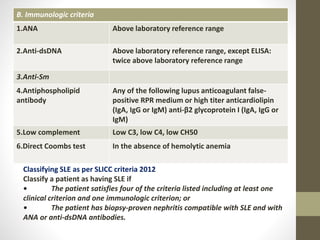
B. Immunologic criteria
1.ANA Above laboratory reference range
2.Anti-dsDNA Above laboratory reference range, except ELISA:
twice above laboratory reference range
3.Anti-Sm
4.Antiphospholipid
antibody
Any of the following lupus anticoagulant false-
positive RPR medium or high titer anticardiolipin
(IgA, IgG or IgM) anti-β2 glycoprotein I (IgA, IgG or
IgM)
5.Low complement Low C3, low C4, low CH50
6.Direct Coombs test In the absence of hemolytic anemia
Classifying SLE as per SLICC criteria 2012
Classify a patient as having SLE if
• The patient satisfies four of the criteria listed including at least one
clinical criterion and one immunologic criterion; or
• The patient has biopsy-proven nephritis compatible with SLE and with
ANA or anti-dsDNA antibodies.
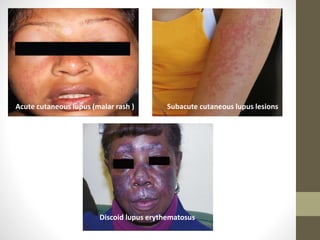
Subacute cutaneous lupus lesions
Discoid lupus erythematosus
Acute cutaneous lupus (malar rash )
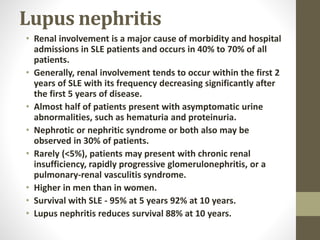
Lupus nephritis
• Renal involvement is a major cause of morbidity and hospital
admissions in SLE patients and occurs in 40% to 70% of all
patients.
• Generally, renal involvement tends to occur within the first 2
years of SLE with its frequency decreasing significantly after
the first 5 years of disease.
• Almost half of patients present with asymptomatic urine
abnormalities, such as hematuria and proteinuria.
• Nephrotic or nephritic syndrome or both also may be
observed in 30% of patients.
• Rarely (<5%), patients may present with chronic renal
insufficiency, rapidly progressive glomerulonephritis, or a
pulmonary-renal vasculitis syndrome.
• Higher in men than in women.
• Survival with SLE - 95% at 5 years 92% at 10 years.
• Lupus nephritis reduces survival 88% at 10 years.
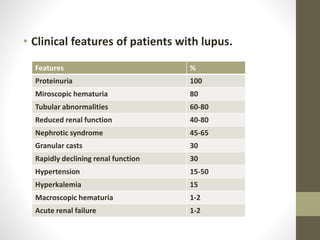
Features %
Proteinuria 100
Miroscopic hematuria 80
Tubular abnormalities 60-80
Reduced renal function 40-80
Nephrotic syndrome 45-65
Granular casts 30
Rapidly declining renal function 30
Hypertension 15-50
Hyperkalemia 15
Macroscopic hematuria 1-2
Acute renal failure 1-2
• Clinical features of patients with lupus.
American College of Rheumatology Guidelines for
Screening, Treatment, and Management of Lupus
Nephritis. 2012
Joint European League Against Rheumatism and European
Renal Association–European Dialysis and Transplant
Association (EULAR/ERA-EDTA) recommendations for the
management of adult and paediatric lupus nephritis.2012
KDIGO(Kidney disease improving global outcomes)
Clinical Practice Guideline for Glomerulonephritis.
2012
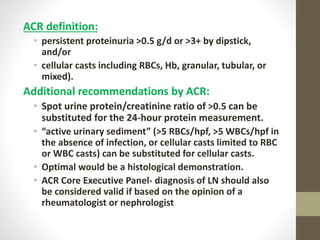
ACR definition:
• persistent proteinuria >0.5 g/d or >3+ by dipstick,
and/or
• cellular casts including RBCs, Hb, granular, tubular, or
mixed).
Additional recommendations by ACR:
• Spot urine protein/creatinine ratio of >0.5 can be
substituted for the 24-hour protein measurement.
• “active urinary sediment” (>5 RBCs/hpf, >5 WBCs/hpf in
the absence of infection, or cellular casts limited to RBC
or WBC casts) can be substituted for cellular casts.
• Optimal would be a histological demonstration.
• ACR Core Executive Panel- diagnosis of LN should also
be considered valid if based on the opinion of a
rheumatologist or nephrologist
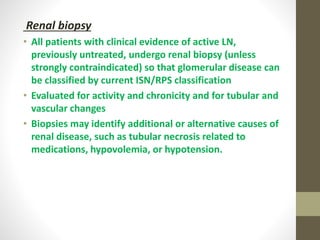
Renal biopsy
• All patients with clinical evidence of active LN,
previously untreated, undergo renal biopsy (unless
strongly contraindicated) so that glomerular disease can
be classified by current ISN/RPS classification
• Evaluated for activity and chronicity and for tubular and
vascular changes
• Biopsies may identify additional or alternative causes of
renal disease, such as tubular necrosis related to
medications, hypovolemia, or hypotension.
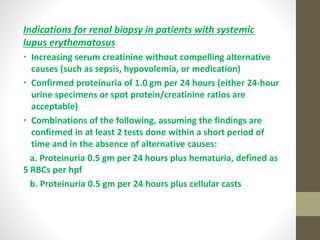
Indications for renal biopsy in patients with systemic
lupus erythematosus
• Increasing serum creatinine without compelling alternative
causes (such as sepsis, hypovolemia, or medication)
• Confirmed proteinuria of 1.0 gm per 24 hours (either 24-hour
urine specimens or spot protein/creatinine ratios are
acceptable)
• Combinations of the following, assuming the findings are
confirmed in at least 2 tests done within a short period of
time and in the absence of alternative causes:
a. Proteinuria 0.5 gm per 24 hours plus hematuria, defined as
5 RBCs per hpf
b. Proteinuria 0.5 gm per 24 hours plus cellular casts
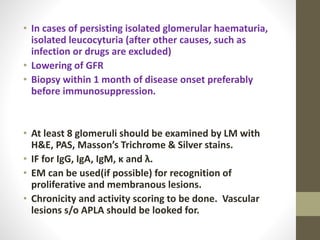
• In cases of persisting isolated glomerular haematuria,
isolated leucocyturia (after other causes, such as
infection or drugs are excluded)
• Lowering of GFR
• Biopsy within 1 month of disease onset preferably
before immunosuppression.
• At least 8 glomeruli should be examined by LM with
H&E, PAS, Masson’s Trichrome & Silver stains.
• IF for IgG, IgA, IgM, κ and λ.
• EM can be used(if possible) for recognition of
proliferative and membranous lesions.
• Chronicity and activity scoring to be done. Vascular
lesions s/o APLA should be looked for.
Pathology
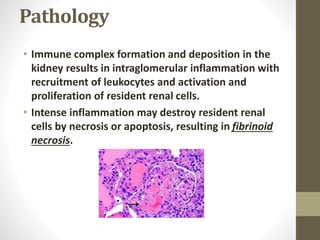
• Immune complex formation and deposition in the
kidney results in intraglomerular inflammation with
recruitment of leukocytes and activation and
proliferation of resident renal cells.
• Intense inflammation may destroy resident renal
cells by necrosis or apoptosis, resulting in fibrinoid
necrosis.
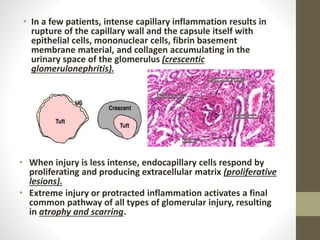
• In a few patients, intense capillary inflammation results in
rupture of the capillary wall and the capsule itself with
epithelial cells, mononuclear cells, fibrin basement
membrane material, and collagen accumulating in the
urinary space of the glomerulus (crescentic
glomerulonephritis).
• When injury is less intense, endocapillary cells respond by
proliferating and producing extracellular matrix (proliferative
lesions).
• Extreme injury or protracted inflammation activates a final
common pathway of all types of glomerular injury, resulting
in atrophy and scarring.
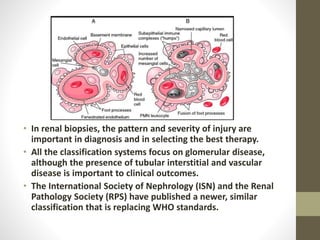
• In lupus nephritis, the location of immune complex
deposition and formation is closely linked to histopathology
and the intensity of the inflammatory response.
• Deposition of immune complexes in the mesangium is
characteristic of mesangial lupus nephritis.
• Immune complex deposition in the subendothelial area of
the capillary loops results in proliferative lupus nephritis
(focal or diffuse) with exuberant glomerular hypercellularity.
This hypercellularity is due to proliferation of mesangial and
endothelial cells and leukocytic infiltrates, resulting in
compromised capillary flow and renal function.
• Epimembranous (subepithelial) deposits along peripheral
glomerular capillary loops that are diffusely thickened and
the lack of inflammatory infiltrate are characteristic of
membranous nephropathy
• In renal biopsies, the pattern and severity of injury are
important in diagnosis and in selecting the best therapy.
• All the classification systems focus on glomerular disease,
although the presence of tubular interstitial and vascular
disease is important to clinical outcomes.
• The International Society of Nephrology (ISN) and the Renal
Pathology Society (RPS) have published a newer, similar
classification that is replacing WHO standards.
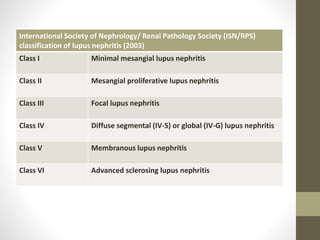
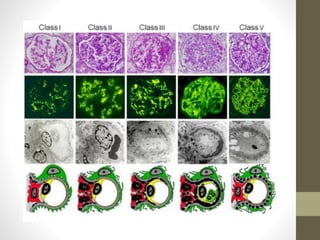
International Society of Nephrology/ Renal Pathology Society (ISN/RPS)
classification of lupus nephritis (2003)
Class I Minimal mesangial lupus nephritis
Class II Mesangial proliferative lupus nephritis
Class III Focal lupus nephritis
Class IV Diffuse segmental (IV-S) or global (IV-G) lupus nephritis
Class V Membranous lupus nephritis
Class VI Advanced sclerosing lupus nephritis
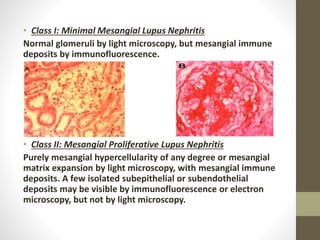
• Class I: Minimal Mesangial Lupus Nephritis
Normal glomeruli by light microscopy, but mesangial immune
deposits by immunofluorescence.
• Class II: Mesangial Proliferative Lupus Nephritis
Purely mesangial hypercellularity of any degree or mesangial
matrix expansion by light microscopy, with mesangial immune
deposits. A few isolated subepithelial or subendothelial
deposits may be visible by immunofluorescence or electron
microscopy, but not by light microscopy.
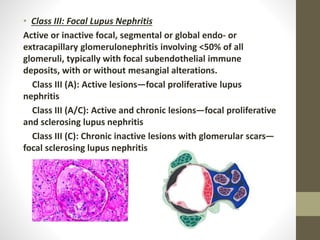
• Class III: Focal Lupus Nephritis
Active or inactive focal, segmental or global endo- or
extracapillary glomerulonephritis involving <50% of all
glomeruli, typically with focal subendothelial immune
deposits, with or without mesangial alterations.
Class III (A): Active lesions—focal proliferative lupus
nephritis
Class III (A/C): Active and chronic lesions—focal proliferative
and sclerosing lupus nephritis
Class III (C): Chronic inactive lesions with glomerular scars—
focal sclerosing lupus nephritis
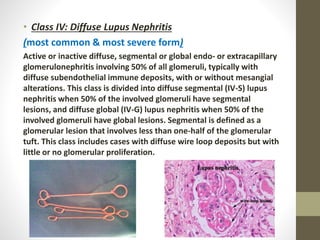
• Class IV: Diffuse Lupus Nephritis
(most common & most severe form)
Active or inactive diffuse, segmental or global endo- or extracapillary
glomerulonephritis involving 50% of all glomeruli, typically with
diffuse subendothelial immune deposits, with or without mesangial
alterations. This class is divided into diffuse segmental (IV-S) lupus
nephritis when 50% of the involved glomeruli have segmental
lesions, and diffuse global (IV-G) lupus nephritis when 50% of the
involved glomeruli have global lesions. Segmental is defined as a
glomerular lesion that involves less than one-half of the glomerular
tuft. This class includes cases with diffuse wire loop deposits but with
little or no glomerular proliferation.
Class IV-S (A): Active lesions—diffuse segmental
proliferative lupus nephritis
Class IV-G (A): Active lesions—diffuse global
proliferative lupus nephritis
Class IV-S (A/C): Active and chronic lesions—diffuse
segmental proliferative and sclerosing lupus nephritis
Class IV-G (A/C): Active and chronic lesions—diffuse
global proliferative and sclerosing lupus nephritis
Class IV-S (C): Chronic inactive lesions with scars—
diffuse segmental sclerosing lupus nephritis
Class IV-G (C): Chronic inactive lesions with scars—
diffuse global sclerosing lupus nephritis
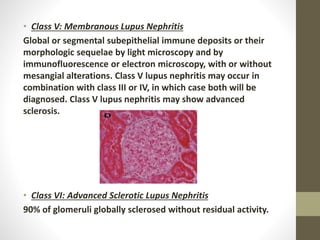
• Class V: Membranous Lupus Nephritis
Global or segmental subepithelial immune deposits or their
morphologic sequelae by light microscopy and by
immunofluorescence or electron microscopy, with or without
mesangial alterations. Class V lupus nephritis may occur in
combination with class III or IV, in which case both will be
diagnosed. Class V lupus nephritis may show advanced
sclerosis.
• Class VI: Advanced Sclerotic Lupus Nephritis
90% of glomeruli globally sclerosed without residual activity.
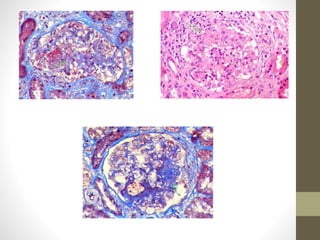
Active and chronic glomerular lesions
Active lesions
• Endocapillary hypercellularity with or without leukocyte
infiltration and with substantial luminal reduction
• Karyorrhexis
• Fibrinoid necrosis
• Rupture of glomerular basement membrane
• Crescents, cellular or fibrocellular
• Subendothelial deposits identifiable by light microscopy
(wireloops)
• Intraluminal immune aggregates (hyaline thrombi)
Chronic lesions
• Glomerular sclerosis (segmental, global)
• Fibrous adhesions
• Fibrous crescents
Treatment
• NSAIDs, antimalarials, glucocorticoids, and, in severe,
refractory cases, immunosuppressive agents (azathioprine,
mycophenolate mofetil, methotrexate) are used in the
treatment of SLE patients without major organ involvement.
General
• Involvement of major organs or extensive involvement of
nonmajor organs (i.e., skin) refractory to first-line agents
• Failure to respond to or inability to taper corticosteroids to
acceptable doses for long-term use
• Indications for Cytotoxic Drug Use in Systemic Lupus
Erythematosus
Specific Organ Involvement
 Renal:
Proliferative or membranous nephritis (nephritic or nephrotic syndrome)
 Hematologic:
Severe thrombocytopenia (platelets <20 × 103/μL)
Thrombotic thrombocytopenic purpura–like syndrome
Severe hemolytic or aplastic anemia, or immune neutropenia not responding
to corticosteroids
 Pulmonary:
Lupus pneumonitis or alveolar hemorrhage
 Cardiac:
Myocarditis with depressed left ventricular function, pericarditis with
impending tamponade
 Gastrointestinal:
Abdominal vasculitis
 Nervous system:
Transverse myelitis, cerebritis, psychosis refractory to corticosteroids,
mononeuritis multiplex, severe peripheral neuropathy
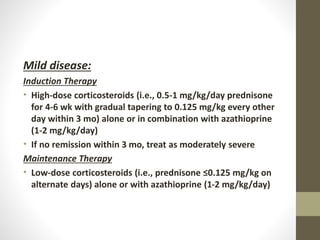
Mild disease:
Induction Therapy
• High-dose corticosteroids (i.e., 0.5-1 mg/kg/day prednisone
for 4-6 wk with gradual tapering to 0.125 mg/kg every other
day within 3 mo) alone or in combination with azathioprine
(1-2 mg/kg/day)
• If no remission within 3 mo, treat as moderately severe
Maintenance Therapy
• Low-dose corticosteroids (i.e., prednisone ≤0.125 mg/kg on
alternate days) alone or with azathioprine (1-2 mg/kg/day)
• Moderate disease
Induction Therapy
• MMF (2 g/day) (or azathioprine) with corticosteroids as
above; if no remission after the first 6-12 mo, advance to
next therapy or
• Pulse cyclophosphamide alone or in combination with pulse
corticosteroids for the first 6 mo (background corticosteroids
0.5 mg/kg/day for 4 wk, then taper) for 7 pulses
Maintenance Therapy
• If remission after first 6-12 mo, MMF may be tapered to 1.5
g/day twice a day for 6-12 mo and then to 1 g/day; consider
further tapering at the end of each year in remission or
• Quarterly pulses of cyclophosphamide or
• Azathioprine (1-2 mg/kg/day)
Severe
Induction Therapy
• Monthly pulses of cyclophosphamide combined with
pulse corticosteroids for 6-12 mo
• If no response, consider adding rituximab or switch to
MMF
Maintenance Therapy
• Quarterly pulses of cyclophosphamide for at least 1 yr
beyond remission
• Azathioprine (1-2 mg/kg/day)
• MMF (1-2 g/day)
Treatment of lupus nephritis
• Depends upon class of LN diagnosed on kidney biopsy
along with presence of extra-renal manifestations of SLE
• Goal of treatment is to normalize kidney function,
reduce proteinuria, and prevent progressive loss of
kidney function.
• Goals of immunusuppressive treatment:
• Long-term preservation of renal function,
• Prevention of flares,
• Avoidance of treatment-related harms, and
• Improved quality of life and survival.
Adjunctive therapy
• All SLE patients with nephritis be treated with a background HCQ
unless there is a contraindication
Rationale:
1. Lower rates of Flares
2. Reduced renal damage
3. Less clotting events
• LN patients with proteinuria >0.5 gm per 24 hours should have
blockade of the renin–angiotensin system
Rationale:
1. Reduces proteinuria by 30%
2. Significantly delays doubling of serum creatinine
3. Delays progression to end-stage renal disease
4. Control of hypertension, with a target of <130/80 mm Hg
• Statin therapy be introduced in patients with low-density
lipoprotein cholesterol >100 mg/dl
• Acetyl-salicylic acid in patients with anti-phospholipid
antibodies, calcium and vitamin D supplementation, and
immunisations with non-live vaccines may reduce treatment
or disease-related comorbidities and should be considered
• Consider anticoagulant treatment in nephrotic syndrome
with serum albumin <20 g/litre, especially if persistent or in
the presence of anti-phospholipid antibodies
Class I and class II
• Conservative (Non-immunomodulatory) treatment is
appropriate for Class I and II LN
• RAAS Blockade with ACE/ARB delays progression of
Lupus Nephritis
• Spironolactone significantly reduces proteinuria and
lowers levels of anti ds DNA and anti ss DNA
• Class I and II LN be treated as dictated by the extrarenal
clinical manifestations of lupus
• EXCEPTION: II LN with proteinuria >3 g/d be treated
with corticosteroids or CNIs as described for MCD.
Class III and IV LN
• Patients with proliferative classes of lupus nephritis
need immunomodulatory treatment to turn off the
immune system.
• Induction therapy: It is initial intense treatment given to
induce remission of active disease
• Maintenance therapy: continued to keep patient in
remission and prevent relapses
EULAR/ERA-EDTA guidelines recommend a lower starting
dose of steriods @0.5mg/kg/d after an initial pulse of
500-750mg iv for 3 days reducing to ≤10mg/d by 4-6
months
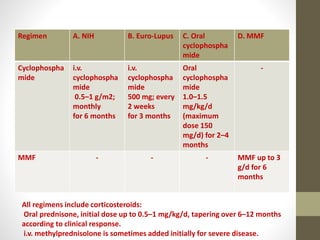
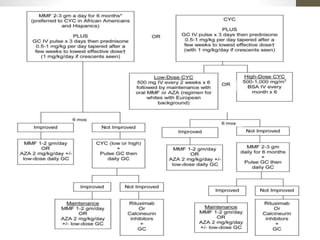
Induction therapy:
The European guidelines recommend either MMF/low
dose “Euro lupus protocol” as the first choice. MMF/ high
dose iv CYC can be tried in those with adverse prognostic
factors (acute deterioration in renal function, substantial
cellular crescents and/or fibrinoid necrosis).
Regimen A. NIH B. Euro-Lupus C. Oral
cyclophospha
mide
D. MMF
Cyclophospha
mide
i.v.
cyclophospha
mide
0.5–1 g/m2;
monthly
for 6 months
i.v.
cyclophospha
mide
500 mg; every
2 weeks
for 3 months
Oral
cyclophospha
mide
1.0–1.5
mg/kg/d
(maximum
dose 150
mg/d) for 2–4
months
-
MMF - - - MMF up to 3
g/d for 6
months
All regimens include corticosteroids:
Oral prednisone, initial dose up to 0.5–1 mg/kg/d, tapering over 6–12 months
according to clinical response.
i.v. methylprednisolone is sometimes added initially for severe disease.
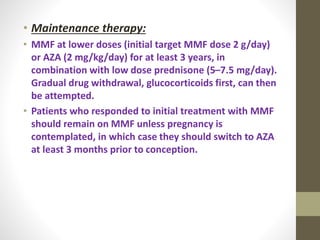
• Maintenance therapy:
• MMF at lower doses (initial target MMF dose 2 g/day)
or AZA (2 mg/kg/day) for at least 3 years, in
combination with low dose prednisone (5–7.5 mg/day).
Gradual drug withdrawal, glucocorticoids first, can then
be attempted.
• Patients who responded to initial treatment with MMF
should remain on MMF unless pregnancy is
contemplated, in which case they should switch to AZA
at least 3 months prior to conception.
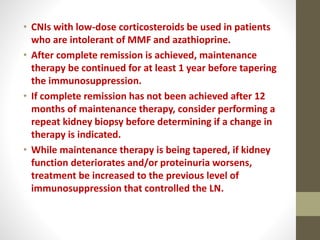
• CNIs with low-dose corticosteroids be used in patients
who are intolerant of MMF and azathioprine.
• After complete remission is achieved, maintenance
therapy be continued for at least 1 year before tapering
the immunosuppression.
• If complete remission has not been achieved after 12
months of maintenance therapy, consider performing a
repeat kidney biopsy before determining if a change in
therapy is indicated.
• While maintenance therapy is being tapered, if kidney
function deteriorates and/or proteinuria worsens,
treatment be increased to the previous level of
immunosuppression that controlled the LN.
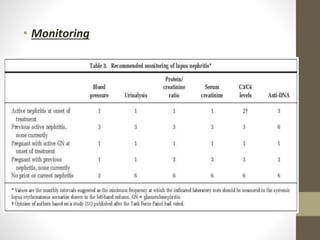
• Monitoring
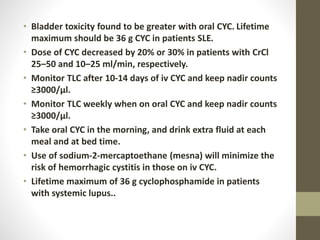
• Bladder toxicity found to be greater with oral CYC. Lifetime
maximum should be 36 g CYC in patients SLE.
• Dose of CYC decreased by 20% or 30% in patients with CrCl
25–50 and 10–25 ml/min, respectively.
• Monitor TLC after 10-14 days of iv CYC and keep nadir counts
≥3000/µl.
• Monitor TLC weekly when on oral CYC and keep nadir counts
≥3000/µl.
• Take oral CYC in the morning, and drink extra fluid at each
meal and at bed time.
• Use of sodium-2-mercaptoethane (mesna) will minimize the
risk of hemorrhagic cystitis in those on iv CYC.
• Lifetime maximum of 36 g cyclophosphamide in patients
with systemic lupus..
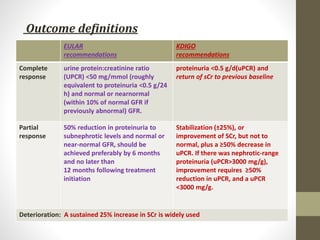
Outcome definitions
EULAR
recommendations
KDIGO
recommendations
Complete
response
urine protein:creatinine ratio
(UPCR) <50 mg/mmol (roughly
equivalent to proteinuria <0.5 g/24
h) and normal or nearnormal
(within 10% of normal GFR if
previously abnormal) GFR.
proteinuria <0.5 g/d(uPCR) and
return of sCr to previous baseline
Partial
response
50% reduction in proteinuria to
subnephrotic levels and normal or
near-normal GFR, should be
achieved preferably by 6 months
and no later than
12 months following treatment
initiation
Stabilization (±25%), or
improvement of SCr, but not to
normal, plus a ≥50% decrease in
uPCR. If there was nephrotic-range
proteinuria (uPCR>3000 mg/g),
improvement requires ≥50%
reduction in uPCR, and a uPCR
<3000 mg/g.
Deterioration: A sustained 25% increase in SCr is widely used
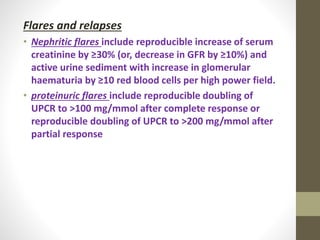
Flares and relapses
• Nephritic flares include reproducible increase of serum
creatinine by ≥30% (or, decrease in GFR by ≥10%) and
active urine sediment with increase in glomerular
haematuria by ≥10 red blood cells per high power field.
• proteinuric flares include reproducible doubling of
UPCR to >100 mg/mmol after complete response or
reproducible doubling of UPCR to >200 mg/mmol after
partial response
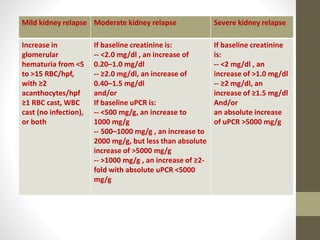
Mild kidney relapse Moderate kidney relapse Severe kidney relapse
Increase in
glomerular
hematuria from <5
to >15 RBC/hpf,
with ≥2
acanthocytes/hpf
≥1 RBC cast, WBC
cast (no infection),
or both
If baseline creatinine is:
-- <2.0 mg/dl , an increase of
0.20–1.0 mg/dl
-- ≥2.0 mg/dl, an increase of
0.40–1.5 mg/dl
and/or
If baseline uPCR is:
-- <500 mg/g, an increase to
1000 mg/g
-- 500–1000 mg/g , an increase to
2000 mg/g, but less than absolute
increase of >5000 mg/g
-- >1000 mg/g , an increase of ≥2-
fold with absolute uPCR <5000
mg/g
If baseline creatinine
is:
-- <2 mg/dl , an
increase of >1.0 mg/dl
-- ≥2 mg/dl, an
increase of ≥1.5 mg/dl
And/or
an absolute increase
of uPCR >5000 mg/g
Resistant lupus
• For patients who fail treatment with MMF or CY,
treatment is switched from MMF to CY, or CY to MPA, or
rituximab be given.
• In patients with worsening SCr and/or proteinuria after
completing one of the initial treatment regimens,
consider performing a repeat kidney biopsy to
distinguish active LN from scarring.
• Treat patients with active LN on biopsy with one of the
alternative initial treatment regimens.
• Nonresponders who have failed more than one of the
recommended initial regimens may be considered for
treatment with rituximab, i.v. immunoglobulin, or CNIs.
• Relapses
• A relapse of LN after complete or partial remission
be treated with the initial therapy followed by the
maintenance therapy that was effective in inducing
the original remission.
• If resuming the original therapy would put the
patient at risk for excessive lifetime
cyclophosphamide exposure, then a non–
cyclophosphamide- based initial regimen be used
• Consider a repeat kidney biopsy during relapse.
Predictors for not achieving remission:
• SCr at the start of treatment
• Magnitude of increase in SCr during relapse
• Delay in starting therapy for more than 3 months after a
clinical diagnosis of LN.
• Severity of proteinuria
• Failure to achieve complete remission a major risk factor for
kidney relapse
Pure Class V
• Non-nephrotic proteinuria, with normal renal function:
antiproteinuric and antiHTN medications with steroids
and immunosuppressants depending on the extrarenal
manifestations.
• Nephrotic range proteinuria: corticosteroids plus an
additional immunosuppressive agent:
cyclophosphamide , or CNI , or MMF, or azathioprine .
• However, ACR and EULAR/ERA-EDTA recommends MMF
as the first line therapy and alternatives given are
CYC/CNIs/rituximab.
ESRD
• All methods of renal replacement treatment can be used in
patients with lupus, but there may be increased risk of
infections in patients on peritoneal dialysis still on
immunosuppressive agents and vascular access thrombosis
in patients with anti-phospholipid antibodies
• Transplantation should be performed when lupus activity has
been absent, or at a low level, for at least 3– 6 months, with
superior results obtained with living donor and pre-emptive
transplantation. Anti-phospholipid antibodies should be
sought during transplant preparation because they are
associated with an increased risk of vascular events in the
transplanted kidney.
• Treated with corticosteroids and immunosuppressives only
as dictated by the extrarenal manifestations of systemic
lupus.
• Lupus nephritis in pregnancy
• In patients with prior LN but no current evidence of
systemic or renal disease activity, no nephritis
medications are necessary.
• Patients with mild systemic activity may be treated with
HCQ
• If clinically active nephritis is present, or there is
substantial extrarenal disease activity, the clinician may
prescribe glucocorticoids at doses necessary to control
disease activity, and if necessary AZA can be added
• Persistently active nephritis with documented or
suspected class III or IV with crescents, consideration of
delivery after 28 weeks for a viable fetus is
recommended.
• Pregnancy may be planned in stable patients with inactive
lupus and UPCR <50 mg/mmol, for the preceding 6 months,
with GFR that should preferably be >50 ml/min.
• The intensity of treatment should not be reduced in
anticipation of pregnancy.
• During pregnancy, acetylsalicylic acid should be considered
to reduce the risk of pre-eclampsia and fetal loss.
• Patients should be assessed at least every 4 weeks,
preferably by a specialist physician and obstetrician.
• Flare of LN during pregnancy can be treated with acceptable
medications stated above depending on severity of flare
• If pregnant patients are receiving corticosteroids or
azathioprine, these drugs not be tapered during pregnancy
or for at least 3 months after delivery.
References
• Harrison's Principles of Internal Medicine. 18th edition
• Kelley's Textbook of Rheumatology. 8th ed.
• American College of Rheumatology Guidelines for Screening,
Treatment, and Management of Lupus Nephritis. 2012
• Joint European League Against Rheumatism and European
Renal Association–European Dialysis and Transplant
Association (EULAR/ERA-EDTA) recommendations for the
management of adult and paediatric lupus nephritis.2012
• KDIGO Clinical Practice Guideline for Glomerulonephritis.
2012
• Derivation and Validation of the Systemic Lupus
International Collaborating Clinics Classification Criteria for
Systemic Lupus Erythematosus.2012
Thank you

lupus nephritis

  • 1.
    Lupus nephritis recent advicesandslicc classifications Presenter: Dr. Kushal.D.P HOD: Prof. Dr. Gadwalkar Srikant. R Moderator: Prof. Dr. Shashibhushan. J
  • 2.
    Introduction • Systemic lupuserythematosis is an autoimmune disease in which organs and cells undergo damage initially mediated by tissue binding autoantibodies and immune complexes. • The term lupus means ‘wolf’. • The median age of onset in Indian SLE is 24.5 years and the sex ratio (F:M) is 9:1. • Incidence and prevalence SLE is rare in India. A prevalence study in India (carried out in a rural population near Delhi) found a point prevalence of 3 per 100,000. This is a much lower figure than reported from the west (varying from 12.5 per100,000 adults in England to 39 per 100,000 in Finland and 124 per 100,000 in USA).
  • 3.
  • 4.
    • Some polymorphismsinfluence clinical manifestations; such as single nucleotide polymorphisms (SNPs) of STAT 4 that associate with severe disease, anti-DNA, nephritis, and anti- phospholipid syndrome , and an allele of FCGRIIA encoding a receptor that binds immune complexes poorly and predisposes to nephritis. • ECM components and cell surface glycoproteins act as autoantigens in lupus nephritis. • Lupus nephritis is rare in drug induced lupus(DILE).
  • 5.
    Antibody & PrevalenceClinical Utility Antinuclear antibodies 98 Best screening test Anti-dsDNA 70 SLE-specific and in some patients correlate with disease activity, nephritis, vasculitis Anti-Sm 25 Specific for SLE Anti-RNP 40 Not specific for SLE Anti-Ro (SS-A) 30 Not specific for SLE; associated with sicca syndrome, predisposes to subacutecutaneous lupus, and to neonatal lupus with congenital heart block; associated with decreased risk for nephritis Anti-La (SS-B) 10 Usually associated with anti-Ro; associated with decreased risk for nephritis Antihistone 70 More frequent in drug-induced lupus than in SLE Antiphospholipid 50 Three tests available—ELISAs for cardiolipin and 2G1, sensitive prothrombin time (DRVVT); predisposes to clotting, fetal loss, thrombocytopenia Antierythrocyte 60 Measured as direct Coombs' test; a small proportion develops overt hemolysis Antiplatelet 30 Associated with thrombocytopenia Antineuronal 60 In some series a positive test in CSF correlates with active CNS lupus. Antiribosomal P 20 In some series a positive test in serum correlates with depression or psychosis due to CNS lupus
  • 6.
    Clinical features • Atits onset, SLE may involve one or several organ systems; over time, additional manifestations may occur . • Most of the autoantibodies characteristic of each person are present at the time clinical manifestations appear . • Severity of SLE varies from mild and intermittent to severe and fulminant. • Most patients experience exacerbations interspersed with periods of relative quiescence; permanent complete remissions are rare. Manifestation Prevalence, % Systemic: Fatigue, malaise, fever, anorexia, weight loss 95 Musculoskeletal 95 Arthralgias/myalgias 95 Nonerosive polyarthritis 60 Hand deformities 10 Myopathy/myositis 25/5 Ischemic necrosis of bone 15
  • 7.
    Manifestation Prevalence, % Cutaneous80 Photosensitivity 70 Malar rash 50 Oral ulcers 40 Alopecia 40 Discoid rash 20 Vasculitis rash 20 Other (e.g., urticaria, subacute cutaneous lupus) 15 Hematologic 85 Anemia (chronic disease) 70 Leukopenia (<4000/L) 65 Lymphopenia (<1500/L) 50 Thrombocytopenia (100,000/L) 15 Lymphadenopathy 15 Splenomegaly 15 Hemolytic anemia 10
  • 8.
    Manifestation Prevalence, % Neurologic60 Cognitive disorder 50 Mood disorder 40 Headache 25 Seizures 20 Mono-, polyneuropathy 15 Stroke, TIA 10 Acute confusional state or movement disorder 2–5 Aseptic meningitis, myelopathy <1 Cardiopulmonary 60 Pleurisy, pericarditis, effusions 30–50 Myocarditis, endocarditis 10 Lupus pneumonitis 10 Coronary artery disease 10 Interstitial fibrosis 5 Pulmonary hypertension, ARDS, hemorrhage <5 Shrinking lung syndrome <5
  • 9.
    Manifestation Prevalence, % Renal30–50 Proteinuria 500 mg/24 h, cellular casts 30–50 Nephrotic syndrome 25 End-stage renal disease 5–10 Gastrointestinal 40 Nonspecific (nausea, mild pain, diarrhea) 30 Abnormal liver enzymes 40 Vasculitis 5 Thrombosis 15 Venous 10 Arterial 5 Ocular 15 Sicca syndrome 15 Conjunctivitis, episcleritis 10 Vasculitis 5
  • 10.
    Diagnosis • The SystemicLupus International Collaborating Clinics (SLICC) Classification 2012 criteria were derived for relatively simple classification rule. Rule Sensitivity Specificity Misclassified cases(number) 1997 ACR criteria 267/310 (86%) 365/392 (93%) 70 SLICC criteria 292/310 (94%) 361/392 (92%) 49
  • 11.
    1997 ACR criteria Malarrash Fixed erythema, flat or raised, over the malar eminences Discoid rash Erythematous circular raised patches with adherent keratotic scaling and follicular plugging; atrophic scarring may occur Photosensitivity Exposure to ultraviolet light causes rash Oral ulcers Includes oral and nasopharyngeal ulcers, observed by physician Arthritis Nonerosive arthritis of two or more peripheral joints, with tenderness, swelling, or effusion Serositis Pleuritis or pericarditis documented by ECG or rub or evidence of effusion Renal disorder Proteinuria >0.5 g/d or 3+, or cellular casts Neurologic disorder Seizures or psychosis without other causes Hematologic disorder Hemolytic anemia or leukopenia (<4000/L) or lymphopenia (<1500/L) or thrombocytopenia(<100,000/L) in the absence of offending drugs Immunologic disorder Anti-dsDNA, anti-Sm, and/or anti-phospholipid Antinuclear antibodies An abnormal titer of ANA by immunofluorescence or an equivalent assay at any point in time in the absence of drugs known to induce ANAs If 4 of these criteria, well documented, are present at any time in a patient's history, the diagnosis is likely to be SLE
  • 12.
    Clinical and immunologiccriteria used in the SLICC classification criteria A. Clinical criteria 1.Acute cutaneous lupus Including lupus malar rash (do not count if malar discoid); bullous lupus; toxic epidermal necrolysis variant of SLE; maculopapular lupus rash; photosensitive lupus rash in the absence of dermatomyositis; or subacute cutaneous lupus (nonindurated psoriaform and/or annular polycyclic lesions that resolve without scarring, although occasionally with postinflammatory depigmentation or telangiectasia) 2.Chronic cutaneous lupus Including classical discoid rash; localized (above the neck); generalized (above and below the neck); hypertrophic (verrucous) lupus; lupus panniculitis (profundus); mucosal lupus; lupus erythematosus tumidus; chillblains lupus; discoid lupus/lichen planus overlap 3.Oral ulcers Palate, buccal, tongue or nasal ulcers in the absence of other causes, such as vasculitis, Behçet’s, infection (herpes), inflammatory bowel disease, reactive arthritis and acidic foods 4.Nonscarring alopecia Diffuse thinning or hair fragility with visible broken hairs in the absence of other causes such as alopecia areata, drugs, iron deficiency and androgenic alopecia
  • 13.
    5.Synovitis Involving twoor more joints, characterized by swelling, effusion or tenderness in two or more joints, and 30 minutes or more of morning stiffness 6.Serositis Typical pleurisy for more than 1 day or pleural effusions or pleural rub; typical pericardial pain (pain with recumbency improved by sitting forward) for more than 1 day or pericardial effusion or pericardial rub or pericarditis by electrocardiography in the absence of other causes, such as infection, uremia and Dressler’s pericarditis 7.Renal Urine protein/creatinine (or 24-hour urine protein) representing 500 mg of protein/24 hour or red blood cell casts 8.Neurologic Seizures; psychosis; mononeuritis multiplex in the absence of other known causes such as primary vasculitis; myelitis; peripheral or cranial neuropathy in the absence of other known causes such as primary vasculitis, infection and diabetes mellitus; acute confusional state in the absence of other causes, including toxic-metabolic, uremia, drugs 9.Hemolytic anemia 10.Leukopenia < 4,000/mm3 at least once (in the absence of other known causes such as Felty’s, drugs and portal hypertension); or Lymphopenia (< 1,000/mm3 at least once) in the absence of other known causes such as corticosteroids, drugs and infection 11.Thrombocy topenia Thrombocytopenia (< 100,000/mm3) at least once (in the absence of other known causes such as drugs, portal hypertension, and TTP)
  • 14.
    B. Immunologic criteria 1.ANAAbove laboratory reference range 2.Anti-dsDNA Above laboratory reference range, except ELISA: twice above laboratory reference range 3.Anti-Sm 4.Antiphospholipid antibody Any of the following lupus anticoagulant false- positive RPR medium or high titer anticardiolipin (IgA, IgG or IgM) anti-β2 glycoprotein I (IgA, IgG or IgM) 5.Low complement Low C3, low C4, low CH50 6.Direct Coombs test In the absence of hemolytic anemia Classifying SLE as per SLICC criteria 2012 Classify a patient as having SLE if • The patient satisfies four of the criteria listed including at least one clinical criterion and one immunologic criterion; or • The patient has biopsy-proven nephritis compatible with SLE and with ANA or anti-dsDNA antibodies.
  • 15.
    Subacute cutaneous lupuslesions Discoid lupus erythematosus Acute cutaneous lupus (malar rash )
  • 16.
    Lupus nephritis • Renalinvolvement is a major cause of morbidity and hospital admissions in SLE patients and occurs in 40% to 70% of all patients. • Generally, renal involvement tends to occur within the first 2 years of SLE with its frequency decreasing significantly after the first 5 years of disease. • Almost half of patients present with asymptomatic urine abnormalities, such as hematuria and proteinuria. • Nephrotic or nephritic syndrome or both also may be observed in 30% of patients. • Rarely (<5%), patients may present with chronic renal insufficiency, rapidly progressive glomerulonephritis, or a pulmonary-renal vasculitis syndrome. • Higher in men than in women. • Survival with SLE - 95% at 5 years 92% at 10 years. • Lupus nephritis reduces survival 88% at 10 years.
  • 17.
    Features % Proteinuria 100 Miroscopichematuria 80 Tubular abnormalities 60-80 Reduced renal function 40-80 Nephrotic syndrome 45-65 Granular casts 30 Rapidly declining renal function 30 Hypertension 15-50 Hyperkalemia 15 Macroscopic hematuria 1-2 Acute renal failure 1-2 • Clinical features of patients with lupus.
  • 18.
    American College ofRheumatology Guidelines for Screening, Treatment, and Management of Lupus Nephritis. 2012 Joint European League Against Rheumatism and European Renal Association–European Dialysis and Transplant Association (EULAR/ERA-EDTA) recommendations for the management of adult and paediatric lupus nephritis.2012 KDIGO(Kidney disease improving global outcomes) Clinical Practice Guideline for Glomerulonephritis. 2012
  • 19.
    ACR definition: • persistentproteinuria >0.5 g/d or >3+ by dipstick, and/or • cellular casts including RBCs, Hb, granular, tubular, or mixed). Additional recommendations by ACR: • Spot urine protein/creatinine ratio of >0.5 can be substituted for the 24-hour protein measurement. • “active urinary sediment” (>5 RBCs/hpf, >5 WBCs/hpf in the absence of infection, or cellular casts limited to RBC or WBC casts) can be substituted for cellular casts. • Optimal would be a histological demonstration. • ACR Core Executive Panel- diagnosis of LN should also be considered valid if based on the opinion of a rheumatologist or nephrologist
  • 20.
    Renal biopsy • Allpatients with clinical evidence of active LN, previously untreated, undergo renal biopsy (unless strongly contraindicated) so that glomerular disease can be classified by current ISN/RPS classification • Evaluated for activity and chronicity and for tubular and vascular changes • Biopsies may identify additional or alternative causes of renal disease, such as tubular necrosis related to medications, hypovolemia, or hypotension.
  • 21.
    Indications for renalbiopsy in patients with systemic lupus erythematosus • Increasing serum creatinine without compelling alternative causes (such as sepsis, hypovolemia, or medication) • Confirmed proteinuria of 1.0 gm per 24 hours (either 24-hour urine specimens or spot protein/creatinine ratios are acceptable) • Combinations of the following, assuming the findings are confirmed in at least 2 tests done within a short period of time and in the absence of alternative causes: a. Proteinuria 0.5 gm per 24 hours plus hematuria, defined as 5 RBCs per hpf b. Proteinuria 0.5 gm per 24 hours plus cellular casts
  • 22.
    • In casesof persisting isolated glomerular haematuria, isolated leucocyturia (after other causes, such as infection or drugs are excluded) • Lowering of GFR • Biopsy within 1 month of disease onset preferably before immunosuppression. • At least 8 glomeruli should be examined by LM with H&E, PAS, Masson’s Trichrome & Silver stains. • IF for IgG, IgA, IgM, κ and λ. • EM can be used(if possible) for recognition of proliferative and membranous lesions. • Chronicity and activity scoring to be done. Vascular lesions s/o APLA should be looked for.
  • 23.
    Pathology • Immune complexformation and deposition in the kidney results in intraglomerular inflammation with recruitment of leukocytes and activation and proliferation of resident renal cells. • Intense inflammation may destroy resident renal cells by necrosis or apoptosis, resulting in fibrinoid necrosis.
  • 24.
    • In afew patients, intense capillary inflammation results in rupture of the capillary wall and the capsule itself with epithelial cells, mononuclear cells, fibrin basement membrane material, and collagen accumulating in the urinary space of the glomerulus (crescentic glomerulonephritis). • When injury is less intense, endocapillary cells respond by proliferating and producing extracellular matrix (proliferative lesions). • Extreme injury or protracted inflammation activates a final common pathway of all types of glomerular injury, resulting in atrophy and scarring.
  • 25.
    • In lupusnephritis, the location of immune complex deposition and formation is closely linked to histopathology and the intensity of the inflammatory response. • Deposition of immune complexes in the mesangium is characteristic of mesangial lupus nephritis. • Immune complex deposition in the subendothelial area of the capillary loops results in proliferative lupus nephritis (focal or diffuse) with exuberant glomerular hypercellularity. This hypercellularity is due to proliferation of mesangial and endothelial cells and leukocytic infiltrates, resulting in compromised capillary flow and renal function. • Epimembranous (subepithelial) deposits along peripheral glomerular capillary loops that are diffusely thickened and the lack of inflammatory infiltrate are characteristic of membranous nephropathy
  • 26.
    • In renalbiopsies, the pattern and severity of injury are important in diagnosis and in selecting the best therapy. • All the classification systems focus on glomerular disease, although the presence of tubular interstitial and vascular disease is important to clinical outcomes. • The International Society of Nephrology (ISN) and the Renal Pathology Society (RPS) have published a newer, similar classification that is replacing WHO standards.
  • 27.
    International Society ofNephrology/ Renal Pathology Society (ISN/RPS) classification of lupus nephritis (2003) Class I Minimal mesangial lupus nephritis Class II Mesangial proliferative lupus nephritis Class III Focal lupus nephritis Class IV Diffuse segmental (IV-S) or global (IV-G) lupus nephritis Class V Membranous lupus nephritis Class VI Advanced sclerosing lupus nephritis
  • 28.
    • Class I:Minimal Mesangial Lupus Nephritis Normal glomeruli by light microscopy, but mesangial immune deposits by immunofluorescence. • Class II: Mesangial Proliferative Lupus Nephritis Purely mesangial hypercellularity of any degree or mesangial matrix expansion by light microscopy, with mesangial immune deposits. A few isolated subepithelial or subendothelial deposits may be visible by immunofluorescence or electron microscopy, but not by light microscopy.
  • 29.
    • Class III:Focal Lupus Nephritis Active or inactive focal, segmental or global endo- or extracapillary glomerulonephritis involving <50% of all glomeruli, typically with focal subendothelial immune deposits, with or without mesangial alterations. Class III (A): Active lesions—focal proliferative lupus nephritis Class III (A/C): Active and chronic lesions—focal proliferative and sclerosing lupus nephritis Class III (C): Chronic inactive lesions with glomerular scars— focal sclerosing lupus nephritis
  • 30.
    • Class IV:Diffuse Lupus Nephritis (most common & most severe form) Active or inactive diffuse, segmental or global endo- or extracapillary glomerulonephritis involving 50% of all glomeruli, typically with diffuse subendothelial immune deposits, with or without mesangial alterations. This class is divided into diffuse segmental (IV-S) lupus nephritis when 50% of the involved glomeruli have segmental lesions, and diffuse global (IV-G) lupus nephritis when 50% of the involved glomeruli have global lesions. Segmental is defined as a glomerular lesion that involves less than one-half of the glomerular tuft. This class includes cases with diffuse wire loop deposits but with little or no glomerular proliferation.
  • 31.
    Class IV-S (A):Active lesions—diffuse segmental proliferative lupus nephritis Class IV-G (A): Active lesions—diffuse global proliferative lupus nephritis Class IV-S (A/C): Active and chronic lesions—diffuse segmental proliferative and sclerosing lupus nephritis Class IV-G (A/C): Active and chronic lesions—diffuse global proliferative and sclerosing lupus nephritis Class IV-S (C): Chronic inactive lesions with scars— diffuse segmental sclerosing lupus nephritis Class IV-G (C): Chronic inactive lesions with scars— diffuse global sclerosing lupus nephritis
  • 32.
    • Class V:Membranous Lupus Nephritis Global or segmental subepithelial immune deposits or their morphologic sequelae by light microscopy and by immunofluorescence or electron microscopy, with or without mesangial alterations. Class V lupus nephritis may occur in combination with class III or IV, in which case both will be diagnosed. Class V lupus nephritis may show advanced sclerosis. • Class VI: Advanced Sclerotic Lupus Nephritis 90% of glomeruli globally sclerosed without residual activity.
  • 34.
    Active and chronicglomerular lesions Active lesions • Endocapillary hypercellularity with or without leukocyte infiltration and with substantial luminal reduction • Karyorrhexis • Fibrinoid necrosis • Rupture of glomerular basement membrane • Crescents, cellular or fibrocellular • Subendothelial deposits identifiable by light microscopy (wireloops) • Intraluminal immune aggregates (hyaline thrombi) Chronic lesions • Glomerular sclerosis (segmental, global) • Fibrous adhesions • Fibrous crescents
  • 36.
    Treatment • NSAIDs, antimalarials,glucocorticoids, and, in severe, refractory cases, immunosuppressive agents (azathioprine, mycophenolate mofetil, methotrexate) are used in the treatment of SLE patients without major organ involvement. General • Involvement of major organs or extensive involvement of nonmajor organs (i.e., skin) refractory to first-line agents • Failure to respond to or inability to taper corticosteroids to acceptable doses for long-term use • Indications for Cytotoxic Drug Use in Systemic Lupus Erythematosus
  • 37.
    Specific Organ Involvement Renal: Proliferative or membranous nephritis (nephritic or nephrotic syndrome)  Hematologic: Severe thrombocytopenia (platelets <20 × 103/μL) Thrombotic thrombocytopenic purpura–like syndrome Severe hemolytic or aplastic anemia, or immune neutropenia not responding to corticosteroids  Pulmonary: Lupus pneumonitis or alveolar hemorrhage  Cardiac: Myocarditis with depressed left ventricular function, pericarditis with impending tamponade  Gastrointestinal: Abdominal vasculitis  Nervous system: Transverse myelitis, cerebritis, psychosis refractory to corticosteroids, mononeuritis multiplex, severe peripheral neuropathy
  • 38.
    Mild disease: Induction Therapy •High-dose corticosteroids (i.e., 0.5-1 mg/kg/day prednisone for 4-6 wk with gradual tapering to 0.125 mg/kg every other day within 3 mo) alone or in combination with azathioprine (1-2 mg/kg/day) • If no remission within 3 mo, treat as moderately severe Maintenance Therapy • Low-dose corticosteroids (i.e., prednisone ≤0.125 mg/kg on alternate days) alone or with azathioprine (1-2 mg/kg/day)
  • 39.
    • Moderate disease InductionTherapy • MMF (2 g/day) (or azathioprine) with corticosteroids as above; if no remission after the first 6-12 mo, advance to next therapy or • Pulse cyclophosphamide alone or in combination with pulse corticosteroids for the first 6 mo (background corticosteroids 0.5 mg/kg/day for 4 wk, then taper) for 7 pulses Maintenance Therapy • If remission after first 6-12 mo, MMF may be tapered to 1.5 g/day twice a day for 6-12 mo and then to 1 g/day; consider further tapering at the end of each year in remission or • Quarterly pulses of cyclophosphamide or • Azathioprine (1-2 mg/kg/day)
  • 40.
    Severe Induction Therapy • Monthlypulses of cyclophosphamide combined with pulse corticosteroids for 6-12 mo • If no response, consider adding rituximab or switch to MMF Maintenance Therapy • Quarterly pulses of cyclophosphamide for at least 1 yr beyond remission • Azathioprine (1-2 mg/kg/day) • MMF (1-2 g/day)
  • 41.
    Treatment of lupusnephritis • Depends upon class of LN diagnosed on kidney biopsy along with presence of extra-renal manifestations of SLE • Goal of treatment is to normalize kidney function, reduce proteinuria, and prevent progressive loss of kidney function. • Goals of immunusuppressive treatment: • Long-term preservation of renal function, • Prevention of flares, • Avoidance of treatment-related harms, and • Improved quality of life and survival.
  • 42.
    Adjunctive therapy • AllSLE patients with nephritis be treated with a background HCQ unless there is a contraindication Rationale: 1. Lower rates of Flares 2. Reduced renal damage 3. Less clotting events • LN patients with proteinuria >0.5 gm per 24 hours should have blockade of the renin–angiotensin system Rationale: 1. Reduces proteinuria by 30% 2. Significantly delays doubling of serum creatinine 3. Delays progression to end-stage renal disease 4. Control of hypertension, with a target of <130/80 mm Hg • Statin therapy be introduced in patients with low-density lipoprotein cholesterol >100 mg/dl
  • 43.
    • Acetyl-salicylic acidin patients with anti-phospholipid antibodies, calcium and vitamin D supplementation, and immunisations with non-live vaccines may reduce treatment or disease-related comorbidities and should be considered • Consider anticoagulant treatment in nephrotic syndrome with serum albumin <20 g/litre, especially if persistent or in the presence of anti-phospholipid antibodies
  • 44.
    Class I andclass II • Conservative (Non-immunomodulatory) treatment is appropriate for Class I and II LN • RAAS Blockade with ACE/ARB delays progression of Lupus Nephritis • Spironolactone significantly reduces proteinuria and lowers levels of anti ds DNA and anti ss DNA • Class I and II LN be treated as dictated by the extrarenal clinical manifestations of lupus • EXCEPTION: II LN with proteinuria >3 g/d be treated with corticosteroids or CNIs as described for MCD.
  • 45.
    Class III andIV LN • Patients with proliferative classes of lupus nephritis need immunomodulatory treatment to turn off the immune system. • Induction therapy: It is initial intense treatment given to induce remission of active disease • Maintenance therapy: continued to keep patient in remission and prevent relapses
  • 46.
    EULAR/ERA-EDTA guidelines recommenda lower starting dose of steriods @0.5mg/kg/d after an initial pulse of 500-750mg iv for 3 days reducing to ≤10mg/d by 4-6 months Induction therapy: The European guidelines recommend either MMF/low dose “Euro lupus protocol” as the first choice. MMF/ high dose iv CYC can be tried in those with adverse prognostic factors (acute deterioration in renal function, substantial cellular crescents and/or fibrinoid necrosis).
  • 47.
    Regimen A. NIHB. Euro-Lupus C. Oral cyclophospha mide D. MMF Cyclophospha mide i.v. cyclophospha mide 0.5–1 g/m2; monthly for 6 months i.v. cyclophospha mide 500 mg; every 2 weeks for 3 months Oral cyclophospha mide 1.0–1.5 mg/kg/d (maximum dose 150 mg/d) for 2–4 months - MMF - - - MMF up to 3 g/d for 6 months All regimens include corticosteroids: Oral prednisone, initial dose up to 0.5–1 mg/kg/d, tapering over 6–12 months according to clinical response. i.v. methylprednisolone is sometimes added initially for severe disease.
  • 48.
    • Maintenance therapy: •MMF at lower doses (initial target MMF dose 2 g/day) or AZA (2 mg/kg/day) for at least 3 years, in combination with low dose prednisone (5–7.5 mg/day). Gradual drug withdrawal, glucocorticoids first, can then be attempted. • Patients who responded to initial treatment with MMF should remain on MMF unless pregnancy is contemplated, in which case they should switch to AZA at least 3 months prior to conception.
  • 49.
    • CNIs withlow-dose corticosteroids be used in patients who are intolerant of MMF and azathioprine. • After complete remission is achieved, maintenance therapy be continued for at least 1 year before tapering the immunosuppression. • If complete remission has not been achieved after 12 months of maintenance therapy, consider performing a repeat kidney biopsy before determining if a change in therapy is indicated. • While maintenance therapy is being tapered, if kidney function deteriorates and/or proteinuria worsens, treatment be increased to the previous level of immunosuppression that controlled the LN.
  • 50.
  • 51.
    • Bladder toxicityfound to be greater with oral CYC. Lifetime maximum should be 36 g CYC in patients SLE. • Dose of CYC decreased by 20% or 30% in patients with CrCl 25–50 and 10–25 ml/min, respectively. • Monitor TLC after 10-14 days of iv CYC and keep nadir counts ≥3000/µl. • Monitor TLC weekly when on oral CYC and keep nadir counts ≥3000/µl. • Take oral CYC in the morning, and drink extra fluid at each meal and at bed time. • Use of sodium-2-mercaptoethane (mesna) will minimize the risk of hemorrhagic cystitis in those on iv CYC. • Lifetime maximum of 36 g cyclophosphamide in patients with systemic lupus..
  • 52.
    Outcome definitions EULAR recommendations KDIGO recommendations Complete response urine protein:creatinineratio (UPCR) <50 mg/mmol (roughly equivalent to proteinuria <0.5 g/24 h) and normal or nearnormal (within 10% of normal GFR if previously abnormal) GFR. proteinuria <0.5 g/d(uPCR) and return of sCr to previous baseline Partial response 50% reduction in proteinuria to subnephrotic levels and normal or near-normal GFR, should be achieved preferably by 6 months and no later than 12 months following treatment initiation Stabilization (±25%), or improvement of SCr, but not to normal, plus a ≥50% decrease in uPCR. If there was nephrotic-range proteinuria (uPCR>3000 mg/g), improvement requires ≥50% reduction in uPCR, and a uPCR <3000 mg/g. Deterioration: A sustained 25% increase in SCr is widely used
  • 53.
    Flares and relapses •Nephritic flares include reproducible increase of serum creatinine by ≥30% (or, decrease in GFR by ≥10%) and active urine sediment with increase in glomerular haematuria by ≥10 red blood cells per high power field. • proteinuric flares include reproducible doubling of UPCR to >100 mg/mmol after complete response or reproducible doubling of UPCR to >200 mg/mmol after partial response
  • 54.
    Mild kidney relapseModerate kidney relapse Severe kidney relapse Increase in glomerular hematuria from <5 to >15 RBC/hpf, with ≥2 acanthocytes/hpf ≥1 RBC cast, WBC cast (no infection), or both If baseline creatinine is: -- <2.0 mg/dl , an increase of 0.20–1.0 mg/dl -- ≥2.0 mg/dl, an increase of 0.40–1.5 mg/dl and/or If baseline uPCR is: -- <500 mg/g, an increase to 1000 mg/g -- 500–1000 mg/g , an increase to 2000 mg/g, but less than absolute increase of >5000 mg/g -- >1000 mg/g , an increase of ≥2- fold with absolute uPCR <5000 mg/g If baseline creatinine is: -- <2 mg/dl , an increase of >1.0 mg/dl -- ≥2 mg/dl, an increase of ≥1.5 mg/dl And/or an absolute increase of uPCR >5000 mg/g
  • 55.
    Resistant lupus • Forpatients who fail treatment with MMF or CY, treatment is switched from MMF to CY, or CY to MPA, or rituximab be given. • In patients with worsening SCr and/or proteinuria after completing one of the initial treatment regimens, consider performing a repeat kidney biopsy to distinguish active LN from scarring. • Treat patients with active LN on biopsy with one of the alternative initial treatment regimens. • Nonresponders who have failed more than one of the recommended initial regimens may be considered for treatment with rituximab, i.v. immunoglobulin, or CNIs.
  • 56.
    • Relapses • Arelapse of LN after complete or partial remission be treated with the initial therapy followed by the maintenance therapy that was effective in inducing the original remission. • If resuming the original therapy would put the patient at risk for excessive lifetime cyclophosphamide exposure, then a non– cyclophosphamide- based initial regimen be used • Consider a repeat kidney biopsy during relapse.
  • 58.
    Predictors for notachieving remission: • SCr at the start of treatment • Magnitude of increase in SCr during relapse • Delay in starting therapy for more than 3 months after a clinical diagnosis of LN. • Severity of proteinuria • Failure to achieve complete remission a major risk factor for kidney relapse
  • 59.
    Pure Class V •Non-nephrotic proteinuria, with normal renal function: antiproteinuric and antiHTN medications with steroids and immunosuppressants depending on the extrarenal manifestations. • Nephrotic range proteinuria: corticosteroids plus an additional immunosuppressive agent: cyclophosphamide , or CNI , or MMF, or azathioprine . • However, ACR and EULAR/ERA-EDTA recommends MMF as the first line therapy and alternatives given are CYC/CNIs/rituximab.
  • 60.
    ESRD • All methodsof renal replacement treatment can be used in patients with lupus, but there may be increased risk of infections in patients on peritoneal dialysis still on immunosuppressive agents and vascular access thrombosis in patients with anti-phospholipid antibodies • Transplantation should be performed when lupus activity has been absent, or at a low level, for at least 3– 6 months, with superior results obtained with living donor and pre-emptive transplantation. Anti-phospholipid antibodies should be sought during transplant preparation because they are associated with an increased risk of vascular events in the transplanted kidney. • Treated with corticosteroids and immunosuppressives only as dictated by the extrarenal manifestations of systemic lupus.
  • 61.
    • Lupus nephritisin pregnancy • In patients with prior LN but no current evidence of systemic or renal disease activity, no nephritis medications are necessary. • Patients with mild systemic activity may be treated with HCQ • If clinically active nephritis is present, or there is substantial extrarenal disease activity, the clinician may prescribe glucocorticoids at doses necessary to control disease activity, and if necessary AZA can be added • Persistently active nephritis with documented or suspected class III or IV with crescents, consideration of delivery after 28 weeks for a viable fetus is recommended.
  • 62.
    • Pregnancy maybe planned in stable patients with inactive lupus and UPCR <50 mg/mmol, for the preceding 6 months, with GFR that should preferably be >50 ml/min. • The intensity of treatment should not be reduced in anticipation of pregnancy. • During pregnancy, acetylsalicylic acid should be considered to reduce the risk of pre-eclampsia and fetal loss. • Patients should be assessed at least every 4 weeks, preferably by a specialist physician and obstetrician. • Flare of LN during pregnancy can be treated with acceptable medications stated above depending on severity of flare • If pregnant patients are receiving corticosteroids or azathioprine, these drugs not be tapered during pregnancy or for at least 3 months after delivery.
  • 63.
    References • Harrison's Principlesof Internal Medicine. 18th edition • Kelley's Textbook of Rheumatology. 8th ed. • American College of Rheumatology Guidelines for Screening, Treatment, and Management of Lupus Nephritis. 2012 • Joint European League Against Rheumatism and European Renal Association–European Dialysis and Transplant Association (EULAR/ERA-EDTA) recommendations for the management of adult and paediatric lupus nephritis.2012 • KDIGO Clinical Practice Guideline for Glomerulonephritis. 2012 • Derivation and Validation of the Systemic Lupus International Collaborating Clinics Classification Criteria for Systemic Lupus Erythematosus.2012
  • 64.