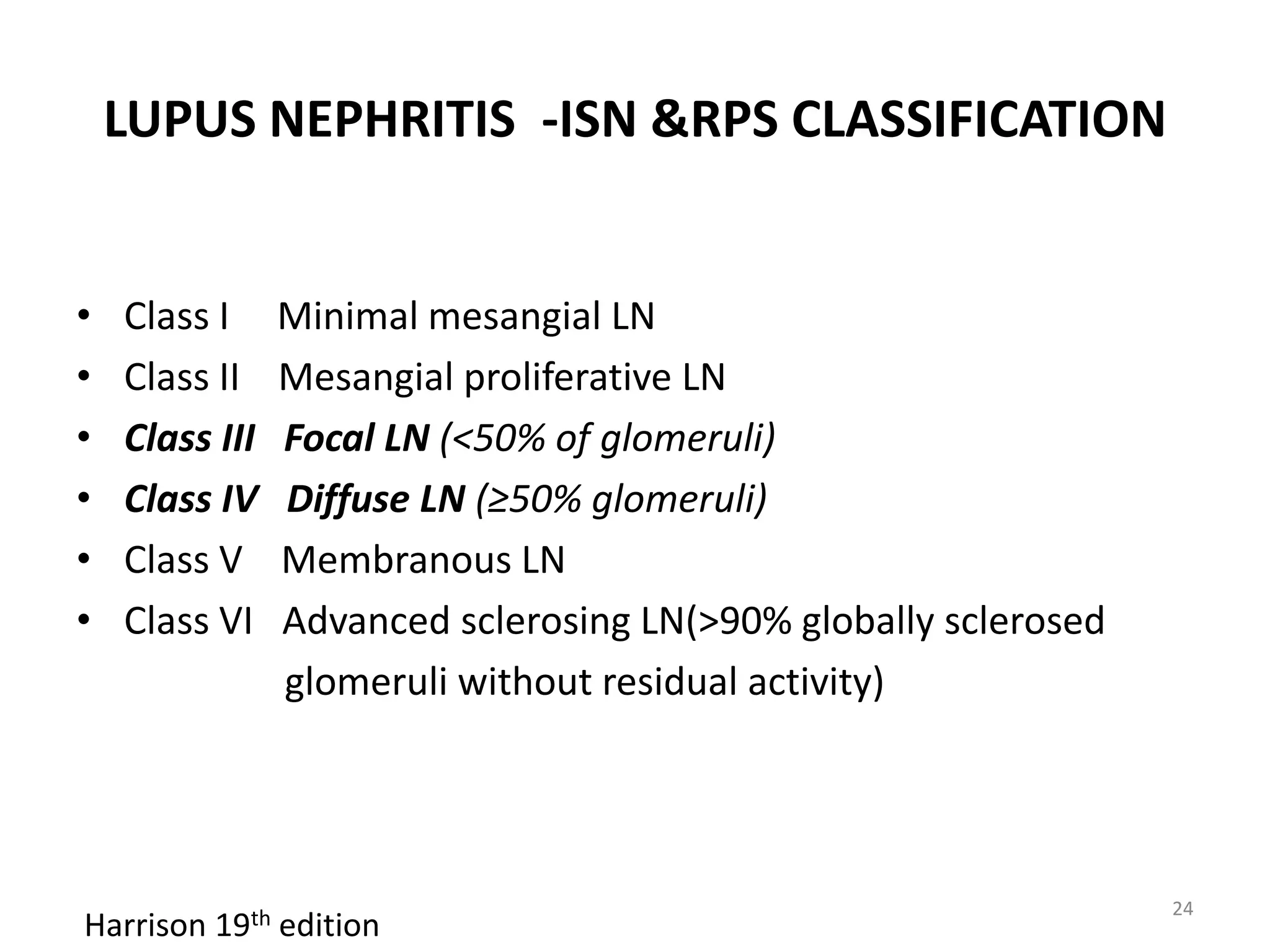
This document discusses systemic lupus erythematosus (SLE), including its definition, pathogenesis, clinical manifestations, diagnostic criteria, treatment, and monitoring. SLE is an autoimmune disease that can damage any organ system via autoantibodies and immune complexes. It predominantly affects women of childbearing age. Common symptoms include fatigue, arthritis, rashes, and hematological abnormalities. Diagnosis requires meeting criteria from clinical manifestations and immunological tests. Treatment involves managing symptoms, preventing flares, and addressing organ-threatening disease with medications like antimalarials, steroids, immunosuppressants. Monitoring includes checking urine, blood tests, and managing complications like lupus nephritis.