By,
Dr. Apoorva Mukund
BNYS, MD ( Yoga Clinical)
Contents
• History
• Introduction
• Prevalence
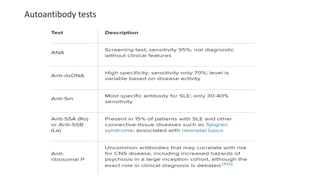
• Antibodies in SLE
• Etiology
• Pathogenesis
• Clinical manifestation
• Diagnosis
• Differential diagnosis
• Diagnostic studies
• Management
History
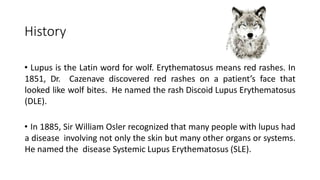
• Lupus is the Latin word for wolf. Erythematosus means red rashes. In
1851, Dr. Cazenave discovered red rashes on a patient’s face that
looked like wolf bites. He named the rash Discoid Lupus Erythematosus
(DLE).
• In 1885, Sir William Osler recognized that many people with lupus had
a disease involving not only the skin but many other organs or systems.
He named the disease Systemic Lupus Erythematosus (SLE).
Introduction
• SLE is the prototype of a multisystem disease of autoimmune origin,
characterized by a vast array of antibodies, particularly antinuclear
antibodies (ANAs).
• Acute or insidious in onset
• It is a chronic remitting and relapsing, often febrile illnesss
characterized principally by injury to skin, joints, kidney and serosal
membranes.
• However, it can affect any other organ in the body
Prevalence
• The reported prevalence of systemic lupus erythematosus (SLE) in the United
States is 20 to 150 cases per 100,000. In women, prevalence rates vary from 164
(White individuals) to 406 (African American individuals) per 100,000
• Estimated incidence rates are 1 to 25 per 100,000 in North America, South
America, Europe, and Asia
• In India, the reported prevalence of SLE is 3.2 per 100,000. Malar rash, arthritis,
renal, and hematological manifestations were reported in higher proportions
among North and West Indian SLE patients. In contrast, serositis and
hematological manifestations were reported to be more frequent in a study
conducted in SLE patients from Kolkata, East India in comparison to other
manifestations.Arthritis and hematological manifestations were reported to be
common in SLE patients from South India.
Autoantibodies in SLE
ANAs are directed against nuclear antigens and are grouped into 4
categories
1. Abs to DNA
2. Abs to histones
3. Abs to nonhistone proteins bound to RNA
4. Abs to nucleolar antigens
The most widely used method for detection of ANAs is indirect
immunoflouresence, which can identify antibodies that bind to variety
of nuclear antigens- DNA, RNA, and proteins ( collectively called as
generic ANAs)
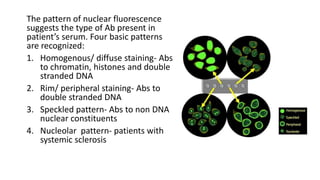
The pattern of nuclear fluorescence
suggests the type of Ab present in
patient’s serum. Four basic patterns
are recognized:
1. Homogenous/ diffuse staining- Abs
to chromatin, histones and double
stranded DNA
2. Rim/ peripheral staining- Abs to
double stranded DNA
3. Speckled pattern- Abs to non DNA
nuclear constituents
4. Nucleolar pattern- patients with
systemic sclerosis
• The immunofluorescence test is sensitive because it is positive in
almost every patient with SLE, but it is not specific.
• Abs to double stranded DNA are so called Smith (Sm) antigen are
virtually diagnostic test for SLE.
• Other than ANAs there are other Abs ; some are against blood cells,
and other react with protein in complex with phospholipids.
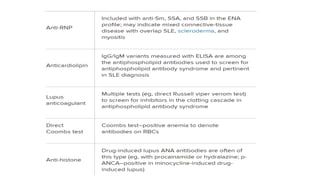
• Antiphospholipid proteins are present in 40-50% of lupus patients
• Abs against the phospholipid beta2 glycoprotein complex also binds
to cardiolipin antigen, used in syphilis serology and hence lupus
patients may have false positive test for syphilis.
• Some of these Abs interfere with invitro clotting state such as partial
thromboplastin time – lupus anticoagulant
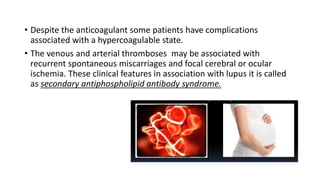
• Despite the anticoagulant some patients have complications
associated with a hypercoagulable state.
• The venous and arterial thromboses may be associated with
recurrent spontaneous miscarriages and focal cerebral or ocular
ischemia. These clinical features in association with lupus it is called
as secondary antiphospholipid antibody syndrome.
Etiology
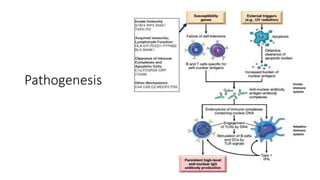
Genetic factors: MHC and non MHC genes
• As many as 20% of clinically unaffected first degree relatives of SLE
pts reveal autoantibodies and other immunoregulatory abnormalities.
• Higher rate of concordance in monozygotic twins (>20%) as compared
to dizygotic twins (1-3%)
• HLA-DQ alleles have been linked in production of anti- double
stranded DNA, anti Sm, anti phospholipid Ab production.
Immunological factors:
• Failure in self tolerance of B cells
• CD4+T helper cells escape tolerance
• Nuclear RNA and DNA activate B cells by TLRs
• Type 1 interferons
• TNF family, BAFF
Environmental factors:
• UV light exposure – induces apoptosis and alters DNA for enhanced
recognition of TLRs, promote IL1 production.
• Sex hormones – during reproductive years
• Drugs- hydralazine, procainamide & D-pencillamine
Pathogenesis
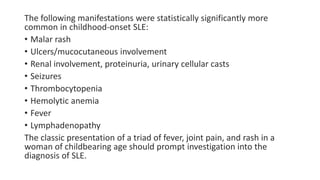
The following manifestations were statistically significantly more
common in childhood-onset SLE:
• Malar rash
• Ulcers/mucocutaneous involvement
• Renal involvement, proteinuria, urinary cellular casts
• Seizures
• Thrombocytopenia
• Hemolytic anemia
• Fever
• Lymphadenopathy
The classic presentation of a triad of fever, joint pain, and rash in a
woman of childbearing age should prompt investigation into the
diagnosis of SLE.
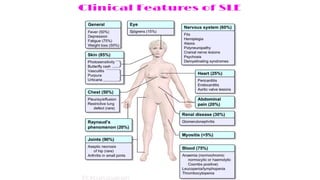
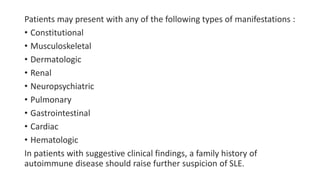
Patients may present with any of the following types of manifestations :
• Constitutional
• Musculoskeletal
• Dermatologic
• Renal
• Neuropsychiatric
• Pulmonary
• Gastrointestinal
• Cardiac
• Hematologic
In patients with suggestive clinical findings, a family history of
autoimmune disease should raise further suspicion of SLE.
Constitutional
• Fatigue, fever, arthralgia, and weight changes are the most common
symptoms in new cases or recurrent active SLE flares.
• Fatigue, the most common constitutional symptom associated with
SLE, can be due to active SLE, medications, lifestyle habits, or
concomitant fibromyalgia or affective disorders.
• Fever may reflect active SLE, infection, and reactions to medications
(ie, drug fever).
• Always exclude an infectious etiology; patients with SLE are
considered immunocompromised and are therefore at higher risk for
developing infections and complications.
• Weight loss may occur in patients with active SLE.
Musculoskeletal
• Joint pain is one of the most common reasons for the initial clinical
presentation of patients with SLE.
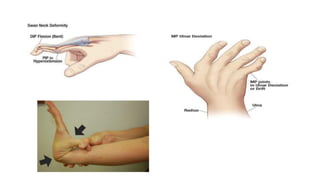
• Arthralgia, myalgia, and frank arthritis may involve the small joints of
the hands, wrists, and knees.
• SLE arthritis or arthralgia may be asymmetrical, with pain that is
disproportionate to swelling.
• SLE arthropathy is rarely erosive or deforming.
• Another important consideration is the increased prevalence of
avascular necrosis (AVN) in the SLE population relative to healthy
individuals.
• Independent risk factors for AVN in patients with SLE include the use
of glucocorticosteroid or cytotoxic agents and the presence of
arthritis.
Dermatologic
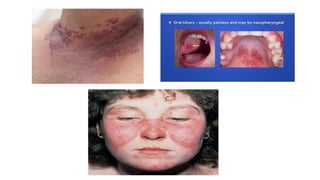
• Cutaneous manifestations of SLE include malar rash, photosensitivity,
and discoid lupus.
• Malar rash is characterized by erythema over the cheeks and nasal
bridge (but sparing the nasolabial folds, which is in contrast to the
rash of dermatomyositis).
• It lasts from days to weeks and is occasionally painful or pruritic.
• Photosensitivity in SLE may be either acute or chronic.
• Discoid lupus is a chronic lupus rash.
• Discoid lesions often also develop in sun-exposed areas but are
plaque like in character, with follicular plugging and scarring. They
may be part of systemic lupus or may represent discoid lupus without
organ involvement, which is a separate diagnostic entity.
• Subacute cutaneous lupus is a rash seen in up to 10% of SLE cases,
but importantly, 50% of patients with this condition will have it in
isolation without systemic lupus.
• Alopecia is an often less specific cutaneous feature of SLE.
• Other cutaneous manifestations related to, but not specific to, SLE
include the following:
➢Raynaud phenomenon
➢Livedo reticularis
➢Panniculitis (lupus profundus)
➢Bullous lesions
➢Vasculitic purpura
➢Telangiectasias
➢Urticaria
Renal
• The kidney is the most commonly involved visceral organ in SLE.
• approximately 50% of patients with SLE develop clinically evident
renal disease, biopsy studies demonstrate some degree of renal
involvement in most patients.
• Glomerular disease usually develops within the first few years of SLE
onset and is often asymptomatic.
• Acute or chronic renal failure may cause symptoms related to uremia
and fluid overload.
• Acute nephritic disease may manifest as hypertension and
hematuria. Nephrotic syndrome may cause edema, weight gain, or
hyperlipidemia.
Neuropsychiatric
• Seizures related to SLE may be generalized or partial and may
precipitate status epilepticus. Psychosis may manifest as paranoia or
hallucinations.
• American College of Rheumatology (ACR) created standardized case
definitions and diagnostic testing recommendations for 19
neuropsychiatric syndromes in SLE, including seizures/seizure
disorders and psychosis.
The remainder of the neuropsychiatric syndromes are as follows
• Acute confusional state
• Acute inflammatory demyelinating
polyradiculoneuropathy (Guillain-
Barre syndrome)
• Anxiety disorder
• Aseptic meningitis
• Autonomic disorder
• Cerebrovascular disease
• Cognitive dysfunction
• Cranial neuropathy
• Demyelinating syndrome
• Headache
• Mononeuropathy
(single/multiplex)
• Mood disorders
• Movement disorder (chorea)
• Myasthenia gravis
• Myelopathy
• Plexopathy
• Polyneuropathy
Pulmonary
• SLE may lead to multiple pulmonary complications, including pleurisy,
pleural effusion, pneumonitis, pulmonary hypertension, and
interstitial lung disease.
• Pleuritis is one of the formal diagnostic criteria for SLE, and it can
induce chest pain and a pleural effusion. The pleural effusion in lupus
is exudative, with an elevated lactate dehydrogenase level.
• Pleurisy with pleuritic chest pain with or without pleural effusions is
the most common feature of acute pulmonary involvement in SLE.
• Most seriously, hemoptysis may herald diffuse alveolar hemorrhage, a
rare, acute, life-threatening pulmonary complication of SLE.
Gastrointestinal
• Infectious causes (bacterial, viral [eg, CMV]), because of
immunosuppression.
• Nausea and dyspepsia are common symptoms in patients with active
SLE.
• Peptic ulcer disease is a common complication, especially in SLE
patients treated with nonsteroidal anti-inflammatory agents (NSAIDs)
and glucocorticoids.
• Occasionally, abdominal pain in active SLE may be directly related to
active lupus, including peritonitis, pancreatitis, mesenteric vasculitis,
and bowel infarction.
• Rarely, lupus enteritis may be the initial manifestation of SLE.
• Jaundice due to autoimmune hepatobiliary disease may also occur.
Cardiac
• Pericarditis is the most common cardiac feature of SLE, manifesting as
positional chest pain that is often relieved when the patient leans
forward.
• Myocarditis may occur in SLE with heart failure symptoms.
• Pulmonary hypertension may present with indolent chest pain or
dyspnea.
• Libman-Sacks endocarditis is noninfectious but may manifest as
symptoms similar to those of infective endocarditis in patients with
SLE or antiphospholipid syndrome.
• More commonly, accelerated ischemic coronary artery disease (CAD)
is associated with SLE.
Hematologic
• A history of multiple cytopenias such as leukopenia, lymphopenia,
anemia, or thrombocytopenia may suggest SLE.
• Leukopenia and, more specifically, lymphopenia are common in SLE;
this, coupled with immunosuppression, may predispose persons with
SLE to frequent infections.
• Thrombocytopenia may be mild or part of a full thrombotic
thrombocytopenic purpura (TTP)–like syndrome or antiphospholipid
antibody syndrome.
• A history of recurrent early miscarriages or a single late pregnancy
loss may be clues to lupus or isolated antiphospholipid antibody
syndrome.
Diagnostic Considerations
• Before making a diagnosis of systemic lupus erythematosus (SLE), ruling
out drugs as the cause of the condition is important.
• Many pharmacologic agents have been associated with a lupus like
syndrome (Drug-Induced Lupus Erythematosus), but procainamide,
hydralazine, and isoniazid have been studied the most extensively.
• Many patients who take these medications have positive antinuclear
antibody test results and other serologic findings. Only a few have the
clinical manifestations.
• A syndrome of drug-induced SLE has been observed with minocycline and
propylthiouracil. Both drugs have a decreased frequency of antihistone
antibodies and anti–double-stranded DNA antibodies, and results for
antineutrophil cytoplasmic antibodies are sometimes positive.
Drug-induced lupus differs from SLE by the following features:
• Sex ratios are nearly equal
• Antibodies to histones are usually found in 80-90%
• Nephritis and central nervous system features are not commonly
present
• There are no antibodies to native DNA or hypocomplementemia
• Discontinuation of the drug leads to resolution of clinical
manifestations and reversion of abnormal laboratory values to normal
Anti-TNF drugs are reported to cause severe drug-induced lupus,
including production of many SLE autoantibodies and, rarely, even
nephritis
Diagnosis
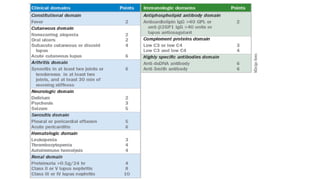
• In September 2019, the European League Against Rheumatism
(EULAR) and the American College of Rheumatology (ACR) published
new criteria for the classification of SLE.
• The EULAR/ACR classification requires an antinuclear antibody (ANA)
titer of at least 1:80 on HEp-2 cells or an equivalent positive test at
least once; otherwise, the patient is considered not to have SLE. If it is
present, seven clinical domains and three immunologic domains are
considered. Each criterion is assigned points, ranging from 2 to 10.
Patients with at least one clinical criterion and 10 or more points are
classified as having SLE.
Classification
Note the following:
• A criterion should not be counted if there is a more likely explanation
for it than SLE
• Occurrence of a criterion on at least one occasion is sufficient
• Criteria need not occur simultaneously
• Within each domain, only the highest-weighted criterion is counted
toward the total score
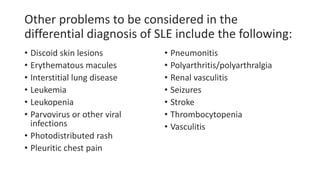
Other problems to be considered in the
differential diagnosis of SLE include the following:
• Discoid skin lesions
• Erythematous macules
• Interstitial lung disease
• Leukemia
• Leukopenia
• Parvovirus or other viral
infections
• Photodistributed rash
• Pleuritic chest pain
• Pneumonitis
• Polyarthritis/polyarthralgia
• Renal vasculitis
• Seizures
• Stroke
• Thrombocytopenia
• Vasculitis
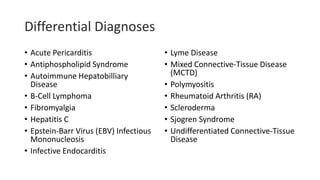
Differential Diagnoses
• Acute Pericarditis
• Antiphospholipid Syndrome
• Autoimmune Hepatobilliary
Disease
• B-Cell Lymphoma
• Fibromyalgia
• Hepatitis C
• Epstein-Barr Virus (EBV) Infectious
Mononucleosis
• Infective Endocarditis
• Lyme Disease
• Mixed Connective-Tissue Disease
(MCTD)
• Polymyositis
• Rheumatoid Arthritis (RA)
• Scleroderma
• Sjogren Syndrome
• Undifferentiated Connective-Tissue
Disease
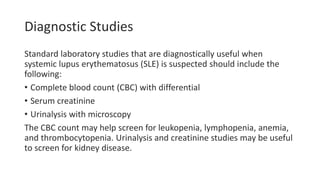
Diagnostic Studies
Standard laboratory studies that are diagnostically useful when
systemic lupus erythematosus (SLE) is suspected should include the
following:
• Complete blood count (CBC) with differential
• Serum creatinine
• Urinalysis with microscopy
The CBC count may help screen for leukopenia, lymphopenia, anemia,
and thrombocytopenia. Urinalysis and creatinine studies may be useful
to screen for kidney disease.
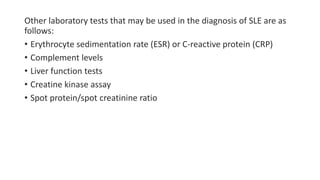
Other laboratory tests that may be used in the diagnosis of SLE are as
follows:
• Erythrocyte sedimentation rate (ESR) or C-reactive protein (CRP)
• Complement levels
• Liver function tests
• Creatine kinase assay
• Spot protein/spot creatinine ratio
Autoantibody tests
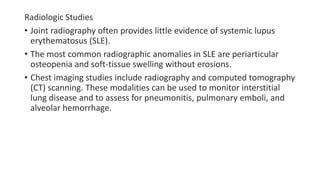
Radiologic Studies
• Joint radiography often provides little evidence of systemic lupus
erythematosus (SLE).
• The most common radiographic anomalies in SLE are periarticular
osteopenia and soft-tissue swelling without erosions.
• Chest imaging studies include radiography and computed tomography
(CT) scanning. These modalities can be used to monitor interstitial
lung disease and to assess for pneumonitis, pulmonary emboli, and
alveolar hemorrhage.
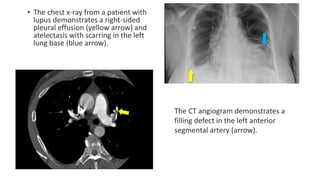
• The chest x-ray from a patient with
lupus demonstrates a right-sided
pleural effusion (yellow arrow) and
atelectasis with scarring in the left
lung base (blue arrow).
The CT angiogram demonstrates a
filling defect in the left anterior
segmental artery (arrow).
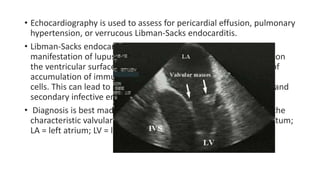
• Echocardiography is used to assess for pericardial effusion, pulmonary
hypertension, or verrucous Libman-Sacks endocarditis.
• Libman-Sacks endocarditis is the most characteristic cardiac
manifestation of lupus. It is characterized by clusters of verrucae on
the ventricular surface of the mitral valve. These lesions consist of
accumulation of immune complexes, platelets, and mononuclear
cells. This can lead to heart failure, valvular dysfunction, emboli, and
secondary infective endocarditis.
• Diagnosis is best made via echocardiography, which may reveal the
characteristic valvular masses (arrows). IVS = interventricular septum;
LA = left atrium; LV = left ventricle.
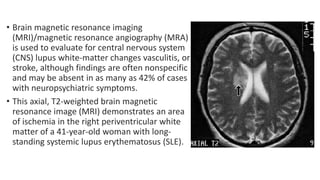
• Brain magnetic resonance imaging
(MRI)/magnetic resonance angiography (MRA)
is used to evaluate for central nervous system
(CNS) lupus white-matter changes vasculitis, or
stroke, although findings are often nonspecific
and may be absent in as many as 42% of cases
with neuropsychiatric symptoms.
• This axial, T2-weighted brain magnetic
resonance image (MRI) demonstrates an area
of ischemia in the right periventricular white
matter of a 41-year-old woman with long-
standing systemic lupus erythematosus (SLE).
• Investigators have suggested that cardiac MRI (CMR) provides an
excellent alternative to clinical assessment, electrocardiography, and
echocardiography for diagnosing SLE myocarditis.
• They reported that patients who were positive for infectious
myocarditis on CMR were more symptomatic than those with active
SLE disease and that more than 50% of patients with CMR-positive
myocarditis had a concurrent positive endomyocardial biopsy.
Joint Effusion and CSF Studies
Arthrocentesis
Lumbar puncture
Biopsies and Histologic Features
• The 2012 American College of Rheumatology (ACR) guidelines for
lupus nephritis recommend renal biopsy for all cases of active,
previously untreated lupus nephritis, unless contraindicated.
• Renal biopsy is used to confirm the presence of lupus nephritis; to aid
in classification of systemic lupus erythematosus (SLE) nephritis based
on the International Society of Nephrology/Renal Pathology Society
(ISN/RPS) classification and to guide therapeutic decisions.
• Another benefit of renal biopsy is in distinguishing renal lupus from
renal vein thrombosis, which may be a complication of
antiphospholipid antibody syndrome and require anticoagulation
rather than immunomodulatory therapy.
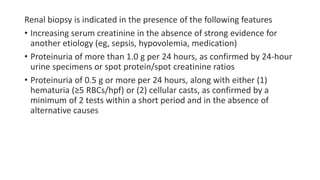
Renal biopsy is indicated in the presence of the following features
• Increasing serum creatinine in the absence of strong evidence for
another etiology (eg, sepsis, hypovolemia, medication)
• Proteinuria of more than 1.0 g per 24 hours, as confirmed by 24-hour
urine specimens or spot protein/spot creatinine ratios
• Proteinuria of 0.5 g or more per 24 hours, along with either (1)
hematuria (≥5 RBCs/hpf) or (2) cellular casts, as confirmed by a
minimum of 2 tests within a short period and in the absence of
alternative causes
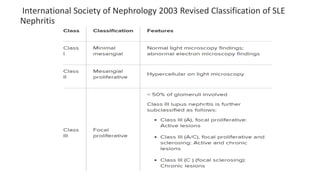
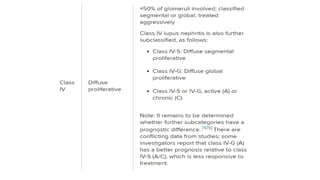
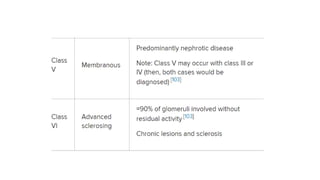
International Society of Nephrology 2003 Revised Classification of SLE
Nephritis
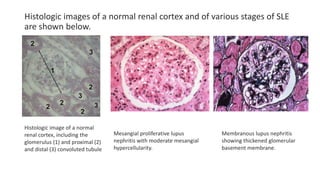
Histologic images of a normal renal cortex and of various stages of SLE
are shown below.
Histologic image of a normal
renal cortex, including the
glomerulus (1) and proximal (2)
and distal (3) convoluted tubule
Mesangial proliferative lupus
nephritis with moderate mesangial
hypercellularity.
Membranous lupus nephritis
showing thickened glomerular
basement membrane.
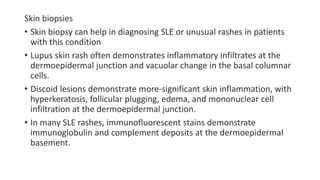
Skin biopsies
• Skin biopsy can help in diagnosing SLE or unusual rashes in patients
with this condition
• Lupus skin rash often demonstrates inflammatory infiltrates at the
dermoepidermal junction and vacuolar change in the basal columnar
cells.
• Discoid lesions demonstrate more-significant skin inflammation, with
hyperkeratosis, follicular plugging, edema, and mononuclear cell
infiltration at the dermoepidermal junction.
• In many SLE rashes, immunofluorescent stains demonstrate
immunoglobulin and complement deposits at the dermoepidermal
basement.
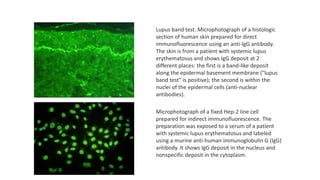
Lupus band test. Microphotograph of a histologic
section of human skin prepared for direct
immunofluorescence using an anti-IgG antibody.
The skin is from a patient with systemic lupus
erythematosus and shows IgG deposit at 2
different places: the first is a band-like deposit
along the epidermal basement membrane ("lupus
band test" is positive); the second is within the
nuclei of the epidermal cells (anti-nuclear
antibodies).
Microphotograph of a fixed Hep-2 line cell
prepared for indirect immunofluorescence. The
preparation was exposed to a serum of a patient
with systemic lupus erythematosus and labeled
using a murine anti-human immunoglobulin G (IgG)
antibody. It shows IgG deposit in the nucleus and
nonspecific deposit in the cytoplasm.
MANAGEMENT
COURSE AND PROGNOSIS
PREVENTIVE THERAPIES
Integrated Approch of Naturopathy& Yoga
• AIMS AND OBJECTIVES
• To reduce mental and physical stress
• Treat the symptoms and inflammation.
• Control the autoimmune reactions.
• To improve the tone & power of muscles
• To correct the metabolic disturbance
• To improve the quality of life
• To improve vitality
• To reduce the dependency on steroids
Management
Naturopathy-A detailed case
history with more emphasis on
life style factors is helpful.
Example eating habits, sleeping
patterns, stress, occupation,
posture, sun exposure, water
drinking, bowel movements,
micturition, substance abuse,
physical activity, allergies etc
Nutrition-
Diet patterns
Weight management
antioxidants
Leaky gut
Yoga-by considering
the Panchakosha
theory, levels of stress
and mental attitude
needs to be elicited
and accordingly
diagnosis is made as to
which sheath(kosha) is
most affected.
•Auto immune diseases are by
exacerbated stress and yoga helps in
relieving it.
•Yoga therapy , a mind body
intervention, is effective in reducing
weight, dyslipidemia, depression, and
also balances the autonomous
nervous system.
•Improves quality of life by reducing
symptoms like pain, fatigue etc
YOGA
Annamaya kosha
• Loosening execrises( Sukshma
vyayama).
• Ardhakatichakrasana.
• Pavanamuktasana.
• Trikonasana.
• Vakrasana
• Shashankasana.
• Suryanamaskara.
• Ardha shalabasana.
Pranamaya kosha
• Nadi Shodhana
• Bhramari
• Surya Bedhana
• Surya Anuloma Viloma.
• Ujjai
Manomaya kosha
❑Meditation
❑Relaxation technique
Vijnamaya kosha
❑Yogic counseling.
❑Knowledge of diet.
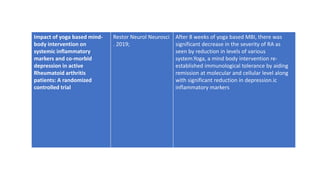
Impact of yoga based mind-
body intervention on
systemic inflammatory
markers and co-morbid
depression in active
Rheumatoid arthritis
patients: A randomized
controlled trial
Restor Neurol Neurosci
. 2019;
After 8 weeks of yoga based MBI, there was
significant decrease in the severity of RA as
seen by reduction in levels of various
system.Yoga, a mind body intervention re-
established immunological tolerance by aiding
remission at molecular and cellular level along
with significant reduction in depression.ic
inflammatory markers
Integrated Yoga Practice in
Cardiac Rehabilitation Program: A
Randomized Control Trial
J Altern Complement Med
. 2020
yoga-practicing group showed significant
reduction in depression (Cardiac
Depression Scale [CDS], U = 71, p value =
0.0), anxiety (Hamilton Anxiety Rating
Scale [HAM-A], U = 128, p value = 0.0),
and a significant increase in quality of life
(QOL) scores (Duke Activity Status Index
[DASI], U = 146, p value = 0.0; and
metabolic equivalents (METs), U =
136, p value = 0.0) at 3 months
compared to control.
Yoga in Rheumatic Diseases
Susan J. Bartlett et al
Curr Rheumatol Rep. Here, we briefly review the
literature on yoga in healthy,
musculoskeletal, and rheumatic
disease populations and offer
recommendations for discussing
ways to begin yoga with patients.
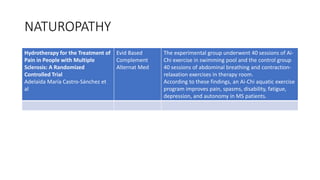
NATUROPATHY
Hydrotherapy for the Treatment of
Pain in People with Multiple
Sclerosis: A Randomized
Controlled Trial
Adelaida María Castro-Sánchez et
al
Evid Based
Complement
Alternat Med
The experimental group underwent 40 sessions of Ai-
Chi exercise in swimming pool and the control group
40 sessions of abdominal breathing and contraction-
relaxation exercises in therapy room.
According to these findings, an Ai-Chi aquatic exercise
program improves pain, spasms, disability, fatigue,
depression, and autonomy in MS patients.
MASSAGE THERAPY
• Reduces joint stiffness and
pain
• Increases joint circulation
• Reduces cortisol and
anxiety levels
• Increases serotonin
Field T, Diego M, Delgado J, Garcia D, Funk C. Rheumatoid arthritis in upper
limbs benefits from moderate pressure massage therapy. Complementary
Therapies in Clinical Practice. 2013;19(2):101-103.
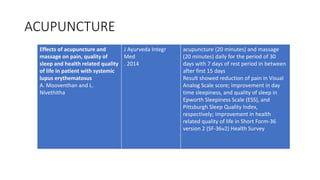
ACUPUNCTURE
Effects of acupuncture and
massage on pain, quality of
sleep and health related quality
of life in patient with systemic
lupus erythematosus
A. Mooventhan and L.
Nivethitha
J Ayurveda Integr
Med
. 2014
acupuncture (20 minutes) and massage
(20 minutes) daily for the period of 30
days with 7 days of rest period in between
after first 15 days
Result showed reduction of pain in Visual
Analog Scale score; improvement in day
time sleepiness, and quality of sleep in
Epworth Sleepiness Scale (ESS), and
Pittsburgh Sleep Quality Index,
respectively; improvement in health
related quality of life in Short Form-36
version 2 (SF-36v2) Health Survey
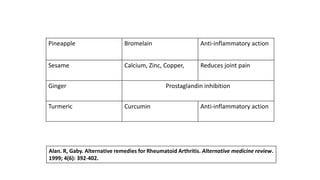
Pineapple Bromelain Anti-inflammatory action
Sesame Calcium, Zinc, Copper, Reduces joint pain
Ginger Prostaglandin inhibition
Turmeric Curcumin Anti-inflammatory action
Alan. R, Gaby. Alternative remedies for Rheumatoid Arthritis. Alternative medicine review.
1999; 4(6): 392-402.
Updated Review of
Complementary and
Alternative Medicine
Treatments for Systemic Lupus
Erythematosus
Carol M Greco, Claire
Nakajima, Susan Manzi
COMPLEMENTARY AND
ALTERNATIVE MEDICINE 2013
the use of supplements such as
vitamin D and omega 3 fatty
acids/fish oil have some
support in SLE,
turmeric/curcumin may prove
useful for reducing oxidative
stress, improving endothelial
function or proteinuria in SLE
DIET
Dietary Intervention And Health
In Patients With Systemic Lupus
Erythematosus: A Systematic
Review Of The Evidence
Marília Cristina Santos de
Medeiros et al
Critical Reviews in Food Science
and Nutrition 2018
studies evidenced that omega-3
supplementation reduced
inflammation, disease activity,
endothelial dysfunction and
oxidative stress; vitamin D
supplementation increased their
serum levels, reduced
inflammatory and hemostatic
markers; turmeric
supplementation reduced
proteinuria, hematuria and
systolic blood pressure; and low
glycaemic index diet caused
weight loss and reduced fatigue.
Weight loss and
improvements in fatigue in
systemic lupus
erythematosus: a controlled
trial of a low glycaemic
index diet versus a calorie
restricted diet in patients
treated with corticosteroids
R J Davieset al
Lupus. 2012 6 week study demonstrated that a Low GI
diet is comparable to the standard. Low
Cal diet, can achieve significant weight
loss, and is safe and well tolerated by
subjects with mild, stable SLE on long
term low dose prednisolone. There were
no disease flares on either diet.
HYDROTHERAPY
• Local and generalized steam baths
• Immersion baths
• Epsom salt baths
• Aquatic exercises in warm pool
• Arm and foot baths – for small joints of arms & feet
• Revulsive compress
• Temperatures used – neutral, warm and hot
• Hall J, Skevington S, Maddison P, Chapman K. A randomized and controlled trial of
hydrotherapy in rheumatoid arthritis. Arthritis Care & Research. 1996;9(3):206-215.
• Al-Qubaeissy K, Fatoye F, Goodwin P, Yohannes A. The Effectiveness of
Hydrotherapy in the Management of Rheumatoid Arthritis: A Systematic Review.
Musculoskeletal Care. 2012;11(1):3-18.
• Becker B. Aquatic Therapy: Scientific Foundations and Clinical Rehabilitation
Applications. PM&R. 2009;1(9):859-872.
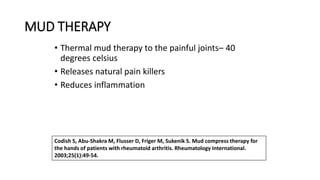
MUD THERAPY
• Thermal mud therapy to the painful joints– 40
degrees celsius
• Releases natural pain killers
• Reduces inflammation
Codish S, Abu-Shakra M, Flusser D, Friger M, Sukenik S. Mud compress therapy for
the hands of patients with rheumatoid arthritis. Rheumatology International.
2003;25(1):49-54.
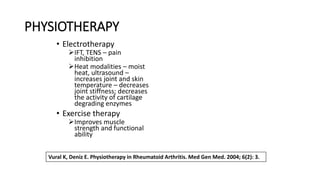
PHYSIOTHERAPY
• Electrotherapy
➢IFT, TENS – pain
inhibition
➢Heat modalities – moist
heat, ultrasound –
increases joint and skin
temperature – decreases
joint stiffness; decreases
the activity of cartilage
degrading enzymes
• Exercise therapy
➢Improves muscle
strength and functional
ability
Vural K, Deniz E. Physiotherapy in Rheumatoid Arthritis. Med Gen Med. 2004; 6(2): 3.
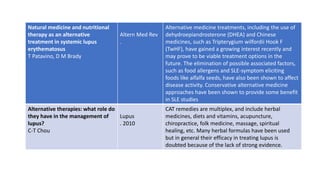
Natural medicine and nutritional
therapy as an alternative
treatment in systemic lupus
erythematosus
T Patavino, D M Brady
Altern Med Rev
.
Alternative medicine treatments, including the use of
dehydroepiandrosterone (DHEA) and Chinese
medicines, such as Tripterygium wilfordii Hook F
(TwHF), have gained a growing interest recently and
may prove to be viable treatment options in the
future. The elimination of possible associated factors,
such as food allergens and SLE-symptom eliciting
foods like alfalfa seeds, have also been shown to affect
disease activity. Conservative alternative medicine
approaches have been shown to provide some benefit
in SLE studies
Alternative therapies: what role do
they have in the management of
lupus?
C-T Chou
Lupus
. 2010
CAT remedies are multiplex, and include herbal
medicines, diets and vitamins, acupuncture,
chiropractice, folk medicine, massage, spiritual
healing, etc. Many herbal formulas have been used
but in general their efficacy in treating lupus is
doubted because of the lack of strong evidence.
References
• Pathologic basis of disease – Robbins and Cotran, chapter 6
• 2019 European League Against Rheumatism/American College of
Rheumatology classification criteria for systemic lupus erythematosus. Ann
Rheum Dis. 2019; 78(9):1151-1159 (ISSN: 1468-2060)
• 2019 European League Against Rheumatism/American College of
Rheumatology Classification Criteria for Systemic Lupus Erythematosus.
Arthritis Rheumatol. 2019; 71(9):1400-1412 (ISSN: 2326-5205)
• https://emedicine.medscape.com
Systemic lupus erythmatosus

Systemic lupus erythmatosus

  • 1.
    By, Dr. Apoorva Mukund BNYS,MD ( Yoga Clinical)
  • 2.
    Contents • History • Introduction •Prevalence • Antibodies in SLE • Etiology • Pathogenesis • Clinical manifestation • Diagnosis • Differential diagnosis • Diagnostic studies • Management
  • 3.
    History • Lupus isthe Latin word for wolf. Erythematosus means red rashes. In 1851, Dr. Cazenave discovered red rashes on a patient’s face that looked like wolf bites. He named the rash Discoid Lupus Erythematosus (DLE). • In 1885, Sir William Osler recognized that many people with lupus had a disease involving not only the skin but many other organs or systems. He named the disease Systemic Lupus Erythematosus (SLE).
  • 4.
    Introduction • SLE isthe prototype of a multisystem disease of autoimmune origin, characterized by a vast array of antibodies, particularly antinuclear antibodies (ANAs). • Acute or insidious in onset • It is a chronic remitting and relapsing, often febrile illnesss characterized principally by injury to skin, joints, kidney and serosal membranes. • However, it can affect any other organ in the body
  • 5.
    Prevalence • The reportedprevalence of systemic lupus erythematosus (SLE) in the United States is 20 to 150 cases per 100,000. In women, prevalence rates vary from 164 (White individuals) to 406 (African American individuals) per 100,000 • Estimated incidence rates are 1 to 25 per 100,000 in North America, South America, Europe, and Asia • In India, the reported prevalence of SLE is 3.2 per 100,000. Malar rash, arthritis, renal, and hematological manifestations were reported in higher proportions among North and West Indian SLE patients. In contrast, serositis and hematological manifestations were reported to be more frequent in a study conducted in SLE patients from Kolkata, East India in comparison to other manifestations.Arthritis and hematological manifestations were reported to be common in SLE patients from South India.
  • 6.
    Autoantibodies in SLE ANAsare directed against nuclear antigens and are grouped into 4 categories 1. Abs to DNA 2. Abs to histones 3. Abs to nonhistone proteins bound to RNA 4. Abs to nucleolar antigens The most widely used method for detection of ANAs is indirect immunoflouresence, which can identify antibodies that bind to variety of nuclear antigens- DNA, RNA, and proteins ( collectively called as generic ANAs)
  • 7.
    The pattern ofnuclear fluorescence suggests the type of Ab present in patient’s serum. Four basic patterns are recognized: 1. Homogenous/ diffuse staining- Abs to chromatin, histones and double stranded DNA 2. Rim/ peripheral staining- Abs to double stranded DNA 3. Speckled pattern- Abs to non DNA nuclear constituents 4. Nucleolar pattern- patients with systemic sclerosis
  • 8.
    • The immunofluorescencetest is sensitive because it is positive in almost every patient with SLE, but it is not specific. • Abs to double stranded DNA are so called Smith (Sm) antigen are virtually diagnostic test for SLE. • Other than ANAs there are other Abs ; some are against blood cells, and other react with protein in complex with phospholipids. • Antiphospholipid proteins are present in 40-50% of lupus patients • Abs against the phospholipid beta2 glycoprotein complex also binds to cardiolipin antigen, used in syphilis serology and hence lupus patients may have false positive test for syphilis. • Some of these Abs interfere with invitro clotting state such as partial thromboplastin time – lupus anticoagulant
  • 9.
    • Despite theanticoagulant some patients have complications associated with a hypercoagulable state. • The venous and arterial thromboses may be associated with recurrent spontaneous miscarriages and focal cerebral or ocular ischemia. These clinical features in association with lupus it is called as secondary antiphospholipid antibody syndrome.
  • 10.
  • 11.
    Genetic factors: MHCand non MHC genes • As many as 20% of clinically unaffected first degree relatives of SLE pts reveal autoantibodies and other immunoregulatory abnormalities. • Higher rate of concordance in monozygotic twins (>20%) as compared to dizygotic twins (1-3%) • HLA-DQ alleles have been linked in production of anti- double stranded DNA, anti Sm, anti phospholipid Ab production. Immunological factors: • Failure in self tolerance of B cells • CD4+T helper cells escape tolerance • Nuclear RNA and DNA activate B cells by TLRs • Type 1 interferons • TNF family, BAFF
  • 12.
    Environmental factors: • UVlight exposure – induces apoptosis and alters DNA for enhanced recognition of TLRs, promote IL1 production. • Sex hormones – during reproductive years • Drugs- hydralazine, procainamide & D-pencillamine
  • 13.
  • 15.
    The following manifestationswere statistically significantly more common in childhood-onset SLE: • Malar rash • Ulcers/mucocutaneous involvement • Renal involvement, proteinuria, urinary cellular casts • Seizures • Thrombocytopenia • Hemolytic anemia • Fever • Lymphadenopathy The classic presentation of a triad of fever, joint pain, and rash in a woman of childbearing age should prompt investigation into the diagnosis of SLE.
  • 16.
    Patients may presentwith any of the following types of manifestations : • Constitutional • Musculoskeletal • Dermatologic • Renal • Neuropsychiatric • Pulmonary • Gastrointestinal • Cardiac • Hematologic In patients with suggestive clinical findings, a family history of autoimmune disease should raise further suspicion of SLE.
  • 17.
    Constitutional • Fatigue, fever,arthralgia, and weight changes are the most common symptoms in new cases or recurrent active SLE flares. • Fatigue, the most common constitutional symptom associated with SLE, can be due to active SLE, medications, lifestyle habits, or concomitant fibromyalgia or affective disorders. • Fever may reflect active SLE, infection, and reactions to medications (ie, drug fever). • Always exclude an infectious etiology; patients with SLE are considered immunocompromised and are therefore at higher risk for developing infections and complications. • Weight loss may occur in patients with active SLE.
  • 18.
    Musculoskeletal • Joint painis one of the most common reasons for the initial clinical presentation of patients with SLE. • Arthralgia, myalgia, and frank arthritis may involve the small joints of the hands, wrists, and knees. • SLE arthritis or arthralgia may be asymmetrical, with pain that is disproportionate to swelling. • SLE arthropathy is rarely erosive or deforming. • Another important consideration is the increased prevalence of avascular necrosis (AVN) in the SLE population relative to healthy individuals. • Independent risk factors for AVN in patients with SLE include the use of glucocorticosteroid or cytotoxic agents and the presence of arthritis.
  • 20.
    Dermatologic • Cutaneous manifestationsof SLE include malar rash, photosensitivity, and discoid lupus. • Malar rash is characterized by erythema over the cheeks and nasal bridge (but sparing the nasolabial folds, which is in contrast to the rash of dermatomyositis). • It lasts from days to weeks and is occasionally painful or pruritic. • Photosensitivity in SLE may be either acute or chronic. • Discoid lupus is a chronic lupus rash. • Discoid lesions often also develop in sun-exposed areas but are plaque like in character, with follicular plugging and scarring. They may be part of systemic lupus or may represent discoid lupus without organ involvement, which is a separate diagnostic entity.
  • 21.
    • Subacute cutaneouslupus is a rash seen in up to 10% of SLE cases, but importantly, 50% of patients with this condition will have it in isolation without systemic lupus. • Alopecia is an often less specific cutaneous feature of SLE. • Other cutaneous manifestations related to, but not specific to, SLE include the following: ➢Raynaud phenomenon ➢Livedo reticularis ➢Panniculitis (lupus profundus) ➢Bullous lesions ➢Vasculitic purpura ➢Telangiectasias ➢Urticaria
  • 23.
    Renal • The kidneyis the most commonly involved visceral organ in SLE. • approximately 50% of patients with SLE develop clinically evident renal disease, biopsy studies demonstrate some degree of renal involvement in most patients. • Glomerular disease usually develops within the first few years of SLE onset and is often asymptomatic. • Acute or chronic renal failure may cause symptoms related to uremia and fluid overload. • Acute nephritic disease may manifest as hypertension and hematuria. Nephrotic syndrome may cause edema, weight gain, or hyperlipidemia.
  • 24.
    Neuropsychiatric • Seizures relatedto SLE may be generalized or partial and may precipitate status epilepticus. Psychosis may manifest as paranoia or hallucinations. • American College of Rheumatology (ACR) created standardized case definitions and diagnostic testing recommendations for 19 neuropsychiatric syndromes in SLE, including seizures/seizure disorders and psychosis.
  • 25.
    The remainder ofthe neuropsychiatric syndromes are as follows • Acute confusional state • Acute inflammatory demyelinating polyradiculoneuropathy (Guillain- Barre syndrome) • Anxiety disorder • Aseptic meningitis • Autonomic disorder • Cerebrovascular disease • Cognitive dysfunction • Cranial neuropathy • Demyelinating syndrome • Headache • Mononeuropathy (single/multiplex) • Mood disorders • Movement disorder (chorea) • Myasthenia gravis • Myelopathy • Plexopathy • Polyneuropathy
  • 26.
    Pulmonary • SLE maylead to multiple pulmonary complications, including pleurisy, pleural effusion, pneumonitis, pulmonary hypertension, and interstitial lung disease. • Pleuritis is one of the formal diagnostic criteria for SLE, and it can induce chest pain and a pleural effusion. The pleural effusion in lupus is exudative, with an elevated lactate dehydrogenase level. • Pleurisy with pleuritic chest pain with or without pleural effusions is the most common feature of acute pulmonary involvement in SLE. • Most seriously, hemoptysis may herald diffuse alveolar hemorrhage, a rare, acute, life-threatening pulmonary complication of SLE.
  • 27.
    Gastrointestinal • Infectious causes(bacterial, viral [eg, CMV]), because of immunosuppression. • Nausea and dyspepsia are common symptoms in patients with active SLE. • Peptic ulcer disease is a common complication, especially in SLE patients treated with nonsteroidal anti-inflammatory agents (NSAIDs) and glucocorticoids. • Occasionally, abdominal pain in active SLE may be directly related to active lupus, including peritonitis, pancreatitis, mesenteric vasculitis, and bowel infarction. • Rarely, lupus enteritis may be the initial manifestation of SLE. • Jaundice due to autoimmune hepatobiliary disease may also occur.
  • 28.
    Cardiac • Pericarditis isthe most common cardiac feature of SLE, manifesting as positional chest pain that is often relieved when the patient leans forward. • Myocarditis may occur in SLE with heart failure symptoms. • Pulmonary hypertension may present with indolent chest pain or dyspnea. • Libman-Sacks endocarditis is noninfectious but may manifest as symptoms similar to those of infective endocarditis in patients with SLE or antiphospholipid syndrome. • More commonly, accelerated ischemic coronary artery disease (CAD) is associated with SLE.
  • 29.
    Hematologic • A historyof multiple cytopenias such as leukopenia, lymphopenia, anemia, or thrombocytopenia may suggest SLE. • Leukopenia and, more specifically, lymphopenia are common in SLE; this, coupled with immunosuppression, may predispose persons with SLE to frequent infections. • Thrombocytopenia may be mild or part of a full thrombotic thrombocytopenic purpura (TTP)–like syndrome or antiphospholipid antibody syndrome. • A history of recurrent early miscarriages or a single late pregnancy loss may be clues to lupus or isolated antiphospholipid antibody syndrome.
  • 30.
    Diagnostic Considerations • Beforemaking a diagnosis of systemic lupus erythematosus (SLE), ruling out drugs as the cause of the condition is important. • Many pharmacologic agents have been associated with a lupus like syndrome (Drug-Induced Lupus Erythematosus), but procainamide, hydralazine, and isoniazid have been studied the most extensively. • Many patients who take these medications have positive antinuclear antibody test results and other serologic findings. Only a few have the clinical manifestations. • A syndrome of drug-induced SLE has been observed with minocycline and propylthiouracil. Both drugs have a decreased frequency of antihistone antibodies and anti–double-stranded DNA antibodies, and results for antineutrophil cytoplasmic antibodies are sometimes positive.
  • 31.
    Drug-induced lupus differsfrom SLE by the following features: • Sex ratios are nearly equal • Antibodies to histones are usually found in 80-90% • Nephritis and central nervous system features are not commonly present • There are no antibodies to native DNA or hypocomplementemia • Discontinuation of the drug leads to resolution of clinical manifestations and reversion of abnormal laboratory values to normal Anti-TNF drugs are reported to cause severe drug-induced lupus, including production of many SLE autoantibodies and, rarely, even nephritis
  • 32.
    Diagnosis • In September2019, the European League Against Rheumatism (EULAR) and the American College of Rheumatology (ACR) published new criteria for the classification of SLE. • The EULAR/ACR classification requires an antinuclear antibody (ANA) titer of at least 1:80 on HEp-2 cells or an equivalent positive test at least once; otherwise, the patient is considered not to have SLE. If it is present, seven clinical domains and three immunologic domains are considered. Each criterion is assigned points, ranging from 2 to 10. Patients with at least one clinical criterion and 10 or more points are classified as having SLE.
  • 33.
  • 34.
    Note the following: •A criterion should not be counted if there is a more likely explanation for it than SLE • Occurrence of a criterion on at least one occasion is sufficient • Criteria need not occur simultaneously • Within each domain, only the highest-weighted criterion is counted toward the total score
  • 35.
    Other problems tobe considered in the differential diagnosis of SLE include the following: • Discoid skin lesions • Erythematous macules • Interstitial lung disease • Leukemia • Leukopenia • Parvovirus or other viral infections • Photodistributed rash • Pleuritic chest pain • Pneumonitis • Polyarthritis/polyarthralgia • Renal vasculitis • Seizures • Stroke • Thrombocytopenia • Vasculitis
  • 36.
    Differential Diagnoses • AcutePericarditis • Antiphospholipid Syndrome • Autoimmune Hepatobilliary Disease • B-Cell Lymphoma • Fibromyalgia • Hepatitis C • Epstein-Barr Virus (EBV) Infectious Mononucleosis • Infective Endocarditis • Lyme Disease • Mixed Connective-Tissue Disease (MCTD) • Polymyositis • Rheumatoid Arthritis (RA) • Scleroderma • Sjogren Syndrome • Undifferentiated Connective-Tissue Disease
  • 37.
    Diagnostic Studies Standard laboratorystudies that are diagnostically useful when systemic lupus erythematosus (SLE) is suspected should include the following: • Complete blood count (CBC) with differential • Serum creatinine • Urinalysis with microscopy The CBC count may help screen for leukopenia, lymphopenia, anemia, and thrombocytopenia. Urinalysis and creatinine studies may be useful to screen for kidney disease.
  • 38.
    Other laboratory teststhat may be used in the diagnosis of SLE are as follows: • Erythrocyte sedimentation rate (ESR) or C-reactive protein (CRP) • Complement levels • Liver function tests • Creatine kinase assay • Spot protein/spot creatinine ratio
  • 39.
  • 41.
    Radiologic Studies • Jointradiography often provides little evidence of systemic lupus erythematosus (SLE). • The most common radiographic anomalies in SLE are periarticular osteopenia and soft-tissue swelling without erosions. • Chest imaging studies include radiography and computed tomography (CT) scanning. These modalities can be used to monitor interstitial lung disease and to assess for pneumonitis, pulmonary emboli, and alveolar hemorrhage.
  • 42.
    • The chestx-ray from a patient with lupus demonstrates a right-sided pleural effusion (yellow arrow) and atelectasis with scarring in the left lung base (blue arrow). The CT angiogram demonstrates a filling defect in the left anterior segmental artery (arrow).
  • 43.
    • Echocardiography isused to assess for pericardial effusion, pulmonary hypertension, or verrucous Libman-Sacks endocarditis. • Libman-Sacks endocarditis is the most characteristic cardiac manifestation of lupus. It is characterized by clusters of verrucae on the ventricular surface of the mitral valve. These lesions consist of accumulation of immune complexes, platelets, and mononuclear cells. This can lead to heart failure, valvular dysfunction, emboli, and secondary infective endocarditis. • Diagnosis is best made via echocardiography, which may reveal the characteristic valvular masses (arrows). IVS = interventricular septum; LA = left atrium; LV = left ventricle.
  • 44.
    • Brain magneticresonance imaging (MRI)/magnetic resonance angiography (MRA) is used to evaluate for central nervous system (CNS) lupus white-matter changes vasculitis, or stroke, although findings are often nonspecific and may be absent in as many as 42% of cases with neuropsychiatric symptoms. • This axial, T2-weighted brain magnetic resonance image (MRI) demonstrates an area of ischemia in the right periventricular white matter of a 41-year-old woman with long- standing systemic lupus erythematosus (SLE).
  • 45.
    • Investigators havesuggested that cardiac MRI (CMR) provides an excellent alternative to clinical assessment, electrocardiography, and echocardiography for diagnosing SLE myocarditis. • They reported that patients who were positive for infectious myocarditis on CMR were more symptomatic than those with active SLE disease and that more than 50% of patients with CMR-positive myocarditis had a concurrent positive endomyocardial biopsy.
  • 46.
    Joint Effusion andCSF Studies Arthrocentesis Lumbar puncture Biopsies and Histologic Features • The 2012 American College of Rheumatology (ACR) guidelines for lupus nephritis recommend renal biopsy for all cases of active, previously untreated lupus nephritis, unless contraindicated. • Renal biopsy is used to confirm the presence of lupus nephritis; to aid in classification of systemic lupus erythematosus (SLE) nephritis based on the International Society of Nephrology/Renal Pathology Society (ISN/RPS) classification and to guide therapeutic decisions. • Another benefit of renal biopsy is in distinguishing renal lupus from renal vein thrombosis, which may be a complication of antiphospholipid antibody syndrome and require anticoagulation rather than immunomodulatory therapy.
  • 47.
    Renal biopsy isindicated in the presence of the following features • Increasing serum creatinine in the absence of strong evidence for another etiology (eg, sepsis, hypovolemia, medication) • Proteinuria of more than 1.0 g per 24 hours, as confirmed by 24-hour urine specimens or spot protein/spot creatinine ratios • Proteinuria of 0.5 g or more per 24 hours, along with either (1) hematuria (≥5 RBCs/hpf) or (2) cellular casts, as confirmed by a minimum of 2 tests within a short period and in the absence of alternative causes
  • 48.
    International Society ofNephrology 2003 Revised Classification of SLE Nephritis
  • 51.
    Histologic images ofa normal renal cortex and of various stages of SLE are shown below. Histologic image of a normal renal cortex, including the glomerulus (1) and proximal (2) and distal (3) convoluted tubule Mesangial proliferative lupus nephritis with moderate mesangial hypercellularity. Membranous lupus nephritis showing thickened glomerular basement membrane.
  • 52.
    Skin biopsies • Skinbiopsy can help in diagnosing SLE or unusual rashes in patients with this condition • Lupus skin rash often demonstrates inflammatory infiltrates at the dermoepidermal junction and vacuolar change in the basal columnar cells. • Discoid lesions demonstrate more-significant skin inflammation, with hyperkeratosis, follicular plugging, edema, and mononuclear cell infiltration at the dermoepidermal junction. • In many SLE rashes, immunofluorescent stains demonstrate immunoglobulin and complement deposits at the dermoepidermal basement.
  • 53.
    Lupus band test.Microphotograph of a histologic section of human skin prepared for direct immunofluorescence using an anti-IgG antibody. The skin is from a patient with systemic lupus erythematosus and shows IgG deposit at 2 different places: the first is a band-like deposit along the epidermal basement membrane ("lupus band test" is positive); the second is within the nuclei of the epidermal cells (anti-nuclear antibodies). Microphotograph of a fixed Hep-2 line cell prepared for indirect immunofluorescence. The preparation was exposed to a serum of a patient with systemic lupus erythematosus and labeled using a murine anti-human immunoglobulin G (IgG) antibody. It shows IgG deposit in the nucleus and nonspecific deposit in the cytoplasm.
  • 54.
  • 57.
  • 58.
  • 59.
    Integrated Approch ofNaturopathy& Yoga • AIMS AND OBJECTIVES • To reduce mental and physical stress • Treat the symptoms and inflammation. • Control the autoimmune reactions. • To improve the tone & power of muscles • To correct the metabolic disturbance • To improve the quality of life • To improve vitality • To reduce the dependency on steroids
  • 60.
    Management Naturopathy-A detailed case historywith more emphasis on life style factors is helpful. Example eating habits, sleeping patterns, stress, occupation, posture, sun exposure, water drinking, bowel movements, micturition, substance abuse, physical activity, allergies etc Nutrition- Diet patterns Weight management antioxidants Leaky gut Yoga-by considering the Panchakosha theory, levels of stress and mental attitude needs to be elicited and accordingly diagnosis is made as to which sheath(kosha) is most affected.
  • 61.
    •Auto immune diseasesare by exacerbated stress and yoga helps in relieving it. •Yoga therapy , a mind body intervention, is effective in reducing weight, dyslipidemia, depression, and also balances the autonomous nervous system. •Improves quality of life by reducing symptoms like pain, fatigue etc YOGA
  • 62.
    Annamaya kosha • Looseningexecrises( Sukshma vyayama). • Ardhakatichakrasana. • Pavanamuktasana. • Trikonasana. • Vakrasana • Shashankasana. • Suryanamaskara. • Ardha shalabasana. Pranamaya kosha • Nadi Shodhana • Bhramari • Surya Bedhana • Surya Anuloma Viloma. • Ujjai
  • 63.
    Manomaya kosha ❑Meditation ❑Relaxation technique Vijnamayakosha ❑Yogic counseling. ❑Knowledge of diet.
  • 64.
    Impact of yogabased mind- body intervention on systemic inflammatory markers and co-morbid depression in active Rheumatoid arthritis patients: A randomized controlled trial Restor Neurol Neurosci . 2019; After 8 weeks of yoga based MBI, there was significant decrease in the severity of RA as seen by reduction in levels of various system.Yoga, a mind body intervention re- established immunological tolerance by aiding remission at molecular and cellular level along with significant reduction in depression.ic inflammatory markers
  • 65.
    Integrated Yoga Practicein Cardiac Rehabilitation Program: A Randomized Control Trial J Altern Complement Med . 2020 yoga-practicing group showed significant reduction in depression (Cardiac Depression Scale [CDS], U = 71, p value = 0.0), anxiety (Hamilton Anxiety Rating Scale [HAM-A], U = 128, p value = 0.0), and a significant increase in quality of life (QOL) scores (Duke Activity Status Index [DASI], U = 146, p value = 0.0; and metabolic equivalents (METs), U = 136, p value = 0.0) at 3 months compared to control.
  • 66.
    Yoga in RheumaticDiseases Susan J. Bartlett et al Curr Rheumatol Rep. Here, we briefly review the literature on yoga in healthy, musculoskeletal, and rheumatic disease populations and offer recommendations for discussing ways to begin yoga with patients.
  • 67.
    NATUROPATHY Hydrotherapy for theTreatment of Pain in People with Multiple Sclerosis: A Randomized Controlled Trial Adelaida María Castro-Sánchez et al Evid Based Complement Alternat Med The experimental group underwent 40 sessions of Ai- Chi exercise in swimming pool and the control group 40 sessions of abdominal breathing and contraction- relaxation exercises in therapy room. According to these findings, an Ai-Chi aquatic exercise program improves pain, spasms, disability, fatigue, depression, and autonomy in MS patients.
  • 68.
    MASSAGE THERAPY • Reducesjoint stiffness and pain • Increases joint circulation • Reduces cortisol and anxiety levels • Increases serotonin Field T, Diego M, Delgado J, Garcia D, Funk C. Rheumatoid arthritis in upper limbs benefits from moderate pressure massage therapy. Complementary Therapies in Clinical Practice. 2013;19(2):101-103.
  • 69.
    ACUPUNCTURE Effects of acupunctureand massage on pain, quality of sleep and health related quality of life in patient with systemic lupus erythematosus A. Mooventhan and L. Nivethitha J Ayurveda Integr Med . 2014 acupuncture (20 minutes) and massage (20 minutes) daily for the period of 30 days with 7 days of rest period in between after first 15 days Result showed reduction of pain in Visual Analog Scale score; improvement in day time sleepiness, and quality of sleep in Epworth Sleepiness Scale (ESS), and Pittsburgh Sleep Quality Index, respectively; improvement in health related quality of life in Short Form-36 version 2 (SF-36v2) Health Survey
  • 70.
    Pineapple Bromelain Anti-inflammatoryaction Sesame Calcium, Zinc, Copper, Reduces joint pain Ginger Prostaglandin inhibition Turmeric Curcumin Anti-inflammatory action Alan. R, Gaby. Alternative remedies for Rheumatoid Arthritis. Alternative medicine review. 1999; 4(6): 392-402.
  • 71.
    Updated Review of Complementaryand Alternative Medicine Treatments for Systemic Lupus Erythematosus Carol M Greco, Claire Nakajima, Susan Manzi COMPLEMENTARY AND ALTERNATIVE MEDICINE 2013 the use of supplements such as vitamin D and omega 3 fatty acids/fish oil have some support in SLE, turmeric/curcumin may prove useful for reducing oxidative stress, improving endothelial function or proteinuria in SLE DIET
  • 72.
    Dietary Intervention AndHealth In Patients With Systemic Lupus Erythematosus: A Systematic Review Of The Evidence Marília Cristina Santos de Medeiros et al Critical Reviews in Food Science and Nutrition 2018 studies evidenced that omega-3 supplementation reduced inflammation, disease activity, endothelial dysfunction and oxidative stress; vitamin D supplementation increased their serum levels, reduced inflammatory and hemostatic markers; turmeric supplementation reduced proteinuria, hematuria and systolic blood pressure; and low glycaemic index diet caused weight loss and reduced fatigue.
  • 73.
    Weight loss and improvementsin fatigue in systemic lupus erythematosus: a controlled trial of a low glycaemic index diet versus a calorie restricted diet in patients treated with corticosteroids R J Davieset al Lupus. 2012 6 week study demonstrated that a Low GI diet is comparable to the standard. Low Cal diet, can achieve significant weight loss, and is safe and well tolerated by subjects with mild, stable SLE on long term low dose prednisolone. There were no disease flares on either diet.
  • 74.
    HYDROTHERAPY • Local andgeneralized steam baths • Immersion baths • Epsom salt baths • Aquatic exercises in warm pool • Arm and foot baths – for small joints of arms & feet • Revulsive compress • Temperatures used – neutral, warm and hot • Hall J, Skevington S, Maddison P, Chapman K. A randomized and controlled trial of hydrotherapy in rheumatoid arthritis. Arthritis Care & Research. 1996;9(3):206-215. • Al-Qubaeissy K, Fatoye F, Goodwin P, Yohannes A. The Effectiveness of Hydrotherapy in the Management of Rheumatoid Arthritis: A Systematic Review. Musculoskeletal Care. 2012;11(1):3-18. • Becker B. Aquatic Therapy: Scientific Foundations and Clinical Rehabilitation Applications. PM&R. 2009;1(9):859-872.
  • 75.
    MUD THERAPY • Thermalmud therapy to the painful joints– 40 degrees celsius • Releases natural pain killers • Reduces inflammation Codish S, Abu-Shakra M, Flusser D, Friger M, Sukenik S. Mud compress therapy for the hands of patients with rheumatoid arthritis. Rheumatology International. 2003;25(1):49-54.
  • 76.
    PHYSIOTHERAPY • Electrotherapy ➢IFT, TENS– pain inhibition ➢Heat modalities – moist heat, ultrasound – increases joint and skin temperature – decreases joint stiffness; decreases the activity of cartilage degrading enzymes • Exercise therapy ➢Improves muscle strength and functional ability Vural K, Deniz E. Physiotherapy in Rheumatoid Arthritis. Med Gen Med. 2004; 6(2): 3.
  • 77.
    Natural medicine andnutritional therapy as an alternative treatment in systemic lupus erythematosus T Patavino, D M Brady Altern Med Rev . Alternative medicine treatments, including the use of dehydroepiandrosterone (DHEA) and Chinese medicines, such as Tripterygium wilfordii Hook F (TwHF), have gained a growing interest recently and may prove to be viable treatment options in the future. The elimination of possible associated factors, such as food allergens and SLE-symptom eliciting foods like alfalfa seeds, have also been shown to affect disease activity. Conservative alternative medicine approaches have been shown to provide some benefit in SLE studies Alternative therapies: what role do they have in the management of lupus? C-T Chou Lupus . 2010 CAT remedies are multiplex, and include herbal medicines, diets and vitamins, acupuncture, chiropractice, folk medicine, massage, spiritual healing, etc. Many herbal formulas have been used but in general their efficacy in treating lupus is doubted because of the lack of strong evidence.
  • 78.
    References • Pathologic basisof disease – Robbins and Cotran, chapter 6 • 2019 European League Against Rheumatism/American College of Rheumatology classification criteria for systemic lupus erythematosus. Ann Rheum Dis. 2019; 78(9):1151-1159 (ISSN: 1468-2060) • 2019 European League Against Rheumatism/American College of Rheumatology Classification Criteria for Systemic Lupus Erythematosus. Arthritis Rheumatol. 2019; 71(9):1400-1412 (ISSN: 2326-5205) • https://emedicine.medscape.com