Prof. Karan S. Chauhan
Assistant Professor
Department Of Civil Engineering
@ Shri Labhubhai Trivedi Institute
Of Engineering And
Technology,Rajkot
Shri Labhubhai TrivediShri Labhubhai Trivedi
Institute of Engineering &Institute of Engineering &
Technology, RajkotTechnology, Rajkot
Shallow FoundationShallow Foundation
Subject Code : 2130607
Subject:- Building Construction
 Substructure or foundation is the lower portion of
the building located below ground level which
transmit the loads of the super structure to the sub
soil.
 It is directly contacted with sub soil
 Lowest portion of foundation called footing
Reduction of load intensity
Even distribution of load
Provision of level surface
Lateral stability
Safety against undermining/scouring due to
flood water and borrowing animals
Protection against soil movements
 It should be sustain dead load and live load and safely transmit
to sub soil without settlement.
 Provide stability & safety to structure or building.
 It should be rigid for different settlement can be minimised
specially for super impose load
 it should be provide deep guard to building for damage & di-
stress by swelling or shrinkage of sub-soil.
 It should be perform for at least as its design life period.
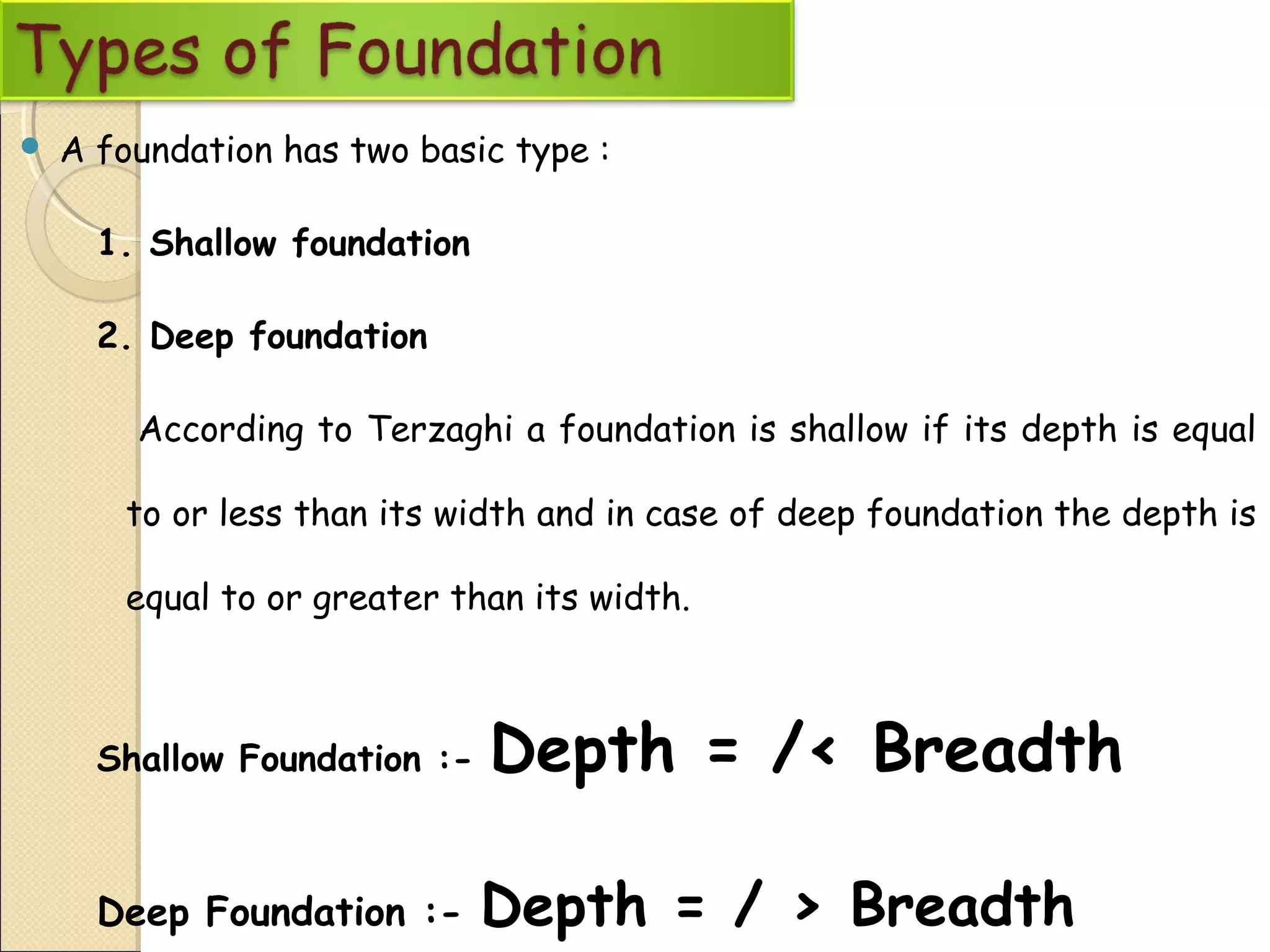
 A foundation has two basic type :
1. Shallow foundation
2. Deep foundation
According to Terzaghi a foundation is shallow if its depth is equal
to or less than its width and in case of deep foundation the depth is
equal to or greater than its width.
Shallow Foundation :- Depth = /< Breadth
Deep Foundation :- Depth = / > Breadth
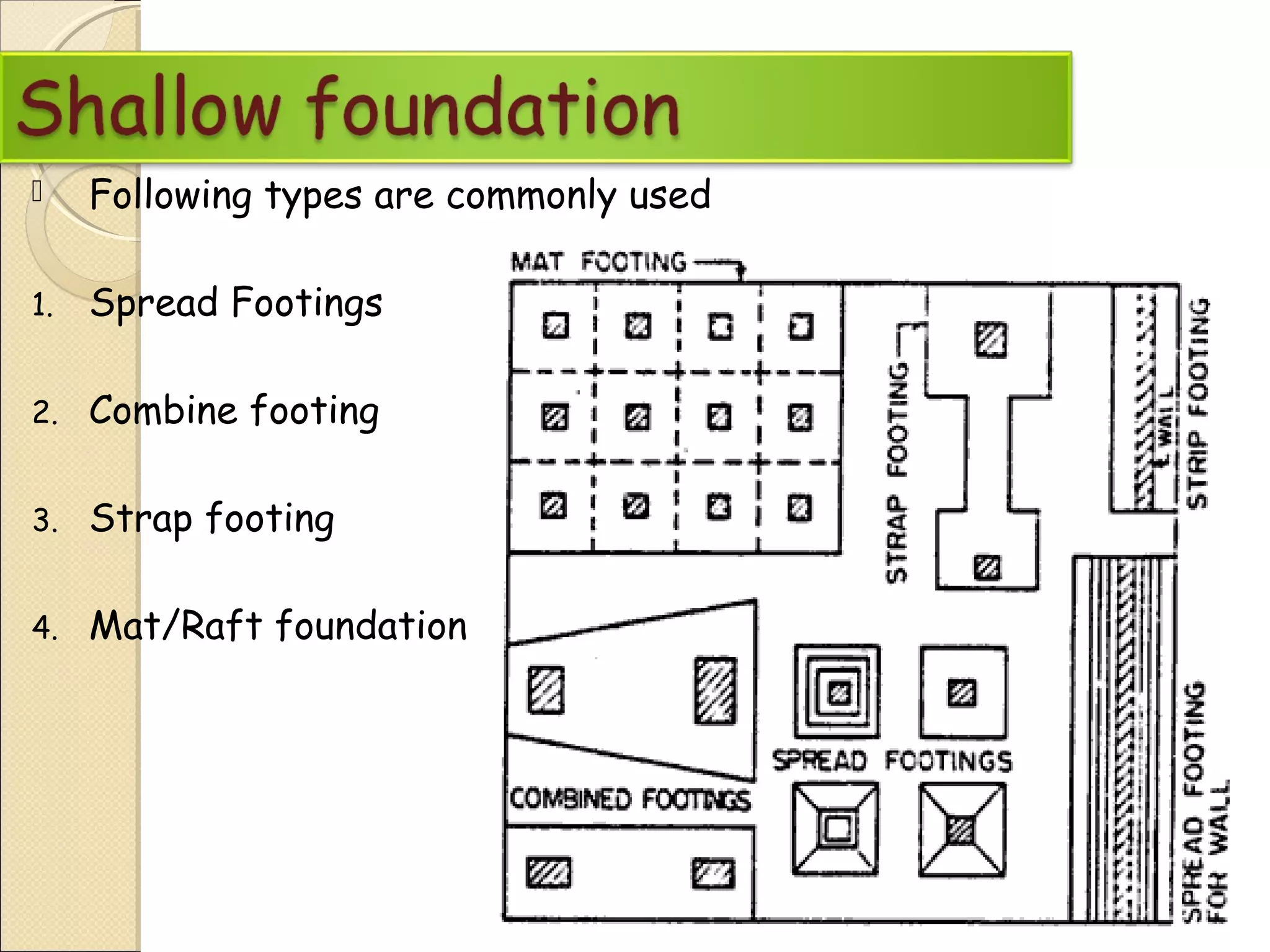
 Following types are commonly used
1. Spread Footings
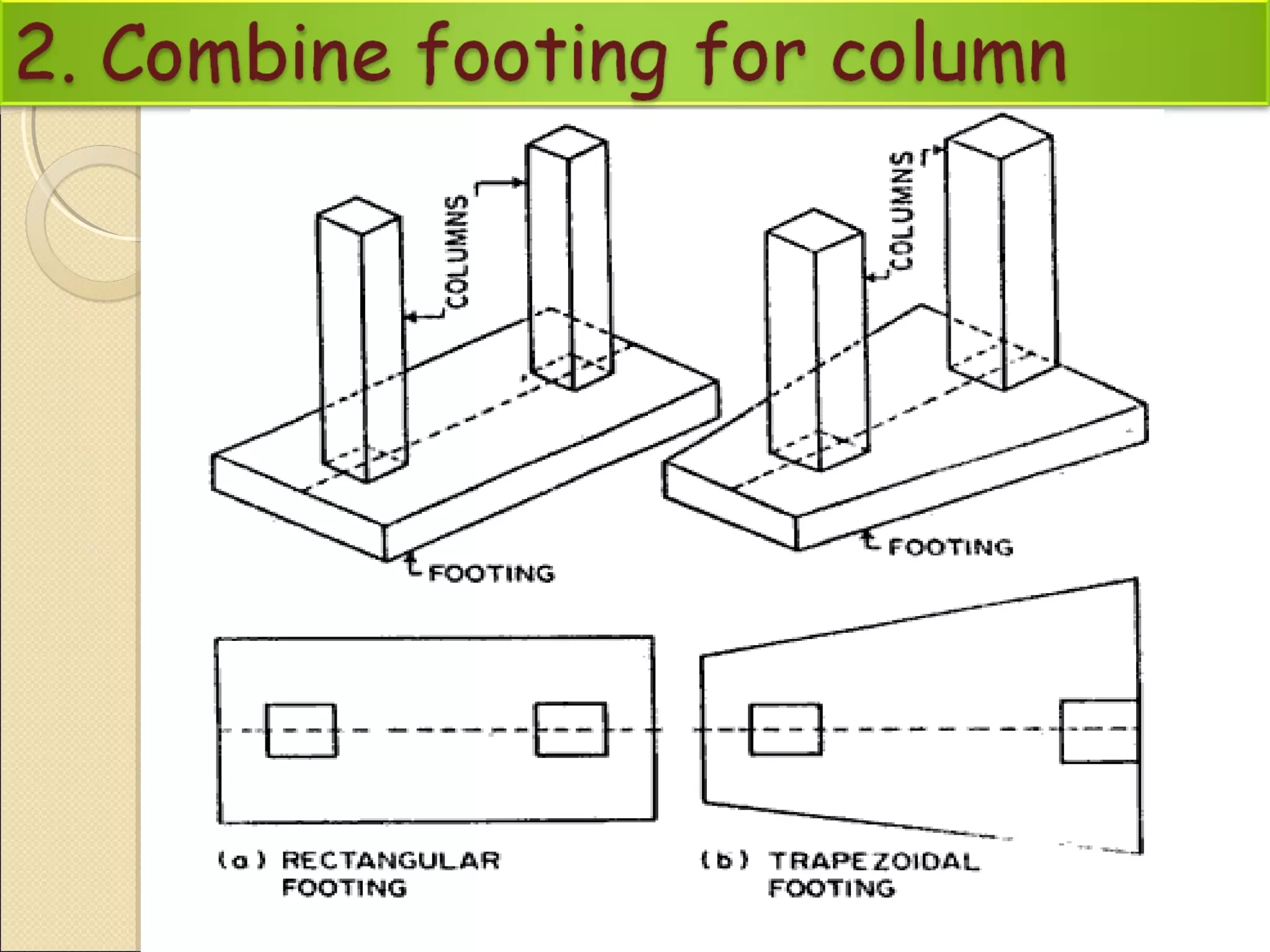
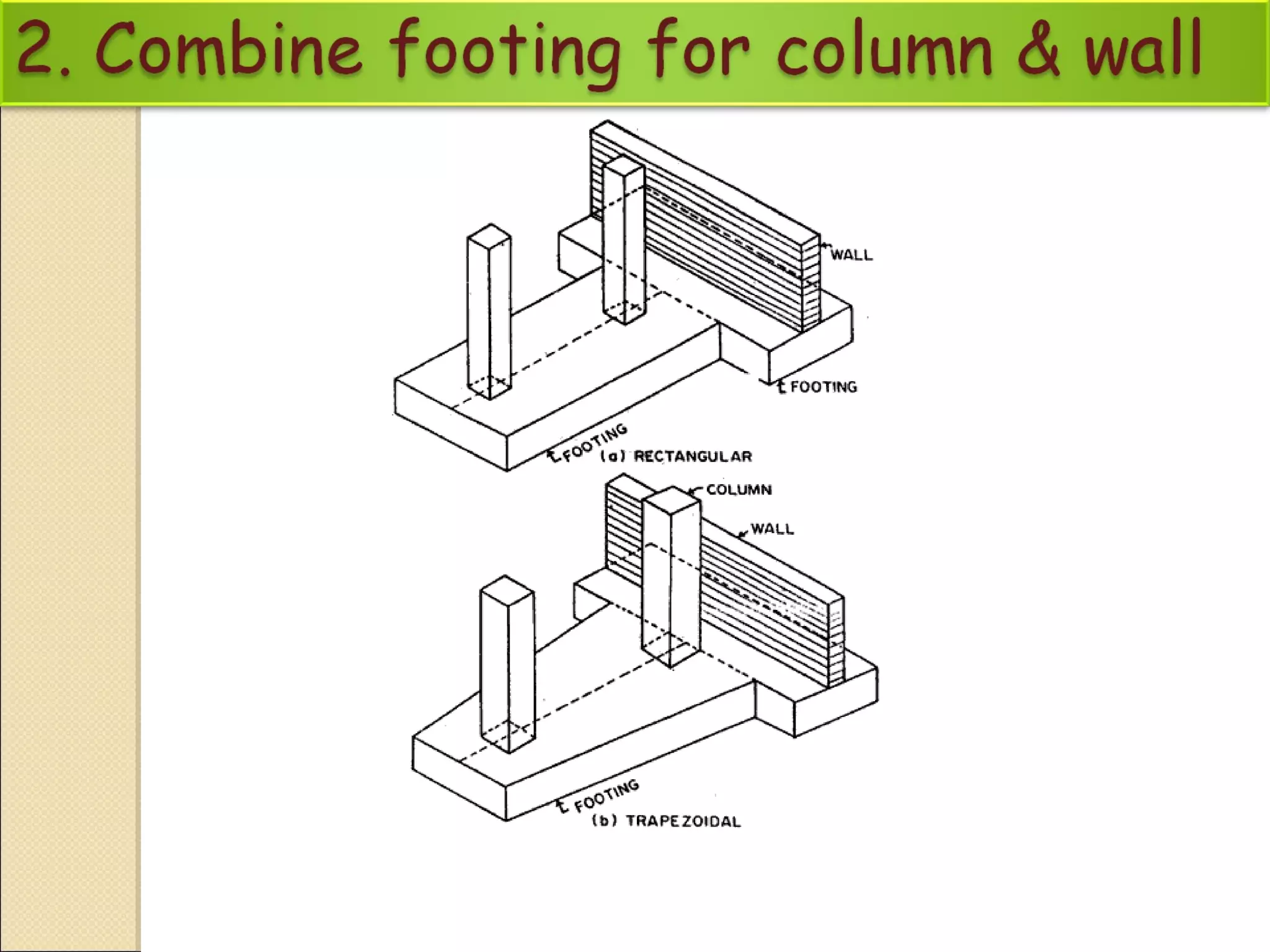
2. Combine footing
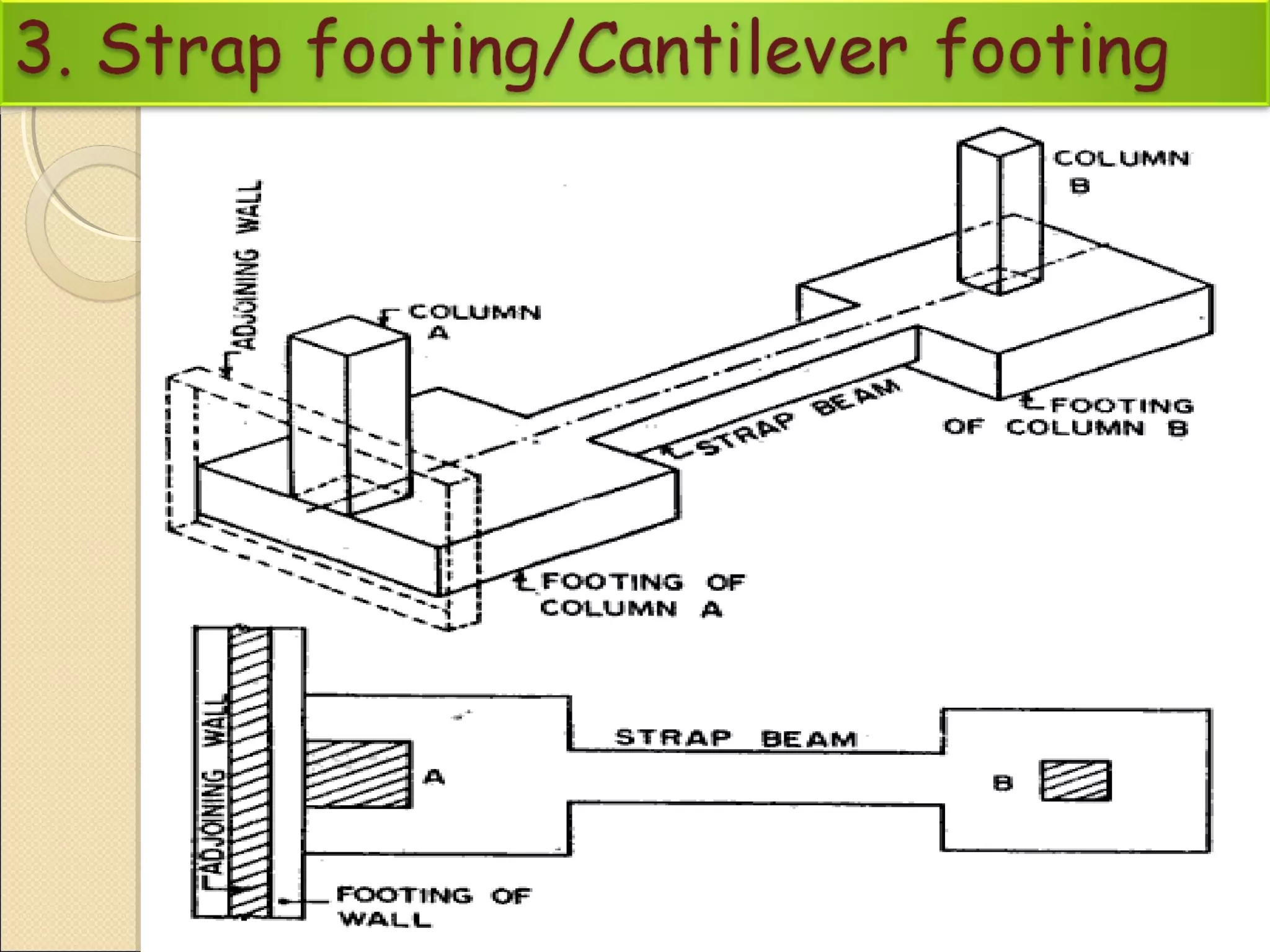
3. Strap footing
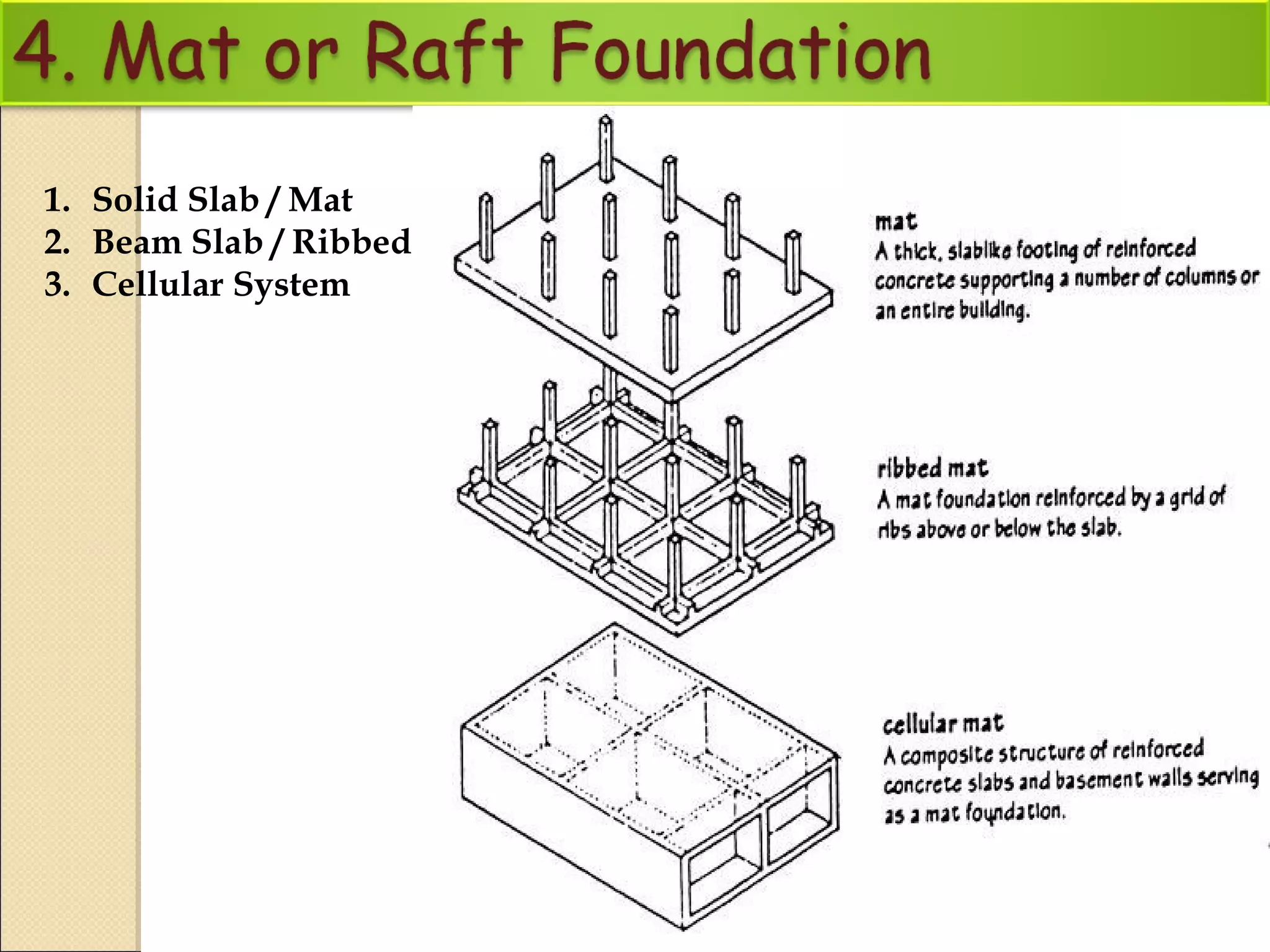
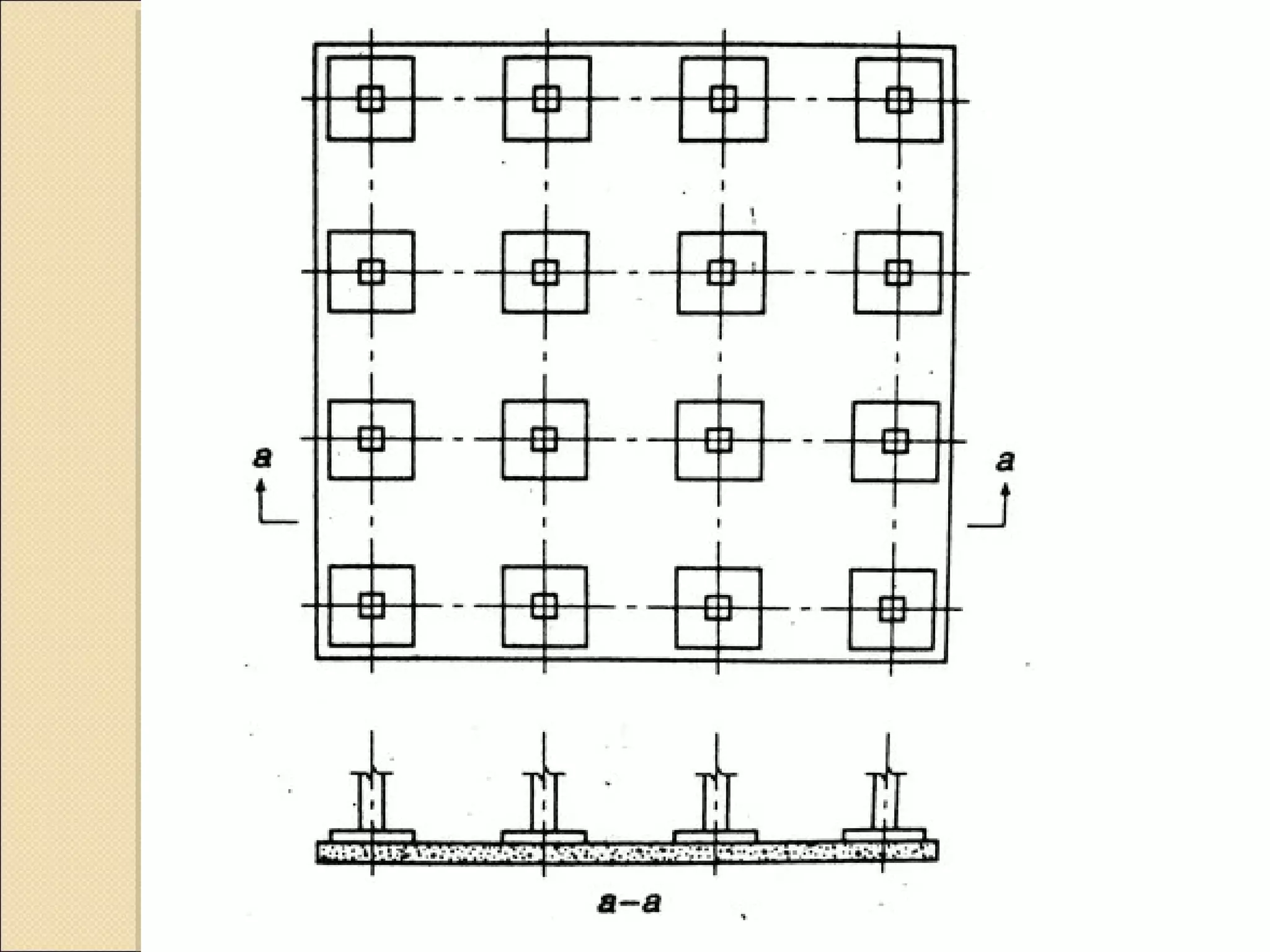
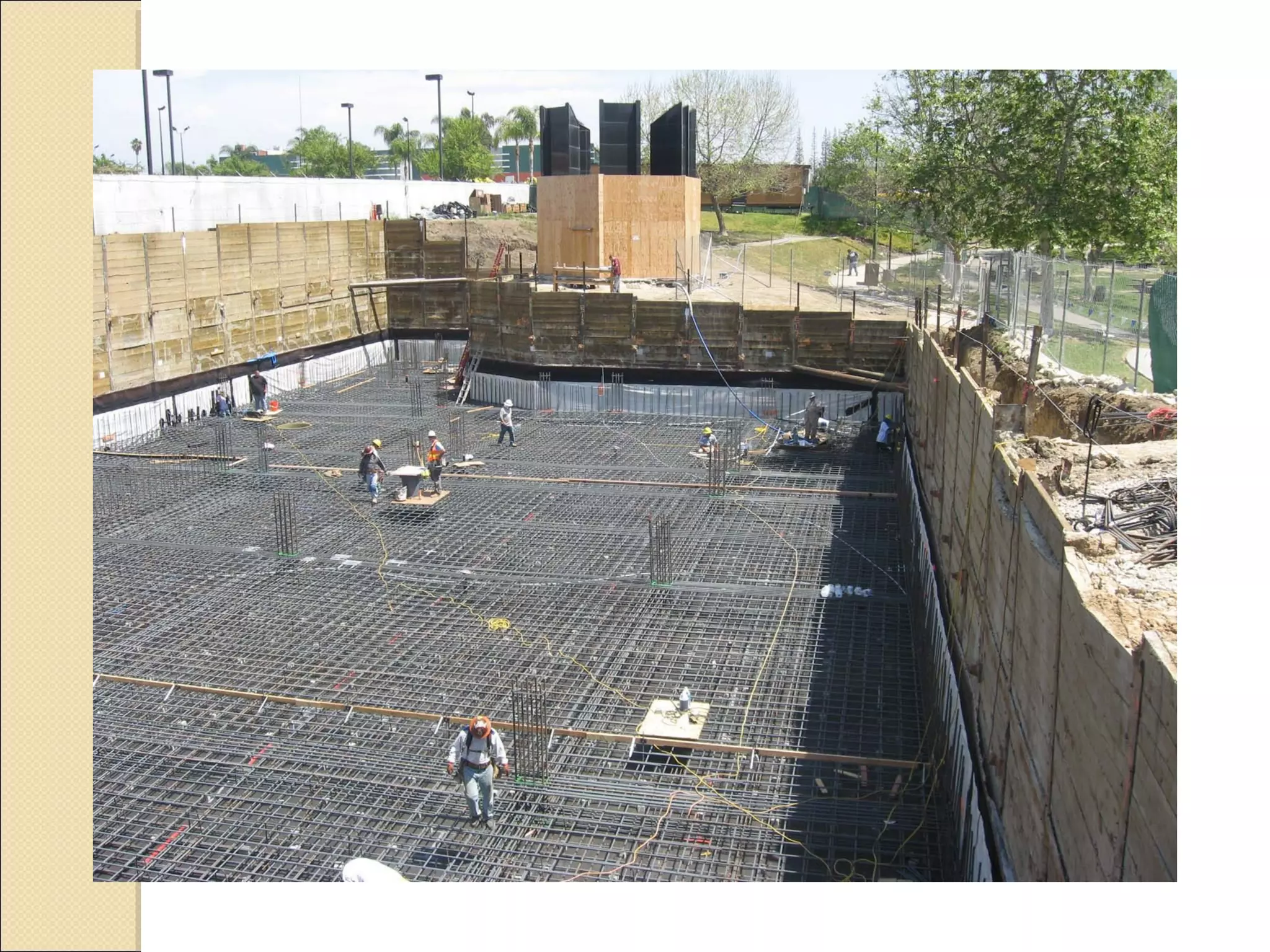
4. Mat/Raft foundation
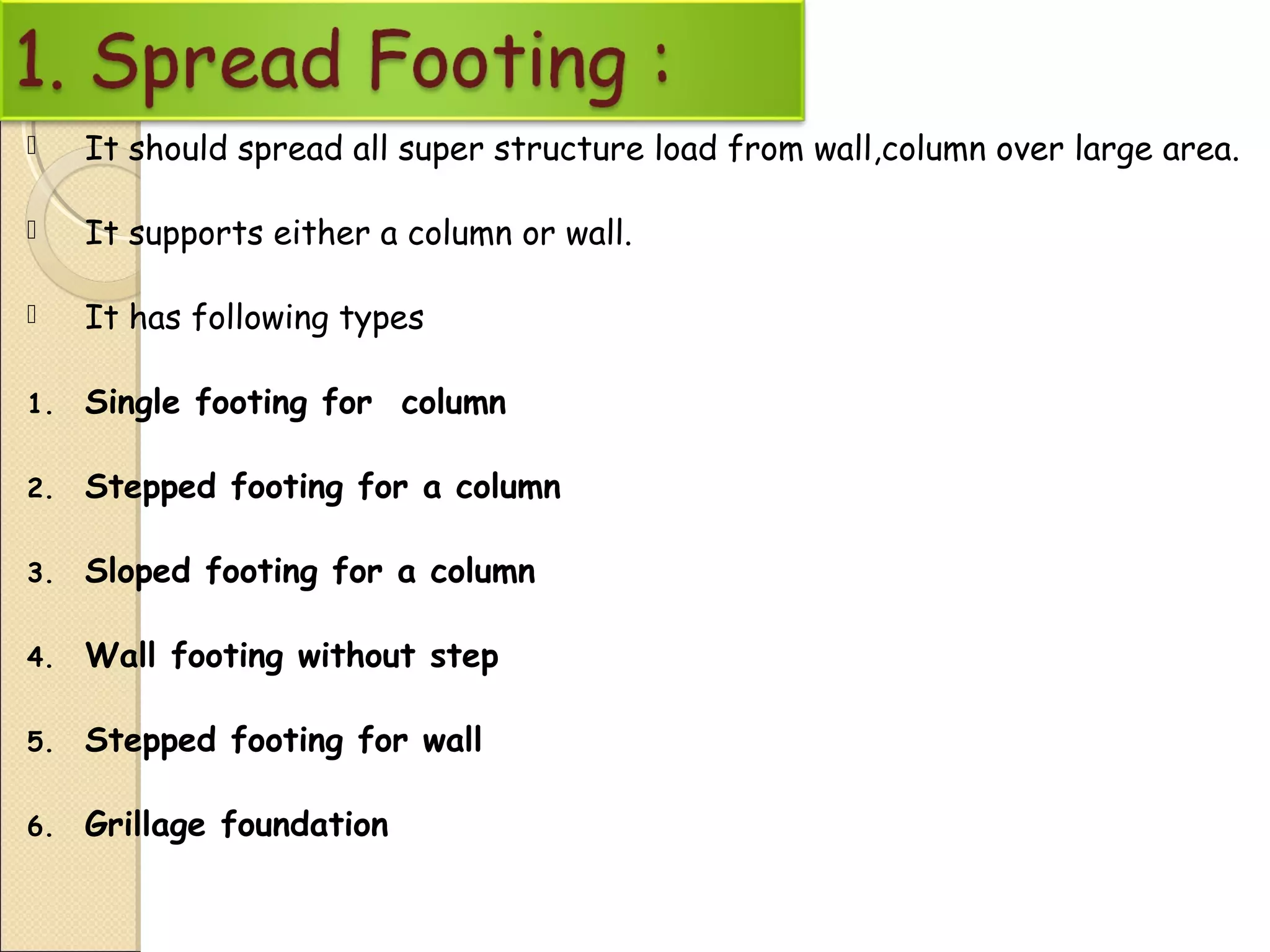
 It should spread all super structure load from wall,column over large area.
 It supports either a column or wall.
 It has following types
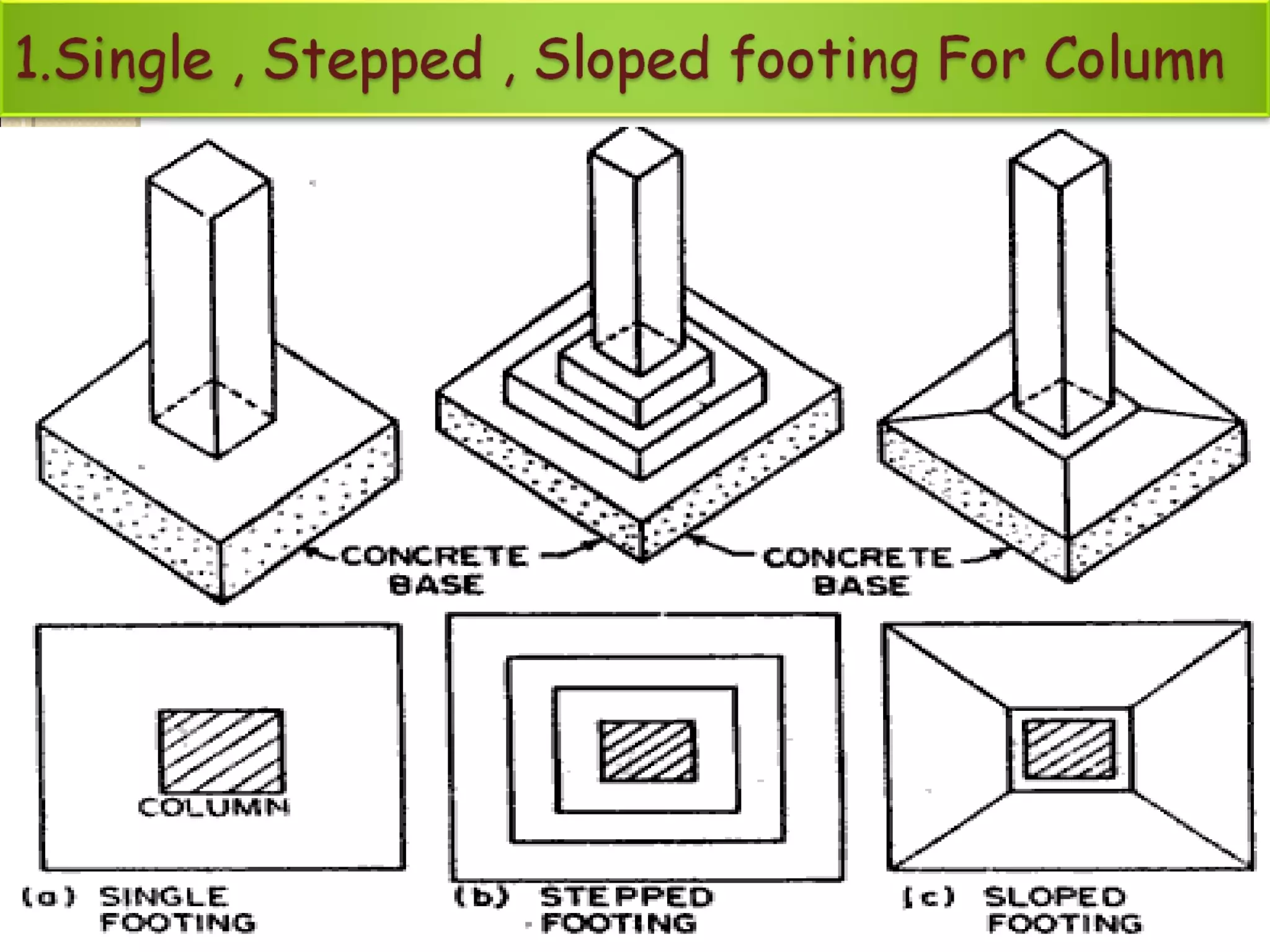
1. Single footing for column
2. Stepped footing for a column
3. Sloped footing for a column
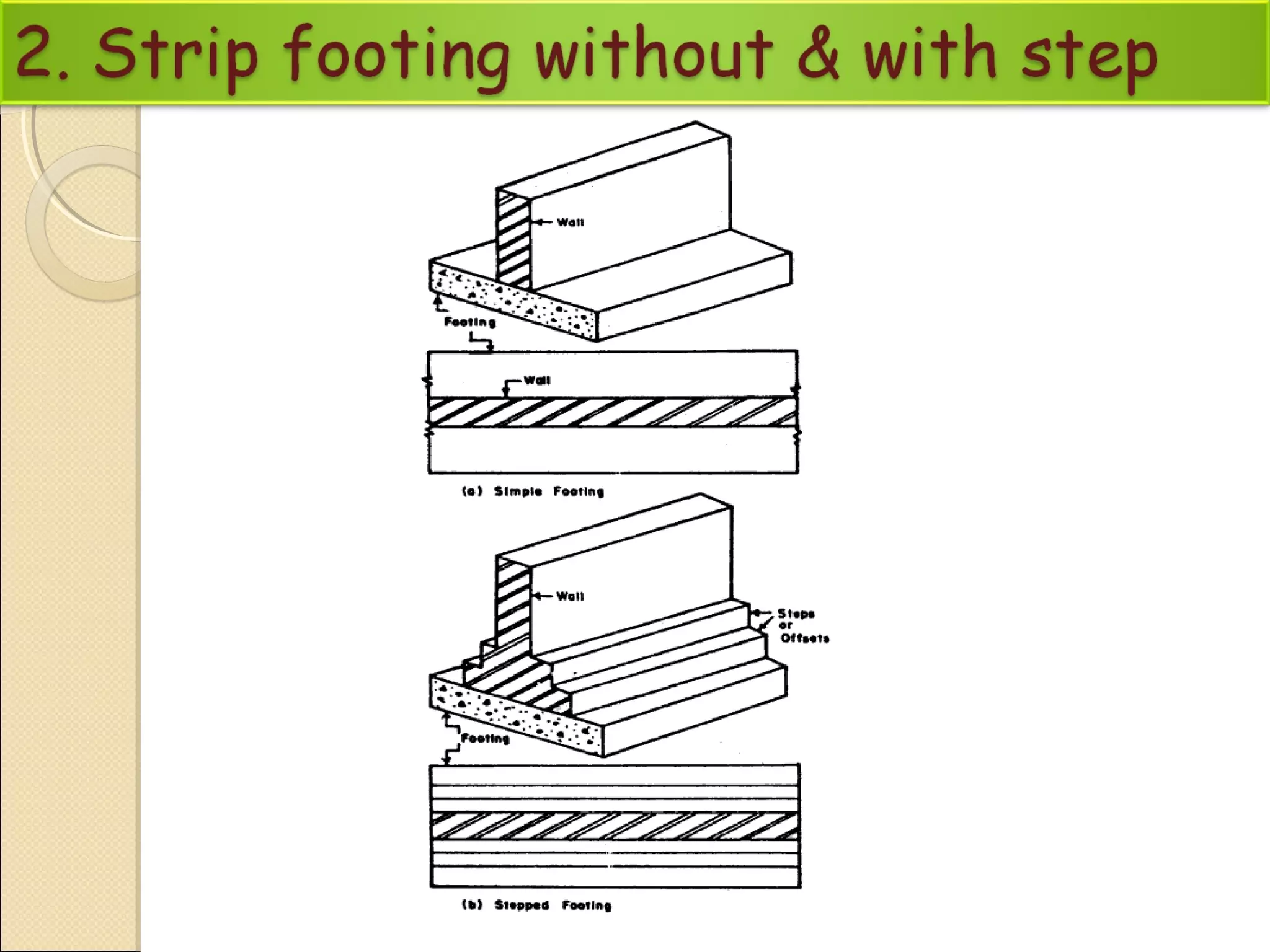
4. Wall footing without step
5. Stepped footing for wall
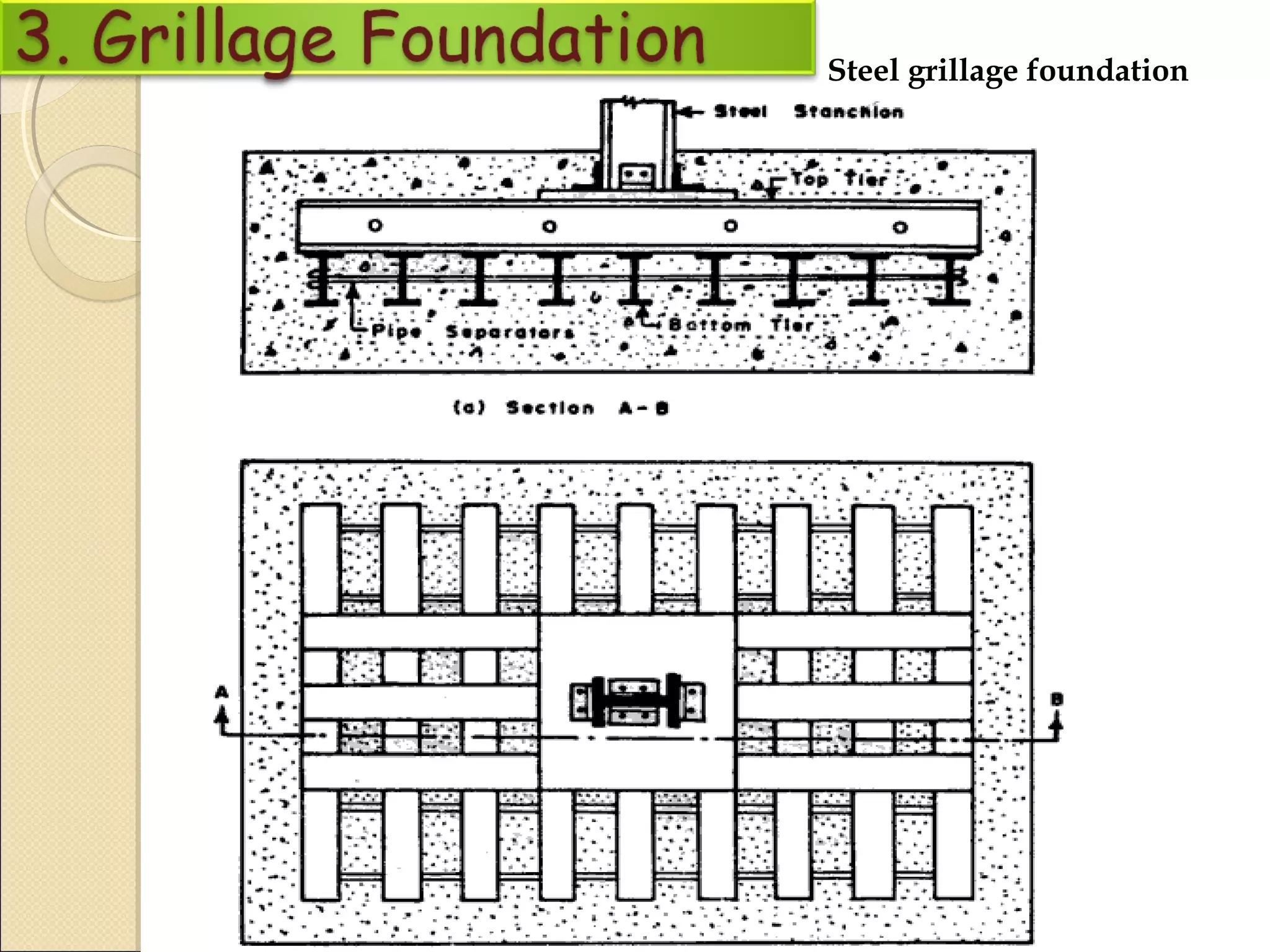
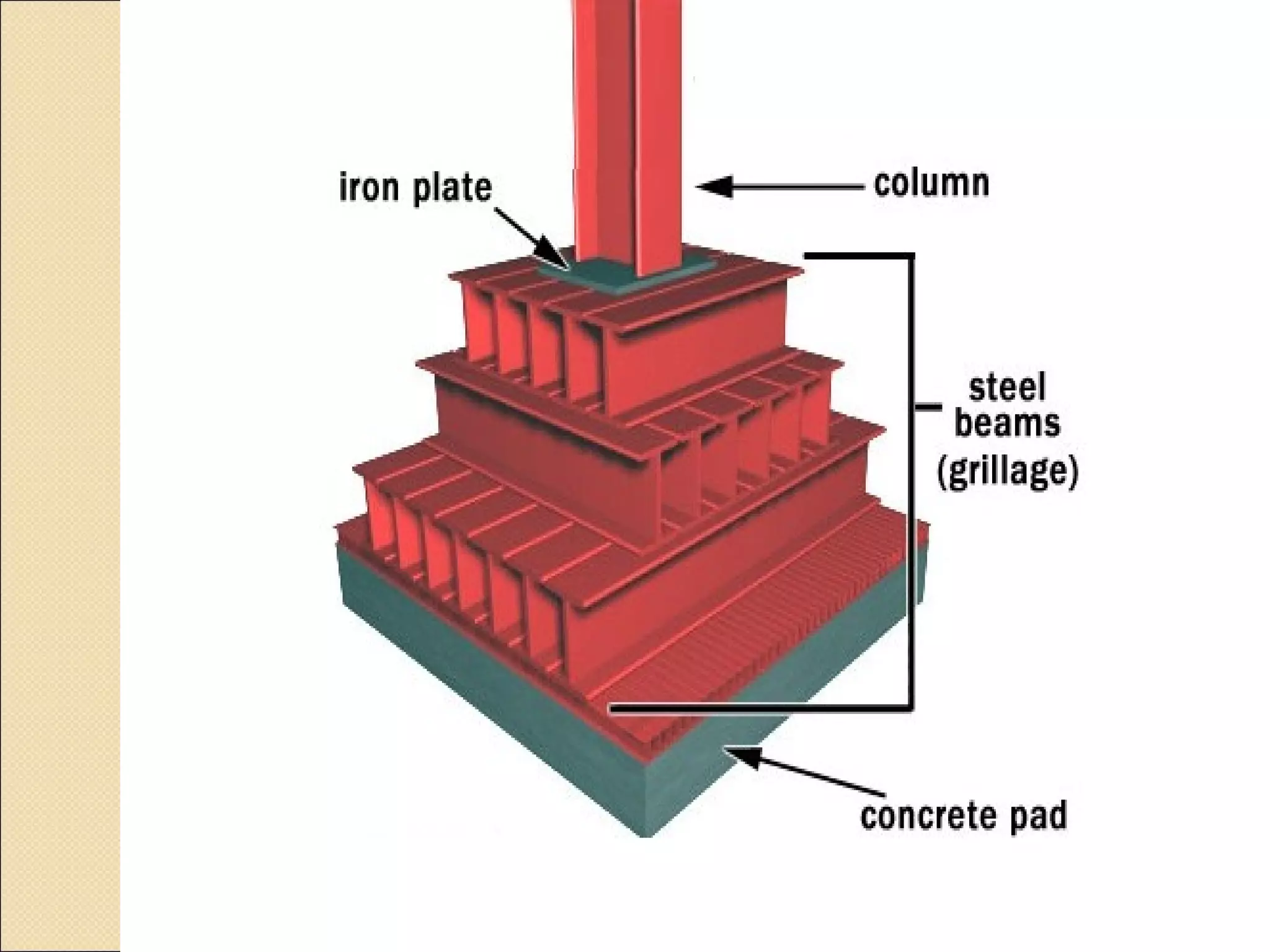
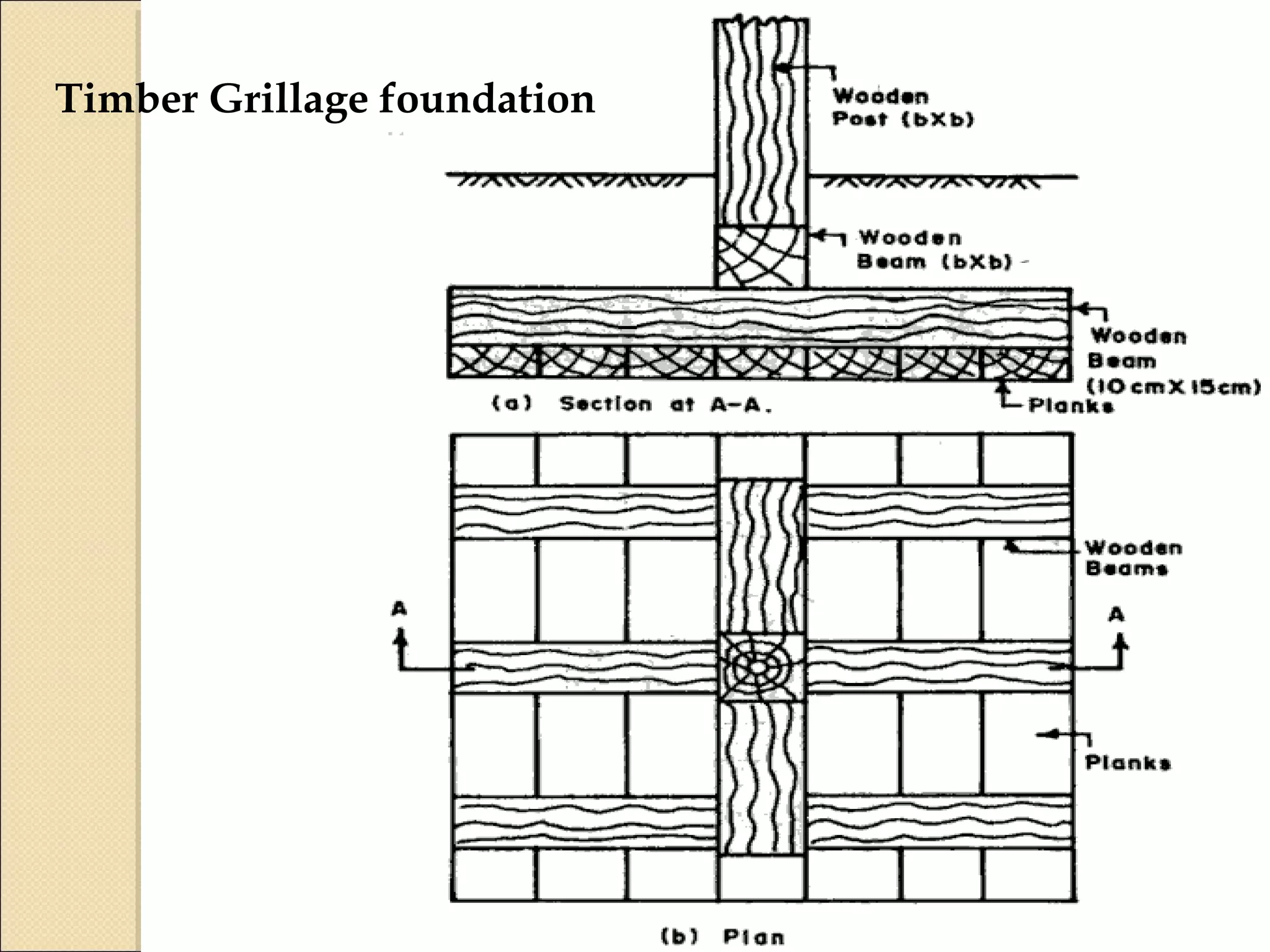
6. Grillage foundation
Steel grillage foundation
Timber Grillage foundation
1. Solid Slab / Mat
2. Beam Slab / Ribbed
3. Cellular System
Black cotton soil called expandable soil.
It is very dangerous due to its volumetric
changes with the change of atmospheric
condition.
Due to more swelling & shrinkage formed
cracks and sometimes wide 15 to 20 cm and deep
about 2.5 to 4 m.
Foundation should be taken at such depth where
cracks can not extend. Depth at least 1.5 m.
If depth does not exceed 1.5 m then entire black cotton
soil may be removed and foundation should be laid on
hard bed.
Foundation or masonry work does not directly contact
with B.C. soil, it can be done by wider & deeper trench
for foundation by filling sand or moorum on either side
or below foundation.
Bed of foundation should be made firm or hard by
ramming per 30 cm layer, moorum should be 15 cm each
layer which is well watered & rammed.
Construction should be made in dry season if
possible.
1.Strip or Pad foundation
2.Pier Foundation
3.Under-reamed pile foundation
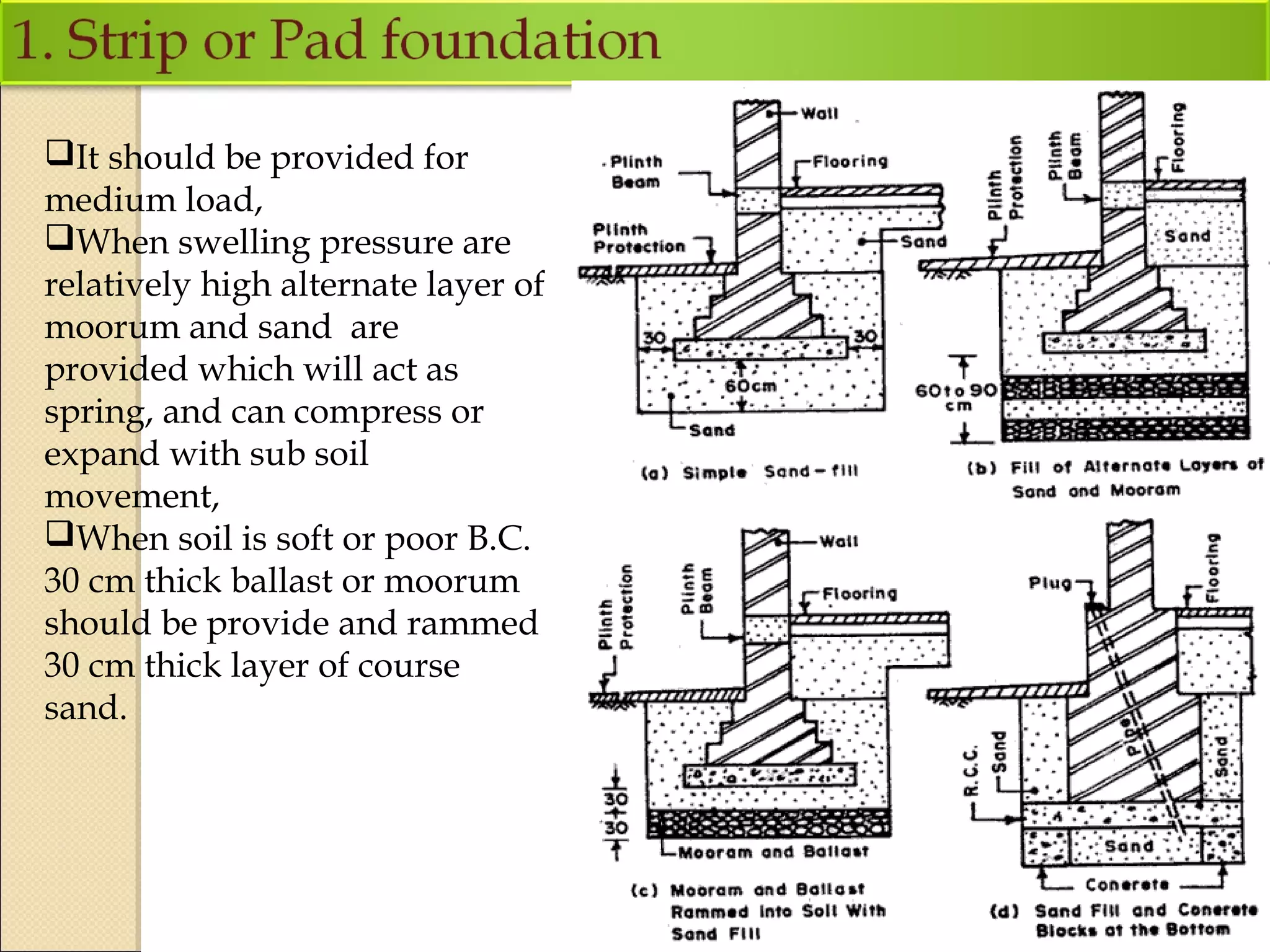
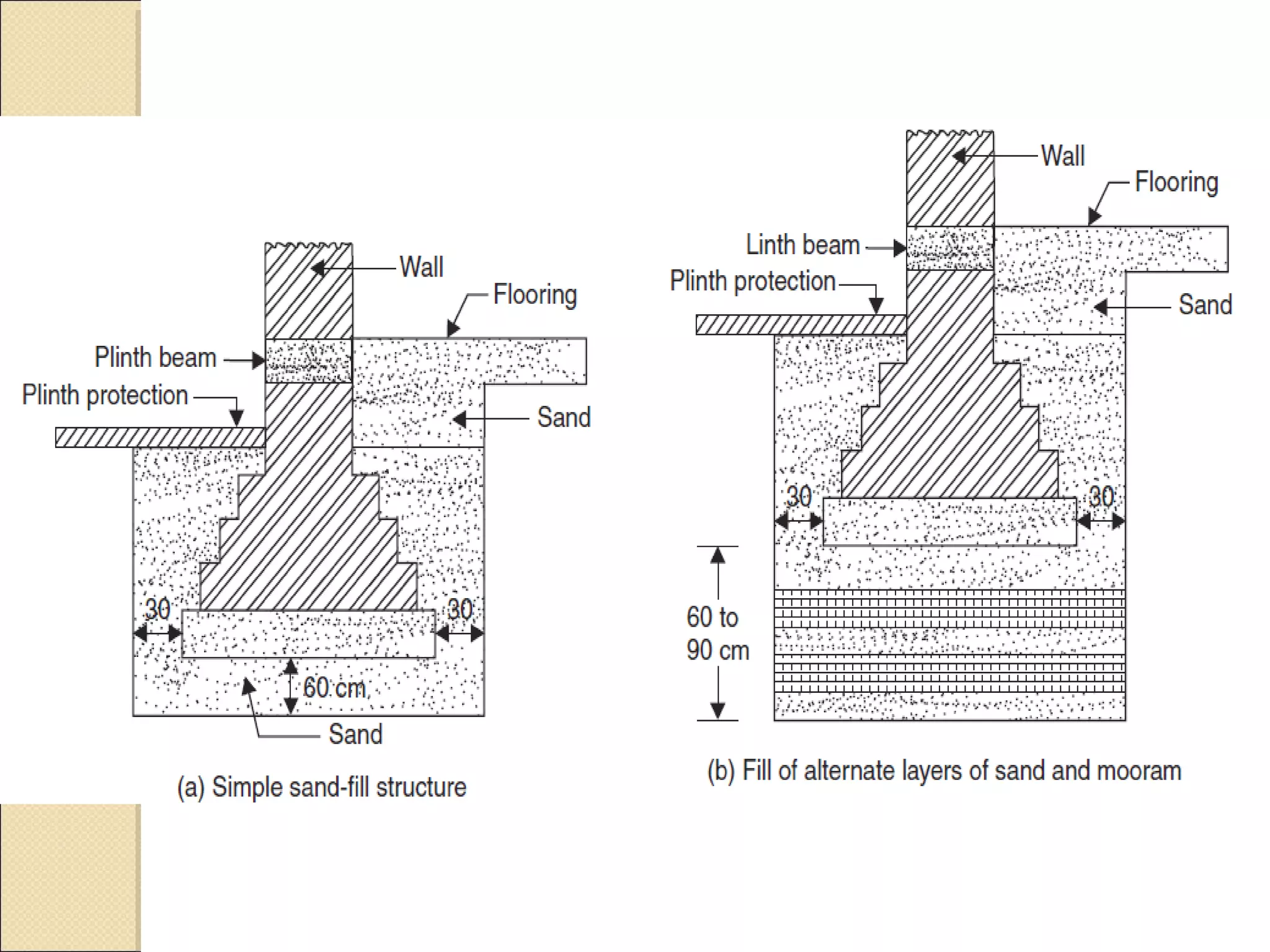
It should be provided for
medium load,
When swelling pressure are
relatively high alternate layer of
moorum and sand are
provided which will act as
spring, and can compress or
expand with sub soil
movement,
When soil is soft or poor B.C.
30 cm thick ballast or moorum
should be provide and rammed
30 cm thick layer of course
sand.
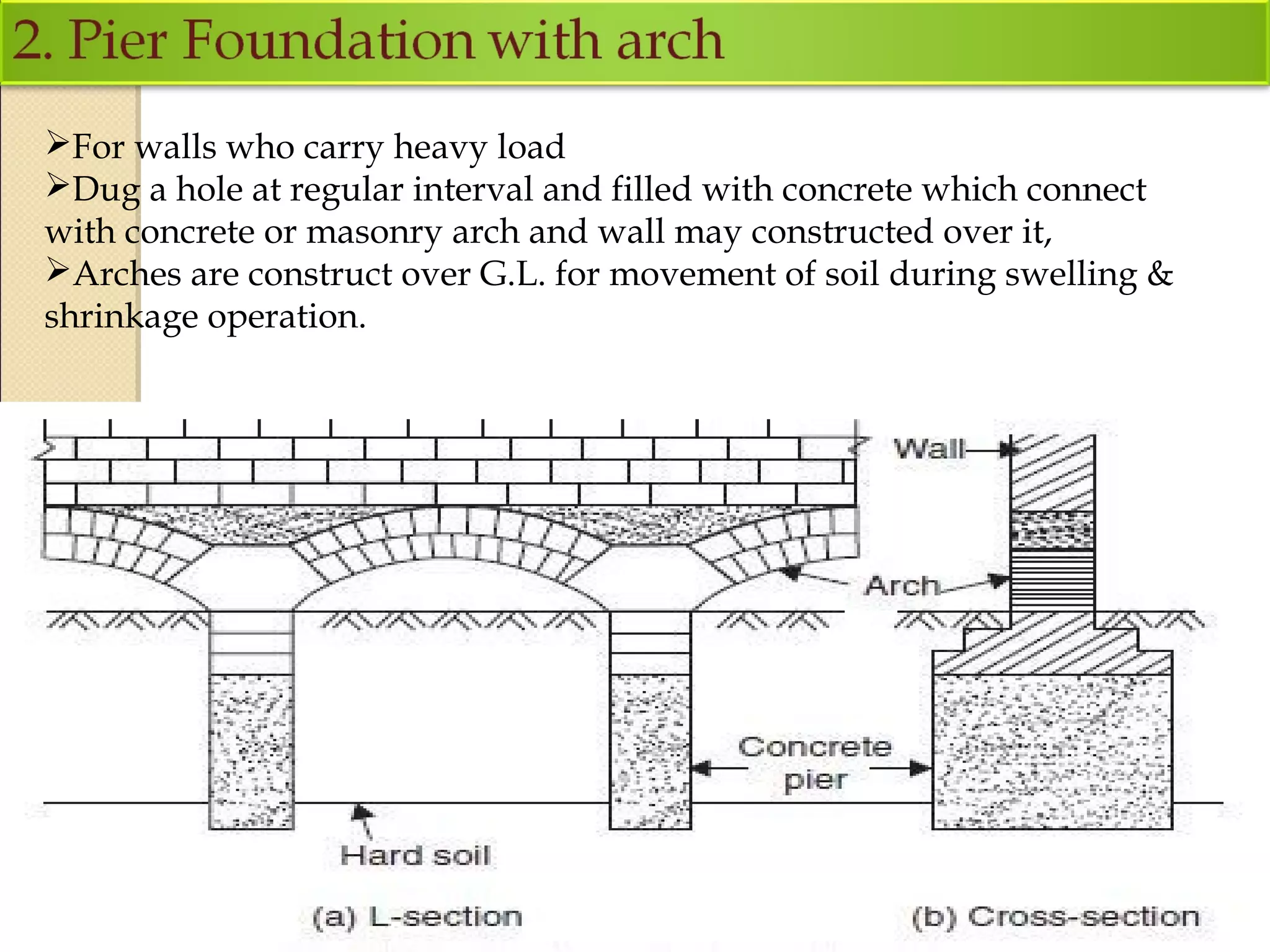
For walls who carry heavy load
Dug a hole at regular interval and filled with concrete which connect
with concrete or masonry arch and wall may constructed over it,
Arches are construct over G.L. for movement of soil during swelling &
shrinkage operation.
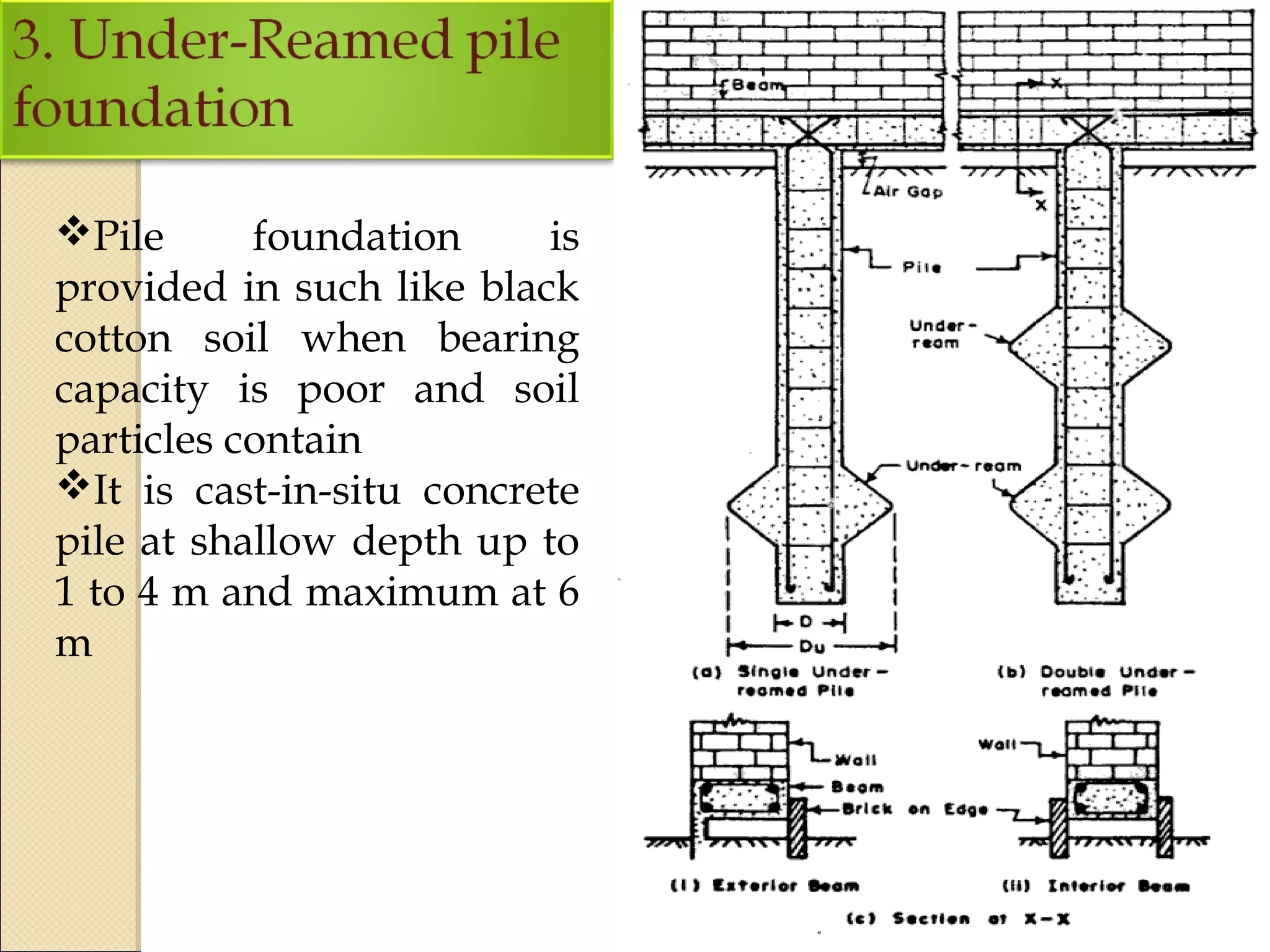
Pile foundation is
provided in such like black
cotton soil when bearing
capacity is poor and soil
particles contain
It is cast-in-situ concrete
pile at shallow depth up to
1 to 4 m and maximum at 6
m
1. Unequal settlement of the foundation sub soil.
2. Unequal settlement of masonry.
3. Horizontal movement of soil adjoining the
structure.
4. Shrinkage due to withdrawal of moisture from
soil below the foundation.
5. Lateral pressure on the wall
6. Action of atmosphere
7. Lateral movement of soil below foundation
Shallow Foundation
Shallow Foundation
Shallow Foundation

Shallow Foundation

  • 1.
    Prof. Karan S.Chauhan Assistant Professor Department Of Civil Engineering @ Shri Labhubhai Trivedi Institute Of Engineering And Technology,Rajkot Shri Labhubhai TrivediShri Labhubhai Trivedi Institute of Engineering &Institute of Engineering & Technology, RajkotTechnology, Rajkot Shallow FoundationShallow Foundation Subject Code : 2130607 Subject:- Building Construction
  • 2.
     Substructure orfoundation is the lower portion of the building located below ground level which transmit the loads of the super structure to the sub soil.  It is directly contacted with sub soil  Lowest portion of foundation called footing
  • 3.
    Reduction of loadintensity Even distribution of load Provision of level surface Lateral stability Safety against undermining/scouring due to flood water and borrowing animals Protection against soil movements
  • 4.
     It shouldbe sustain dead load and live load and safely transmit to sub soil without settlement.  Provide stability & safety to structure or building.  It should be rigid for different settlement can be minimised specially for super impose load  it should be provide deep guard to building for damage & di- stress by swelling or shrinkage of sub-soil.  It should be perform for at least as its design life period.
  • 5.
     A foundationhas two basic type : 1. Shallow foundation 2. Deep foundation According to Terzaghi a foundation is shallow if its depth is equal to or less than its width and in case of deep foundation the depth is equal to or greater than its width. Shallow Foundation :- Depth = /< Breadth Deep Foundation :- Depth = / > Breadth
  • 6.
     Following typesare commonly used 1. Spread Footings 2. Combine footing 3. Strap footing 4. Mat/Raft foundation
  • 7.
     It shouldspread all super structure load from wall,column over large area.  It supports either a column or wall.  It has following types 1. Single footing for column 2. Stepped footing for a column 3. Sloped footing for a column 4. Wall footing without step 5. Stepped footing for wall 6. Grillage foundation
  • 10.
  • 12.
  • 16.
    1. Solid Slab/ Mat 2. Beam Slab / Ribbed 3. Cellular System
  • 19.
    Black cotton soilcalled expandable soil. It is very dangerous due to its volumetric changes with the change of atmospheric condition. Due to more swelling & shrinkage formed cracks and sometimes wide 15 to 20 cm and deep about 2.5 to 4 m.
  • 20.
    Foundation should betaken at such depth where cracks can not extend. Depth at least 1.5 m. If depth does not exceed 1.5 m then entire black cotton soil may be removed and foundation should be laid on hard bed. Foundation or masonry work does not directly contact with B.C. soil, it can be done by wider & deeper trench for foundation by filling sand or moorum on either side or below foundation. Bed of foundation should be made firm or hard by ramming per 30 cm layer, moorum should be 15 cm each layer which is well watered & rammed. Construction should be made in dry season if possible.
  • 21.
    1.Strip or Padfoundation 2.Pier Foundation 3.Under-reamed pile foundation
  • 22.
    It should beprovided for medium load, When swelling pressure are relatively high alternate layer of moorum and sand are provided which will act as spring, and can compress or expand with sub soil movement, When soil is soft or poor B.C. 30 cm thick ballast or moorum should be provide and rammed 30 cm thick layer of course sand.
  • 24.
    For walls whocarry heavy load Dug a hole at regular interval and filled with concrete which connect with concrete or masonry arch and wall may constructed over it, Arches are construct over G.L. for movement of soil during swelling & shrinkage operation.
  • 25.
    Pile foundation is providedin such like black cotton soil when bearing capacity is poor and soil particles contain It is cast-in-situ concrete pile at shallow depth up to 1 to 4 m and maximum at 6 m
  • 27.
    1. Unequal settlementof the foundation sub soil. 2. Unequal settlement of masonry. 3. Horizontal movement of soil adjoining the structure. 4. Shrinkage due to withdrawal of moisture from soil below the foundation. 5. Lateral pressure on the wall 6. Action of atmosphere 7. Lateral movement of soil below foundation